MICROORGANISM AND THEIR EFFCTS ON LIVING THINGCHAPTER 1
MICROORGANISM……?Micro and Makro?
Micro mean…………….small, very small, can’t see by naked eyes.Makro mean……………big,can see by naked eyes
How to see the tiny particle such as microorganism…..It can be seen by using electron microscope..
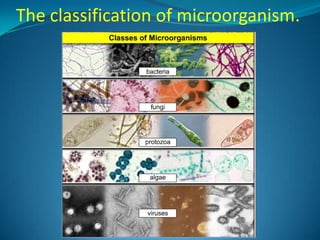
The classification of microorganism.
The characteristic of microorganism include their…Appearance  ---- keadaanluaranShape……………….. BentukSize…………………… saizMethod of reproduction……………..caramembiakNutrition  ……………………. NutrisiHabitat……………………….. Tempattinggal
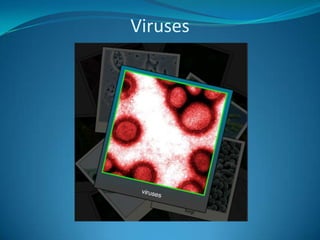
Viruses
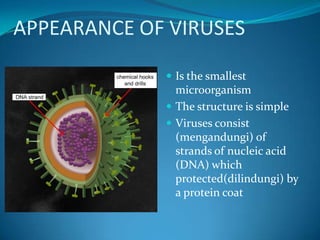
APPEARANCE OF VIRUSESIs the smallest microorganismThe structure is simple Viruses consist (mengandungi) of strands of nucleic acid (DNA) which protected(dilindungi) by a protein coat
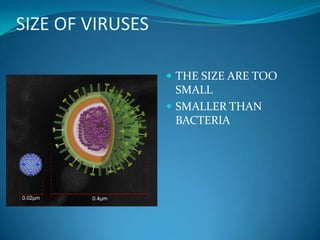
SIZE OF VIRUSESTHE SIZE ARE TOO SMALLSMALLER THAN BACTERIA
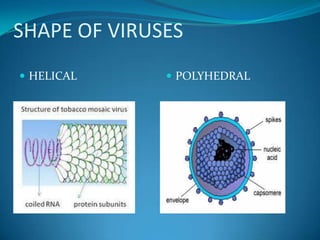
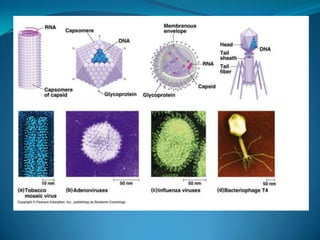
SHAPE OF VIRUSESHELICALPOLYHEDRAL
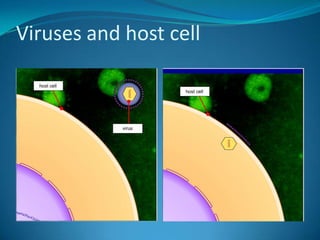
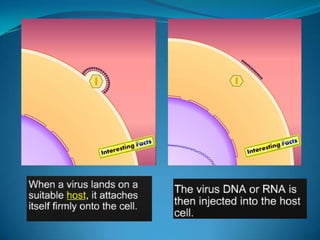
CHARACTERISTIC  OF VIRUSViruses do not make their own foodThey obtain (mendapatkan) food from animals,plants and some bacteria.So they are PARASITES (mendapatmakanandrindividu lain sehinggamembawakeburukankepadaindividutersebut)The cell where the viruses are attached (melekat) are called as host cells…This cell become the habitat of the viruses
Viruses and host cell
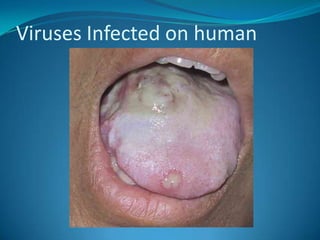
Viruses are parasites…They can infectHumanAnimal Plant Bacteria
Viruses Infected on human
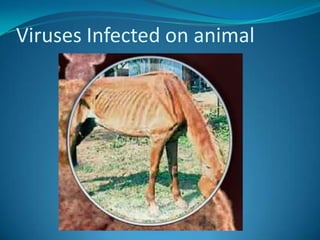
Viruses Infected on animal
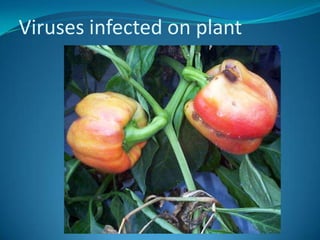
Viruses infected on plant
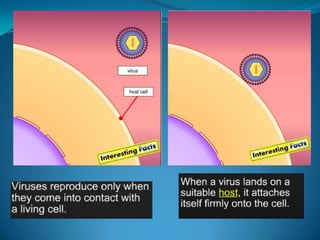
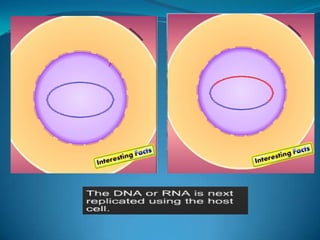
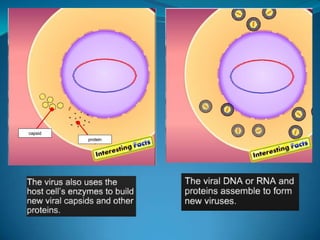
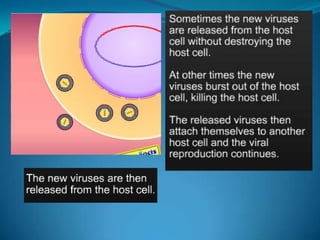
Method of reproductionIt only reproduce when it is contact with living  cell.
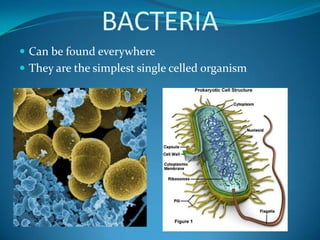
BACTERIACan be found everywhereThey are the simplest single celled organism
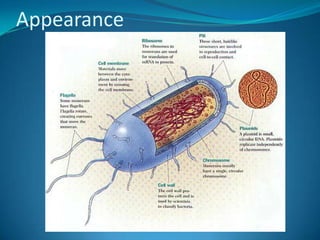
Appearance
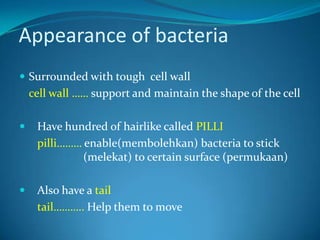
Appearance of bacteria Surrounded with tough  cell wallcell wall …… support and maintain the shape of the cellHave hundred of hairlike called PILLIpilli……… enable(membolehkan) bacteria to stick 		(melekat) to certain surface (permukaan)Also have a tail	tail……….. Help them to move
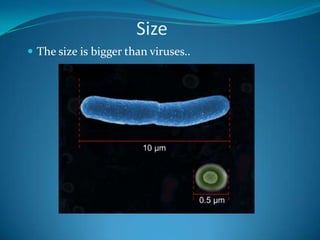
Size The size is bigger than viruses..
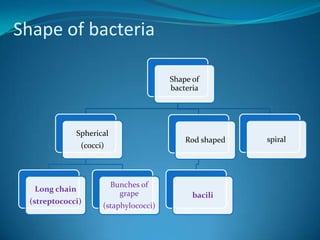
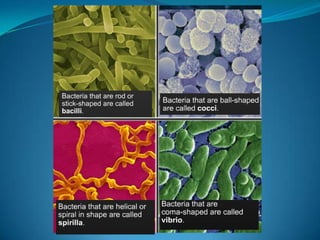
Shape of bacteria
Nutrition Carry out photosynthesisSome live as parasitesSome are SAPROTROPHS…saprotrophs…absorb (serap) nutrient from    	                  dead organism
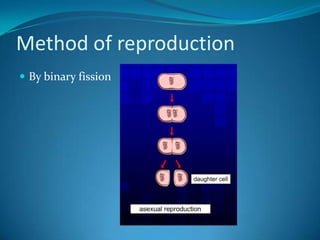
Method of reproductionBy binary fission
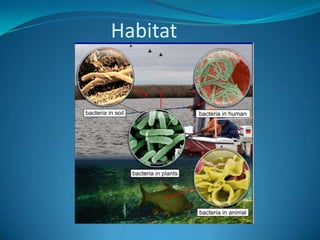
Habitat
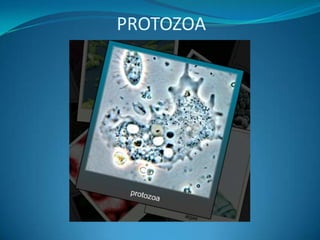
PROTOZOA
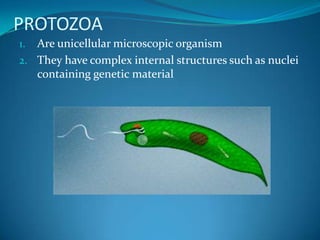
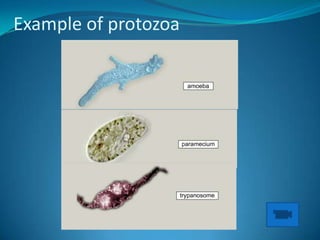
PROTOZOAAre unicellular microscopic organismThey have complex internal structures such as nuclei containing genetic material
Size of protozoaRanges from 5 to 250 µmSo they are easily seen under low magnification microscope.
Example of protozoa
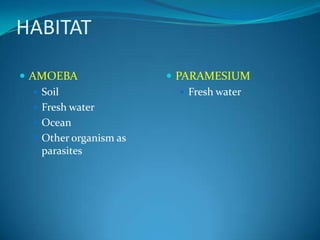
HABITATAMOEBA SoilFresh waterOcean Other organism as parasitesPARAMESIUMFresh water
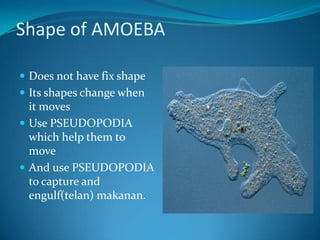
Shape of AMOEBADoes not have fix shapeIts shapes change when it movesUse PSEUDOPODIA which help them to moveAnd use PSEUDOPODIA to capture and engulf(telan) makanan.
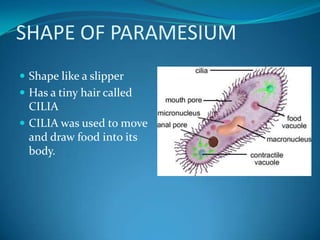
Shape like a slipperHas a tiny hair called CILIACILIA was used to move and draw food into its body.SHAPE OF PARAMESIUM
METHOD OF REPRODUCTIONAMOEBA	Binary fissionPARAMESIUMBinary fission
ALGAE
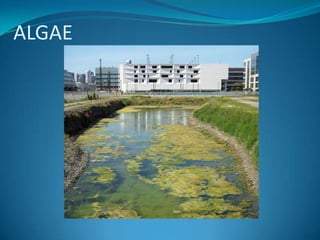
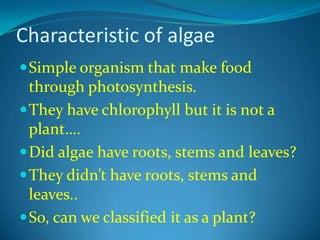
Characteristic of algaeSimple organism that make food through photosynthesis.
They have chlorophyll but it is not a plant….
Did algae have roots, stems and leaves?
They didn’t have roots, stems and leaves..
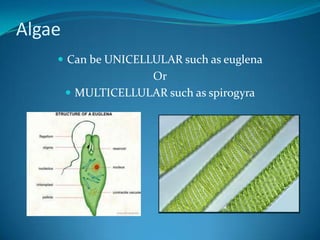
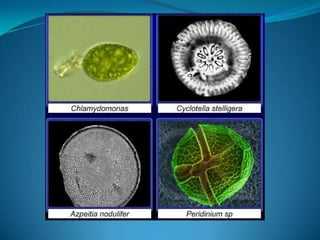
So, can we classified it as a plant?Algae Can be UNICELLULAR such as euglenaOrMULTICELLULAR such as spirogyra
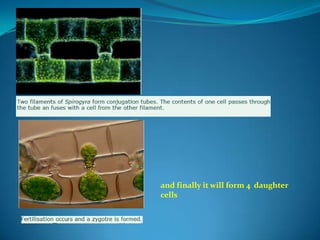
Method of reproductionThey reproduce  asexually through  BINARY FISSIONSPIRIGYRA reproduce SEXUALLY through CONJUGATION
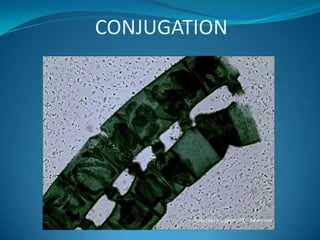
CONJUGATIONTWO individual united by a tube formed by outgrowths from one or both of the cells.Genetic materials are passed through the tube into the other cell.
CONJUGATION
and finally it will form 4  daughter cells
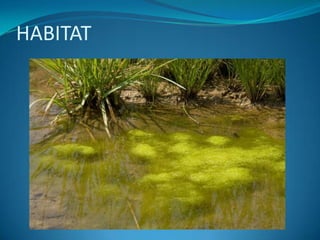
HABITAT
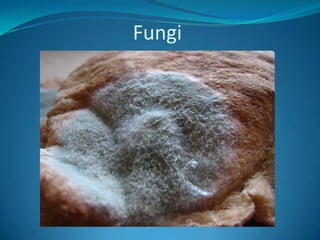
Fungi
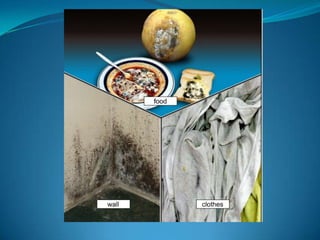
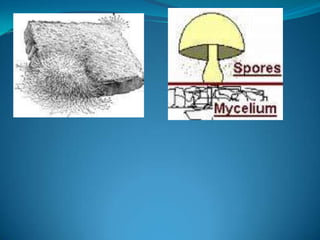
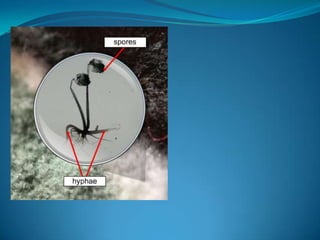
Fungi Are simple, plant like organismDo not contain the chlorophyllFeed (mendapatmakanan) on the dead matter
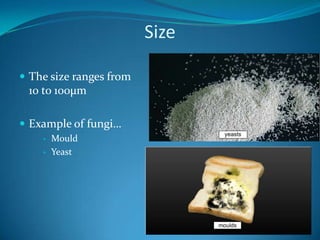
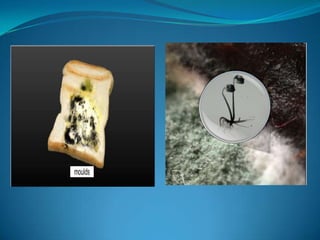
Size The size ranges from 10 to 100µmExample of fungi…Mould Yeast

1.1 classification of microbes