






• Microorganisms use nutrients to obtain energy and
synthesize new cellular components.
• Nutrients are substances used in biosynthesis and
energy production and are requires for microbial
growth.
• Most important nutrients are carbon, hydrogen,
nitrogen and oxygen.
• When these microorganisms obtain their nutrients by
living on or in the host, they can cause disease in the
organism by interfering with their host’s nutrition,
metabolism and disrupt host’s homeostasis.
Requirements for growth
• Physical requirements
• Temperature
• pH
• Oxygen
• Hydrostatic Pressure
• Osmotic pressure
•Chemical requirements
(nutritional factors)
• Carbon
• Nitrogen, sulphur, and
phosphorous
• Trace elements
• Oxygen
• Organic growth factor
Physical Factors Required for Bacterial Growth
1) pH
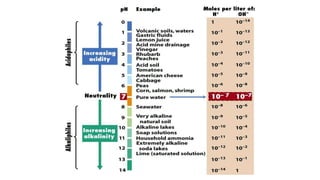
• Optimum pH: the pH at which the microorganism grows best
(e.g. pH 7)
• Most bacteria grow between pH 6.5 and 7.5
• Molds and yeasts grow between pH 5 and 6
• According to their tolerance for acidity/alkalinity, bacteria are
classified as:
• Acidophiles (acid-loving): grow best at pH 0.1-5.4
• Neutrophils: grow best at pH 5.4 to 8.0
• Alkaliphiles (base-loving): grow best at pH 7.0-11.5
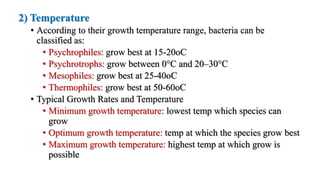
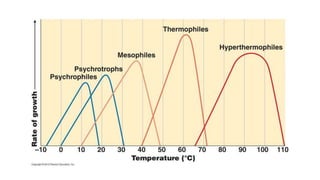
2) Temperature
• According to their growth temperature range, bacteria can be
classified as:
• Psychrophiles: grow best at 15-20oC
• Psychrotrophs: grow between 0°C and 20–30°C
• Mesophiles: grow best at 25-40oC
• Thermophiles: grow best at 50-60oC
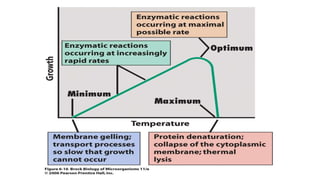
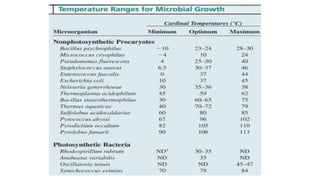
• Typical Growth Rates and Temperature
• Minimum growth temperature: lowest temp which species can
grow
• Optimum growth temperature: temp at which the species grow best
• Maximum growth temperature: highest temp at which grow is
possible
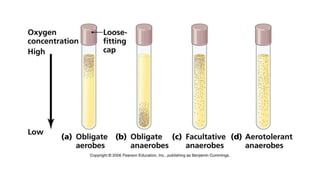
3) Oxygen
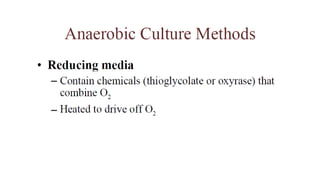
• Aerobes: require oxygen to grow
• Obligate aerobes: must have free oxygen for aerobic respiration (e.g. Pseudomonas)
• Anaerobes: do not require oxygen to grow
• Obligate anaerobes: killed by free oxygen (e.g. Bacteroides)
• Microaerophiles: grow best in presence of small amount of free oxygen
• Capnophiles: carbon-dioxide loving organisms that thrive under conditions of low oxygen
• Facultative anaerobes: carry on aerobic metabolism when oxygen is present, but shift to
anaerobic metabolism when oxygen is absent
• Aerotolerant anaerobes: can survive in the presence of oxygen but do not use it in their
metabolism
• Obligate: organism must have specified environmental condition
• Facultative: organism is able to adjust to and tolerate environmental condition, but can
also live in other conditions
4) Hydrostatic pressure
•Water in oceans and lakes exerts pressure exerted
by standing water, in proportion to its depth
•Pressure doubles with every 10 meter increase in
Depth
•Barophiles: bacteria that live at high pressures,
but die if left in laboratory at standard
atmospheric pressure
5) Osmotic pressure
•Environments that contain dissolved substances exert
osmotic pressure, and pressure can exceed that exerted
by dissolved substances in cells
•Hyperosmotic environments: cells lose water and
undergo plasmolysis (shrinking of cell)
•Hypoosmotic environment: cells gain water and swell
and burst
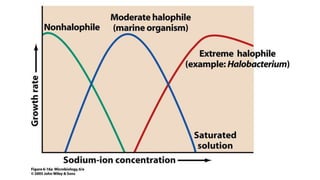
Halophiles
• Salt-loving organisms which require moderate to large
quantities of salt (sodium chloride)
• Membrane transport systems actively transport sodium ions
out of cells and concentrate potassium ions inside
• Why do halophiles require sodium?
• Cells need sodium to maintain a high intracellular
potassium concentration for enzymatic function
• Cells need sodium to maintain the integrity of their cell
walls
Chemical requirements: nutrient factors
• Carbon sources
• Nitrogen sources
• Sulphur and phosphorus
• Trace elements (e.g. copper, iron, zinc, and cobalt)
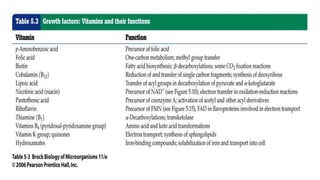
• Vitamins (e.g. folic acid, vitamin B-12, vitamin K)
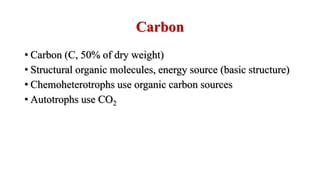
Carbon
• Carbon (C, 50% of dry weight)
• Structural organic molecules, energy source (basic structure)
• Chemoheterotrophs use organic carbon sources
• Autotrophs use CO2
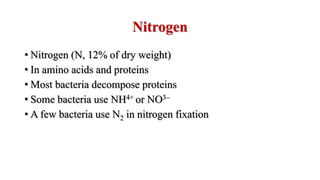
Nitrogen
• Nitrogen (N, 12% of dry weight)
• In amino acids and proteins
• Most bacteria decompose proteins
• Some bacteria use NH4+ or NO3–
• A few bacteria use N2 in nitrogen fixation
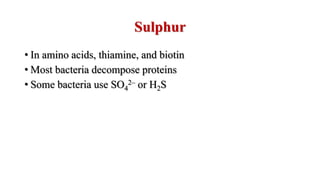
Sulphur
• In amino acids, thiamine, and biotin
• Most bacteria decompose proteins
• Some bacteria use SO4
2– or H2S
Phosphorus
• In DNA, RNA, ATP, and membranes
• PO4
3– is a source of phosphorus
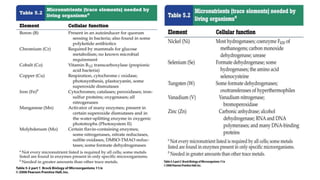
Trace elements
• Inorganic elements (mineral) required in small amounts
• Usually as enzyme cofactors
• Ex: iron, molybdenum, zinc
Buffer
• To neutralize acids and maintain proper pH
• Peptones and amino acids or phosphate salts may act as
buffers
Organic growth factor
• Organic compounds obtained directly from the environment
• Ex: Vitamins, amino acids, purines, and pyrimidines
Microbial Growth
3. Microbial nutrition and growth (Microbiology)

3. Microbial nutrition and growth (Microbiology)

  • 3.
    • Microorganisms usenutrients to obtain energy and synthesize new cellular components. • Nutrients are substances used in biosynthesis and energy production and are requires for microbial growth. • Most important nutrients are carbon, hydrogen, nitrogen and oxygen. • When these microorganisms obtain their nutrients by living on or in the host, they can cause disease in the organism by interfering with their host’s nutrition, metabolism and disrupt host’s homeostasis.
  • 4.
    Requirements for growth •Physical requirements • Temperature • pH • Oxygen • Hydrostatic Pressure • Osmotic pressure •Chemical requirements (nutritional factors) • Carbon • Nitrogen, sulphur, and phosphorous • Trace elements • Oxygen • Organic growth factor
  • 5.
    Physical Factors Requiredfor Bacterial Growth 1) pH • Optimum pH: the pH at which the microorganism grows best (e.g. pH 7) • Most bacteria grow between pH 6.5 and 7.5 • Molds and yeasts grow between pH 5 and 6 • According to their tolerance for acidity/alkalinity, bacteria are classified as: • Acidophiles (acid-loving): grow best at pH 0.1-5.4 • Neutrophils: grow best at pH 5.4 to 8.0 • Alkaliphiles (base-loving): grow best at pH 7.0-11.5
  • 7.
    2) Temperature • Accordingto their growth temperature range, bacteria can be classified as: • Psychrophiles: grow best at 15-20oC • Psychrotrophs: grow between 0°C and 20–30°C • Mesophiles: grow best at 25-40oC • Thermophiles: grow best at 50-60oC • Typical Growth Rates and Temperature • Minimum growth temperature: lowest temp which species can grow • Optimum growth temperature: temp at which the species grow best • Maximum growth temperature: highest temp at which grow is possible
  • 12.
    3) Oxygen • Aerobes:require oxygen to grow • Obligate aerobes: must have free oxygen for aerobic respiration (e.g. Pseudomonas) • Anaerobes: do not require oxygen to grow • Obligate anaerobes: killed by free oxygen (e.g. Bacteroides) • Microaerophiles: grow best in presence of small amount of free oxygen • Capnophiles: carbon-dioxide loving organisms that thrive under conditions of low oxygen • Facultative anaerobes: carry on aerobic metabolism when oxygen is present, but shift to anaerobic metabolism when oxygen is absent • Aerotolerant anaerobes: can survive in the presence of oxygen but do not use it in their metabolism • Obligate: organism must have specified environmental condition • Facultative: organism is able to adjust to and tolerate environmental condition, but can also live in other conditions
  • 14.
    4) Hydrostatic pressure •Waterin oceans and lakes exerts pressure exerted by standing water, in proportion to its depth •Pressure doubles with every 10 meter increase in Depth •Barophiles: bacteria that live at high pressures, but die if left in laboratory at standard atmospheric pressure
  • 15.
    5) Osmotic pressure •Environmentsthat contain dissolved substances exert osmotic pressure, and pressure can exceed that exerted by dissolved substances in cells •Hyperosmotic environments: cells lose water and undergo plasmolysis (shrinking of cell) •Hypoosmotic environment: cells gain water and swell and burst
  • 17.
    Halophiles • Salt-loving organismswhich require moderate to large quantities of salt (sodium chloride) • Membrane transport systems actively transport sodium ions out of cells and concentrate potassium ions inside • Why do halophiles require sodium? • Cells need sodium to maintain a high intracellular potassium concentration for enzymatic function • Cells need sodium to maintain the integrity of their cell walls
  • 19.
    Chemical requirements: nutrientfactors • Carbon sources • Nitrogen sources • Sulphur and phosphorus • Trace elements (e.g. copper, iron, zinc, and cobalt) • Vitamins (e.g. folic acid, vitamin B-12, vitamin K)
  • 20.
    Carbon • Carbon (C,50% of dry weight) • Structural organic molecules, energy source (basic structure) • Chemoheterotrophs use organic carbon sources • Autotrophs use CO2
  • 22.
    Nitrogen • Nitrogen (N,12% of dry weight) • In amino acids and proteins • Most bacteria decompose proteins • Some bacteria use NH4+ or NO3– • A few bacteria use N2 in nitrogen fixation
  • 23.
    Sulphur • In aminoacids, thiamine, and biotin • Most bacteria decompose proteins • Some bacteria use SO4 2– or H2S
  • 24.
    Phosphorus • In DNA,RNA, ATP, and membranes • PO4 3– is a source of phosphorus
  • 25.
    Trace elements • Inorganicelements (mineral) required in small amounts • Usually as enzyme cofactors • Ex: iron, molybdenum, zinc
  • 27.
    Buffer • To neutralizeacids and maintain proper pH • Peptones and amino acids or phosphate salts may act as buffers
  • 28.
    Organic growth factor •Organic compounds obtained directly from the environment • Ex: Vitamins, amino acids, purines, and pyrimidines
  • 50.