Life Saving College Of Nursing
M. Farooq Marwat
RN, Dip. Card, BSN
Objective
 At the end of this presentation, the student will be
able to :
 Understand the bacteria
 Know about the characteristics of bacteria
 Know about the classification of bacteria
 Know about the structure of bacteria
 Know about the disease cause by bacteria
Bacteria
 The word bacteria is derived from a Latin and a Greek word
Bakteria meaning “cane”. (Rod)
 Bacteria is a micro organism with few micro meter in
length and have wide range of shapes (round, oval, rod and
spiral shapes).
 First discover by Antony Van Leeun Hook in 1676, initially
called “Animalcules”
 Study about bacteria is know as “Bacteriology”, while study
about the harmful effect of bacteria on human body is
known as “Medical bacteriology”.
Bacteria
 Bacteria are found everywhere on earth i.e. in soil,
water, air, deep earth crust, radio active waste and
acidic hot spring
 A single gram of soil contain 40 million bacteria while
a million bacteria found in an ml of fresh water.
 However only few of these are harm full to human
body causes disease
 They produce more Oxygen than plants
Bacteria
 Bacteria are earlier form of life form on earth.
 Their fossils are found 2.5 billions years ago
Characteristics of Bacteria
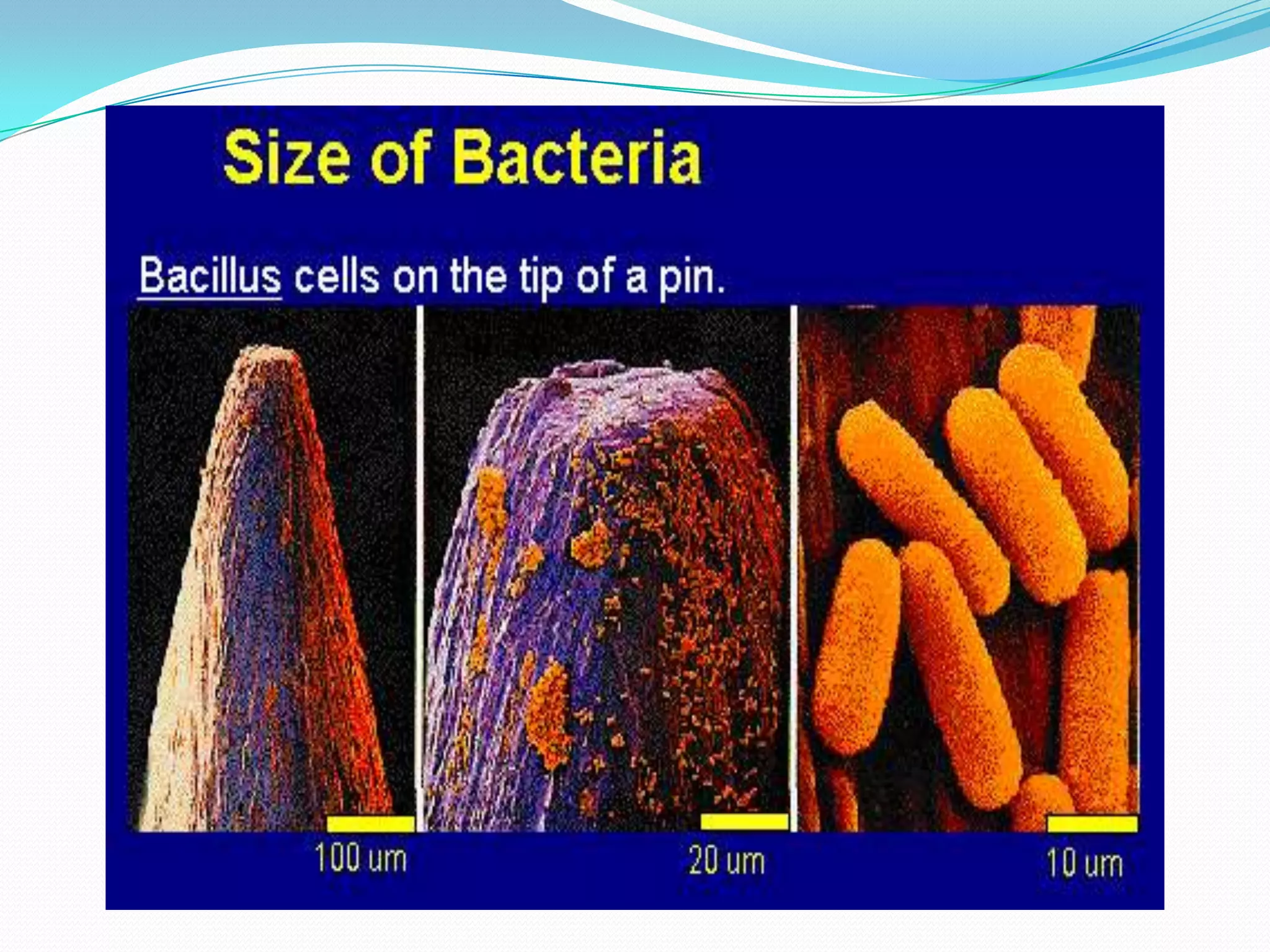
 Size of bacteria rang between 0.5 to 5 micrometer
 They are prokaryotic microbes (have no membrane
bounded Nucleus and mitochondria)
 Have a single chromosome as Genetic material
 Enclosed in a rigid cell wall made up of peptidoglycane
 Some bacteria, along with plasma membrane, contain
an additional membrane called Capsule
Characteristics of Bacteria…..
 Reproduce by Amitosis (asexual form of reproduction)
 Many bacteria form Spores
 Some bacteria are Auto tropes while some are hetro
tropes
 Most grow best at pH of 6.5 to 7.0
 Many act as decomposers recycling nutrients
Nutrition Source for bacteria
 Saprobes –
feed on dead organic matter
 Parasites
feed on a host cell
 Photoautotroph
use sunlight to make food
 Chemoautotroph
oxidize inorganic matter such as iron or sulfur to
make food
Classification of bacteria
Bacteria are classified according to following properties
1. According to Morphology
2. According to Needs for Oxygen
3. According to Staining they retain
4. According to Heat Tolerance
5. According to Pathoginicity
According to Morphology
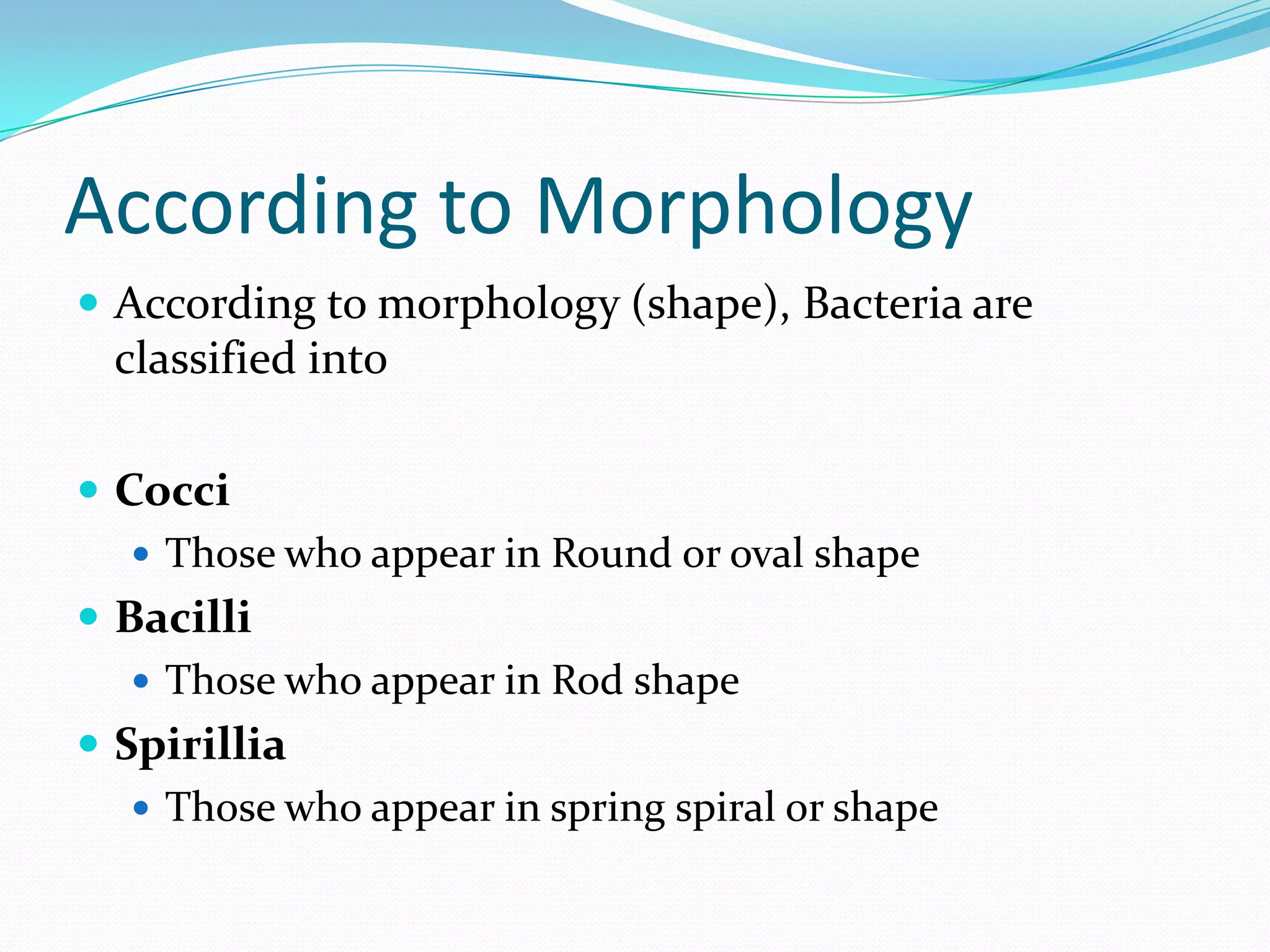
 According to morphology (shape), Bacteria are
classified into
 Cocci
 Those who appear in Round or oval shape
 Bacilli
 Those who appear in Rod shape
 Spirillia
 Those who appear in spring spiral or shape
According to Morphology…
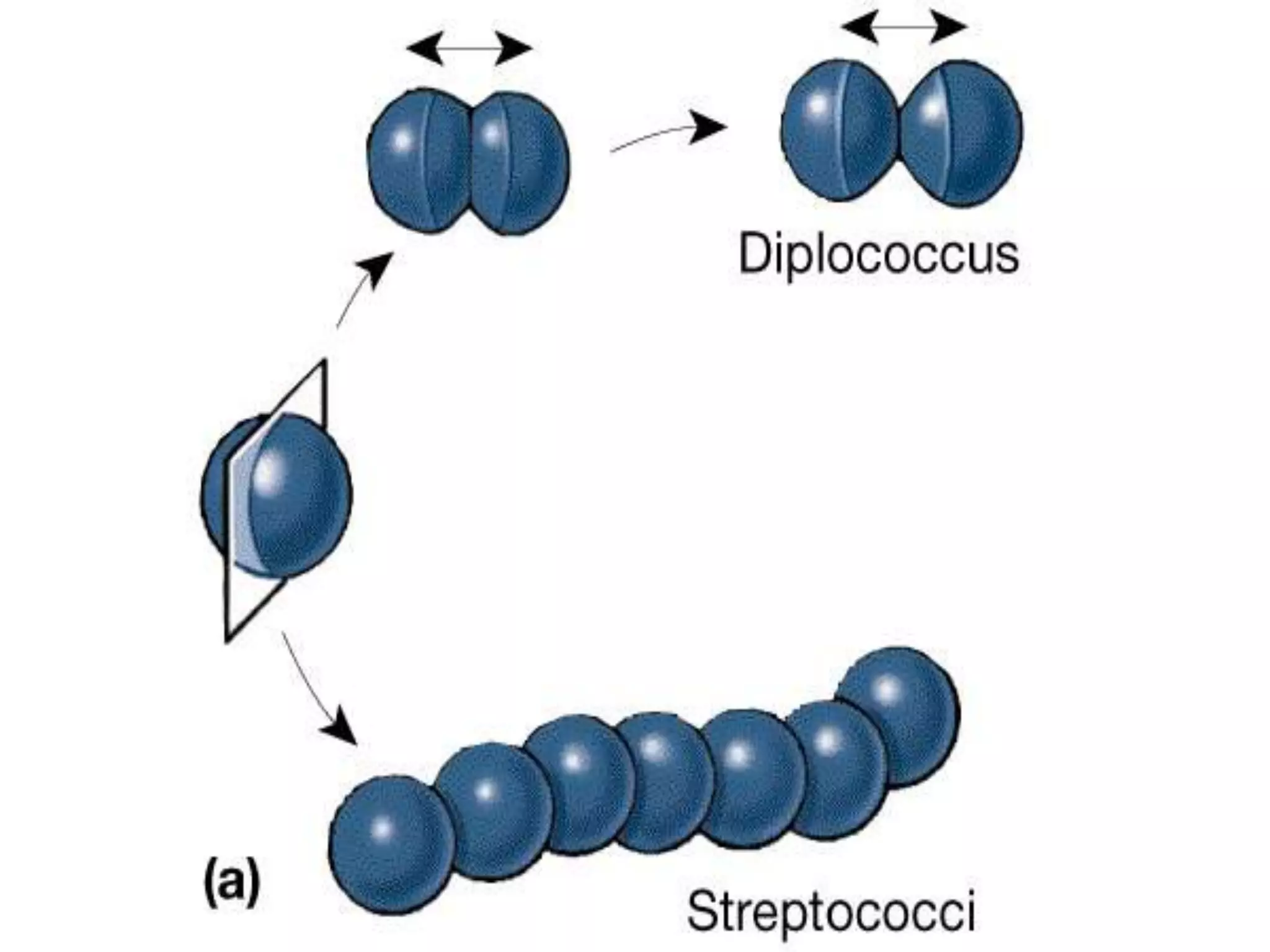
Arrangement of Bacteria
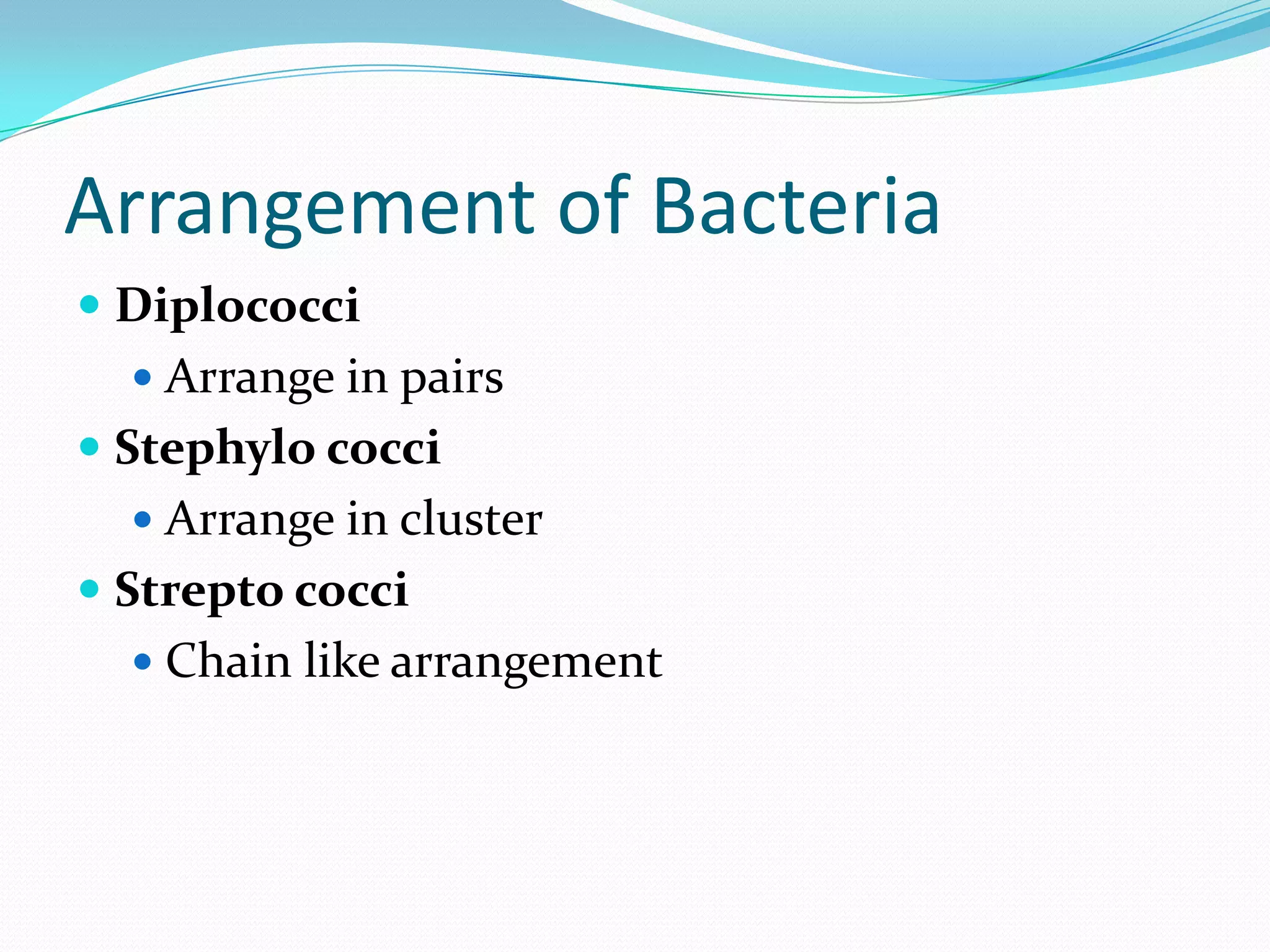
 Diplococci
 Arrange in pairs
 Stephylo cocci
 Arrange in cluster
 Strepto cocci
 Chain like arrangement
According to Needs for Oxygen
 According to their need for oxygen, Bacteria are
classified into
 Aerobic
 Those who required Oxygen to live
 Anaerobic
 Those who don’t required Oxygen to live
 Facultative Aerobic
 Those who can adjust in either presence or absence of
Oxygen
According to Staining they retain
 According to stain (color) they retain or appear
during the procedure of gram staining, Bacteria are
classified into
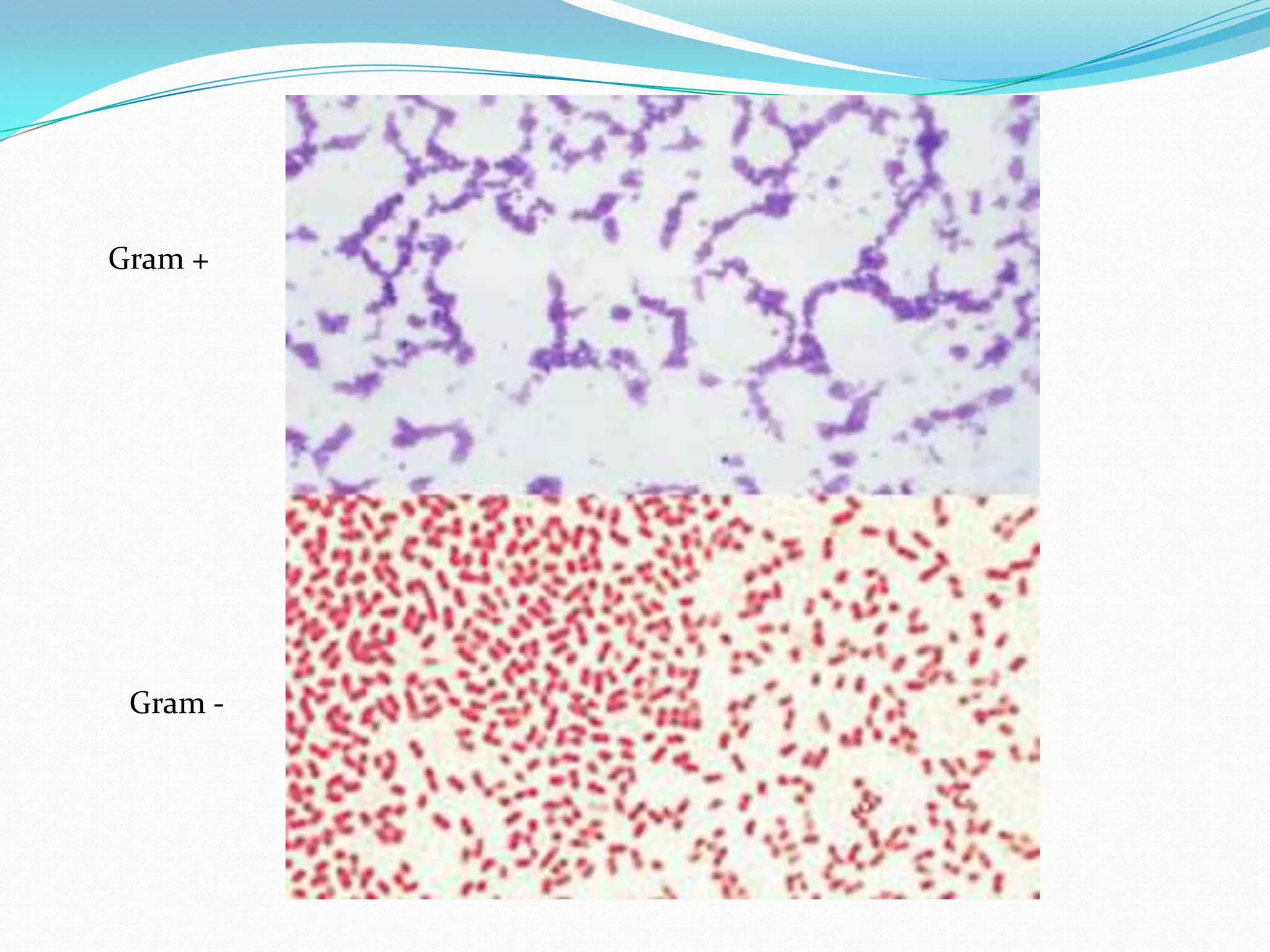
 Gram Positive
 Those who appear blue, purple or violate in color
 Gram Negative
 Those who appear red or pink in color
Gram +
Gram -
According to Heat Tolerance
 According to temperature on which Bacteria can be
best live, they are classified into
 Psychrophilic bacteria
 Can survive on extreme cold temperature
 Mesophilic bacteria
 Can survive on extreme cold temperature
 Thermophilc bacteria
 Can survive on extreme hot temperature
According to Pathoginicity
According to disease causing ability of bacteria, they are
of two types
 Pathogenic bacteria
 Those who cause disease in human
 Non-Pathogenic bacteria
 Those who cannot cause disease in humans
Structure of Bacteria
•Capsule
•Cell wall
•Ribosomes
•Nucleoid
•Flagella
•Pilli
•Cytoplasm
Capsule
keeps the cell from
drying out and
helps it stick to
food or other cells
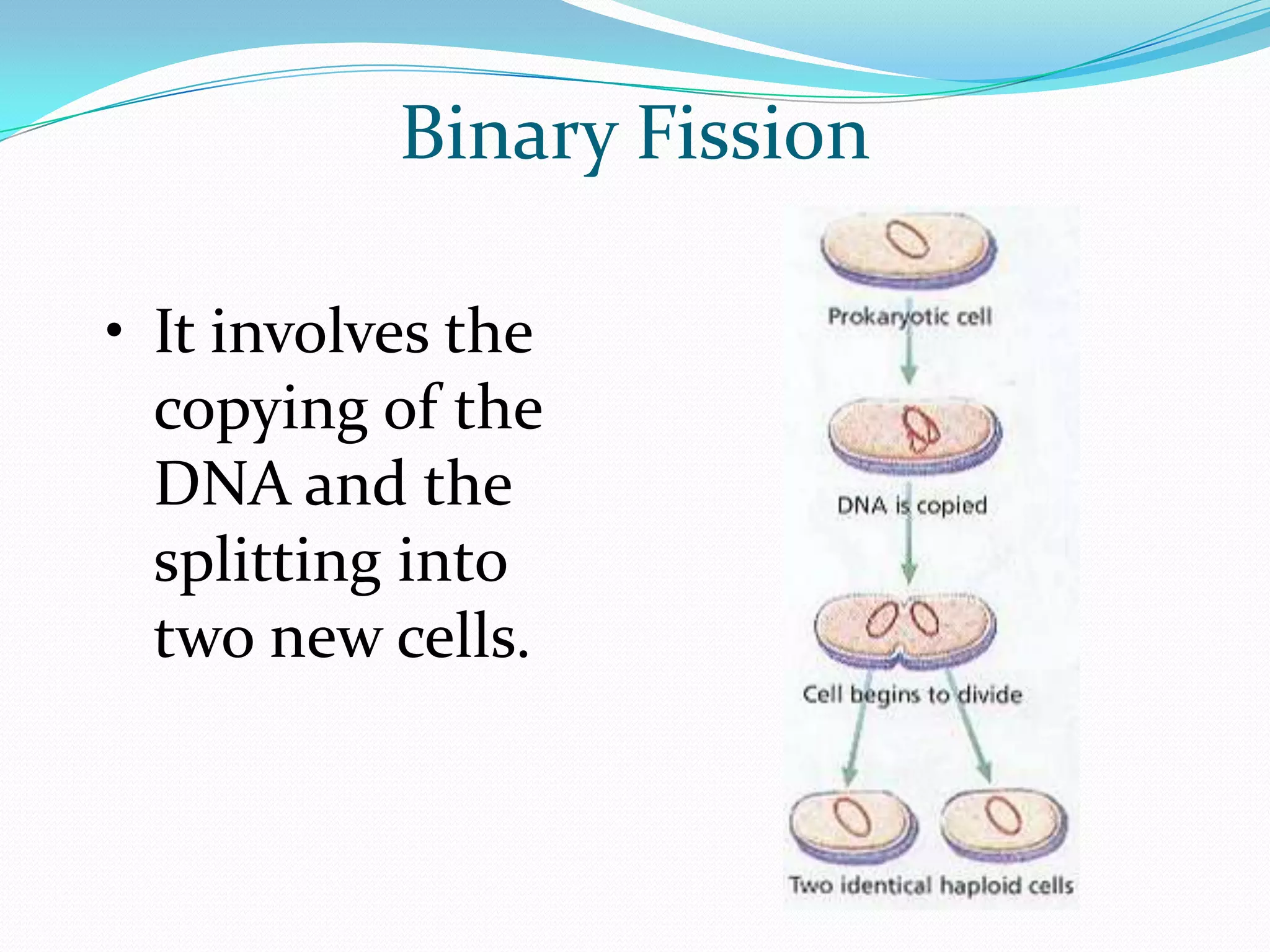
Cell Wall
Thick outer covering
that maintains the
overall shape of the
bacterial cell
Ribosomes
 cell part where proteins
 are made
 Ribosomes give the
 cytoplasm of bacteria a
 granular appearance in
 electron micrographs
Chromosome
A ring made up of DNA
Bacteria contain a
single chromosome
Flagella
A whip-like tail that
some bacteria have
for locomotion
Bacteria Reproduction
 Under optimum conditions bacteria can reproduce
every 20 minutes. (double every 10 to 20 minutes.
 Bacteria reproduction is controlled by various factors
including : temperature and food availability.
 Their reproduction can be by:
 Asexual: Binary fission
 Sexual: conjugation
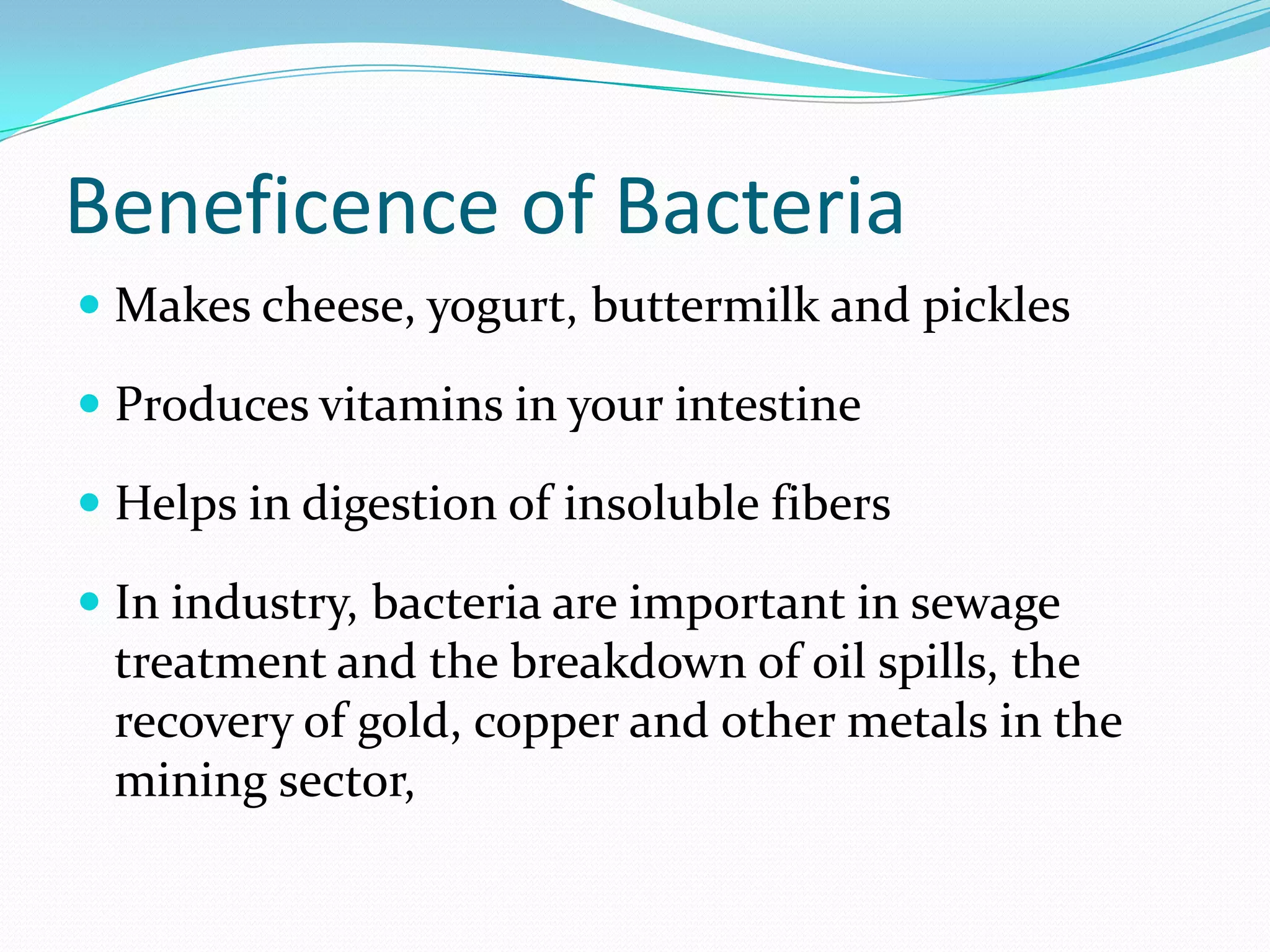
Binary Fission
• It involves the
copying of the
DNA and the
splitting into
two new cells.
Conjugation
• Sexual reproduction
• One bacteria is able
to transfer its DNA
into another bacteria
by means of a pilus
(pili)
Beneficence of Bacteria
 Makes cheese, yogurt, buttermilk and pickles
 Produces vitamins in your intestine
 Helps in digestion of insoluble fibers
 In industry, bacteria are important in sewage
treatment and the breakdown of oil spills, the
recovery of gold, copper and other metals in the
mining sector,
Beneficence of Bacteria
 Bacteria are also helpful in biotechnology, and the
manufacture of antibiotics and other chemicals.
 Many act as decomposers recycling nutrients
 Actinomycetes, produce antibiotics such as
streptomycin and nocardicin.
 Saprobes help to break down dead organic matter.
Harmful effect of Bacteria
 Cause disease in body including:
1. TB
2. Pertusis
3. Diphtheria
4. Tetanus
5. Dysentery
6. Typhoid
7. Meningitis, Encephalitis
8. Gonorrhea
9. Pneumonia
10. Syphilis
Endospores
 Some bacteria are capable to produce spore that
are highly resistant to extreme environmental
condition.
 In favorable condition, bacteria re grow again to a
bacteria
Toxins
 Some bacteria release poisons known as toxins which
cause food poisoning. Some toxins, known as
exotoxins multiply in food. These toxins are not easily
destroyed by cooking and may remain in food once
they have developed.
 Other bacteria produce toxins inside the human body
only after the food has been eaten. These are called
endotoxins
Bacteria

Bacteria

  • 1.
    Life Saving CollegeOf Nursing M. Farooq Marwat RN, Dip. Card, BSN
  • 2.
    Objective  At theend of this presentation, the student will be able to :  Understand the bacteria  Know about the characteristics of bacteria  Know about the classification of bacteria  Know about the structure of bacteria  Know about the disease cause by bacteria
  • 3.
    Bacteria  The wordbacteria is derived from a Latin and a Greek word Bakteria meaning “cane”. (Rod)  Bacteria is a micro organism with few micro meter in length and have wide range of shapes (round, oval, rod and spiral shapes).  First discover by Antony Van Leeun Hook in 1676, initially called “Animalcules”  Study about bacteria is know as “Bacteriology”, while study about the harmful effect of bacteria on human body is known as “Medical bacteriology”.
  • 4.
    Bacteria  Bacteria arefound everywhere on earth i.e. in soil, water, air, deep earth crust, radio active waste and acidic hot spring  A single gram of soil contain 40 million bacteria while a million bacteria found in an ml of fresh water.  However only few of these are harm full to human body causes disease  They produce more Oxygen than plants
  • 5.
    Bacteria  Bacteria areearlier form of life form on earth.  Their fossils are found 2.5 billions years ago
  • 6.
    Characteristics of Bacteria Size of bacteria rang between 0.5 to 5 micrometer  They are prokaryotic microbes (have no membrane bounded Nucleus and mitochondria)  Have a single chromosome as Genetic material  Enclosed in a rigid cell wall made up of peptidoglycane  Some bacteria, along with plasma membrane, contain an additional membrane called Capsule
  • 7.
    Characteristics of Bacteria….. Reproduce by Amitosis (asexual form of reproduction)  Many bacteria form Spores  Some bacteria are Auto tropes while some are hetro tropes  Most grow best at pH of 6.5 to 7.0  Many act as decomposers recycling nutrients
  • 8.
    Nutrition Source forbacteria  Saprobes – feed on dead organic matter  Parasites feed on a host cell  Photoautotroph use sunlight to make food  Chemoautotroph oxidize inorganic matter such as iron or sulfur to make food
  • 10.
    Classification of bacteria Bacteriaare classified according to following properties 1. According to Morphology 2. According to Needs for Oxygen 3. According to Staining they retain 4. According to Heat Tolerance 5. According to Pathoginicity
  • 11.
    According to Morphology According to morphology (shape), Bacteria are classified into  Cocci  Those who appear in Round or oval shape  Bacilli  Those who appear in Rod shape  Spirillia  Those who appear in spring spiral or shape
  • 12.
  • 13.
    Arrangement of Bacteria Diplococci  Arrange in pairs  Stephylo cocci  Arrange in cluster  Strepto cocci  Chain like arrangement
  • 16.
    According to Needsfor Oxygen  According to their need for oxygen, Bacteria are classified into  Aerobic  Those who required Oxygen to live  Anaerobic  Those who don’t required Oxygen to live  Facultative Aerobic  Those who can adjust in either presence or absence of Oxygen
  • 17.
    According to Stainingthey retain  According to stain (color) they retain or appear during the procedure of gram staining, Bacteria are classified into  Gram Positive  Those who appear blue, purple or violate in color  Gram Negative  Those who appear red or pink in color
  • 18.
  • 19.
    According to HeatTolerance  According to temperature on which Bacteria can be best live, they are classified into  Psychrophilic bacteria  Can survive on extreme cold temperature  Mesophilic bacteria  Can survive on extreme cold temperature  Thermophilc bacteria  Can survive on extreme hot temperature
  • 20.
    According to Pathoginicity Accordingto disease causing ability of bacteria, they are of two types  Pathogenic bacteria  Those who cause disease in human  Non-Pathogenic bacteria  Those who cannot cause disease in humans
  • 21.
  • 22.
    Structure of Bacteria •Capsule •Cellwall •Ribosomes •Nucleoid •Flagella •Pilli •Cytoplasm
  • 23.
    Capsule keeps the cellfrom drying out and helps it stick to food or other cells
  • 24.
    Cell Wall Thick outercovering that maintains the overall shape of the bacterial cell
  • 25.
    Ribosomes  cell partwhere proteins  are made  Ribosomes give the  cytoplasm of bacteria a  granular appearance in  electron micrographs
  • 26.
    Chromosome A ring madeup of DNA Bacteria contain a single chromosome
  • 27.
    Flagella A whip-like tailthat some bacteria have for locomotion
  • 28.
    Bacteria Reproduction  Underoptimum conditions bacteria can reproduce every 20 minutes. (double every 10 to 20 minutes.  Bacteria reproduction is controlled by various factors including : temperature and food availability.  Their reproduction can be by:  Asexual: Binary fission  Sexual: conjugation
  • 29.
    Binary Fission • Itinvolves the copying of the DNA and the splitting into two new cells.
  • 30.
    Conjugation • Sexual reproduction •One bacteria is able to transfer its DNA into another bacteria by means of a pilus (pili)
  • 31.
    Beneficence of Bacteria Makes cheese, yogurt, buttermilk and pickles  Produces vitamins in your intestine  Helps in digestion of insoluble fibers  In industry, bacteria are important in sewage treatment and the breakdown of oil spills, the recovery of gold, copper and other metals in the mining sector,
  • 32.
    Beneficence of Bacteria Bacteria are also helpful in biotechnology, and the manufacture of antibiotics and other chemicals.  Many act as decomposers recycling nutrients  Actinomycetes, produce antibiotics such as streptomycin and nocardicin.  Saprobes help to break down dead organic matter.
  • 33.
    Harmful effect ofBacteria  Cause disease in body including: 1. TB 2. Pertusis 3. Diphtheria 4. Tetanus 5. Dysentery 6. Typhoid 7. Meningitis, Encephalitis 8. Gonorrhea 9. Pneumonia 10. Syphilis
  • 34.
    Endospores  Some bacteriaare capable to produce spore that are highly resistant to extreme environmental condition.  In favorable condition, bacteria re grow again to a bacteria
  • 35.
    Toxins  Some bacteriarelease poisons known as toxins which cause food poisoning. Some toxins, known as exotoxins multiply in food. These toxins are not easily destroyed by cooking and may remain in food once they have developed.  Other bacteria produce toxins inside the human body only after the food has been eaten. These are called endotoxins