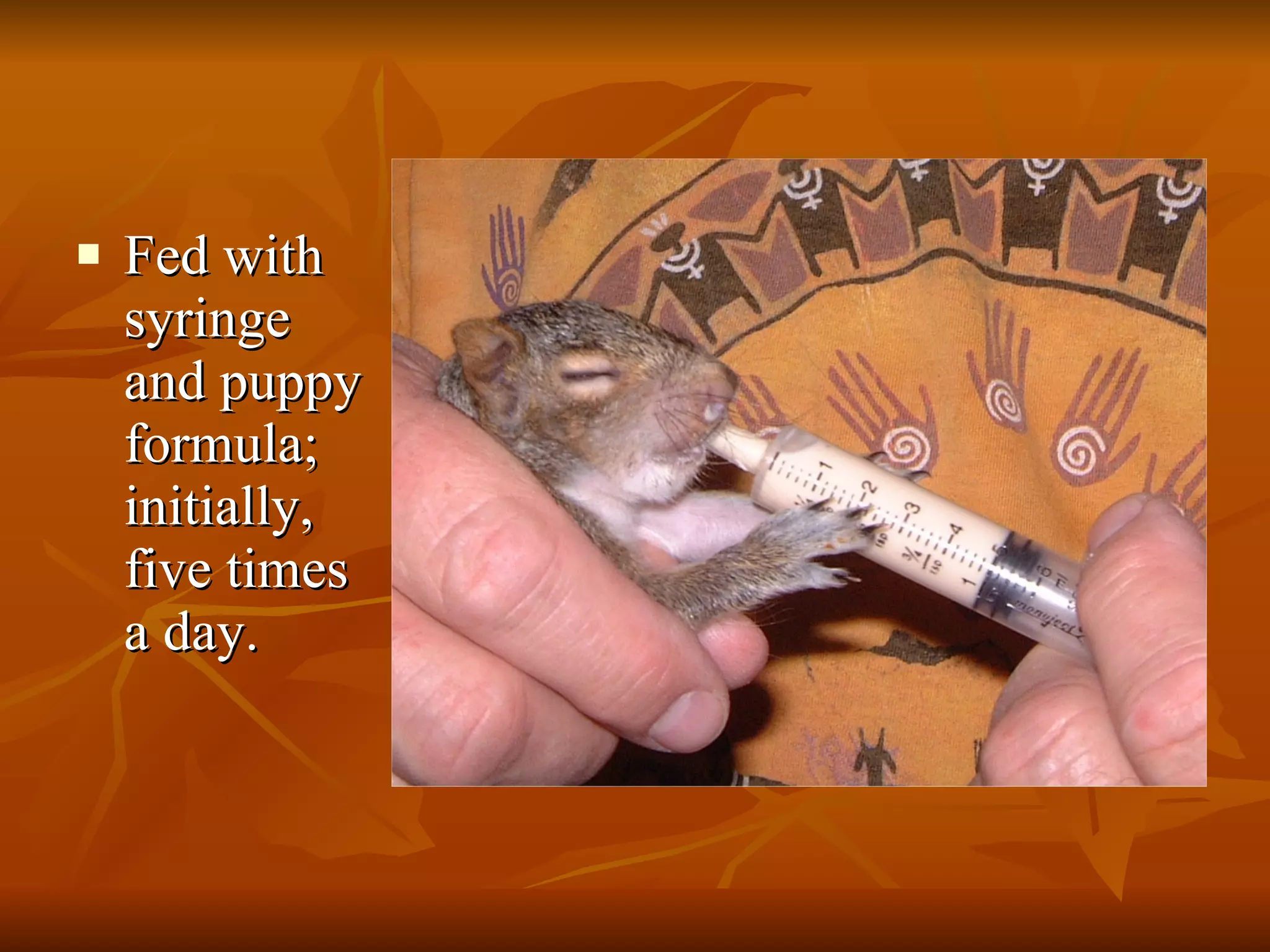
The document describes how classical conditioning can be applied to a baby squirrel, detailing the feeding and hygiene routine that led to a conditioned response. It parallels this experience with Ivan Pavlov's experiments with dogs and discusses John Watson's work on conditioned emotional responses in advertising. The document then contrasts classical conditioning with operant conditioning, outlining the principles and examples of both methodologies.
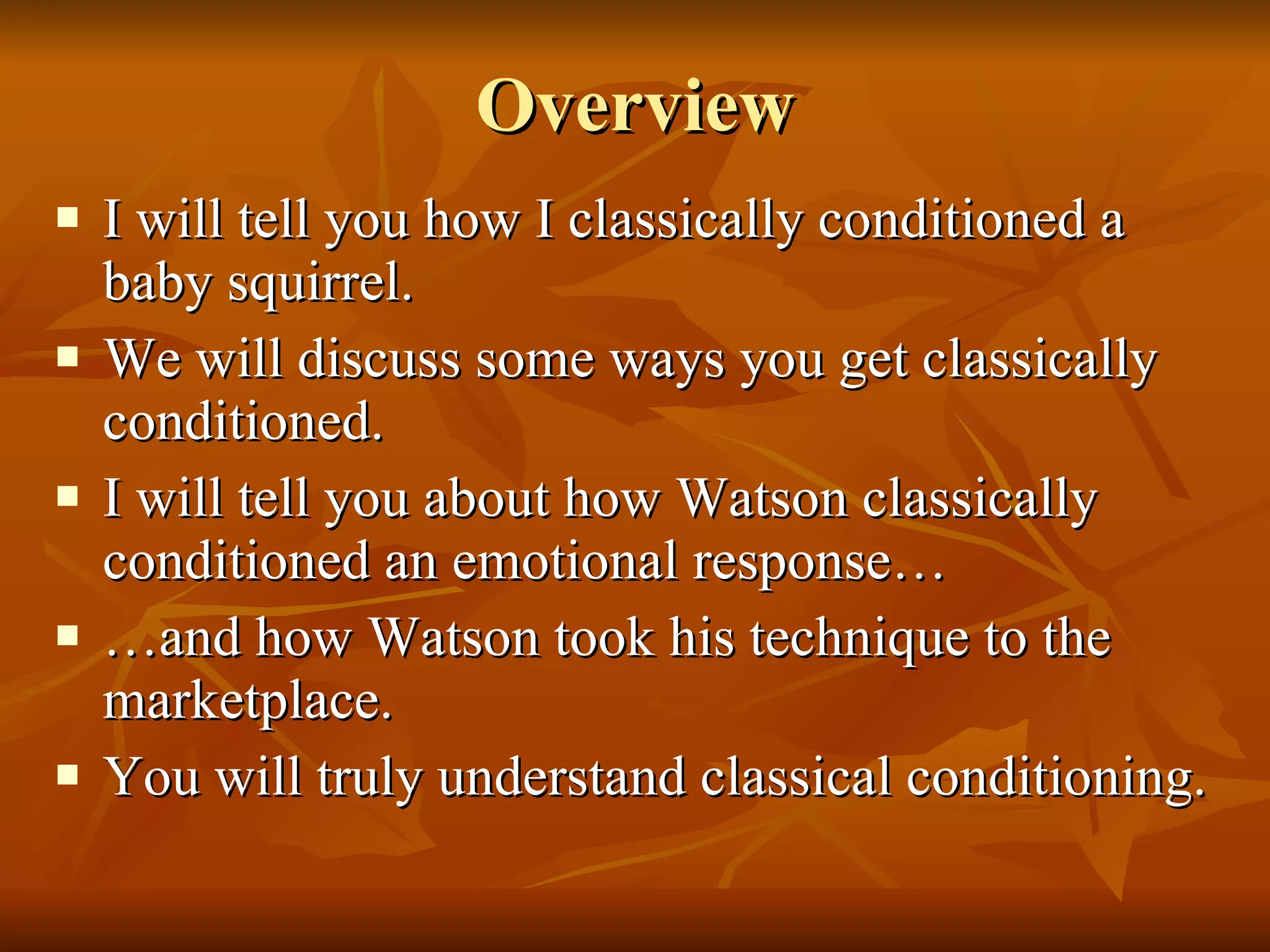
Overview I willtell you how I classically conditioned a baby squirrel. We will discuss some ways you get classically conditioned. I will tell you about how Watson classically conditioned an emotional response… …and how Watson took his technique to the marketplace. You will truly understand classical conditioning.
3.
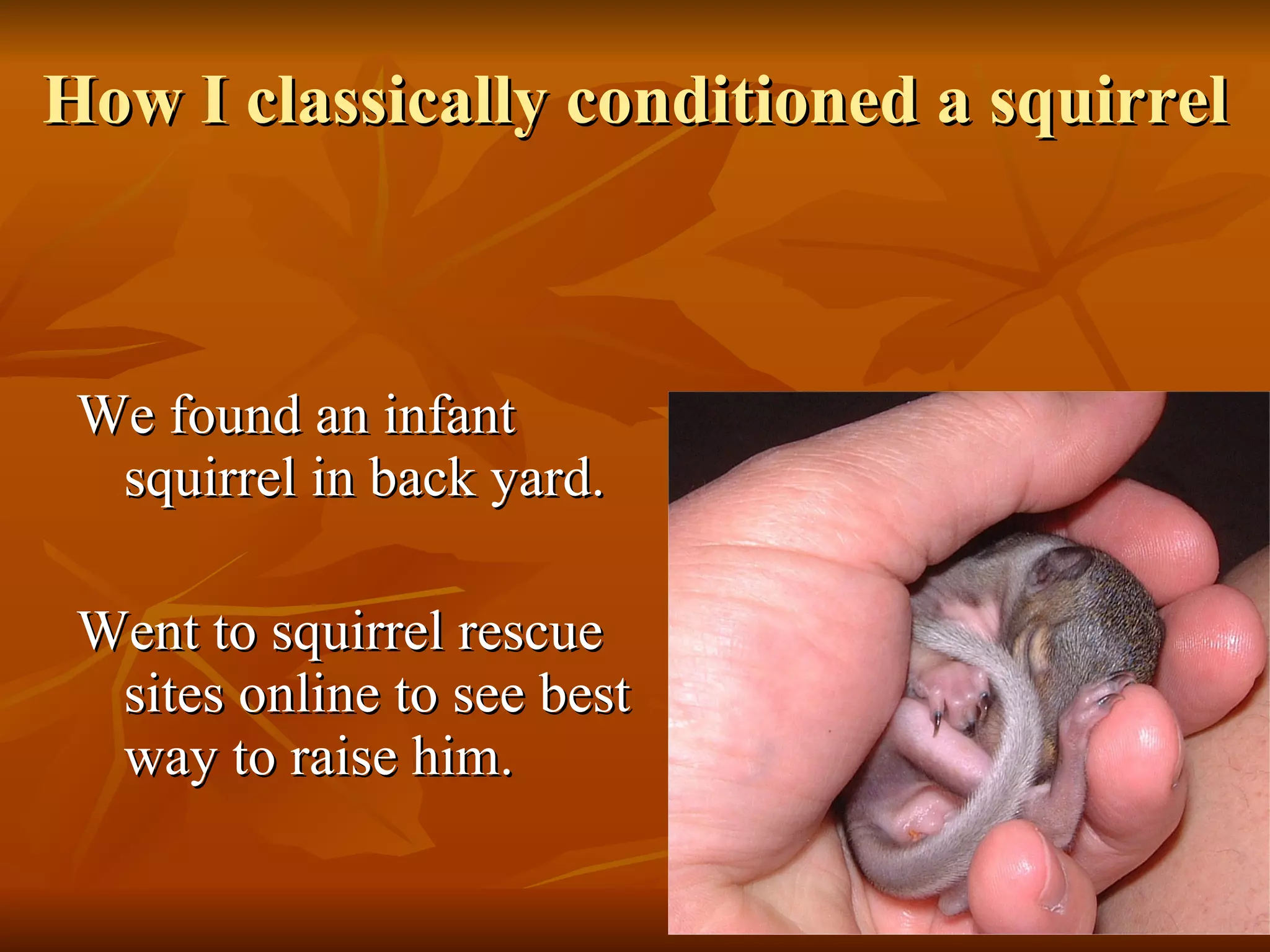
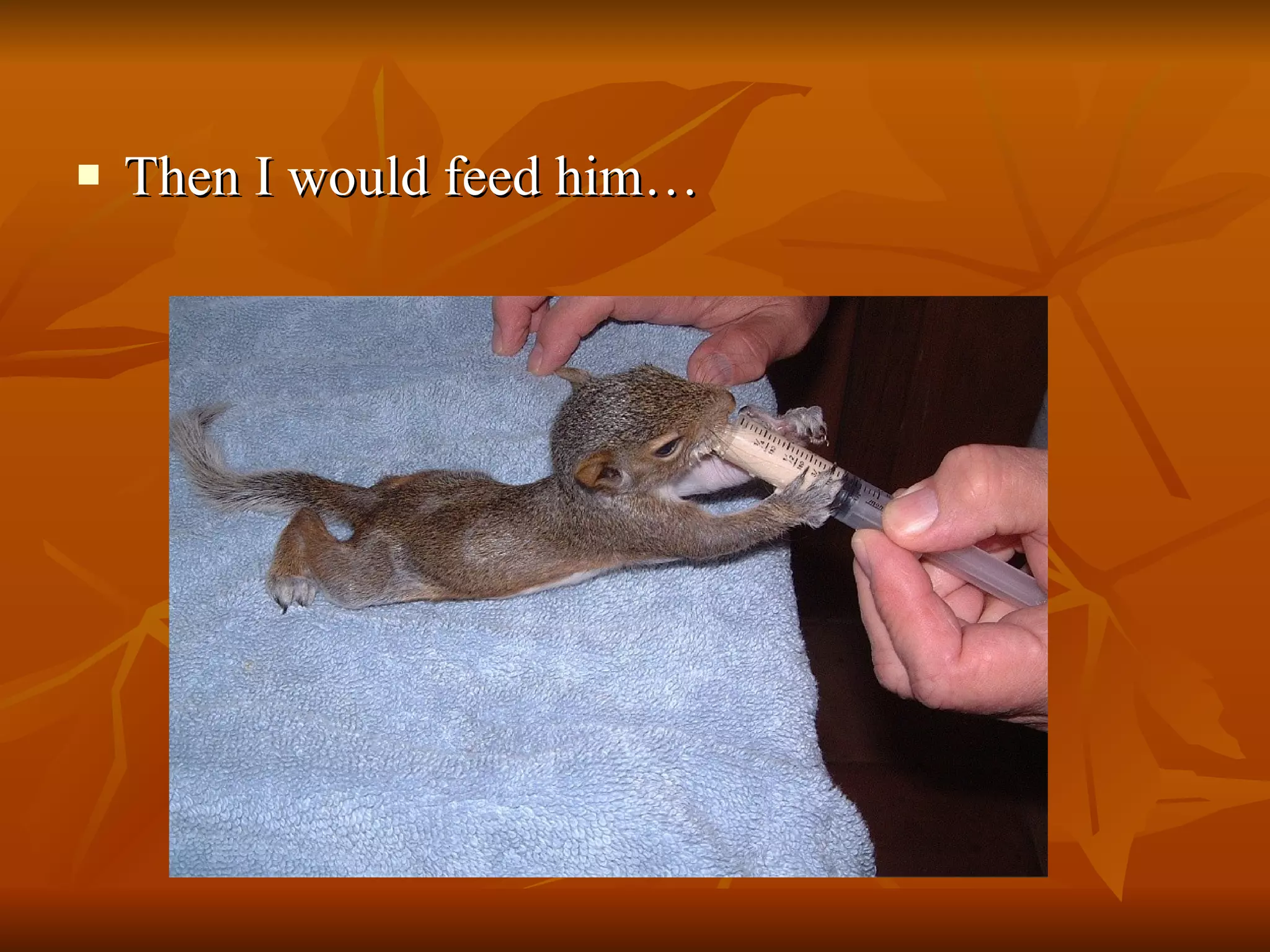
How I classicallyconditioned a squirrel We found an infant squirrel in back yard. Went to squirrel rescue sites online to see best way to raise him.
The setup… Allmammals have a reflex called the gastro-colic reflex. When they eat, they have a reflexive urge to excrete.
6.
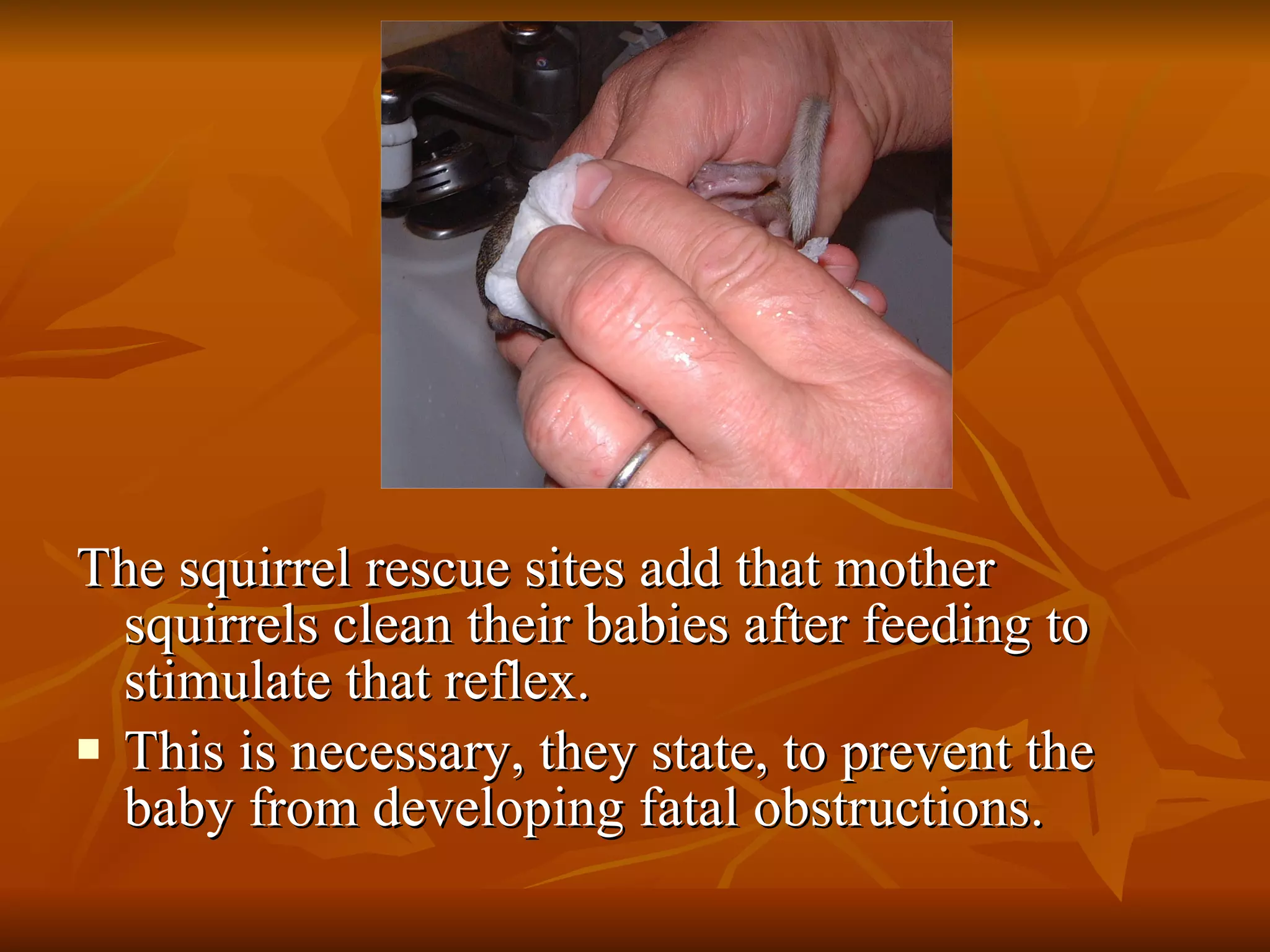
The squirrel rescuesites add that mother squirrels clean their babies after feeding to stimulate that reflex. This is necessary, they state, to prevent the baby from developing fatal obstructions.
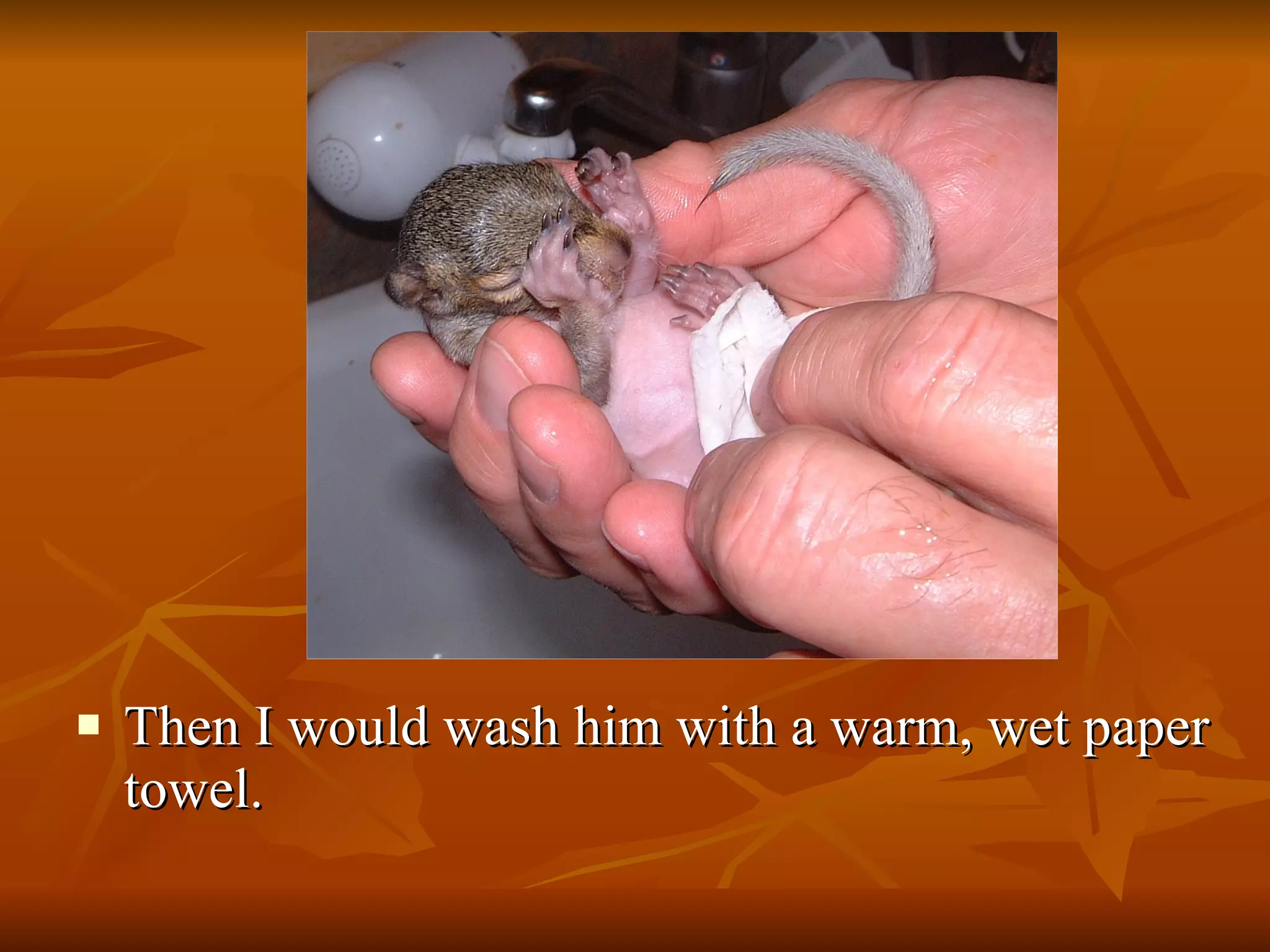
Then I wouldwash him with a warm, wet paper towel.
10.
As he grew,the feeding schedule lightened up. Soon I was feeding him three times a day, though he was eating more. I crushed up Cheerios and mixed into the formula… … and began putting cracked nuts and whole Cheerios in his cage.
11.
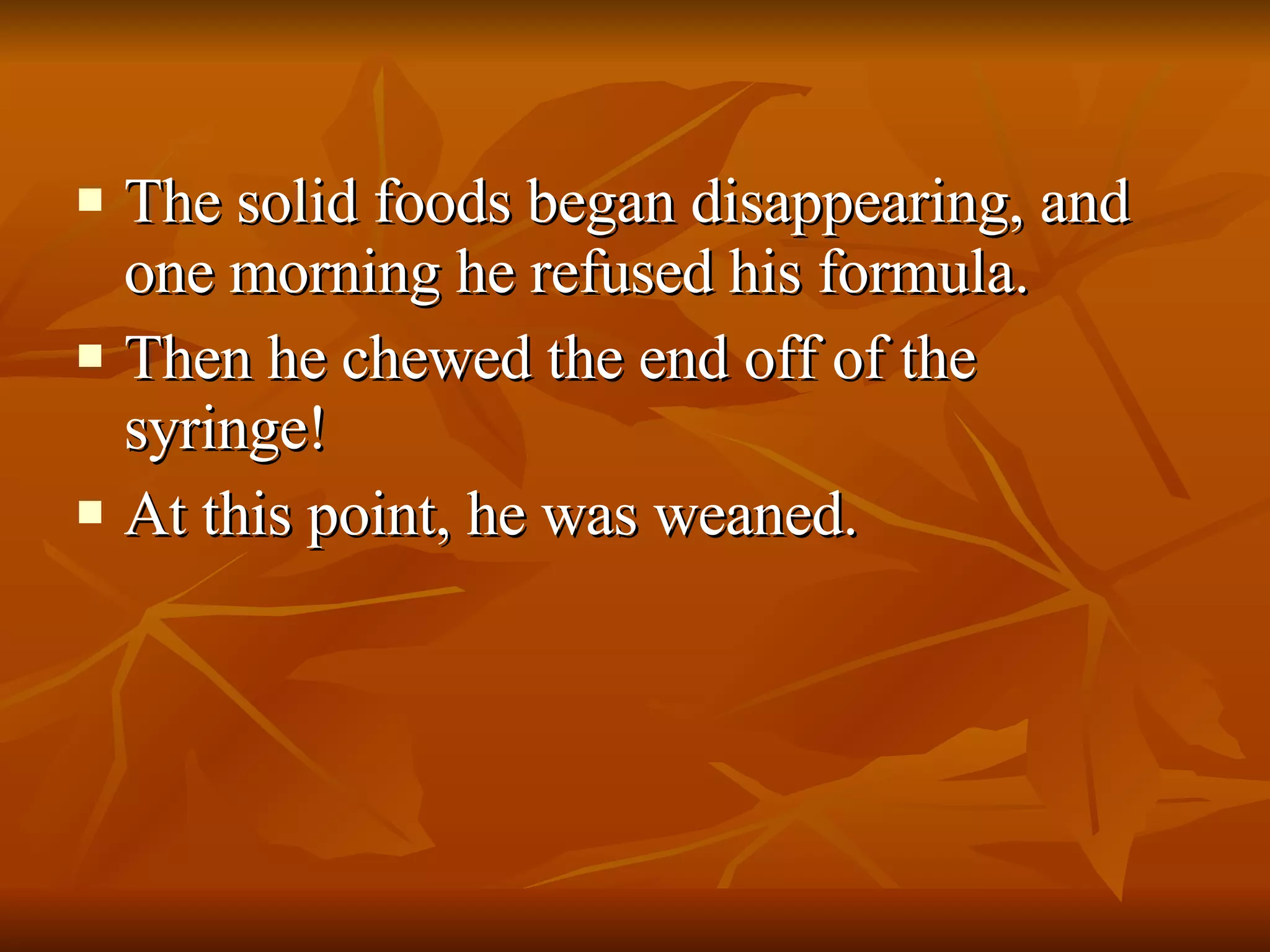
The solid foodsbegan disappearing, and one morning he refused his formula. Then he chewed the end off of the syringe! At this point, he was weaned.
12.
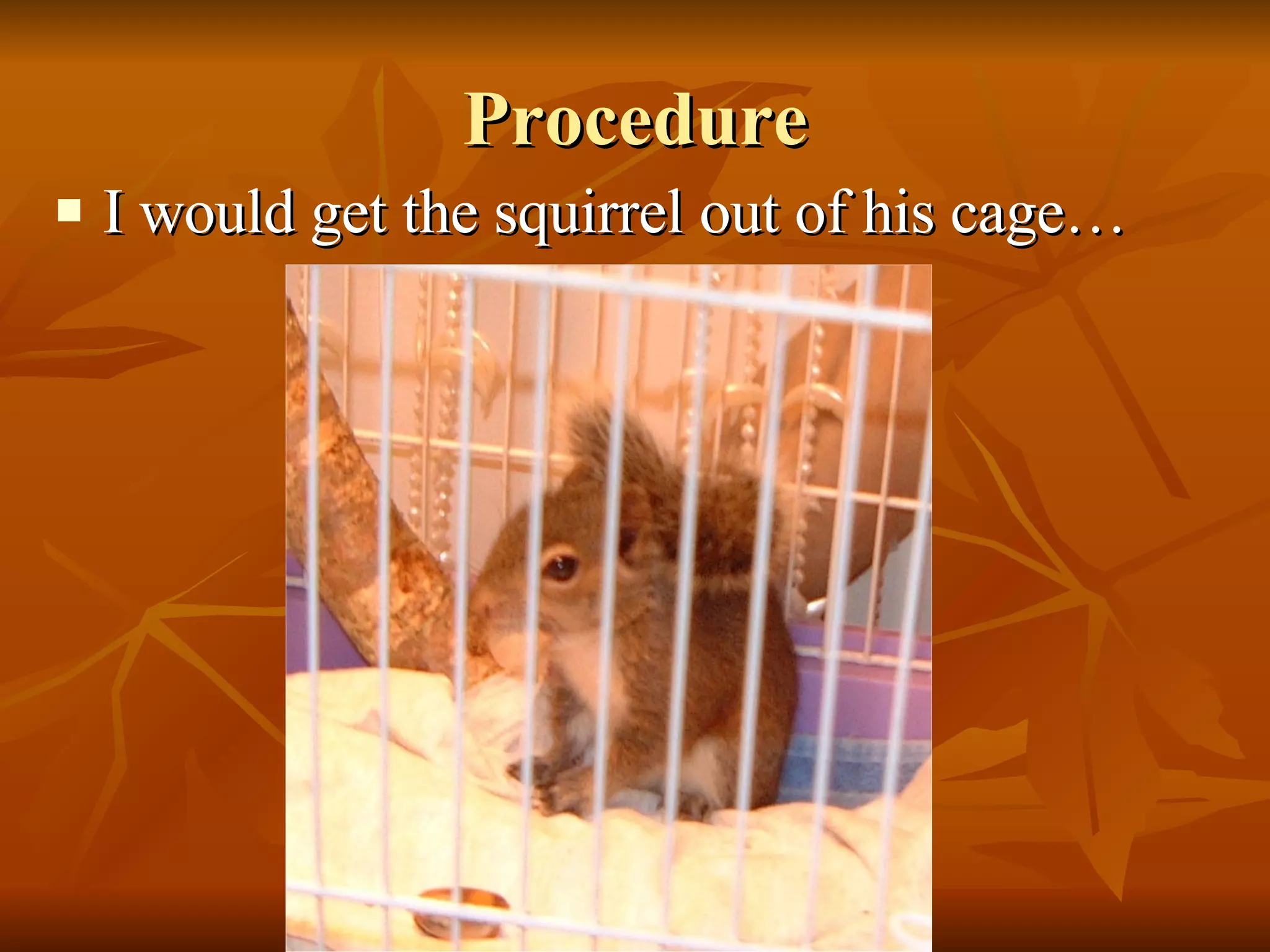
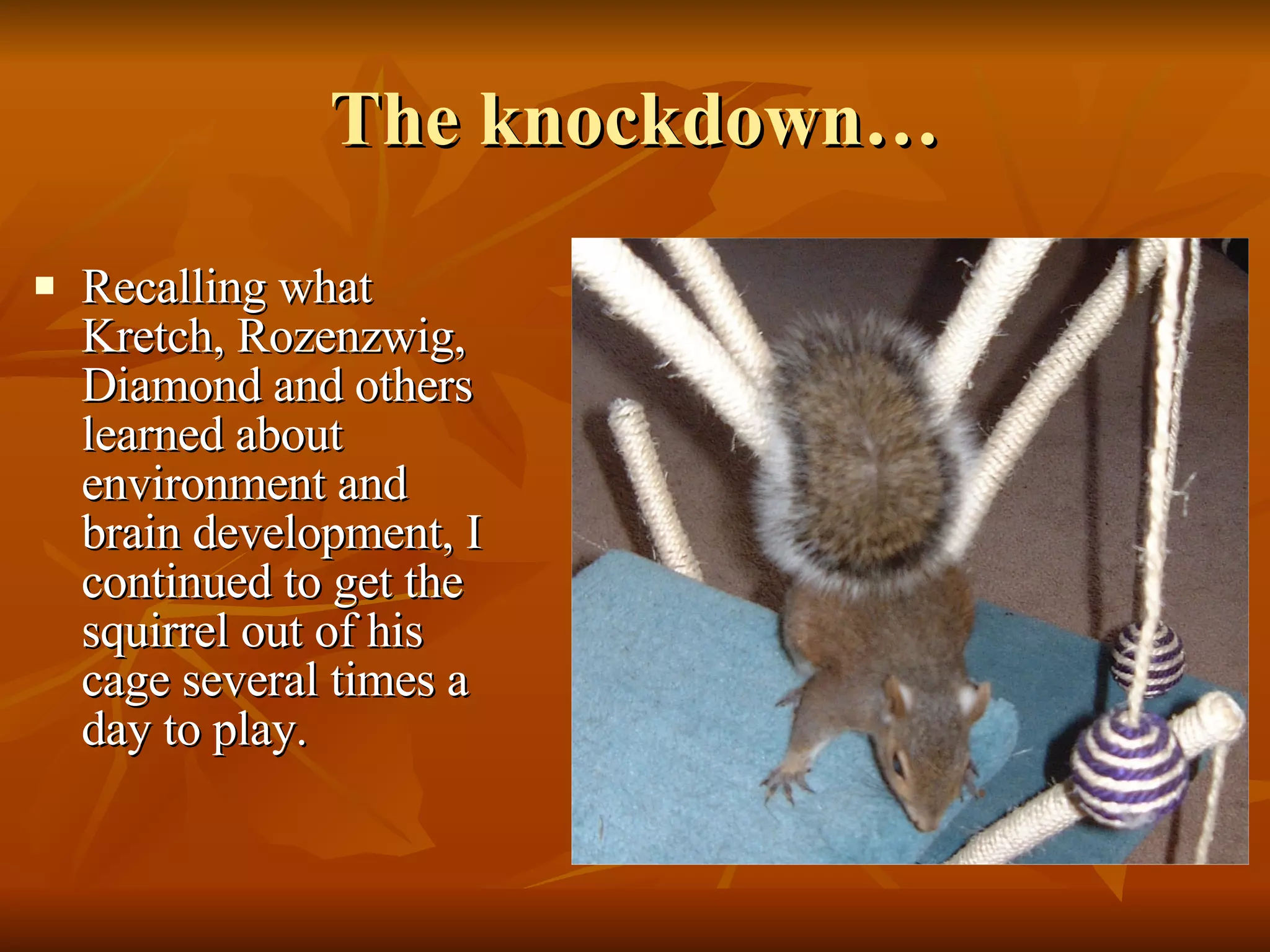
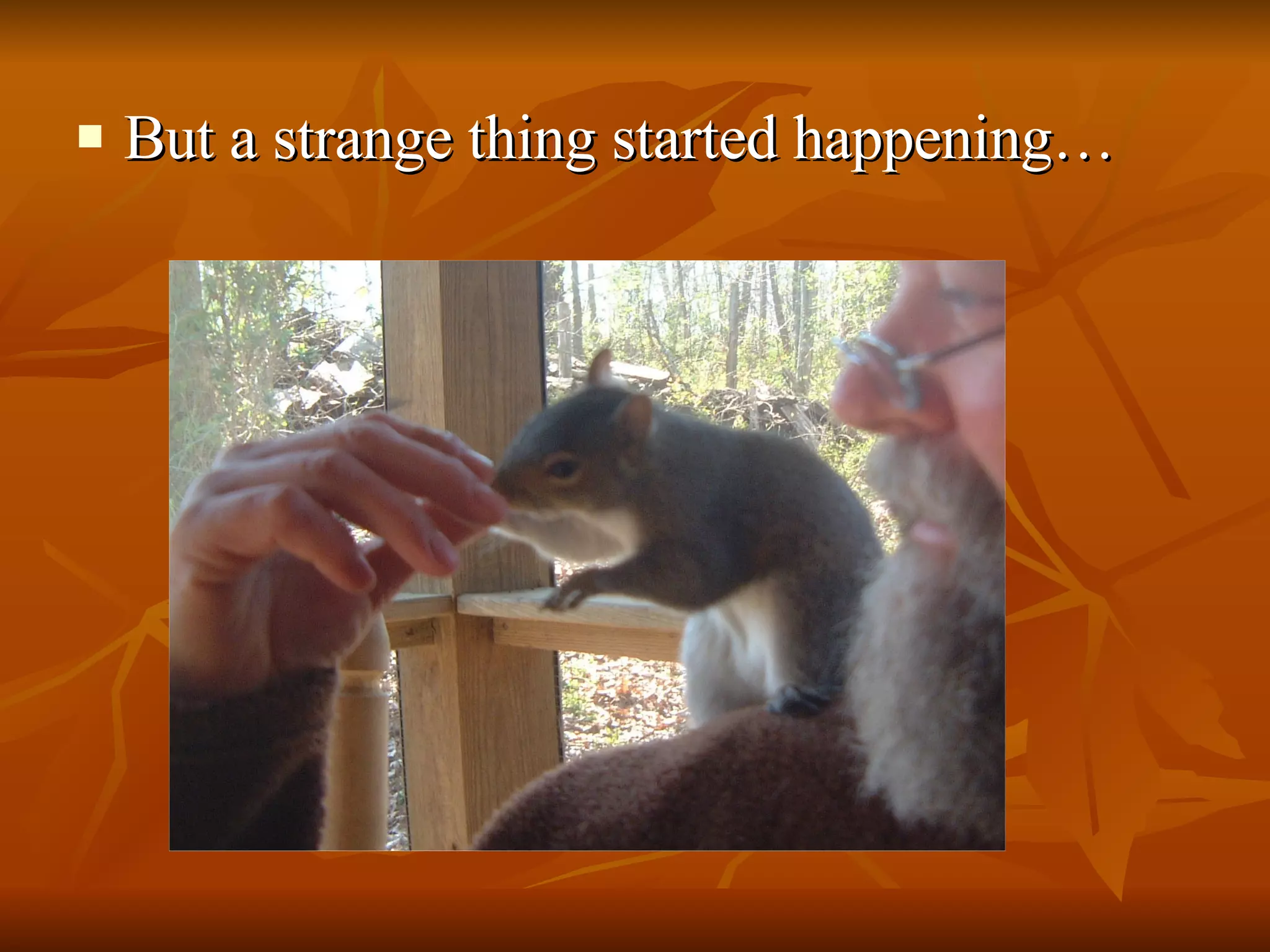
The knockdown… Recallingwhat Kretch, Rozenzwig, Diamond and others learned about environment and brain development, I continued to get the squirrel out of his cage several times a day to play.
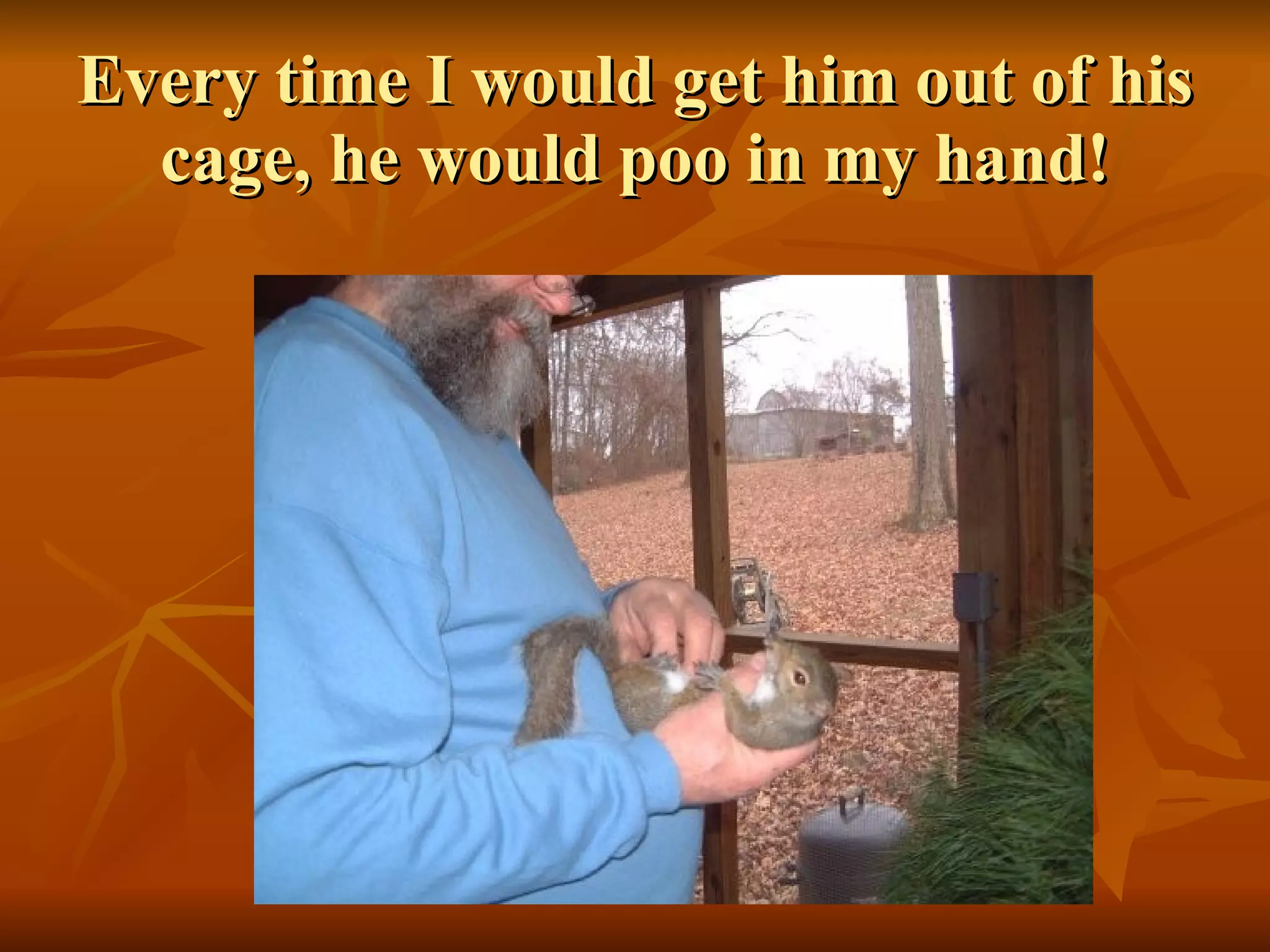
Every time Iwould get him out of his cage, he would poo in my hand!
15.
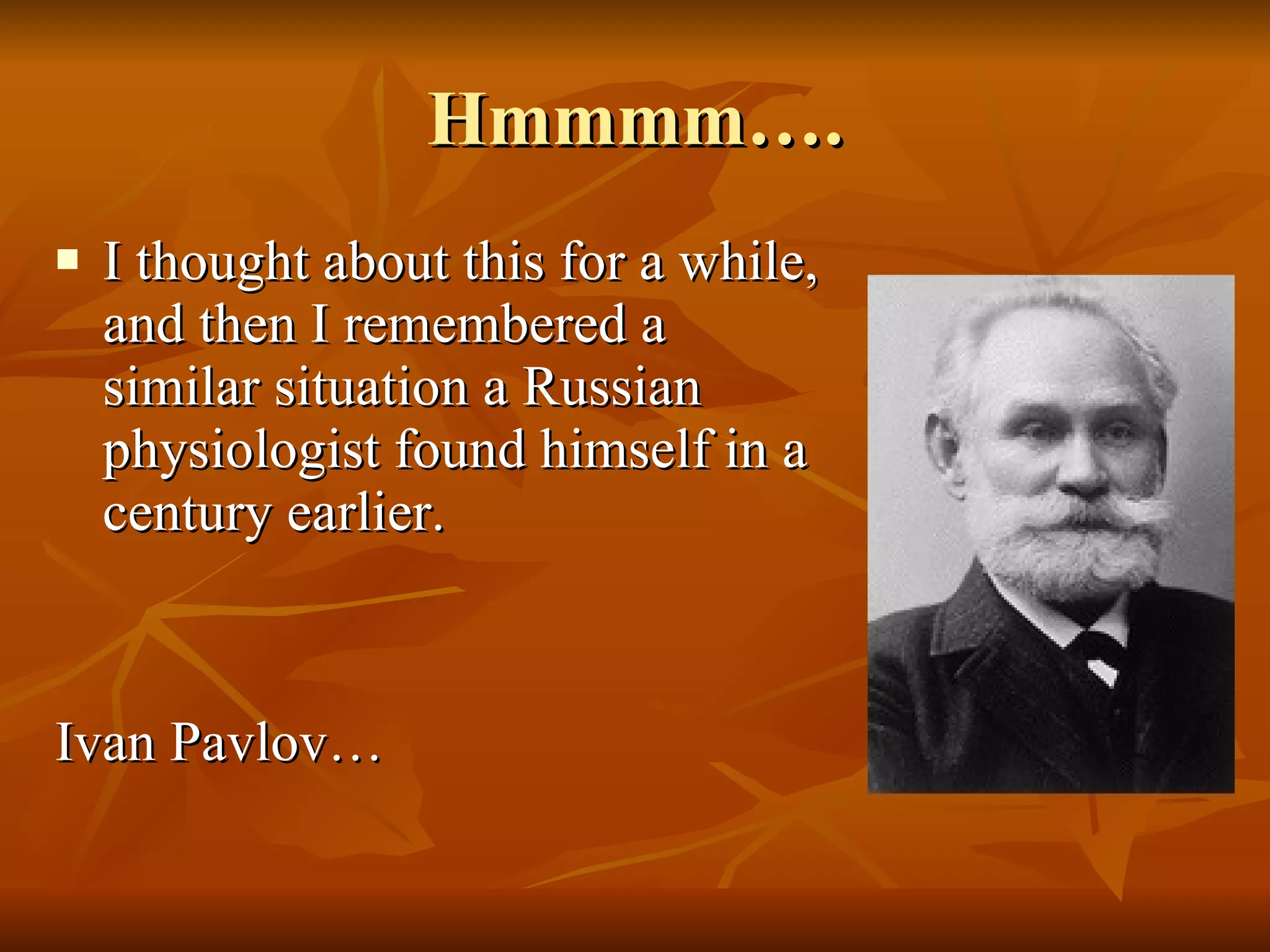
Hmmmm…. I thoughtabout this for a while, and then I remembered a similar situation a Russian physiologist found himself in a century earlier. Ivan Pavlov…
16.
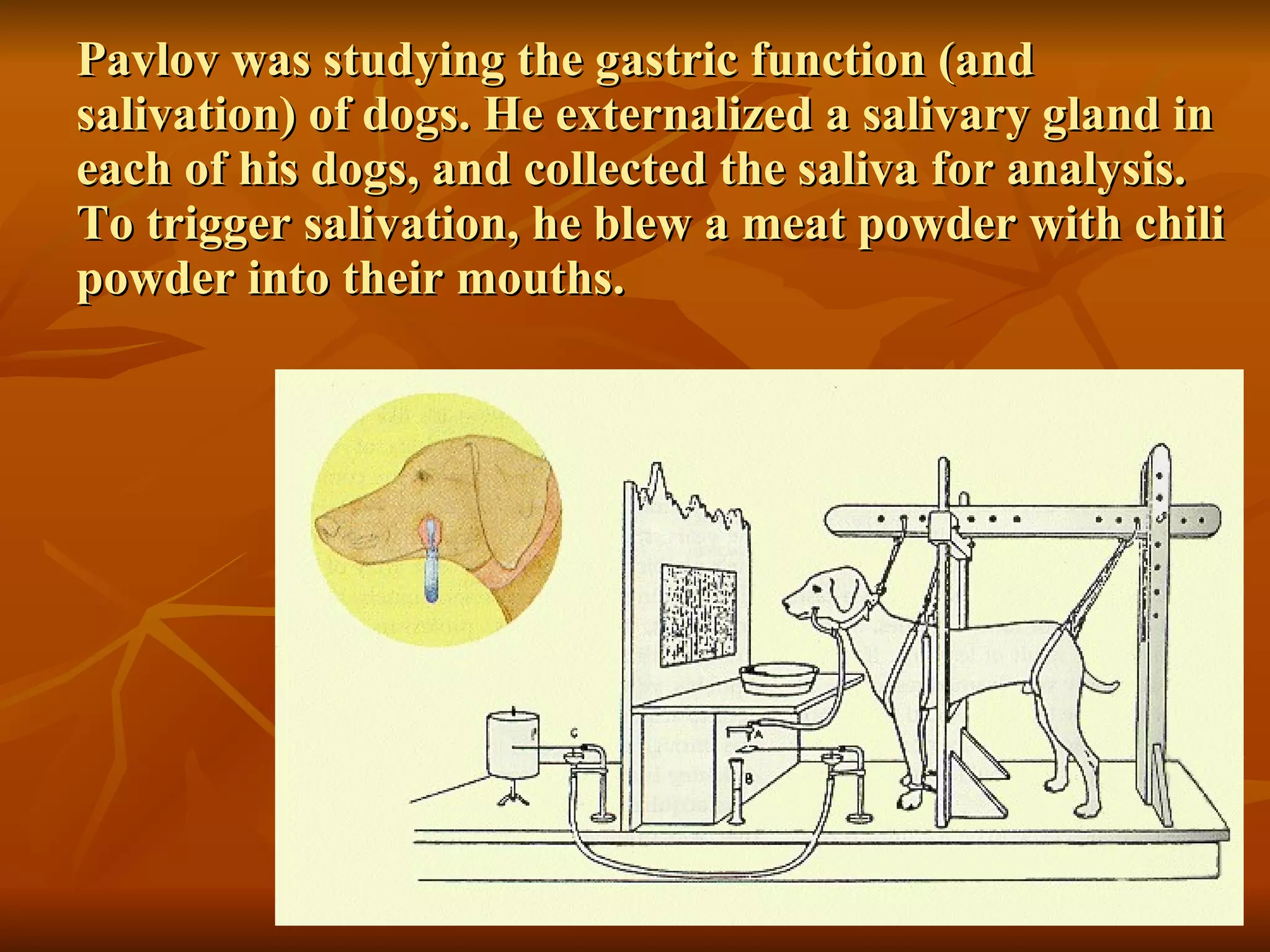
Pavlov was studyingthe gastric function (and salivation) of dogs. He externalized a salivary gland in each of his dogs, and collected the saliva for analysis. To trigger salivation, he blew a meat powder with chili powder into their mouths.
17.
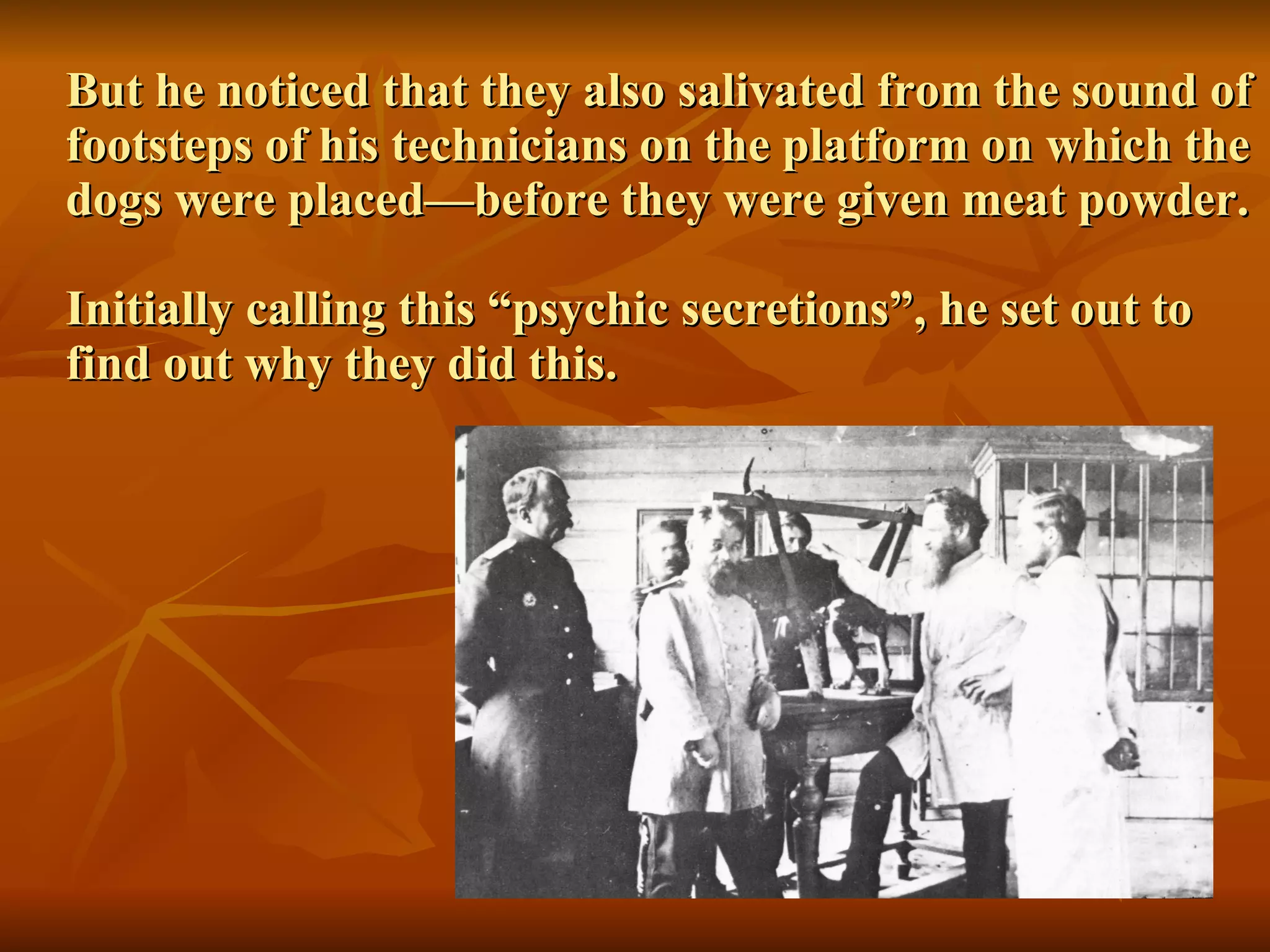
But he noticedthat they also salivated from the sound of footsteps of his technicians on the platform on which the dogs were placed—before they were given meat powder. Initially calling this “psychic secretions”, he set out to find out why they did this.
18.
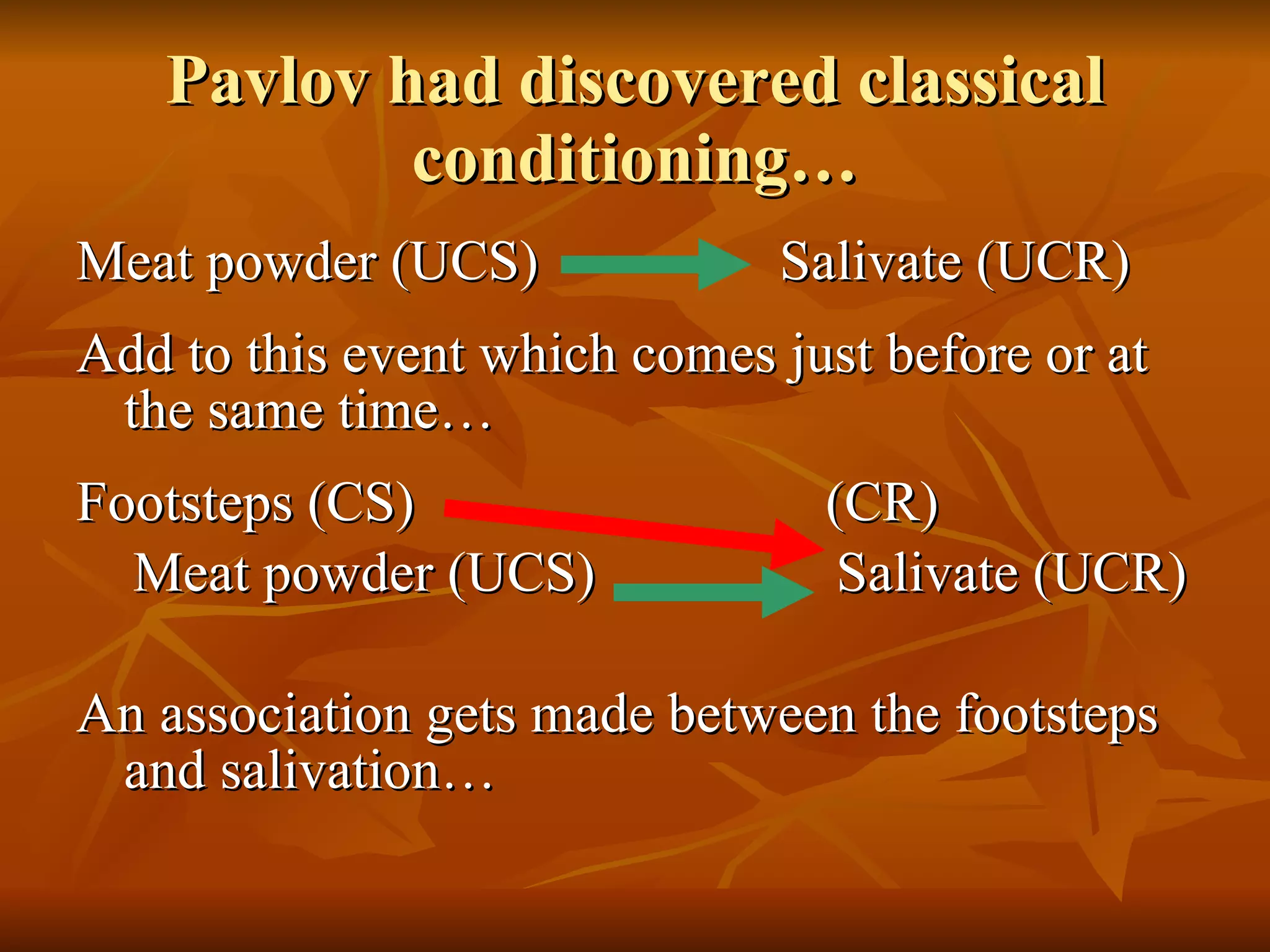
Pavlov had discoveredclassical conditioning… Meat powder (UCS) Salivate (UCR) Add to this event which comes just before or at the same time… Footsteps (CS) (CR) Meat powder (UCS) Salivate (UCR) An association gets made between the footsteps and salivation…
19.
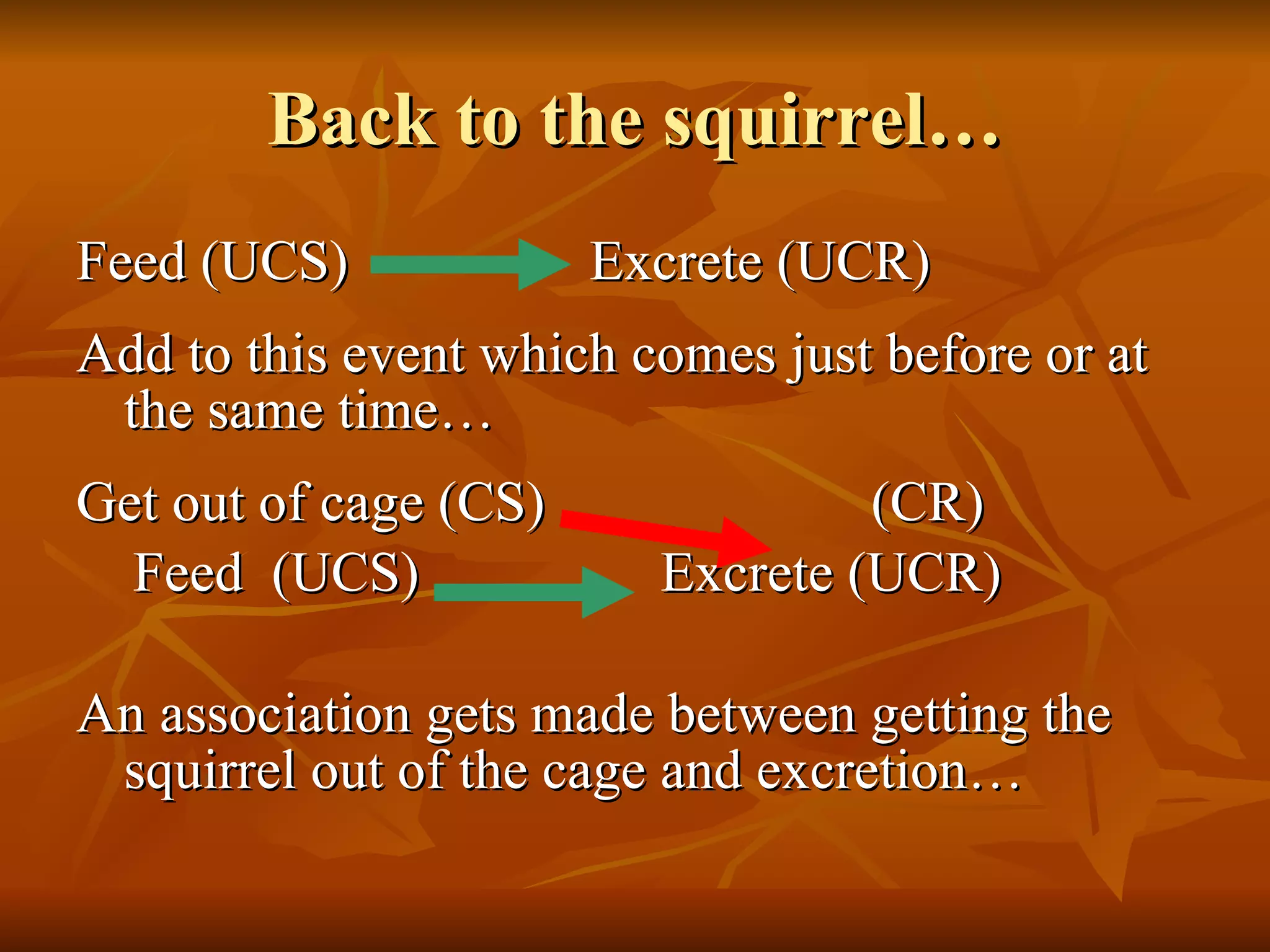
Back to thesquirrel… Feed (UCS) Excrete (UCR) Add to this event which comes just before or at the same time… Get out of cage (CS) (CR) Feed (UCS) Excrete (UCR) An association gets made between getting the squirrel out of the cage and excretion…
20.
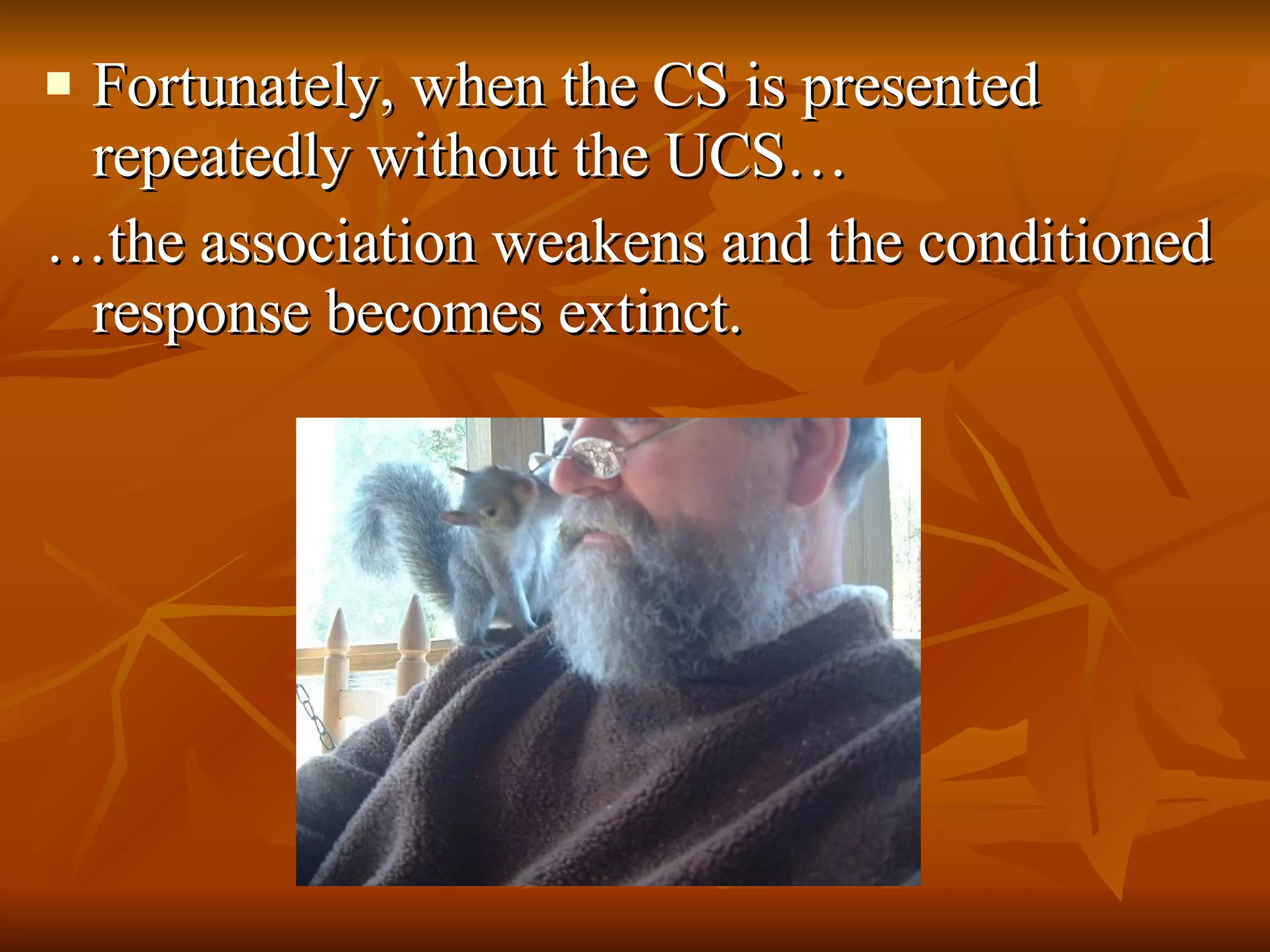
Fortunately, when theCS is presented repeatedly without the UCS… … the association weakens and the conditioned response becomes extinct.
21.
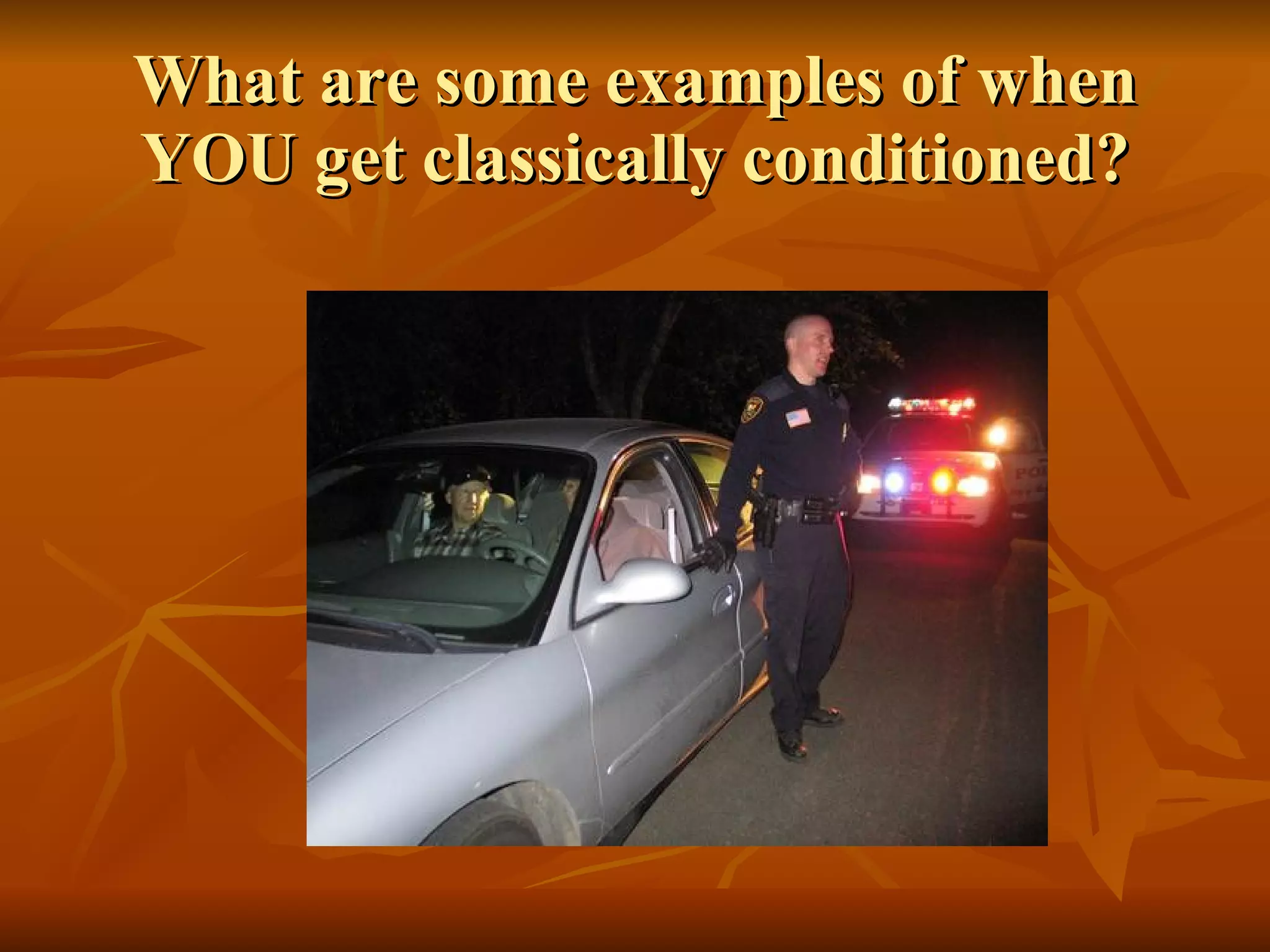
What are someexamples of when YOU get classically conditioned?
22.
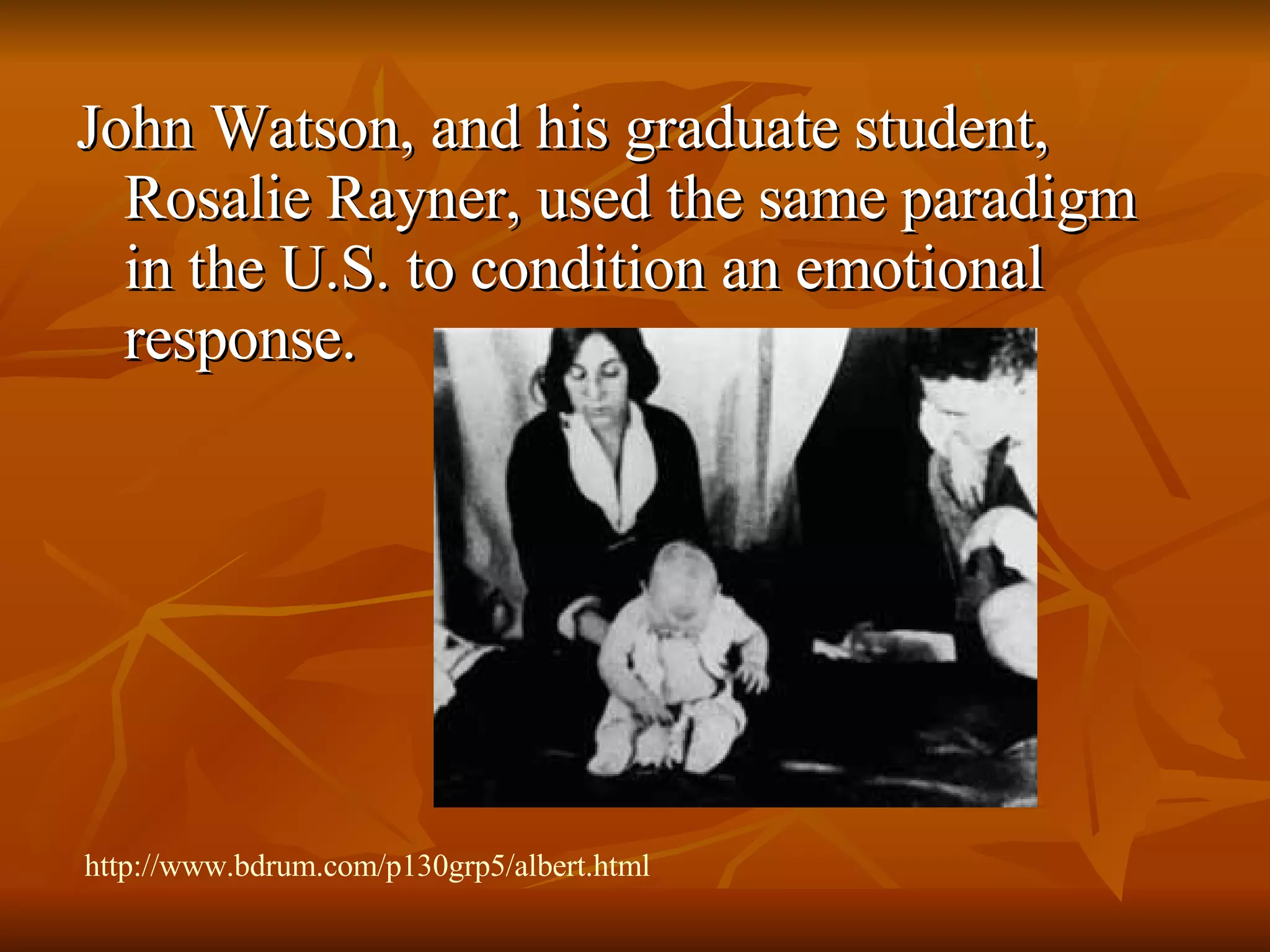
John Watson, andhis graduate student, Rosalie Rayner, used the same paradigm in the U.S. to condition an emotional response. http://www.bdrum.com/p130grp5/albert.html
23.
Unfortunately, Watson wassmitten by his lovely assistant… When his, errrr, indiscretion was discovered, his academic career was over. So he divorced his wife, married his assistant, and went into advertising!
24.
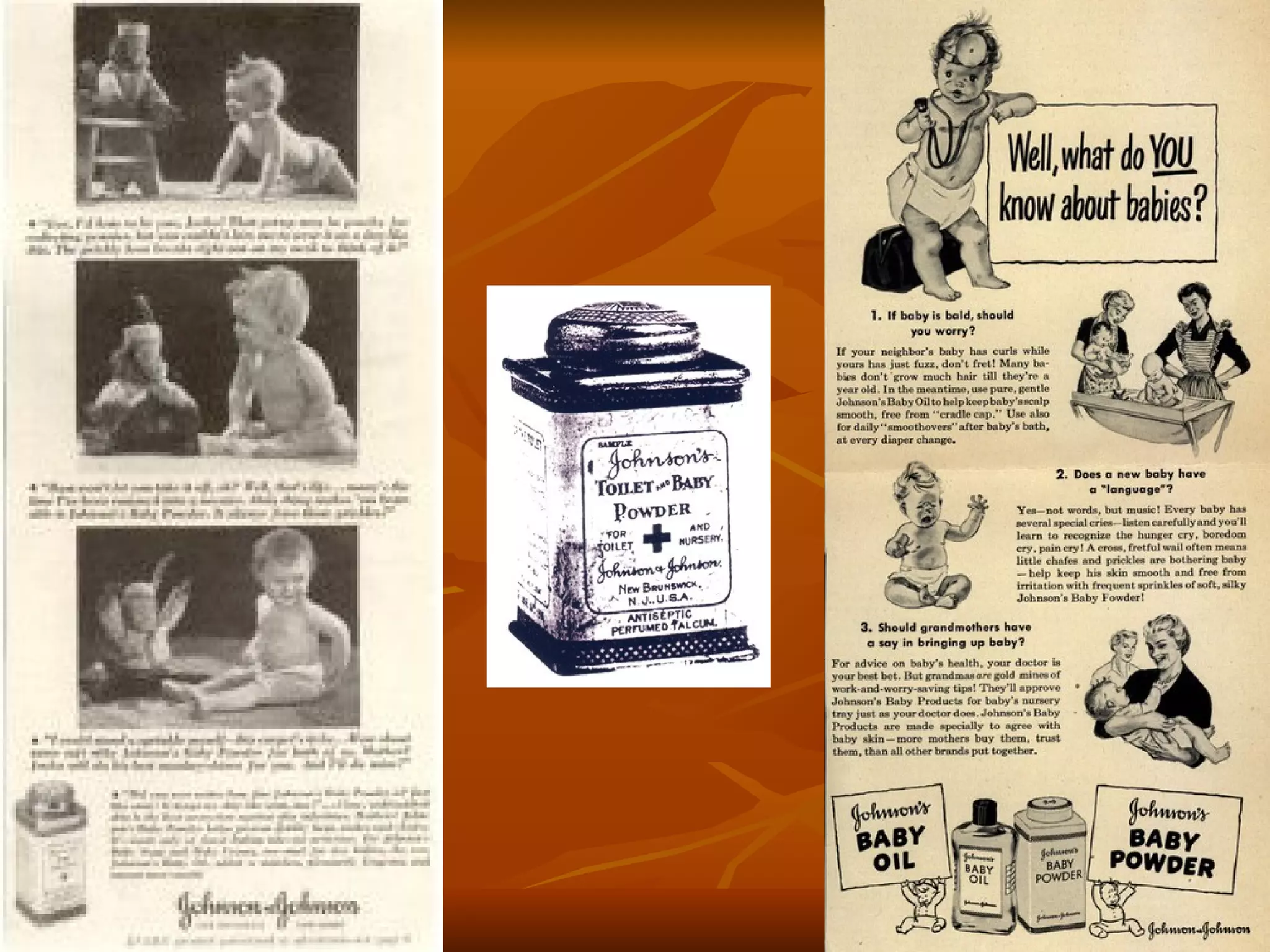
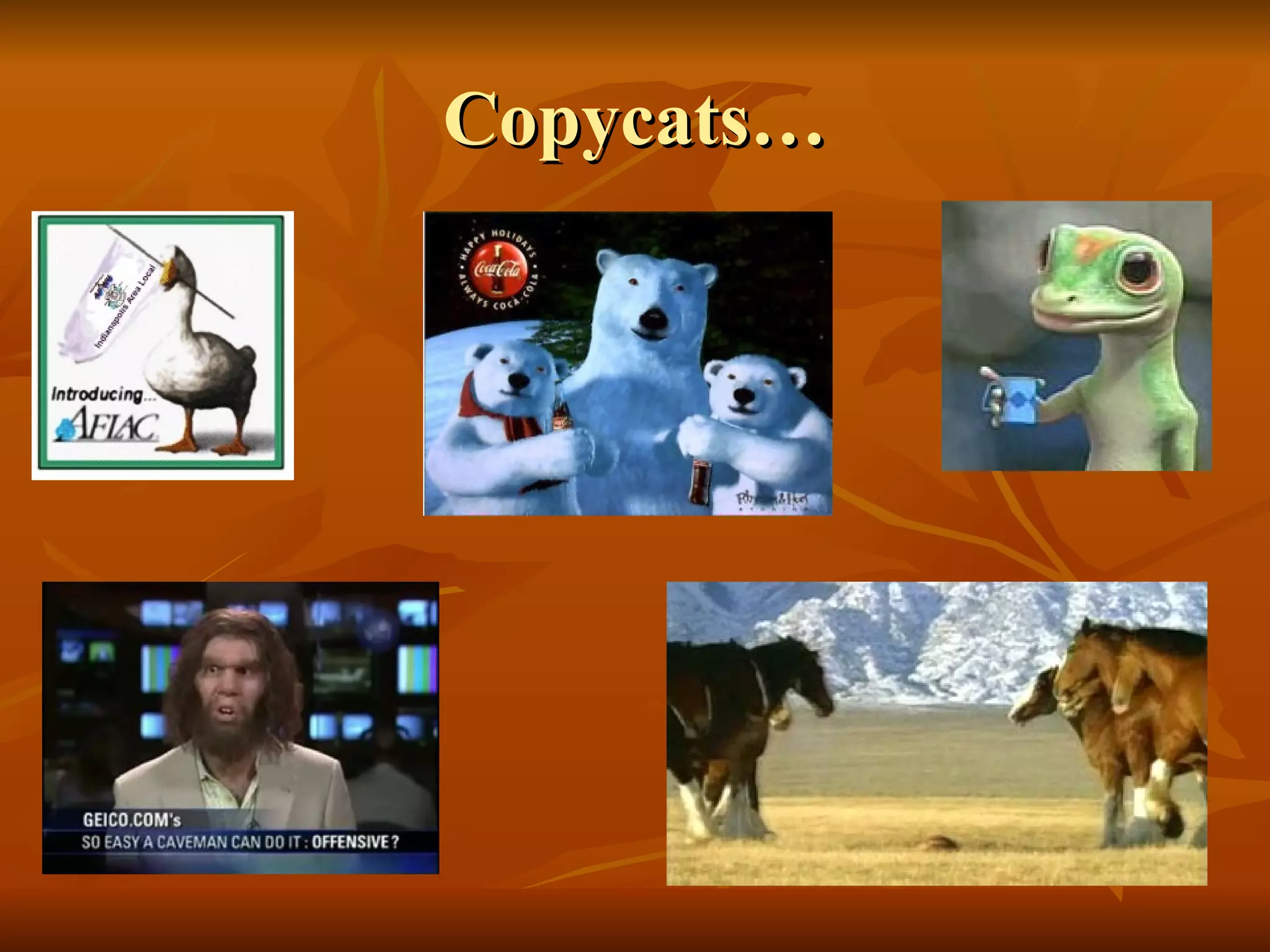
Watson’s genius… Watsoncreated an advertising campaign that has been used down to the present day The paradigm that he used – conditioned emotional response – is now more widely used than ever.
25.
26.
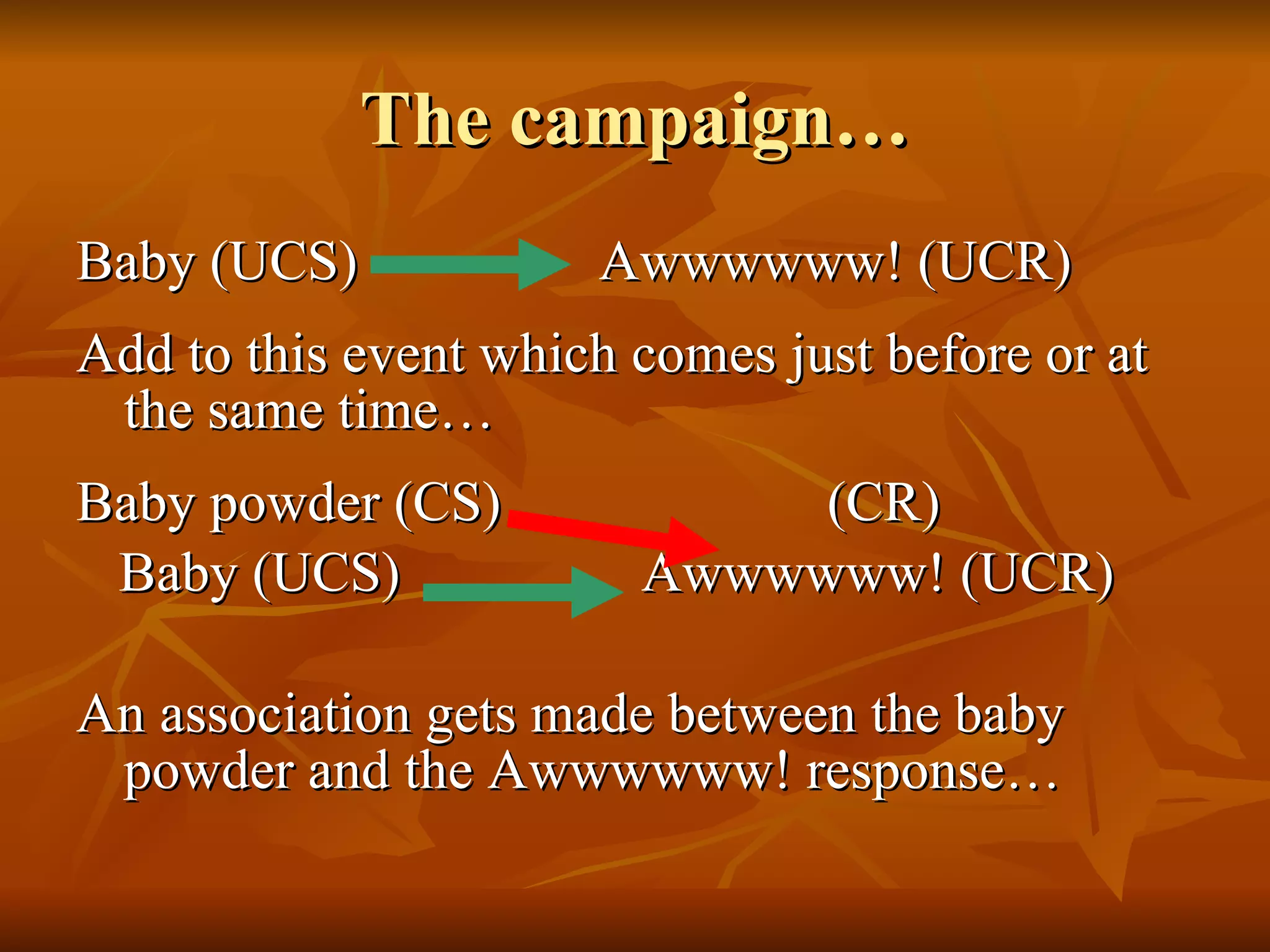
The campaign… Baby(UCS) Awwwwww! (UCR) Add to this event which comes just before or at the same time… Baby powder (CS) (CR) Baby (UCS) Awwwwww! (UCR) An association gets made between the baby powder and the Awwwwww! response…
Why is thissuch a powerful approach? When cognitive sales approaches are used, the attempt to influence us is overt, and we are likely to counter-argue. For products with low differentiation, like beer and insurance, cognitive persuasion is not likely to be effective, anyway, in part because of brand loyalty – another concept that Watson pioneered. With conditioned emotional responses, the persuasion is covert – we are not aware that we are being influenced.
29.
Operant Conditioning Whereasclassical conditioning is a passive paradigm, operant conditioning is an active paradigm. We “operate” in order to receive some reward or avoid some punishment. With classical conditioning, the response comes after the stimulus. With operant conditioning, the response comes first.
30.
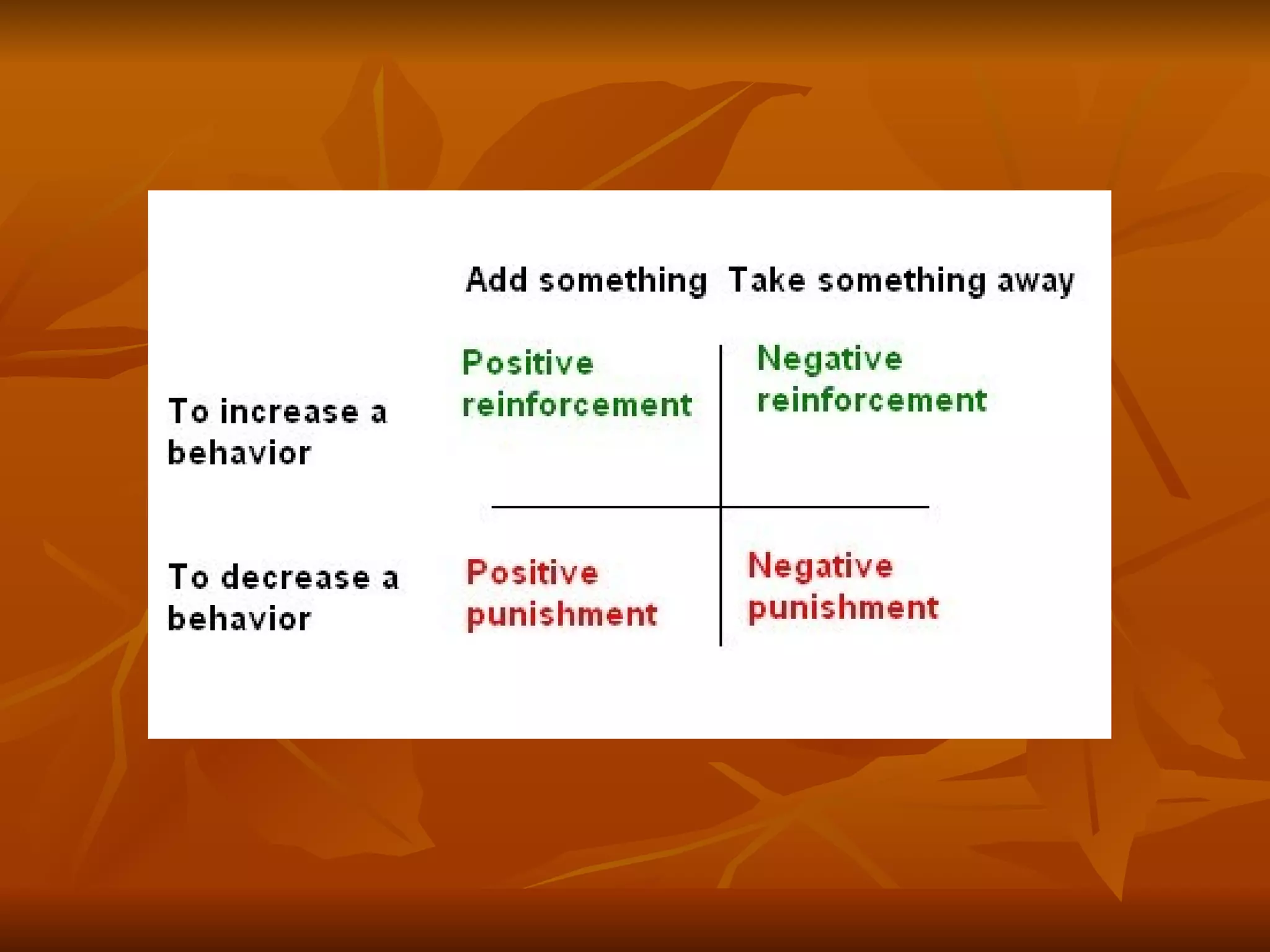
Operant Conditioning Withoperant conditioning, we may use behavioral contingencies with the goal of increasing a behavior. We “reinforce” the behavior. We also may use behavioral contingencies with the goal of decreasing a behavior. In this case, we “punish” the behavior.
31.
Operant Conditioning Withoperant conditioning, too, there are contingencies that we can add, and there are contingencies that we can take away. Think math. The + of addition also is evaluated as “positive”, and the – of subtraction also is evaluated as “negative”. Both of these options are available for either reinforcement or punishment. Be careful about the connotation of negative, however. Adding something that someone does not like is still positive, even though they will evaluate it as negative.
32.
33.
Give me examples,please. Positive reinforcement Negative reinforcement Positive punishment Negative punishment