Downloaded 144 times

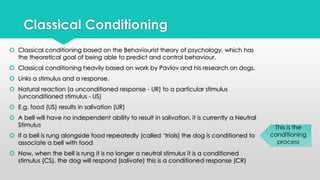
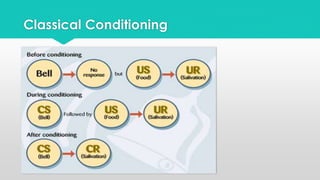
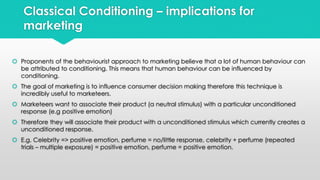
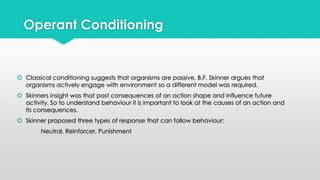
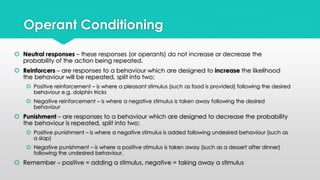
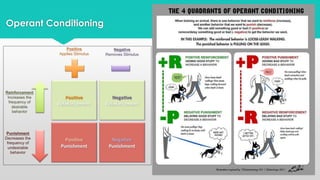
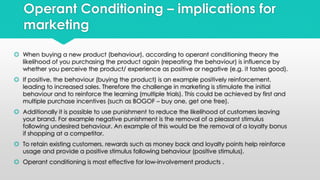

This document discusses classical and operant conditioning and their implications for marketing. Classical conditioning links a neutral stimulus to an unconditioned stimulus to elicit a response through repeated pairing, like Pavlov's dogs learning to salivate to a bell. Operant conditioning proposes that behaviors are shaped by their consequences, with reinforcers increasing a behavior and punishments decreasing it. Marketers aim to associate products with positive emotions through classical conditioning and influence purchasing behaviors as operant conditioning by providing incentives and rewards to customers.


