Knowles’ Principles of Andragogy
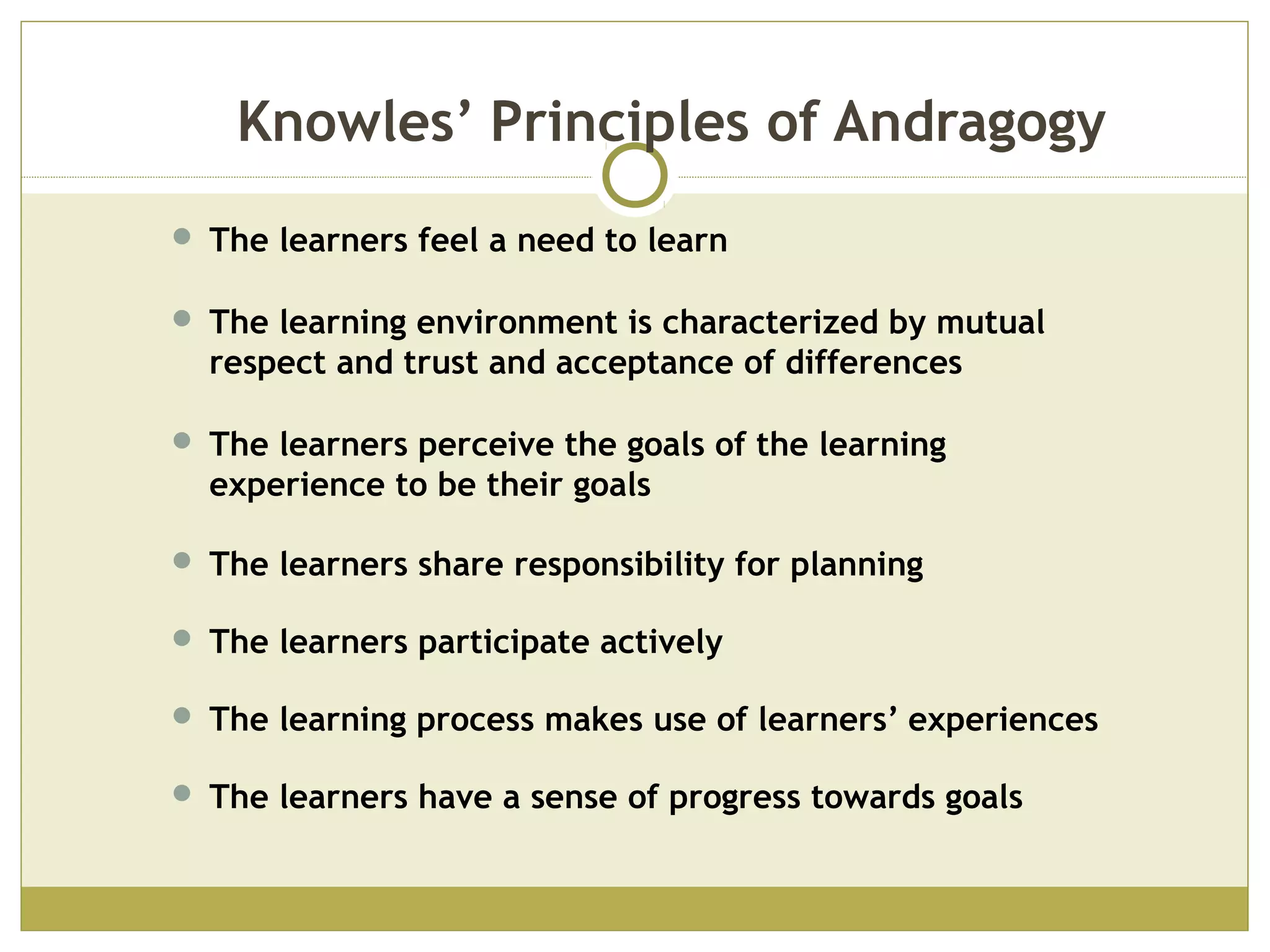
 The learners feel a need to learn
 The learning environment is characterized by mutual
respect and trust and acceptance of differences
 The learners perceive the goals of the learning
experience to be their goals
 The learners share responsibility for planning
 The learners participate actively
 The learning process makes use of learners’ experiences
 The learners have a sense of progress towards goals
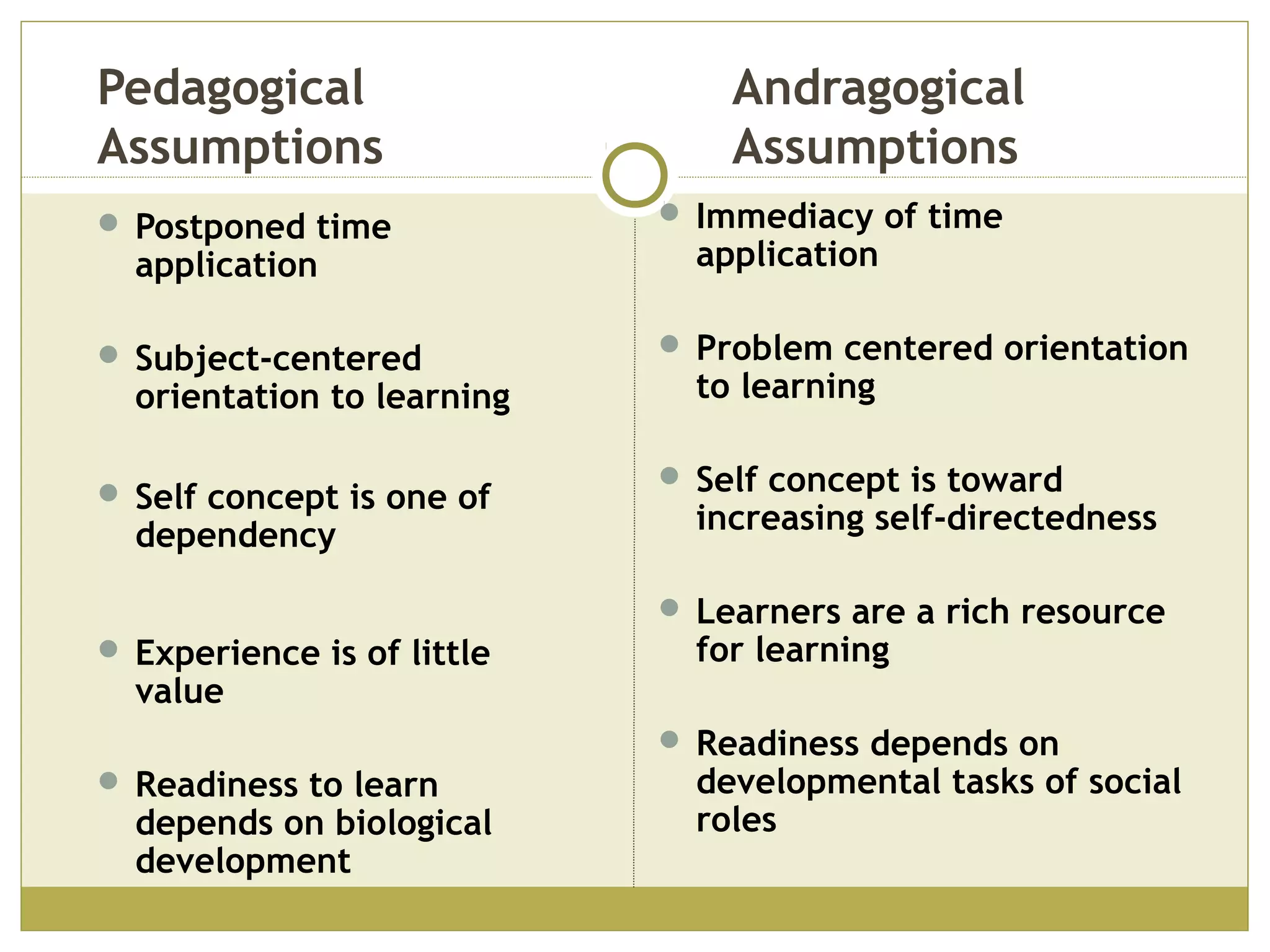
Pedagogical Andragogical
Assumptions Assumptions
 Postponed time
application
 Subject-centered
orientation to learning
 Self concept is one of
dependency
 Experience is of little
value
 Readiness to learn
depends on biological
development
 Immediacy of time
application
 Problem centered orientation
to learning
 Self concept is toward
increasing self-directedness
 Learners are a rich resource
for learning
 Readiness depends on
developmental tasks of social
roles
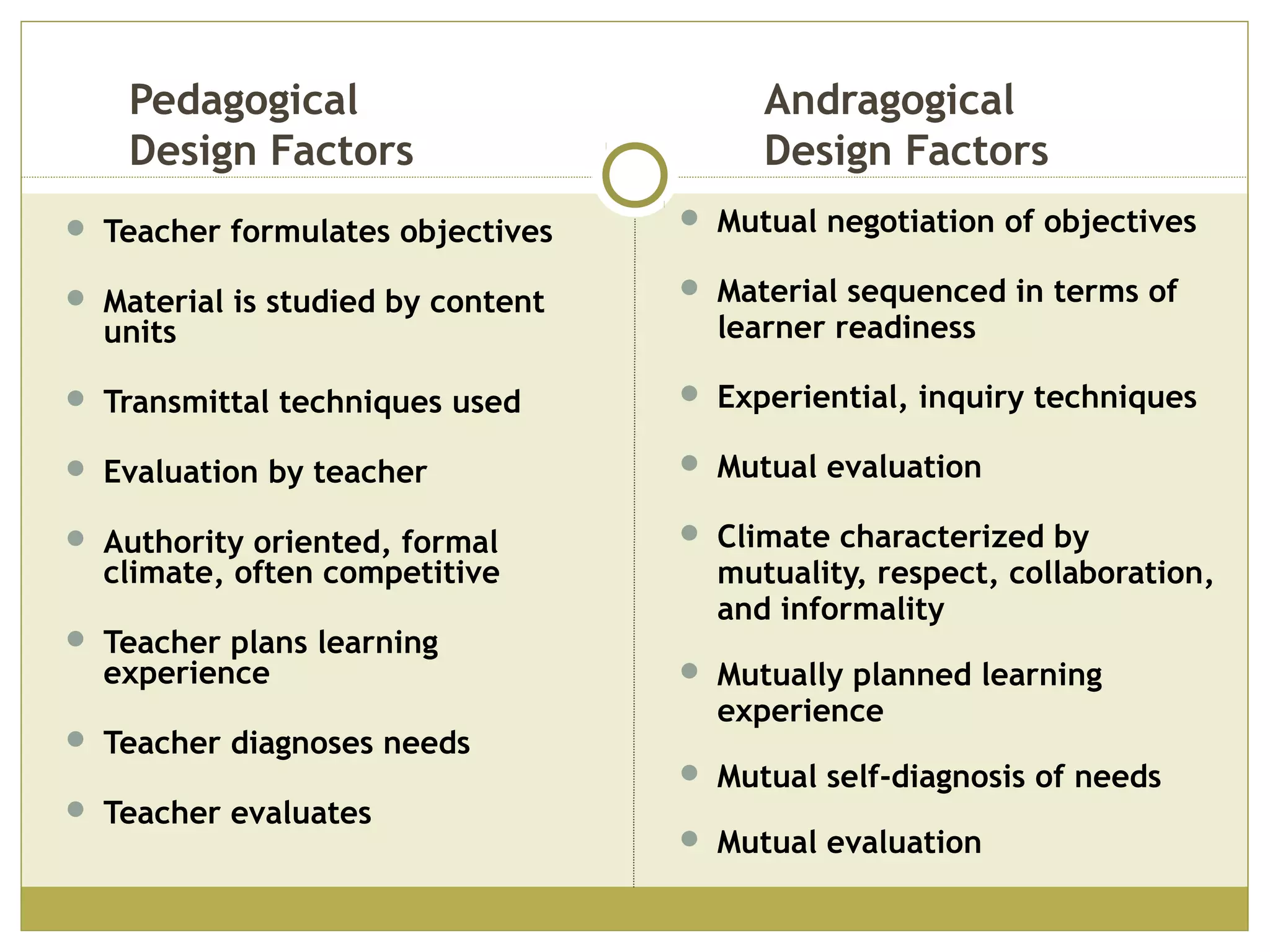
Pedagogical Andragogical
Design Factors Design Factors
 Teacher formulates objectives
 Material is studied by content
units
 Transmittal techniques used
 Evaluation by teacher
 Authority oriented, formal
climate, often competitive
 Teacher plans learning
experience
 Teacher diagnoses needs
 Teacher evaluates
 Mutual negotiation of objectives
 Material sequenced in terms of
learner readiness
 Experiential, inquiry techniques
 Mutual evaluation
 Climate characterized by
mutuality, respect, collaboration,
and informality
 Mutually planned learning
experience
 Mutual self-diagnosis of needs
 Mutual evaluation
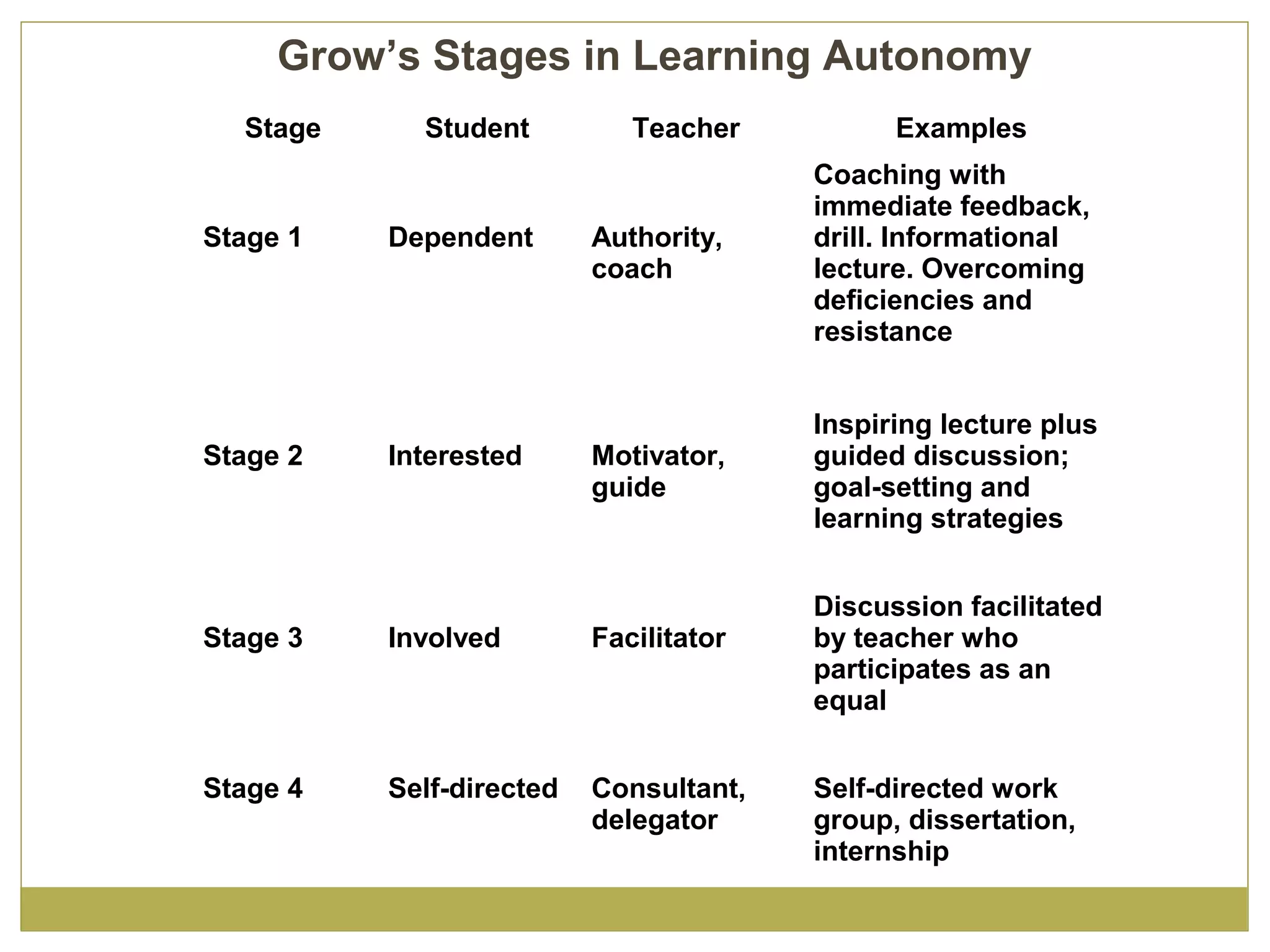
Grow’s Stages in Learning Autonomy
Stage Student Teacher Examples
Stage 1 Dependent Authority,
coach
Coaching with
immediate feedback,
drill. Informational
lecture. Overcoming
deficiencies and
resistance
Stage 2 Interested Motivator,
guide
Inspiring lecture plus
guided discussion;
goal-setting and
learning strategies
Stage 3 Involved Facilitator
Discussion facilitated
by teacher who
participates as an
equal
Stage 4 Self-directed Consultant,
delegator
Self-directed work
group, dissertation,
internship
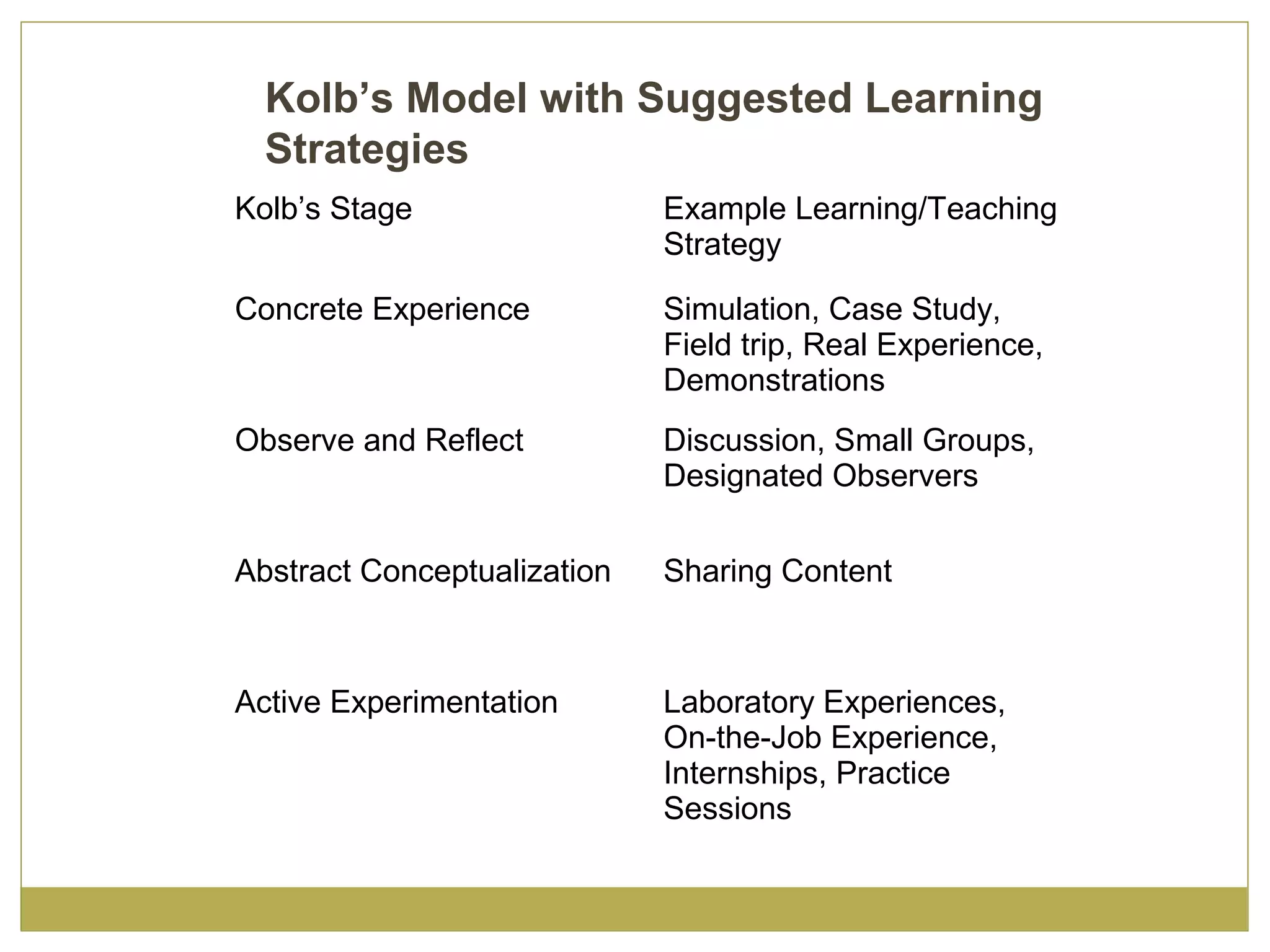
Kolb’s Model with Suggested Learning
Strategies
Kolb’s Stage Example Learning/Teaching
Strategy
Concrete Experience Simulation, Case Study,
Field trip, Real Experience,
Demonstrations
Observe and Reflect Discussion, Small Groups,
Designated Observers
Abstract Conceptualization Sharing Content
Active Experimentation Laboratory Experiences,
On-the-Job Experience,
Internships, Practice
Sessions
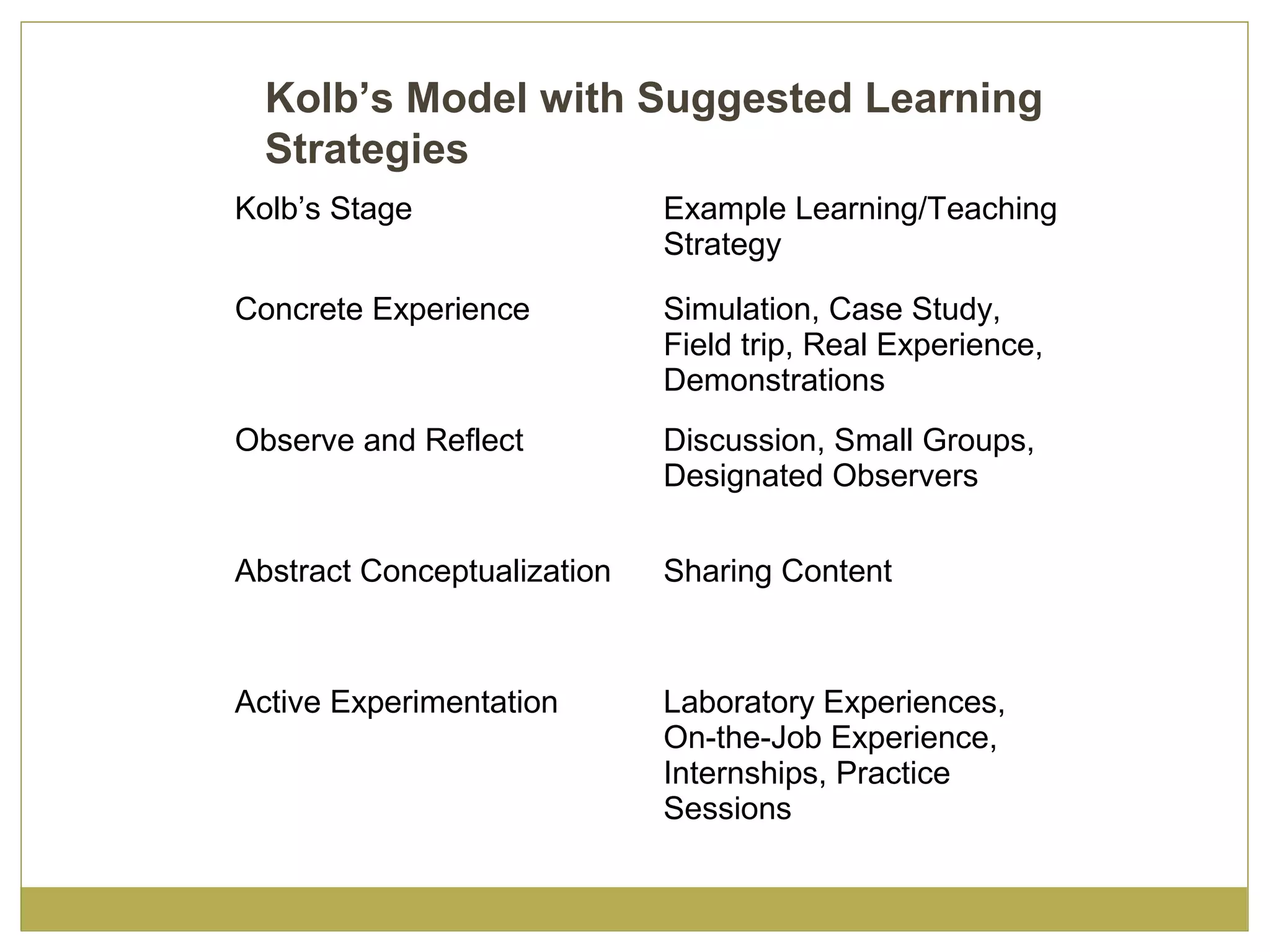
Kolb’s Model with Suggested Learning
Strategies
Kolb’s Stage Example Learning/Teaching
Strategy
Concrete Experience Simulation, Case Study,
Field trip, Real Experience,
Demonstrations
Observe and Reflect Discussion, Small Groups,
Designated Observers
Abstract Conceptualization Sharing Content
Active Experimentation Laboratory Experiences,
On-the-Job Experience,
Internships, Practice
Sessions

Class 3 knowles principles of andragogy

  • 1.
    Knowles’ Principles ofAndragogy  The learners feel a need to learn  The learning environment is characterized by mutual respect and trust and acceptance of differences  The learners perceive the goals of the learning experience to be their goals  The learners share responsibility for planning  The learners participate actively  The learning process makes use of learners’ experiences  The learners have a sense of progress towards goals
  • 2.
    Pedagogical Andragogical Assumptions Assumptions Postponed time application  Subject-centered orientation to learning  Self concept is one of dependency  Experience is of little value  Readiness to learn depends on biological development  Immediacy of time application  Problem centered orientation to learning  Self concept is toward increasing self-directedness  Learners are a rich resource for learning  Readiness depends on developmental tasks of social roles
  • 3.
    Pedagogical Andragogical Design FactorsDesign Factors  Teacher formulates objectives  Material is studied by content units  Transmittal techniques used  Evaluation by teacher  Authority oriented, formal climate, often competitive  Teacher plans learning experience  Teacher diagnoses needs  Teacher evaluates  Mutual negotiation of objectives  Material sequenced in terms of learner readiness  Experiential, inquiry techniques  Mutual evaluation  Climate characterized by mutuality, respect, collaboration, and informality  Mutually planned learning experience  Mutual self-diagnosis of needs  Mutual evaluation
  • 4.
    Grow’s Stages inLearning Autonomy Stage Student Teacher Examples Stage 1 Dependent Authority, coach Coaching with immediate feedback, drill. Informational lecture. Overcoming deficiencies and resistance Stage 2 Interested Motivator, guide Inspiring lecture plus guided discussion; goal-setting and learning strategies Stage 3 Involved Facilitator Discussion facilitated by teacher who participates as an equal Stage 4 Self-directed Consultant, delegator Self-directed work group, dissertation, internship
  • 6.
    Kolb’s Model withSuggested Learning Strategies Kolb’s Stage Example Learning/Teaching Strategy Concrete Experience Simulation, Case Study, Field trip, Real Experience, Demonstrations Observe and Reflect Discussion, Small Groups, Designated Observers Abstract Conceptualization Sharing Content Active Experimentation Laboratory Experiences, On-the-Job Experience, Internships, Practice Sessions
  • 7.
    Kolb’s Model withSuggested Learning Strategies Kolb’s Stage Example Learning/Teaching Strategy Concrete Experience Simulation, Case Study, Field trip, Real Experience, Demonstrations Observe and Reflect Discussion, Small Groups, Designated Observers Abstract Conceptualization Sharing Content Active Experimentation Laboratory Experiences, On-the-Job Experience, Internships, Practice Sessions