




Heutagogy-Heutagogy-
Self determinedSelf determined
learninglearning
By- Mugdha Jadhav(04)By- Mugdha Jadhav(04)
Department of EducationalDepartment of Educational
TechnologyTechnology
Content OutlineContent Outline
 What is hetagogy
 Pedagogy
 Andragogy
 Key difference Heutagogy, Pedagogy and Andragogy
 Contribution to Distance Education, Web 2.0, and Social
Media
 Heutagogy in Practice
HeutagogyHeutagogy
Heutagogy is self determined learning,
students take full responsibility of the individual
learning. This approach is one step ahead of
Pedagogy and Andragogy. This theory is developed
by Stewart Hase of Southern Cross University
and Chris Kenyon in Australia in 2000.
Key ElementsKey Elements
 Learning will be student centered (content,
processes, & goals)
 Emphasis will be on learning processes over
content mastery
 Knowing how to learn will be an essential skill
 Learning will be multidisciplinary
Key ElementsKey Elements
 Learning will be supported by curricular
flexibility
 Individualized learning
 Provisions for flexible or negotiated
assessments
 Enable rather than control informal learning
PedagogyPedagogy
Pedagogy is a traditional education which
focuses on the relationship of teacher and
student. In this approach of learning, students
are fully dependent on teacher and this makes
learning teacher-centered.
AndragogyAndragogy
Andragogy is a learning strategy developed
for adult learners. It is clearly and distinctly
different from traditional pedagogy. This
approach of learning is totally learner focus.
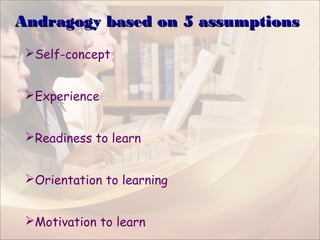
Andragogy based on 5 assumptionsAndragogy based on 5 assumptions
Self-concept
Experience
Readiness to learn
Orientation to learning
Motivation to learn
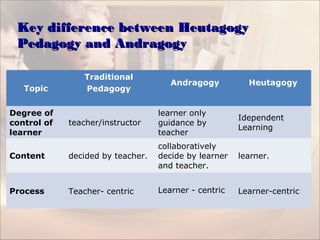
Key difference between HeutagogyKey difference between Heutagogy
Pedagogy and AndragogyPedagogy and Andragogy
Topic
Traditional
Pedagogy
Andragogy Heutagogy
Degree of
control of
learner
teacher/instructor
learner only
guidance by
teacher
Idependent
Learning
Content decided by teacher.
collaboratively
decide by learner
and teacher.
learner.
Process Teacher- centric Learner - centric Learner-centric
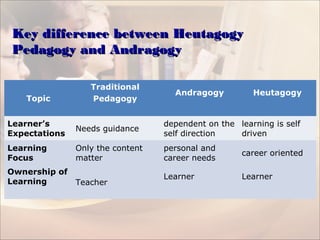
Key difference between HeutagogyKey difference between Heutagogy
Pedagogy and AndragogyPedagogy and Andragogy
Topic
Traditional
Pedagogy
Andragogy Heutagogy
Learner’s
Expectations
Needs guidance
dependent on the
self direction
learning is self
driven
Learning
Focus
Only the content
matter
personal and
career needs
career oriented
Ownership of
Learning Teacher
Learner Learner
Heutagogy's ContributionHeutagogy's Contribution
Distance Education
Web 2.0
Social Media
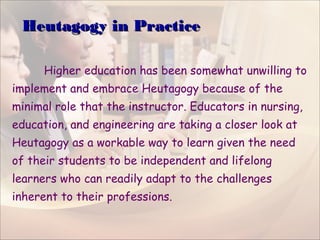
Heutagogy in PracticeHeutagogy in Practice
Higher education has been somewhat unwilling to
implement and embrace Heutagogy because of the
minimal role that the instructor. Educators in nursing,
education, and engineering are taking a closer look at
Heutagogy as a workable way to learn given the need
of their students to be independent and lifelong
learners who can readily adapt to the challenges
inherent to their professions.
Heutagogy

Heutagogy

  • 1.
    Heutagogy-Heutagogy- Self determinedSelf determined learninglearning By-Mugdha Jadhav(04)By- Mugdha Jadhav(04) Department of EducationalDepartment of Educational TechnologyTechnology
  • 2.
    Content OutlineContent Outline What is hetagogy  Pedagogy  Andragogy  Key difference Heutagogy, Pedagogy and Andragogy  Contribution to Distance Education, Web 2.0, and Social Media  Heutagogy in Practice
  • 3.
    HeutagogyHeutagogy Heutagogy is selfdetermined learning, students take full responsibility of the individual learning. This approach is one step ahead of Pedagogy and Andragogy. This theory is developed by Stewart Hase of Southern Cross University and Chris Kenyon in Australia in 2000.
  • 4.
    Key ElementsKey Elements Learning will be student centered (content, processes, & goals)  Emphasis will be on learning processes over content mastery  Knowing how to learn will be an essential skill  Learning will be multidisciplinary
  • 5.
    Key ElementsKey Elements Learning will be supported by curricular flexibility  Individualized learning  Provisions for flexible or negotiated assessments  Enable rather than control informal learning
  • 6.
    PedagogyPedagogy Pedagogy is atraditional education which focuses on the relationship of teacher and student. In this approach of learning, students are fully dependent on teacher and this makes learning teacher-centered.
  • 7.
    AndragogyAndragogy Andragogy is alearning strategy developed for adult learners. It is clearly and distinctly different from traditional pedagogy. This approach of learning is totally learner focus.
  • 8.
    Andragogy based on5 assumptionsAndragogy based on 5 assumptions Self-concept Experience Readiness to learn Orientation to learning Motivation to learn
  • 9.
    Key difference betweenHeutagogyKey difference between Heutagogy Pedagogy and AndragogyPedagogy and Andragogy Topic Traditional Pedagogy Andragogy Heutagogy Degree of control of learner teacher/instructor learner only guidance by teacher Idependent Learning Content decided by teacher. collaboratively decide by learner and teacher. learner. Process Teacher- centric Learner - centric Learner-centric
  • 10.
    Key difference betweenHeutagogyKey difference between Heutagogy Pedagogy and AndragogyPedagogy and Andragogy Topic Traditional Pedagogy Andragogy Heutagogy Learner’s Expectations Needs guidance dependent on the self direction learning is self driven Learning Focus Only the content matter personal and career needs career oriented Ownership of Learning Teacher Learner Learner
  • 11.
  • 12.
    Heutagogy in PracticeHeutagogyin Practice Higher education has been somewhat unwilling to implement and embrace Heutagogy because of the minimal role that the instructor. Educators in nursing, education, and engineering are taking a closer look at Heutagogy as a workable way to learn given the need of their students to be independent and lifelong learners who can readily adapt to the challenges inherent to their professions.