Interactive and Innovative teaching
methods including Large group,
Small group and appropriate use of
media
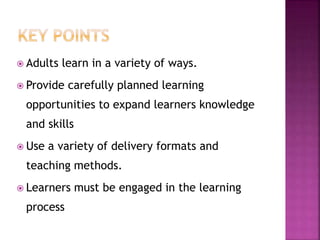
 Adults learn in a variety of ways.
 Provide carefully planned learning
opportunities to expand learners knowledge
and skills
 Use a variety of delivery formats and
teaching methods.
 Learners must be engaged in the learning
process
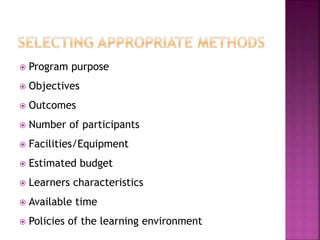
 Program purpose
 Objectives
 Outcomes
 Number of participants
 Facilities/Equipment
 Estimated budget
 Learners characteristics
 Available time
 Policies of the learning environment
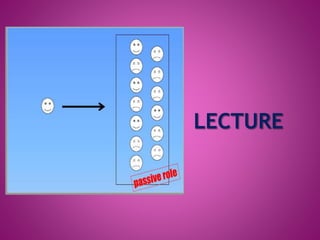
 Lectures
 Symposium
 Panel
 Conference
 Debate
 Workshop
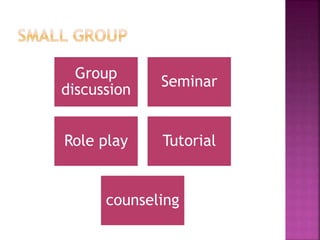
Group
discussion
Seminar
Role play Tutorial
counseling
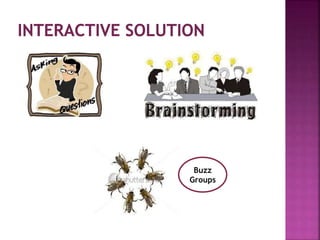
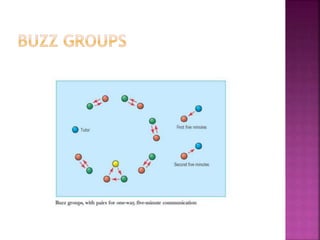
Buzz
Groups
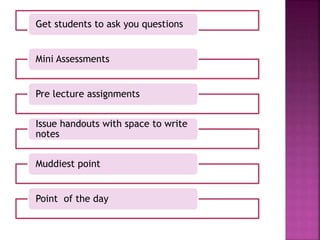
Get students to ask you questions
Mini Assessments
Pre lecture assignments
Issue handouts with space to write
notes
Muddiest point
Point of the day
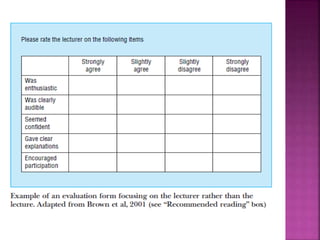
 FEEDBACK
Symposium
Panel Discussion
 Group discussion plays a valuable role in the
all-round education of students
 problem based learning
 team projects
 traditional academic scenario of the tutorial or
seminar.
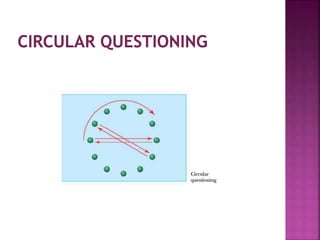
 Each person has a brief time—say, 20 seconds or
one minute—to say something in turn round the
group.
 More interest and energy is usually generated,
 If the first person chooses who should go second,
the second who should go third, and so on.
Message is more important than medium
 Five basic principles apply to preparing teaching
material
 Links
 Intelligibility
 General style
 Highlighting
 Targeting
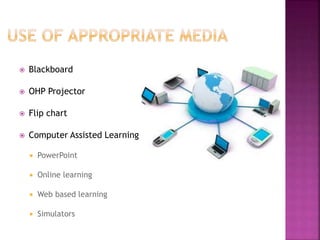
 Blackboard
 OHP Projector
 Flip chart
 Computer Assisted Learning
 PowerPoint
 Online learning
 Web based learning
 Simulators
 Use a clear font that is easily readable
 Use a type size of 20 points or greater
 Use a light text on a dark background for slides
 Use short sentences and small tables
 Restrict the overall number of words on each slide to
about 40 or fewer
 Avoid patterned backgrounds—they are extremely
distracting
 Limit the number of colours on your slides to a
maximum of three
 Use highlighting to emphasise items in lists
 Use animation and sound effects sparingly
Interactive and innovative teaching methods

Interactive and innovative teaching methods

  • 1.
    Interactive and Innovativeteaching methods including Large group, Small group and appropriate use of media
  • 2.
     Adults learnin a variety of ways.  Provide carefully planned learning opportunities to expand learners knowledge and skills  Use a variety of delivery formats and teaching methods.  Learners must be engaged in the learning process
  • 3.
     Program purpose Objectives  Outcomes  Number of participants  Facilities/Equipment  Estimated budget  Learners characteristics  Available time  Policies of the learning environment
  • 4.
     Lectures  Symposium Panel  Conference  Debate  Workshop
  • 5.
  • 7.
  • 9.
    Get students toask you questions Mini Assessments Pre lecture assignments Issue handouts with space to write notes Muddiest point Point of the day
  • 10.
  • 12.
  • 13.
     Group discussionplays a valuable role in the all-round education of students  problem based learning  team projects  traditional academic scenario of the tutorial or seminar.
  • 14.
     Each personhas a brief time—say, 20 seconds or one minute—to say something in turn round the group.  More interest and energy is usually generated,  If the first person chooses who should go second, the second who should go third, and so on.
  • 20.
    Message is moreimportant than medium
  • 21.
     Five basicprinciples apply to preparing teaching material  Links  Intelligibility  General style  Highlighting  Targeting
  • 22.
     Blackboard  OHPProjector  Flip chart  Computer Assisted Learning  PowerPoint  Online learning  Web based learning  Simulators
  • 23.
     Use aclear font that is easily readable  Use a type size of 20 points or greater  Use a light text on a dark background for slides  Use short sentences and small tables  Restrict the overall number of words on each slide to about 40 or fewer
  • 24.
     Avoid patternedbackgrounds—they are extremely distracting  Limit the number of colours on your slides to a maximum of three  Use highlighting to emphasise items in lists  Use animation and sound effects sparingly