Cyril Houle’s
The Inquiring Mind, 1961
• Examined 22 cases of men and women who
engaged in continuing learning
• Wanted to find out
• Why?
• How they perceived themselves?
• How they were perceived by others?
Commonalities
• Perceived by others as “deeply engaged in
learning”
• Perceived learning as important
• All had goals to achieve
• All found learning enjoyable / significant
• All believed learning worthwhile for its own sake
Differences
• Varied in major purpose or values of continuing
education
Goal
Oriented
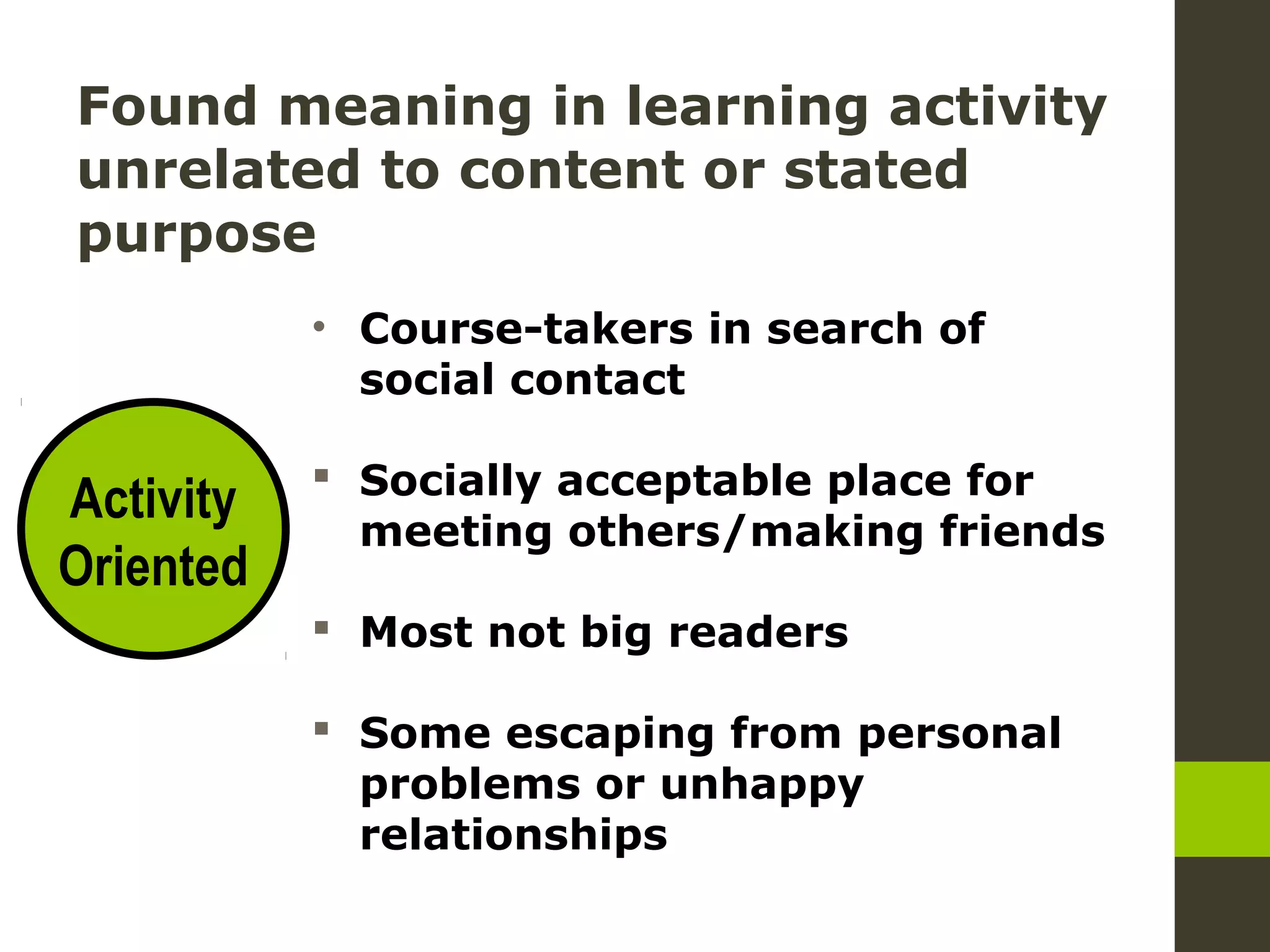
Activity
Oriented
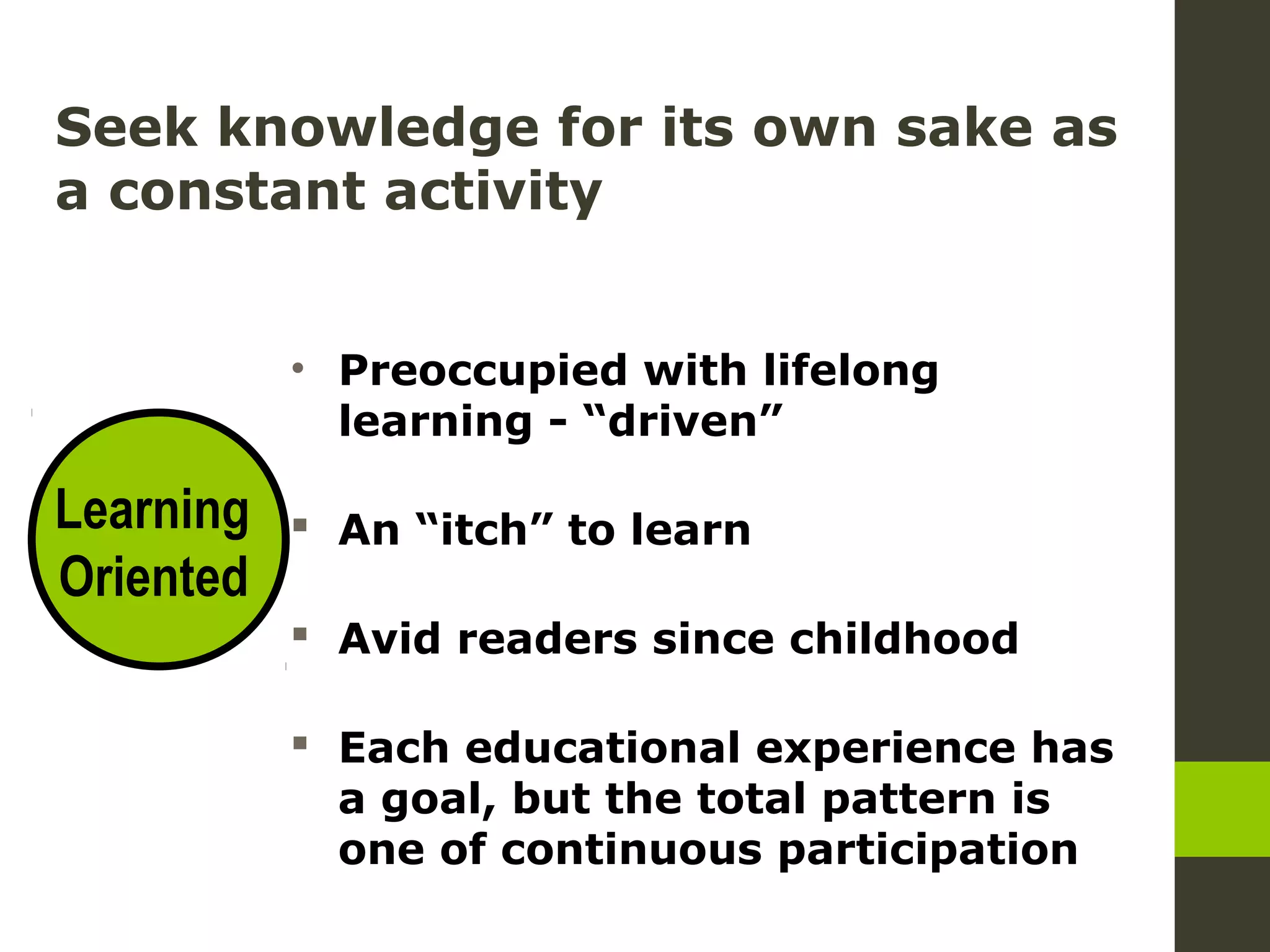
Learning
Oriented
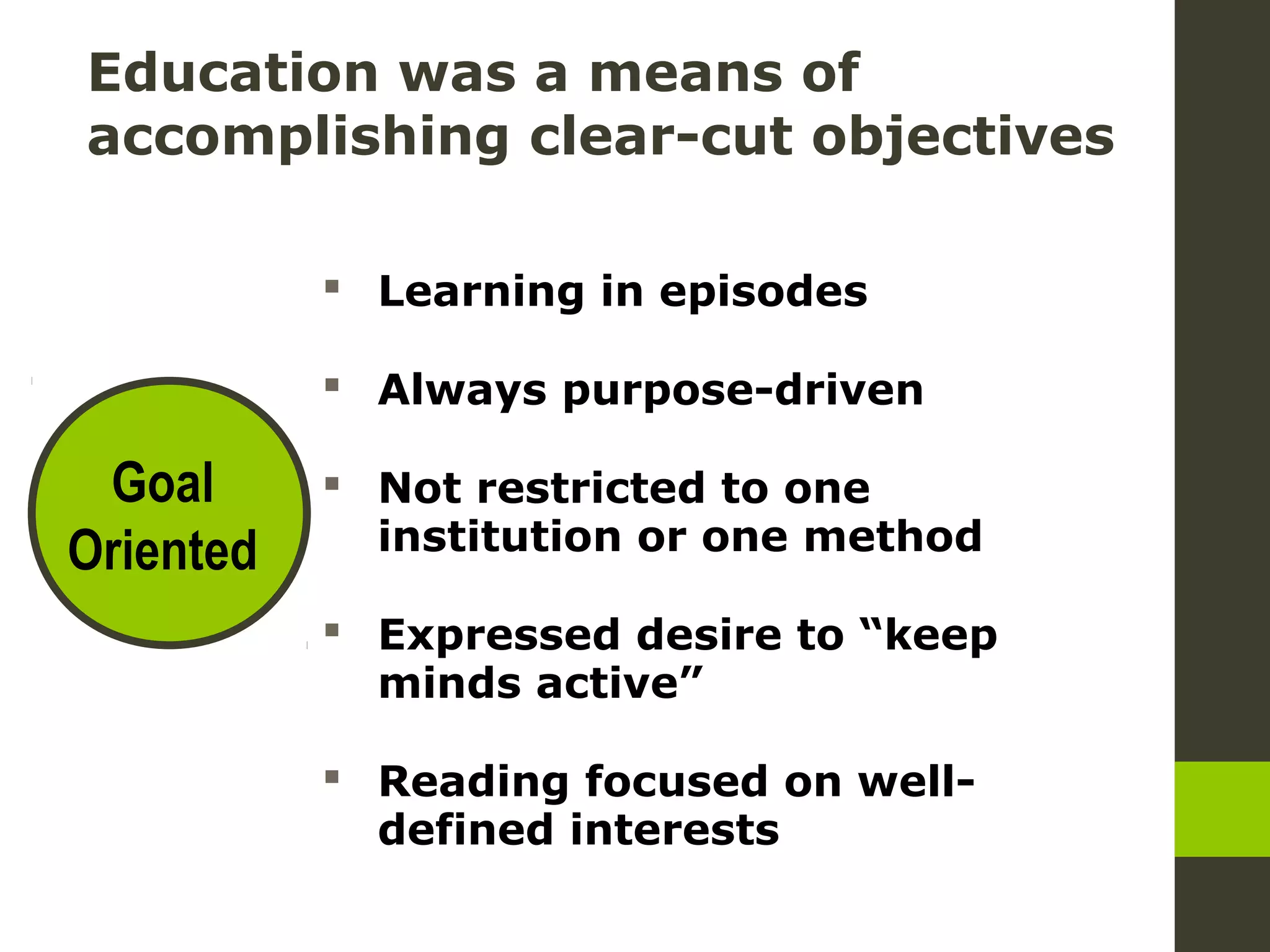
Goal
Oriented
Education was a means of
accomplishing clear-cut objectives
 Learning in episodes
 Always purpose-driven
 Not restricted to one
institution or one method
 Expressed desire to “keep
minds active”
 Reading focused on well-
defined interests
Found meaning in learning activity
unrelated to content or stated
purpose
• Course-takers in search of
social contact
 Socially acceptable place for
meeting others/making friends
 Most not big readers
 Some escaping from personal
problems or unhappy
relationships
Activity
Oriented
Seek knowledge for its own sake as
a constant activity
• Preoccupied with lifelong
learning - “driven”
 An “itch” to learn
 Avid readers since childhood
 Each educational experience has
a goal, but the total pattern is
one of continuous participation
Learning
Oriented
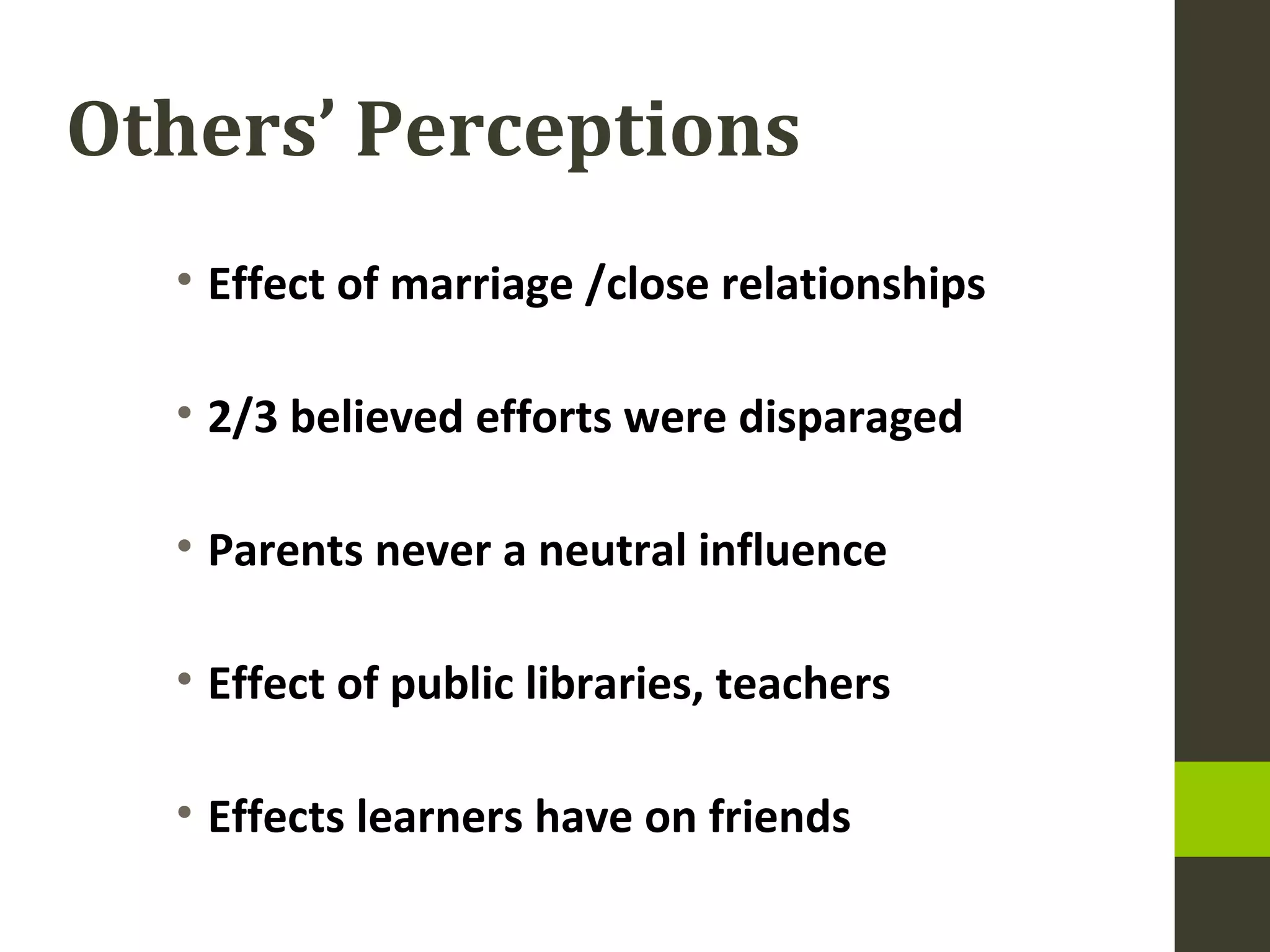
Others’ Perceptions
• Effect of marriage /close relationships
• 2/3 believed efforts were disparaged
• Parents never a neutral influence
• Effect of public libraries, teachers
• Effects learners have on friends

Class 2 or 3 houle's inquiring mind

  • 1.
    Cyril Houle’s The InquiringMind, 1961 • Examined 22 cases of men and women who engaged in continuing learning • Wanted to find out • Why? • How they perceived themselves? • How they were perceived by others?
  • 2.
    Commonalities • Perceived byothers as “deeply engaged in learning” • Perceived learning as important • All had goals to achieve • All found learning enjoyable / significant • All believed learning worthwhile for its own sake
  • 3.
    Differences • Varied inmajor purpose or values of continuing education Goal Oriented Activity Oriented Learning Oriented
  • 4.
    Goal Oriented Education was ameans of accomplishing clear-cut objectives  Learning in episodes  Always purpose-driven  Not restricted to one institution or one method  Expressed desire to “keep minds active”  Reading focused on well- defined interests
  • 5.
    Found meaning inlearning activity unrelated to content or stated purpose • Course-takers in search of social contact  Socially acceptable place for meeting others/making friends  Most not big readers  Some escaping from personal problems or unhappy relationships Activity Oriented
  • 6.
    Seek knowledge forits own sake as a constant activity • Preoccupied with lifelong learning - “driven”  An “itch” to learn  Avid readers since childhood  Each educational experience has a goal, but the total pattern is one of continuous participation Learning Oriented
  • 7.
    Others’ Perceptions • Effectof marriage /close relationships • 2/3 believed efforts were disparaged • Parents never a neutral influence • Effect of public libraries, teachers • Effects learners have on friends