Teaching 
Learning 
strategies
Teaching 
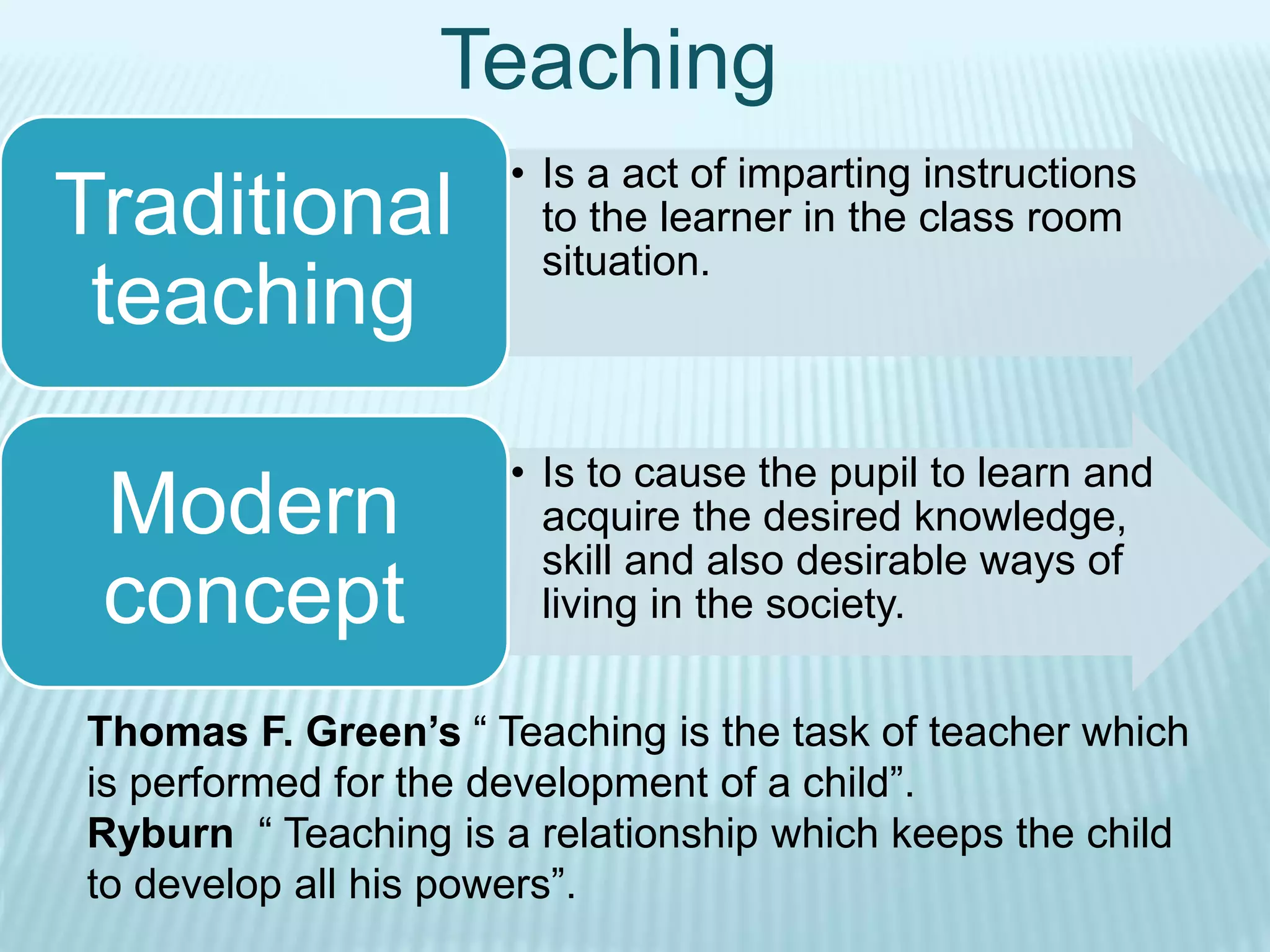
• Is a act of imparting instructions 
to the learner in the class room 
situation. 
Traditional 
teaching 
• Is to cause the pupil to learn and 
acquire the desired knowledge, 
skill and also desirable ways of 
living in the society. 
Modern 
concept 
Thomas F. Green’s “ Teaching is the task of teacher which 
is performed for the development of a child”. 
Ryburn “ Teaching is a relationship which keeps the child 
to develop all his powers”.
Learning 
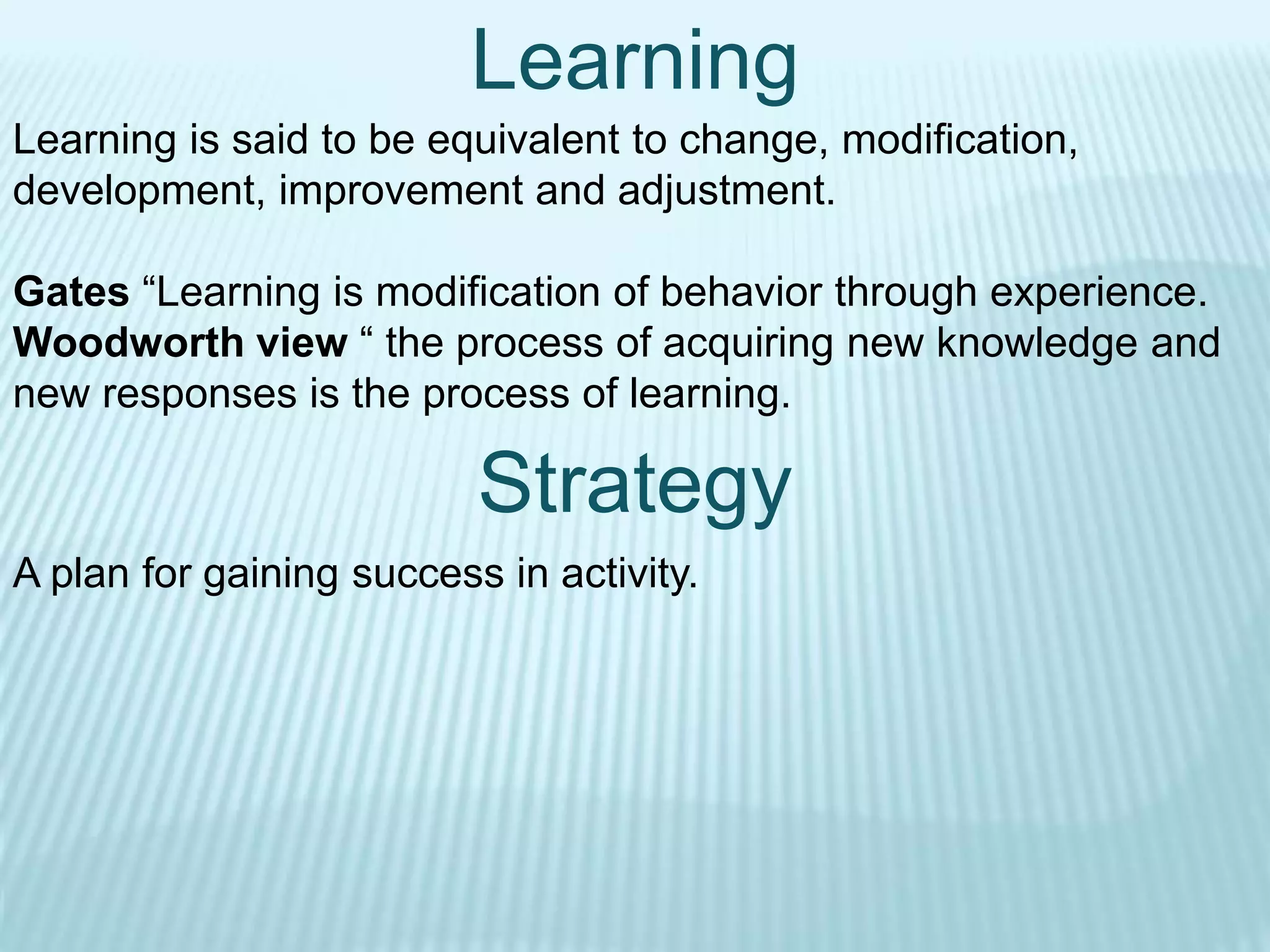
Learning is said to be equivalent to change, modification, 
development, improvement and adjustment. 
Gates “Learning is modification of behavior through experience. 
Woodworth view “ the process of acquiring new knowledge and 
new responses is the process of learning. 
Strategy 
A plan for gaining success in activity.
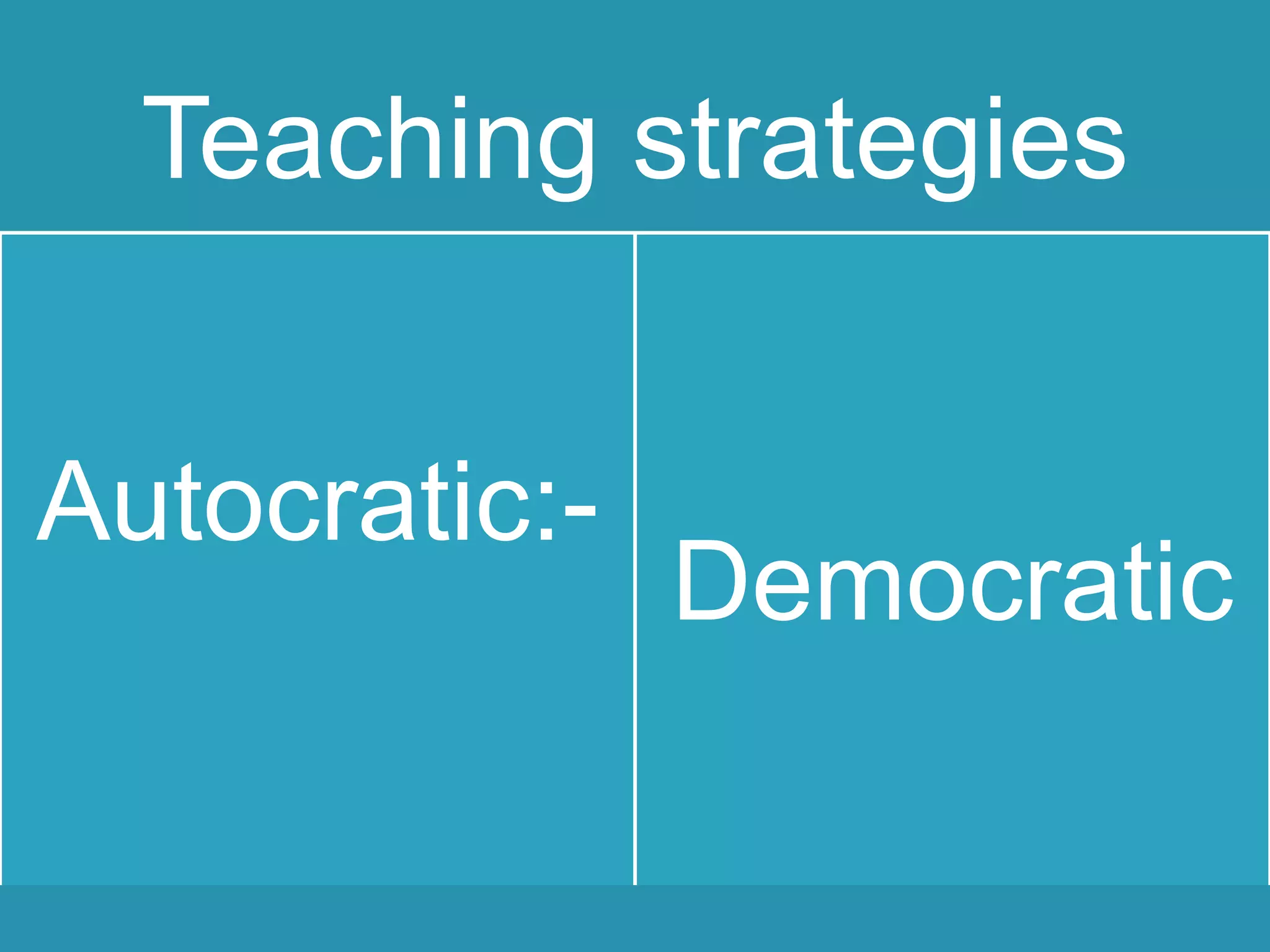
Teaching strategies 
Autocratic:- 
Democratic
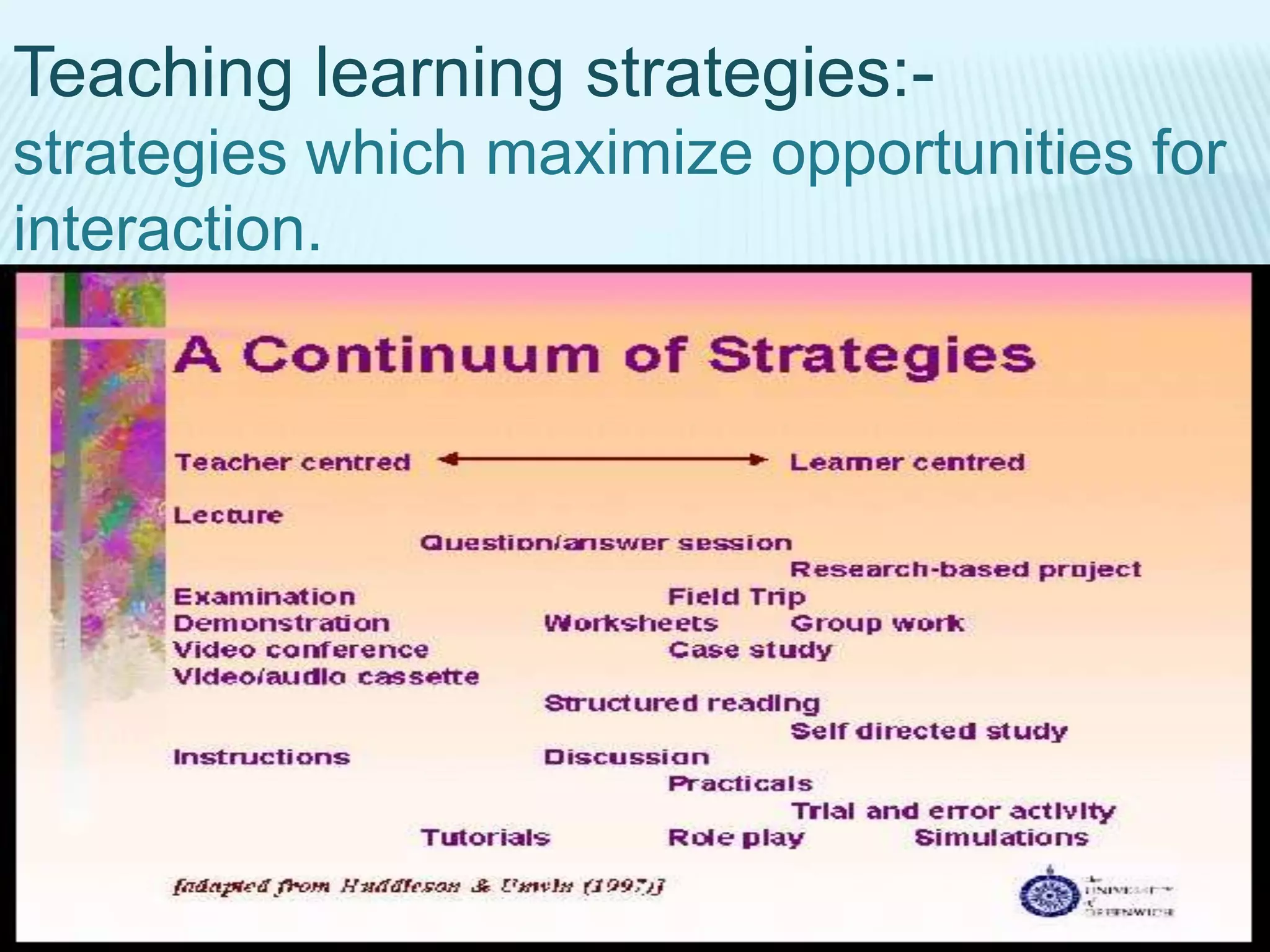
Teaching learning strategies:- 
strategies which maximize opportunities for 
interaction.
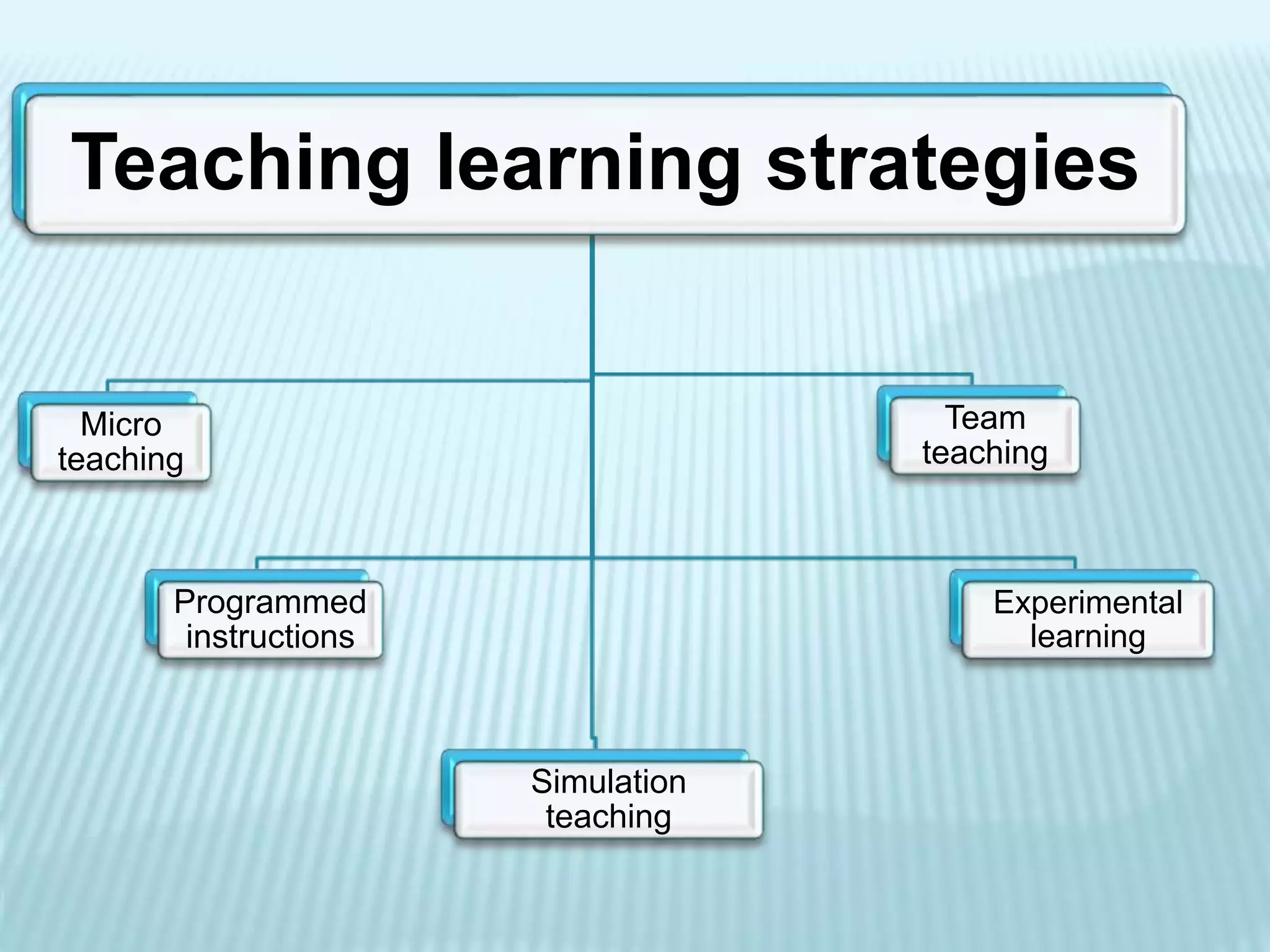
Teaching learning strategies 
Micro 
teaching 
Programmed 
instructions 
Simulation 
teaching 
Team 
teaching 
Experimental 
learning
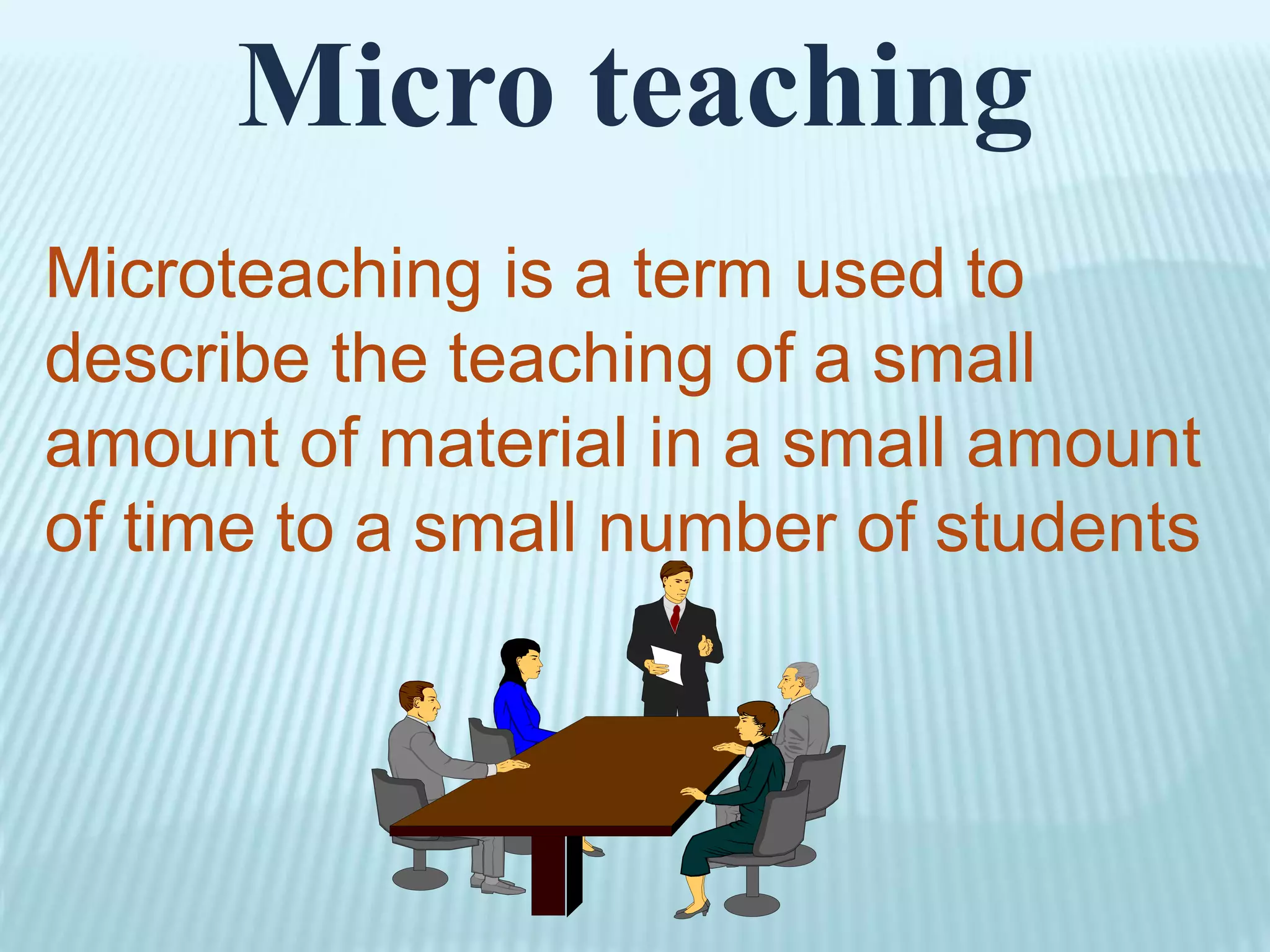
Micro teaching 
Microteaching is a term used to 
describe the teaching of a small 
amount of material in a small amount 
of time to a small number of students
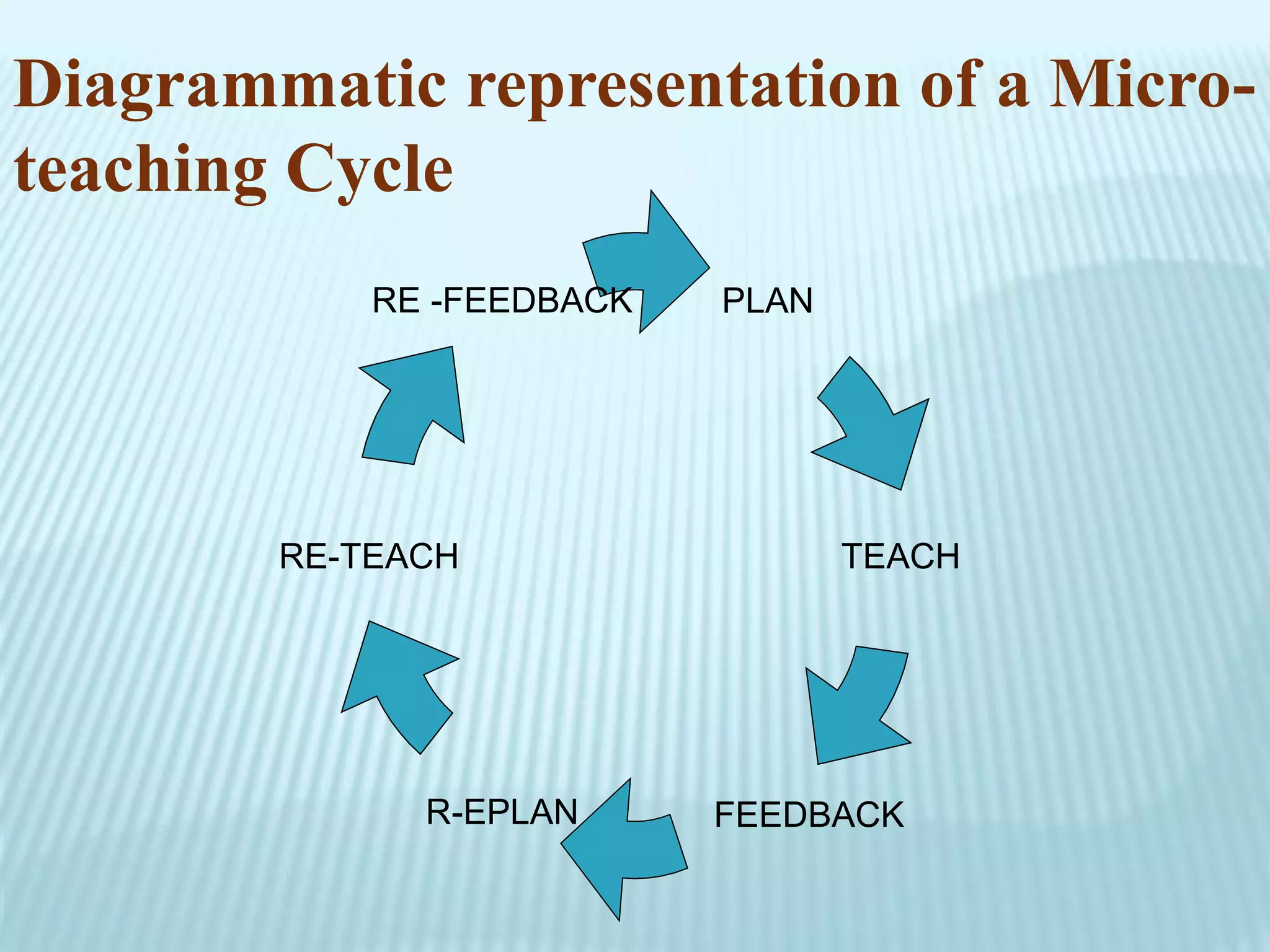
Diagrammatic representation of a Micro-teaching 
PLAN 
TEACH 
Cycle 
RE -FEEDBACK 
FEEDBACK 
RE-TEACH 
R-EPLAN
Team teaching 
An innovative teaching method in which 
two or more teachers teach a group of 
students.
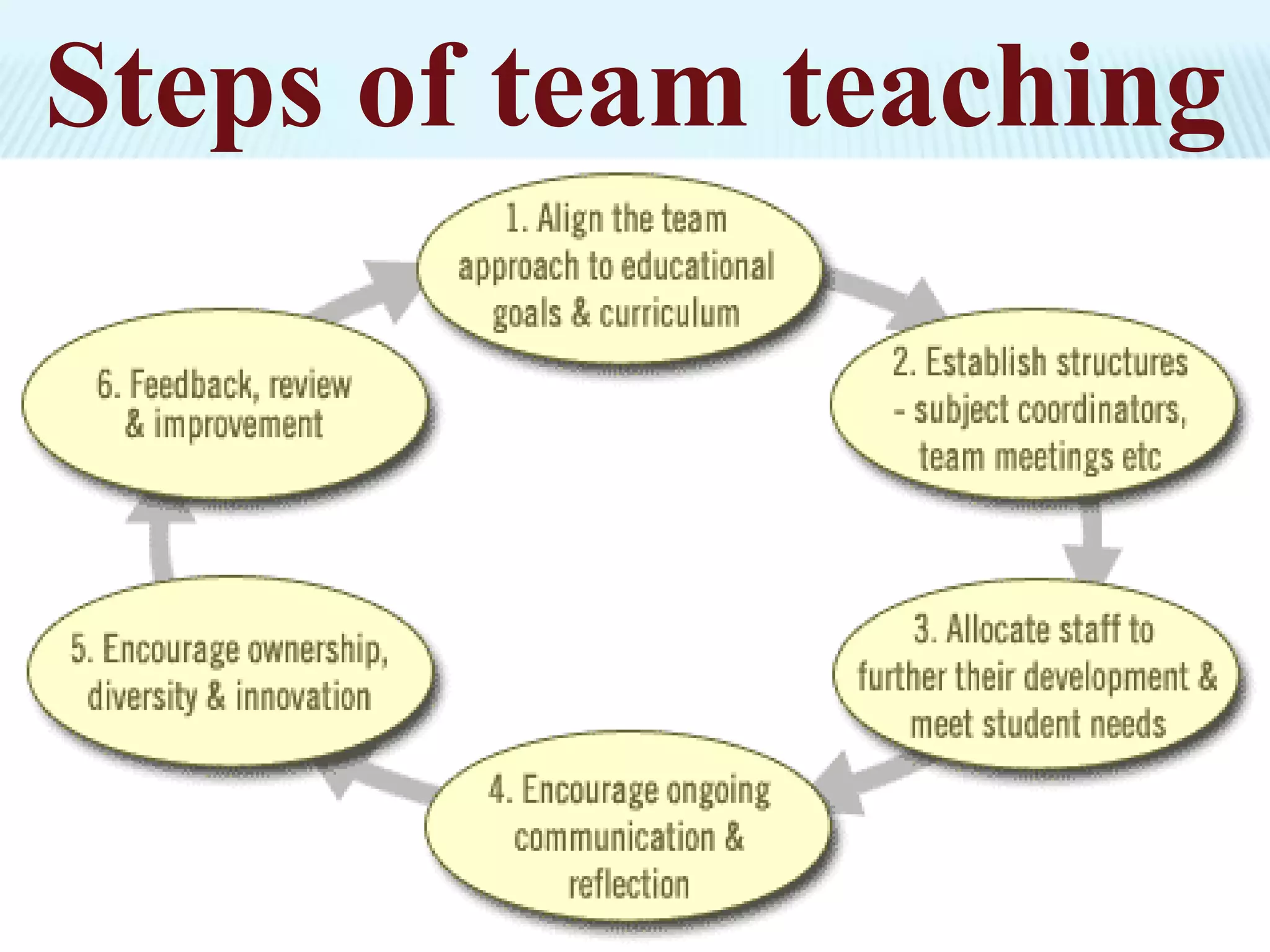
Steps of team teaching
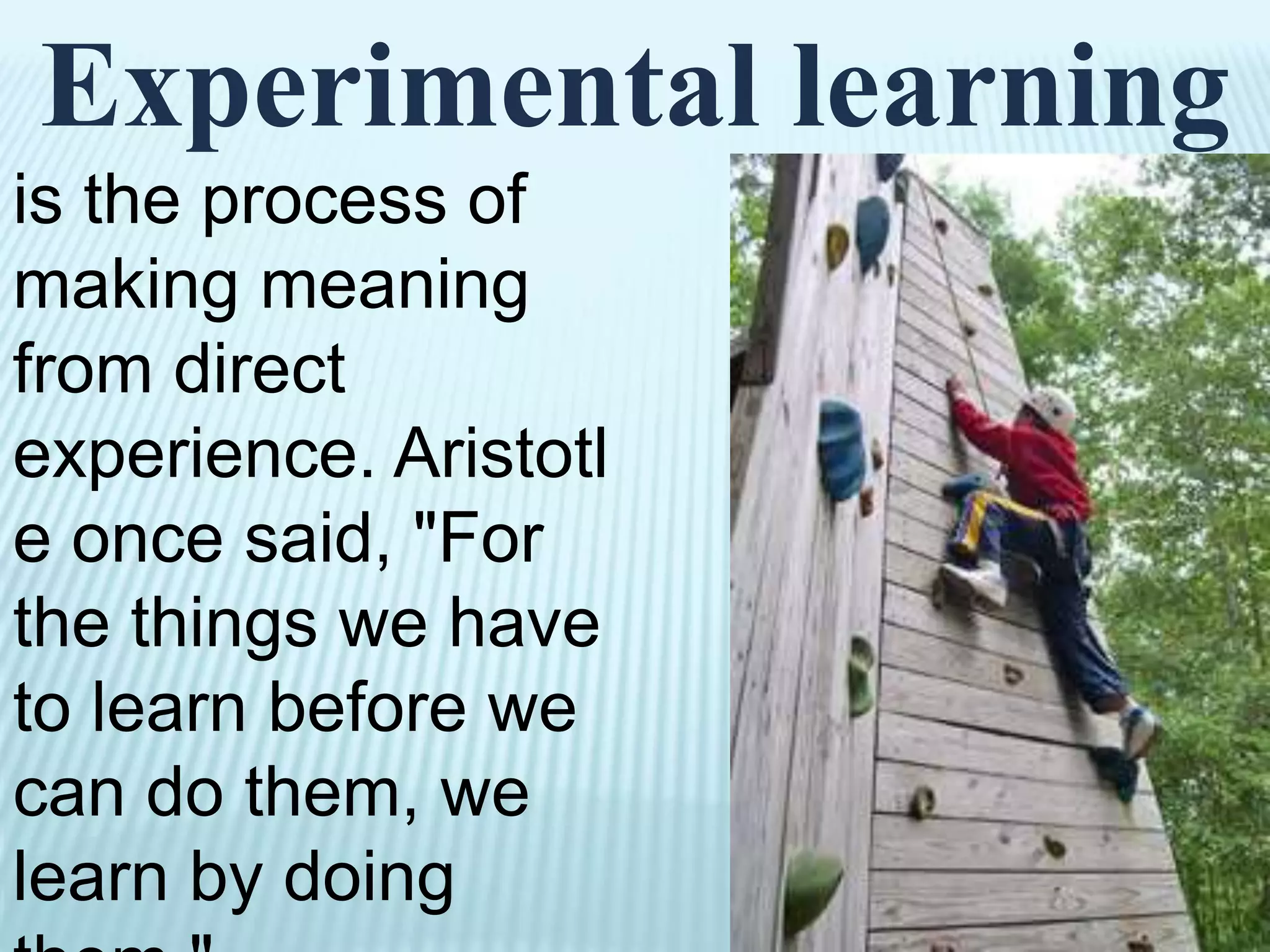
Experimental learning 
is the process of 
making meaning 
from direct 
experience. Aristotl 
e once said, "For 
the things we have 
to learn before we 
can do them, we 
learn by doing 
them."
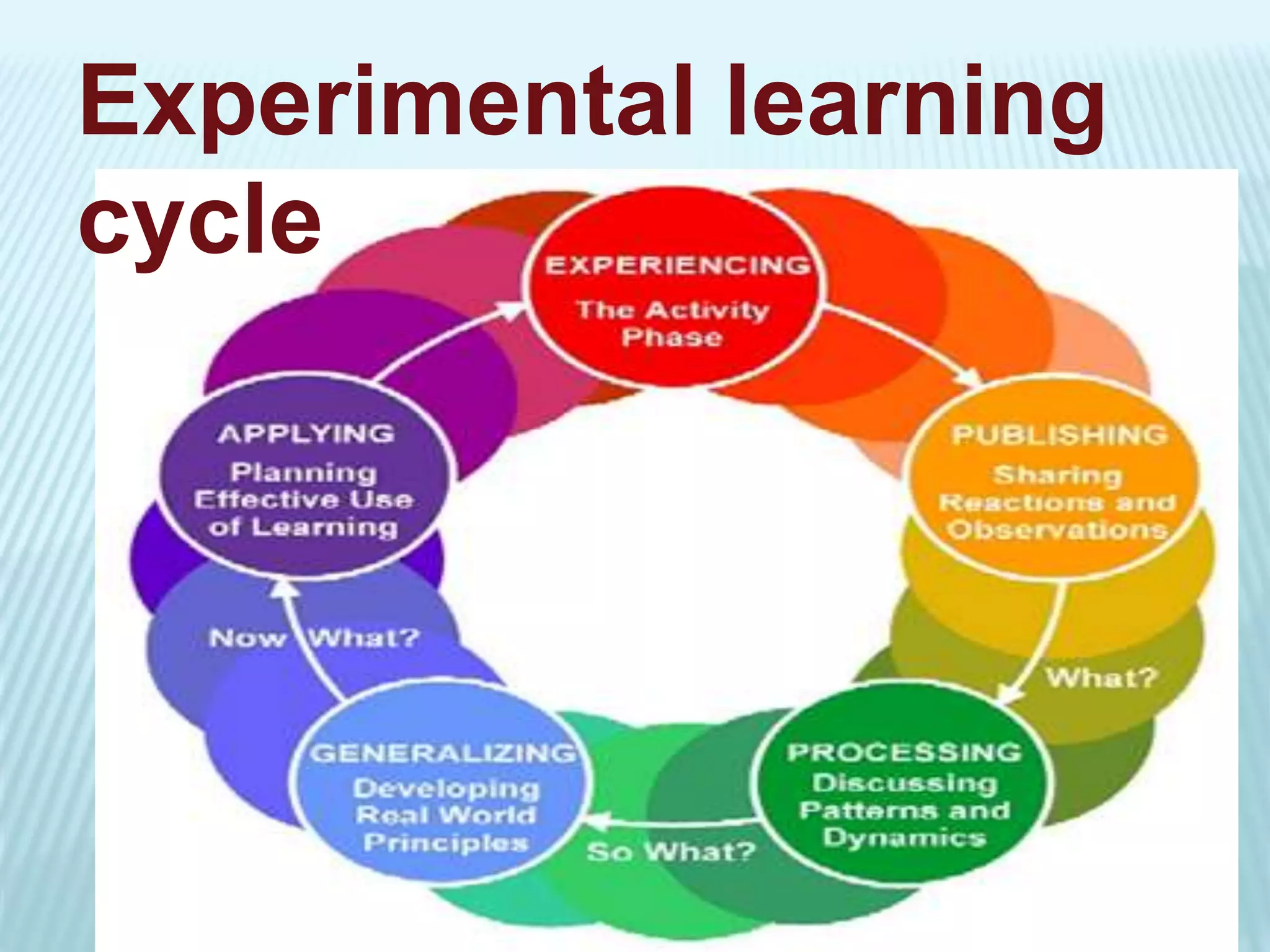
Experimental learning 
cycle
Programmed instructions 
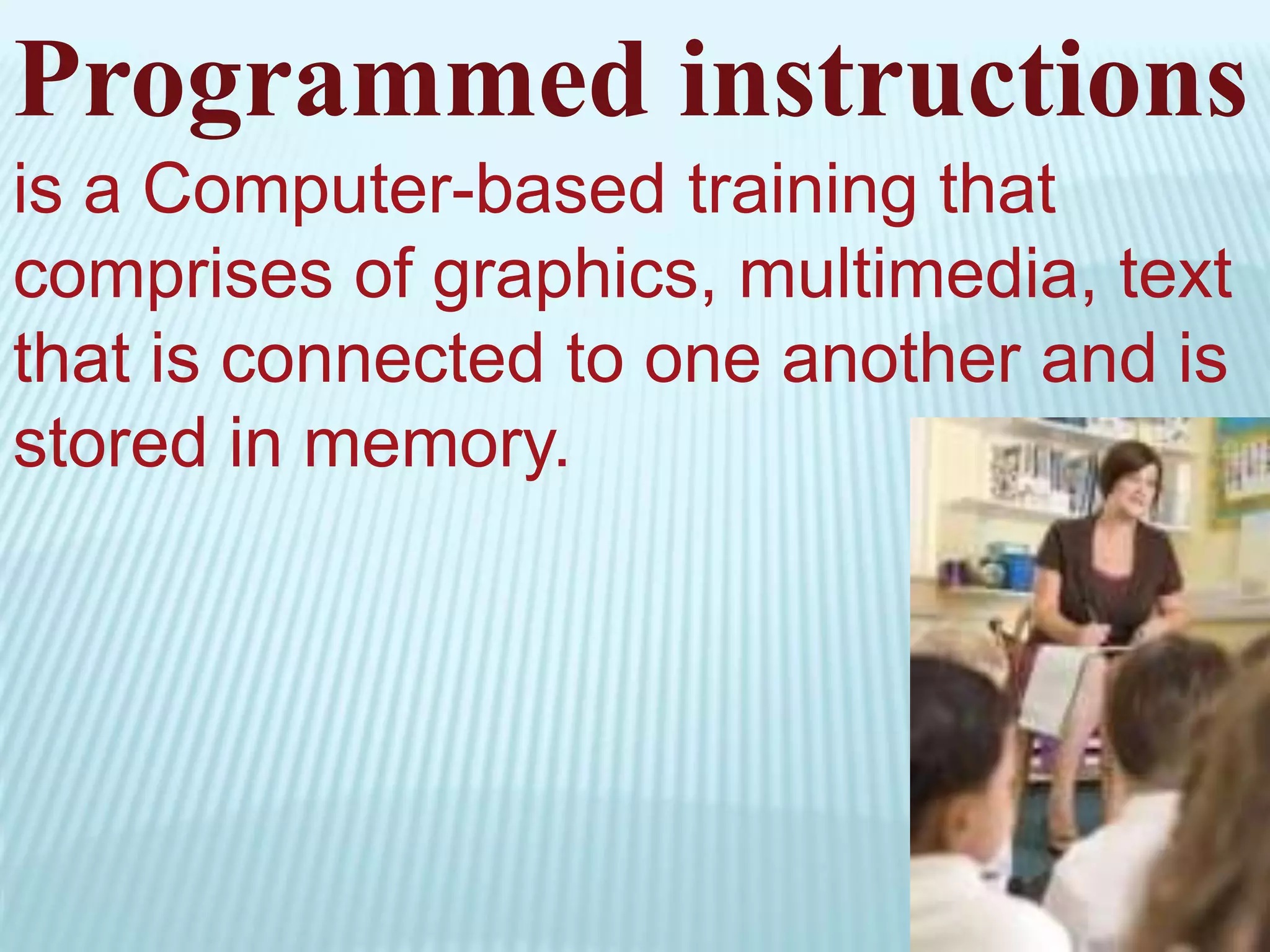
is a Computer-based training that 
comprises of graphics, multimedia, text 
that is connected to one another and is 
stored in memory.
Simulation teaching 
Simulations are a useful teaching 
strategy for illustrating a complex and 
changing situation. Simulations are 
(necessarily) less complex than the 
situations they represent.
Submitted by:- 
Kiran Paul

teaching learning strategies

  • 1.
  • 2.
    Teaching • Isa act of imparting instructions to the learner in the class room situation. Traditional teaching • Is to cause the pupil to learn and acquire the desired knowledge, skill and also desirable ways of living in the society. Modern concept Thomas F. Green’s “ Teaching is the task of teacher which is performed for the development of a child”. Ryburn “ Teaching is a relationship which keeps the child to develop all his powers”.
  • 3.
    Learning Learning issaid to be equivalent to change, modification, development, improvement and adjustment. Gates “Learning is modification of behavior through experience. Woodworth view “ the process of acquiring new knowledge and new responses is the process of learning. Strategy A plan for gaining success in activity.
  • 4.
  • 5.
    Teaching learning strategies:- strategies which maximize opportunities for interaction.
  • 6.
    Teaching learning strategies Micro teaching Programmed instructions Simulation teaching Team teaching Experimental learning
  • 7.
    Micro teaching Microteachingis a term used to describe the teaching of a small amount of material in a small amount of time to a small number of students
  • 8.
    Diagrammatic representation ofa Micro-teaching PLAN TEACH Cycle RE -FEEDBACK FEEDBACK RE-TEACH R-EPLAN
  • 9.
    Team teaching Aninnovative teaching method in which two or more teachers teach a group of students.
  • 10.
    Steps of teamteaching
  • 11.
    Experimental learning isthe process of making meaning from direct experience. Aristotl e once said, "For the things we have to learn before we can do them, we learn by doing them."
  • 12.
  • 13.
    Programmed instructions isa Computer-based training that comprises of graphics, multimedia, text that is connected to one another and is stored in memory.
  • 14.
    Simulation teaching Simulationsare a useful teaching strategy for illustrating a complex and changing situation. Simulations are (necessarily) less complex than the situations they represent.
  • 15.