Agenda
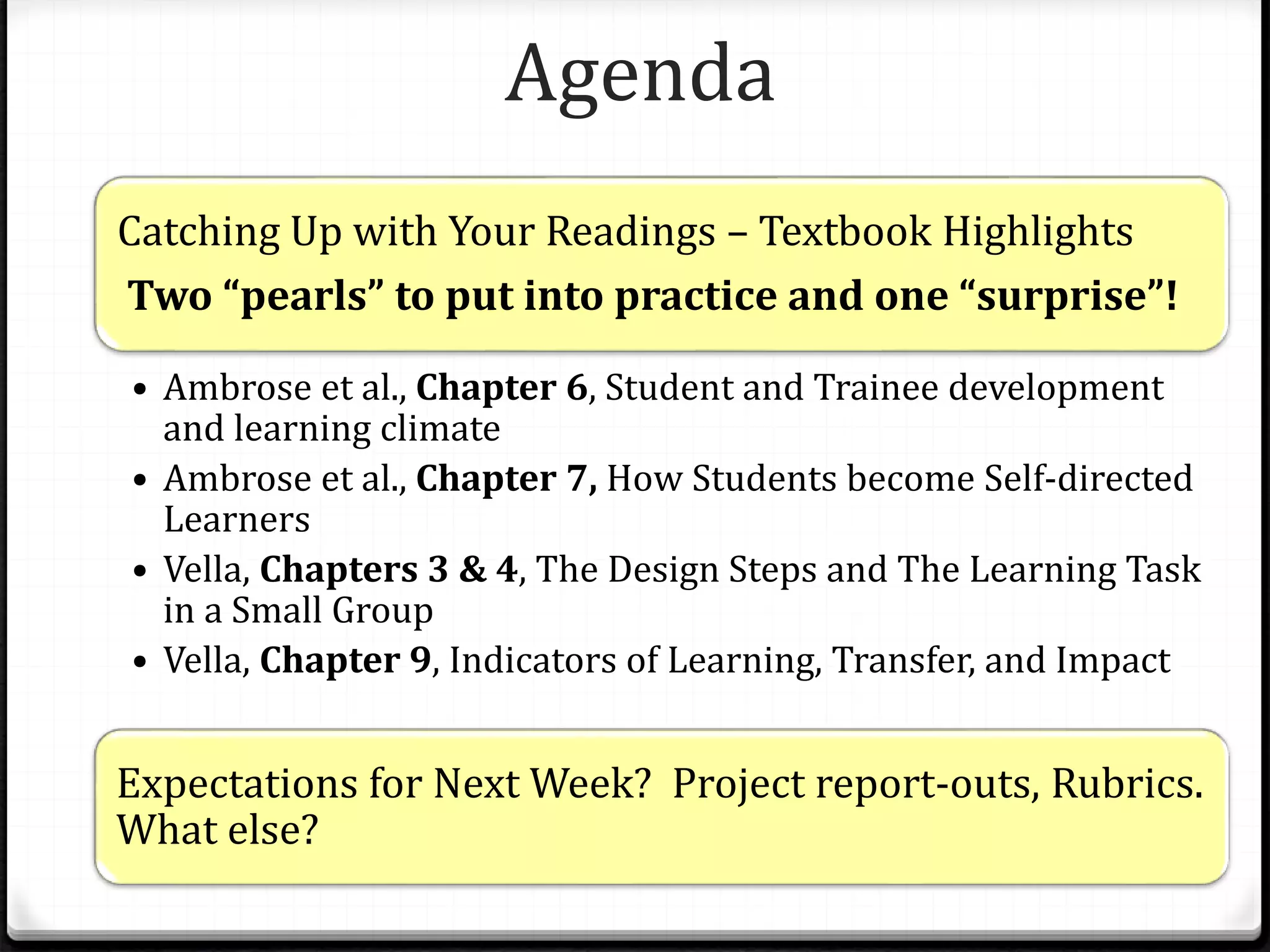
Catching Up with Your Readings – Textbook Highlights
Two “pearls” to put into practice and one “surprise”!
Expectations for Next Week? Project report-outs, Rubrics.
What else?
• Ambrose et al., Chapter 6, Student and Trainee development
and learning climate
• Ambrose et al., Chapter 7, How Students become Self-directed
Learners
• Vella, Chapters 3 & 4, The Design Steps and The Learning Task
in a Small Group
• Vella, Chapter 9, Indicators of Learning, Transfer, and Impact
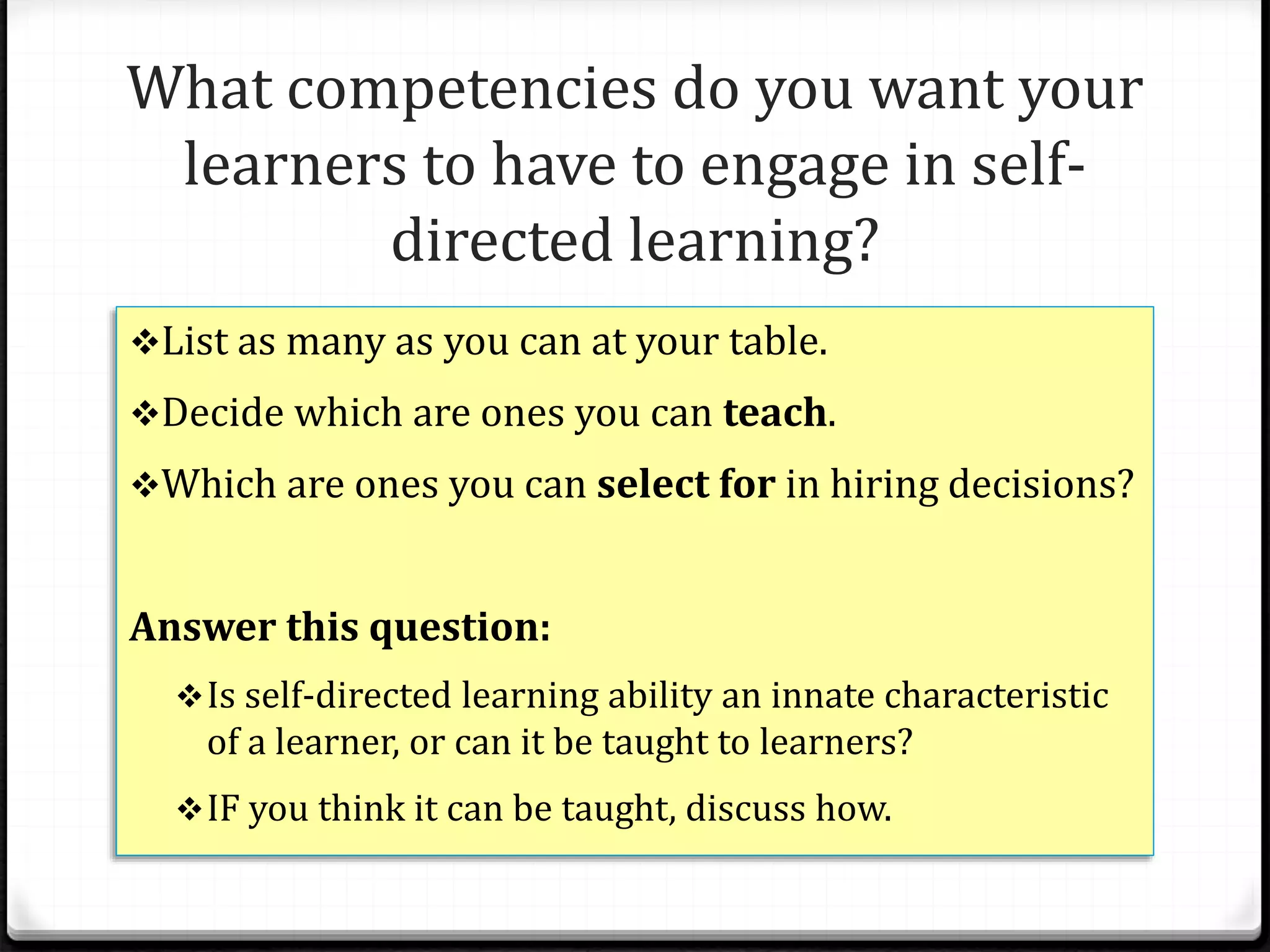
What competencies do you want your
learners to have to engage in self-
directed learning?
List as many as you can at your table.
Decide which are ones you can teach.
Which are ones you can select for in hiring decisions?
Answer this question:
Is self-directed learning ability an innate characteristic
of a learner, or can it be taught to learners?
IF you think it can be taught, discuss how.
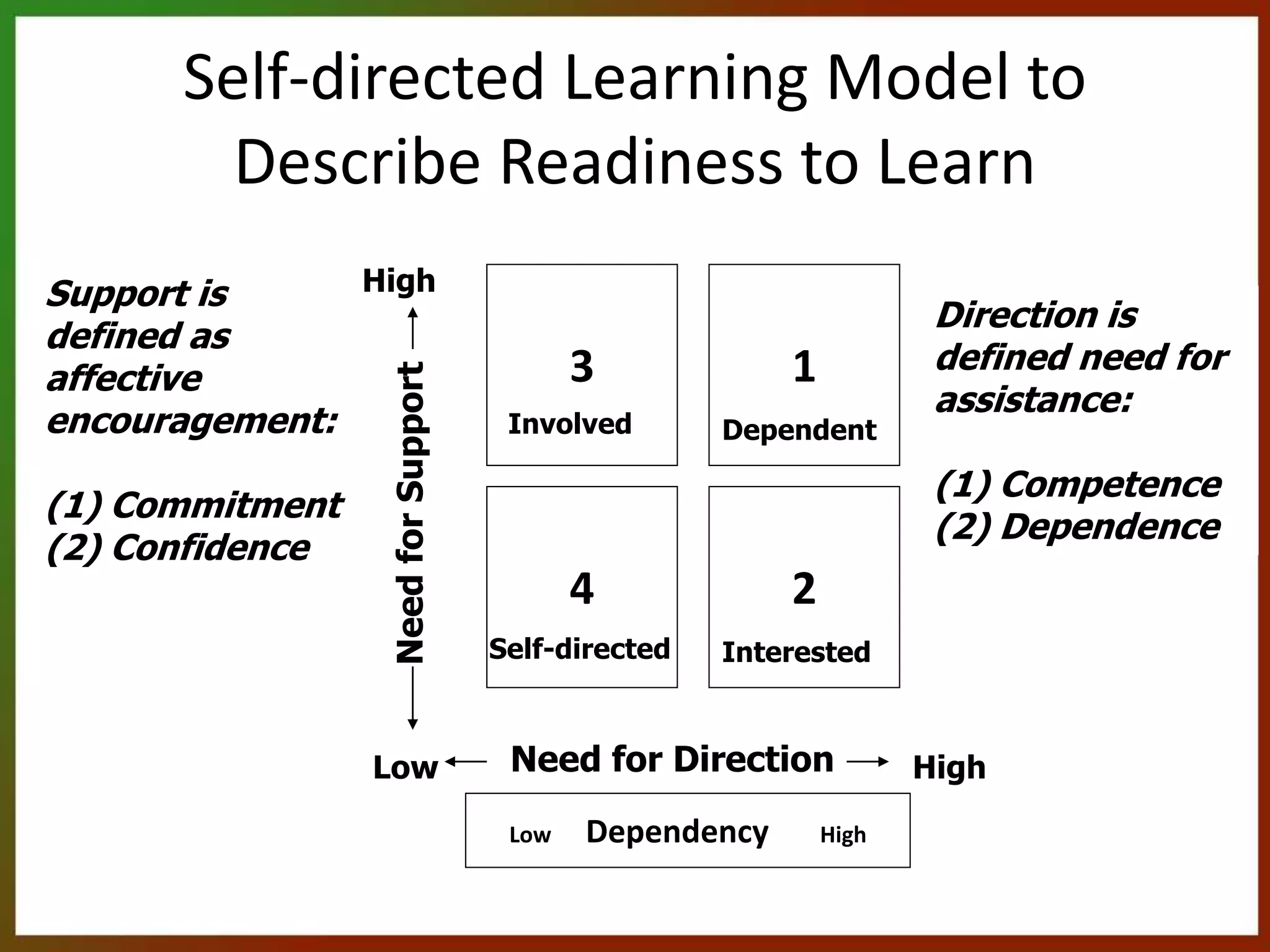
Self-directed Learning Model to
Describe Readiness to Learn
13
24
Low Dependency High
NeedforSupport
Need for DirectionLow
High
High
Dependent
Interested
Involved
Self-directed
Support is
defined as
affective
encouragement:
(1) Commitment
(2) Confidence
Direction is
defined need for
assistance:
(1) Competence
(2) Dependence
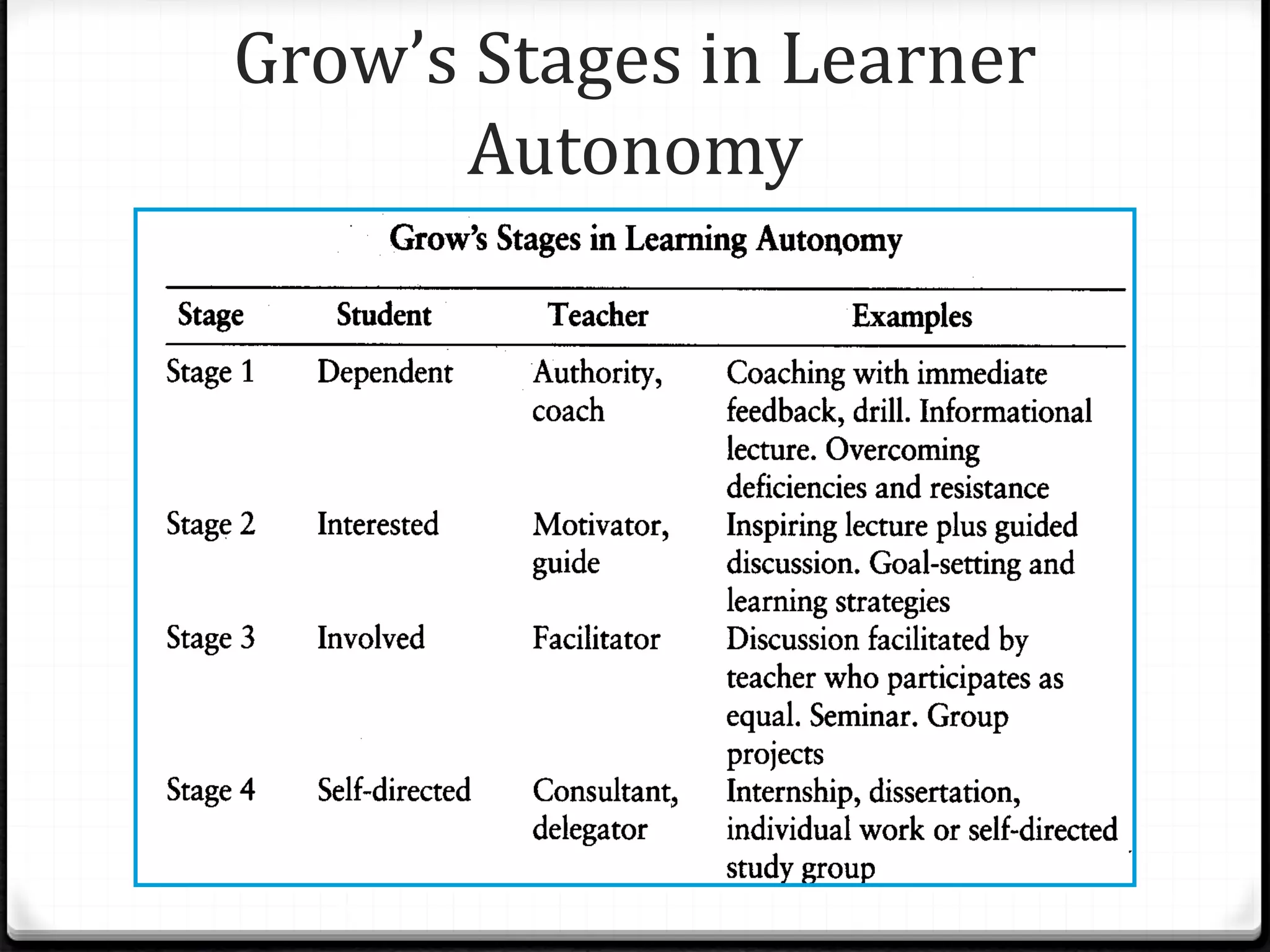
Grow’s Stages in Learner
Autonomy
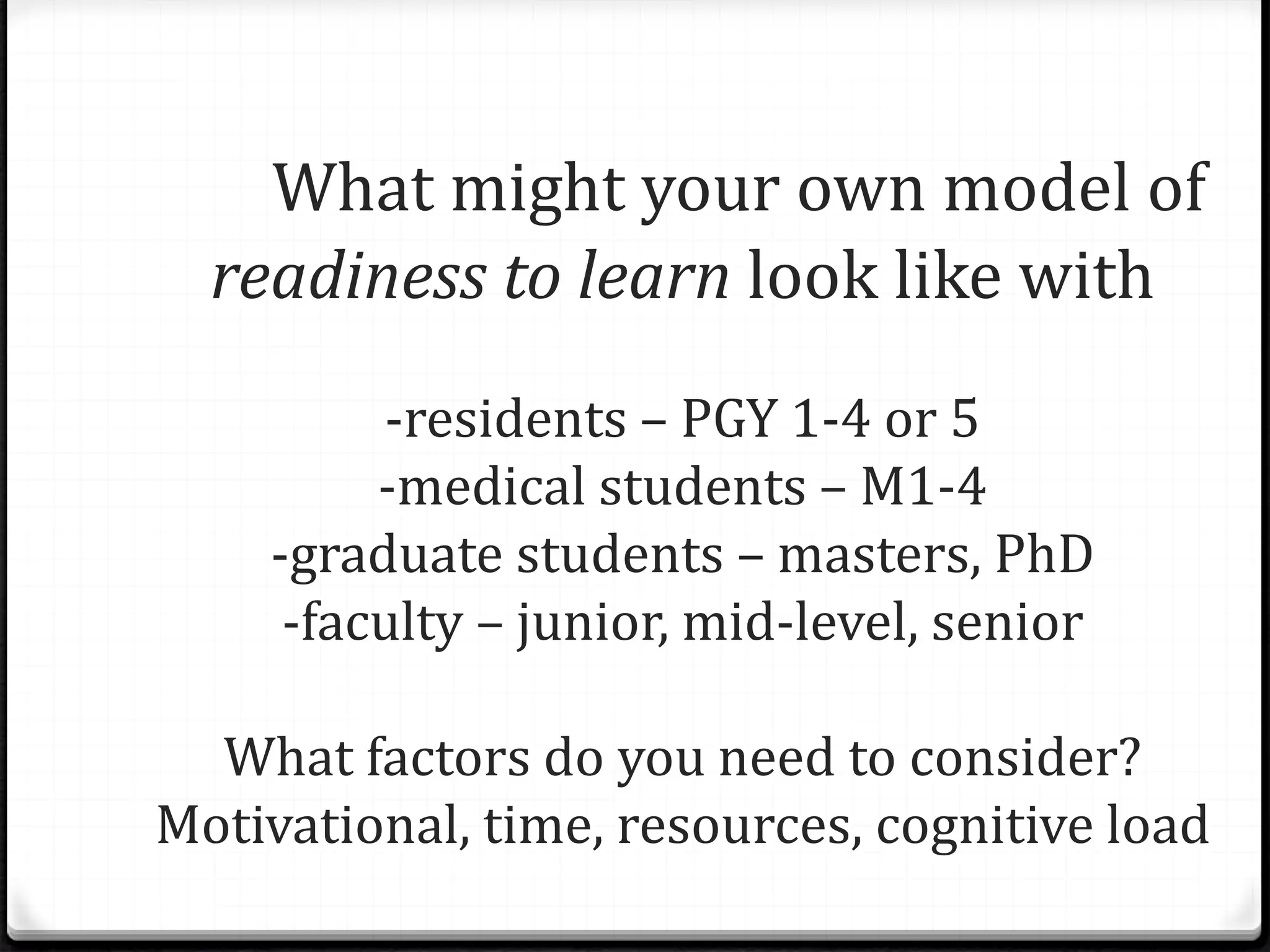
What might your own model of
readiness to learn look like with
-residents – PGY 1-4 or 5
-medical students – M1-4
-graduate students – masters, PhD
-faculty – junior, mid-level, senior
What factors do you need to consider?
Motivational, time, resources, cognitive load
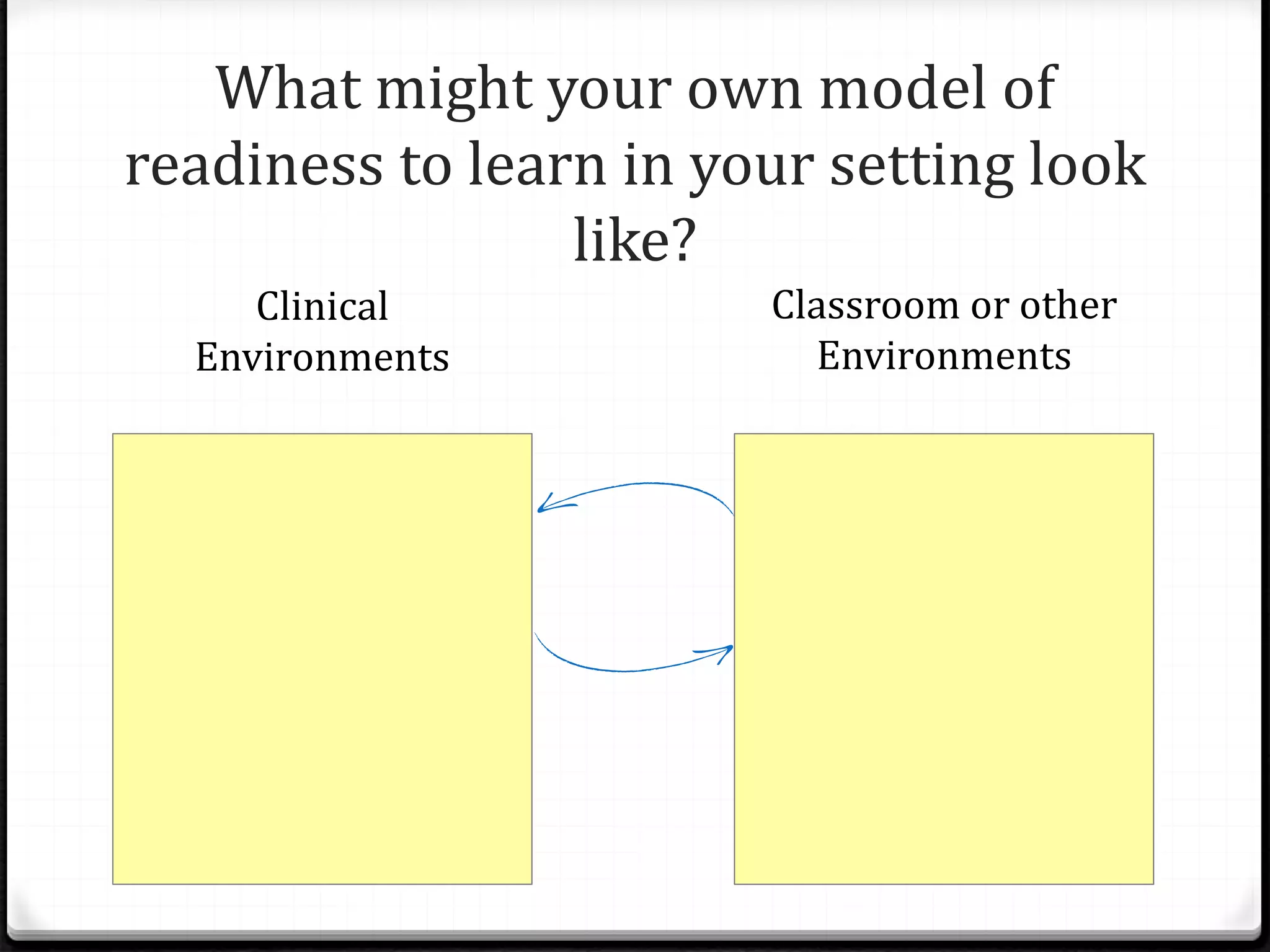
What might your own model of
readiness to learn in your setting look
like?
Clinical
Environments
Classroom or other
Environments
What Do You Know About How
Adult Learning Works?

Class session 11 putting it all together

  • 2.
    Agenda Catching Up withYour Readings – Textbook Highlights Two “pearls” to put into practice and one “surprise”! Expectations for Next Week? Project report-outs, Rubrics. What else? • Ambrose et al., Chapter 6, Student and Trainee development and learning climate • Ambrose et al., Chapter 7, How Students become Self-directed Learners • Vella, Chapters 3 & 4, The Design Steps and The Learning Task in a Small Group • Vella, Chapter 9, Indicators of Learning, Transfer, and Impact
  • 3.
    What competencies doyou want your learners to have to engage in self- directed learning? List as many as you can at your table. Decide which are ones you can teach. Which are ones you can select for in hiring decisions? Answer this question: Is self-directed learning ability an innate characteristic of a learner, or can it be taught to learners? IF you think it can be taught, discuss how.
  • 4.
    Self-directed Learning Modelto Describe Readiness to Learn 13 24 Low Dependency High NeedforSupport Need for DirectionLow High High Dependent Interested Involved Self-directed Support is defined as affective encouragement: (1) Commitment (2) Confidence Direction is defined need for assistance: (1) Competence (2) Dependence
  • 5.
    Grow’s Stages inLearner Autonomy
  • 6.
    What might yourown model of readiness to learn look like with -residents – PGY 1-4 or 5 -medical students – M1-4 -graduate students – masters, PhD -faculty – junior, mid-level, senior What factors do you need to consider? Motivational, time, resources, cognitive load
  • 7.
    What might yourown model of readiness to learn in your setting look like? Clinical Environments Classroom or other Environments
  • 8.
    What Do YouKnow About How Adult Learning Works?