Circulation
Unit 11 – Body Systems
Circulation
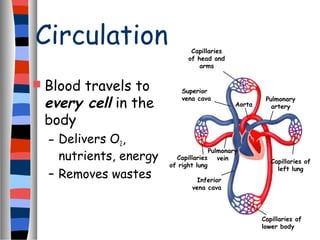
 Blood travels to
every cell in the
body
– Delivers O2,
nutrients, energy
– Removes wastes
j
Capillaries
of head and
arms
Pulmonary
arteryAorta
Superior
vena cava
Inferior
vena cava
Pulmonary
veinCapillaries
of right lung
Capillaries of
left lung
Capillaries of
lower body
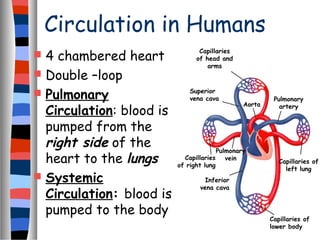
Circulation in Humans
j
Capillaries
of head and
arms
Pulmonary
arteryAorta
Superior
vena cava
Inferior
vena cava
Pulmonary
veinCapillaries
of right lung
Capillaries of
left lung
Capillaries of
lower body
 4 chambered heart
 Double –loop
 Pulmonary
Circulation: blood is
pumped from the
right side of the
heart to the lungs
 Systemic
Circulation: blood is
pumped to the body
Human Heart
 Hollow muscular organ
 Surrounded by a protective sac called
pericardium
 Myocardium - muscle in the heart walls
 A septum divides the heart in half
 Each side has 2 chambers
– Atrium (upper) receives blood
– Ventricles (lower) pump blood OUT of the heart
 Valves keep blood flowing in the right
direction
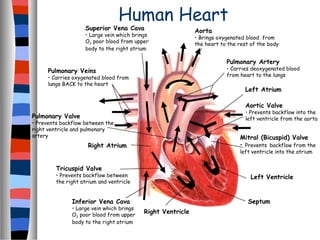
Human Heart
Mitral (Bicuspid) Valve
• Prevents backflow from the
left ventricle into the atrium
Septum
Right Ventricle
Tricuspid Valve
• Prevents backflow between
the right atrium and ventricle
Right Atrium
Pulmonary Artery
• Carries deoxygenated blood
from heart to the lungs
Pulmonary Valve
• Prevents backflow between the
right ventricle and pulmonary
artery
Pulmonary Veins
• Carries oxygenated blood from
lungs BACK to the heart
Aortic Valve
• Prevents backflow into the
left ventricle from the aorta
Left Atrium
Left Ventricle
Superior Vena Cava
• Large vein which brings
O2 poor blood from upper
body to the right atrium
Inferior Vena Cava
• Large vein which brings
O2 poor blood from upper
body to the right atrium
Aorta
• Brings oxygenated blood from
the heart to the rest of the body
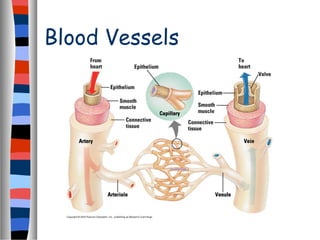
Blood Vessels
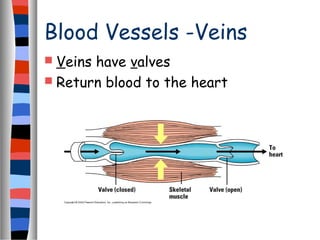
Blood Vessels -Veins
 Veins have valves
 Return blood to the heart
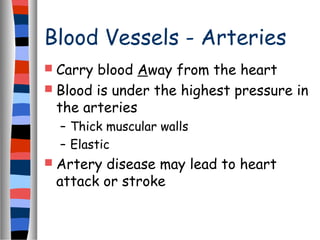
Blood Vessels - Arteries
 Carry blood Away from the heart
 Blood is under the highest pressure in
the arteries
– Thick muscular walls
– Elastic
 Artery disease may lead to heart
attack or stroke
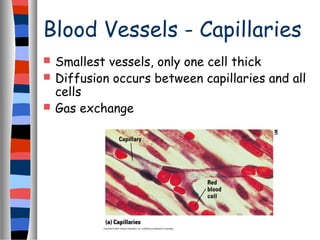
Blood Vessels - Capillaries
 Smallest vessels, only one cell thick
 Diffusion occurs between capillaries and all
cells
 Gas exchange
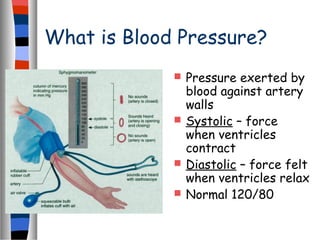
What is Blood Pressure?
 Pressure exerted by
blood against artery
walls
 Systolic – force
when ventricles
contract
 Diastolic – force felt
when ventricles relax
 Normal 120/80
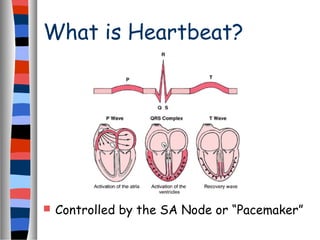
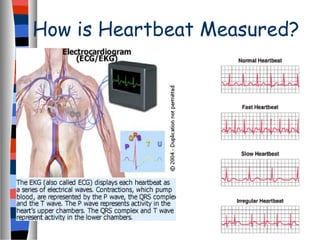
What is Heartbeat?
 Controlled by the SA Node or “Pacemaker”
How is Heartbeat Measured?
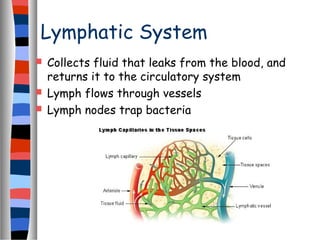
Lymphatic System
 Collects fluid that leaks from the blood, and
returns it to the circulatory system
 Lymph flows through vessels
 Lymph nodes trap bacteria
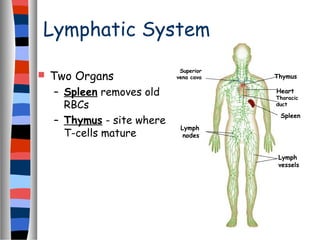
Lymphatic System
 Two Organs
– Spleen removes old
RBCs
– Thymus - site where
T-cells mature
Superior
vena cava
Lymph
nodes
Thymus
Heart
Thoracic
duct
Spleen
Lymph
vessels
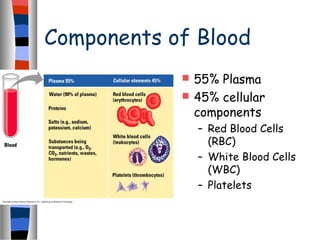
Components of Blood
 55% Plasma
 45% cellular
components
– Red Blood Cells
(RBC)
– White Blood Cells
(WBC)
– Platelets
Components of Blood
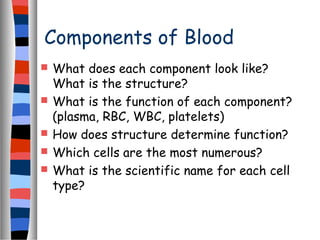
 What does each component look like?
What is the structure?
 What is the function of each component?
(plasma, RBC, WBC, platelets)
 How does structure determine function?
 Which cells are the most numerous?
 What is the scientific name for each cell
type?
Components of Blood
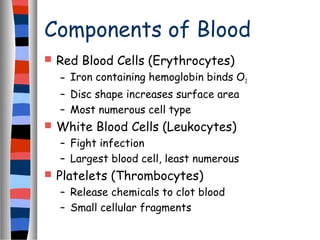
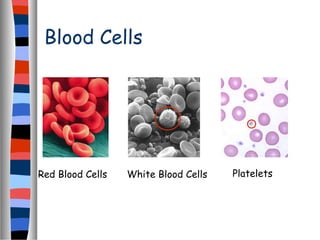
 Red Blood Cells (Erythrocytes)
– Iron containing hemoglobin binds O2
– Disc shape increases surface area
– Most numerous cell type
 White Blood Cells (Leukocytes)
– Fight infection
– Largest blood cell, least numerous
 Platelets (Thrombocytes)
– Release chemicals to clot blood
– Small cellular fragments
Blood Cells
Red Blood Cells White Blood Cells Platelets
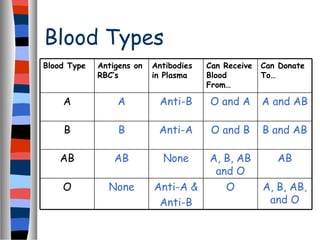
Blood Types
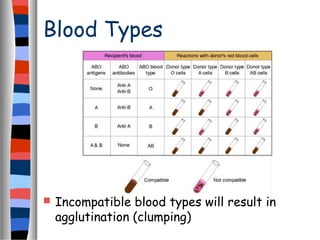
 Incompatible blood types will result in
agglutination (clumping)
Blood Types
A, B, AB,
and O
OAnti-A &
Anti-B
NoneO
ABA, B, AB
and O
NoneABAB
B and ABO and BAnti-ABB
A and ABO and AAnti-BAA
Can Donate
To…
Can Receive
Blood
From…
Antibodies
in Plasma
Antigens on
RBC’s
Blood Type

Circulation human heart shortened and revised

  • 1.
  • 2.
    Circulation  Blood travelsto every cell in the body – Delivers O2, nutrients, energy – Removes wastes j Capillaries of head and arms Pulmonary arteryAorta Superior vena cava Inferior vena cava Pulmonary veinCapillaries of right lung Capillaries of left lung Capillaries of lower body
  • 3.
    Circulation in Humans j Capillaries ofhead and arms Pulmonary arteryAorta Superior vena cava Inferior vena cava Pulmonary veinCapillaries of right lung Capillaries of left lung Capillaries of lower body  4 chambered heart  Double –loop  Pulmonary Circulation: blood is pumped from the right side of the heart to the lungs  Systemic Circulation: blood is pumped to the body
  • 4.
    Human Heart  Hollowmuscular organ  Surrounded by a protective sac called pericardium  Myocardium - muscle in the heart walls  A septum divides the heart in half  Each side has 2 chambers – Atrium (upper) receives blood – Ventricles (lower) pump blood OUT of the heart  Valves keep blood flowing in the right direction
  • 5.
    Human Heart Mitral (Bicuspid)Valve • Prevents backflow from the left ventricle into the atrium Septum Right Ventricle Tricuspid Valve • Prevents backflow between the right atrium and ventricle Right Atrium Pulmonary Artery • Carries deoxygenated blood from heart to the lungs Pulmonary Valve • Prevents backflow between the right ventricle and pulmonary artery Pulmonary Veins • Carries oxygenated blood from lungs BACK to the heart Aortic Valve • Prevents backflow into the left ventricle from the aorta Left Atrium Left Ventricle Superior Vena Cava • Large vein which brings O2 poor blood from upper body to the right atrium Inferior Vena Cava • Large vein which brings O2 poor blood from upper body to the right atrium Aorta • Brings oxygenated blood from the heart to the rest of the body
  • 6.
  • 7.
    Blood Vessels -Veins Veins have valves  Return blood to the heart
  • 8.
    Blood Vessels -Arteries  Carry blood Away from the heart  Blood is under the highest pressure in the arteries – Thick muscular walls – Elastic  Artery disease may lead to heart attack or stroke
  • 9.
    Blood Vessels -Capillaries  Smallest vessels, only one cell thick  Diffusion occurs between capillaries and all cells  Gas exchange
  • 10.
    What is BloodPressure?  Pressure exerted by blood against artery walls  Systolic – force when ventricles contract  Diastolic – force felt when ventricles relax  Normal 120/80
  • 11.
    What is Heartbeat? Controlled by the SA Node or “Pacemaker”
  • 12.
  • 13.
    Lymphatic System  Collectsfluid that leaks from the blood, and returns it to the circulatory system  Lymph flows through vessels  Lymph nodes trap bacteria
  • 14.
    Lymphatic System  TwoOrgans – Spleen removes old RBCs – Thymus - site where T-cells mature Superior vena cava Lymph nodes Thymus Heart Thoracic duct Spleen Lymph vessels
  • 15.
    Components of Blood 55% Plasma  45% cellular components – Red Blood Cells (RBC) – White Blood Cells (WBC) – Platelets
  • 16.
    Components of Blood What does each component look like? What is the structure?  What is the function of each component? (plasma, RBC, WBC, platelets)  How does structure determine function?  Which cells are the most numerous?  What is the scientific name for each cell type?
  • 17.
    Components of Blood Red Blood Cells (Erythrocytes) – Iron containing hemoglobin binds O2 – Disc shape increases surface area – Most numerous cell type  White Blood Cells (Leukocytes) – Fight infection – Largest blood cell, least numerous  Platelets (Thrombocytes) – Release chemicals to clot blood – Small cellular fragments
  • 18.
    Blood Cells Red BloodCells White Blood Cells Platelets
  • 19.
    Blood Types  Incompatibleblood types will result in agglutination (clumping)
  • 20.
    Blood Types A, B,AB, and O OAnti-A & Anti-B NoneO ABA, B, AB and O NoneABAB B and ABO and BAnti-ABB A and ABO and AAnti-BAA Can Donate To… Can Receive Blood From… Antibodies in Plasma Antigens on RBC’s Blood Type