THE CARDIAC CYCLE
By: Christabelle Cécile
Definition
 Cardiac cycle is the complete cycle of events in the
heart from the beginning of one heart beat to the
beginning of the next
 Cardiac muscle differs from all other muscles of the
body
 It is myogenic
 Heart muscle has its own built in mechanism for
bringing about: contraction & relaxation
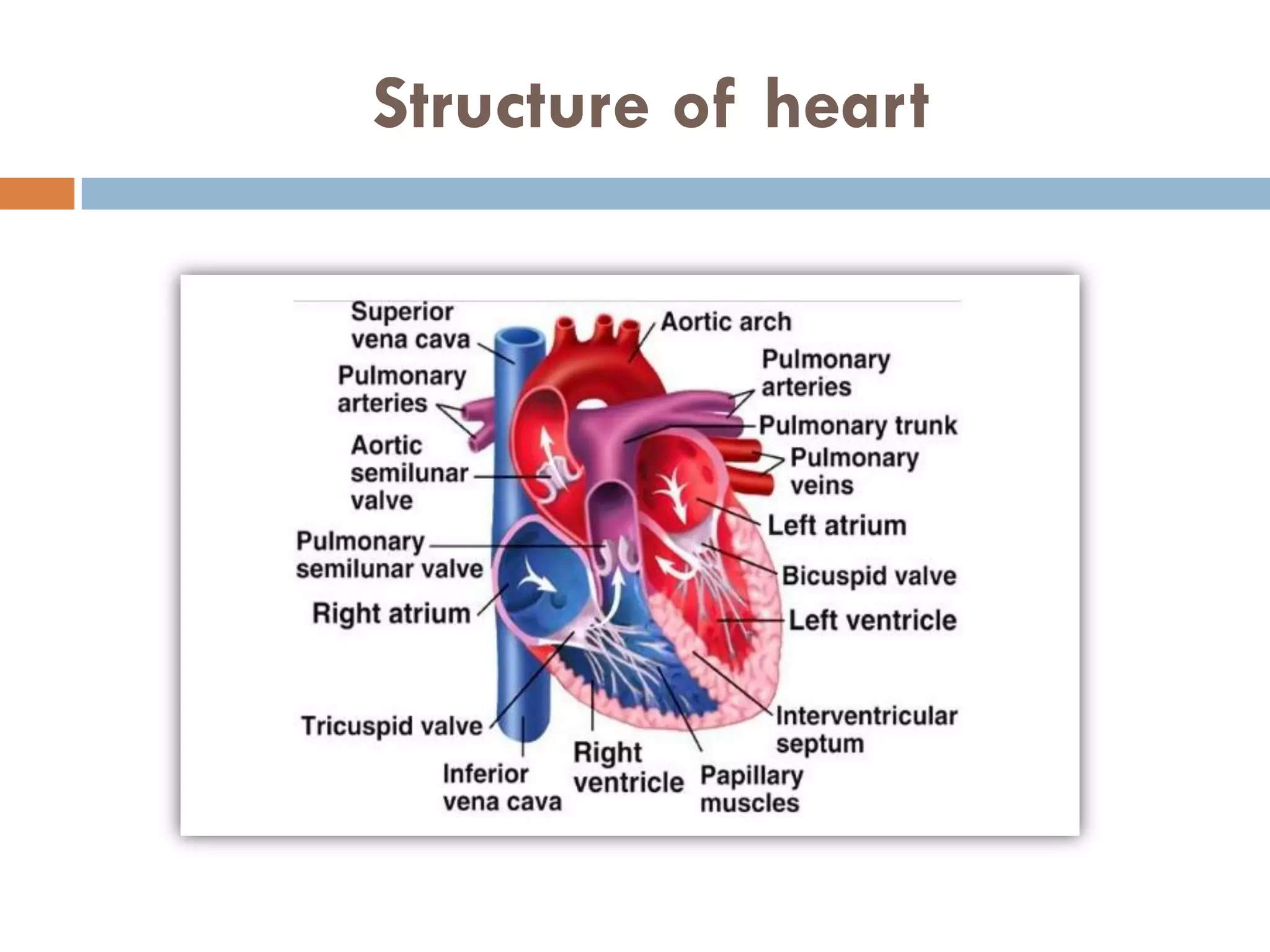
Structure of heart
Mechanism
 Heart muscle cells cannot contract by their own
natural rhythms
 So, cardiac cycle is initiated in a specialised patch
of muscle
 Found in the right atrium called the sino-atrial node
(SAN)
 Located near the opening of venae cavae
 Consists of a small number of cardiac muscle fibres and
few nerve endings
 Stimulus for contraction of the heart is originated in the
SAN
Mechanism
 However, there is a band of fibres between the
atria and ventricles which does not conduct the
excitation wave of the SAN
 The only route through is via a patch of conducting
fibres
 Called the atrio-ventricular node (AVN) situated in the
septum
Mechanism
 AVN picks up excitation wave as it spreads across
the atria and passes it on to a bunch of conducting
fibres
 called the Purkyne tissue
 This transmits the excitation wave rapidly down to
the base of the septum and then to the walls of the
ventricles
 Thus, causing the cardiac muscle in these walls to
contract. Squeezing blood upwards and into
arteries
4 stages of Cardiac Cycle
Stage 1 – Atrial diastole
 Bicuspid and tricuspid valves are closed
 Muscles in the atria relaxes and the pressure
decreases while volume increases inside
 Blood returns to the heart under low pressure in the
veins and enters the two atria
 The venae cavae carry deoxygenated blood to the
right atrium
 The pulmonary veins carry oxygenated blood to the
left atrium
Stage 2 – Atrial systole
 It is the time when the heart is filled with blood
 The muscle in the atrial walls contracts with the help
of SAN
 The pressure increases and the atrio-ventricular
valves open so the blood found in atria is forced
into the ventricles
 Blood from atria does not go back into the
pulmonary veins or the venae cavae because of the
semilunar valves which prevent backflow
Stage 3 – Ventricular systole
 0.1 second after the contraction of the atria, the
ventricles also contract
 Thick muscular walls of the ventricles squeeze inwards
on the blood, increasing pressure and pushing it out of
the heart
 As pressure in ventricles become greater than that in
atria, the atrio-ventricular valves shut, preventing
backflow to the atria
 Instead, blood rushes upwards into the aorta and the
pulmonary artery, pushing open the semilunar valves
Stage 4 – Ventricular diastole
 Here, the muscles relaxes
 As this happens, pressure in ventricles drops
 The high-pressure blood which has just been pushed
into the arteries would flow back into the ventricles
 But, this is prevented by the presence of the
semilunar valves which snap shut as the blood fills
their cusps

The Cardiac Cycle

  • 1.
    THE CARDIAC CYCLE By:Christabelle Cécile
  • 2.
    Definition  Cardiac cycleis the complete cycle of events in the heart from the beginning of one heart beat to the beginning of the next  Cardiac muscle differs from all other muscles of the body  It is myogenic  Heart muscle has its own built in mechanism for bringing about: contraction & relaxation
  • 3.
  • 4.
    Mechanism  Heart musclecells cannot contract by their own natural rhythms  So, cardiac cycle is initiated in a specialised patch of muscle  Found in the right atrium called the sino-atrial node (SAN)  Located near the opening of venae cavae  Consists of a small number of cardiac muscle fibres and few nerve endings  Stimulus for contraction of the heart is originated in the SAN
  • 5.
    Mechanism  However, thereis a band of fibres between the atria and ventricles which does not conduct the excitation wave of the SAN  The only route through is via a patch of conducting fibres  Called the atrio-ventricular node (AVN) situated in the septum
  • 6.
    Mechanism  AVN picksup excitation wave as it spreads across the atria and passes it on to a bunch of conducting fibres  called the Purkyne tissue  This transmits the excitation wave rapidly down to the base of the septum and then to the walls of the ventricles  Thus, causing the cardiac muscle in these walls to contract. Squeezing blood upwards and into arteries
  • 7.
    4 stages ofCardiac Cycle
  • 8.
    Stage 1 –Atrial diastole  Bicuspid and tricuspid valves are closed  Muscles in the atria relaxes and the pressure decreases while volume increases inside  Blood returns to the heart under low pressure in the veins and enters the two atria  The venae cavae carry deoxygenated blood to the right atrium  The pulmonary veins carry oxygenated blood to the left atrium
  • 9.
    Stage 2 –Atrial systole  It is the time when the heart is filled with blood  The muscle in the atrial walls contracts with the help of SAN  The pressure increases and the atrio-ventricular valves open so the blood found in atria is forced into the ventricles  Blood from atria does not go back into the pulmonary veins or the venae cavae because of the semilunar valves which prevent backflow
  • 10.
    Stage 3 –Ventricular systole  0.1 second after the contraction of the atria, the ventricles also contract  Thick muscular walls of the ventricles squeeze inwards on the blood, increasing pressure and pushing it out of the heart  As pressure in ventricles become greater than that in atria, the atrio-ventricular valves shut, preventing backflow to the atria  Instead, blood rushes upwards into the aorta and the pulmonary artery, pushing open the semilunar valves
  • 11.
    Stage 4 –Ventricular diastole  Here, the muscles relaxes  As this happens, pressure in ventricles drops  The high-pressure blood which has just been pushed into the arteries would flow back into the ventricles  But, this is prevented by the presence of the semilunar valves which snap shut as the blood fills their cusps