CHAPTER 7
Section 3 Notes
TROUBLE ON THE FRONTIER; MONEY PROBLEMS
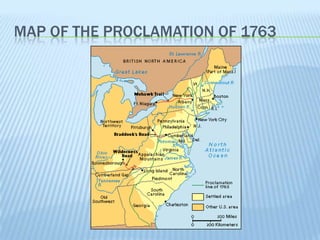
 After the FRENCH AND INDIAN WAR, BRITISH
colonists sought to settle the territory won from
FRANCE. However, the BRITISH government closed
the lands to settlement due to fear of NATIVE
AMERICAN ATTACKS. The order was known as the
PROCLAMATION OF 1763. Many colonists reacted
angrily to the order.
 After the war, the BRITISH government and the
colonists also clashed over the issue of MONEY. The
BRITISH wanted the colonists to HELP PAY OFF
WAR DEBT. The colonists believed that BRITAIN had
a duty to protect the colonies.
MAP OF THE PROCLAMATION OF 1763
STAMP ACT CONTROVERSY
 In 1765, Parliament passed the STAMP ACT. This law
forced the colonists to PAY A SPECIAL TAX ON ITEMS
THAT WERE STAMPED. These items included
NEWSPAPERS, PLAYING CARDS, and LEGAL
DOCUMENTS.
 The colonists claimed that as BRITISH citizens, they
could be taxed only by a BODY THAT REPRESENTED
THEM. Since they had no representation in Parliament,
they accused the BRITISH government of violating the
notion of NO TAXATION WITHOUT REPRESENTATION.
 The colonists BOYCOTTED numerous stamped items
and formed the STAMP ACT CONGRESS to protest the
act.
 In 1766, Parliament repealed the STAMP ACT.
MORE CONFLICTS WITH PARLIAMENT; TALK OF
INDEPENDENCE
 In 1767, Parliament passed the TOWNSHEND
ACTS. These acts placed import taxes on numerous
items including PAINT, PAPER, and TEA. The act
also allowed BRITISH officials to freely search
COLONISTS’ PROPERTY FOR SMUGGLED
GOODS.
 The colonists responded by BOYCOTTING many
British goods.
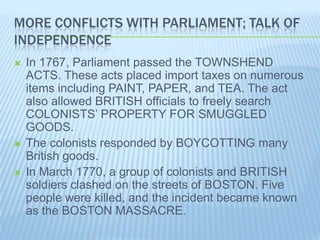
 In March 1770, a group of colonists and BRITISH
soldiers clashed on the streets of BOSTON. Five
people were killed, and the incident became known
as the BOSTON MASSACRE.
BOSTON MASSACRE
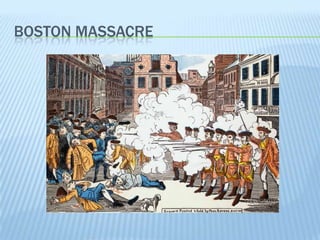
BOSTON MASSACRE
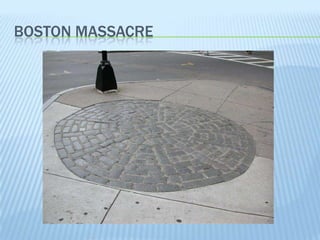
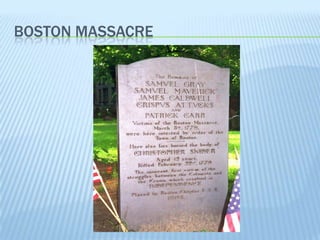
BOSTON MASSACRE
THE CONFLICT INCREASES
 In 1772, as the crisis with the BRITISH grew, colonial
leaders organized COMMITTEES OF
CORRESPONDENCE. These groups worked as a
network for passing along news of important events.
 In 1773, the BRITISH government pass the TEA ACT. The
act gave the EAST INDIA COMPANY exclusive rights to
sell TEA to the American colonies. As a result, colonial
TEA merchants were cut out of business.
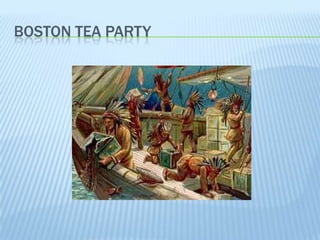
 In the fall of 1773, a group of colonists crept onto a ship in
BOSTON HARBOR loaded with East India TEA. The
colonists dumped the tea into the water to protest the TEA
ACT. Their action became known as the BOSTON TEA
PARTY.
BOSTON TEA PARTY

Chapter 7 Section 3 Notes

  • 1.
  • 2.
    TROUBLE ON THEFRONTIER; MONEY PROBLEMS  After the FRENCH AND INDIAN WAR, BRITISH colonists sought to settle the territory won from FRANCE. However, the BRITISH government closed the lands to settlement due to fear of NATIVE AMERICAN ATTACKS. The order was known as the PROCLAMATION OF 1763. Many colonists reacted angrily to the order.  After the war, the BRITISH government and the colonists also clashed over the issue of MONEY. The BRITISH wanted the colonists to HELP PAY OFF WAR DEBT. The colonists believed that BRITAIN had a duty to protect the colonies.
  • 3.
    MAP OF THEPROCLAMATION OF 1763
  • 4.
    STAMP ACT CONTROVERSY In 1765, Parliament passed the STAMP ACT. This law forced the colonists to PAY A SPECIAL TAX ON ITEMS THAT WERE STAMPED. These items included NEWSPAPERS, PLAYING CARDS, and LEGAL DOCUMENTS.  The colonists claimed that as BRITISH citizens, they could be taxed only by a BODY THAT REPRESENTED THEM. Since they had no representation in Parliament, they accused the BRITISH government of violating the notion of NO TAXATION WITHOUT REPRESENTATION.  The colonists BOYCOTTED numerous stamped items and formed the STAMP ACT CONGRESS to protest the act.  In 1766, Parliament repealed the STAMP ACT.
  • 5.
    MORE CONFLICTS WITHPARLIAMENT; TALK OF INDEPENDENCE  In 1767, Parliament passed the TOWNSHEND ACTS. These acts placed import taxes on numerous items including PAINT, PAPER, and TEA. The act also allowed BRITISH officials to freely search COLONISTS’ PROPERTY FOR SMUGGLED GOODS.  The colonists responded by BOYCOTTING many British goods.  In March 1770, a group of colonists and BRITISH soldiers clashed on the streets of BOSTON. Five people were killed, and the incident became known as the BOSTON MASSACRE.
  • 6.
  • 7.
  • 8.
  • 9.
    THE CONFLICT INCREASES In 1772, as the crisis with the BRITISH grew, colonial leaders organized COMMITTEES OF CORRESPONDENCE. These groups worked as a network for passing along news of important events.  In 1773, the BRITISH government pass the TEA ACT. The act gave the EAST INDIA COMPANY exclusive rights to sell TEA to the American colonies. As a result, colonial TEA merchants were cut out of business.  In the fall of 1773, a group of colonists crept onto a ship in BOSTON HARBOR loaded with East India TEA. The colonists dumped the tea into the water to protest the TEA ACT. Their action became known as the BOSTON TEA PARTY.
  • 10.