The French & Indian War (1756  to 1763) “The Great War for Empire”
Was 1763  a "turning point"  in British-colonial relationships???
North America in 1750
British French Fort Necessity  Fort Duquesne   *  George Washington  *  Delaware & Shawnee   Indians The  Ohio Valley 1754    The First Clash
Ben Franklin    representatives from   New England, NY, MD, PA Albany Congress     failed Iroquois   broke off relations with    Britain & threatened to   trade with the French. 1754    Albany Plan of Union
Gen. Edward Braddock    evict the  French from the OH Valley & Canada  (Newfoundland & Nova Scotia) Attacks OH Valley, Mohawk Valley,   & Acadia. Killed 10 mi. from Ft. Duquesne     by 1500 French and Indian forces. Only Br. Success    expelled France    from Louisiana.  CAJUNS 1755    Br. Decides to Eliminate Fr. Presence in No. Amer.
Native American tribes  exploited both sides!  Lord  Loudouin Marquis  de Montcalm 1756    War Is Formally    Declared!
March in formation or    bayonet charge. Br. officers wanted to   take charge of colonials. Prima Donna Br.    officers with servants   & tea settings. Drills & tough   discipline. Colonists should pay   for their own defense. Indian-style guerilla   tactics. Col. militias served   under own captains. No mil. deference or   protocols observed. Resistance to rising   taxes. Casual,    non-professionals. Methods of Fighting: Military Organization: Military Discipline: Finances: Demeanor: British-American Colonial Tensions British Colonials
He understood colonial concerns. He offered them a compromise: -  col. loyalty & mil. cooperation-->Br.    would reimburse col. assemblies for   their costs. -   Lord Loudoun would be removed. RESULTS?     Colonial morale   increased by 1758. 1757    William Pitt Becomes Foreign Minister
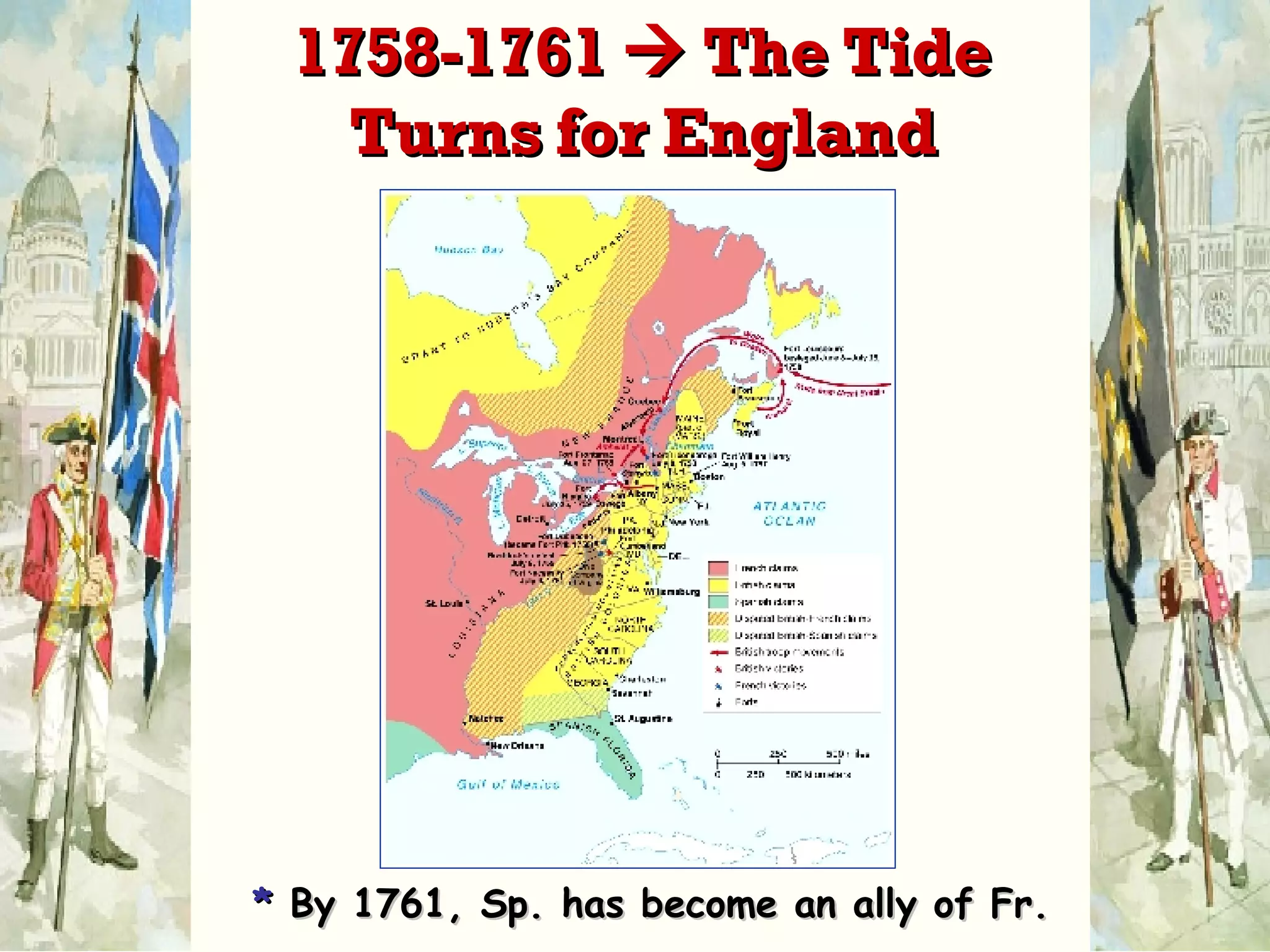
*   By 1761, Sp. has become an ally of Fr. 1758-1761    The Tide Turns for England
France -->  lost her Canadian possessions, most of her empire in India, and claims  to lands east of the Mississippi River. Spain -->   got all French lands west of the Mississippi River, New Orleans, but lost Florida to England. England -->   got all French lands in Canada, exclusive rights to Caribbean slave trade, and commercial dominance  in India. 1763    Treaty of Paris
North America in 1763
1.   It increased her colonial empire in    the Americas. 2.   It greatly enlarged England’s debt. 3.   Britain’s contempt for the colonials    created bitter feelings. Therefore, England felt that a major reorganization of her  American Empire  was necessary! Effects of the War  on Britain?
1.   It united them against a   common enemy for the first   time. 2.   It created a socializing   experience for all the    colonials who participated. 3.   It created bitter feelings    towards the British that   would only intensify. Effects of the War on the American Colonials
1763      Pontiac’s Rebellion Fort Detroit British “gifts” of smallpox-infected blankets from Fort Pitt. The Aftermath:  Tensions Along the Frontier
Pontiac’s Rebellion (1763)
British     Proclamation   Line of 1763. Colonials    Paxton Boys (PA) BACKLASH!
Br. Gvt. measures to prevent smuggling: James Otis’  case Protection of a citizen’s  private property must be  held in higher regard  than a parliamentary   statute. 1761     writs of assistance He lost    parliamentary  law and custom had equal weight. Rethinking Their Empire
1.   Sugar Act - 1764 2.   Currency Act - 1764 4.   Stamp Act - 1765 3.   Quartering Act - 1765 George Grenville’s Program, 1763-1765
Real Whigs Q->   What was the extent of Parliament’s   authority over the colonies?? Absolute? OR  Limited? Q->   How could the colonies give or    withhold consent for parliamentary   legislation when they did not have   representation in that body?? Theories of Representation
Loyal Nine   - 1765 Sons of Liberty   –  began in NYC: Samuel  Adams Stamp Act Congress   – 1765     *   Stamp Act Resolves Declaratory Act   – 1766 Stamp Act Crisis
1767     William Pitt, P. M. & Charles    Townshend, Secretary of   the Exchequer. Shift from paying taxes for Br. war    debts & quartering of troops     paying col. govt. salaries. He diverted revenue collection from    internal to  external trade. Tax these imports    paper, paint,   lead, glass, tea. Increase custom officials at    American ports    established a    Board of Customs in Boston. Townshend Duties Crisis:  1767-1770
1.   John Dickinson    1768   *   Letters from a Farmer in   Pennsylvania . 2.   1768    2 nd  non-importation    movement:   *   “Daughters of Liberty”   *   spinning bees 3.   Riots against customs agents:   *  John Hancock’s ship, the    Liberty .   *  4000 British troops sent    to Boston. Colonial Response to the Townshend Duties
"patriots!" For the first time,  many colonists began calling people  who joined the non-importation movement,

French And Indian War

  • 1.
    The French &Indian War (1756 to 1763) “The Great War for Empire”
  • 2.
    Was 1763 a "turning point" in British-colonial relationships???
  • 3.
  • 4.
    British French FortNecessity Fort Duquesne * George Washington * Delaware & Shawnee Indians The Ohio Valley 1754  The First Clash
  • 5.
    Ben Franklin  representatives from New England, NY, MD, PA Albany Congress  failed Iroquois broke off relations with Britain & threatened to trade with the French. 1754  Albany Plan of Union
  • 6.
    Gen. Edward Braddock  evict the French from the OH Valley & Canada (Newfoundland & Nova Scotia) Attacks OH Valley, Mohawk Valley, & Acadia. Killed 10 mi. from Ft. Duquesne  by 1500 French and Indian forces. Only Br. Success  expelled France from Louisiana. CAJUNS 1755  Br. Decides to Eliminate Fr. Presence in No. Amer.
  • 7.
    Native American tribes exploited both sides! Lord Loudouin Marquis de Montcalm 1756  War Is Formally Declared!
  • 8.
    March in formationor bayonet charge. Br. officers wanted to take charge of colonials. Prima Donna Br. officers with servants & tea settings. Drills & tough discipline. Colonists should pay for their own defense. Indian-style guerilla tactics. Col. militias served under own captains. No mil. deference or protocols observed. Resistance to rising taxes. Casual, non-professionals. Methods of Fighting: Military Organization: Military Discipline: Finances: Demeanor: British-American Colonial Tensions British Colonials
  • 9.
    He understood colonialconcerns. He offered them a compromise: - col. loyalty & mil. cooperation-->Br. would reimburse col. assemblies for their costs. - Lord Loudoun would be removed. RESULTS?  Colonial morale increased by 1758. 1757  William Pitt Becomes Foreign Minister
  • 10.
    * By 1761, Sp. has become an ally of Fr. 1758-1761  The Tide Turns for England
  • 11.
    France --> lost her Canadian possessions, most of her empire in India, and claims to lands east of the Mississippi River. Spain --> got all French lands west of the Mississippi River, New Orleans, but lost Florida to England. England --> got all French lands in Canada, exclusive rights to Caribbean slave trade, and commercial dominance in India. 1763  Treaty of Paris
  • 12.
  • 13.
    1. It increased her colonial empire in the Americas. 2. It greatly enlarged England’s debt. 3. Britain’s contempt for the colonials created bitter feelings. Therefore, England felt that a major reorganization of her American Empire was necessary! Effects of the War on Britain?
  • 14.
    1. It united them against a common enemy for the first time. 2. It created a socializing experience for all the colonials who participated. 3. It created bitter feelings towards the British that would only intensify. Effects of the War on the American Colonials
  • 15.
    1763  Pontiac’s Rebellion Fort Detroit British “gifts” of smallpox-infected blankets from Fort Pitt. The Aftermath: Tensions Along the Frontier
  • 16.
  • 17.
    British  Proclamation Line of 1763. Colonials  Paxton Boys (PA) BACKLASH!
  • 18.
    Br. Gvt. measuresto prevent smuggling: James Otis’ case Protection of a citizen’s private property must be held in higher regard than a parliamentary statute. 1761  writs of assistance He lost  parliamentary law and custom had equal weight. Rethinking Their Empire
  • 19.
    1. Sugar Act - 1764 2. Currency Act - 1764 4. Stamp Act - 1765 3. Quartering Act - 1765 George Grenville’s Program, 1763-1765
  • 20.
    Real Whigs Q-> What was the extent of Parliament’s authority over the colonies?? Absolute? OR Limited? Q-> How could the colonies give or withhold consent for parliamentary legislation when they did not have representation in that body?? Theories of Representation
  • 21.
    Loyal Nine - 1765 Sons of Liberty – began in NYC: Samuel Adams Stamp Act Congress – 1765 * Stamp Act Resolves Declaratory Act – 1766 Stamp Act Crisis
  • 22.
    1767  William Pitt, P. M. & Charles Townshend, Secretary of the Exchequer. Shift from paying taxes for Br. war debts & quartering of troops  paying col. govt. salaries. He diverted revenue collection from internal to external trade. Tax these imports  paper, paint, lead, glass, tea. Increase custom officials at American ports  established a Board of Customs in Boston. Townshend Duties Crisis: 1767-1770
  • 23.
    1. John Dickinson  1768 * Letters from a Farmer in Pennsylvania . 2. 1768  2 nd non-importation movement: * “Daughters of Liberty” * spinning bees 3. Riots against customs agents: * John Hancock’s ship, the Liberty . * 4000 British troops sent to Boston. Colonial Response to the Townshend Duties
  • 24.
    "patriots!" For thefirst time, many colonists began calling people who joined the non-importation movement,