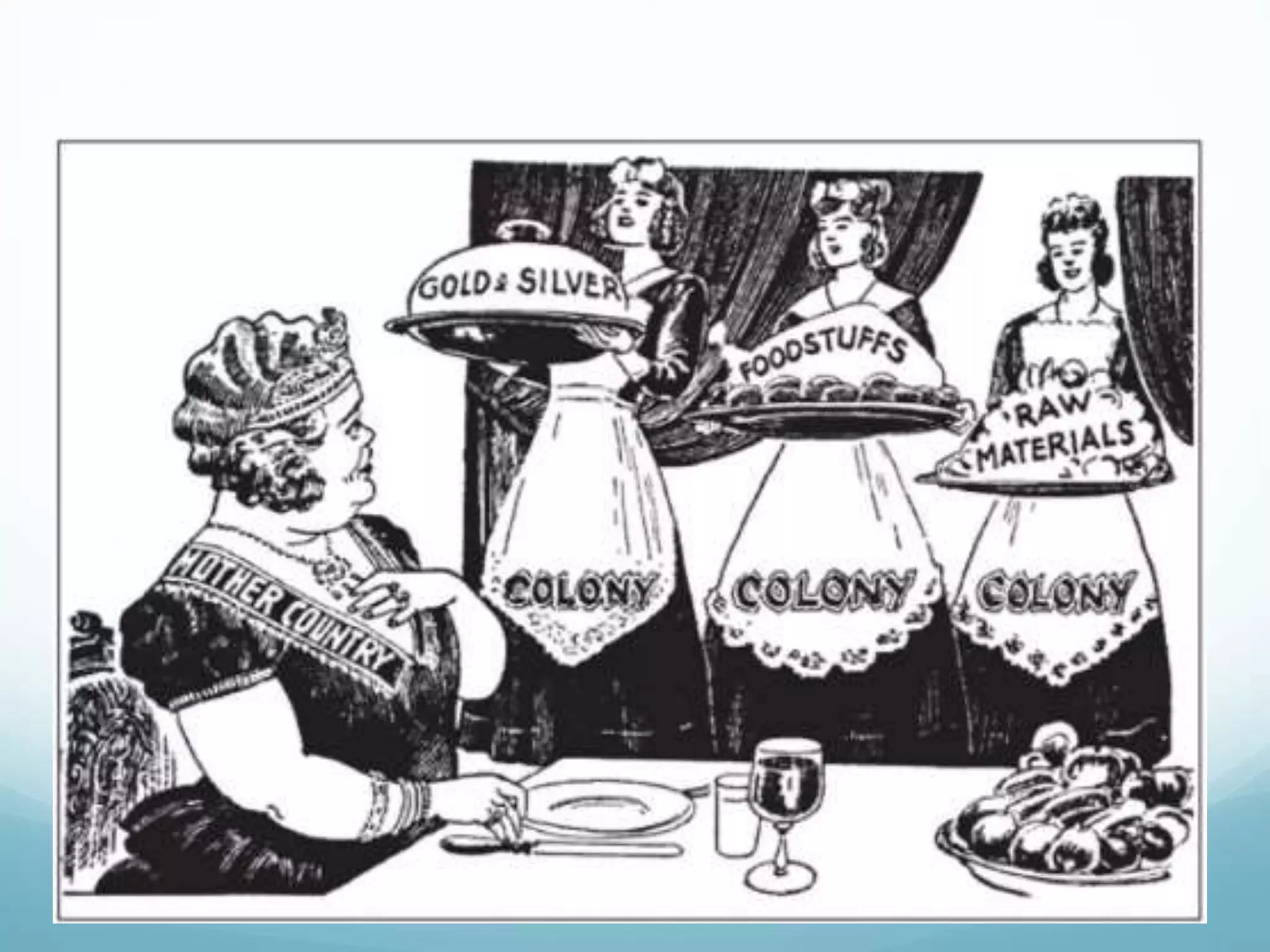
 Many colonist benefited from the trade relationship 
with the home country. 
 Main purpose of the colonial system was to enrich 
Britain
 1650 
 Policy/Theory 
 Economic theory that states a nation becomes stronger by 
keeping strict CONTROL over its trade. 
 A nation should have more EXPORTS than imports 
 Colonies existed for one purpose only: to enrich the MOTHER 
LAND!
 Trade system 
 Americans provide raw goods to Britain 
 Britain used the raw goods to produce 
manufactured goods 
 Sold in European markets and back to the 
colonies 
• NO SHARING: only English ships and merchants 
were used for manufacturing and shipping goods 
to the colonies
& 
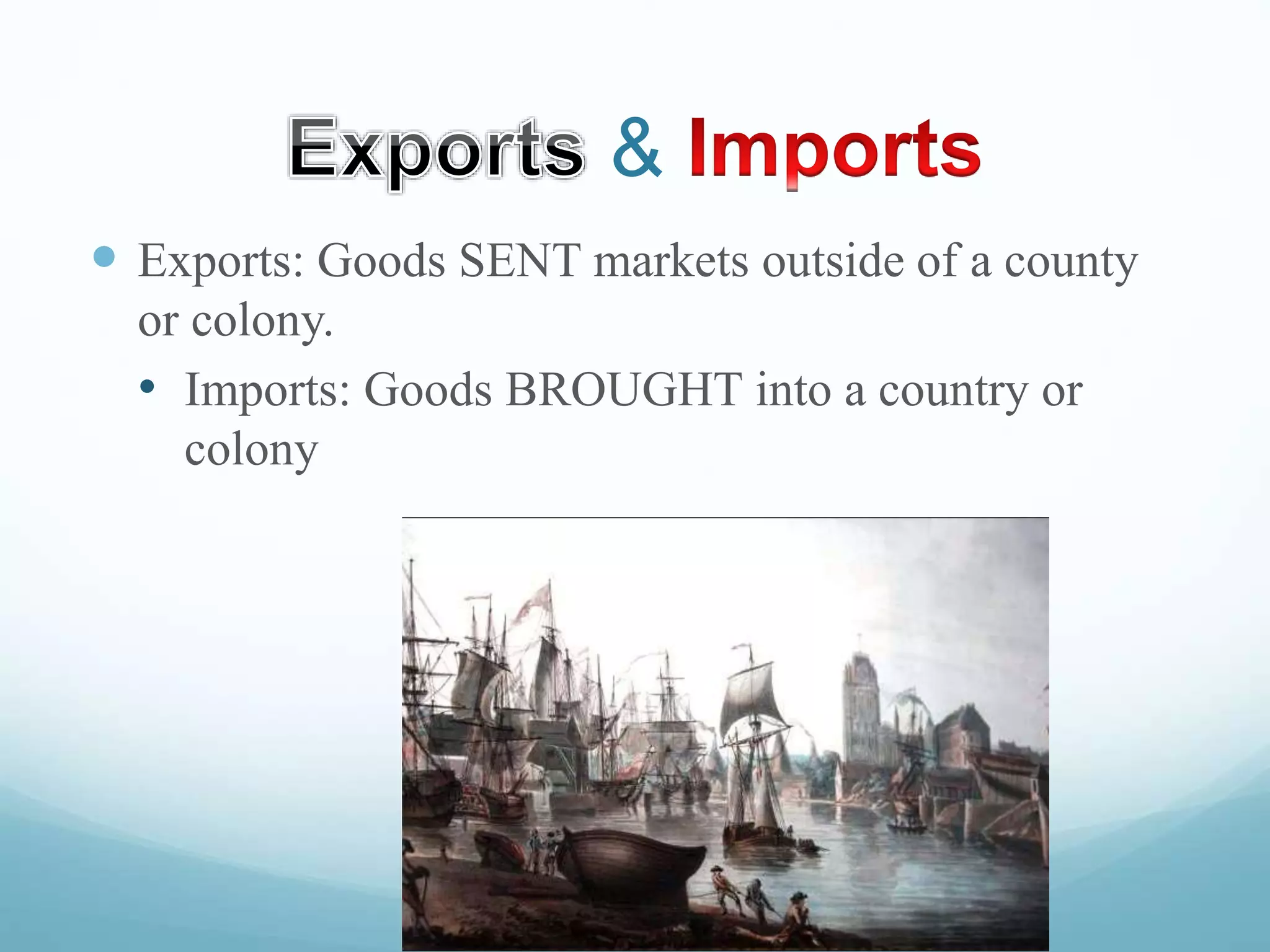
 Exports: Goods SENT markets outside of a county 
or colony. 
• Imports: Goods BROUGHT into a country or 
colony
 Theory of Mercantilism, why do you want to 
have more exports than imports? 
 Answer: If you EARN (exports) more than you 
SPEND (imports), then you will be left with a profit 
in the end.
 As the colonies became more successful and 
profitable, England began to increase control over 
the colonies 
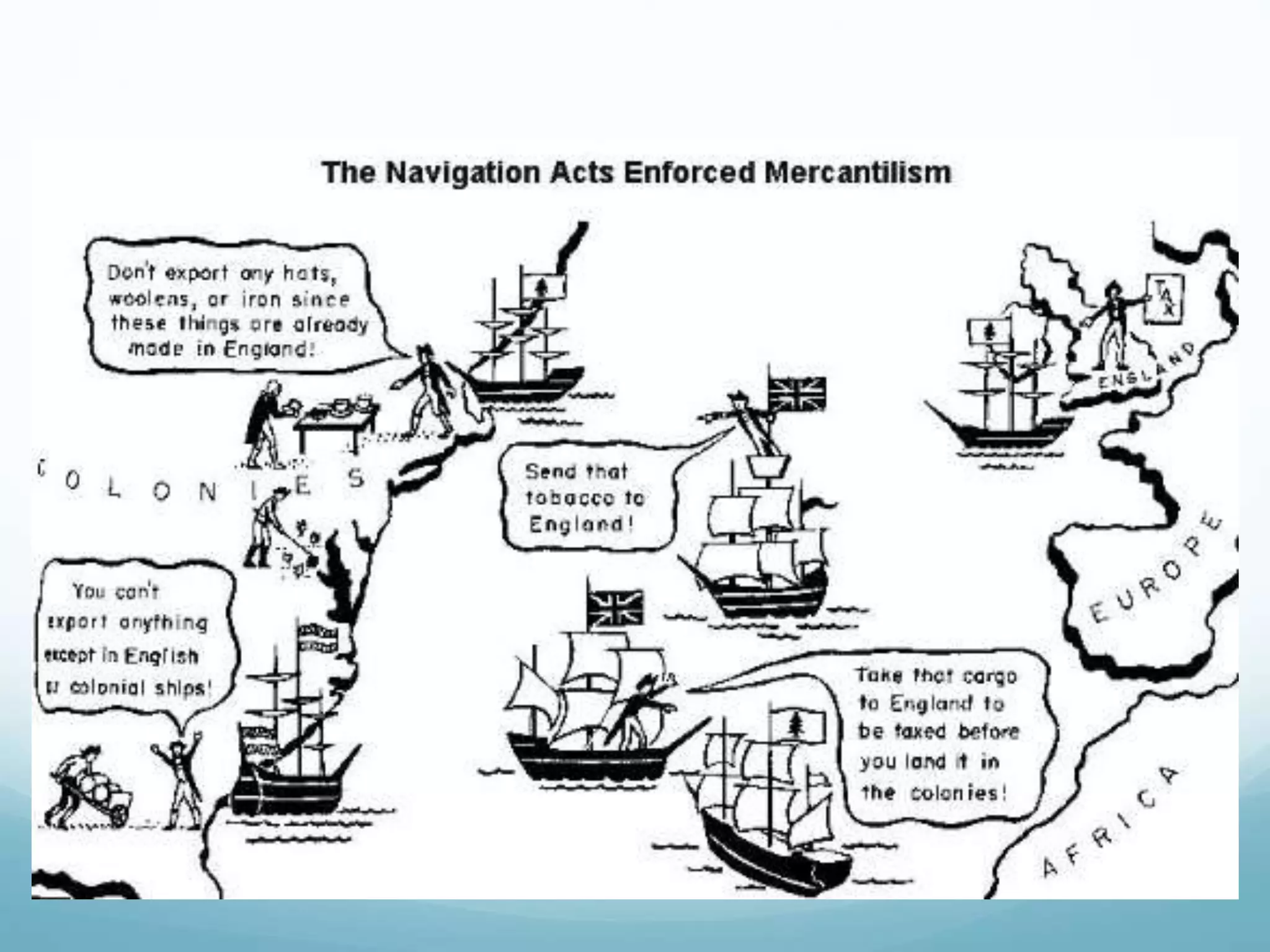
 The first major Act which was placed over the 
colonist was the Navigation Acts. 
 Between 1651 and 1673 
 Detailed series of laws that restricted colonial trade
-No country can trade with the colonies unless the 
goods were shipped in either colonial or English 
ships 
-All vessels must be operated by crews that were 
at least ¾ English or colonial 
-Colonies can export certain products ONLY to 
England 
-Almost all goods traded between the colonies and 
Europe had to pass through an English port
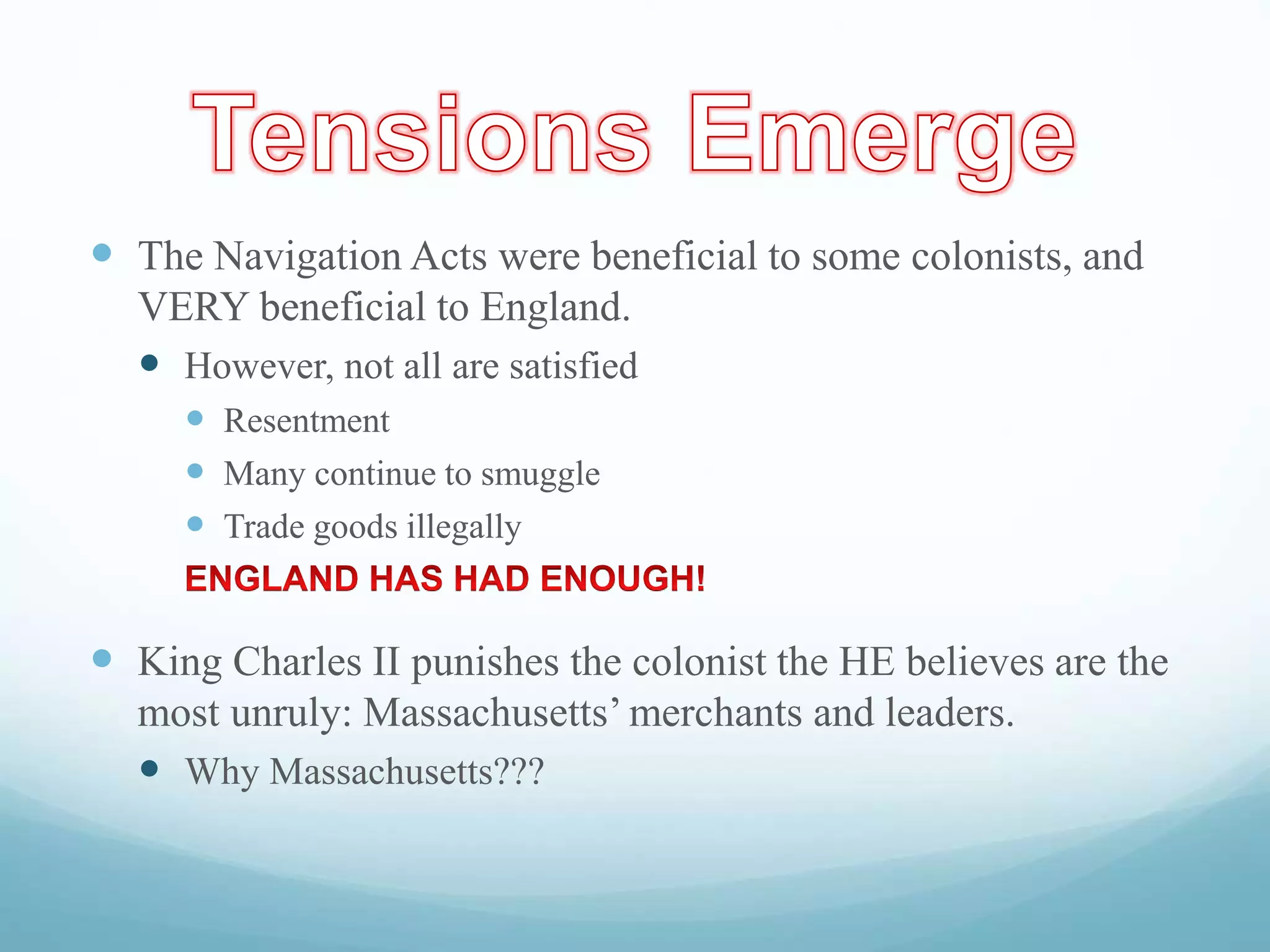
 The Navigation Acts were beneficial to some colonists, and 
VERY beneficial to England. 
 However, not all are satisfied 
 Resentment 
 Many continue to smuggle 
 Trade goods illegally 
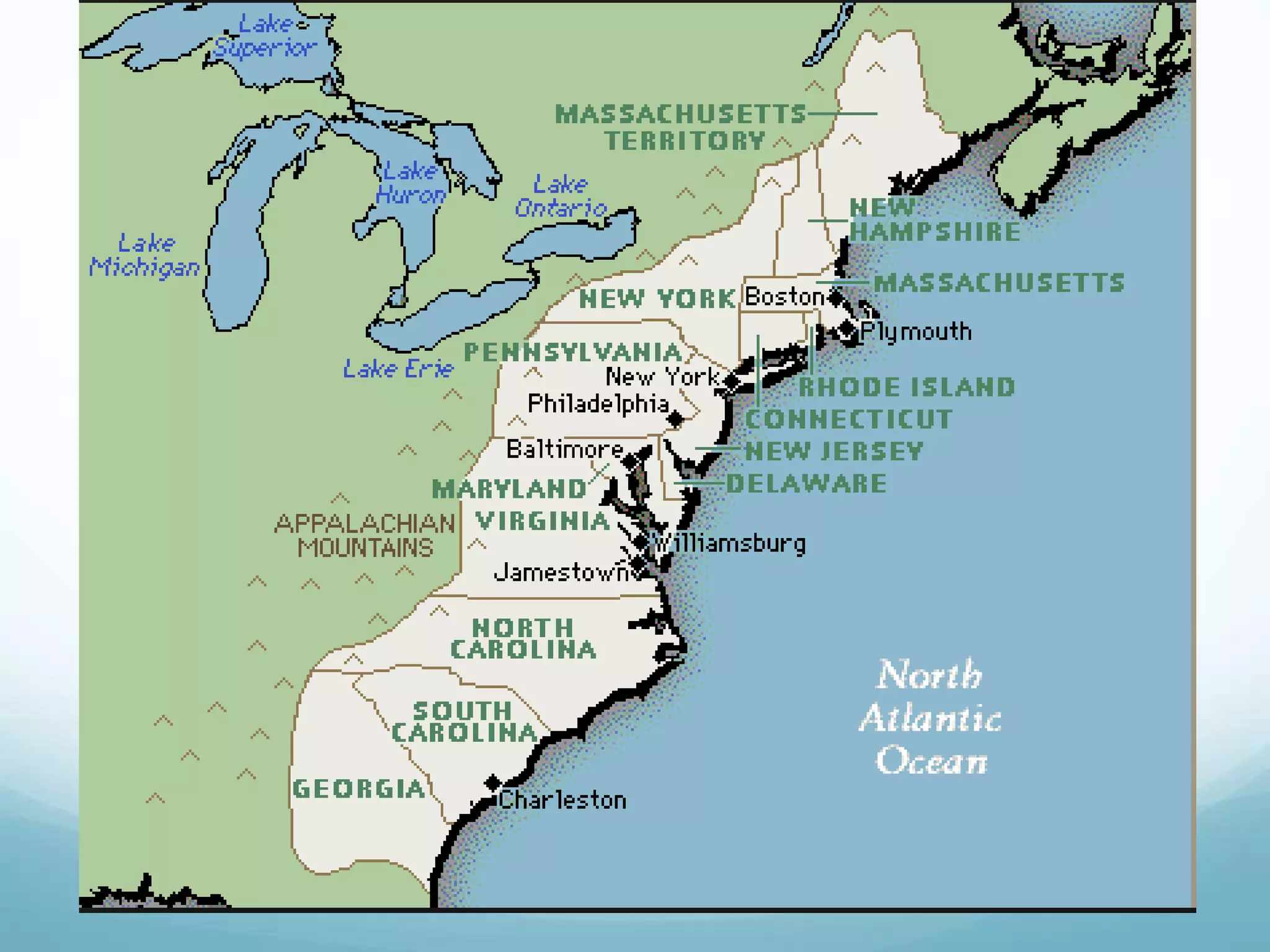
 King Charles II punishes the colonist the HE believes are the 
most unruly: Massachusetts’ merchants and leaders. 
 Why Massachusetts???
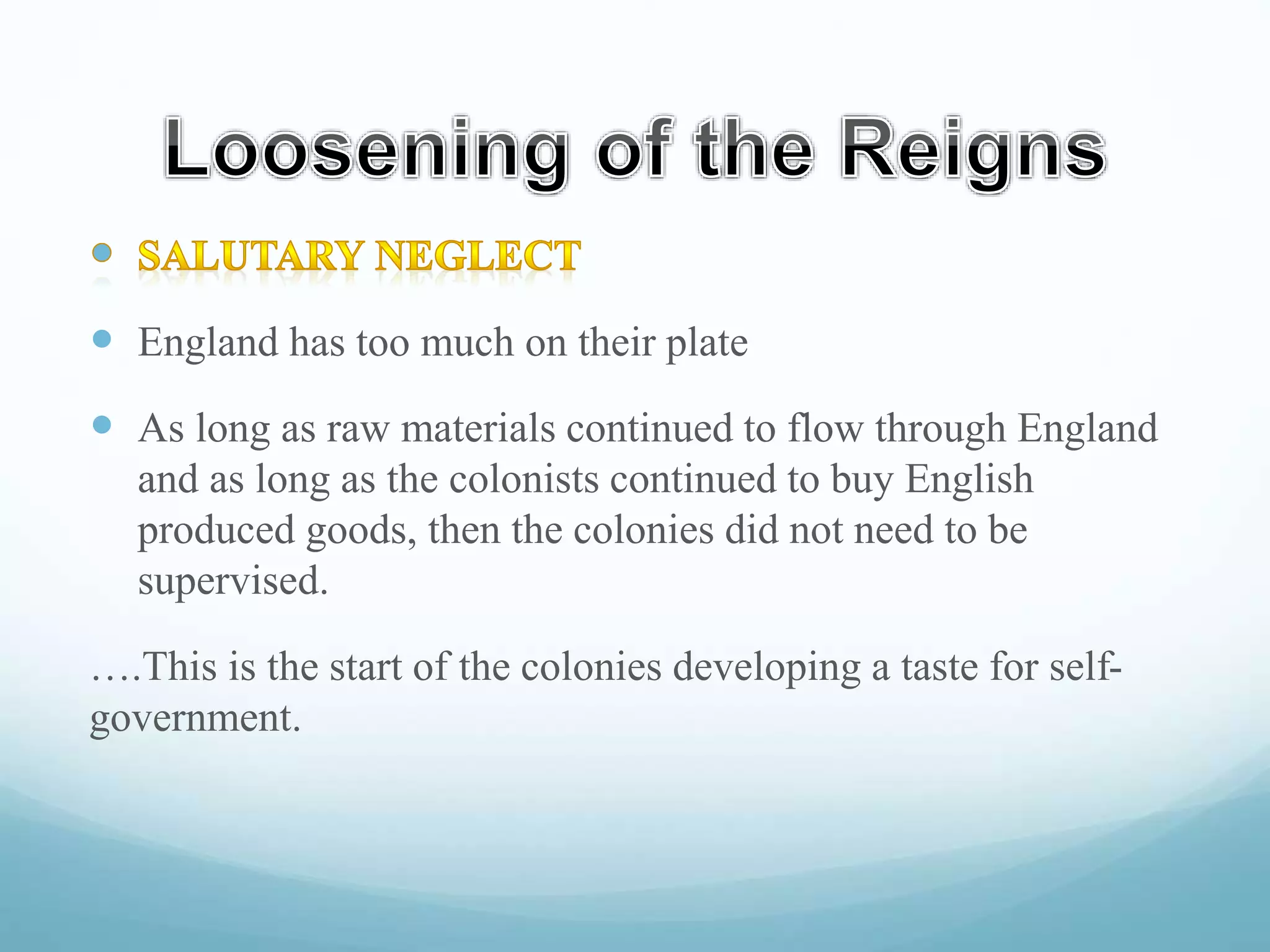
 England has too much on their plate 
 As long as raw materials continued to flow through England 
and as long as the colonists continued to buy English 
produced goods, then the colonies did not need to be 
supervised. 
….This is the start of the colonies developing a taste for self-government.
 
 British mercantilism 
manifested itself in the 
form of the triangular 
trade. Trade routes 
linked the colonies, 
West Indies, England, 
and Africa
 New England rum was 
shipped to Africa and 
traded for slaves 
 Slaves are brought to the 
West Indies and traded for 
sugar and molasses. 
- 
 Raw goods were shipped 
from the colonies to 
England, where they were 
swapped for a cargo of 
manufactured goods
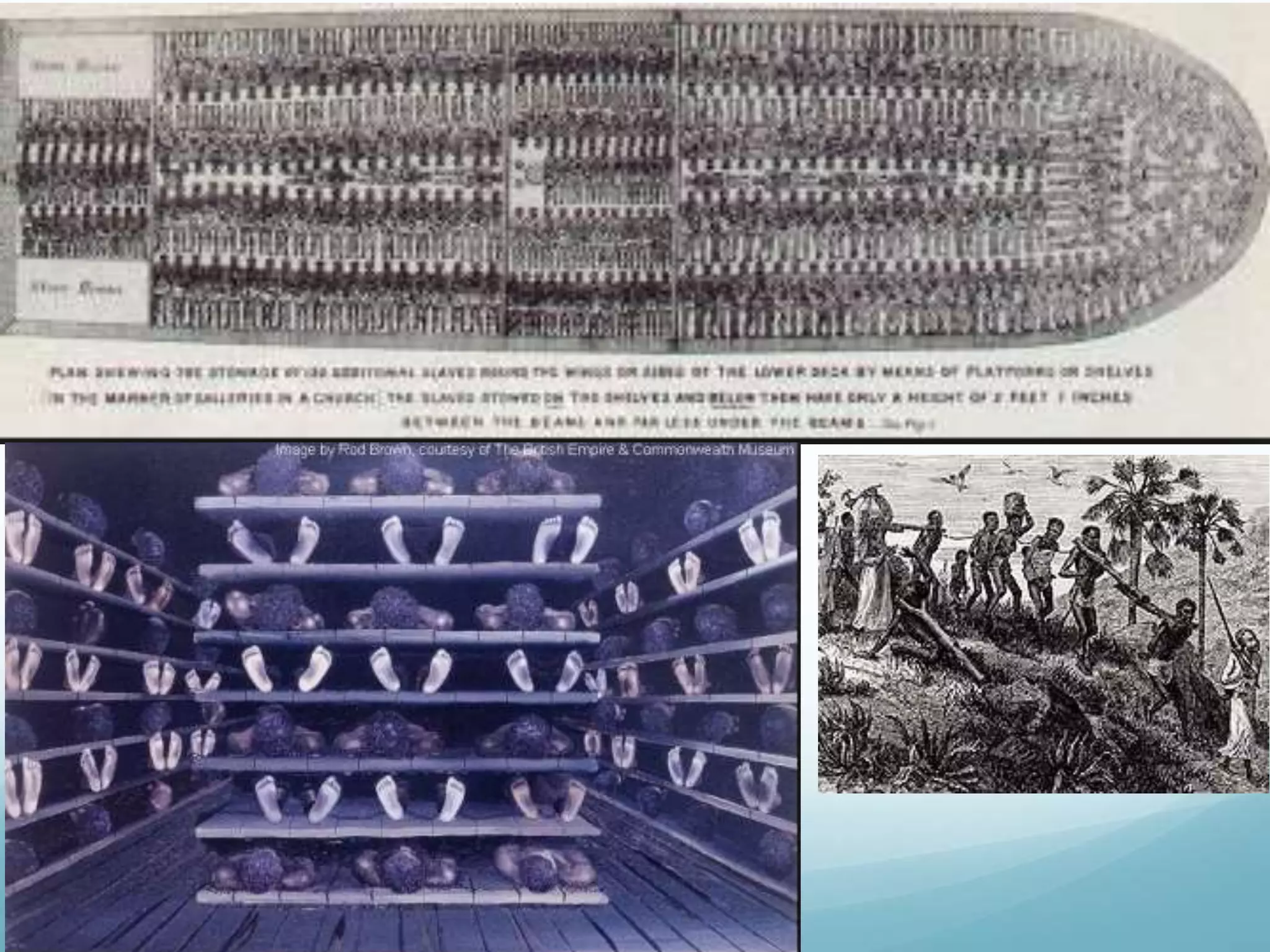
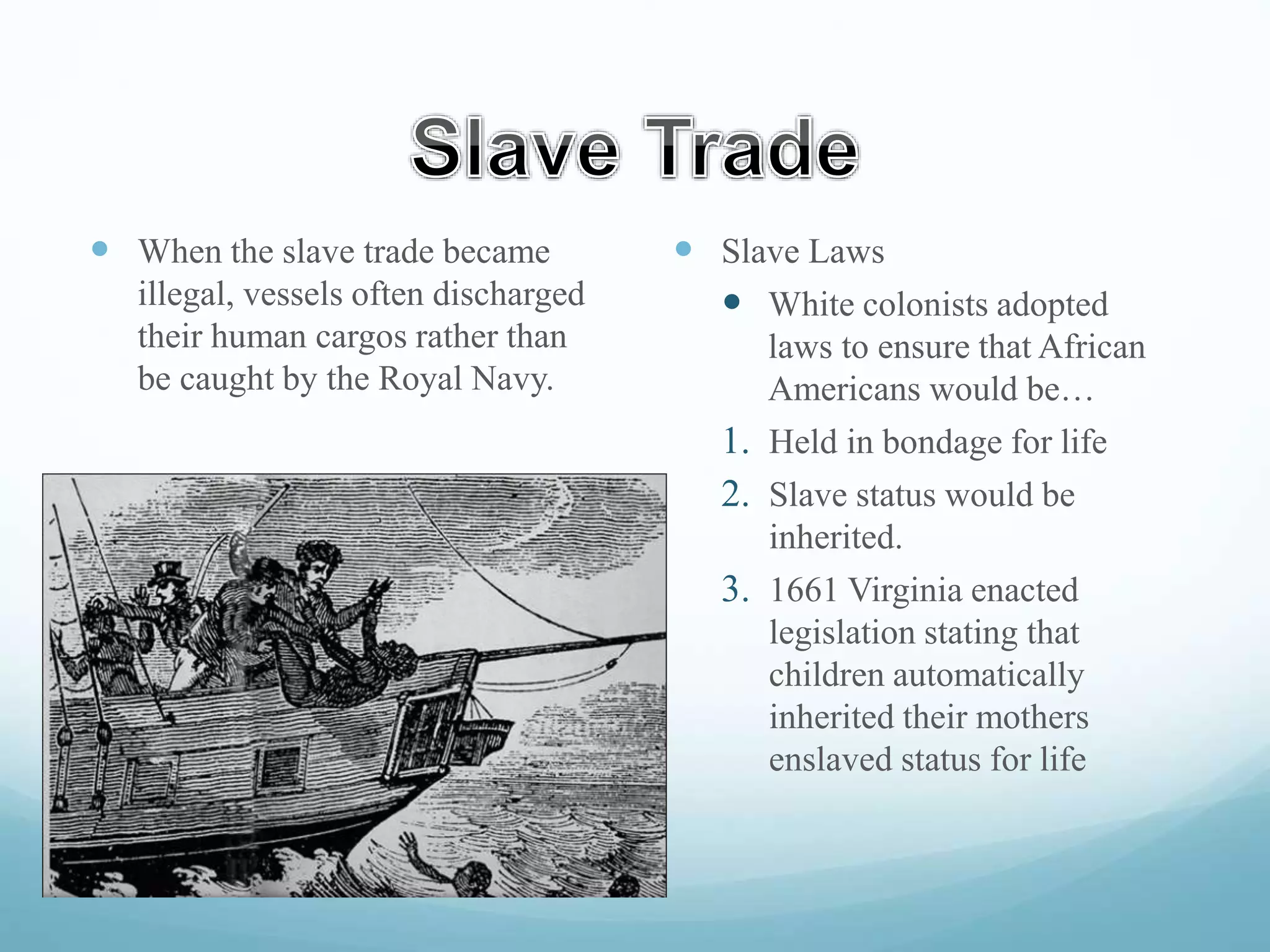
 When the slave trade became 
illegal, vessels often discharged 
their human cargos rather than 
be caught by the Royal Navy. 
 Slave Laws 
 White colonists adopted 
laws to ensure that African 
Americans would be… 
1. Held in bondage for life 
2. Slave status would be 
inherited. 
3. 1661 Virginia enacted 
legislation stating that 
children automatically 
inherited their mothers 
enslaved status for life
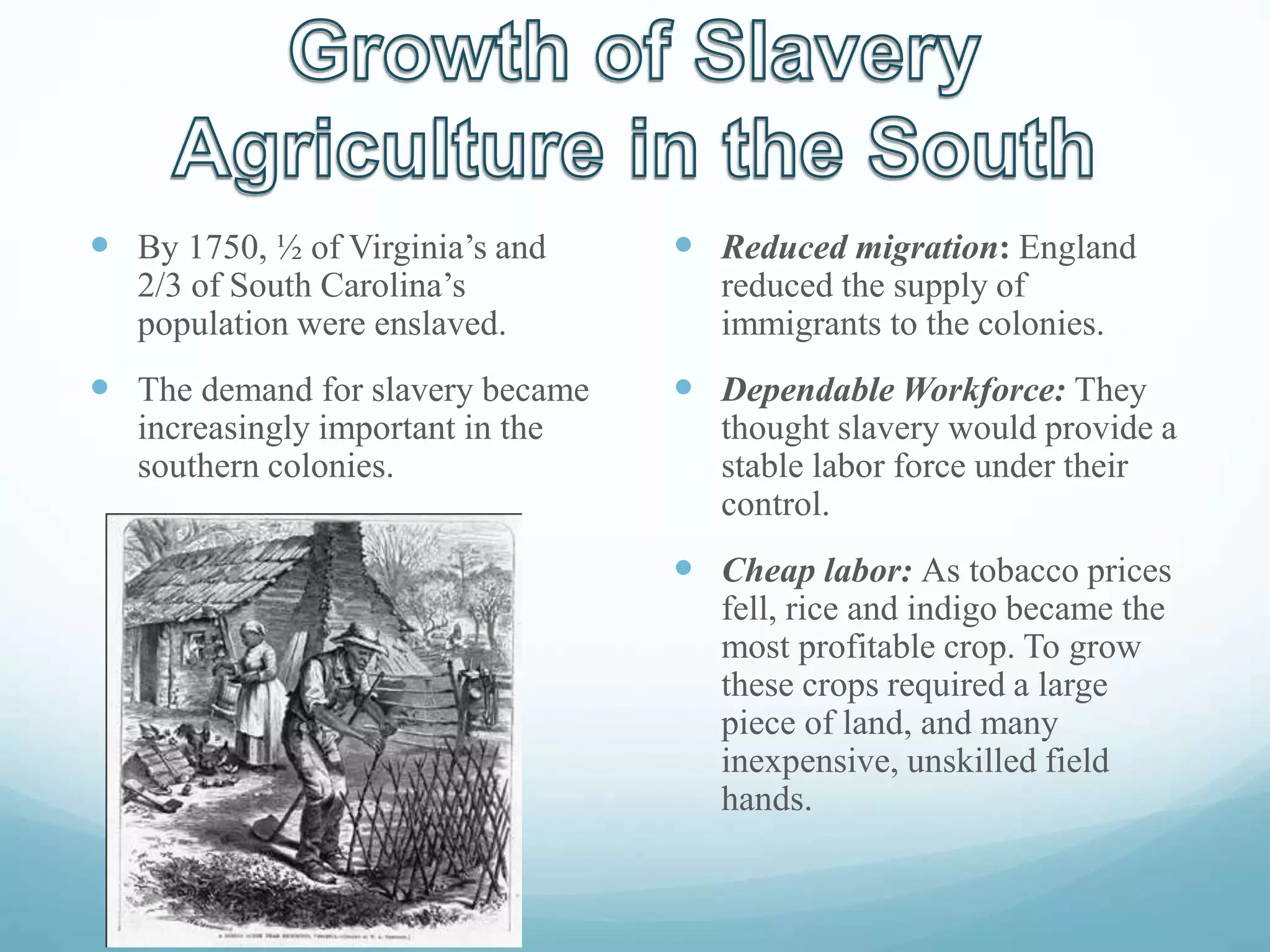
 By 1750, ½ of Virginia’s and 
2/3 of South Carolina’s 
population were enslaved. 
 The demand for slavery became 
increasingly important in the 
southern colonies. 
 Reduced migration: England 
reduced the supply of 
immigrants to the colonies. 
 Dependable Workforce: They 
thought slavery would provide a 
stable labor force under their 
control. 
 Cheap labor: As tobacco prices 
fell, rice and indigo became the 
most profitable crop. To grow 
these crops required a large 
piece of land, and many 
inexpensive, unskilled field 
hands.
The thirteen colonies, mercantilism, navigation acts

The thirteen colonies, mercantilism, navigation acts

  • 2.
     Many colonistbenefited from the trade relationship with the home country.  Main purpose of the colonial system was to enrich Britain
  • 3.
     1650 Policy/Theory  Economic theory that states a nation becomes stronger by keeping strict CONTROL over its trade.  A nation should have more EXPORTS than imports  Colonies existed for one purpose only: to enrich the MOTHER LAND!
  • 4.
     Trade system  Americans provide raw goods to Britain  Britain used the raw goods to produce manufactured goods  Sold in European markets and back to the colonies • NO SHARING: only English ships and merchants were used for manufacturing and shipping goods to the colonies
  • 5.
    &  Exports:Goods SENT markets outside of a county or colony. • Imports: Goods BROUGHT into a country or colony
  • 6.
     Theory ofMercantilism, why do you want to have more exports than imports?  Answer: If you EARN (exports) more than you SPEND (imports), then you will be left with a profit in the end.
  • 7.
     As thecolonies became more successful and profitable, England began to increase control over the colonies  The first major Act which was placed over the colonist was the Navigation Acts.  Between 1651 and 1673  Detailed series of laws that restricted colonial trade
  • 8.
    -No country cantrade with the colonies unless the goods were shipped in either colonial or English ships -All vessels must be operated by crews that were at least ¾ English or colonial -Colonies can export certain products ONLY to England -Almost all goods traded between the colonies and Europe had to pass through an English port
  • 10.
     The NavigationActs were beneficial to some colonists, and VERY beneficial to England.  However, not all are satisfied  Resentment  Many continue to smuggle  Trade goods illegally  King Charles II punishes the colonist the HE believes are the most unruly: Massachusetts’ merchants and leaders.  Why Massachusetts???
  • 11.
     England hastoo much on their plate  As long as raw materials continued to flow through England and as long as the colonists continued to buy English produced goods, then the colonies did not need to be supervised. ….This is the start of the colonies developing a taste for self-government.
  • 13.
      Britishmercantilism manifested itself in the form of the triangular trade. Trade routes linked the colonies, West Indies, England, and Africa
  • 14.
     New Englandrum was shipped to Africa and traded for slaves  Slaves are brought to the West Indies and traded for sugar and molasses. -  Raw goods were shipped from the colonies to England, where they were swapped for a cargo of manufactured goods
  • 16.
     When theslave trade became illegal, vessels often discharged their human cargos rather than be caught by the Royal Navy.  Slave Laws  White colonists adopted laws to ensure that African Americans would be… 1. Held in bondage for life 2. Slave status would be inherited. 3. 1661 Virginia enacted legislation stating that children automatically inherited their mothers enslaved status for life
  • 17.
     By 1750,½ of Virginia’s and 2/3 of South Carolina’s population were enslaved.  The demand for slavery became increasingly important in the southern colonies.  Reduced migration: England reduced the supply of immigrants to the colonies.  Dependable Workforce: They thought slavery would provide a stable labor force under their control.  Cheap labor: As tobacco prices fell, rice and indigo became the most profitable crop. To grow these crops required a large piece of land, and many inexpensive, unskilled field hands.