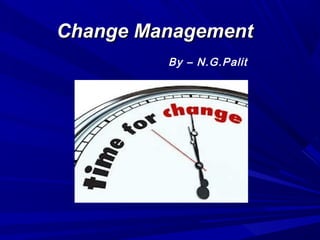

Change Management
By – N.G.Palit
”PROGRESS IS IMPOSSIBLE

Without CHANGE”,
&
Those who can’t change their minds
can’t
CHANGE ANYTHING”
- George Bernard Shaw
Why Change?
” It is not the strongest species

that survive,
nor the most intelligent,
it is the one
most adaptable to change”
- Charles Darwin
Why Change?
Nothing Is Constant
Except

CHANGE
Why Change?
Change is a part of life
&
Change is inevitable
You Have Only One Choice
Either You Change
Or
PERISH
Why Change?
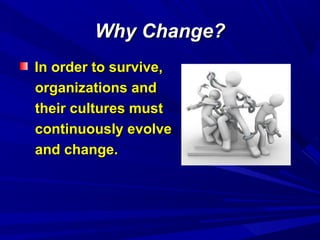
In order to survive,
organizations and
their cultures must
continuously evolve
and change.
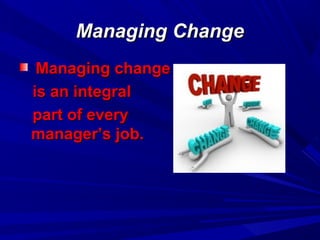
Managing Change
Managing change
is an integral
part of every
manager’s job.
Manager as Change-Agent
People who act as catalysts and assume
the responsibility for changing process
are called – ”CHANGE AGENTS”
Change Management
Change Management
Involves the process
that ensures business
responds to the
environment in which
it operates
Forces for Change
External Forces:
Market place
Govt. Laws &
regulations.
Technology
Labour market
Economic changes

Internal Forces:
Changes in strategy
of the organization
Workforce changes
New equipment
Employee attitude
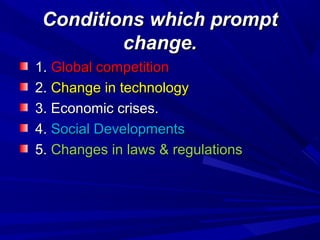
Conditions which prompt
change.
1. Global competition
2. Change in technology
3. Economic crises.
4. Social Developments
5. Changes in laws & regulations
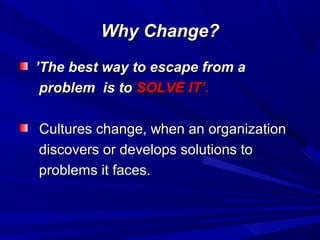
Why Change?
’The best way to escape from a
problem is to SOLVE IT’.
Cultures change, when an organization
discovers or develops solutions to
problems it faces.
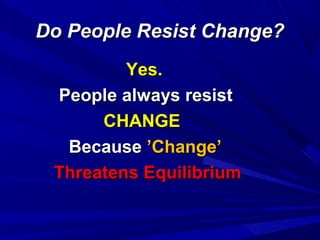
Do People Resist Change?
Yes.
People always resist
CHANGE
Because ’Change’
Threatens Equilibrium
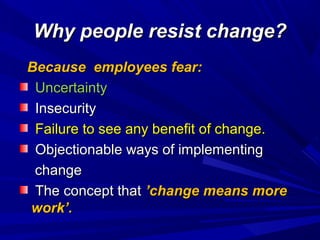
Why people resist change?
Because employees fear:
Uncertainty
Insecurity
Failure to see any benefit of change.
Objectionable ways of implementing
change
The concept that ’change means more
work’.
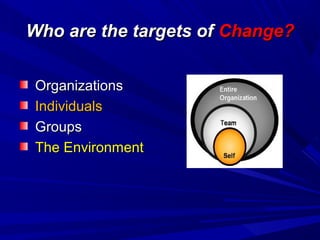
Who are the targets of Change?
Organizations
Individuals
Groups
The Environment
Four Responses to Change
First, is the Victim. They are terrified
Second is the Bystanders
Third is the Critics
Fourth is the Navigator, who have to
implement the change.
The Team can encash
Opportunities
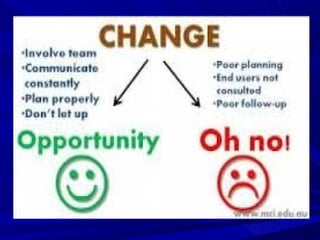
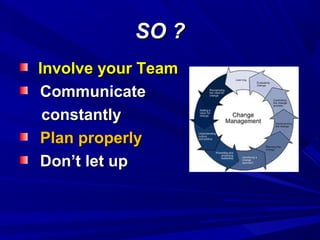
SO ?
Involve your Team
Communicate
constantly
Plan properly
Don’t let up
How to manage
organizational change?
Organizational culture can either facilitate
or inhibit changes.
We need to change organizational culture
if it hinders the process of change and
achievement of organizational goals
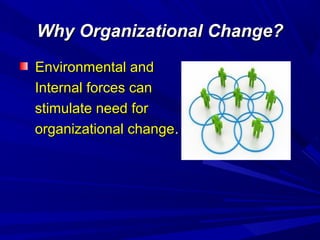
Why Organizational Change?
Environmental and
Internal forces can
stimulate need for
organizational change.
Environmental Forces
Environmental forces include:
Technology
Marketing forces
Social trends
Political and regulatory forces
Internal Forces
Come from decisions made within the
company.
This may be in Top-down direction, i.e
originating from top management and
travel downwards,
Or, it may oriniginate from frontline
employees & travel in a Bottom-up
direction
Important Cultural Issues
The three importnat
cultural issues of any
organization are:
1. Ethics
2. Diversity of employees
3. Leadership behaviour
Changing Organizational
Culture
Top leaders can set the tone for a
change in organization’s culture.
Managers and leaders must
introduce and ”cement” ethical
practices into organization’s culture.
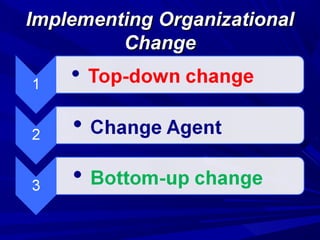
Implementing Organizational
Change
Changes at Individual level
Changes in this area can be achieved
by:
1. Changes in the number and skills of
the human resource component.
2. Improving levels of employees’
motivation and performance.
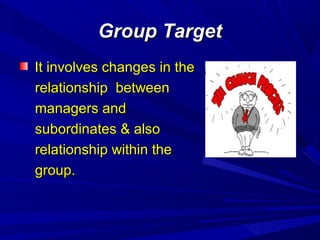
Group Target
It involves changes in the
relationship between
managers and
subordinates & also
relationship within the
group.
Organizational Targets
It may be changes in any of the
following:
Products , quality or service offered.
Goals & strategies.
Organizational structure
Organizational Culure
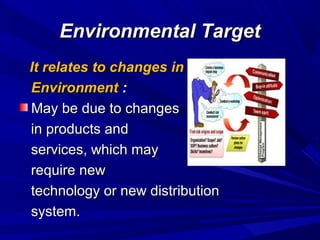
Environmental Target
It relates to changes in
Environment :
May be due to changes
in products and
services, which may
require new
technology or new distribution
system.
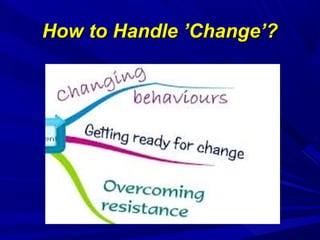
How to Handle ’Change’?
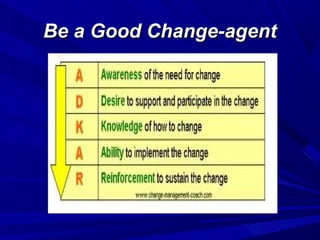
Be a Good Change-agent
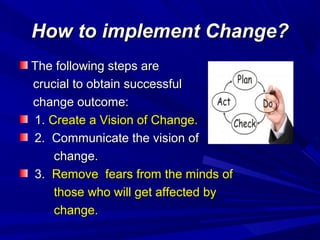
How to implement Change?
The following steps are
crucial to obtain successful
change outcome:
1. Create a Vision of Change.
2. Communicate the vision of
change.
3. Remove fears from the minds of
those who will get affected by
change.
Pre-planning for Change
Introduce change gradually
Clarify goals, policies, strategies
Wherever possible, keep the team intact
and keep the same job titles.
Maximise supervision & dialogue
Develop trust and confidence
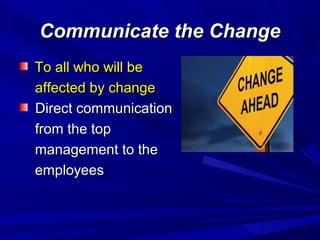
Communicate the Change
To all who will be
affected by change
Direct communication
from the top
management to the
employees
When to Communicate?
Communicate before the change, not
afterwards.
Regularly communicate during change
Early and frequent communication is
desirable.
Communicate both orally & in writing
THE ART OF PROGRESS
” Is to preserve order amid change
AND
to preserve change amid order”
Any Question?
At the End
If you liked this presentation, please
feel free to send your valuable comments
and feedback to:
nandapalit@yahoo.co.in
Thank you
- N.G.Palit

Change management by N.G.Palit

  • 1.
  • 2.
    ”PROGRESS IS IMPOSSIBLE WithoutCHANGE”, & Those who can’t change their minds can’t CHANGE ANYTHING” - George Bernard Shaw
  • 3.
    Why Change? ” Itis not the strongest species that survive, nor the most intelligent, it is the one most adaptable to change” - Charles Darwin
  • 4.
    Why Change? Nothing IsConstant Except CHANGE
  • 5.
    Why Change? Change isa part of life & Change is inevitable
  • 6.
    You Have OnlyOne Choice Either You Change Or PERISH
  • 7.
    Why Change? In orderto survive, organizations and their cultures must continuously evolve and change.
  • 9.
    Managing Change Managing change isan integral part of every manager’s job.
  • 10.
    Manager as Change-Agent Peoplewho act as catalysts and assume the responsibility for changing process are called – ”CHANGE AGENTS”
  • 11.
    Change Management Change Management Involvesthe process that ensures business responds to the environment in which it operates
  • 12.
    Forces for Change ExternalForces: Market place Govt. Laws & regulations. Technology Labour market Economic changes Internal Forces: Changes in strategy of the organization Workforce changes New equipment Employee attitude
  • 13.
    Conditions which prompt change. 1.Global competition 2. Change in technology 3. Economic crises. 4. Social Developments 5. Changes in laws & regulations
  • 14.
    Why Change? ’The bestway to escape from a problem is to SOLVE IT’. Cultures change, when an organization discovers or develops solutions to problems it faces.
  • 15.
    Do People ResistChange? Yes. People always resist CHANGE Because ’Change’ Threatens Equilibrium
  • 16.
    Why people resistchange? Because employees fear: Uncertainty Insecurity Failure to see any benefit of change. Objectionable ways of implementing change The concept that ’change means more work’.
  • 17.
    Who are thetargets of Change? Organizations Individuals Groups The Environment
  • 18.
    Four Responses toChange First, is the Victim. They are terrified Second is the Bystanders Third is the Critics Fourth is the Navigator, who have to implement the change.
  • 19.
    The Team canencash Opportunities
  • 21.
    SO ? Involve yourTeam Communicate constantly Plan properly Don’t let up
  • 22.
    How to manage organizationalchange? Organizational culture can either facilitate or inhibit changes. We need to change organizational culture if it hinders the process of change and achievement of organizational goals
  • 23.
    Why Organizational Change? Environmentaland Internal forces can stimulate need for organizational change.
  • 24.
    Environmental Forces Environmental forcesinclude: Technology Marketing forces Social trends Political and regulatory forces
  • 25.
    Internal Forces Come fromdecisions made within the company. This may be in Top-down direction, i.e originating from top management and travel downwards, Or, it may oriniginate from frontline employees & travel in a Bottom-up direction
  • 26.
    Important Cultural Issues Thethree importnat cultural issues of any organization are: 1. Ethics 2. Diversity of employees 3. Leadership behaviour
  • 27.
    Changing Organizational Culture Top leaderscan set the tone for a change in organization’s culture. Managers and leaders must introduce and ”cement” ethical practices into organization’s culture.
  • 28.
  • 29.
    Changes at Individuallevel Changes in this area can be achieved by: 1. Changes in the number and skills of the human resource component. 2. Improving levels of employees’ motivation and performance.
  • 30.
    Group Target It involveschanges in the relationship between managers and subordinates & also relationship within the group.
  • 31.
    Organizational Targets It maybe changes in any of the following: Products , quality or service offered. Goals & strategies. Organizational structure Organizational Culure
  • 32.
    Environmental Target It relatesto changes in Environment : May be due to changes in products and services, which may require new technology or new distribution system.
  • 33.
    How to Handle’Change’?
  • 34.
    Be a GoodChange-agent
  • 35.
    How to implementChange? The following steps are crucial to obtain successful change outcome: 1. Create a Vision of Change. 2. Communicate the vision of change. 3. Remove fears from the minds of those who will get affected by change.
  • 36.
    Pre-planning for Change Introducechange gradually Clarify goals, policies, strategies Wherever possible, keep the team intact and keep the same job titles. Maximise supervision & dialogue Develop trust and confidence
  • 37.
    Communicate the Change Toall who will be affected by change Direct communication from the top management to the employees
  • 38.
    When to Communicate? Communicatebefore the change, not afterwards. Regularly communicate during change Early and frequent communication is desirable. Communicate both orally & in writing
  • 39.
    THE ART OFPROGRESS ” Is to preserve order amid change AND to preserve change amid order”
  • 40.
  • 41.
    At the End Ifyou liked this presentation, please feel free to send your valuable comments and feedback to: nandapalit@yahoo.co.in
  • 42.