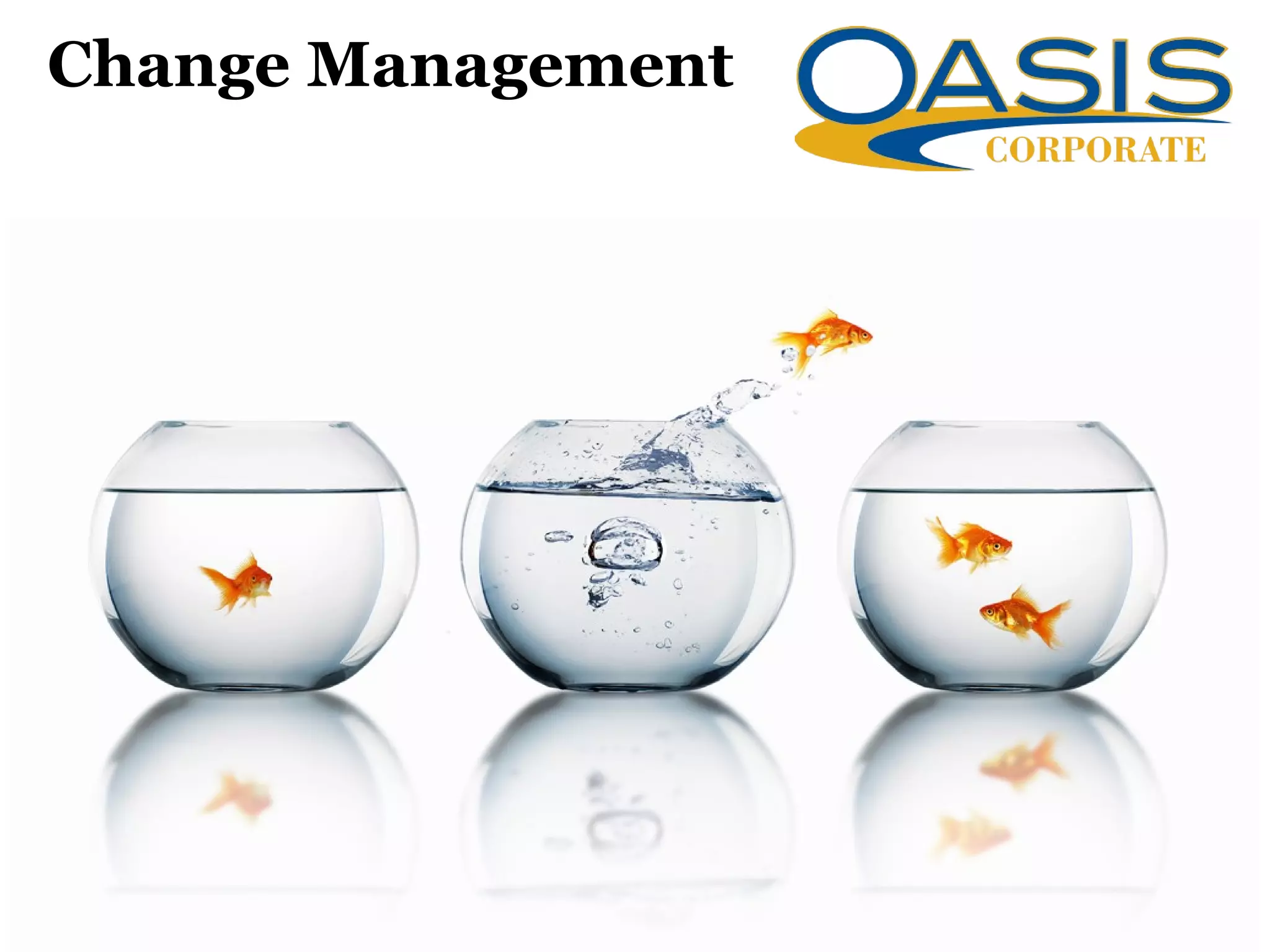
Change Management
Presentation Outlets
• What is Change Management ?
What is Change Management ?
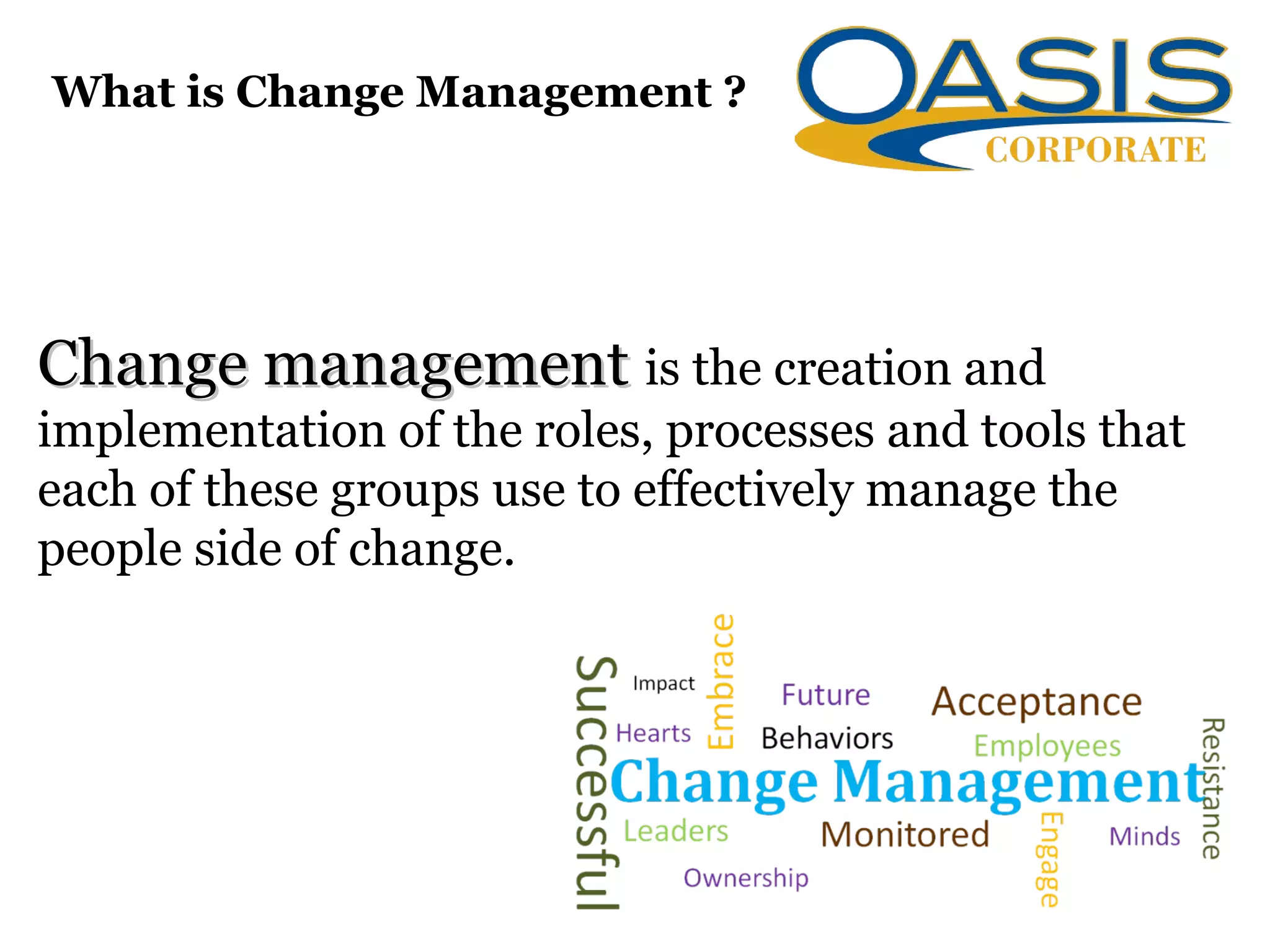
Change managementChange management is the creation and
implementation of the roles, processes and tools that
each of these groups use to effectively manage the
people side of change.
What does it mean to
“manage change”?
• To the organisation:
Have a structured change management process suitable
to the nature of the change.
• To the employee:
Understand what change means and how it affects me.
Have some skills to manage change.
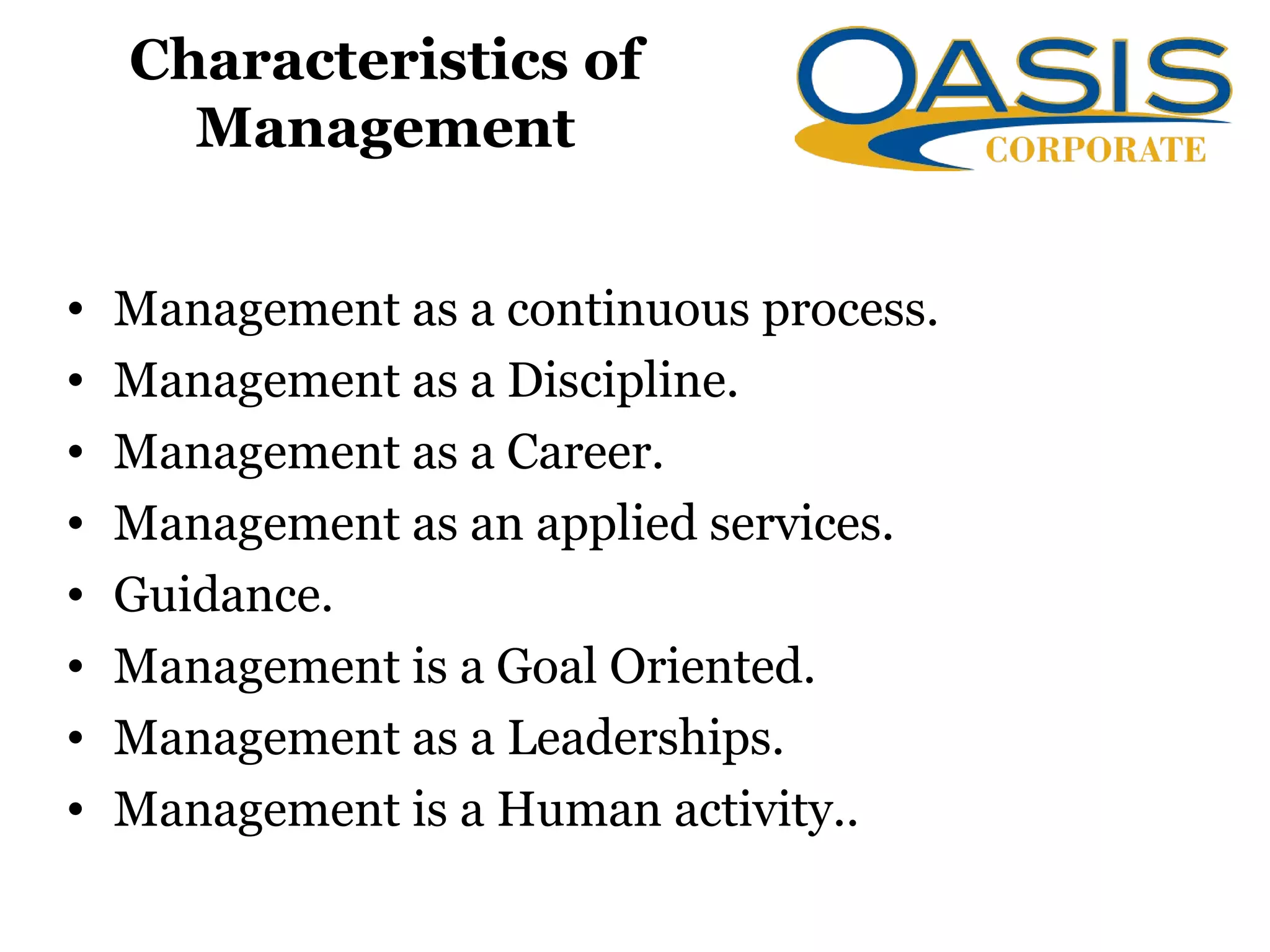
Characteristics of
Management
• Management as a continuous process.
• Management as a Discipline.
• Management as a Career.
• Management as an applied services.
• Guidance.
• Management is a Goal Oriented.
• Management as a Leaderships.
• Management is a Human activity..
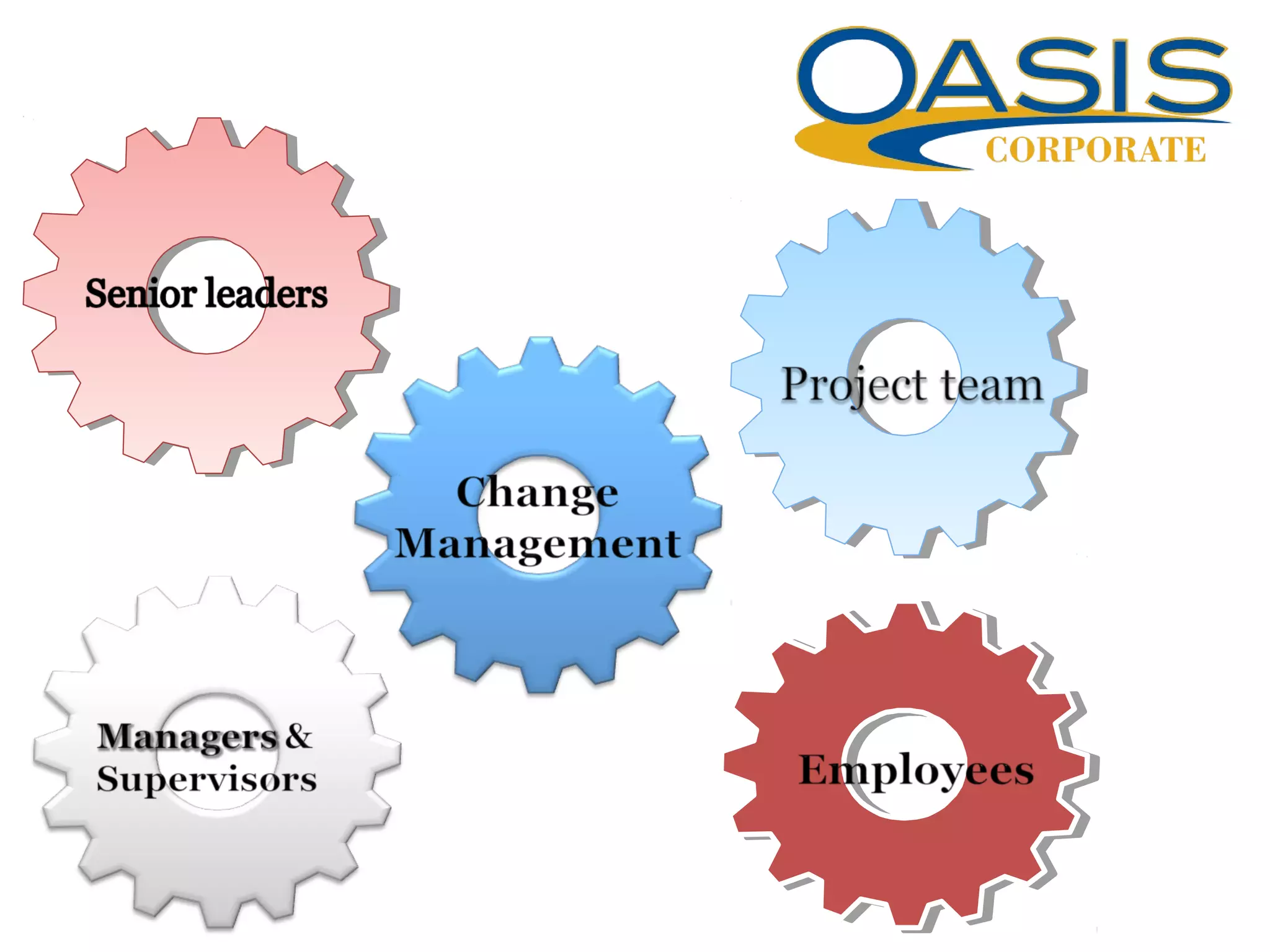
Who is involved in Managing
Change?
Change management requires each of the ‘gears’ in the picture to
fulfill their specific role. A change manager can facilitate
assessments, create a change management strategy and develop
change management plans, but they are not the only ones involved
in managed change. The other groups involved in managing change
include:
•Project team
•Senior leaders
•Managers and supervisors
•Employees
Level of Change
Management
1. First level
• Generic
• Applicable to any type of change
2. Second level
• Specific
• Applicable to a particular type of change
Three phases of change:
• Prepare
• Implement
• Reinforce
Organizational Change
Management
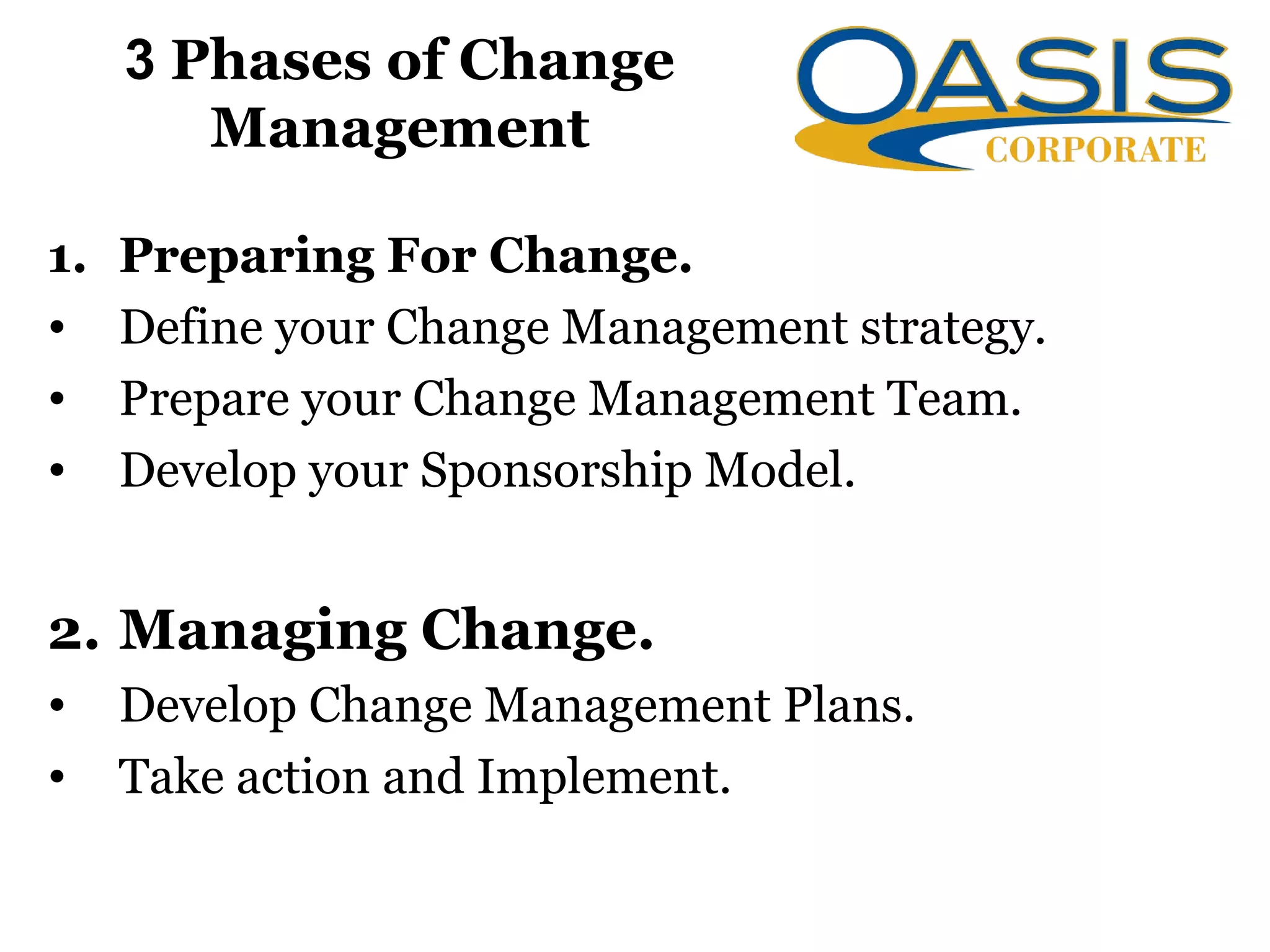
3 Phases of Change
Management
1. Preparing For Change.
• Define your Change Management strategy.
• Prepare your Change Management Team.
• Develop your Sponsorship Model.
2. Managing Change.
• Develop Change Management Plans.
• Take action and Implement.
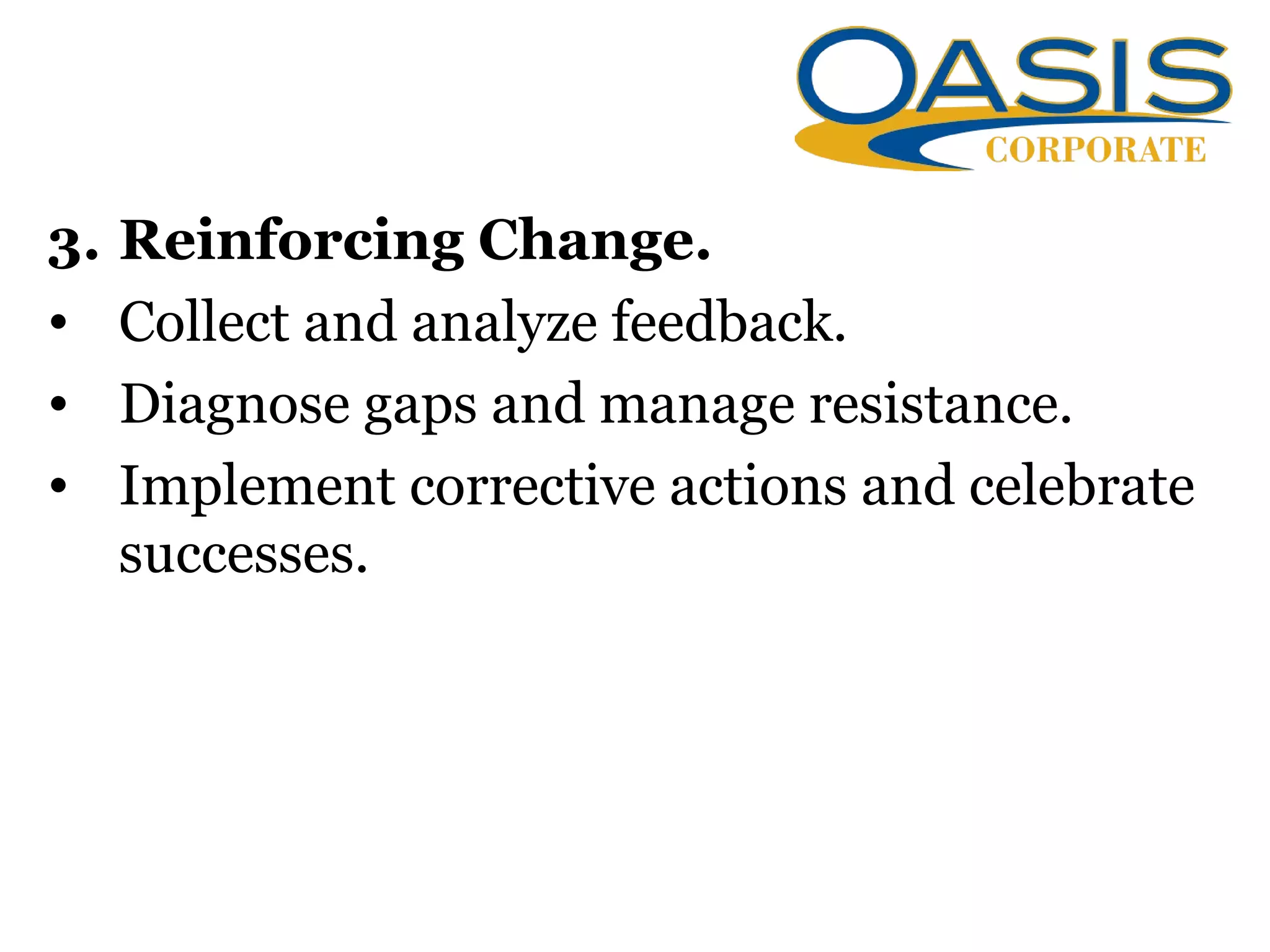
3. Reinforcing Change.
• Collect and analyze feedback.
• Diagnose gaps and manage resistance.
• Implement corrective actions and celebrate
successes.
ADKAR Model
ADKAR is easy to remember and is a
foundational tool for understanding “how,
why and when” to use different Change
Management tools.
The ADKAR Model
 Awareness of the need for change.
 Desire to support the change.
 Knowledge on how to change.
 Ability to implement new skills.
 Reinforcement to cement the
change.
Connecting Change
Management activities with
desired business results.
Change
Management
Channels
Communications
Sponsor roadmap
Training
Resistance mgmt.
Coaching
Awareness
Desire
Knowledge
Ability
Reinforcement
ADKAR
Phases of
Change
Leadership Vs Management
Leadership is the ability to develop a
vision that motivates others to move with a
passion towards a common goal.
ManageMent is the ability to
organize resources and coordinate the
execution of tasks necessary to reach a
goal in a timely and cost effective manner.
Time Management
 Development of processes and tools that increases the
Efficiency, Productivity and Effectiveness.
 Time management is the act or practice of managing and
supervising time.
 Doing things right is Efficiency.
 Doing the right things is Effectiveness.
Communication Plan in
Management
Communication Management include processes
required to ensure timely and appropriate generation,
collection, distribution, storage, retrieval, and ultimate
disposal of project information.
• Identify Stakeholders
• Plan Communication
• Distribute Information
• Manage Stakeholders expectations
• Report Performance
Plaining Management
• Planning is the process of thinking about and organizing
the activities required to achieve a desired goal.
• It involves the creation and maintenance of a plan, such as
psychological aspects that require conceptual skills.
• There are even a couple of tests to measure someone’s
capability of planning well. As such, planning is a
fundamental property of intelligent behavior.
SWOT TASK
10 Benefits of
Management
• Better Efficiency in delivering services.
• Enhanced Customer/Client Satisfactions.
• Improved Growth & Development within your Team.
• Enhanced Effectiveness in Delivering Services.
• Increase in Quality.
• Greater Standing & Competitive Edge.
• Opportunity to Expand your Services.
• Better Flexibility.
• Increased Risk Assessment.
• Increase in Quantity.
CA. Sanjiv Nanda
Smarthead Consultants pvt. LtD.
NDR & Co. , Chartered Accountants
You Tube Channel :- Seek Expert Business Advice
Personal Id :- ca.sanjiv.nanda@gmail.com
Personal id ;- sanjiv.nanda@gmail.com
sanjiv.nanda@smartheadconsulting.com
https://www.youtube.com/channel/UCmmx2GFXeoF-DNtNjwnpYJA
https://www.facebook.com/ca.sanjivnanda919/
Presentation on Change Management

Presentation on Change Management

  • 1.
  • 2.
    Presentation Outlets • Whatis Change Management ?
  • 3.
    What is ChangeManagement ? Change managementChange management is the creation and implementation of the roles, processes and tools that each of these groups use to effectively manage the people side of change.
  • 4.
    What does itmean to “manage change”? • To the organisation: Have a structured change management process suitable to the nature of the change. • To the employee: Understand what change means and how it affects me. Have some skills to manage change.
  • 5.
    Characteristics of Management • Managementas a continuous process. • Management as a Discipline. • Management as a Career. • Management as an applied services. • Guidance. • Management is a Goal Oriented. • Management as a Leaderships. • Management is a Human activity..
  • 6.
    Who is involvedin Managing Change? Change management requires each of the ‘gears’ in the picture to fulfill their specific role. A change manager can facilitate assessments, create a change management strategy and develop change management plans, but they are not the only ones involved in managed change. The other groups involved in managing change include: •Project team •Senior leaders •Managers and supervisors •Employees
  • 8.
    Level of Change Management 1.First level • Generic • Applicable to any type of change 2. Second level • Specific • Applicable to a particular type of change
  • 9.
    Three phases ofchange: • Prepare • Implement • Reinforce Organizational Change Management
  • 10.
    3 Phases ofChange Management 1. Preparing For Change. • Define your Change Management strategy. • Prepare your Change Management Team. • Develop your Sponsorship Model. 2. Managing Change. • Develop Change Management Plans. • Take action and Implement.
  • 11.
    3. Reinforcing Change. •Collect and analyze feedback. • Diagnose gaps and manage resistance. • Implement corrective actions and celebrate successes.
  • 12.
    ADKAR Model ADKAR iseasy to remember and is a foundational tool for understanding “how, why and when” to use different Change Management tools.
  • 13.
    The ADKAR Model Awareness of the need for change.  Desire to support the change.  Knowledge on how to change.  Ability to implement new skills.  Reinforcement to cement the change.
  • 14.
    Connecting Change Management activitieswith desired business results. Change Management Channels Communications Sponsor roadmap Training Resistance mgmt. Coaching Awareness Desire Knowledge Ability Reinforcement ADKAR Phases of Change
  • 15.
    Leadership Vs Management Leadershipis the ability to develop a vision that motivates others to move with a passion towards a common goal. ManageMent is the ability to organize resources and coordinate the execution of tasks necessary to reach a goal in a timely and cost effective manner.
  • 16.
    Time Management  Developmentof processes and tools that increases the Efficiency, Productivity and Effectiveness.  Time management is the act or practice of managing and supervising time.  Doing things right is Efficiency.  Doing the right things is Effectiveness.
  • 17.
    Communication Plan in Management CommunicationManagement include processes required to ensure timely and appropriate generation, collection, distribution, storage, retrieval, and ultimate disposal of project information. • Identify Stakeholders • Plan Communication • Distribute Information • Manage Stakeholders expectations • Report Performance
  • 18.
    Plaining Management • Planningis the process of thinking about and organizing the activities required to achieve a desired goal. • It involves the creation and maintenance of a plan, such as psychological aspects that require conceptual skills. • There are even a couple of tests to measure someone’s capability of planning well. As such, planning is a fundamental property of intelligent behavior.
  • 19.
  • 20.
    10 Benefits of Management •Better Efficiency in delivering services. • Enhanced Customer/Client Satisfactions. • Improved Growth & Development within your Team. • Enhanced Effectiveness in Delivering Services. • Increase in Quality. • Greater Standing & Competitive Edge. • Opportunity to Expand your Services. • Better Flexibility. • Increased Risk Assessment. • Increase in Quantity.
  • 22.
    CA. Sanjiv Nanda SmartheadConsultants pvt. LtD. NDR & Co. , Chartered Accountants You Tube Channel :- Seek Expert Business Advice Personal Id :- ca.sanjiv.nanda@gmail.com Personal id ;- sanjiv.nanda@gmail.com sanjiv.nanda@smartheadconsulting.com https://www.youtube.com/channel/UCmmx2GFXeoF-DNtNjwnpYJA https://www.facebook.com/ca.sanjivnanda919/