Downloaded 475 times




![4. Ian P, Richard D, Gob A. Managing organizational
change. New Delhi: Tata McGraw Hill Education
India Pvt. Ltd; 2006.p:49-52,145-153.
5. Richards L. Why Is Change Important in an
Organization[INTERNET]. [updated on 2013 Mar;
Cited on 2013 Nov 10]. Available from:
http://smallbusiness.chron.com/change-important-
organization-728.html
42](https://image.slidesharecdn.com/anirudhevaluatory1-140806060919-phpapp01/85/Managing-Organisational-Change-42-320.jpg)


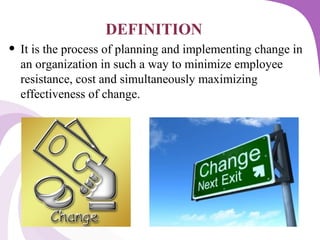
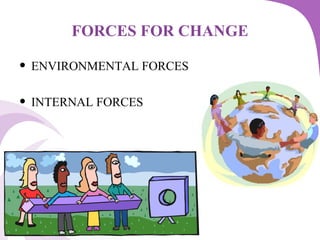
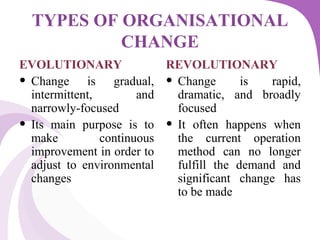
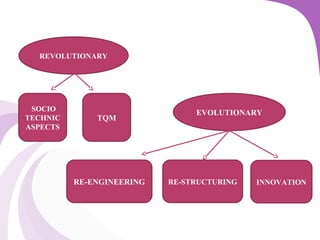
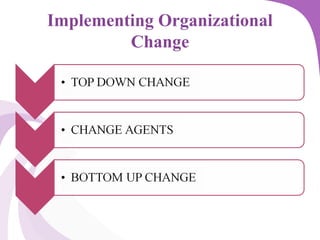
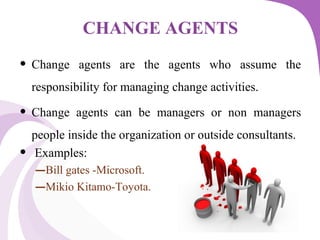
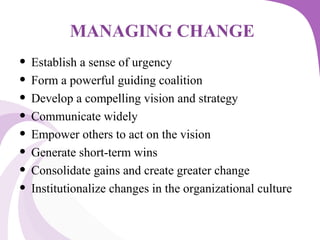
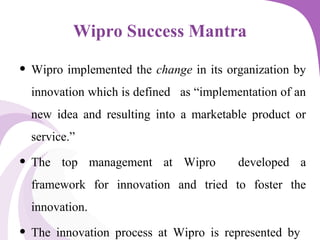
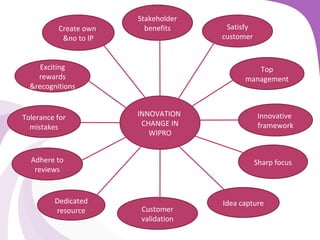
This document discusses organizational change and provides examples of successful change implementation at Wipro and Tata. It defines organizational change as planning and implementing change in a way to minimize resistance and costs while maximizing effectiveness. Forces for change include environmental factors like politics, economics, and customer needs as well as internal factors like profitability and employee expectations. Change can be evolutionary or revolutionary. Successful change requires establishing urgency, forming guiding coalitions, communicating vision, empowering employees, generating wins, consolidating gains, and institutionalizing changes. Wipro shifted to consulting services through innovation while Tata introduced a performance management system to reward top performers and reduce hierarchy through its business excellence model.


