survive & thrive
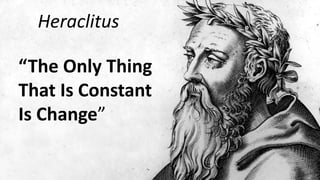
“The Only Thing
That Is Constant
Is Change”
Heraclitus
Nestle executive in a 2002 interview with CIO magazine the
executive summarized what the company had learned.
“No major software implementation is really about software. It’s
about change management… When you move to SAP, you are
changing the way people work… You are challenging principles,
their beliefs and the way they have done things for many years”
Jon Madonna, CEO KPMG Marwick in Jumping the Curve
“Nothing stops an organization faster than people who believe
that the way they work yesterday is the best way to work
tomorrow. To succeed, not only do your people have to change
the way they act, they’ve got to change the way they think
about the past.”
“Supportive Quotes ©”
1976-1990
*90% market
share in film
*One of the Most
valuable brands
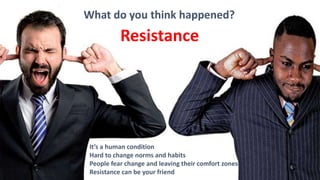
What do you think happened?
Resistance
It’s a human condition
Hard to change norms and habits
People fear change and leaving their comfort zones
Resistance can be your friend
Reasons why people resist change in the workplace
1. Loss of Job
2. Bad Communication Strategy
3. Shock and Fear of the Unknown
4. Loss of Control
5. Lack of Competence
6. Poor Timing
7. Lack of Reward
8. Office Politics
9. Loss of Support System
10. Former Change Experience
Change management is a structured approach for ensuring that changes are
thoroughly and smoothly implemented, and that the lasting benefits of change
are achieved.
Definition
The focus is on the wider impacts of change, particularly on people and how they,
as individuals and teams, move from the current situation to the new one.
Types of change include:
• Process change
• Organizational restructure / Join merge
• Culture change
• Facilities / location change
• IT / System implementation
• Management change
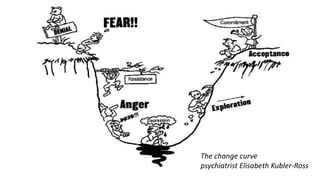
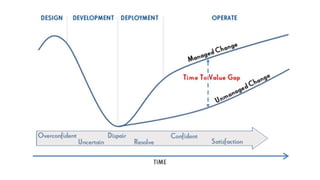
The change curve
psychiatrist Elisabeth Kubler-Ross
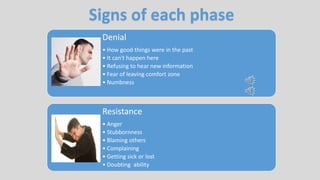
Denial
• How good things were in the past
• It can't happen here
• Refusing to hear new information
• Fear of leaving comfort zone
• Numbness
Resistance
• Anger
• Stubbornness
• Blaming others
• Complaining
• Getting sick or lost
• Doubting ability
Signs of each phase
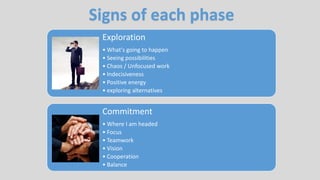
Exploration
• What's going to happen
• Seeing possibilities
• Chaos / Unfocused work
• Indecisiveness
• Positive energy
• exploring alternatives
Commitment
• Where I am headed
• Focus
• Teamwork
• Vision
• Cooperation
• Balance
Signs of each phase
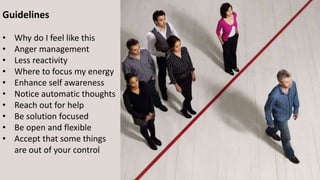
Guidelines
• Why do I feel like this
• Anger management
• Less reactivity
• Where to focus my energy
• Enhance self awareness
• Notice automatic thoughts
• Reach out for help
• Be solution focused
• Be open and flexible
• Accept that some things
are out of your control
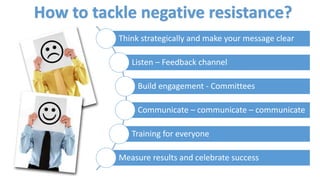
How to tackle negative resistance?
Think strategically and make your message clear
Listen – Feedback channel
Build engagement - Committees
Communicate – communicate – communicate
Training for everyone
Measure results and celebrate success
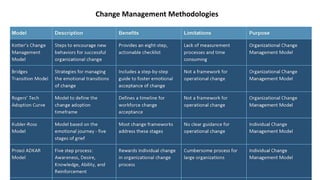
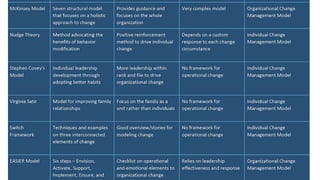
Change Management Methodologies
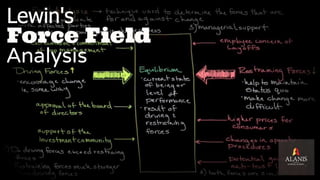
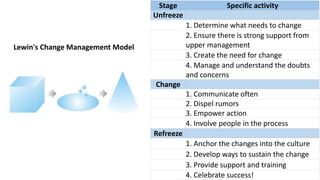
Lewin's Change Management Model
Stage Specific activity
Unfreeze
1. Determine what needs to change
2. Ensure there is strong support from
upper management
3. Create the need for change
4. Manage and understand the doubts
and concerns
Change
1. Communicate often
2. Dispel rumors
3. Empower action
4. Involve people in the process
Refreeze
1. Anchor the changes into the culture
2. Develop ways to sustain the change
3. Provide support and training
4. Celebrate success!
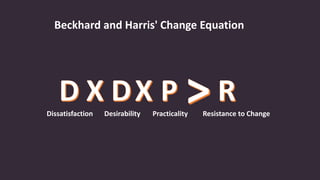
Beckhard and Harris' Change Equation
Dissatisfaction Desirability Practicality Resistance to Change
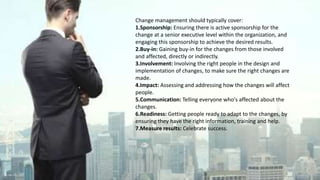
Change management should typically cover:
1.Sponsorship: Ensuring there is active sponsorship for the
change at a senior executive level within the organization, and
engaging this sponsorship to achieve the desired results.
2.Buy-in: Gaining buy-in for the changes from those involved
and affected, directly or indirectly.
3.Involvement: Involving the right people in the design and
implementation of changes, to make sure the right changes are
made.
4.Impact: Assessing and addressing how the changes will affect
people.
5.Communication: Telling everyone who's affected about the
changes.
6.Readiness: Getting people ready to adapt to the changes, by
ensuring they have the right information, training and help.
7.Measure results: Celebrate success.
Haitham Fansa
03-422478
hf@kiwinology.com
Thank You

Change management PMI

  • 1.
  • 2.
    “The Only Thing ThatIs Constant Is Change” Heraclitus
  • 4.
    Nestle executive ina 2002 interview with CIO magazine the executive summarized what the company had learned. “No major software implementation is really about software. It’s about change management… When you move to SAP, you are changing the way people work… You are challenging principles, their beliefs and the way they have done things for many years” Jon Madonna, CEO KPMG Marwick in Jumping the Curve “Nothing stops an organization faster than people who believe that the way they work yesterday is the best way to work tomorrow. To succeed, not only do your people have to change the way they act, they’ve got to change the way they think about the past.” “Supportive Quotes ©”
  • 7.
    1976-1990 *90% market share infilm *One of the Most valuable brands
  • 9.
    What do youthink happened? Resistance It’s a human condition Hard to change norms and habits People fear change and leaving their comfort zones Resistance can be your friend
  • 10.
    Reasons why peopleresist change in the workplace 1. Loss of Job 2. Bad Communication Strategy 3. Shock and Fear of the Unknown 4. Loss of Control 5. Lack of Competence 6. Poor Timing 7. Lack of Reward 8. Office Politics 9. Loss of Support System 10. Former Change Experience
  • 11.
    Change management isa structured approach for ensuring that changes are thoroughly and smoothly implemented, and that the lasting benefits of change are achieved. Definition The focus is on the wider impacts of change, particularly on people and how they, as individuals and teams, move from the current situation to the new one. Types of change include: • Process change • Organizational restructure / Join merge • Culture change • Facilities / location change • IT / System implementation • Management change
  • 13.
    The change curve psychiatristElisabeth Kubler-Ross
  • 15.
    Denial • How goodthings were in the past • It can't happen here • Refusing to hear new information • Fear of leaving comfort zone • Numbness Resistance • Anger • Stubbornness • Blaming others • Complaining • Getting sick or lost • Doubting ability Signs of each phase
  • 16.
    Exploration • What's goingto happen • Seeing possibilities • Chaos / Unfocused work • Indecisiveness • Positive energy • exploring alternatives Commitment • Where I am headed • Focus • Teamwork • Vision • Cooperation • Balance Signs of each phase
  • 17.
    Guidelines • Why doI feel like this • Anger management • Less reactivity • Where to focus my energy • Enhance self awareness • Notice automatic thoughts • Reach out for help • Be solution focused • Be open and flexible • Accept that some things are out of your control
  • 18.
    How to tacklenegative resistance? Think strategically and make your message clear Listen – Feedback channel Build engagement - Committees Communicate – communicate – communicate Training for everyone Measure results and celebrate success
  • 20.
  • 22.
    Lewin's Change ManagementModel Stage Specific activity Unfreeze 1. Determine what needs to change 2. Ensure there is strong support from upper management 3. Create the need for change 4. Manage and understand the doubts and concerns Change 1. Communicate often 2. Dispel rumors 3. Empower action 4. Involve people in the process Refreeze 1. Anchor the changes into the culture 2. Develop ways to sustain the change 3. Provide support and training 4. Celebrate success!
  • 23.
    Beckhard and Harris'Change Equation Dissatisfaction Desirability Practicality Resistance to Change
  • 24.
    Change management shouldtypically cover: 1.Sponsorship: Ensuring there is active sponsorship for the change at a senior executive level within the organization, and engaging this sponsorship to achieve the desired results. 2.Buy-in: Gaining buy-in for the changes from those involved and affected, directly or indirectly. 3.Involvement: Involving the right people in the design and implementation of changes, to make sure the right changes are made. 4.Impact: Assessing and addressing how the changes will affect people. 5.Communication: Telling everyone who's affected about the changes. 6.Readiness: Getting people ready to adapt to the changes, by ensuring they have the right information, training and help. 7.Measure results: Celebrate success.
  • 25.