CHANGE
MANAGEMENT

      Presented By:
      Neha Thakur
      Ruhi Beri
      Sukhman Mann
      Vidushi Thareja
Topics for Discussion

Change

Organisational Change

Factors affecting Change

Resistance to Change

Need for Change

Process for creating Change
The Only Thing Which Is Permanent In
           This World………


       CHANGE!!!
Organisational change is defined as change that
has an impact on the way that work is performed and
has significant effects on staff. This could include
changes:

- In the structure of an organisation
- To organisational operation and size of a workforce
- To working hours or practices
- In the way roles are carried out
- To the scope of a role that results in a change to
the working situation, structure, terms and
conditions or environment.
Major Types of
Organizational Change
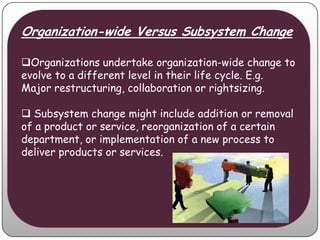
Organization-wide Versus Subsystem Change

Organizations undertake organization-wide change to
evolve to a different level in their life cycle. E.g.
Major restructuring, collaboration or rightsizing.

 Subsystem change might include addition or removal
of a product or service, reorganization of a certain
department, or implementation of a new process to
deliver products or services.
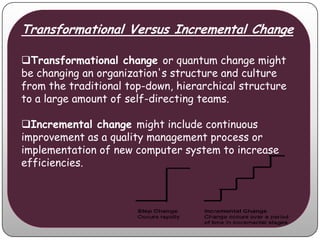
Transformational Versus Incremental Change

Transformational change or quantum change might
be changing an organization's structure and culture
from the traditional top-down, hierarchical structure
to a large amount of self-directing teams.

Incremental change might include continuous
improvement as a quality management process or
implementation of new computer system to increase
efficiencies.
Remedial Versus Developmental Change
Change can be intended to remedy current
situations. E.g. To improve the poor performance of a
product, reduce burnout in the workplace or address
large budget deficits.

Change can also be developmental to make a
successful situation even more successful. E.g. Expand
the amount of customers served, or duplicate
successful products or services.
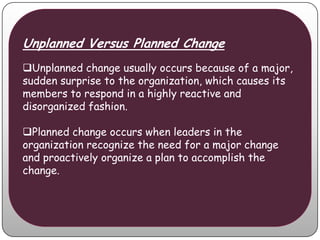
Unplanned Versus Planned Change
Unplanned change usually occurs because of a major,
sudden surprise to the organization, which causes its
members to respond in a highly reactive and
disorganized fashion.

Planned change occurs when leaders in the
organization recognize the need for a major change
and proactively organize a plan to accomplish the
change.
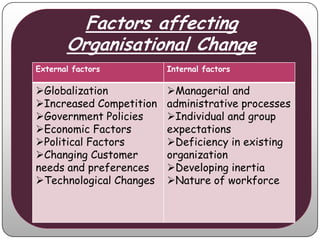
Factors affecting
       Organisational Change
External factors         Internal factors

Globalization           Managerial and
Increased Competition   administrative processes
Government Policies     Individual and group
Economic Factors        expectations
Political Factors       Deficiency in existing
Changing Customer       organization
needs and preferences    Developing inertia
Technological Changes   Nature of workforce
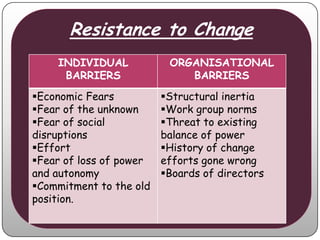
Resistance to Change
    INDIVIDUAL            ORGANISATIONAL
     BARRIERS                BARRIERS
Economic Fears          Structural inertia
Fear of the unknown     Work group norms
Fear of social          Threat to existing
disruptions              balance of power
Effort                  History of change
Fear of loss of power   efforts gone wrong
and autonomy             Boards of directors
Commitment to the old
position.
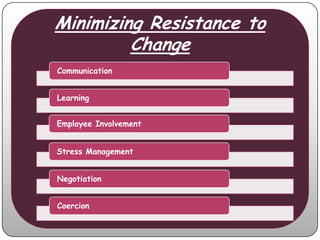
Minimizing Resistance to
         Change
Communication


Learning


Employee Involvement


Stress Management


Negotiation


Coercion
Need for Change
Change is used as a survival tactic in today’s
  business environment. If the organisation
     does not keep a pace with changing
technology, consumer demands and effective
   business processes, they will lose their
              competitive edge.
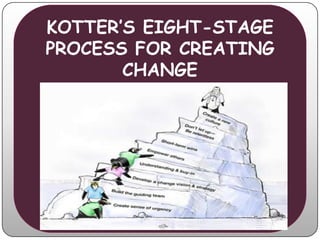
KOTTER’S EIGHT-STAGE
PROCESS FOR CREATING
       CHANGE
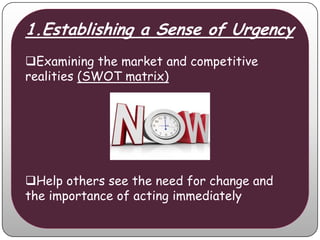
1.Establishing a Sense of Urgency
Examining the market and competitive
realities (SWOT matrix)


Help others see the need for change and
the importance of acting immediately
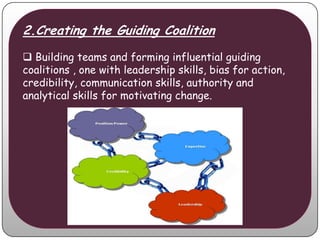
2.Creating the Guiding Coalition
 Building teams and forming influential guiding
coalitions , one with leadership skills, bias for action,
credibility, communication skills, authority and
analytical skills for motivating change.
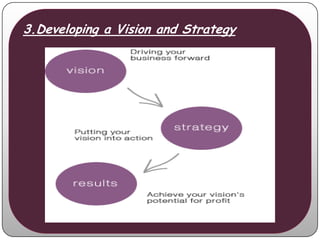
3.Developing a Vision and Strategy
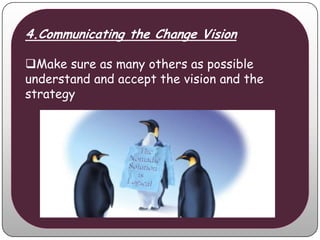
4.Communicating the Change Vision

Make sure as many others as possible
understand and accept the vision and the
strategy
5.Empowering Broad-Based Action

Develop a shared sense of purpose

Break the change up into smaller projects and allow
people to add to the process

Give small groups specific projects to do that will
help contribute towards the change.
6.Generate Short-Term Wins

Make sure you make time to acknowledge and
celebrate the wins. Don’t keep looking up the mountain.

Provide positive feedback to further builds morale
and motivation.
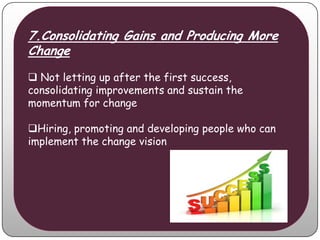
7.Consolidating Gains and Producing More
Change
 Not letting up after the first success,
consolidating improvements and sustain the
momentum for change

Hiring, promoting and developing people who can
implement the change vision
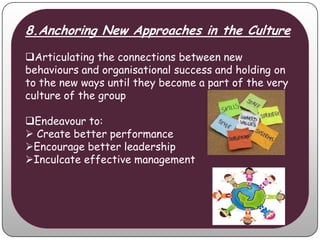
8.Anchoring New Approaches in the Culture
Articulating the connections between new
behaviours and organisational success and holding on
to the new ways until they become a part of the very
culture of the group

Endeavour to:
 Create better performance
Encourage better leadership
Inculcate effective management

Change management

  • 1.
    CHANGE MANAGEMENT Presented By: Neha Thakur Ruhi Beri Sukhman Mann Vidushi Thareja
  • 2.
    Topics for Discussion Change OrganisationalChange Factors affecting Change Resistance to Change Need for Change Process for creating Change
  • 3.
    The Only ThingWhich Is Permanent In This World……… CHANGE!!!
  • 4.
    Organisational change isdefined as change that has an impact on the way that work is performed and has significant effects on staff. This could include changes: - In the structure of an organisation - To organisational operation and size of a workforce - To working hours or practices - In the way roles are carried out - To the scope of a role that results in a change to the working situation, structure, terms and conditions or environment.
  • 5.
  • 6.
    Organization-wide Versus SubsystemChange Organizations undertake organization-wide change to evolve to a different level in their life cycle. E.g. Major restructuring, collaboration or rightsizing.  Subsystem change might include addition or removal of a product or service, reorganization of a certain department, or implementation of a new process to deliver products or services.
  • 7.
    Transformational Versus IncrementalChange Transformational change or quantum change might be changing an organization's structure and culture from the traditional top-down, hierarchical structure to a large amount of self-directing teams. Incremental change might include continuous improvement as a quality management process or implementation of new computer system to increase efficiencies.
  • 8.
    Remedial Versus DevelopmentalChange Change can be intended to remedy current situations. E.g. To improve the poor performance of a product, reduce burnout in the workplace or address large budget deficits. Change can also be developmental to make a successful situation even more successful. E.g. Expand the amount of customers served, or duplicate successful products or services.
  • 9.
    Unplanned Versus PlannedChange Unplanned change usually occurs because of a major, sudden surprise to the organization, which causes its members to respond in a highly reactive and disorganized fashion. Planned change occurs when leaders in the organization recognize the need for a major change and proactively organize a plan to accomplish the change.
  • 10.
    Factors affecting Organisational Change External factors Internal factors Globalization Managerial and Increased Competition administrative processes Government Policies Individual and group Economic Factors expectations Political Factors Deficiency in existing Changing Customer organization needs and preferences Developing inertia Technological Changes Nature of workforce
  • 11.
    Resistance to Change INDIVIDUAL ORGANISATIONAL BARRIERS BARRIERS Economic Fears Structural inertia Fear of the unknown Work group norms Fear of social Threat to existing disruptions balance of power Effort History of change Fear of loss of power efforts gone wrong and autonomy Boards of directors Commitment to the old position.
  • 12.
    Minimizing Resistance to Change Communication Learning Employee Involvement Stress Management Negotiation Coercion
  • 13.
    Need for Change Changeis used as a survival tactic in today’s business environment. If the organisation does not keep a pace with changing technology, consumer demands and effective business processes, they will lose their competitive edge.
  • 14.
  • 15.
    1.Establishing a Senseof Urgency Examining the market and competitive realities (SWOT matrix) Help others see the need for change and the importance of acting immediately
  • 16.
    2.Creating the GuidingCoalition  Building teams and forming influential guiding coalitions , one with leadership skills, bias for action, credibility, communication skills, authority and analytical skills for motivating change.
  • 17.
  • 18.
    4.Communicating the ChangeVision Make sure as many others as possible understand and accept the vision and the strategy
  • 19.
    5.Empowering Broad-Based Action Developa shared sense of purpose Break the change up into smaller projects and allow people to add to the process Give small groups specific projects to do that will help contribute towards the change.
  • 20.
    6.Generate Short-Term Wins Makesure you make time to acknowledge and celebrate the wins. Don’t keep looking up the mountain. Provide positive feedback to further builds morale and motivation.
  • 21.
    7.Consolidating Gains andProducing More Change  Not letting up after the first success, consolidating improvements and sustain the momentum for change Hiring, promoting and developing people who can implement the change vision
  • 22.
    8.Anchoring New Approachesin the Culture Articulating the connections between new behaviours and organisational success and holding on to the new ways until they become a part of the very culture of the group Endeavour to:  Create better performance Encourage better leadership Inculcate effective management