Downloaded 1,648 times
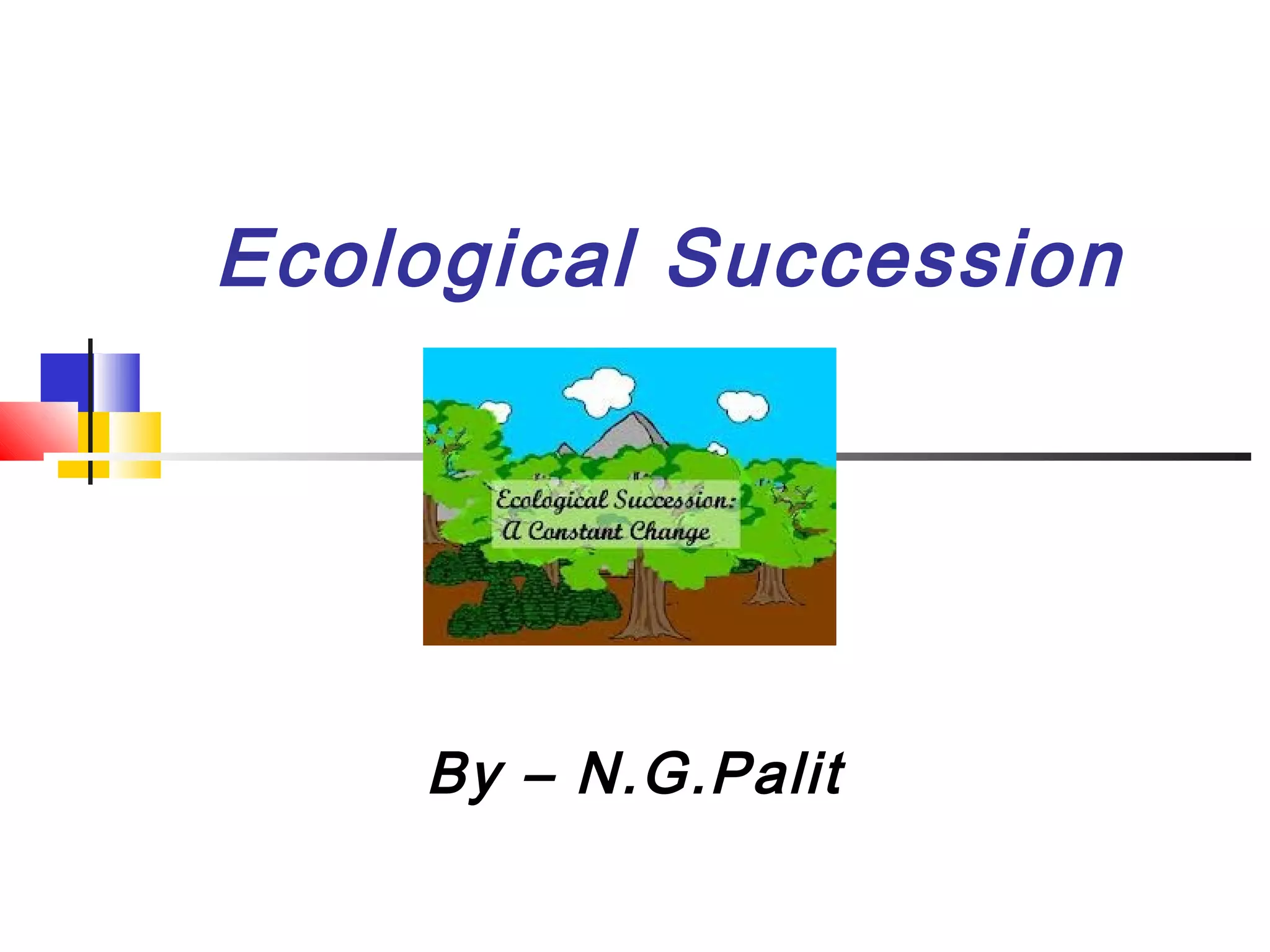

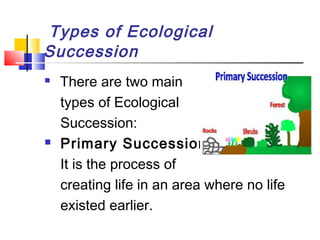
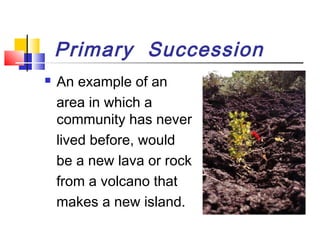
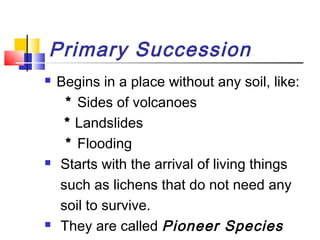
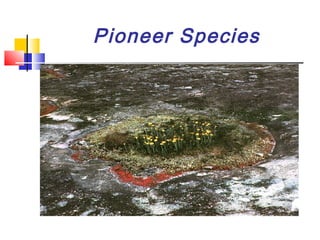
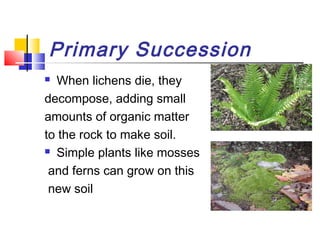
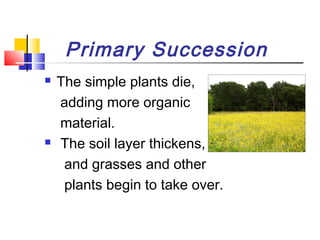
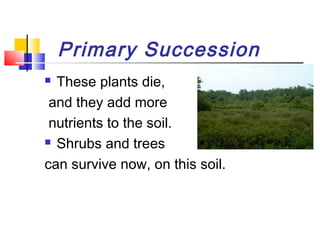
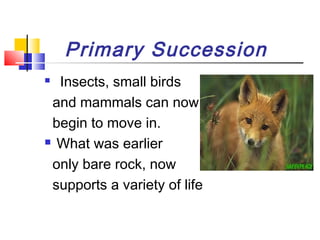
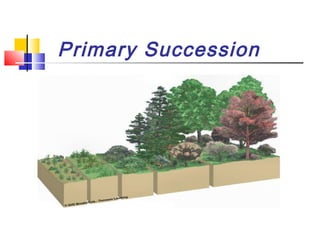
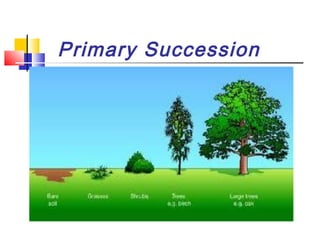
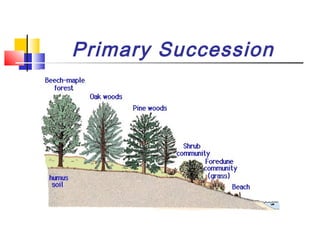
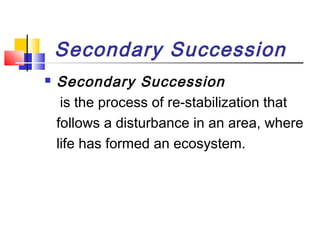
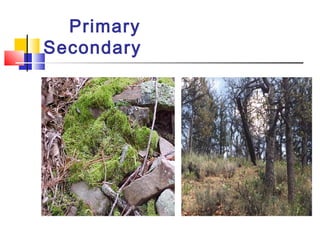
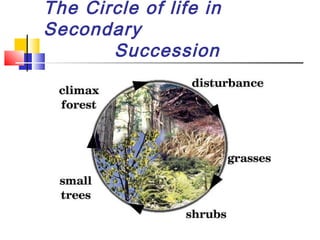
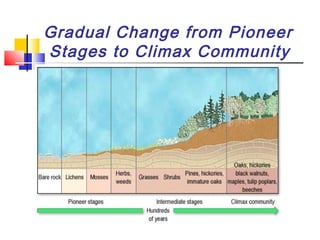
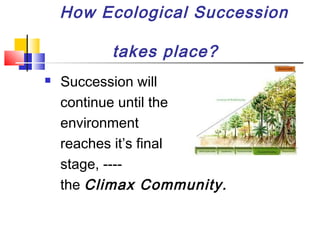
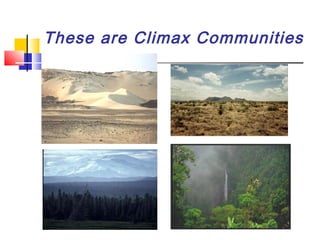
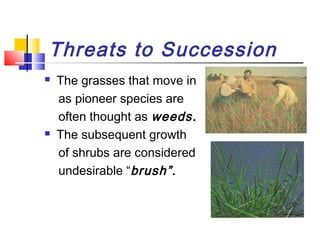
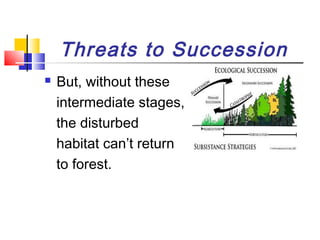



Ecological succession is the gradual process of change and replacement of species in an ecosystem over time, occurring in two main types: primary succession, which starts in lifeless areas, and secondary succession, which follows disturbances in previously established ecosystems. Primary succession initiates with pioneer species, like lichens, that establish soil and allow for further biodiversity development, while secondary succession involves the recovery of an area after disturbances such as fires or floods. Succession continues until a stable climax community is reached, which can be affected by physical factors, human activities, and environmental changes.


