Take Over defenses MERGER AND ACQUISITION
Introduction Not all mergers are welcome During the 1980s, a variety of devices were developed to defend firms from unwelcome takeover proposals Anti take over defenses Preventive measures  Active measures Chapter 19-
Poison Pill Flip in plan Flip over plan Back end plans Voting plans People pill Preventive measures  Greenmail Standstill agreement White knights White squire Pac man defense Restructuring Active measures
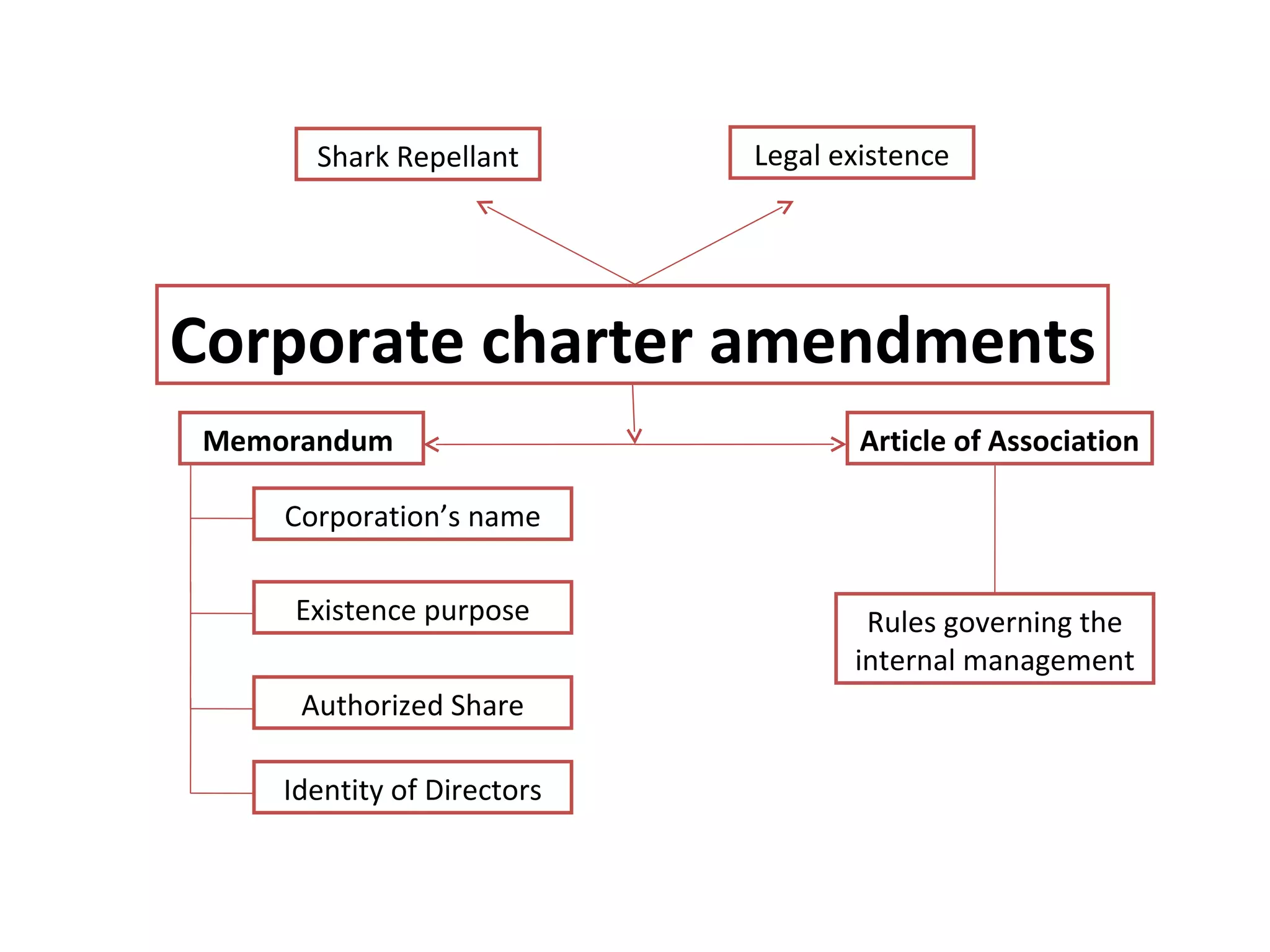
Memorandum  Article of Association Corporate charter amendments Shark Repellant Legal existence Corporation’s name Existence purpose Authorized Share Identity of Directors Rules governing the internal management
Corporate charter amendments Common types  Classified boards Super majority provisions Fair price amendment Dual Capitalization
Classified boards Divided into different classes One class to be reselected each year Delays effective transfer of control in take over Example Suppose twelve members in a group Divided into group of three  Hostile bidder has to wait two more annual meetings inspite of holding majority of stocks
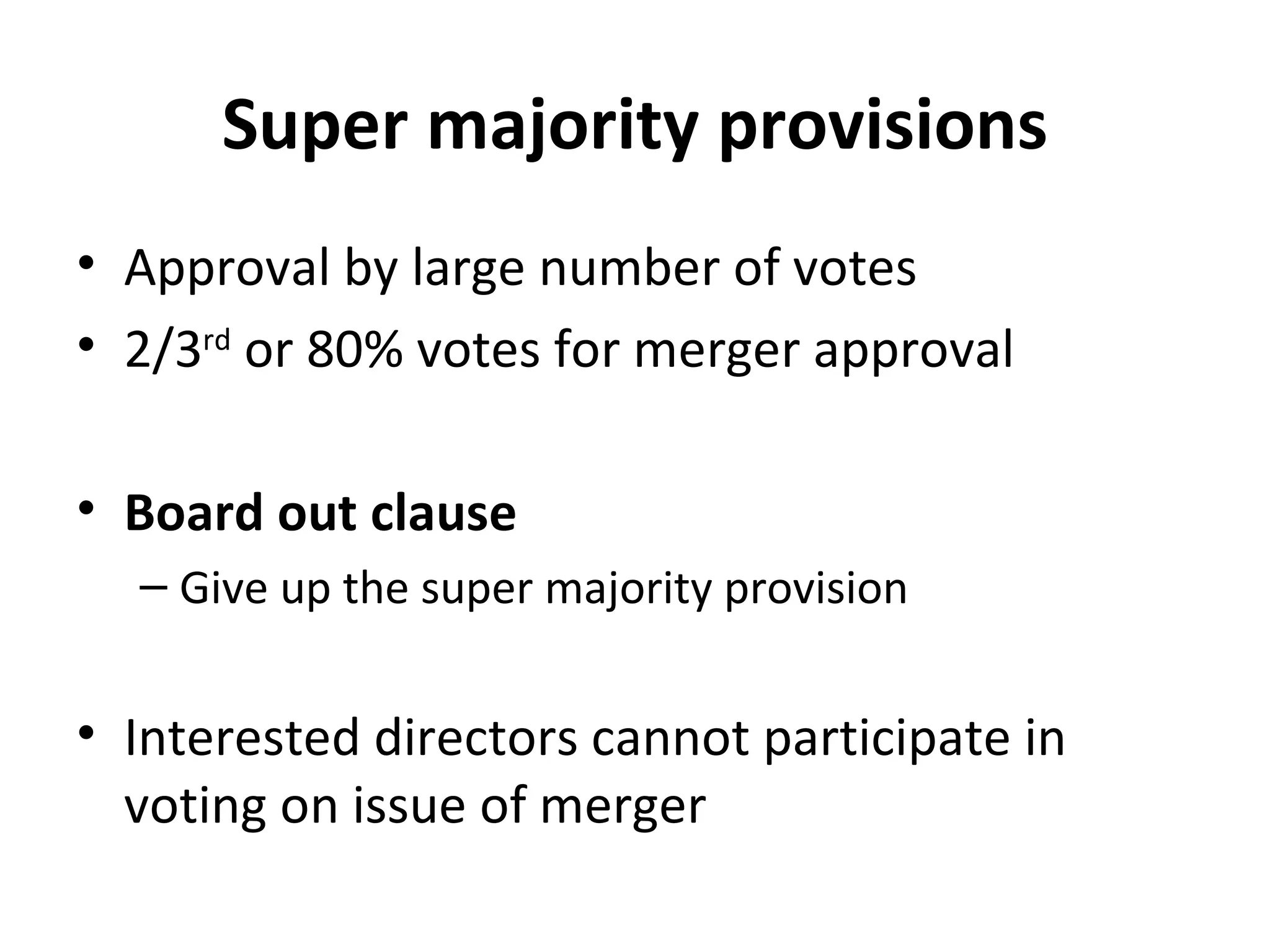
Super majority provisions Approval by large number of votes 2/3 rd  or 80% votes for merger approval Board out clause Give up the super majority provision Interested directors cannot participate in voting on issue of merger
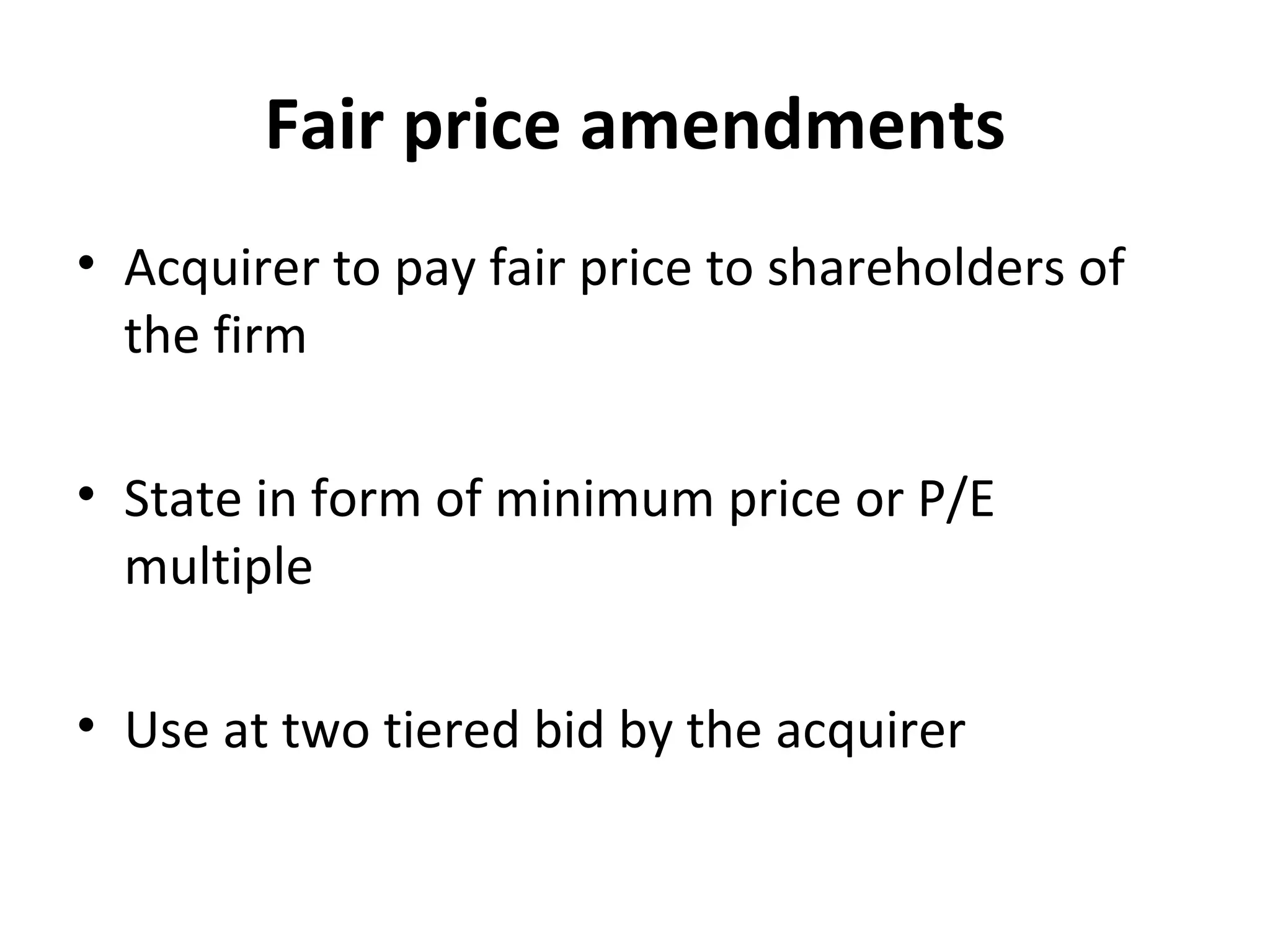
Fair price amendments Acquirer to pay fair price to shareholders of the firm State in form of minimum price or P/E multiple Use at two tiered bid by the acquirer
Dual capitalization New class of securities with voting rights To friendly stockholders Stock holders prefer special voting stocks Increase dividend and power Management retains the voting power
Active Anti-takeover defenses
Greenmail Buying back of share at premium Signing a Standstill Agreement Standstill Agreement Not to increase holdings for particular period Accompanied by target’s agreement Acquirer's refusal Prevents falling into hands of another bidder
White Knights Another company more acceptable More favorable terms than original bidders Terms required Not to disassemble  No layoffs
White squire Target sells only a block of its stock to third party it considers to be friendly In return, white squire may receive: board seats, dividend, discounted shares Preferred stock usually used in white squire transactions because it enables board to tailor characteristics of stock as described
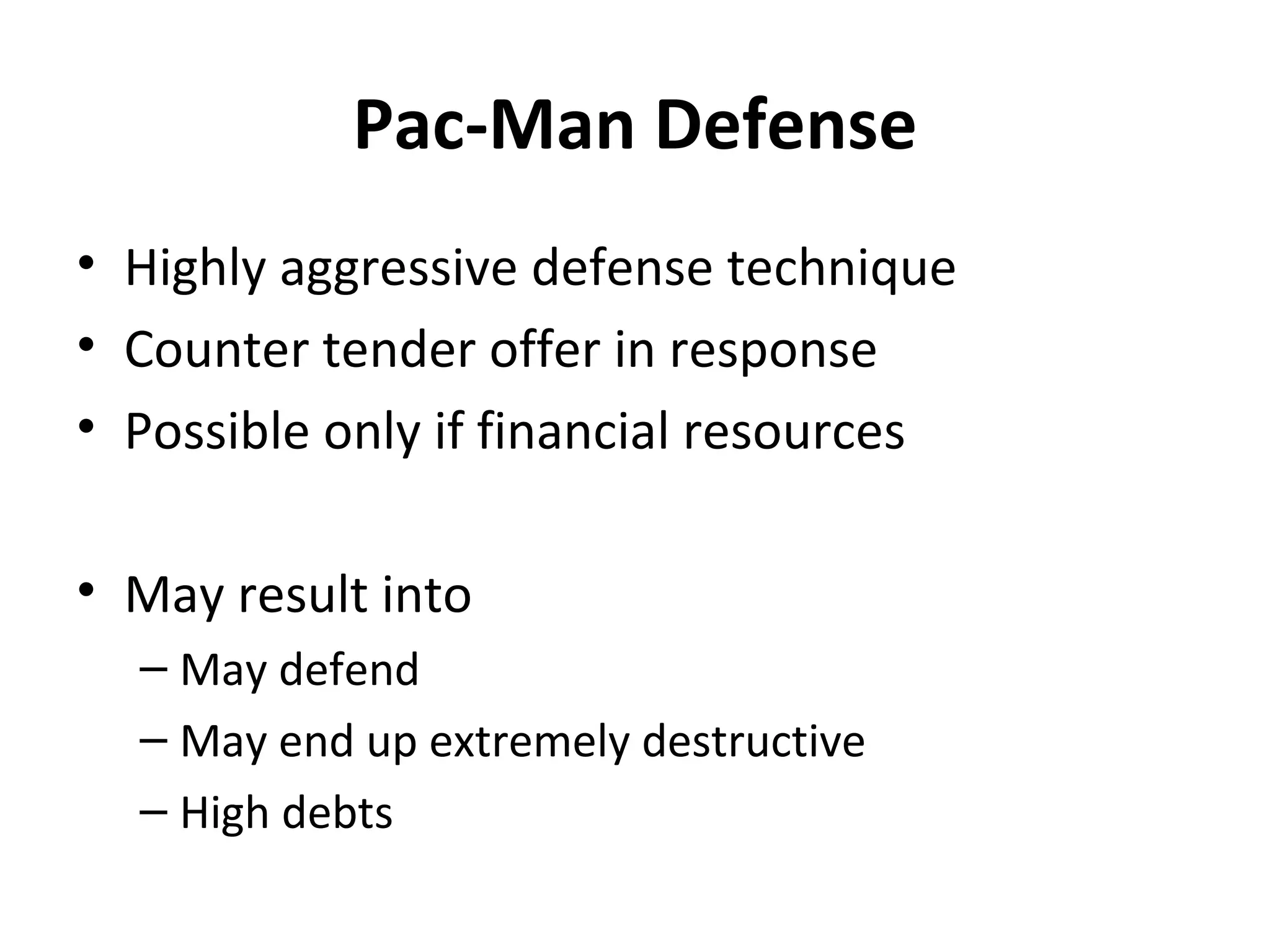
Pac-Man Defense Highly aggressive defense technique  Counter tender offer in response Possible only if financial resources May result into May defend May end up extremely destructive High debts
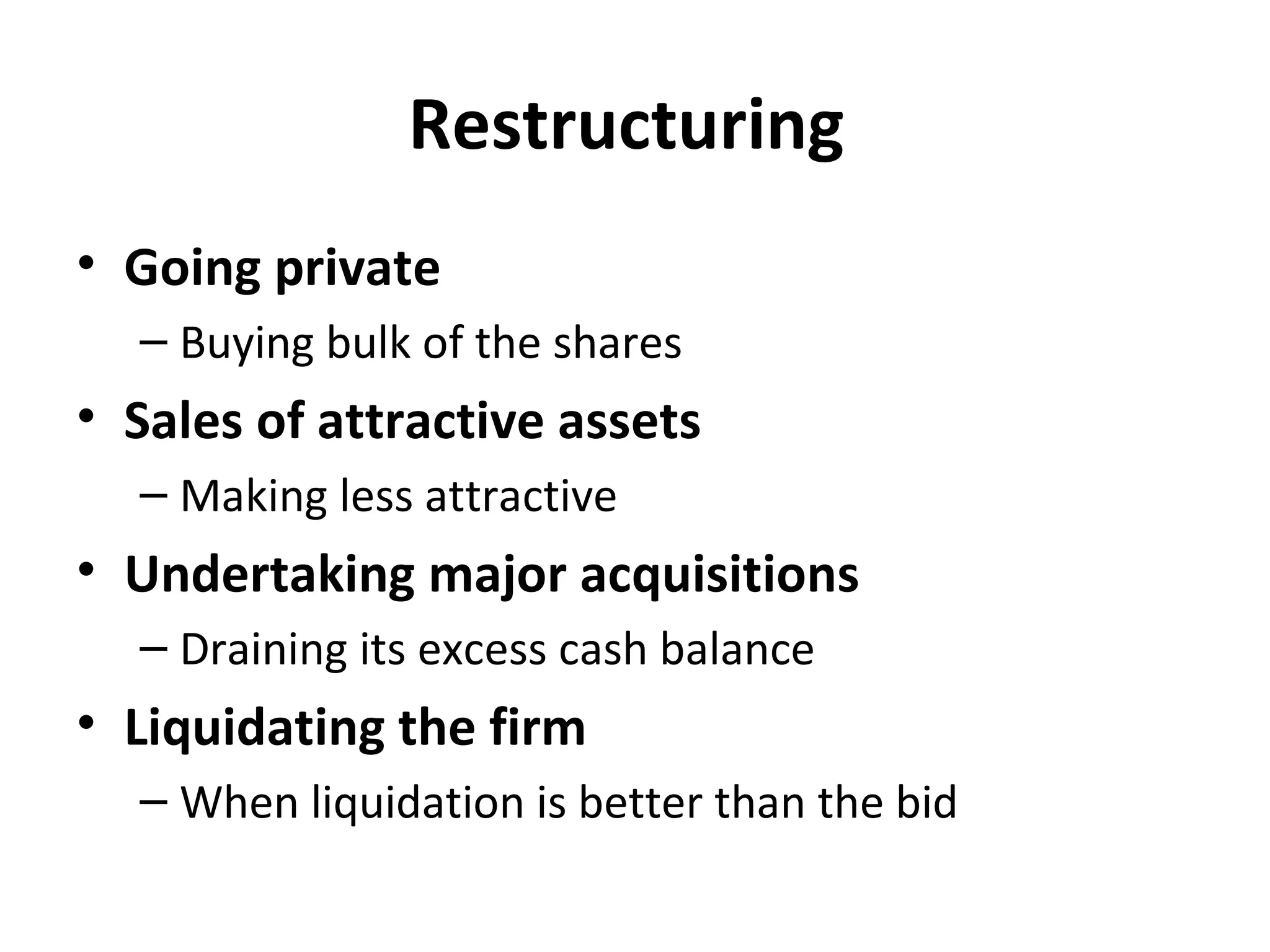
Restructuring  Going private  Buying bulk of the shares Sales of attractive assets Making less attractive  Undertaking major acquisitions Draining its excess cash balance Liquidating the firm When liquidation is better than the bid

take over defenses

  • 1.
    Take Over defensesMERGER AND ACQUISITION
  • 2.
    Introduction Not allmergers are welcome During the 1980s, a variety of devices were developed to defend firms from unwelcome takeover proposals Anti take over defenses Preventive measures Active measures Chapter 19-
  • 3.
    Poison Pill Flipin plan Flip over plan Back end plans Voting plans People pill Preventive measures Greenmail Standstill agreement White knights White squire Pac man defense Restructuring Active measures
  • 4.
    Memorandum Articleof Association Corporate charter amendments Shark Repellant Legal existence Corporation’s name Existence purpose Authorized Share Identity of Directors Rules governing the internal management
  • 5.
    Corporate charter amendmentsCommon types Classified boards Super majority provisions Fair price amendment Dual Capitalization
  • 6.
    Classified boards Dividedinto different classes One class to be reselected each year Delays effective transfer of control in take over Example Suppose twelve members in a group Divided into group of three Hostile bidder has to wait two more annual meetings inspite of holding majority of stocks
  • 7.
    Super majority provisionsApproval by large number of votes 2/3 rd or 80% votes for merger approval Board out clause Give up the super majority provision Interested directors cannot participate in voting on issue of merger
  • 8.
    Fair price amendmentsAcquirer to pay fair price to shareholders of the firm State in form of minimum price or P/E multiple Use at two tiered bid by the acquirer
  • 9.
    Dual capitalization Newclass of securities with voting rights To friendly stockholders Stock holders prefer special voting stocks Increase dividend and power Management retains the voting power
  • 10.
  • 11.
    Greenmail Buying backof share at premium Signing a Standstill Agreement Standstill Agreement Not to increase holdings for particular period Accompanied by target’s agreement Acquirer's refusal Prevents falling into hands of another bidder
  • 12.
    White Knights Anothercompany more acceptable More favorable terms than original bidders Terms required Not to disassemble No layoffs
  • 13.
    White squire Targetsells only a block of its stock to third party it considers to be friendly In return, white squire may receive: board seats, dividend, discounted shares Preferred stock usually used in white squire transactions because it enables board to tailor characteristics of stock as described
  • 14.
    Pac-Man Defense Highlyaggressive defense technique Counter tender offer in response Possible only if financial resources May result into May defend May end up extremely destructive High debts
  • 15.
    Restructuring Goingprivate Buying bulk of the shares Sales of attractive assets Making less attractive Undertaking major acquisitions Draining its excess cash balance Liquidating the firm When liquidation is better than the bid