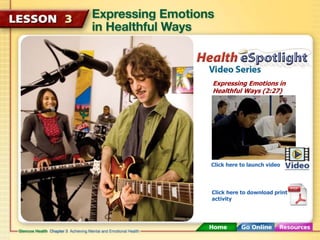
Expressing Emotions in 
Healthful Ways (2:27) 
Click here to launch video 
Click here to download print 
activity
Managing your emotions allows you to 
express them in healthful ways.
emotions 
hormones 
hostility 
empathy 
defense mechanisms
Understanding Your Emotions 
Recognizing and acknowledging your 
emotions is a sign of good mental and 
emotional health. 
How you respond to your emotions can affect 
your mental/emotional, physical, and social 
health.
Understanding Your Emotions 
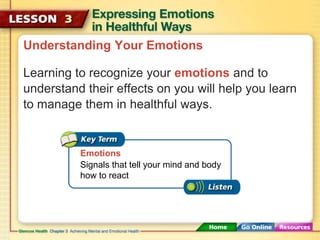
Learning to recognize your emotions and to 
understand their effects on you will help you learn 
to manage them in healthful ways. 
Emotions 
Signals that tell your mind and body 
how to react
Understanding Your Emotions 
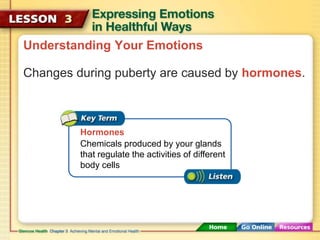
Changes during puberty are caused by hormones. 
Hormones 
Chemicals produced by your glands 
that regulate the activities of different 
body cells
Understanding Your Emotions 
Hormones can make you feel as if your emotions 
are swinging from one extreme to another.
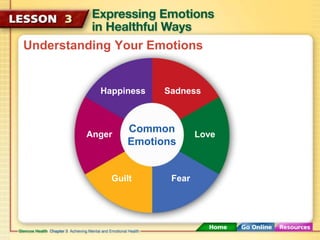
Understanding Your Emotions 
Happiness Sadness 
Common 
Emotions 
Love 
Anger 
Guilt Fear
Understanding Your Emotions 
Hostility is a form of anger that can hurt others, as 
well as the hostile person. 
Hostility 
The intentional use of unfriendly or 
offensive behavior
Managing Your Emotions 
Knowing how to recognize your emotions 
can help you manage them in healthful ways. 
Learning to express emotions in a healthful way 
will not only help you cope with emotional 
upsets, but also helps those around you to 
better handle their emotions.
Dealing with Emotions in Positive Ways 
Emotions are neither good nor bad. 
The way you express your emotions, however, can 
produce good or bad consequences.
Dealing with Emotions in Positive Ways 
Feeling bad, or emotional, when things happen in 
your life is normal. 
These feelings can be managed.
Dealing with Emotions in Positive Ways 
One example of expressing empathy is supporting 
a friend who is going through a difficult time. 
Empathy 
The ability to imagine and understand 
how someone else feels
Dealing with Emotions in Positive Ways 
To help you recognize your emotions and 
express them in positive ways, ask yourself 
these questions: 
Why do I feel the way I do about this event? 
Will this event matter later on in my life? 
Why should I wait before responding? 
What can I do to feel better? 
Who can I ask to help me deal with my negative feelings?
Dealing with Emotions in Positive Ways 
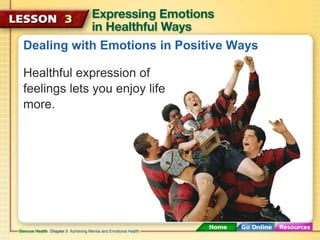
Healthful expression of 
feelings lets you enjoy life 
more.
Responding to Difficult Emotions 
Reducing the Intensity of Emotions 
Take several deep breaths. 
Relax your muscles. 
Get away from the situation until you calm down. 
Analyze your emotions by writing about them in a private journal.
Responding to Difficult Emotions 
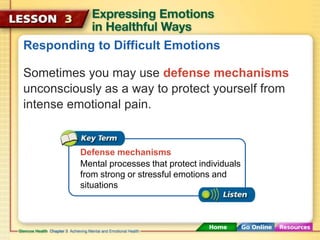
Sometimes you may use defense mechanisms 
unconsciously as a way to protect yourself from 
intense emotional pain. 
Defense mechanisms 
Mental processes that protect individuals 
from strong or stressful emotions and 
situations
Responding to Difficult Emotions 
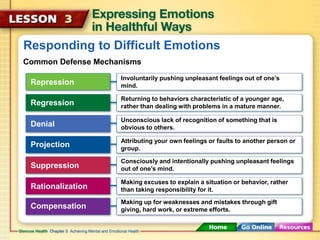
Common Defense Mechanisms 
Repression 
Regression 
Denial 
Projection 
Suppression 
Rationalization 
Compensation 
Involuntarily pushing unpleasant feelings out of one’s 
mind. 
Returning to behaviors characteristic of a younger age, 
rather than dealing with problems in a mature manner. 
Unconscious lack of recognition of something that is 
obvious to others. 
Attributing your own feelings or faults to another person or 
group. 
Consciously and intentionally pushing unpleasant feelings 
out of one’s mind. 
Making excuses to explain a situation or behavior, rather 
than taking responsibility for it. 
Making up for weaknesses and mistakes through gift 
giving, hard work, or extreme efforts.
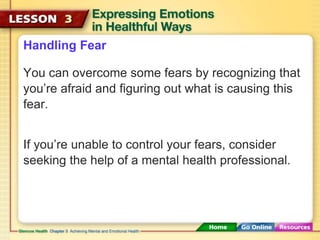
Handling Fear 
You can overcome some fears by recognizing that 
you’re afraid and figuring out what is causing this 
fear. 
If you’re unable to control your fears, consider 
seeking the help of a mental health professional.
Dealing with Guilt 
Guilt is a very destructive emotion that can harm 
your self-esteem.
Dealing with Guilt 
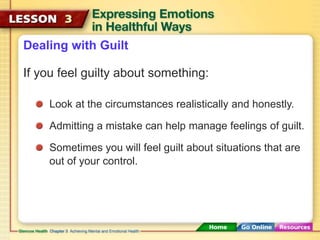
If you feel guilty about something: 
Look at the circumstances realistically and honestly. 
Admitting a mistake can help manage feelings of guilt. 
Sometimes you will feel guilt about situations that are 
out of your control.
Managing Anger 
Anger is one of the most difficult emotions to 
handle. 
As with guilt, it is best to figure out what is causing 
your anger, and then deal with it in a healthy way.
Managing Anger 
When you first feel anger building up inside you, try 
to calm down. 
If this doesn’t work, physically remove yourself 
from the situation.
Managing Anger 
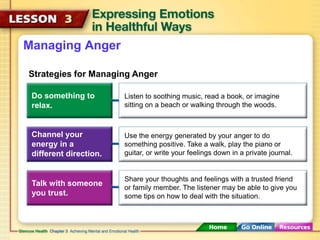
Strategies for Managing Anger 
Do something to 
relax. 
Channel your 
energy in a 
different direction. 
Talk with someone 
you trust. 
Listen to soothing music, read a book, or imagine 
sitting on a beach or walking through the woods. 
Use the energy generated by your anger to do 
something positive. Take a walk, play the piano or 
guitar, or write your feelings down in a private journal. 
Share your thoughts and feelings with a trusted friend 
or family member. The listener may be able to give you 
some tips on how to deal with the situation.
Managing Anger 
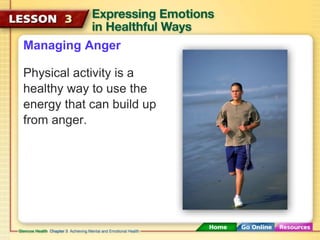
Physical activity is a 
healthy way to use the 
energy that can build up 
from anger.
After You Read 
Reviewing Facts and Vocabulary 
1. What are emotions? How can emotions 
affect your behavior? 
Emotions are signals that tell your mind and 
body how to react.
After You Read 
Reviewing Facts and Vocabulary 
2. What are five common defense 
mechanisms? 
Any five: Repression, suppression, 
rationalization, regression, denial, 
compensation, projection
After You Read 
Reviewing Facts and Vocabulary 
3. List three strategies for handling anger in 
a healthful way. 
Do something to relax, channel your energy 
in a different direction, talk to someone you 
trust
Ch03 03

Ch03 03

  • 1.
    Expressing Emotions in Healthful Ways (2:27) Click here to launch video Click here to download print activity
  • 2.
    Managing your emotionsallows you to express them in healthful ways.
  • 3.
    emotions hormones hostility empathy defense mechanisms
  • 4.
    Understanding Your Emotions Recognizing and acknowledging your emotions is a sign of good mental and emotional health. How you respond to your emotions can affect your mental/emotional, physical, and social health.
  • 5.
    Understanding Your Emotions Learning to recognize your emotions and to understand their effects on you will help you learn to manage them in healthful ways. Emotions Signals that tell your mind and body how to react
  • 6.
    Understanding Your Emotions Changes during puberty are caused by hormones. Hormones Chemicals produced by your glands that regulate the activities of different body cells
  • 7.
    Understanding Your Emotions Hormones can make you feel as if your emotions are swinging from one extreme to another.
  • 8.
    Understanding Your Emotions Happiness Sadness Common Emotions Love Anger Guilt Fear
  • 9.
    Understanding Your Emotions Hostility is a form of anger that can hurt others, as well as the hostile person. Hostility The intentional use of unfriendly or offensive behavior
  • 10.
    Managing Your Emotions Knowing how to recognize your emotions can help you manage them in healthful ways. Learning to express emotions in a healthful way will not only help you cope with emotional upsets, but also helps those around you to better handle their emotions.
  • 11.
    Dealing with Emotionsin Positive Ways Emotions are neither good nor bad. The way you express your emotions, however, can produce good or bad consequences.
  • 12.
    Dealing with Emotionsin Positive Ways Feeling bad, or emotional, when things happen in your life is normal. These feelings can be managed.
  • 13.
    Dealing with Emotionsin Positive Ways One example of expressing empathy is supporting a friend who is going through a difficult time. Empathy The ability to imagine and understand how someone else feels
  • 14.
    Dealing with Emotionsin Positive Ways To help you recognize your emotions and express them in positive ways, ask yourself these questions: Why do I feel the way I do about this event? Will this event matter later on in my life? Why should I wait before responding? What can I do to feel better? Who can I ask to help me deal with my negative feelings?
  • 15.
    Dealing with Emotionsin Positive Ways Healthful expression of feelings lets you enjoy life more.
  • 16.
    Responding to DifficultEmotions Reducing the Intensity of Emotions Take several deep breaths. Relax your muscles. Get away from the situation until you calm down. Analyze your emotions by writing about them in a private journal.
  • 17.
    Responding to DifficultEmotions Sometimes you may use defense mechanisms unconsciously as a way to protect yourself from intense emotional pain. Defense mechanisms Mental processes that protect individuals from strong or stressful emotions and situations
  • 18.
    Responding to DifficultEmotions Common Defense Mechanisms Repression Regression Denial Projection Suppression Rationalization Compensation Involuntarily pushing unpleasant feelings out of one’s mind. Returning to behaviors characteristic of a younger age, rather than dealing with problems in a mature manner. Unconscious lack of recognition of something that is obvious to others. Attributing your own feelings or faults to another person or group. Consciously and intentionally pushing unpleasant feelings out of one’s mind. Making excuses to explain a situation or behavior, rather than taking responsibility for it. Making up for weaknesses and mistakes through gift giving, hard work, or extreme efforts.
  • 19.
    Handling Fear Youcan overcome some fears by recognizing that you’re afraid and figuring out what is causing this fear. If you’re unable to control your fears, consider seeking the help of a mental health professional.
  • 20.
    Dealing with Guilt Guilt is a very destructive emotion that can harm your self-esteem.
  • 21.
    Dealing with Guilt If you feel guilty about something: Look at the circumstances realistically and honestly. Admitting a mistake can help manage feelings of guilt. Sometimes you will feel guilt about situations that are out of your control.
  • 22.
    Managing Anger Angeris one of the most difficult emotions to handle. As with guilt, it is best to figure out what is causing your anger, and then deal with it in a healthy way.
  • 23.
    Managing Anger Whenyou first feel anger building up inside you, try to calm down. If this doesn’t work, physically remove yourself from the situation.
  • 24.
    Managing Anger Strategiesfor Managing Anger Do something to relax. Channel your energy in a different direction. Talk with someone you trust. Listen to soothing music, read a book, or imagine sitting on a beach or walking through the woods. Use the energy generated by your anger to do something positive. Take a walk, play the piano or guitar, or write your feelings down in a private journal. Share your thoughts and feelings with a trusted friend or family member. The listener may be able to give you some tips on how to deal with the situation.
  • 25.
    Managing Anger Physicalactivity is a healthy way to use the energy that can build up from anger.
  • 26.
    After You Read Reviewing Facts and Vocabulary 1. What are emotions? How can emotions affect your behavior? Emotions are signals that tell your mind and body how to react.
  • 27.
    After You Read Reviewing Facts and Vocabulary 2. What are five common defense mechanisms? Any five: Repression, suppression, rationalization, regression, denial, compensation, projection
  • 28.
    After You Read Reviewing Facts and Vocabulary 3. List three strategies for handling anger in a healthful way. Do something to relax, channel your energy in a different direction, talk to someone you trust