Our Emotions
Miss. Hattendorf
Understanding our
Emotions
• Emotions: Signals that tell your mind and body how to
react.
• Referred to as feelings—responses to certain thoughts
and events
• Emotions affect all sides of your healthy triangle
Identifying Your Emotions
• Hormone: Chemical secreted by your glands that
regulates the activities of different body cells
• Hormones may cause a swing between extreme
emotions
• Being able to identify your feelings is the first
step in knowing how to respond in a healthy way
Happiness
• Being satisfied or feeling positive
• You usually feel energetic, creative, and sociable
Sadness
• Normal, healthy reaction to difficult events
• It can range from being disappointed or rejected to
experiencing the loss of a loved one
• You may feel easily discouraged and have less energy
Love
• Strong affection, deep concern, and respect
• Supporting the growth and individual needs of another
person and respecting that person’s boundaries and values
• Can be expressed through words or actions
Empathy
• Ability to imagine and understand how someone else
feels
• You feel connected to another person’s emotions
Fear
• When you are startled by someone or something
• Feelings of fear can increase your alertness and help you
escape from potentially harmful situations
Guilt
• Acting against one’s values or from failing to act when
action might have brought about a better outcome
• Guilt can eat at you, or your conscience can motivate you
to make positive changes in your behavior
Anger
• Common reaction to being emotionally hurt or physically
harmed
• When not handled in a constructive way it can result in
violence
Responding to Your
Emotions
• Pick an emotion that you have had to deal with in the past.
• Use the following strategies for interpreting and responding to
this emotion
• 1. Look below the surface of your emotion. Ask yourself:
What am I really reacting to?
• 2. Consider whether or not the situation to which you are
reacting with matter?
• 3. Don’t take action on a strong feeling until you have
considered the consequences. What could the consequences
entail?
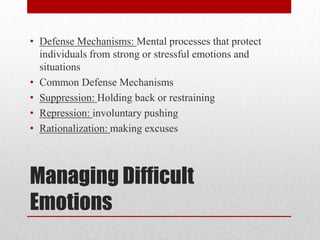
Managing Difficult
Emotions
• Defense Mechanisms: Mental processes that protect
individuals from strong or stressful emotions and
situations
• Common Defense Mechanisms
• Suppression: Holding back or restraining
• Repression: involuntary pushing
• Rationalization: making excuses
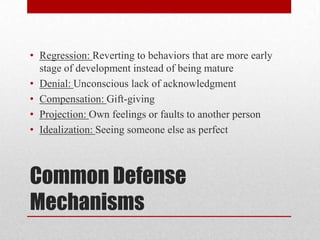
Common Defense
Mechanisms
• Regression: Reverting to behaviors that are more early
stage of development instead of being mature
• Denial: Unconscious lack of acknowledgment
• Compensation: Gift-giving
• Projection: Own feelings or faults to another person
• Idealization: Seeing someone else as perfect
Cartoon Book
The emotional cartoon booklet.

Our Emotions

  • 1.
  • 2.
    Understanding our Emotions • Emotions:Signals that tell your mind and body how to react. • Referred to as feelings—responses to certain thoughts and events • Emotions affect all sides of your healthy triangle
  • 3.
    Identifying Your Emotions •Hormone: Chemical secreted by your glands that regulates the activities of different body cells • Hormones may cause a swing between extreme emotions • Being able to identify your feelings is the first step in knowing how to respond in a healthy way
  • 4.
    Happiness • Being satisfiedor feeling positive • You usually feel energetic, creative, and sociable
  • 5.
    Sadness • Normal, healthyreaction to difficult events • It can range from being disappointed or rejected to experiencing the loss of a loved one • You may feel easily discouraged and have less energy
  • 6.
    Love • Strong affection,deep concern, and respect • Supporting the growth and individual needs of another person and respecting that person’s boundaries and values • Can be expressed through words or actions
  • 7.
    Empathy • Ability toimagine and understand how someone else feels • You feel connected to another person’s emotions
  • 8.
    Fear • When youare startled by someone or something • Feelings of fear can increase your alertness and help you escape from potentially harmful situations
  • 9.
    Guilt • Acting againstone’s values or from failing to act when action might have brought about a better outcome • Guilt can eat at you, or your conscience can motivate you to make positive changes in your behavior
  • 10.
    Anger • Common reactionto being emotionally hurt or physically harmed • When not handled in a constructive way it can result in violence
  • 11.
    Responding to Your Emotions •Pick an emotion that you have had to deal with in the past. • Use the following strategies for interpreting and responding to this emotion • 1. Look below the surface of your emotion. Ask yourself: What am I really reacting to? • 2. Consider whether or not the situation to which you are reacting with matter? • 3. Don’t take action on a strong feeling until you have considered the consequences. What could the consequences entail?
  • 12.
    Managing Difficult Emotions • DefenseMechanisms: Mental processes that protect individuals from strong or stressful emotions and situations • Common Defense Mechanisms • Suppression: Holding back or restraining • Repression: involuntary pushing • Rationalization: making excuses
  • 13.
    Common Defense Mechanisms • Regression:Reverting to behaviors that are more early stage of development instead of being mature • Denial: Unconscious lack of acknowledgment • Compensation: Gift-giving • Projection: Own feelings or faults to another person • Idealization: Seeing someone else as perfect
  • 14.