Tania Akram
Bs (hons)-Psychology
Anger
 In general:
A strong feeling of annoyance, displeasure, or hostility
 In psychology:
Anger is an emotion characterized by antagonism
toward someone or something you feel has
deliberately done you wrong.
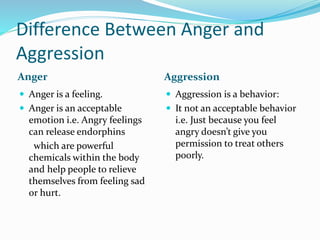
Difference Between Anger and
Aggression
Anger Aggression
 Anger is a feeling.
 Anger is an acceptable
emotion i.e. Angry feelings
can release endorphins
which are powerful
chemicals within the body
and help people to relieve
themselves from feeling sad
or hurt.
 Aggression is a behavior:
 It not an acceptable behavior
i.e. Just because you feel
angry doesn’t give you
permission to treat others
poorly.
Bullying
 In general:
Bullying is the use of force, threat, or coercion to
abuse, intimidate, or aggressively dominate others.
 In psychology:
Bullying is a form of aggressive behavior in which
someone intentionally and repeatedly causes another
person injury or discomfort.
Bullying and Anger
 Bullying can be both an expression and a cause of
anger.
 As bullying causes unpleasant feelings in us, these
unpleasant feelings can also lead us toward bullying.
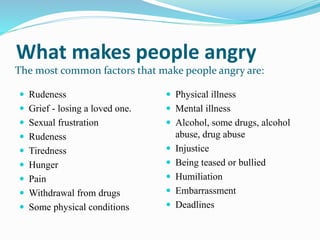
What makes people angry
The most common factors that make people angry are:
 Rudeness
 Grief - losing a loved one.
 Sexual frustration
 Rudeness
 Tiredness
 Hunger
 Pain
 Withdrawal from drugs
 Some physical conditions
 Physical illness
 Mental illness
 Alcohol, some drugs, alcohol
abuse, drug abuse
 Injustice
 Being teased or bullied
 Humiliation
 Embarrassment
 Deadlines
How can anger make you ill
 Uncontrolled or unresolved anger can lead to the
physical health problems, emotional and mental
problems.
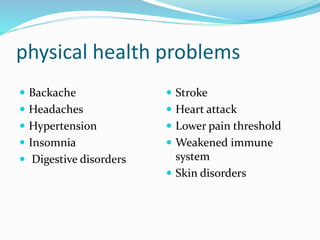
physical health problems
 Backache
 Headaches
 Hypertension
 Insomnia
 Digestive disorders
 Stroke
 Heart attack
 Lower pain threshold
 Weakened immune
system
 Skin disorders
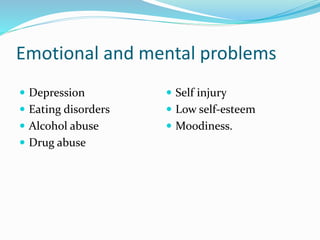
Emotional and mental problems
 Depression
 Eating disorders
 Alcohol abuse
 Drug abuse
 Self injury
 Low self-esteem
 Moodiness.
Anger Management
 Anger management is the process of learning to
recognize signs that you're becoming angry, and taking
action to calm down and deal with the situation in a
positive way.
 We all feel angry sometimes and may say or do things
we regret. This is a normal part of life, and may not
necessarily mean you need anger management help.
When you need help?
 The following may indicate that you need anger
management help:
1. You have trouble with the authorities.
2. You frequently feel that you have to hold in your
anger.
3. You have numerous arguments with people around
you
4. You find yourself involved in fights.
5. You have outbursts where you break things.
6. You lose your temper when driving and become
reckless.
7. You think that perhaps you do need help.
Therapy
 Anger management therapy may be done in group
sessions, often called anger management classes
 one-on-one (UK/Ireland: one-to-one) with a
counselor or psychotherapist, often referred to as
psychotherapy.
Depending on your circumstances and
needs, sessions may go on for a few weeks or
months.
If you have any mental health conditions,
such as depression, an addiction it is
important that anger management sessions
complement any other treatment you are
having.
 It is vital that the psychotherapist or whoever is
running the anger management classes knows about
your current medical situation, as well as your medical
history.
Anger management aims
1. Help you identify your anger triggers.
2. Help you respond in a non-aggressive way to these
triggers before you lose your temper.
3. Learn how to acquire and utilize specific skills for
handling your anger triggers.
4. Learn to effectively identify moments when your
thought processes are not leading to logical
conclusions.
5. Learn how to bring yourself back to a state of calm
and peace.
6. Learn how to express your feelings and needs
assertively in situations.
7. Learning how to redirect your energies and resources
into problem solving rather than fury in situations.
Signs and symptoms of emerging
anger
 Most people are able to identify signs and symptoms of
emerging anger which indicate where in the anger-
calm continuum they are. These may include:
1. Emotional symptoms
2. Physical symptoms
Emotional symptoms
 A desire to escape
from the situation
 Irritation
 Sadness or
depression
 Guilt
 Resentment
 Anxiety
 Desire to lash out
verbally
 Desire to lash out
physically.
Physical symptoms
 Grinding teeth
 Clenching their jaw
 Stomach upset
 Accelerated heart
rate.
 Sweating
 Dizziness
 Breathlessness
 Hot flashes in the
face or neck
 Trembling hands
 Tingling at the back
of the neck.
Rating your anger
Remember that anger is not a leap from
calm to fury, there are many levels in
between - if you are aware of this, as
well as some other factors, it is easier to
be in control, to think things through
in a logical way.
There are many ways of rating your
anger - some people devise a scale
from 1 to 100, with 100 being
fury/rage.
An Anger Plan
Being able to rate your anger helps you
know where you are in the anger scale -
that alone will not get rid of the anger;
it is a step. The next step is to devise an
anger plan.
Anger plans may vary and depend on
certain aspects of the person, as well as
his/her circumstances.
An anger plan may include:
 Taking time out
 Change the subject
 Relaxation techniques
 Delay your responses
Useful Tips To Reduce Anger
 Slow things down
 Express your anger
 Cognitive restructuring
 Exercise regularly
 Focus on the solution, not just the problem
 Don't hold on to resentment
 Sleep
Slow things down
 Count to ten; devise strategies to slow things down. As
your pace slows down try to visualize a relaxing or
pleasant experience - take your mind there.
Express your anger
 Make sure you do this when you have calmed down.
Do this in an assertive non-aggressive way.
Cognitive Restructuring
 According to the American Psychological Association,
this means changing the way you think. An angry
person may have overly-dramatic thinking.
Exercise regularly
 Many of the hormones we release when we are angry
are produced.
 Exercise uses up those chemicals and hormones.
Sleep
 Try to get at least 7 hours good quality sleep every
night.
 Sleep deprivation has been linked in many studies to
mental, physical and emotional health problems -
including anger.

Bullying and anger management

  • 1.
  • 2.
    Anger  In general: Astrong feeling of annoyance, displeasure, or hostility  In psychology: Anger is an emotion characterized by antagonism toward someone or something you feel has deliberately done you wrong.
  • 3.
    Difference Between Angerand Aggression Anger Aggression  Anger is a feeling.  Anger is an acceptable emotion i.e. Angry feelings can release endorphins which are powerful chemicals within the body and help people to relieve themselves from feeling sad or hurt.  Aggression is a behavior:  It not an acceptable behavior i.e. Just because you feel angry doesn’t give you permission to treat others poorly.
  • 4.
    Bullying  In general: Bullyingis the use of force, threat, or coercion to abuse, intimidate, or aggressively dominate others.  In psychology: Bullying is a form of aggressive behavior in which someone intentionally and repeatedly causes another person injury or discomfort.
  • 5.
    Bullying and Anger Bullying can be both an expression and a cause of anger.  As bullying causes unpleasant feelings in us, these unpleasant feelings can also lead us toward bullying.
  • 6.
    What makes peopleangry The most common factors that make people angry are:  Rudeness  Grief - losing a loved one.  Sexual frustration  Rudeness  Tiredness  Hunger  Pain  Withdrawal from drugs  Some physical conditions  Physical illness  Mental illness  Alcohol, some drugs, alcohol abuse, drug abuse  Injustice  Being teased or bullied  Humiliation  Embarrassment  Deadlines
  • 7.
    How can angermake you ill  Uncontrolled or unresolved anger can lead to the physical health problems, emotional and mental problems.
  • 8.
    physical health problems Backache  Headaches  Hypertension  Insomnia  Digestive disorders  Stroke  Heart attack  Lower pain threshold  Weakened immune system  Skin disorders
  • 9.
    Emotional and mentalproblems  Depression  Eating disorders  Alcohol abuse  Drug abuse  Self injury  Low self-esteem  Moodiness.
  • 10.
    Anger Management  Angermanagement is the process of learning to recognize signs that you're becoming angry, and taking action to calm down and deal with the situation in a positive way.
  • 11.
     We allfeel angry sometimes and may say or do things we regret. This is a normal part of life, and may not necessarily mean you need anger management help.
  • 12.
    When you needhelp?  The following may indicate that you need anger management help: 1. You have trouble with the authorities. 2. You frequently feel that you have to hold in your anger. 3. You have numerous arguments with people around you
  • 13.
    4. You findyourself involved in fights. 5. You have outbursts where you break things. 6. You lose your temper when driving and become reckless. 7. You think that perhaps you do need help.
  • 14.
    Therapy  Anger managementtherapy may be done in group sessions, often called anger management classes  one-on-one (UK/Ireland: one-to-one) with a counselor or psychotherapist, often referred to as psychotherapy.
  • 15.
    Depending on yourcircumstances and needs, sessions may go on for a few weeks or months. If you have any mental health conditions, such as depression, an addiction it is important that anger management sessions complement any other treatment you are having.
  • 16.
     It isvital that the psychotherapist or whoever is running the anger management classes knows about your current medical situation, as well as your medical history.
  • 17.
    Anger management aims 1.Help you identify your anger triggers. 2. Help you respond in a non-aggressive way to these triggers before you lose your temper. 3. Learn how to acquire and utilize specific skills for handling your anger triggers. 4. Learn to effectively identify moments when your thought processes are not leading to logical conclusions.
  • 18.
    5. Learn howto bring yourself back to a state of calm and peace. 6. Learn how to express your feelings and needs assertively in situations. 7. Learning how to redirect your energies and resources into problem solving rather than fury in situations.
  • 19.
    Signs and symptomsof emerging anger  Most people are able to identify signs and symptoms of emerging anger which indicate where in the anger- calm continuum they are. These may include: 1. Emotional symptoms 2. Physical symptoms
  • 20.
    Emotional symptoms  Adesire to escape from the situation  Irritation  Sadness or depression  Guilt  Resentment  Anxiety  Desire to lash out verbally  Desire to lash out physically.
  • 21.
    Physical symptoms  Grindingteeth  Clenching their jaw  Stomach upset  Accelerated heart rate.  Sweating  Dizziness  Breathlessness  Hot flashes in the face or neck  Trembling hands  Tingling at the back of the neck.
  • 22.
    Rating your anger Rememberthat anger is not a leap from calm to fury, there are many levels in between - if you are aware of this, as well as some other factors, it is easier to be in control, to think things through in a logical way.
  • 23.
    There are manyways of rating your anger - some people devise a scale from 1 to 100, with 100 being fury/rage.
  • 24.
    An Anger Plan Beingable to rate your anger helps you know where you are in the anger scale - that alone will not get rid of the anger; it is a step. The next step is to devise an anger plan. Anger plans may vary and depend on certain aspects of the person, as well as his/her circumstances.
  • 25.
    An anger planmay include:  Taking time out  Change the subject  Relaxation techniques  Delay your responses
  • 26.
    Useful Tips ToReduce Anger  Slow things down  Express your anger  Cognitive restructuring  Exercise regularly  Focus on the solution, not just the problem  Don't hold on to resentment  Sleep
  • 27.
    Slow things down Count to ten; devise strategies to slow things down. As your pace slows down try to visualize a relaxing or pleasant experience - take your mind there.
  • 28.
    Express your anger Make sure you do this when you have calmed down. Do this in an assertive non-aggressive way.
  • 29.
    Cognitive Restructuring  Accordingto the American Psychological Association, this means changing the way you think. An angry person may have overly-dramatic thinking.
  • 30.
    Exercise regularly  Manyof the hormones we release when we are angry are produced.  Exercise uses up those chemicals and hormones.
  • 31.
    Sleep  Try toget at least 7 hours good quality sleep every night.  Sleep deprivation has been linked in many studies to mental, physical and emotional health problems - including anger.