Body Image and Eating 
Disorders (2:06) 
Click here to launch video 
Click here to download 
print activity
Poor body image may lead to 
unhealthful and harmful eating 
behaviors.
body image 
fad diets 
weight cycling 
eating disorders 
anorexia nervosa 
bulimia nervosa 
binge eating disorder
Your Body Image 
The media and other influences can affect 
your body image. 
Try to accept yourself the way you are.
Your Body Image 
When you look in the mirror, do you like what 
you see? If the answer is yes, that means that 
your body image is positive. 
Body image 
The way you see 
your body
Your Body Image 
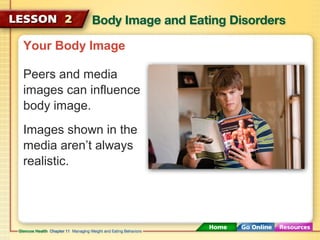
Peers and media 
images can influence 
body image. 
Images shown in the 
media aren’t always 
realistic.
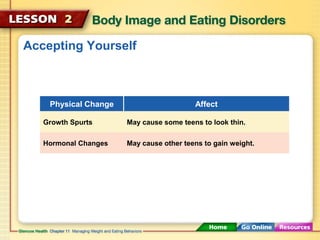
Accepting Yourself 
Physical Change Affect 
Growth Spurts May cause some teens to look thin. 
May cause other Hormonal Changes teens to gain weight.
Fad Diets 
Fad diets are neither safe nor reliable ways to 
lose weight. 
People on fad diets may lose weight 
temporarily, but they usually regain it after going 
off the diet.
Fad Diets 
Teens who want to lose weight may be tempted to 
try fad diets that promise quick, easy weight loss. 
Fad diets 
Weight-loss plans that tend 
to be popular for only a 
short time
Fad Diets 
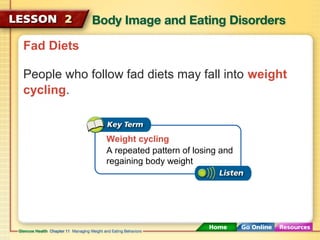
People who follow fad diets may fall into weight 
cycling. 
Weight cycling 
A repeated pattern of losing and 
regaining body weight
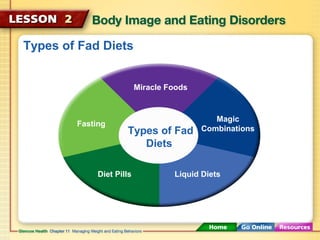
Types of Fad Diets 
Miracle Foods 
Types of Fad 
Diets 
Magic 
Combinations 
Fasting 
Diet Pills Liquid Diets
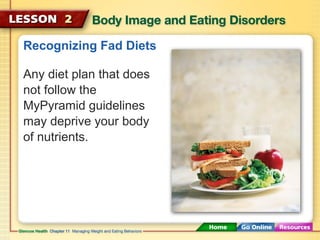
Recognizing Fad Diets 
Any diet plan that does 
not follow the 
MyPyramid guidelines 
may deprive your body 
of nutrients.
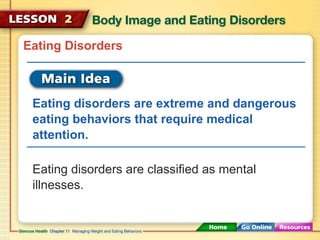
Eating Disorders 
Eating disorders are extreme and dangerous 
eating behaviors that require medical 
attention. 
Eating disorders are classified as mental 
illnesses.
Eating Disorders 
Eating disorders are often linked to depression, 
low self-esteem, or troubled personal relationships. 
Eating disorders 
Extreme, harmful eating 
behaviors that can cause serious 
illness or even death
Eating Disorders 
Social and cultural forces that emphasize physical 
appearance can play a role in eating disorders. 
Research also suggests that genetics may be a 
factor in the development of eating disorders.
Anorexia Nervosa 
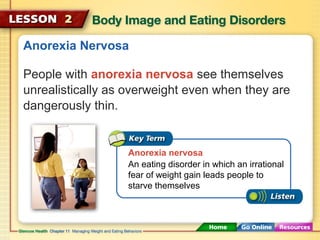
People with anorexia nervosa see themselves 
unrealistically as overweight even when they are 
dangerously thin. 
Anorexia nervosa 
An eating disorder in which an irrational 
fear of weight gain leads people to 
starve themselves
Anorexia Nervosa 
People with anorexia 
develop obsessive 
behaviors related to food, 
such as: 
avoiding food and meals 
eating only a few kinds of 
food in small amounts 
weighing or counting the 
calories in everything they eat 
exercising excessively 
weighing themselves 
repeatedly
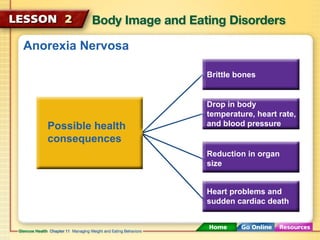
Anorexia Nervosa 
Possible health 
consequences 
Brittle bones 
Drop in body 
temperature, heart rate, 
and blood pressure 
Reduction in organ 
size 
Heart problems and 
sudden cardiac death
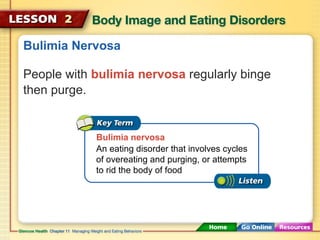
Bulimia Nervosa 
People with bulimia nervosa regularly binge 
then purge. 
Bulimia nervosa 
An eating disorder that involves cycles 
of overeating and purging, or attempts 
to rid the body of food
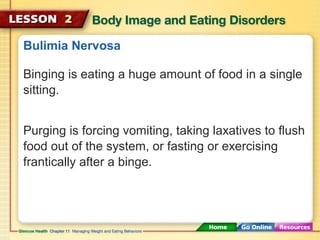
Bulimia Nervosa 
Binging is eating a huge amount of food in a single 
sitting. 
Purging is forcing vomiting, taking laxatives to flush 
food out of the system, or fasting or exercising 
frantically after a binge.
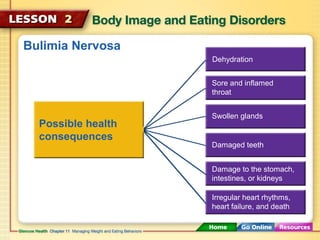
Bulimia Nervosa 
Possible health 
consequences 
Dehydration 
Sore and inflamed 
throat 
Swollen glands 
Damaged teeth 
Damage to the stomach, 
intestines, or kidneys 
Irregular heart rhythms, 
heart failure, and death
Binge Eating Disorder 
People with binge eating disorder do not purge. 
Binge eating disorder 
an eating disorder in which people 
overeat compulsively
Binge Eating Disorder 
Consequences of binge eating disorder include: 
Becoming 
overweight or 
obese 
Developing the 
health problems 
associated with 
obesity
Seeking Help 
Eating disorders are serious illnesses that require 
medical help. 
Medical help may involve counseling, nutritional 
guidance, a doctor’s care, and, in extreme cases, a 
hospital stay.
Seeking Help 
If you think that you or someone you know may 
have an eating disorder, talk to a trusted adult, 
such as a parent, counselor, or school nurse.
After You Read 
Reviewing Facts and Vocabulary 
1. List two factors that influence body 
image. 
Any two: Insecurity about physical changes 
during adolescence, images in the media, 
attitudes of friends and family
After You Read 
Reviewing Facts and Vocabulary 
2. Define fad diets. 
Fad diets are weight-loss plans that tend to 
be popular for only a short time.
After You Read 
Reviewing Facts and Vocabulary 
3. List three types of eating disorders. 
Anorexia nervosa, bulimia nervosa, binge 
eating disorder
Ch11 02

Ch11 02

  • 1.
    Body Image andEating Disorders (2:06) Click here to launch video Click here to download print activity
  • 2.
    Poor body imagemay lead to unhealthful and harmful eating behaviors.
  • 3.
    body image faddiets weight cycling eating disorders anorexia nervosa bulimia nervosa binge eating disorder
  • 4.
    Your Body Image The media and other influences can affect your body image. Try to accept yourself the way you are.
  • 5.
    Your Body Image When you look in the mirror, do you like what you see? If the answer is yes, that means that your body image is positive. Body image The way you see your body
  • 6.
    Your Body Image Peers and media images can influence body image. Images shown in the media aren’t always realistic.
  • 7.
    Accepting Yourself PhysicalChange Affect Growth Spurts May cause some teens to look thin. May cause other Hormonal Changes teens to gain weight.
  • 8.
    Fad Diets Faddiets are neither safe nor reliable ways to lose weight. People on fad diets may lose weight temporarily, but they usually regain it after going off the diet.
  • 9.
    Fad Diets Teenswho want to lose weight may be tempted to try fad diets that promise quick, easy weight loss. Fad diets Weight-loss plans that tend to be popular for only a short time
  • 10.
    Fad Diets Peoplewho follow fad diets may fall into weight cycling. Weight cycling A repeated pattern of losing and regaining body weight
  • 11.
    Types of FadDiets Miracle Foods Types of Fad Diets Magic Combinations Fasting Diet Pills Liquid Diets
  • 12.
    Recognizing Fad Diets Any diet plan that does not follow the MyPyramid guidelines may deprive your body of nutrients.
  • 13.
    Eating Disorders Eatingdisorders are extreme and dangerous eating behaviors that require medical attention. Eating disorders are classified as mental illnesses.
  • 14.
    Eating Disorders Eatingdisorders are often linked to depression, low self-esteem, or troubled personal relationships. Eating disorders Extreme, harmful eating behaviors that can cause serious illness or even death
  • 15.
    Eating Disorders Socialand cultural forces that emphasize physical appearance can play a role in eating disorders. Research also suggests that genetics may be a factor in the development of eating disorders.
  • 16.
    Anorexia Nervosa Peoplewith anorexia nervosa see themselves unrealistically as overweight even when they are dangerously thin. Anorexia nervosa An eating disorder in which an irrational fear of weight gain leads people to starve themselves
  • 17.
    Anorexia Nervosa Peoplewith anorexia develop obsessive behaviors related to food, such as: avoiding food and meals eating only a few kinds of food in small amounts weighing or counting the calories in everything they eat exercising excessively weighing themselves repeatedly
  • 18.
    Anorexia Nervosa Possiblehealth consequences Brittle bones Drop in body temperature, heart rate, and blood pressure Reduction in organ size Heart problems and sudden cardiac death
  • 19.
    Bulimia Nervosa Peoplewith bulimia nervosa regularly binge then purge. Bulimia nervosa An eating disorder that involves cycles of overeating and purging, or attempts to rid the body of food
  • 20.
    Bulimia Nervosa Bingingis eating a huge amount of food in a single sitting. Purging is forcing vomiting, taking laxatives to flush food out of the system, or fasting or exercising frantically after a binge.
  • 21.
    Bulimia Nervosa Possiblehealth consequences Dehydration Sore and inflamed throat Swollen glands Damaged teeth Damage to the stomach, intestines, or kidneys Irregular heart rhythms, heart failure, and death
  • 22.
    Binge Eating Disorder People with binge eating disorder do not purge. Binge eating disorder an eating disorder in which people overeat compulsively
  • 23.
    Binge Eating Disorder Consequences of binge eating disorder include: Becoming overweight or obese Developing the health problems associated with obesity
  • 24.
    Seeking Help Eatingdisorders are serious illnesses that require medical help. Medical help may involve counseling, nutritional guidance, a doctor’s care, and, in extreme cases, a hospital stay.
  • 25.
    Seeking Help Ifyou think that you or someone you know may have an eating disorder, talk to a trusted adult, such as a parent, counselor, or school nurse.
  • 26.
    After You Read Reviewing Facts and Vocabulary 1. List two factors that influence body image. Any two: Insecurity about physical changes during adolescence, images in the media, attitudes of friends and family
  • 27.
    After You Read Reviewing Facts and Vocabulary 2. Define fad diets. Fad diets are weight-loss plans that tend to be popular for only a short time.
  • 28.
    After You Read Reviewing Facts and Vocabulary 3. List three types of eating disorders. Anorexia nervosa, bulimia nervosa, binge eating disorder