Suicide Prevention (1:36) 
Click here to launch video 
Click here to download 
print activity
Professional intervention and support 
from friends and family can often help 
prevent suicide.
alienation 
suicide 
cluster suicides
Knowing the Facts About Suicide 
Certain risk factors increase thoughts of 
suicide and suicide attempts. 
Talking about suicide and where to go for help 
may prevent someone from attempting suicide.
Knowing the Facts About Suicide 
For some people, stress can cause alienation. 
Alienation 
Feeling isolated and separated from 
everyone else
Knowing the Facts About Suicide 
People who feel alienated may be unable to cope 
with difficult life experiences. 
They may seek to escape from the pain and 
consider ending their lives.
Knowing the Facts About Suicide 
Suicide is the third leading cause of death for 
teens ages 15 to 19. 
Suicide 
The act of intentionally taking one’s 
own life
Suicide Risk Factors 
Depression or another mental disorder 
A history of abusing alcohol or other drugs 
A stressful situation or loss 
Previous suicide attempts 
Family history of mental disorders, substance abuse, or suicide 
Access to guns
Suicide Risk Factors 
Exposure to other teens who have died by suicide 
is a risk factor that can lead to cluster suicides. 
Cluster suicides 
A series of suicides occurring within a short 
period of time and involving several people in 
the same school or community
Strategies to Prevent Suicide 
Recognizing the signs of suicide may help 
prevent it. 
When someone talks about committing suicide 
—whether it’s done in a serious, casual, or even 
humorous way—take it seriously.
Strategies to Prevent Suicide 
Any discussion or suggestion about suicide 
requires immediate attention. 
Never agree to keep a secret if a friend says he or 
she is considering suicide. 
Tell an adult immediately.
Strategies to Prevent Suicide 
The warning signs of suicide should be taken 
seriously. 
The more signs exhibited, the more likely it is that 
the person is thinking about suicide.
Strategies to Prevent Suicide 
Warning Signs of Suicide 
Direct statements such as “I wish I were dead.” 
Indirect statements such as “I can’t take it anymore.” 
Writing poems, song lyrics, or diary entries that deal with death 
Direct or indirect suicide threats 
An unusual obsession with death
Strategies to Prevent Suicide 
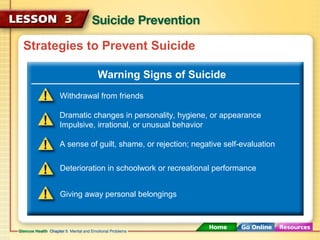
Warning Signs of Suicide 
Withdrawal from friends 
Dramatic changes in personality, hygiene, or appearance 
Impulsive, irrational, or unusual behavior 
A sense of guilt, shame, or rejection; negative self-evaluation 
Deterioration in schoolwork or recreational performance 
Giving away personal belongings
Strategies to Prevent Suicide 
Warning Signs of Suicide 
Substance abuse 
Complaints about physical symptoms, such as stomachaches, 
headaches, and fatigue 
Persistent boredom and indifference 
Violent actions, rebellious behavior, or running away 
Intolerance for praise or rewards
How You Can Help 
People who are considering suicide often believe 
that their death will not matter to anyone. 
Showing empathy when talking with that person 
will let him or her know you are concerned.
How You Can Help 
If someone you know may be considering suicide, 
try the following 
Initiate a 
meaningful 
conversation. 
Show support 
and ask 
questions. 
Try to persuade 
the person to 
seek help.
How You Can Help 
Call a crisis center or a suicide hotline if you feel 
you might be in danger of hurting yourself. 
You can also speak to a crisis worker about 
someone you are concerned about.
How You Can Help 
Suicide survivor support groups are 
available in most communities.
After You Read 
Reviewing Facts and Vocabulary 
1. Define the term alienation. 
Feeling isolated and separated from 
everyone else
After You Read 
Reviewing Facts and Vocabulary 
2. What two risk factors have the strongest 
association with suicide? 
Suffering from a mental disorder; having a 
history of abusing alcohol or other drugs
After You Read 
Reviewing Facts and Vocabulary 
3. Name five warning signs of suicide. 
Any of the five warning signs listed in 
Figure 5.7 on page 124
Ch05 03

Ch05 03

  • 1.
    Suicide Prevention (1:36) Click here to launch video Click here to download print activity
  • 2.
    Professional intervention andsupport from friends and family can often help prevent suicide.
  • 3.
  • 4.
    Knowing the FactsAbout Suicide Certain risk factors increase thoughts of suicide and suicide attempts. Talking about suicide and where to go for help may prevent someone from attempting suicide.
  • 5.
    Knowing the FactsAbout Suicide For some people, stress can cause alienation. Alienation Feeling isolated and separated from everyone else
  • 6.
    Knowing the FactsAbout Suicide People who feel alienated may be unable to cope with difficult life experiences. They may seek to escape from the pain and consider ending their lives.
  • 7.
    Knowing the FactsAbout Suicide Suicide is the third leading cause of death for teens ages 15 to 19. Suicide The act of intentionally taking one’s own life
  • 8.
    Suicide Risk Factors Suicide Risk Factors Depression or another mental disorder A history of abusing alcohol or other drugs A stressful situation or loss Previous suicide attempts Family history of mental disorders, substance abuse, or suicide Access to guns
  • 9.
    Suicide Risk Factors Exposure to other teens who have died by suicide is a risk factor that can lead to cluster suicides. Cluster suicides A series of suicides occurring within a short period of time and involving several people in the same school or community
  • 10.
    Strategies to PreventSuicide Recognizing the signs of suicide may help prevent it. When someone talks about committing suicide —whether it’s done in a serious, casual, or even humorous way—take it seriously.
  • 11.
    Strategies to PreventSuicide Any discussion or suggestion about suicide requires immediate attention. Never agree to keep a secret if a friend says he or she is considering suicide. Tell an adult immediately.
  • 12.
    Strategies to PreventSuicide The warning signs of suicide should be taken seriously. The more signs exhibited, the more likely it is that the person is thinking about suicide.
  • 13.
    Strategies to PreventSuicide Warning Signs of Suicide Direct statements such as “I wish I were dead.” Indirect statements such as “I can’t take it anymore.” Writing poems, song lyrics, or diary entries that deal with death Direct or indirect suicide threats An unusual obsession with death
  • 14.
    Strategies to PreventSuicide Warning Signs of Suicide Withdrawal from friends Dramatic changes in personality, hygiene, or appearance Impulsive, irrational, or unusual behavior A sense of guilt, shame, or rejection; negative self-evaluation Deterioration in schoolwork or recreational performance Giving away personal belongings
  • 15.
    Strategies to PreventSuicide Warning Signs of Suicide Substance abuse Complaints about physical symptoms, such as stomachaches, headaches, and fatigue Persistent boredom and indifference Violent actions, rebellious behavior, or running away Intolerance for praise or rewards
  • 16.
    How You CanHelp People who are considering suicide often believe that their death will not matter to anyone. Showing empathy when talking with that person will let him or her know you are concerned.
  • 17.
    How You CanHelp If someone you know may be considering suicide, try the following Initiate a meaningful conversation. Show support and ask questions. Try to persuade the person to seek help.
  • 18.
    How You CanHelp Call a crisis center or a suicide hotline if you feel you might be in danger of hurting yourself. You can also speak to a crisis worker about someone you are concerned about.
  • 19.
    How You CanHelp Suicide survivor support groups are available in most communities.
  • 20.
    After You Read Reviewing Facts and Vocabulary 1. Define the term alienation. Feeling isolated and separated from everyone else
  • 21.
    After You Read Reviewing Facts and Vocabulary 2. What two risk factors have the strongest association with suicide? Suffering from a mental disorder; having a history of abusing alcohol or other drugs
  • 22.
    After You Read Reviewing Facts and Vocabulary 3. Name five warning signs of suicide. Any of the five warning signs listed in Figure 5.7 on page 124