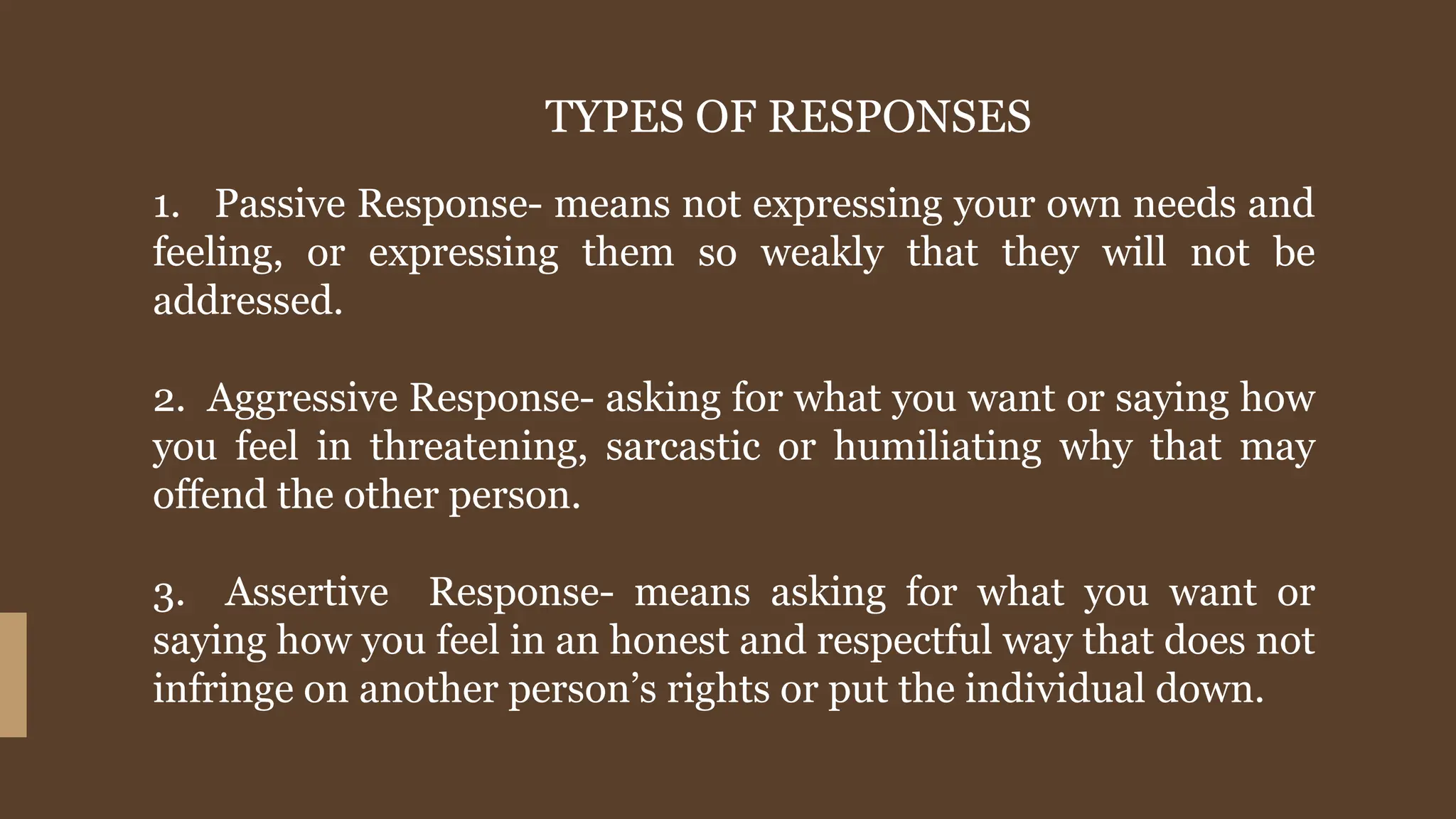
EMOTIONAL
INTELLIGENCE
LESSON 8:
OBJECTIVES
At the end of the lesson you will be able to:
• discuss that understanding the intensity and
differentiation of your emotions may help in
communicating emotional expressions;
• explore your positive and negative emotions and
how you express or hide them, and
• demonstrate and create ways to manage various
emotions
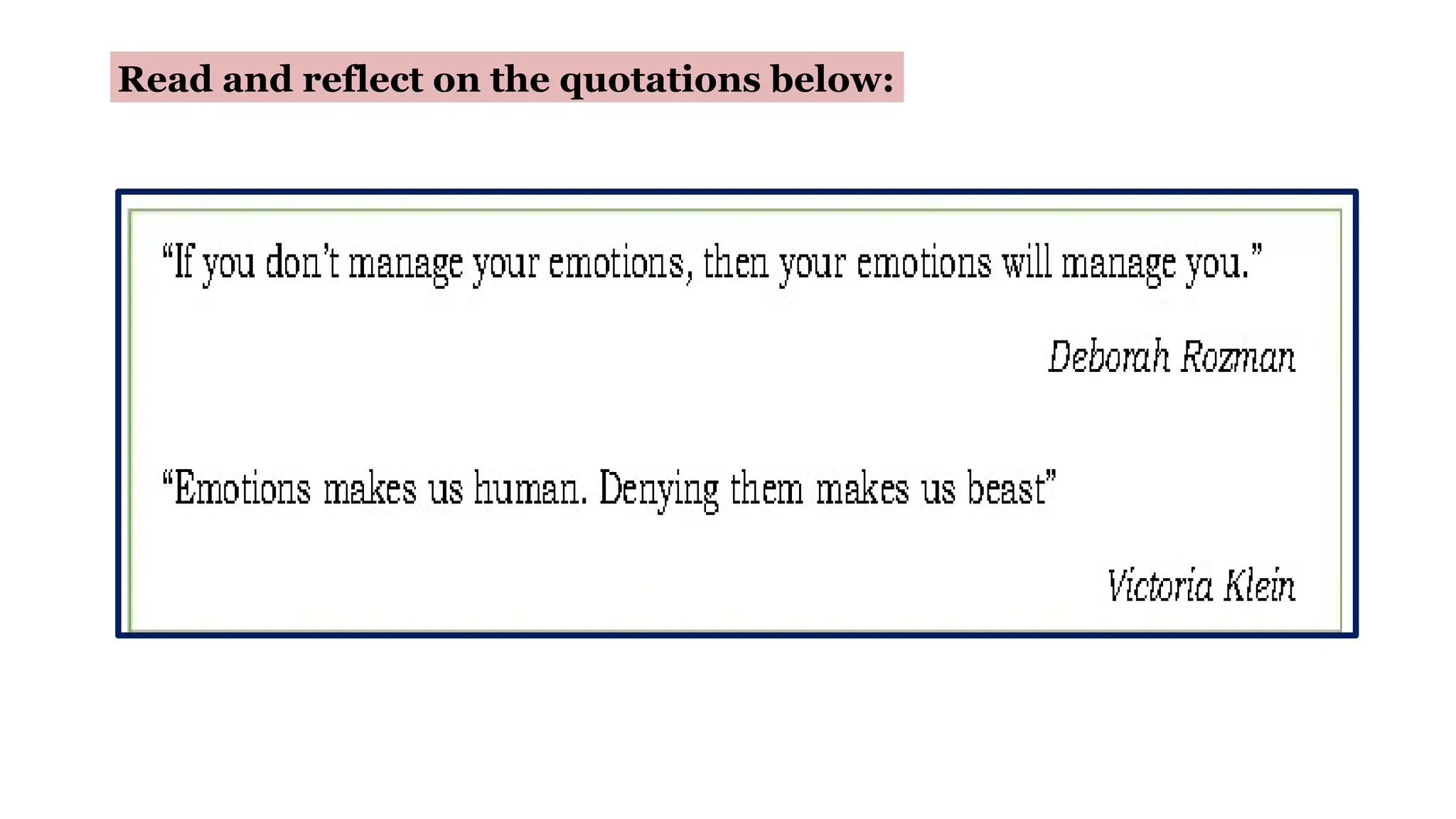
Read and reflect on the quotations below:
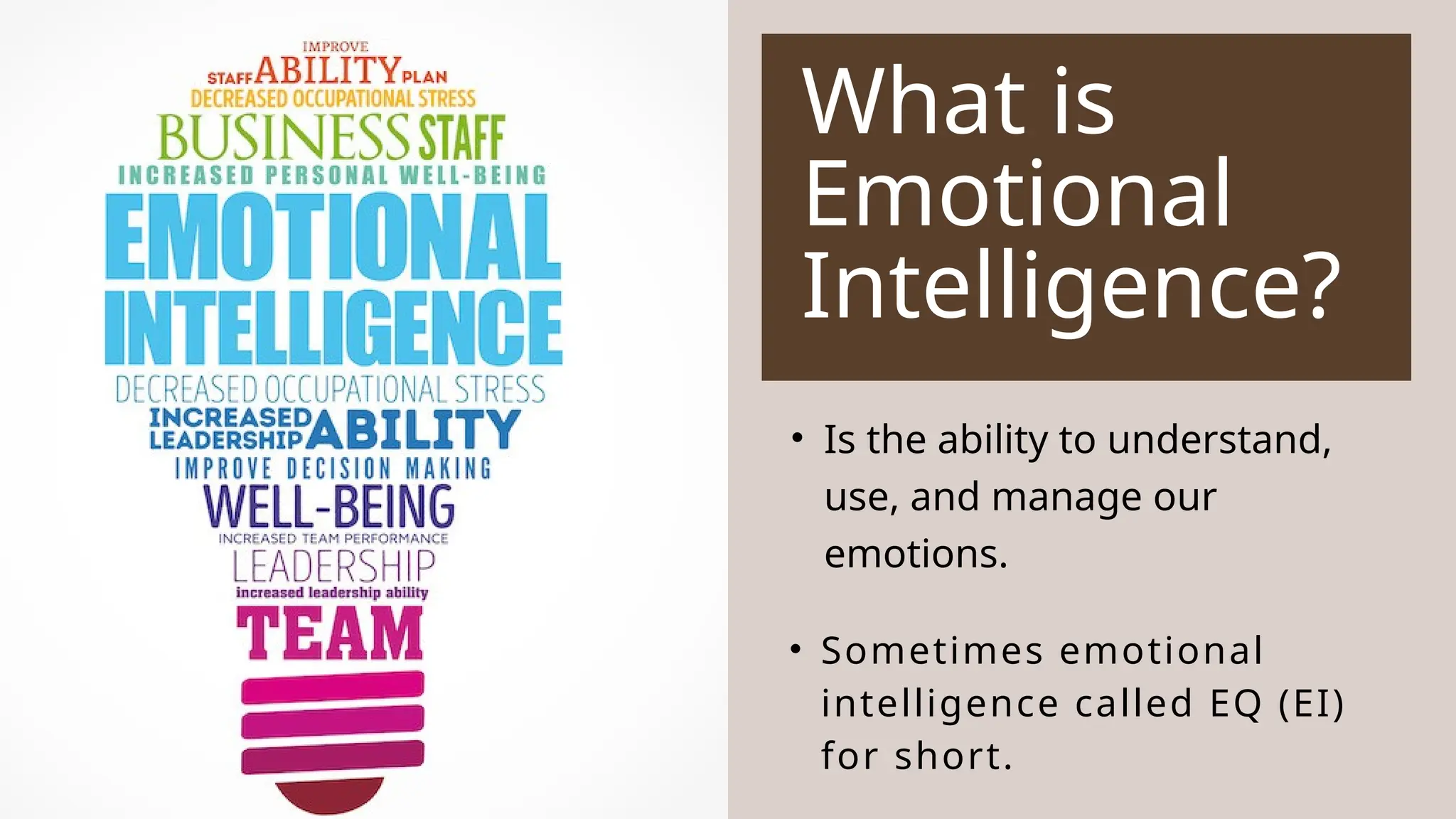
What is
Emotional
Intelligence?
• Is the ability to understand,
use, and manage our
emotions.
• Sometimes emotional
intelligence called EQ (EI)
for short.
DIFFERENT SKILLS
OF
EMOTIONAL
INTELLIGENCE
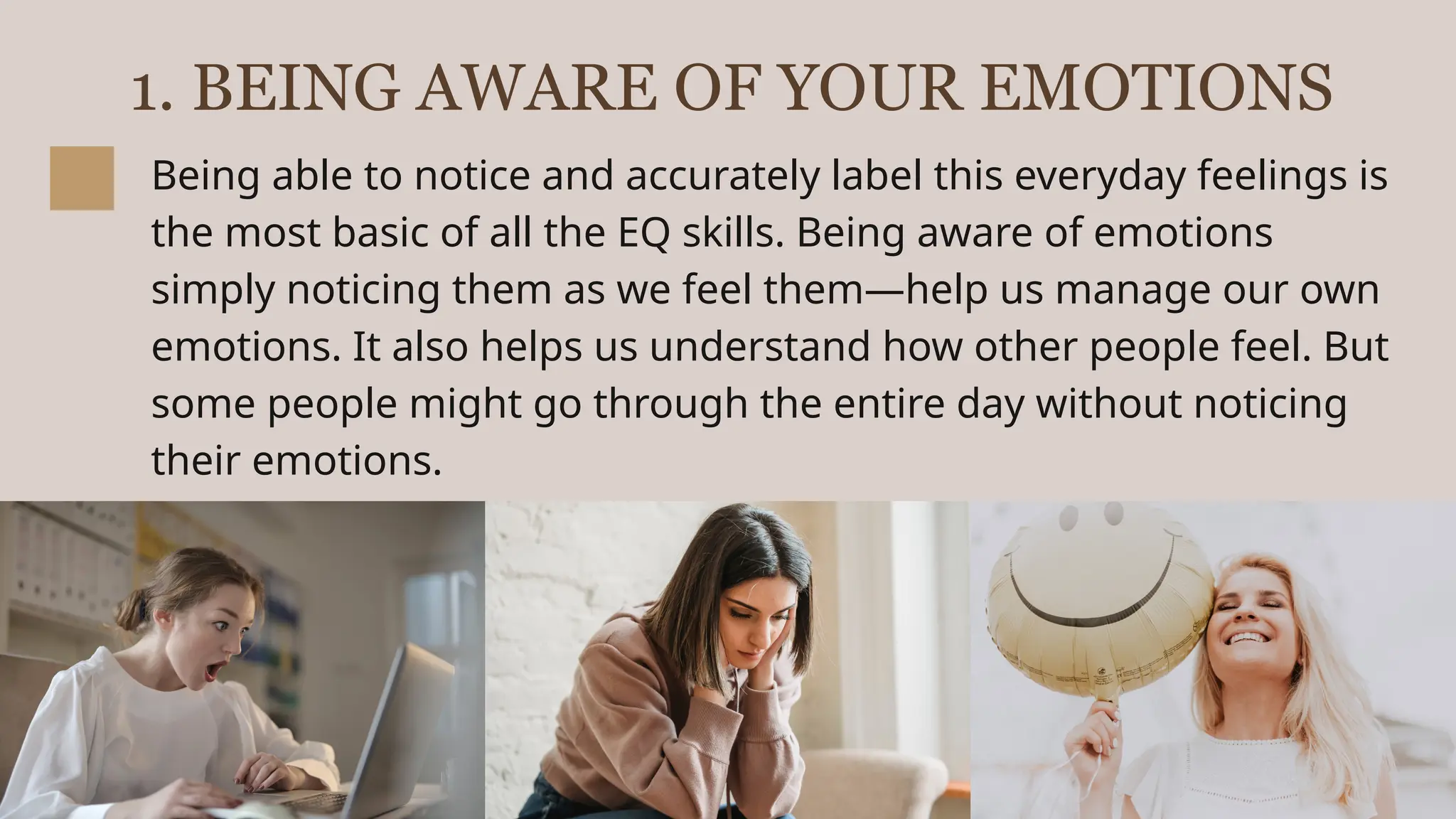
1. BEING AWARE OF YOUR EMOTIONS
Being able to notice and accurately label this everyday feelings is
the most basic of all the EQ skills. Being aware of emotions
simply noticing them as we feel them—help us manage our own
emotions. It also helps us understand how other people feel. But
some people might go through the entire day without noticing
their emotions.
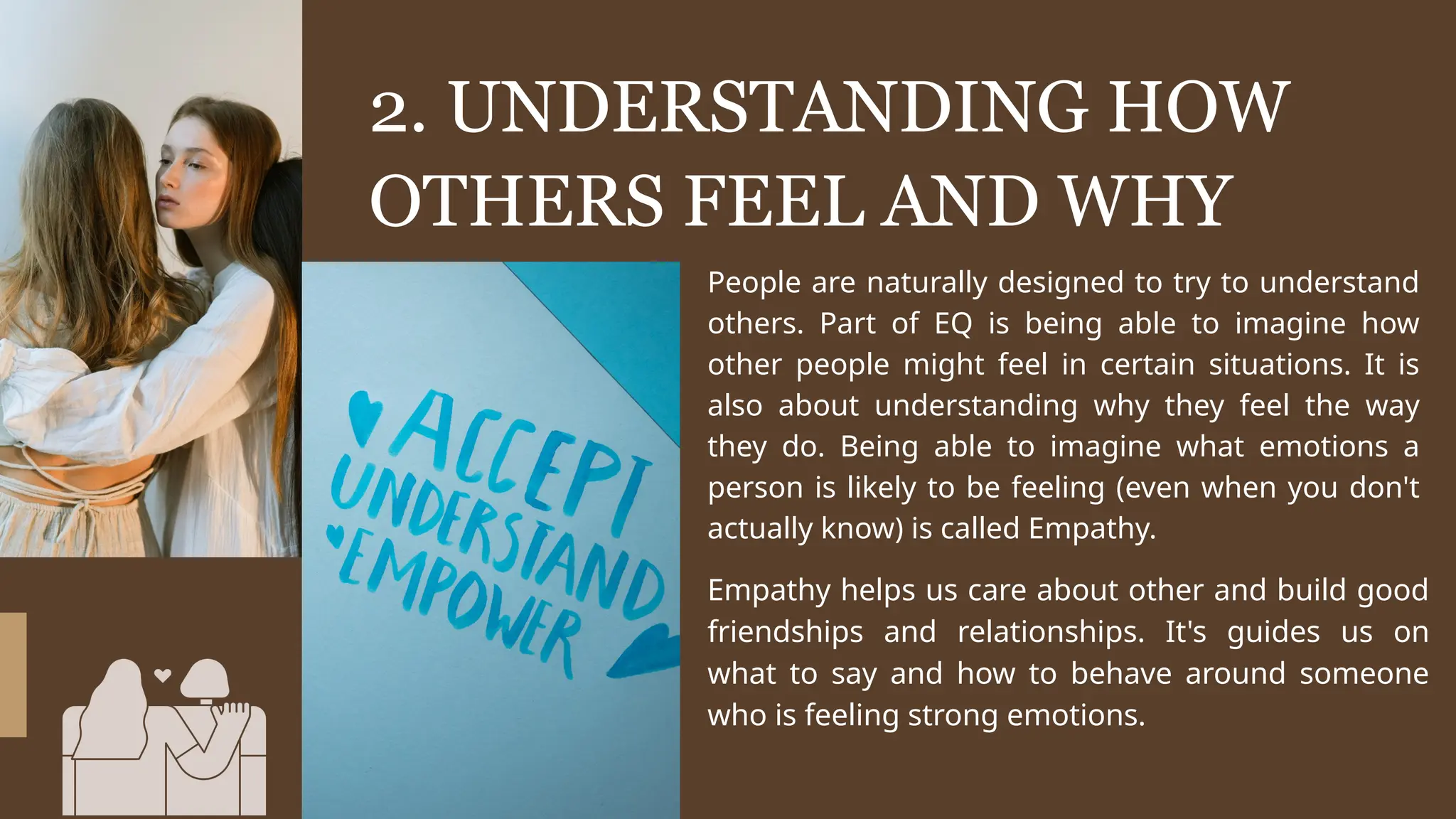
2. UNDERSTANDING HOW
OTHERS FEEL AND WHY
People are naturally designed to try to understand
others. Part of EQ is being able to imagine how
other people might feel in certain situations. It is
also about understanding why they feel the way
they do. Being able to imagine what emotions a
person is likely to be feeling (even when you don't
actually know) is called Empathy.
Empathy helps us care about other and build good
friendships and relationships. It's guides us on
what to say and how to behave around someone
who is feeling strong emotions.
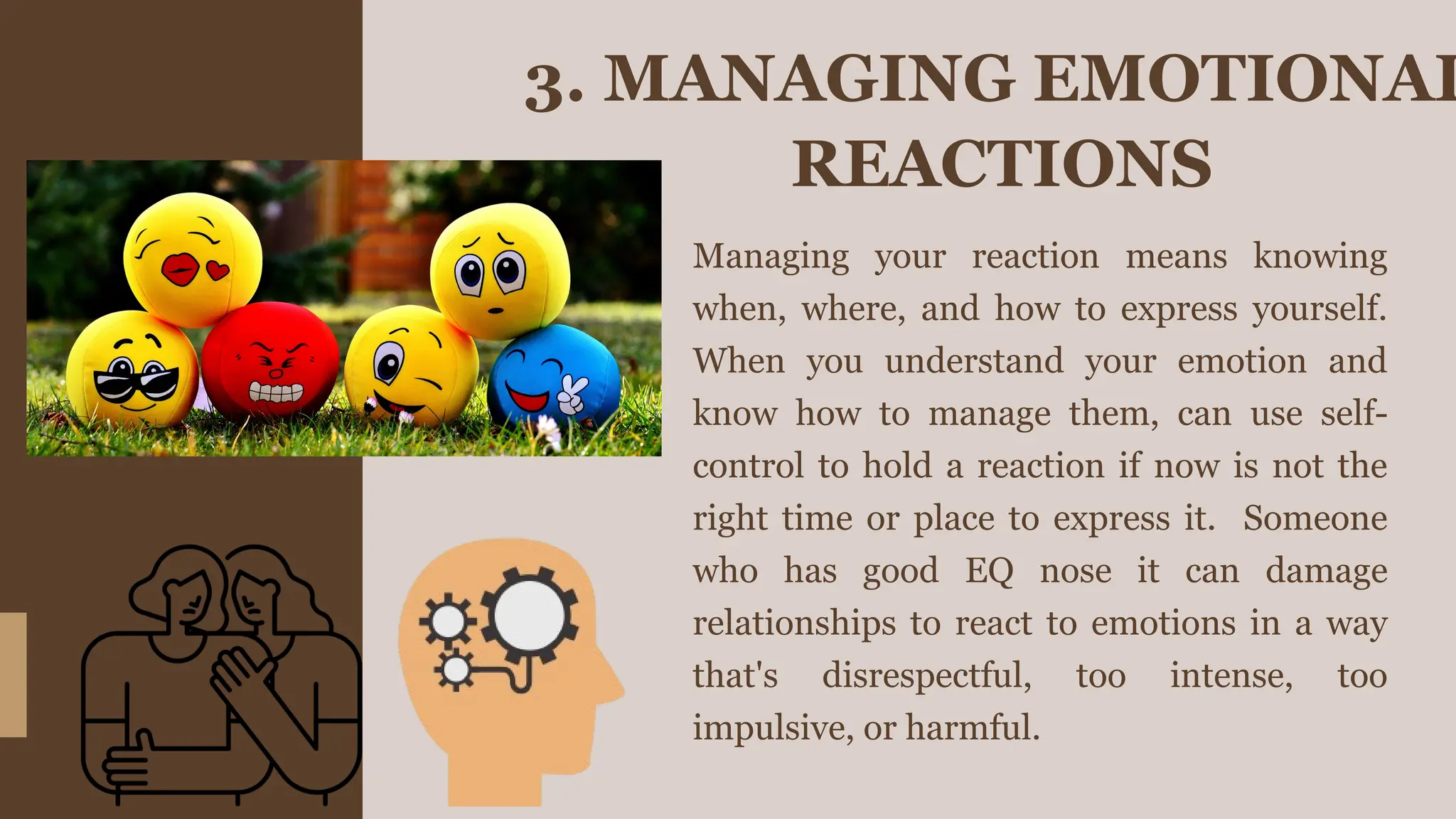
3. MANAGING EMOTIONAL
REACTIONS
Managing your reaction means knowing
when, where, and how to express yourself.
When you understand your emotion and
know how to manage them, can use self-
control to hold a reaction if now is not the
right time or place to express it. Someone
who has good EQ nose it can damage
relationships to react to emotions in a way
that's disrespectful, too intense, too
impulsive, or harmful.
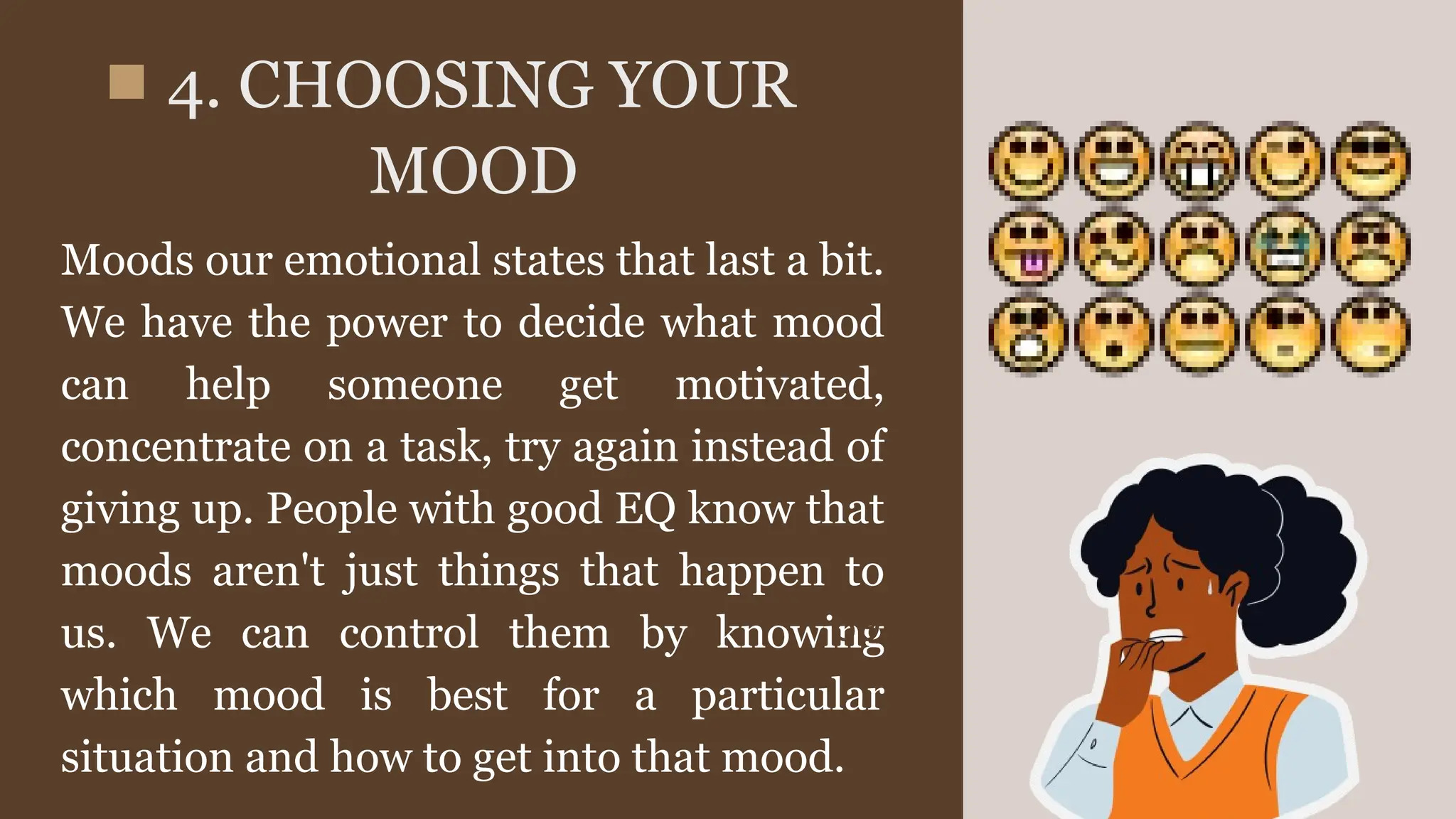
Moods our emotional states that last a bit.
We have the power to decide what mood
can help someone get motivated,
concentrate on a task, try again instead of
giving up. People with good EQ know that
moods aren't just things that happen to
us. We can control them by knowing
which mood is best for a particular
situation and how to get into that mood.
4. CHOOSING YOUR
MOOD
69%
January
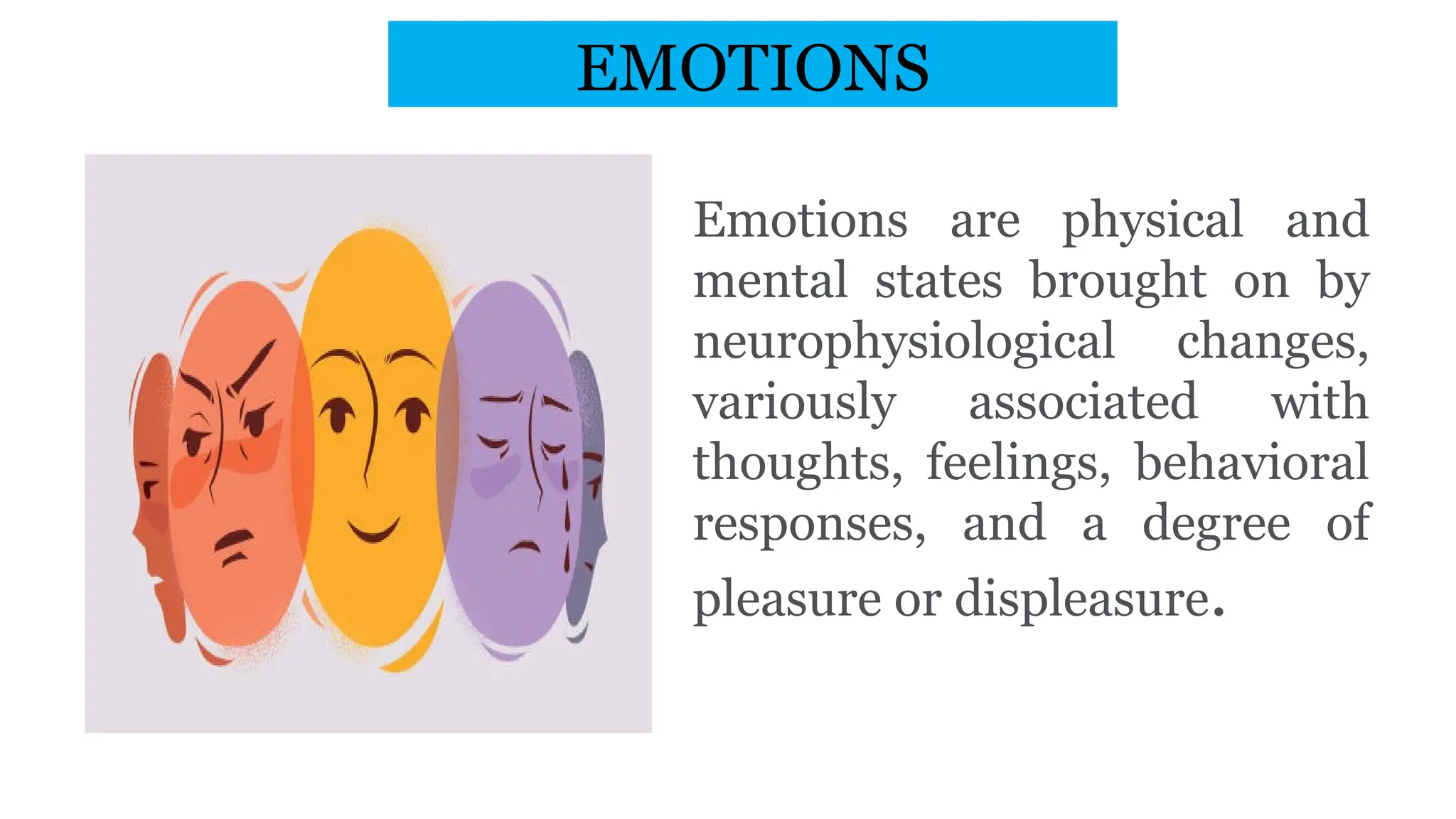
Emotions are physical and
mental states brought on by
neurophysiological changes,
variously associated with
thoughts, feelings, behavioral
responses, and a degree of
pleasure or displeasure.
EMOTIONS
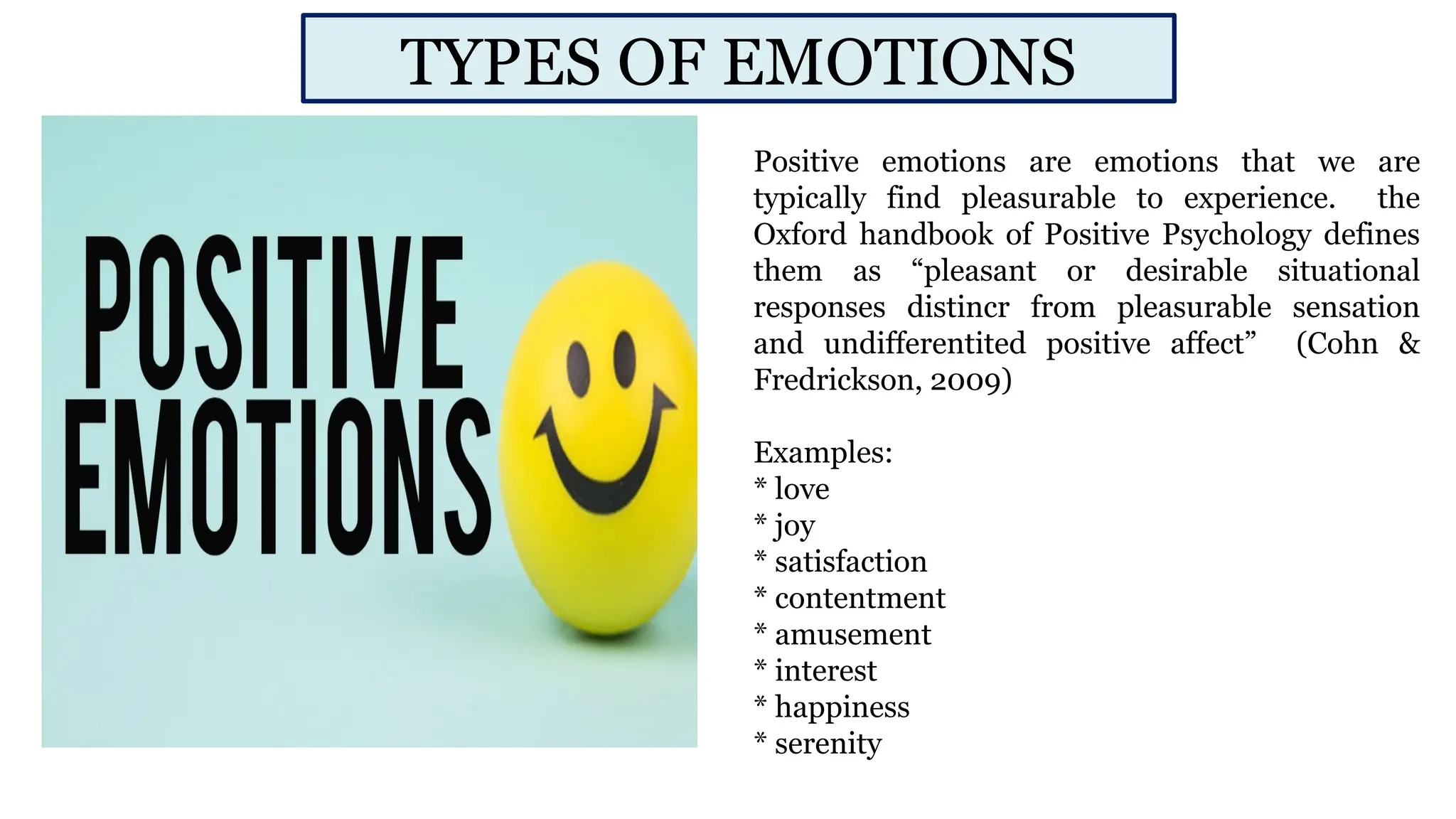
Positive emotions are emotions that we are
typically find pleasurable to experience. the
Oxford handbook of Positive Psychology defines
them as “pleasant or desirable situational
responses distincr from pleasurable sensation
and undifferentited positive affect” (Cohn &
Fredrickson, 2009)
Examples:
* love
* joy
* satisfaction
* contentment
* amusement
* interest
* happiness
* serenity
TYPES OF EMOTIONS
NEGATIVE
EMOTIONS
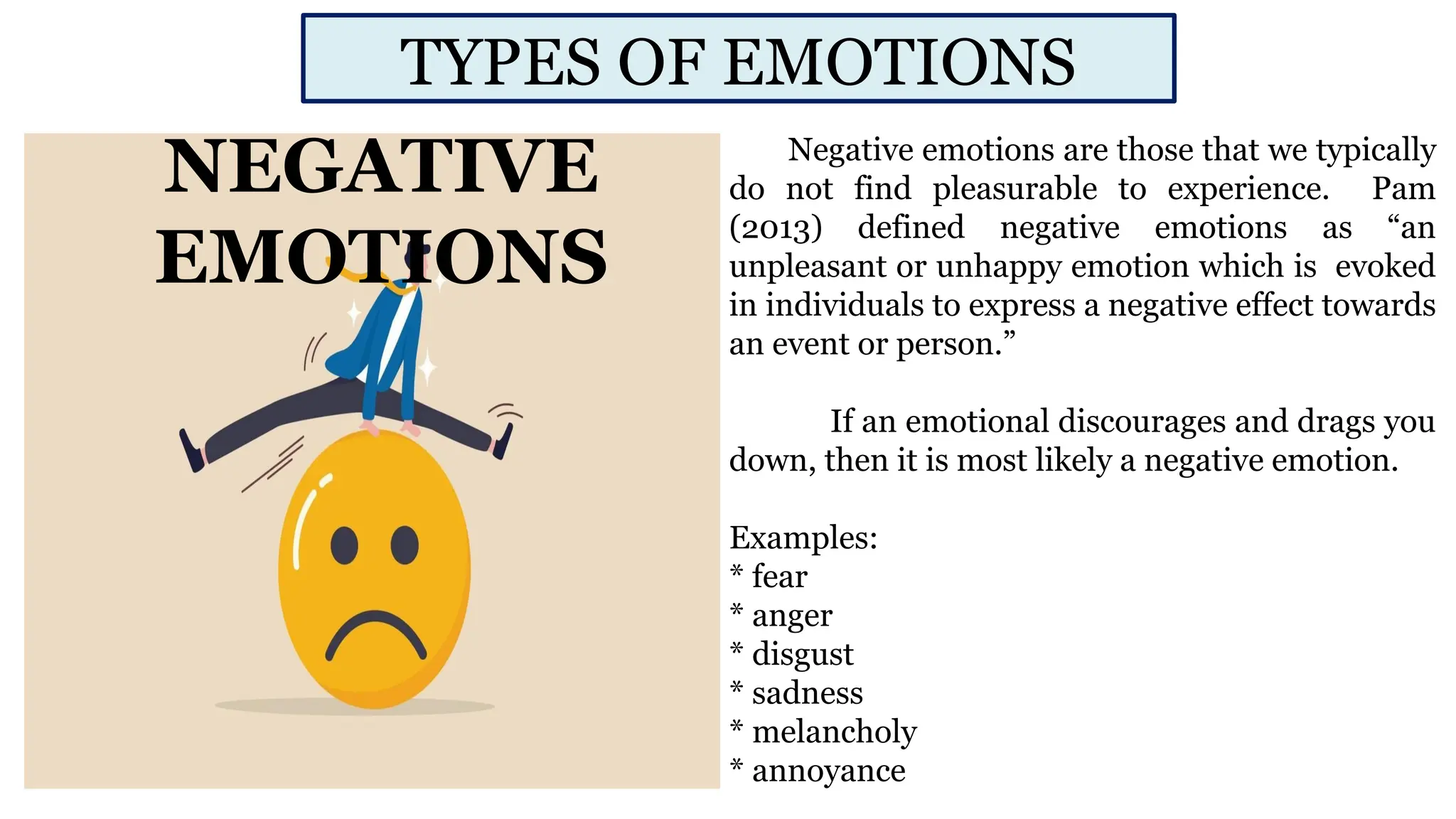
Negative emotions are those that we typically
do not find pleasurable to experience. Pam
(2013) defined negative emotions as “an
unpleasant or unhappy emotion which is evoked
in individuals to express a negative effect towards
an event or person.”
If an emotional discourages and drags you
down, then it is most likely a negative emotion.
Examples:
* fear
* anger
* disgust
* sadness
* melancholy
* annoyance
TYPES OF EMOTIONS
Do we need
positive and
negative
emotions?
EMOTIONAL EXPRESSION
Emotional expressions are a set of behaviors manifested from our feelings
and moods. When we were little, we tend to cry a lot when we are in pain
or when we are sad or lonely.
Tips to Improve Emotional Expressions
1. It always begins with self-awareness
2. Emotions are data, it communicates meaning and intent.
3. Practice communicating your Emotional Expression to closest friends
first.
4. Avoid responding “okay” when trusted people ask, “How Are You”,
especially when they seem so sincere about their concern.
5. If you cannot find somebody to communicate your emotions, you may
take a video of yours while expressing yourself
6. Change your perspective about expressing unpleasant emotions.
The Different Type of Emotions and
How They Are Expressed
Decision making – is a cognitive process where the outcome is a choice between
alternatives. We often have different preferences as to our preferred, approach,
varying between thinking and feeling.
Emotional Decision making – this is the reactive (and largely subconscious)decision-
making that you encounter in heated arguments or when faced with immediate
danger.
Logical Decision making – the foundation of such decisions is the principle of utility,
whereby the value of each option is assessed by assigning criteria (often weighted).
Emotional awareness – This skill is all about being able to notice and identify the
emotions we feel at any given moment.
Moods - are the emotions we feel.
Mindset - is the thoughts and ideas that go along with that mood.
Feeling – an emotional state or reaction.
MANAGING EMOTIONAL REACTIONS
• We all get angry. We all have disappointments. Often, it is important to
express how you feel. But managing your reaction means knowing when,
where, and how to express yourself. When you understand your emotions
and know how to manage them, you can use self-control to hold a reaction if
now is not the right time or place to express it.
• You have probably been in a situation where someone reacted in a way that
was too emotional, making you feel embarrassed for the person. You also
might have been in a situation where your own emotions felt so strong that it
took all your self_x0002_control not to go down that path yourself.
• Maybe you can think of a time when you did not manage your reaction.
Perhaps anxiety, anger, or frustration got the better of you, it happens. When
it does, forgive yourself and focus on what you could have done better. Think
about what you might do next time.
RECOGNIZING AND MANAGING EMOTIONS
Emotions are feelings. To start to understand your emotions, you need to ask
yourself two questions:
• How do I feel?
• How do I know?
But others also have emotions. At the same time as being aware of your own
feelings, you also need to be aware of those of others.
You also need to ask:
• How do others feel, and how do I know?
There are several ways that we can tell how others are feeling, but particularly by observing
what they say, and how they behave, including their body language. Research suggests that more than
80% of communication is non-verbal, meaning that it comes from body language and facial
expression. Many of us do not like to talk about our emotions, especially not if they really matter to us,
so they tend to be expressed even more in our body language.
TYPES OF RESPONSES
1. Passive Response- means not expressing your own needs and
feeling, or expressing them so weakly that they will not be
addressed.
2. Aggressive Response- asking for what you want or saying how
you feel in threatening, sarcastic or humiliating why that may
offend the other person.
3. Assertive Response- means asking for what you want or
saying how you feel in an honest and respectful way that does not
infringe on another person’s rights or put the individual down.
THANK YOU

Per-Dev_Lesson-8.pptx emotional intelligence

  • 1.
  • 2.
    OBJECTIVES At the endof the lesson you will be able to: • discuss that understanding the intensity and differentiation of your emotions may help in communicating emotional expressions; • explore your positive and negative emotions and how you express or hide them, and • demonstrate and create ways to manage various emotions
  • 3.
    Read and reflecton the quotations below:
  • 5.
    What is Emotional Intelligence? • Isthe ability to understand, use, and manage our emotions. • Sometimes emotional intelligence called EQ (EI) for short.
  • 6.
  • 7.
    1. BEING AWAREOF YOUR EMOTIONS Being able to notice and accurately label this everyday feelings is the most basic of all the EQ skills. Being aware of emotions simply noticing them as we feel them—help us manage our own emotions. It also helps us understand how other people feel. But some people might go through the entire day without noticing their emotions.
  • 8.
    2. UNDERSTANDING HOW OTHERSFEEL AND WHY People are naturally designed to try to understand others. Part of EQ is being able to imagine how other people might feel in certain situations. It is also about understanding why they feel the way they do. Being able to imagine what emotions a person is likely to be feeling (even when you don't actually know) is called Empathy. Empathy helps us care about other and build good friendships and relationships. It's guides us on what to say and how to behave around someone who is feeling strong emotions.
  • 9.
    3. MANAGING EMOTIONAL REACTIONS Managingyour reaction means knowing when, where, and how to express yourself. When you understand your emotion and know how to manage them, can use self- control to hold a reaction if now is not the right time or place to express it. Someone who has good EQ nose it can damage relationships to react to emotions in a way that's disrespectful, too intense, too impulsive, or harmful.
  • 10.
    Moods our emotionalstates that last a bit. We have the power to decide what mood can help someone get motivated, concentrate on a task, try again instead of giving up. People with good EQ know that moods aren't just things that happen to us. We can control them by knowing which mood is best for a particular situation and how to get into that mood. 4. CHOOSING YOUR MOOD 69% January
  • 11.
    Emotions are physicaland mental states brought on by neurophysiological changes, variously associated with thoughts, feelings, behavioral responses, and a degree of pleasure or displeasure. EMOTIONS
  • 12.
    Positive emotions areemotions that we are typically find pleasurable to experience. the Oxford handbook of Positive Psychology defines them as “pleasant or desirable situational responses distincr from pleasurable sensation and undifferentited positive affect” (Cohn & Fredrickson, 2009) Examples: * love * joy * satisfaction * contentment * amusement * interest * happiness * serenity TYPES OF EMOTIONS
  • 13.
    NEGATIVE EMOTIONS Negative emotions arethose that we typically do not find pleasurable to experience. Pam (2013) defined negative emotions as “an unpleasant or unhappy emotion which is evoked in individuals to express a negative effect towards an event or person.” If an emotional discourages and drags you down, then it is most likely a negative emotion. Examples: * fear * anger * disgust * sadness * melancholy * annoyance TYPES OF EMOTIONS
  • 14.
    Do we need positiveand negative emotions?
  • 15.
    EMOTIONAL EXPRESSION Emotional expressionsare a set of behaviors manifested from our feelings and moods. When we were little, we tend to cry a lot when we are in pain or when we are sad or lonely. Tips to Improve Emotional Expressions 1. It always begins with self-awareness 2. Emotions are data, it communicates meaning and intent. 3. Practice communicating your Emotional Expression to closest friends first. 4. Avoid responding “okay” when trusted people ask, “How Are You”, especially when they seem so sincere about their concern. 5. If you cannot find somebody to communicate your emotions, you may take a video of yours while expressing yourself 6. Change your perspective about expressing unpleasant emotions.
  • 16.
    The Different Typeof Emotions and How They Are Expressed
  • 17.
    Decision making –is a cognitive process where the outcome is a choice between alternatives. We often have different preferences as to our preferred, approach, varying between thinking and feeling. Emotional Decision making – this is the reactive (and largely subconscious)decision- making that you encounter in heated arguments or when faced with immediate danger. Logical Decision making – the foundation of such decisions is the principle of utility, whereby the value of each option is assessed by assigning criteria (often weighted). Emotional awareness – This skill is all about being able to notice and identify the emotions we feel at any given moment. Moods - are the emotions we feel. Mindset - is the thoughts and ideas that go along with that mood. Feeling – an emotional state or reaction.
  • 18.
    MANAGING EMOTIONAL REACTIONS •We all get angry. We all have disappointments. Often, it is important to express how you feel. But managing your reaction means knowing when, where, and how to express yourself. When you understand your emotions and know how to manage them, you can use self-control to hold a reaction if now is not the right time or place to express it. • You have probably been in a situation where someone reacted in a way that was too emotional, making you feel embarrassed for the person. You also might have been in a situation where your own emotions felt so strong that it took all your self_x0002_control not to go down that path yourself. • Maybe you can think of a time when you did not manage your reaction. Perhaps anxiety, anger, or frustration got the better of you, it happens. When it does, forgive yourself and focus on what you could have done better. Think about what you might do next time.
  • 19.
    RECOGNIZING AND MANAGINGEMOTIONS Emotions are feelings. To start to understand your emotions, you need to ask yourself two questions: • How do I feel? • How do I know? But others also have emotions. At the same time as being aware of your own feelings, you also need to be aware of those of others. You also need to ask: • How do others feel, and how do I know? There are several ways that we can tell how others are feeling, but particularly by observing what they say, and how they behave, including their body language. Research suggests that more than 80% of communication is non-verbal, meaning that it comes from body language and facial expression. Many of us do not like to talk about our emotions, especially not if they really matter to us, so they tend to be expressed even more in our body language.
  • 20.
    TYPES OF RESPONSES 1.Passive Response- means not expressing your own needs and feeling, or expressing them so weakly that they will not be addressed. 2. Aggressive Response- asking for what you want or saying how you feel in threatening, sarcastic or humiliating why that may offend the other person. 3. Assertive Response- means asking for what you want or saying how you feel in an honest and respectful way that does not infringe on another person’s rights or put the individual down.
  • 21.