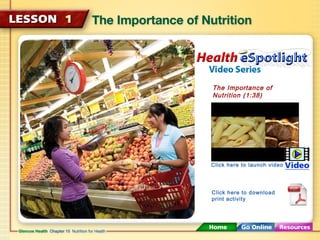
The Importance of 
Nutrition (1:38) 
Click here to launch video 
Click here to download 
print activity
Learning to make healthful food 
choices will keep you healthy 
throughout your life.
nutrition 
nutrients 
calorie 
hunger 
appetite
Why Nutrition Matters 
The food you eat affects your health and 
quality of life. 
Healthful foods provide fuel for physical 
activities, help you stay mentally alert, and keep 
you looking and feeling your best.
Why Nutrition Matters 
To make healthful food choices, you must first 
learn about nutrition. 
Nutrition 
The process by which your body 
takes in and uses food
Why Nutrition Matters 
Your body relies on food to provide it with 
nutrients. 
Nutrients 
Substances in food that your body 
needs to grow, to repair itself, and 
to supply you with energy
Why Nutrition Matters 
The energy your body receives from food is 
measured in calories. 
Calorie 
A unit of heat used to measure 
the energy your body uses and 
the energy it receives from food
Why Nutrition Matters 
Eating a variety of healthful foods can help you 
avoid unhealthful weight gain and diseases such 
as type 2 diabetes.
Why Nutrition Matters 
Eating a variety of 
healthful foods can 
lower your risk of 
developing other 
conditions, including: 
Cardiovascular 
disease 
Certain cancers 
Stroke 
Osteoporosis
What Influences Your Food Choices? 
A variety of factors influence food choices. 
When you make food choices, you need to 
understand what influences you.
Hunger and Appetite 
One reason people eat is hunger. 
Hunger 
The natural physical drive to eat, 
prompted by the body’s need for food
Hunger and Appetite 
A second reason people eat is appetite. 
Appetite 
The psychological 
desire for food
Food and Emotions 
Sometimes people eat in response to an emotional 
need, like when they feel stressed, frustrated, 
lonely, or sad. 
In other cases, people may snack out of boredom 
or use food as a reward.
Food and Emotions 
Some people engage in “mindless eating,” which is 
snacking continuously while absorbed in another 
activity.
Food and Emotions 
Recognizing how emotions affect your eating can 
help you break such patterns and reconnect your 
eating with real hunger.
Food and Your Environment 
Family and 
culture Friends 
Environmental 
Influences 
Time and 
Advertising money
Food and Your Environment 
Seeing what your friends and peers eat can 
influence your own food choices.
After You Read 
Reviewing Facts and Vocabulary 
1. Name three health problems that good 
nutrition can help you avoid. 
Any three: unhealthful weight gain, type 2 
diabetes, cardiovascular disease, stroke, 
certain cancers, osteoporosis
After You Read 
Reviewing Facts and Vocabulary 
2. What is the difference between hunger 
and appetite? 
Hunger is the physical drive to eat when 
the body needs food. Appetite is the 
psychological desire for food, not based on 
physical need.
After You Read 
Reviewing Facts and Vocabulary 
3. Identify two emotions that influence 
eating when someone isn’t hungry. 
Any two emotions, such as those 
mentioned in the text (e.g., stress, 
loneliness, boredom)
Ch10 01

Ch10 01

  • 1.
    The Importance of Nutrition (1:38) Click here to launch video Click here to download print activity
  • 2.
    Learning to makehealthful food choices will keep you healthy throughout your life.
  • 3.
  • 4.
    Why Nutrition Matters The food you eat affects your health and quality of life. Healthful foods provide fuel for physical activities, help you stay mentally alert, and keep you looking and feeling your best.
  • 5.
    Why Nutrition Matters To make healthful food choices, you must first learn about nutrition. Nutrition The process by which your body takes in and uses food
  • 6.
    Why Nutrition Matters Your body relies on food to provide it with nutrients. Nutrients Substances in food that your body needs to grow, to repair itself, and to supply you with energy
  • 7.
    Why Nutrition Matters The energy your body receives from food is measured in calories. Calorie A unit of heat used to measure the energy your body uses and the energy it receives from food
  • 8.
    Why Nutrition Matters Eating a variety of healthful foods can help you avoid unhealthful weight gain and diseases such as type 2 diabetes.
  • 9.
    Why Nutrition Matters Eating a variety of healthful foods can lower your risk of developing other conditions, including: Cardiovascular disease Certain cancers Stroke Osteoporosis
  • 10.
    What Influences YourFood Choices? A variety of factors influence food choices. When you make food choices, you need to understand what influences you.
  • 11.
    Hunger and Appetite One reason people eat is hunger. Hunger The natural physical drive to eat, prompted by the body’s need for food
  • 12.
    Hunger and Appetite A second reason people eat is appetite. Appetite The psychological desire for food
  • 13.
    Food and Emotions Sometimes people eat in response to an emotional need, like when they feel stressed, frustrated, lonely, or sad. In other cases, people may snack out of boredom or use food as a reward.
  • 14.
    Food and Emotions Some people engage in “mindless eating,” which is snacking continuously while absorbed in another activity.
  • 15.
    Food and Emotions Recognizing how emotions affect your eating can help you break such patterns and reconnect your eating with real hunger.
  • 16.
    Food and YourEnvironment Family and culture Friends Environmental Influences Time and Advertising money
  • 17.
    Food and YourEnvironment Seeing what your friends and peers eat can influence your own food choices.
  • 18.
    After You Read Reviewing Facts and Vocabulary 1. Name three health problems that good nutrition can help you avoid. Any three: unhealthful weight gain, type 2 diabetes, cardiovascular disease, stroke, certain cancers, osteoporosis
  • 19.
    After You Read Reviewing Facts and Vocabulary 2. What is the difference between hunger and appetite? Hunger is the physical drive to eat when the body needs food. Appetite is the psychological desire for food, not based on physical need.
  • 20.
    After You Read Reviewing Facts and Vocabulary 3. Identify two emotions that influence eating when someone isn’t hungry. Any two emotions, such as those mentioned in the text (e.g., stress, loneliness, boredom)