Lifelong Nutrition (2:41) 
Click here to launch video 
Click here to download 
print activity
Nutritional needs will change 
throughout your life.
vegetarian 
dietary supplements 
performance enhancers 
herbal supplements 
megadoses
Lifelong Nutritional Needs 
Your age, gender, lifestyle, and health needs 
can affect your body’s food needs. 
Everyone has different nutritional needs.
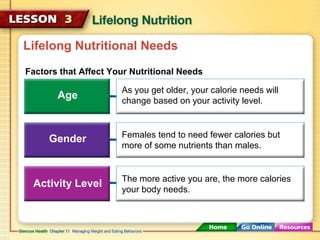
Lifelong Nutritional Needs 
Factors that Affect Your Nutritional Needs 
Age 
Gender 
Activity Level 
As you get older, your calorie needs will 
change based on your activity level. 
Females tend to need fewer calories but 
more of some nutrients than males. 
The more active you are, the more calories 
your body needs.
Vegetarian Diets 
A healthful vegetarian diet contains a variety of 
foods, including plenty of vegetables, fruits, and 
whole-grain foods. 
Vegetarian 
A person who eats mostly or 
only plant-based foods
Vegetarian Diets 
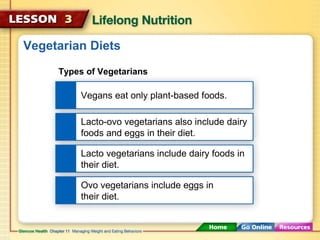
Types of Vegetarians 
Vegans eat only plant-based foods. 
Lacto-ovo vegetarians also include dairy 
foods and eggs in their diet. 
Lacto vegetarians include dairy foods in 
their diet. 
Ovo vegetarians include eggs in 
their diet.
Vegetarian Diets 
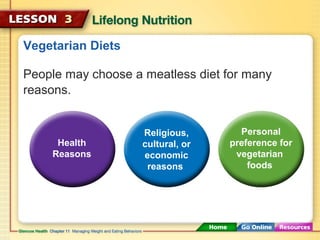
People may choose a meatless diet for many 
reasons. 
Personal 
preference for 
vegetarian 
foods 
Religious, 
cultural, or 
economic 
reasons 
Health 
Reasons
Vegetarian Diets 
Plant-based foods tend to be lower in saturated fat 
and cholesterol, and higher in fiber, than most 
animal-based foods. 
A well-planned meatless diet may help reduce the 
risk of cardiovascular disease and some types of 
cancer.
Vegetarian Diets 
Plant-based foods tend to be lower in certain 
nutrients, such as protein, iron, calcium, zinc, and 
some B vitamins. 
One nutrient, vitamin B12, is found only in 
animal-based foods.
Vegetarian Diets 
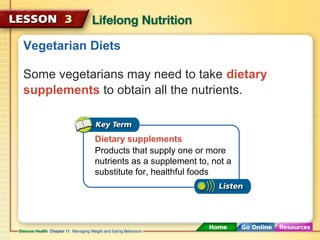
Some vegetarians may need to take dietary 
supplements to obtain all the nutrients. 
Dietary supplements 
Products that supply one or more 
nutrients as a supplement to, not a 
substitute for, healthful foods
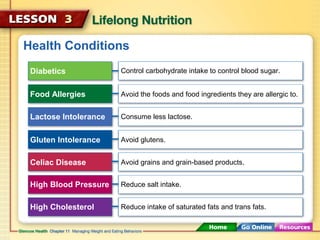
Health Conditions 
Diabetics 
Food Allergies 
Lactose Intolerance 
Gluten Intolerance 
Celiac Disease 
High Blood Pressure 
High Cholesterol 
Control carbohydrate intake to control blood sugar. 
Avoid the foods and food ingredients they are allergic to. 
Consume less lactose. 
Avoid glutens. 
Avoid grains and grain-based products. 
Reduce salt intake. 
Reduce intake of saturated fats and trans fats.
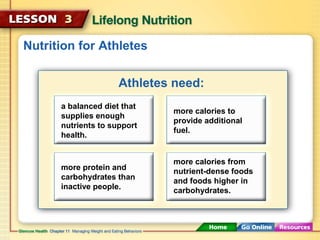
Nutrition for Athletes 
Athletes need: 
a balanced diet that 
supplies enough 
nutrients to support 
health. 
more calories to 
provide additional 
fuel. 
more protein and 
carbohydrates than 
inactive people. 
more calories from 
nutrient-dense foods 
and foods higher in 
carbohydrates.
Making Weight 
If your sport requires you to “make weight” to 
compete with others in the same weight class, you 
must compete at a weight that’s right for you. 
Your ideal weight will put your BMI in a healthy 
range and allow you to eat enough to meet your 
daily nutrient needs.
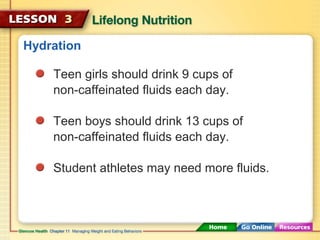
Hydration 
Teen girls should drink 9 cups of 
non-caffeinated fluids each day. 
Teen boys should drink 13 cups of 
non-caffeinated fluids each day. 
Student athletes may need more fluids.
Hydration 
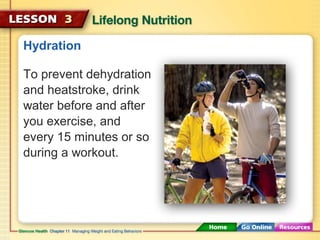
To prevent dehydration 
and heatstroke, drink 
water before and after 
you exercise, and 
every 15 minutes or so 
during a workout.
Hydration 
Dehydration can lead to fatigue, dizziness or 
light-headedness, cramping, and an imbalance of 
electrolytes—minerals that help maintain the 
body’s fluid balance. 
The minerals sodium, chloride, and potassium 
are all electrolytes.
Avoiding Performance Enhancers 
Some athletes try to gain an extra edge by using 
illegal performance enhancers. 
Performance enhancers 
Substances that boost 
athletic ability
Avoiding Performance Enhancers 
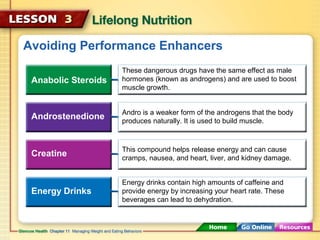
Anabolic Steroids 
Androstenedione 
Creatine 
Energy Drinks 
These dangerous drugs have the same effect as male 
hormones (known as androgens) and are used to boost 
muscle growth. 
Andro is a weaker form of the androgens that the body 
produces naturally. It is used to build muscle. 
This compound helps release energy and can cause 
cramps, nausea, and heart, liver, and kidney damage. 
Energy drinks contain high amounts of caffeine and 
provide energy by increasing your heart rate. These 
beverages can lead to dehydration.
Eating Before a Competition 
Eat about three to four hours before a competition 
and drink plenty of water before, during, and after 
the competition. 
Choose meals that are high in carbohydrates and 
low in fat and protein.
Using Supplements 
Dietary supplements can help people meet 
their nutrient needs if they cannot do it with 
food alone. 
Dietary supplements provide various 
combinations of vitamins, minerals, protein, 
and fiber.
Using Supplements 
Dietary supplements are 
no substitute for eating a 
variety of healthful foods.
Using Supplements 
Vegetarians may use supplements to provide 
nutrients they do not get from animal-based foods. 
Pregnant or nursing women may use supplements 
to get the extra nutrients their bodies need. 
People recovering from illness or taking certain 
medications may need to take supplements.
Concerns About Dietary Supplements 
Most people who follow a nutritious, well-balanced 
eating plan will not need a multivitamin. 
Multivitamin and mineral supplements are 
generally safe to use, as long as you use them 
correctly.
Concerns About Dietary Supplements 
Do not take supplements that provide more than 
100 percent of the Daily Values for any nutrient.
Concerns About Dietary Supplements 
Taking megadoses of any supplement can be 
dangerous, especially fat-soluble vitamins, which 
can build up in body fat and become toxic. 
Megadoses 
Very large amounts
Concerns About Dietary Supplements 
The National Institutes of Health (NIH) cautions 
that herbal supplements are just like drugs. 
Herbal supplements 
Dietary supplements 
containing plant extracts
Concerns About Dietary Supplements 
Herbal supplements can be dangerous. 
Some herbal supplements have been known to 
cause heart attack, stroke, or serious liver 
damage.
After You Read 
Reviewing Facts and Vocabulary 
1. What are dietary supplements? 
Dietary supplements are products that 
supply one or more nutrients as a 
supplement to, not a substitute for, 
healthful foods.
After You Read 
Reviewing Facts and Vocabulary 
2. List three factors that can affect your 
body’s nutrient needs. 
Age, gender, activity level
After You Read 
Reviewing Facts and Vocabulary 
3. Why should teen athletes avoid 
performance enhancers? 
Teen athletes should avoid performance 
enhancers because they pose health risks 
and many are illegal and/or banned in 
competitive sports.
Ch11 03

Ch11 03

  • 1.
    Lifelong Nutrition (2:41) Click here to launch video Click here to download print activity
  • 2.
    Nutritional needs willchange throughout your life.
  • 3.
    vegetarian dietary supplements performance enhancers herbal supplements megadoses
  • 4.
    Lifelong Nutritional Needs Your age, gender, lifestyle, and health needs can affect your body’s food needs. Everyone has different nutritional needs.
  • 5.
    Lifelong Nutritional Needs Factors that Affect Your Nutritional Needs Age Gender Activity Level As you get older, your calorie needs will change based on your activity level. Females tend to need fewer calories but more of some nutrients than males. The more active you are, the more calories your body needs.
  • 6.
    Vegetarian Diets Ahealthful vegetarian diet contains a variety of foods, including plenty of vegetables, fruits, and whole-grain foods. Vegetarian A person who eats mostly or only plant-based foods
  • 7.
    Vegetarian Diets Typesof Vegetarians Vegans eat only plant-based foods. Lacto-ovo vegetarians also include dairy foods and eggs in their diet. Lacto vegetarians include dairy foods in their diet. Ovo vegetarians include eggs in their diet.
  • 8.
    Vegetarian Diets Peoplemay choose a meatless diet for many reasons. Personal preference for vegetarian foods Religious, cultural, or economic reasons Health Reasons
  • 9.
    Vegetarian Diets Plant-basedfoods tend to be lower in saturated fat and cholesterol, and higher in fiber, than most animal-based foods. A well-planned meatless diet may help reduce the risk of cardiovascular disease and some types of cancer.
  • 10.
    Vegetarian Diets Plant-basedfoods tend to be lower in certain nutrients, such as protein, iron, calcium, zinc, and some B vitamins. One nutrient, vitamin B12, is found only in animal-based foods.
  • 11.
    Vegetarian Diets Somevegetarians may need to take dietary supplements to obtain all the nutrients. Dietary supplements Products that supply one or more nutrients as a supplement to, not a substitute for, healthful foods
  • 12.
    Health Conditions Diabetics Food Allergies Lactose Intolerance Gluten Intolerance Celiac Disease High Blood Pressure High Cholesterol Control carbohydrate intake to control blood sugar. Avoid the foods and food ingredients they are allergic to. Consume less lactose. Avoid glutens. Avoid grains and grain-based products. Reduce salt intake. Reduce intake of saturated fats and trans fats.
  • 13.
    Nutrition for Athletes Athletes need: a balanced diet that supplies enough nutrients to support health. more calories to provide additional fuel. more protein and carbohydrates than inactive people. more calories from nutrient-dense foods and foods higher in carbohydrates.
  • 14.
    Making Weight Ifyour sport requires you to “make weight” to compete with others in the same weight class, you must compete at a weight that’s right for you. Your ideal weight will put your BMI in a healthy range and allow you to eat enough to meet your daily nutrient needs.
  • 15.
    Hydration Teen girlsshould drink 9 cups of non-caffeinated fluids each day. Teen boys should drink 13 cups of non-caffeinated fluids each day. Student athletes may need more fluids.
  • 16.
    Hydration To preventdehydration and heatstroke, drink water before and after you exercise, and every 15 minutes or so during a workout.
  • 17.
    Hydration Dehydration canlead to fatigue, dizziness or light-headedness, cramping, and an imbalance of electrolytes—minerals that help maintain the body’s fluid balance. The minerals sodium, chloride, and potassium are all electrolytes.
  • 18.
    Avoiding Performance Enhancers Some athletes try to gain an extra edge by using illegal performance enhancers. Performance enhancers Substances that boost athletic ability
  • 19.
    Avoiding Performance Enhancers Anabolic Steroids Androstenedione Creatine Energy Drinks These dangerous drugs have the same effect as male hormones (known as androgens) and are used to boost muscle growth. Andro is a weaker form of the androgens that the body produces naturally. It is used to build muscle. This compound helps release energy and can cause cramps, nausea, and heart, liver, and kidney damage. Energy drinks contain high amounts of caffeine and provide energy by increasing your heart rate. These beverages can lead to dehydration.
  • 20.
    Eating Before aCompetition Eat about three to four hours before a competition and drink plenty of water before, during, and after the competition. Choose meals that are high in carbohydrates and low in fat and protein.
  • 21.
    Using Supplements Dietarysupplements can help people meet their nutrient needs if they cannot do it with food alone. Dietary supplements provide various combinations of vitamins, minerals, protein, and fiber.
  • 22.
    Using Supplements Dietarysupplements are no substitute for eating a variety of healthful foods.
  • 23.
    Using Supplements Vegetariansmay use supplements to provide nutrients they do not get from animal-based foods. Pregnant or nursing women may use supplements to get the extra nutrients their bodies need. People recovering from illness or taking certain medications may need to take supplements.
  • 24.
    Concerns About DietarySupplements Most people who follow a nutritious, well-balanced eating plan will not need a multivitamin. Multivitamin and mineral supplements are generally safe to use, as long as you use them correctly.
  • 25.
    Concerns About DietarySupplements Do not take supplements that provide more than 100 percent of the Daily Values for any nutrient.
  • 26.
    Concerns About DietarySupplements Taking megadoses of any supplement can be dangerous, especially fat-soluble vitamins, which can build up in body fat and become toxic. Megadoses Very large amounts
  • 27.
    Concerns About DietarySupplements The National Institutes of Health (NIH) cautions that herbal supplements are just like drugs. Herbal supplements Dietary supplements containing plant extracts
  • 28.
    Concerns About DietarySupplements Herbal supplements can be dangerous. Some herbal supplements have been known to cause heart attack, stroke, or serious liver damage.
  • 29.
    After You Read Reviewing Facts and Vocabulary 1. What are dietary supplements? Dietary supplements are products that supply one or more nutrients as a supplement to, not a substitute for, healthful foods.
  • 30.
    After You Read Reviewing Facts and Vocabulary 2. List three factors that can affect your body’s nutrient needs. Age, gender, activity level
  • 31.
    After You Read Reviewing Facts and Vocabulary 3. Why should teen athletes avoid performance enhancers? Teen athletes should avoid performance enhancers because they pose health risks and many are illegal and/or banned in competitive sports.