Integrated Science


   Unit 4, Chapter 12
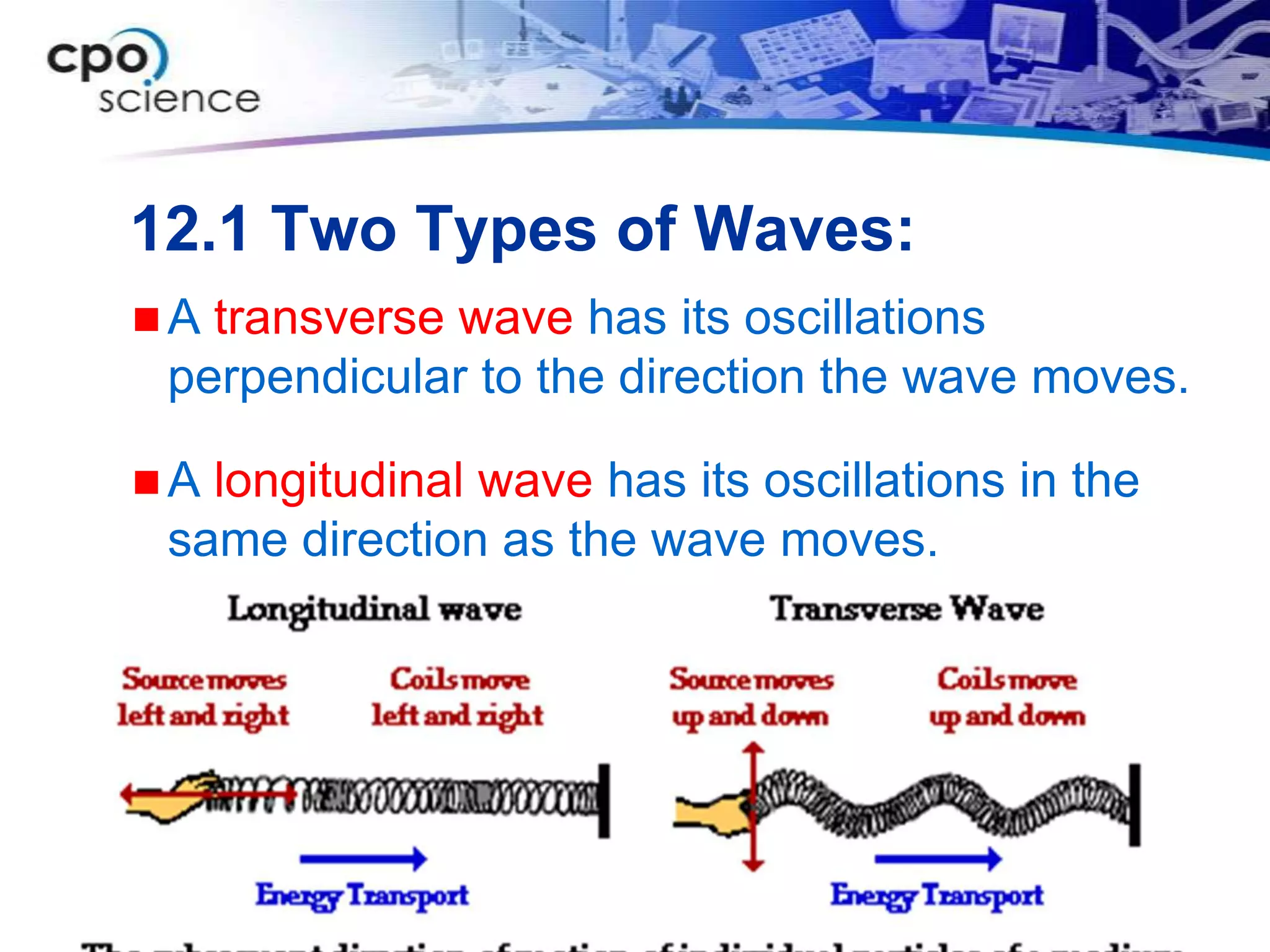
12.1 Two Types of Waves:
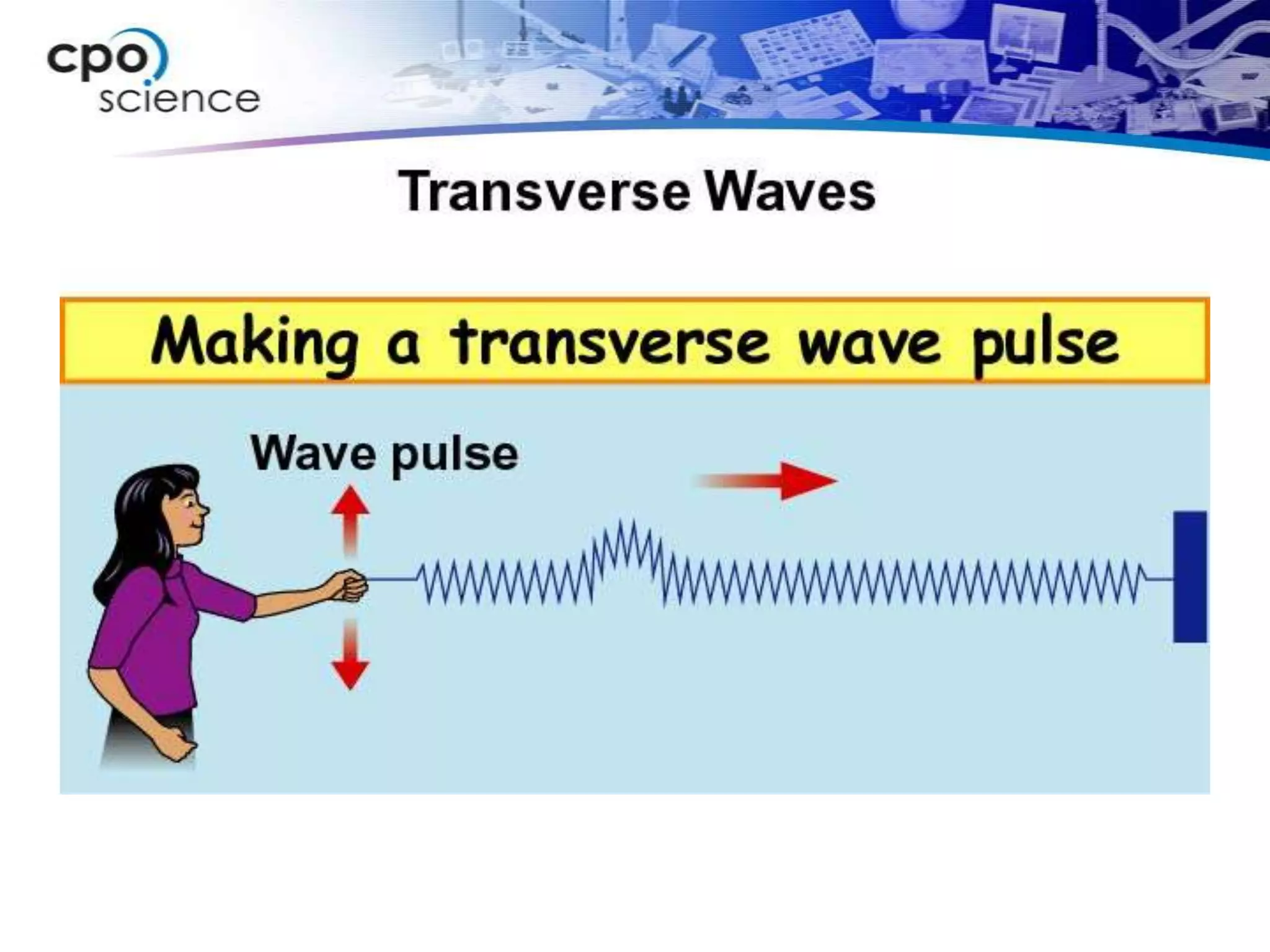
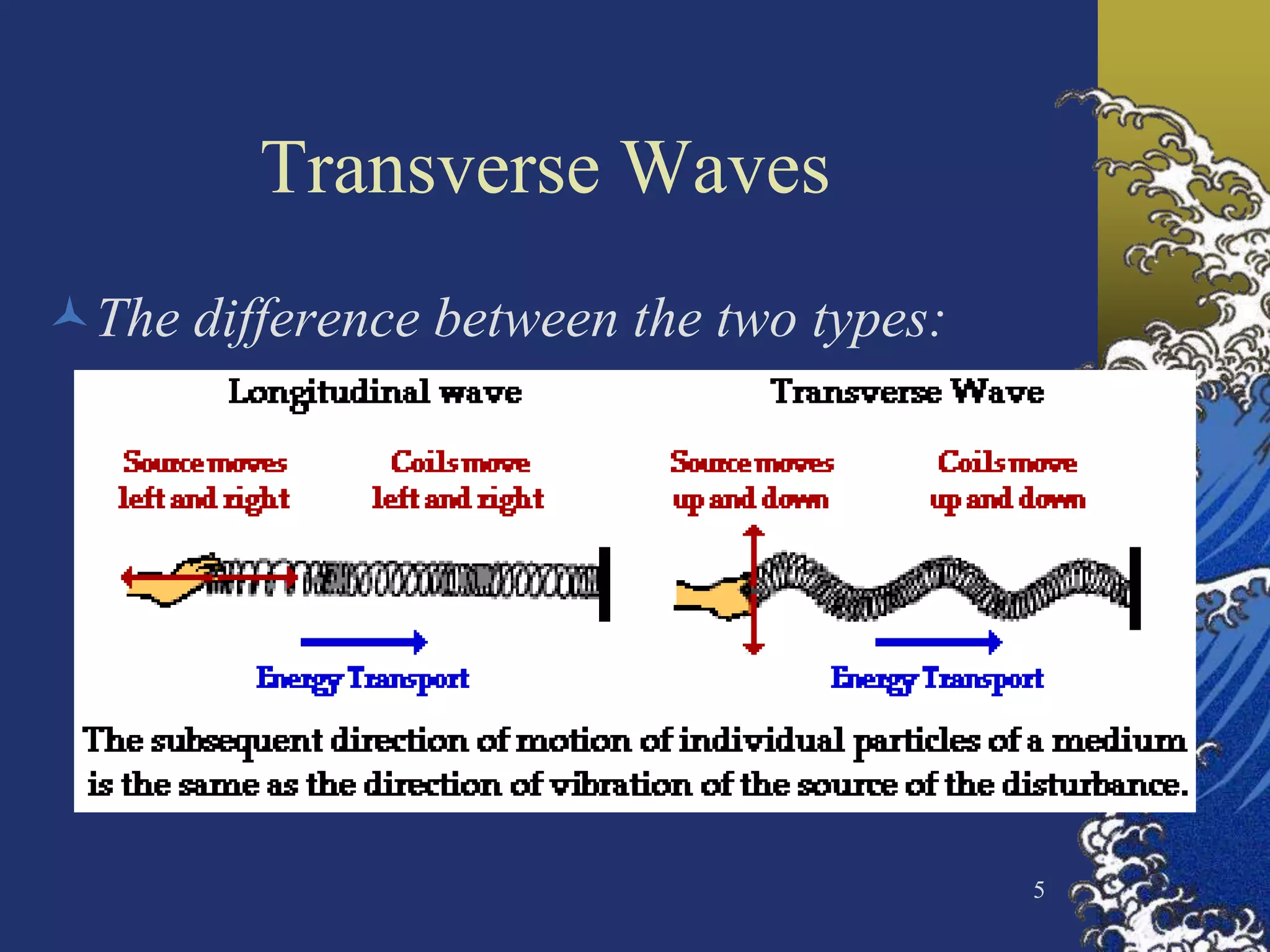
A transverse wave has its oscillations
 perpendicular to the direction the wave moves.

A longitudinal wave has its oscillations in the
 same direction as the wave moves.
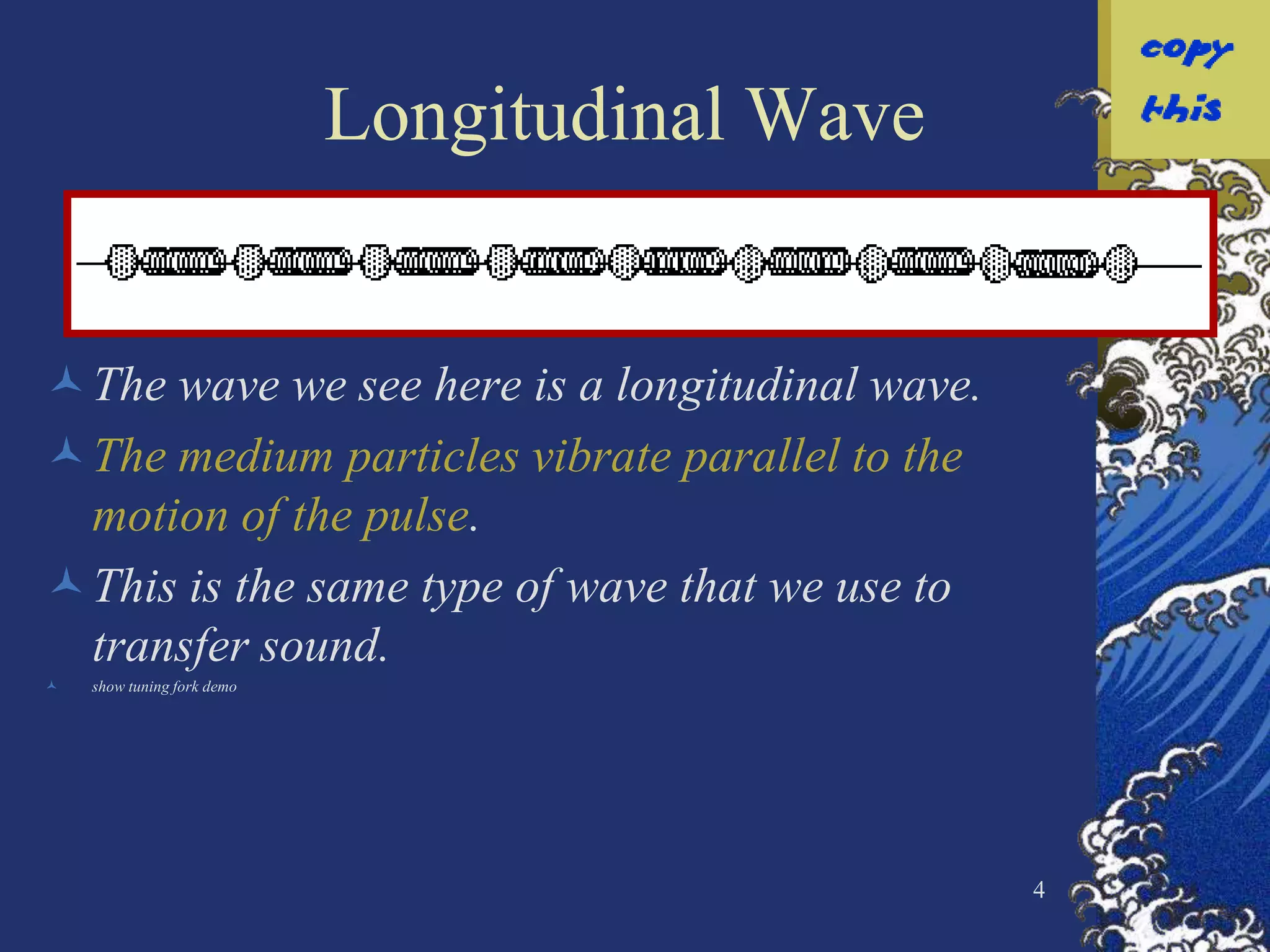
Longitudinal Wave


The wave we see here is a longitudinal wave.
The medium particles vibrate parallel to the
 motion of the pulse.
This is the same type of wave that we use to
 transfer sound.
   show tuning fork demo


                                                4
Transverse Waves
The difference between the two types:


                                         5
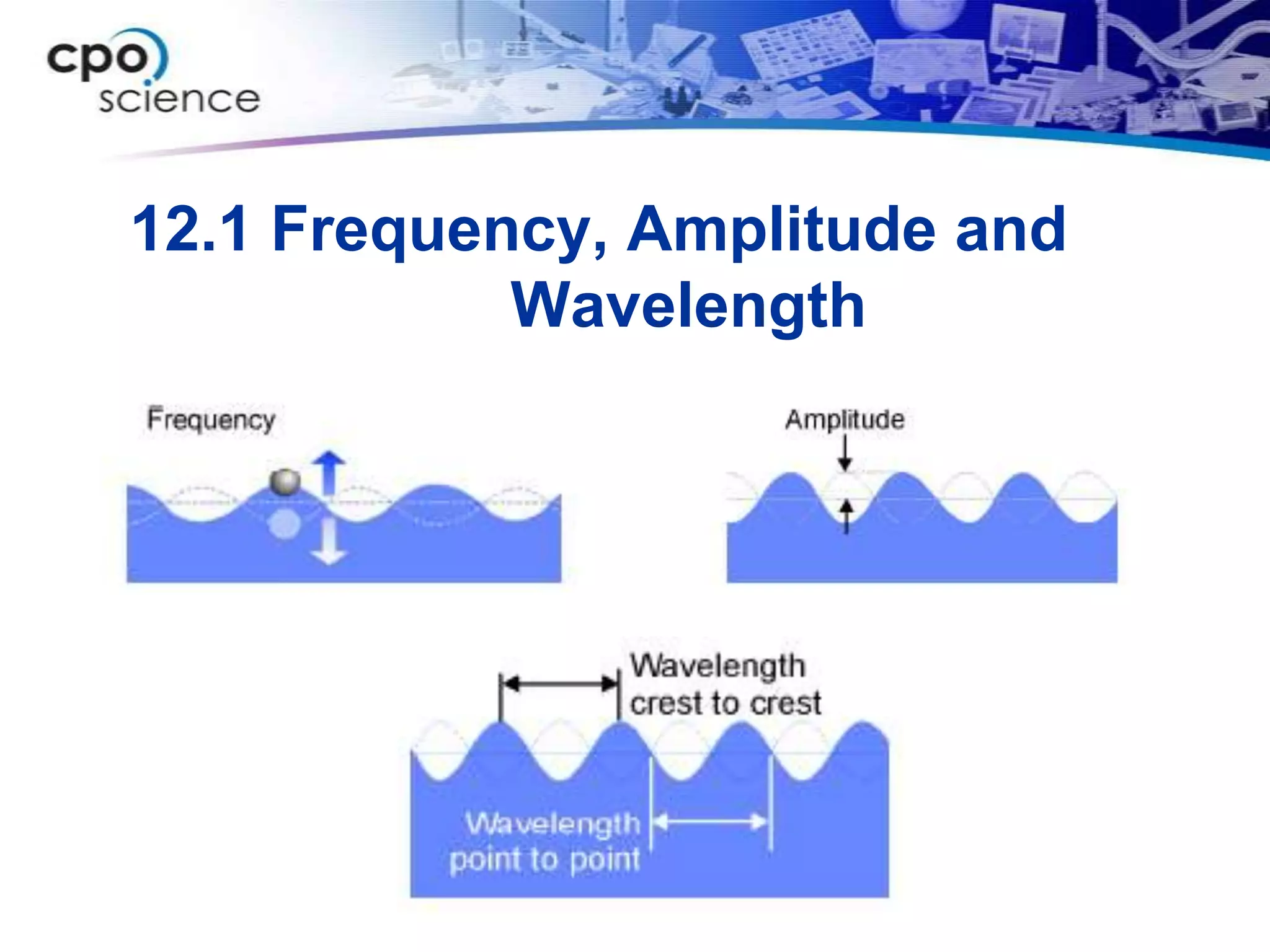
12.1 Frequency, Amplitude and
            Wavelength
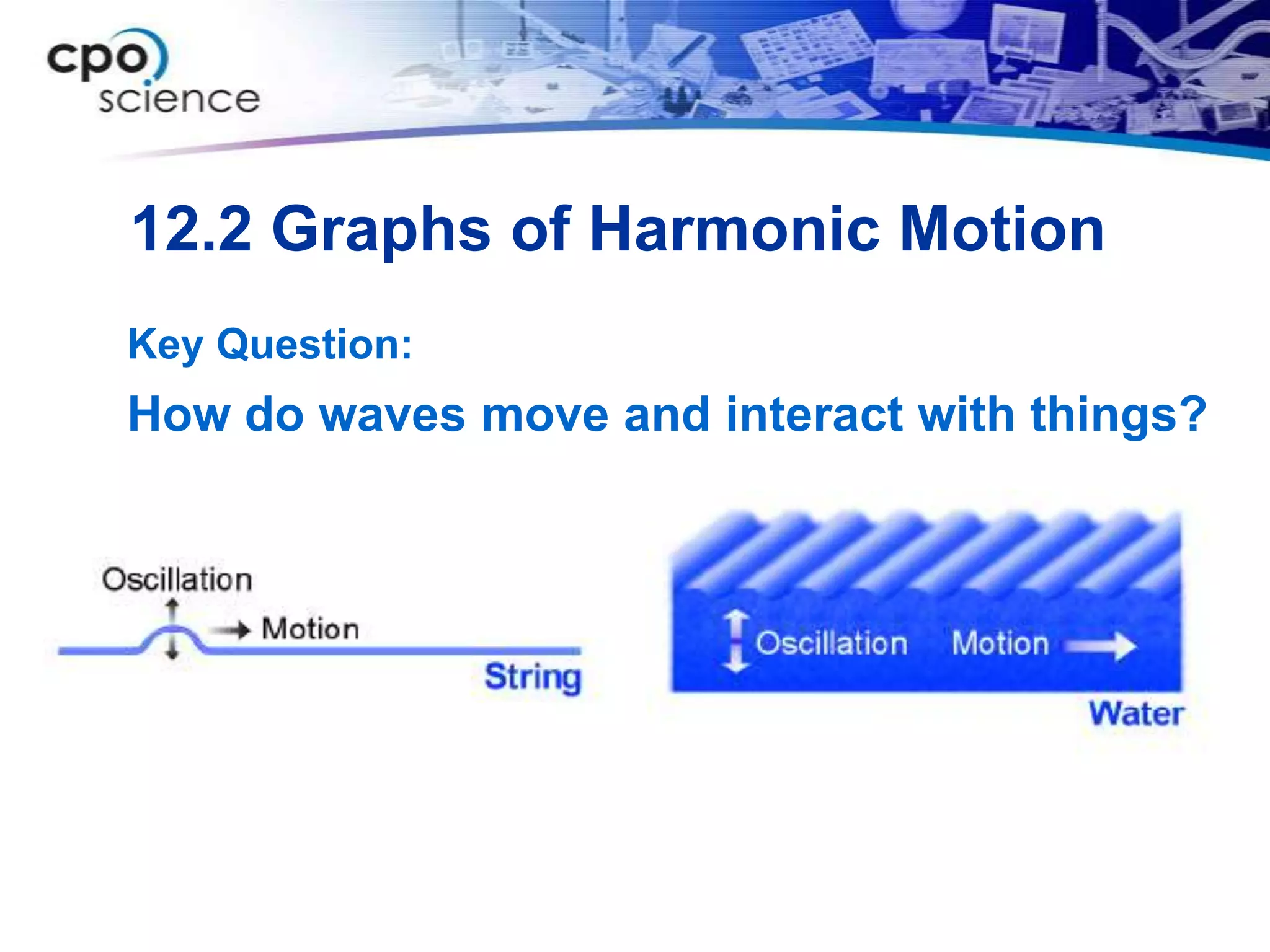
12.2 Graphs of Harmonic Motion
Key Question:
How do waves move and interact with things?
*Wave Shapes
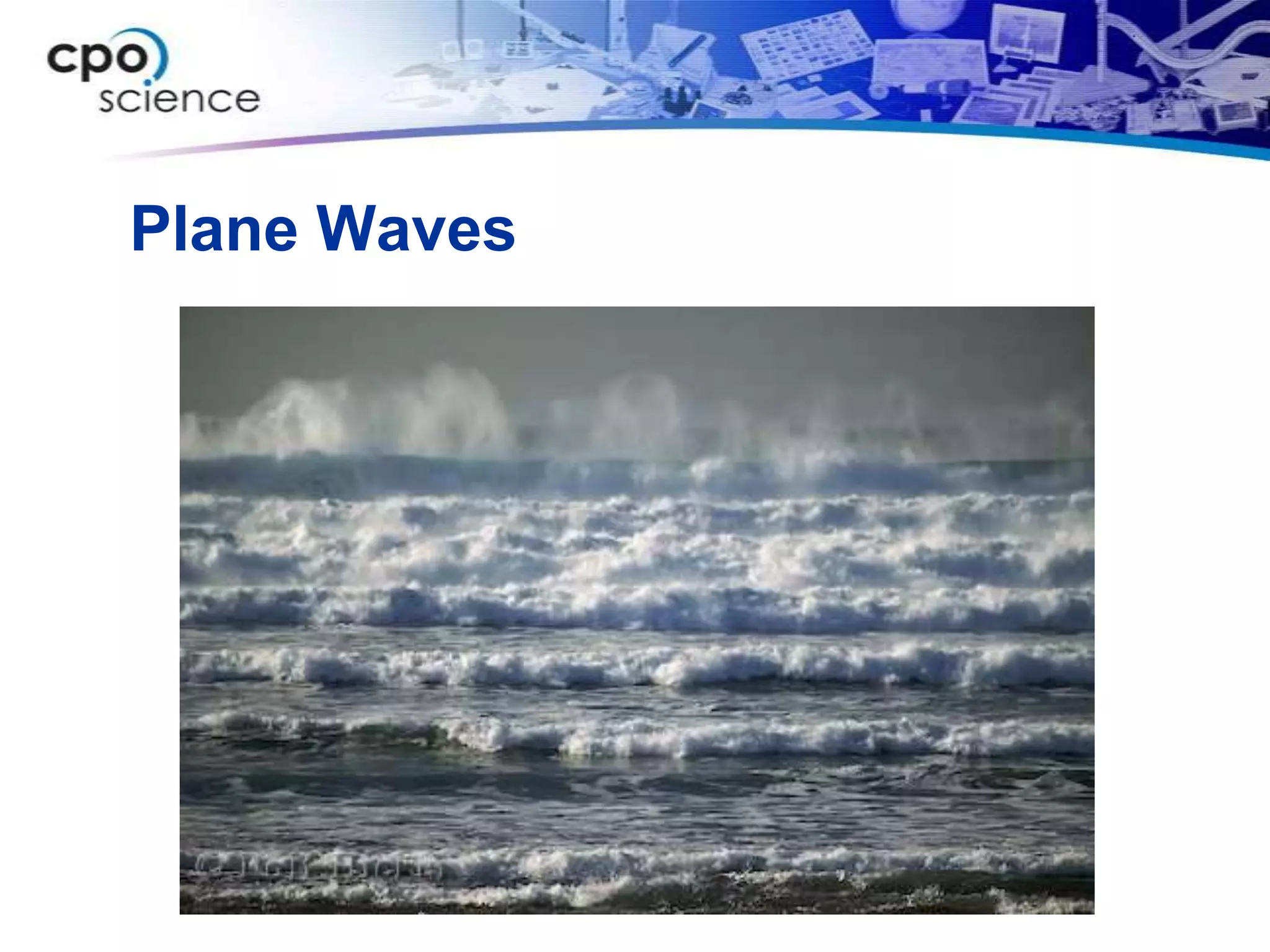
 *PlaneWaves- a wave that has crests all in a
 straight line.
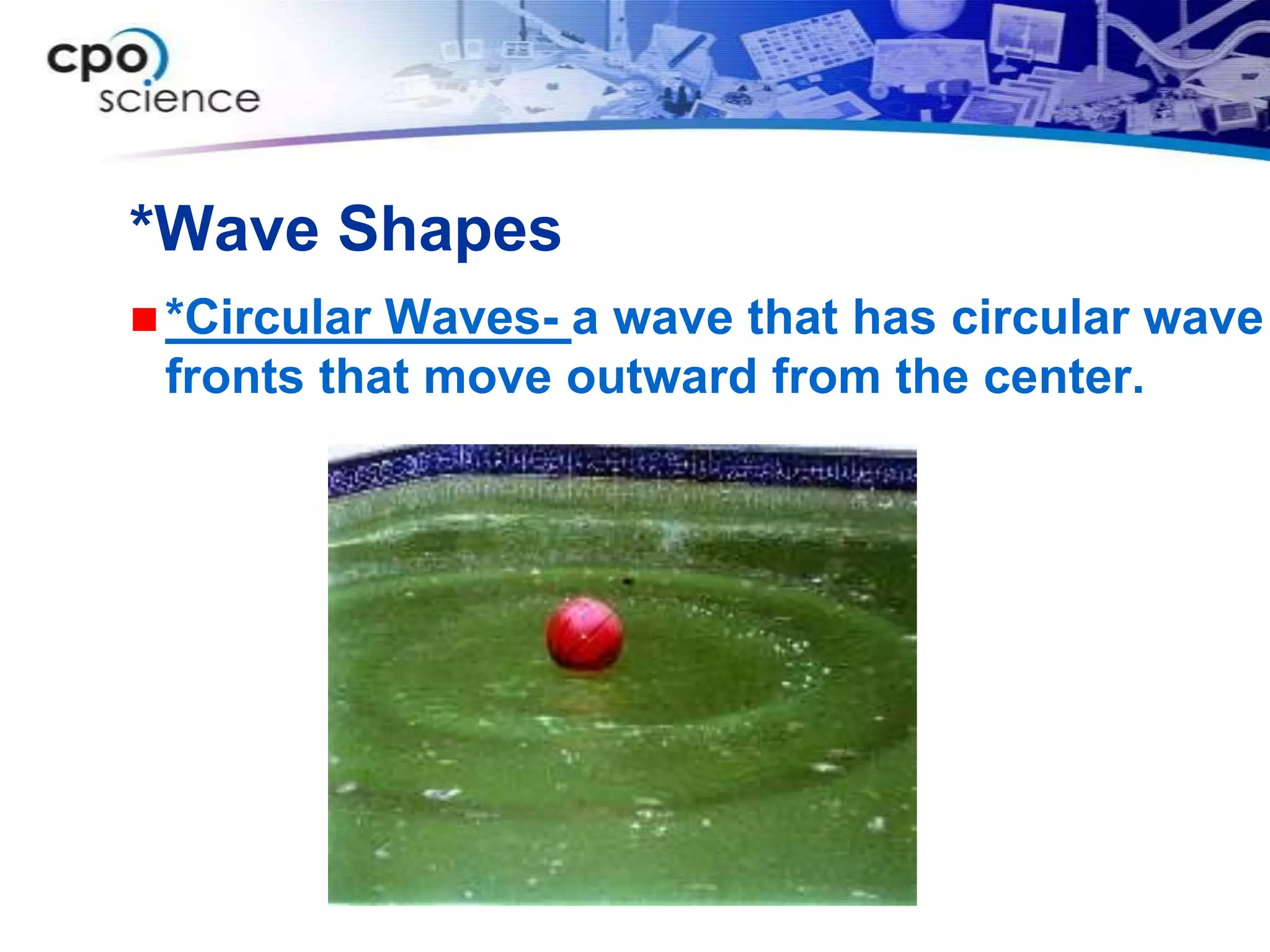
*Wave Shapes
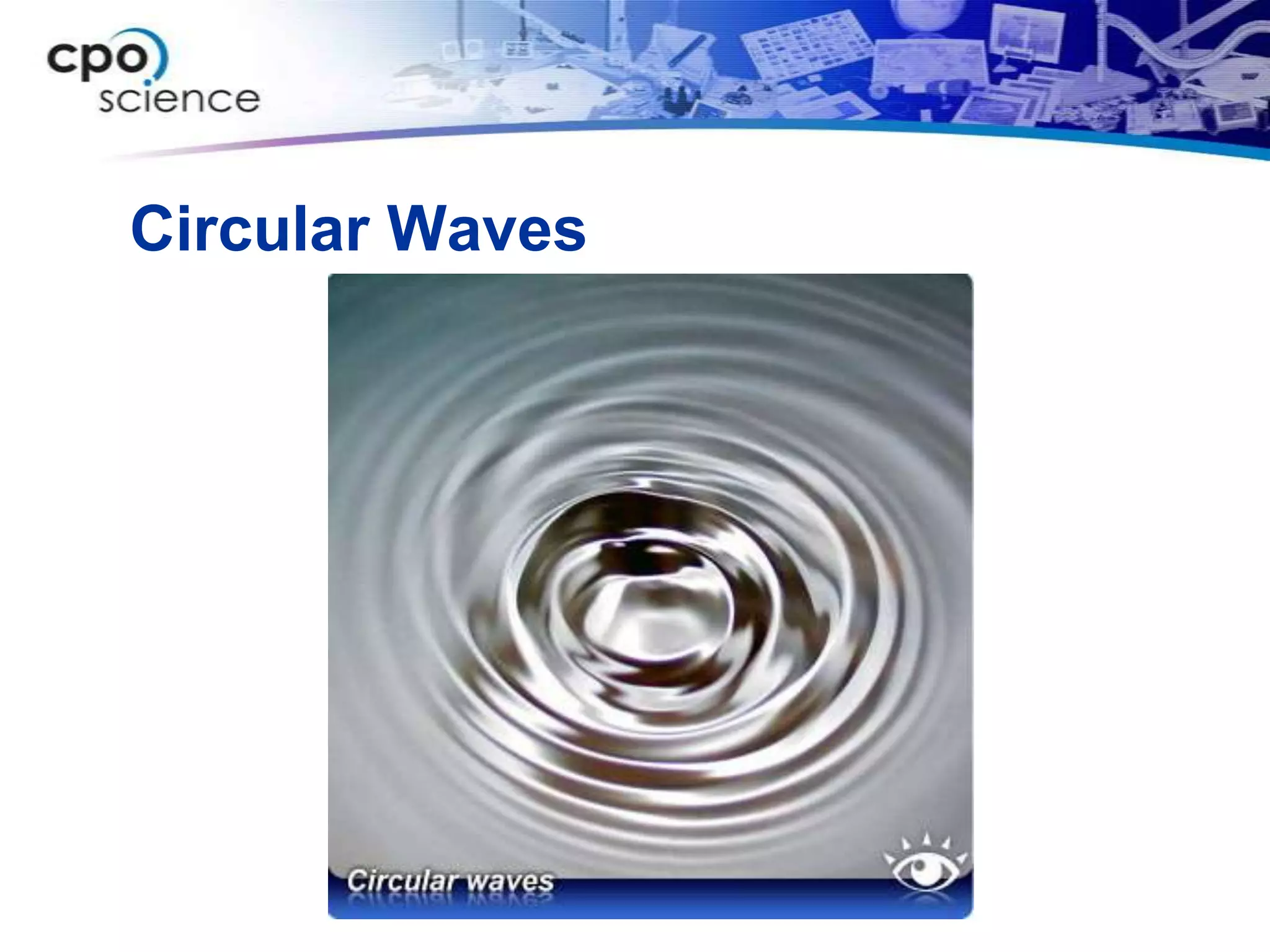
 *CircularWaves- a wave that has circular wave
 fronts that move outward from the center.
Plane Waves
Circular Waves
*What happens when a wave hits an
obstacle?

 *Reflection

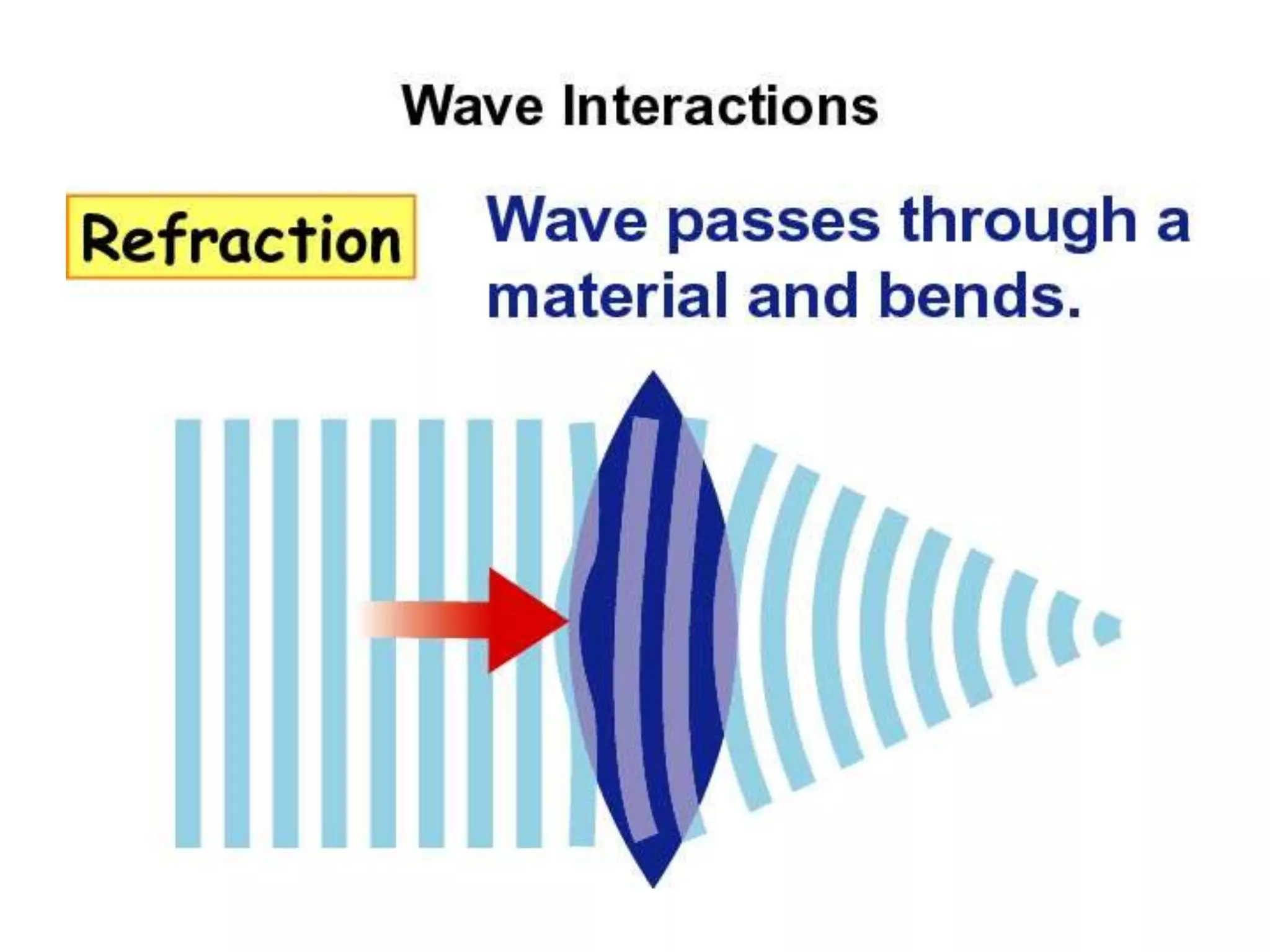
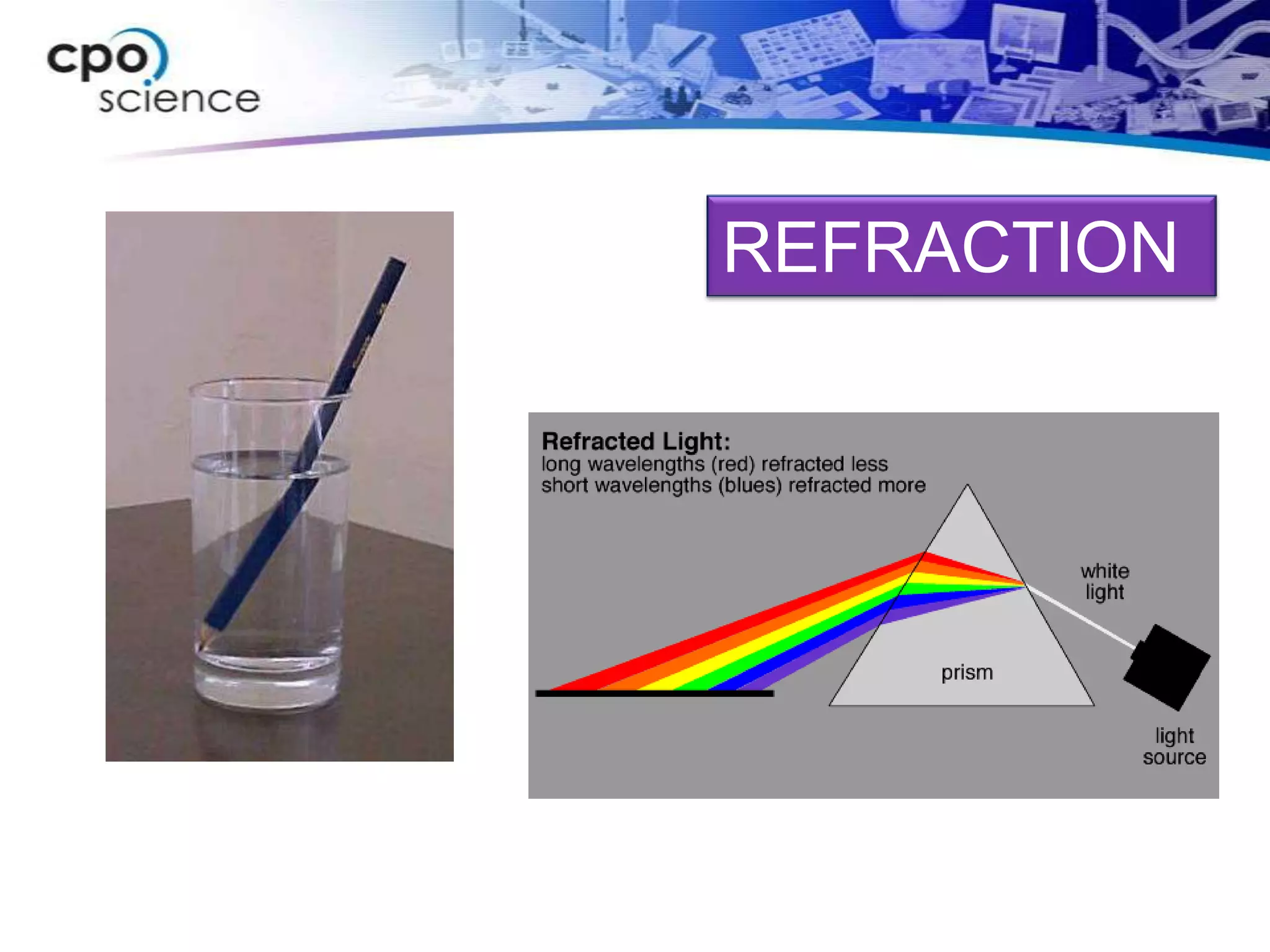
 *Refraction

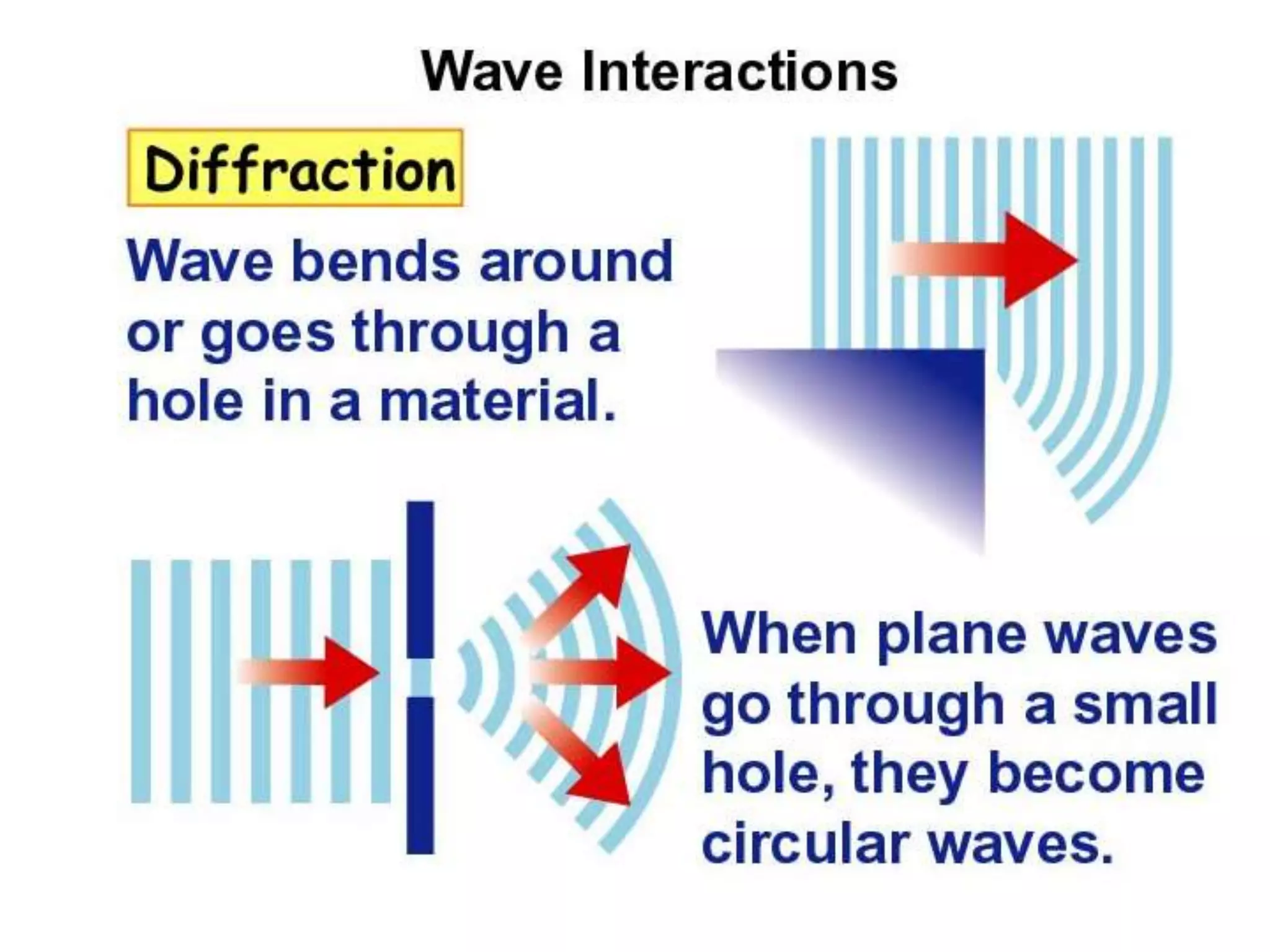
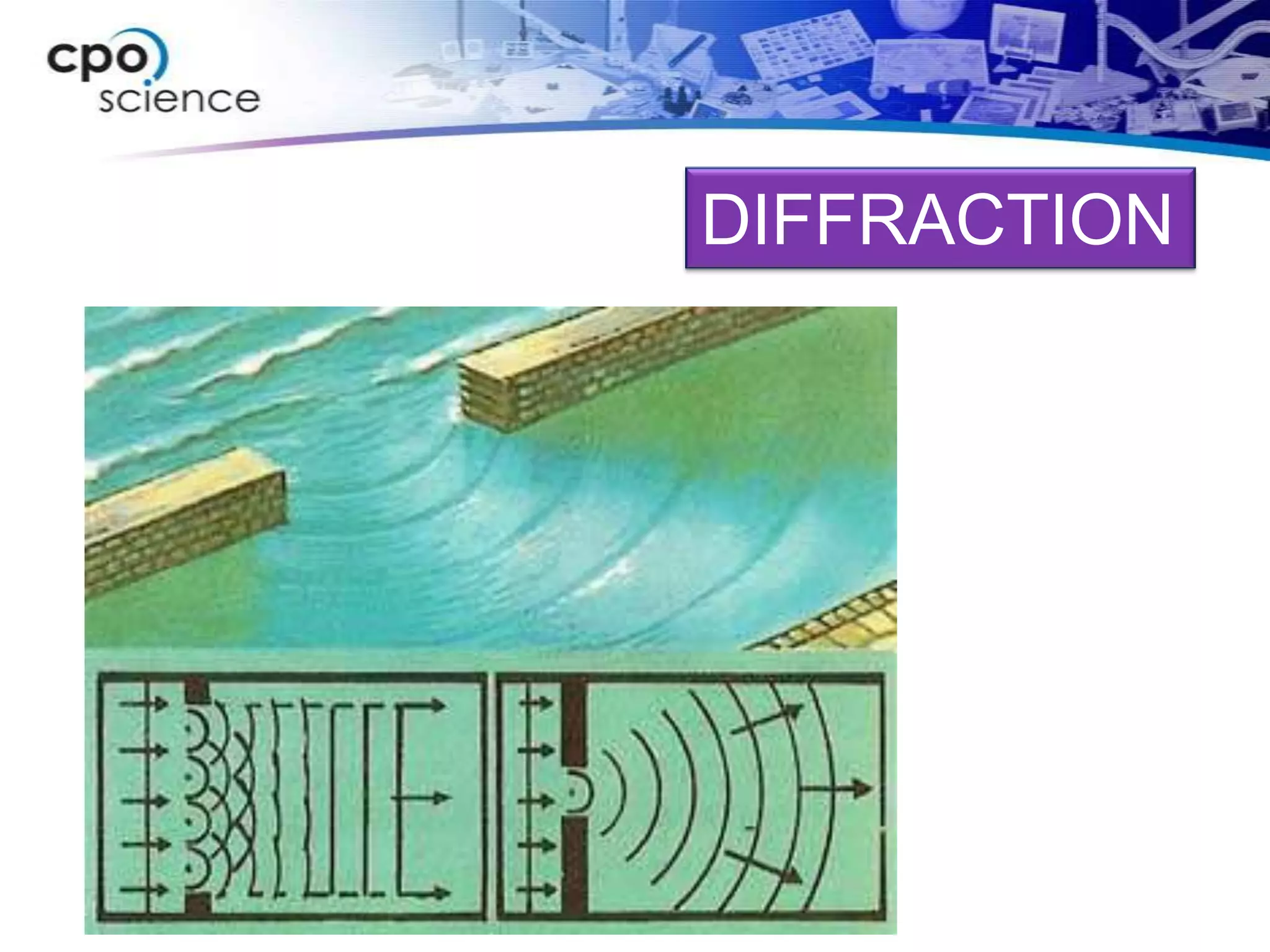
 *Diffraction

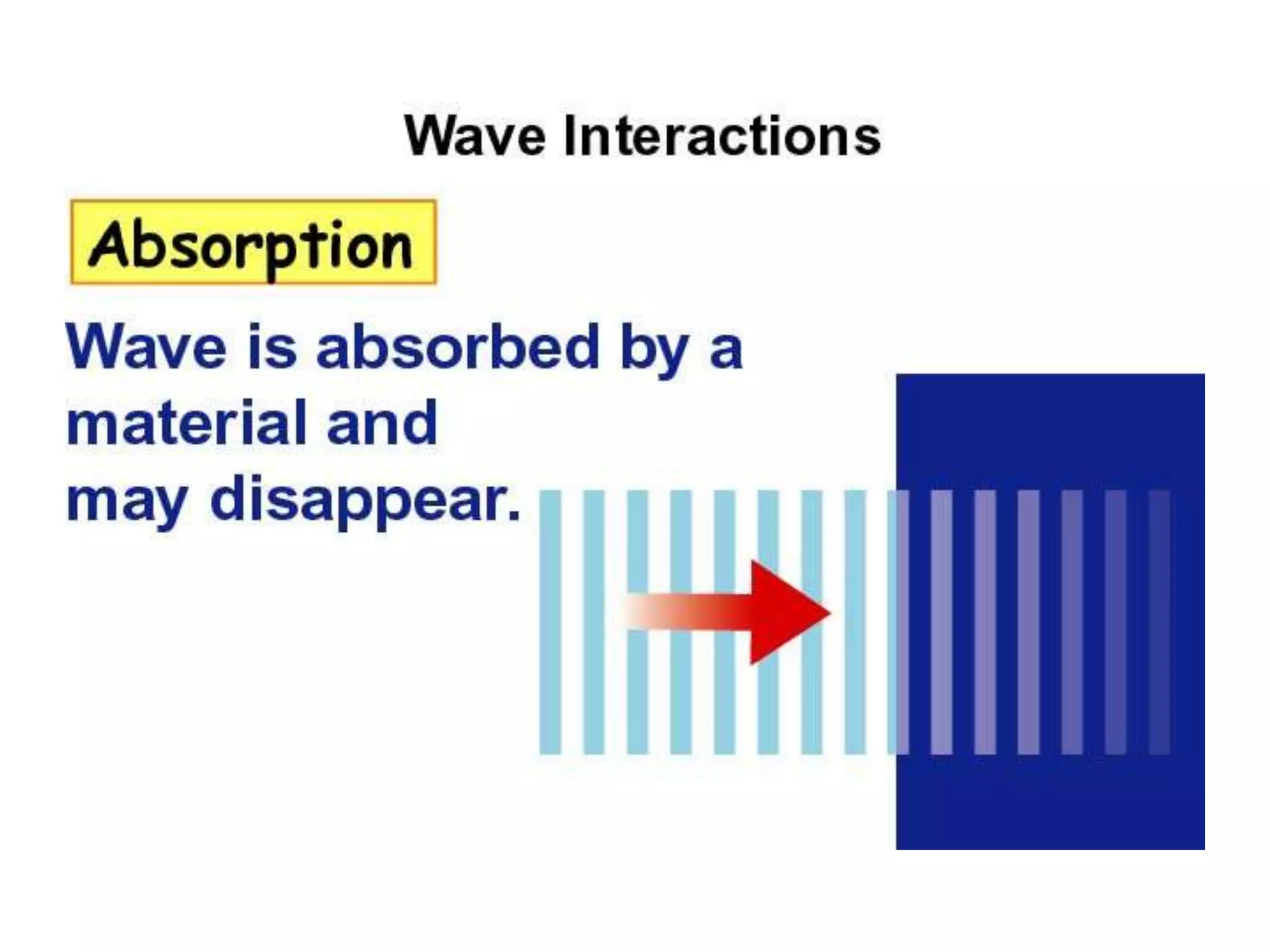
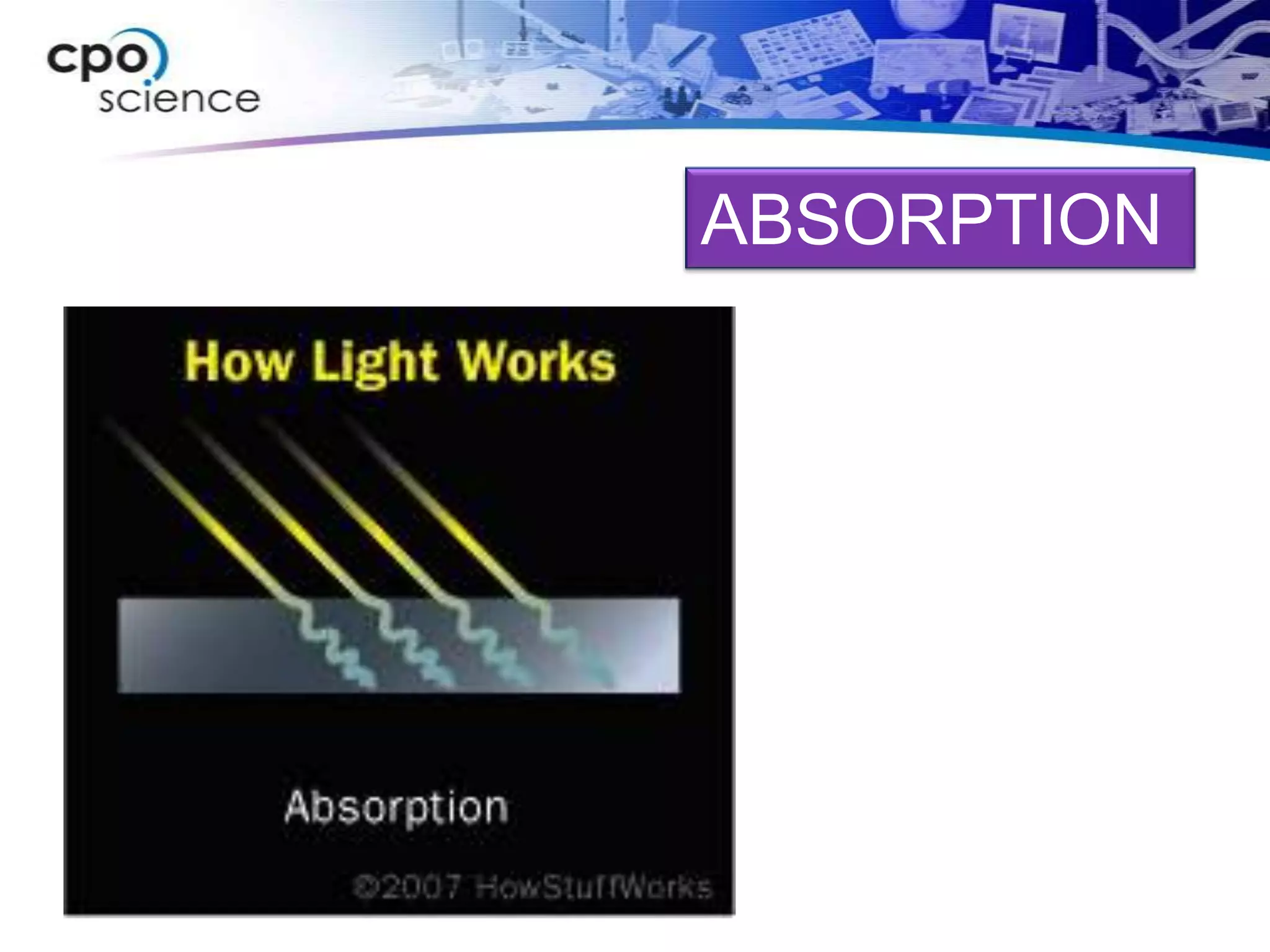
 *Absorption
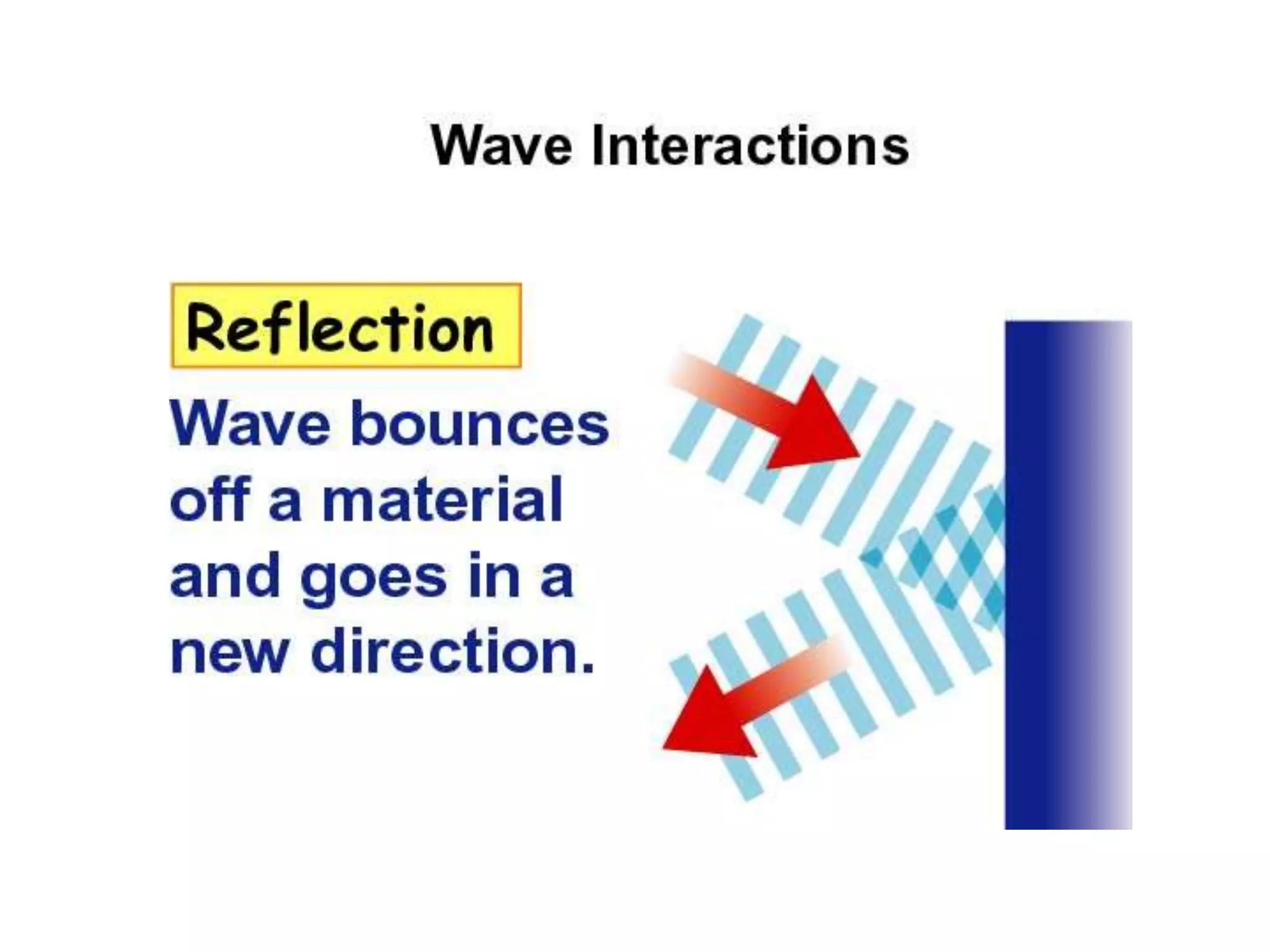
REFLECTION
REFRACTION
DIFFRACTION
ABSORPTION
Wave Interaction
All we have left to discover is how waves
 interact with each other.
*When two waves meet while
 traveling along the same medium
 it is called INTERFERENCE.


                                             21
Constructive Interference
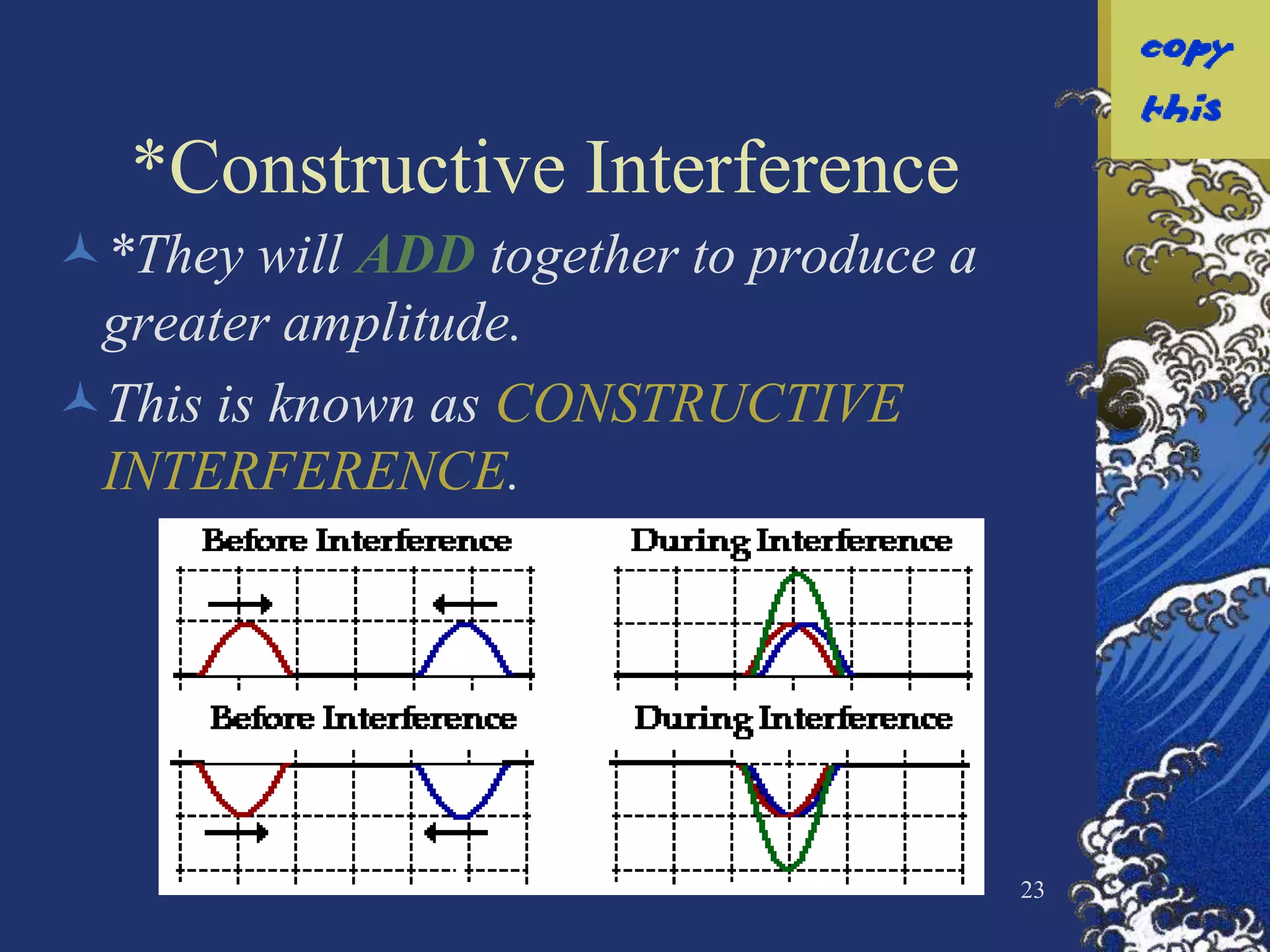
Let’s consider two waves moving towards
 each other, both having a positive
 upward amplitude.
What will happen when they meet?


                                       22
*Constructive Interference
*They will ADD together to produce a
 greater amplitude.
This is known as CONSTRUCTIVE
 INTERFERENCE.


                                        23
Destructive Interference
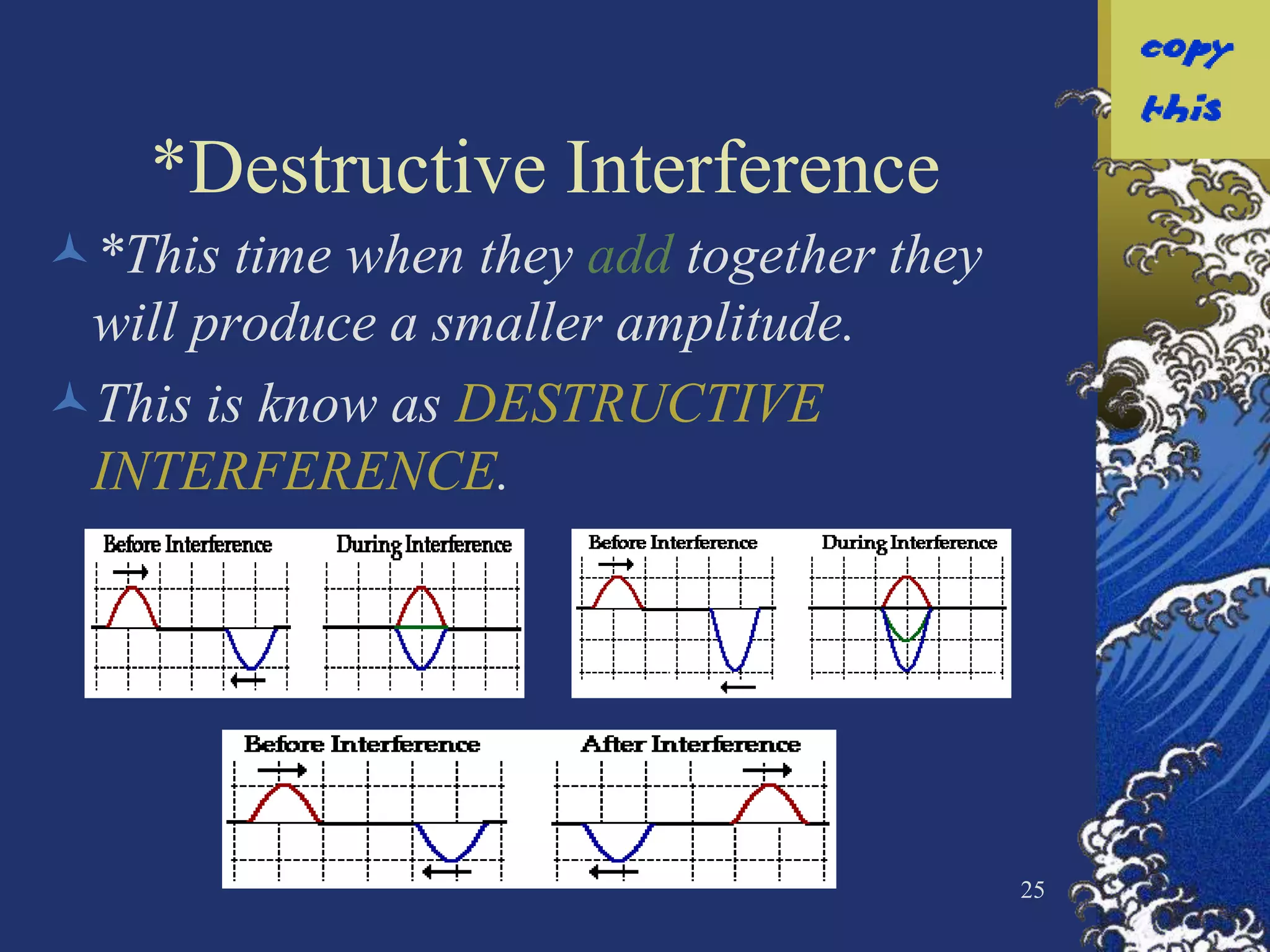
Now let’s consider the opposite, two
 waves moving towards each other, one
 having a positive (upward) and one a
 negative (downward) amplitude.
What will happen when they meet?


                                        24
*Destructive Interference
*This time when they add together they
 will produce a smaller amplitude.
This is know as DESTRUCTIVE
 INTERFERENCE.


                                          25
Wave Interference


                    26
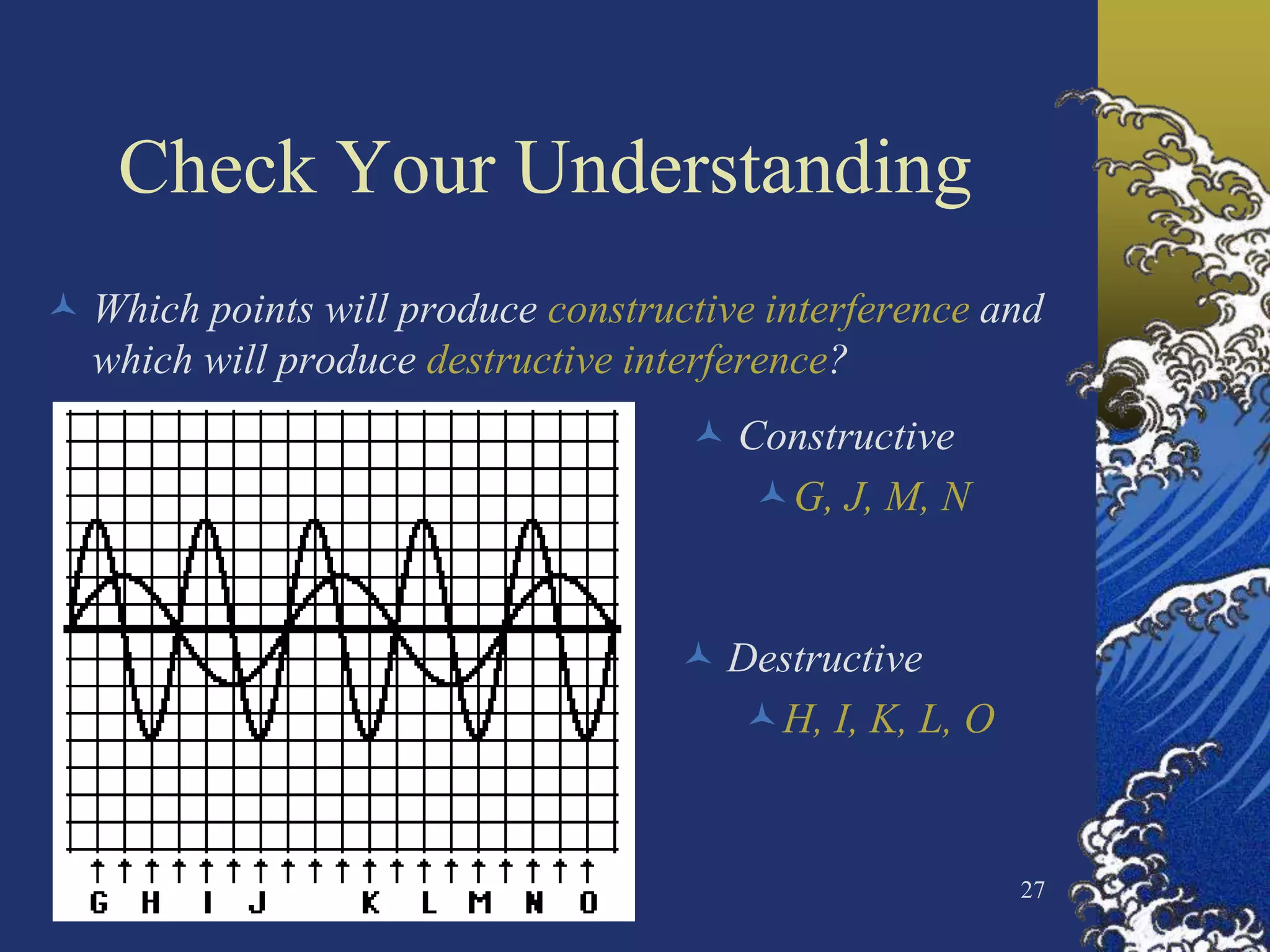
Check Your Understanding
 Which points will produce constructive interference and
  which will produce destructive interference?
                                     Constructive
                                       G, J, M, N


                                     Destructive
                                       H, I, K, L, O


                                                        27
Your Turn:

    Create a graphic organizer using the following terms:
1.    Reflection

2.    Refraction

3.    Diffraction

4.    Absorption

    Explain what the term means. (use your own words)

    Draw a picture to represent what happens.

    List Examples

Ch 12.2 Waves in Motion ppt