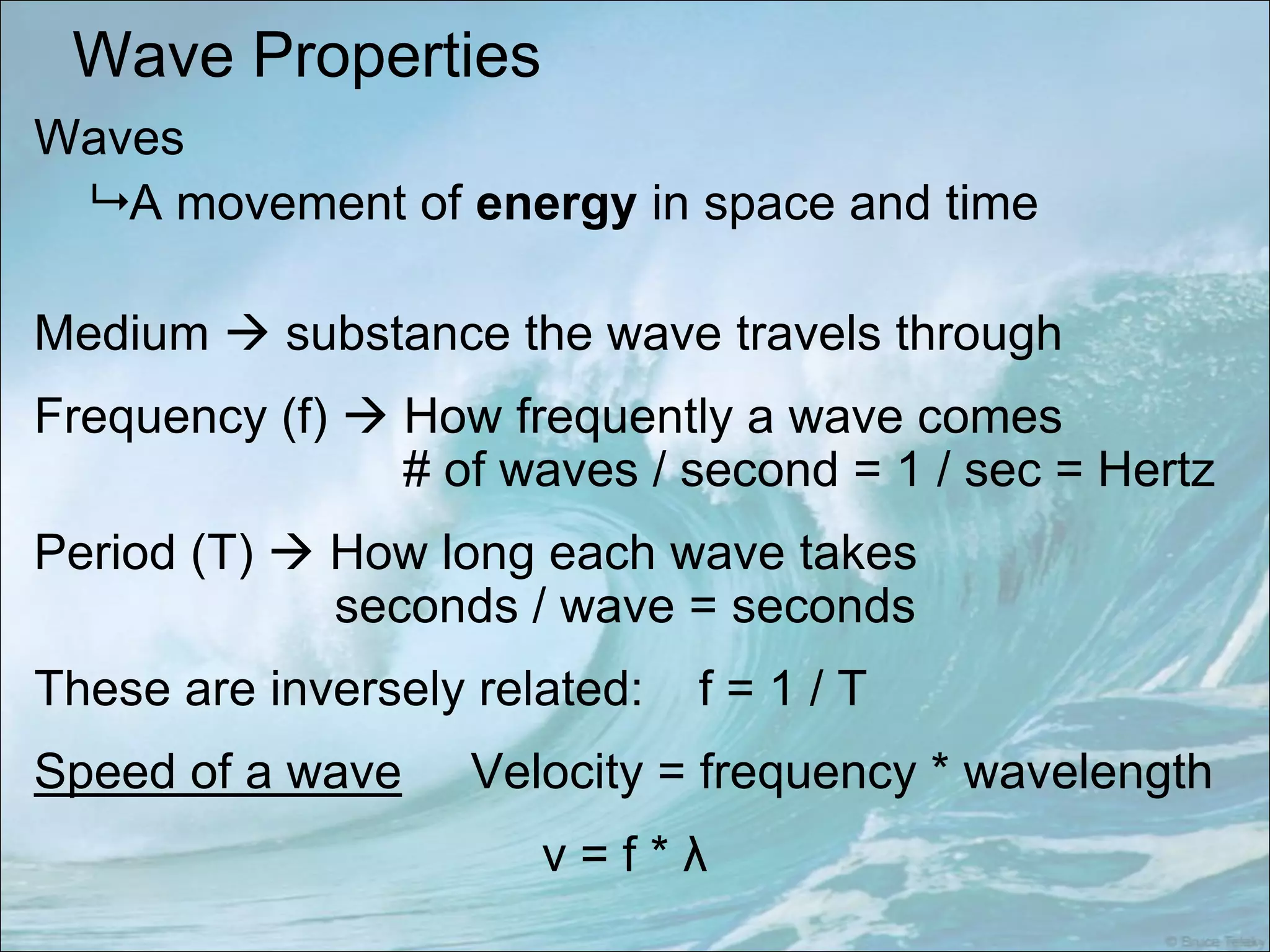
Wave Properties
Waves
  A movement of energy in space and time

Medium  substance the wave travels through
Frequency (f)  How frequently a wave comes
                # of waves / second = 1 / sec = Hertz
Period (T)  How long each wave takes
             seconds / wave = seconds
These are inversely related:   f=1/T
Speed of a wave     Velocity = frequency * wavelength
                       v=f*λ
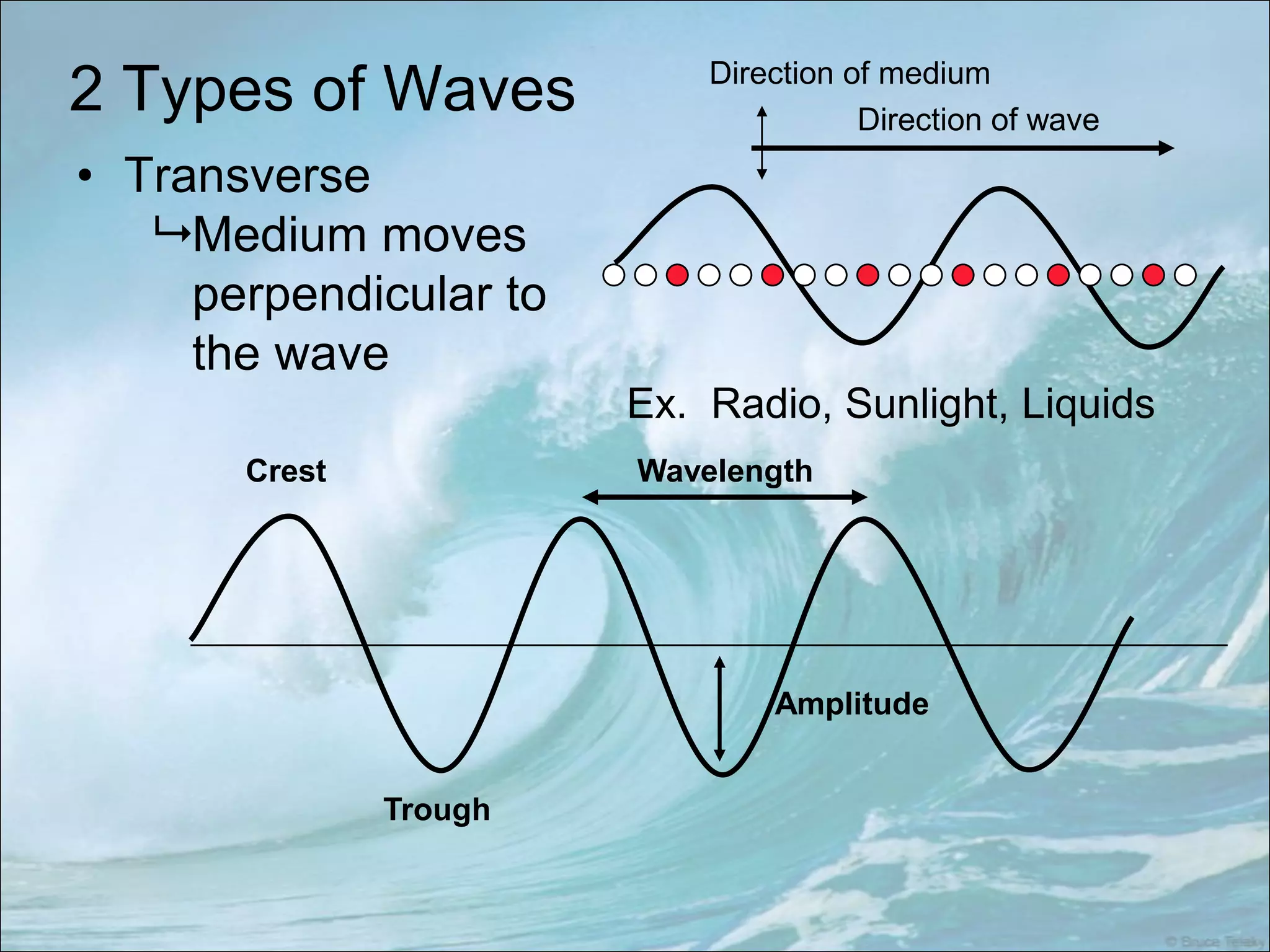
Direction of medium
2 Types of Waves                       Direction of wave
• Transverse
    Medium moves
     perpendicular to
     the wave
                        Ex. Radio, Sunlight, Liquids
       Crest            Wavelength


                                Amplitude


               Trough
• Longitudinal
                     Direction of medium
    Medium moves                          Direction of wave

     parallel to
     the wave

                         Ex. Sound, Water
                        Rarefaction


       Compression
Interference
• Constructive  the
  amplitudes of waves
  passing through each
  other add up


                    • Destructive  the
                      amplitudes of waves
                      passing through each other
                      cancel out
Reflection  bouncing
               of a wave off a barrier
             Refraction  bending of a
             wave when entering a
             new medium

                           Diffraction  Bending of
                           a wave around a barrier


Polarization  filtering
part of a wave out
Standing Wave
A wave which looks like
it is standing still.
The reflected wave hits
at the same point as the
incident wave.
Nodes  points where
the medium doesn’t
move                       Harmonic  standing waves that
                           sound good together.
Antinodes  points   # of harmonic is # of antinodes.
where the medium has 1st Harmonic  lowest frequency
maximum displacement that will fit in pipe or on a string
Wave properties

Wave properties

  • 1.
    Wave Properties Waves A movement of energy in space and time Medium  substance the wave travels through Frequency (f)  How frequently a wave comes # of waves / second = 1 / sec = Hertz Period (T)  How long each wave takes seconds / wave = seconds These are inversely related: f=1/T Speed of a wave Velocity = frequency * wavelength v=f*λ
  • 2.
    Direction of medium 2Types of Waves Direction of wave • Transverse  Medium moves perpendicular to the wave Ex. Radio, Sunlight, Liquids Crest Wavelength Amplitude Trough
  • 3.
    • Longitudinal Direction of medium  Medium moves Direction of wave parallel to the wave Ex. Sound, Water Rarefaction Compression
  • 4.
    Interference • Constructive the amplitudes of waves passing through each other add up • Destructive  the amplitudes of waves passing through each other cancel out
  • 5.
    Reflection  bouncing of a wave off a barrier Refraction  bending of a wave when entering a new medium Diffraction  Bending of a wave around a barrier Polarization  filtering part of a wave out
  • 6.
    Standing Wave A wavewhich looks like it is standing still. The reflected wave hits at the same point as the incident wave. Nodes  points where the medium doesn’t move Harmonic  standing waves that sound good together. Antinodes  points # of harmonic is # of antinodes. where the medium has 1st Harmonic  lowest frequency maximum displacement that will fit in pipe or on a string