EPILEPSY FIRST AID
   Emmaline McCulloch, RN
   Epilepsy Resource Nurse
            9 West
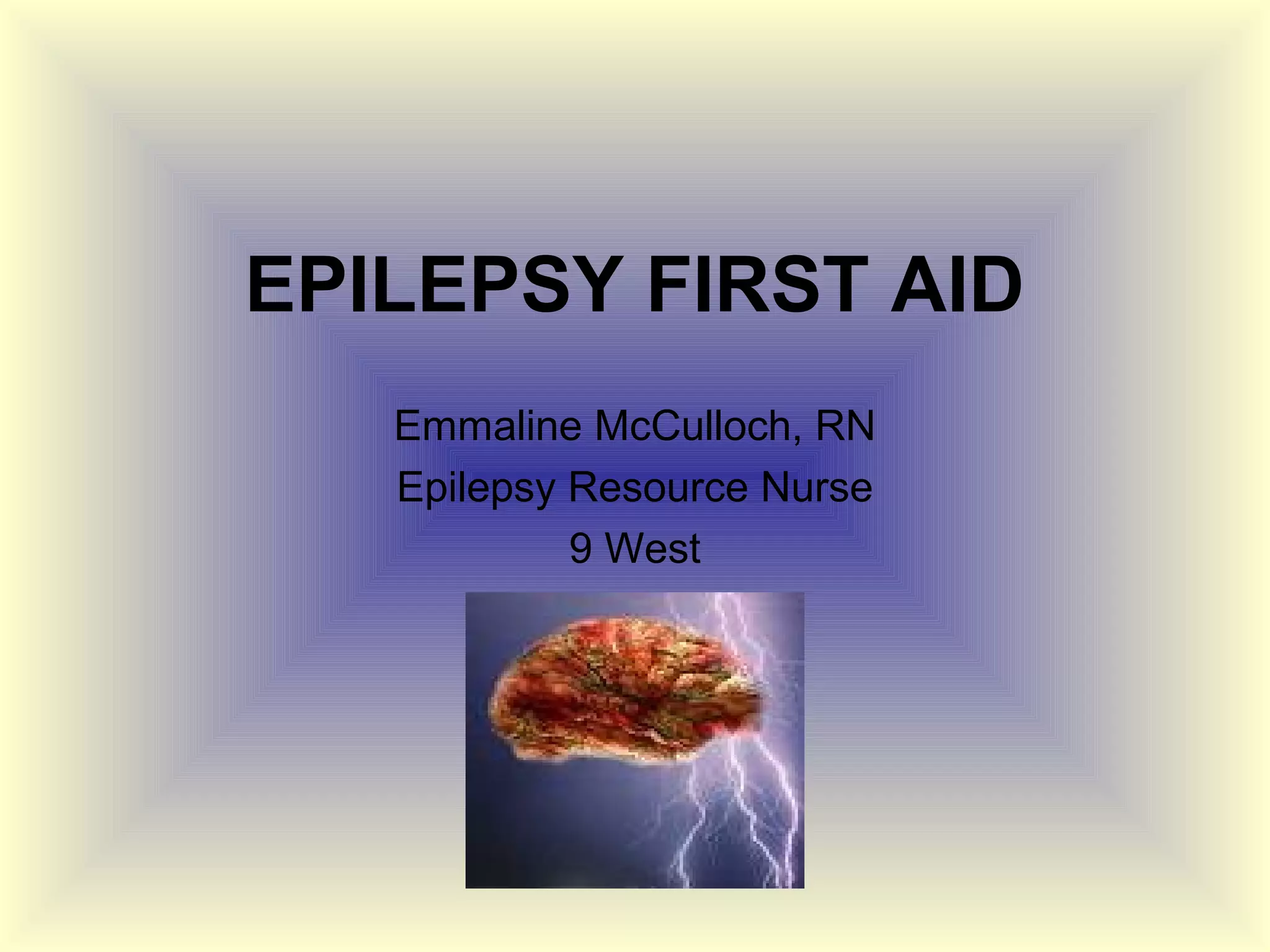
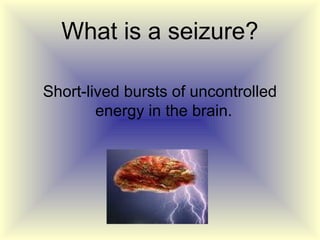
What is a seizure?

Short-lived bursts of uncontrolled
        energy in the brain.
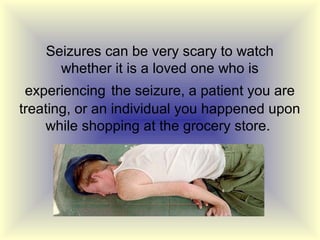
Seizures can be very scary to watch
      whether it is a loved one who is
 experiencing the seizure, a patient you are
treating, or an individual you happened upon
    while shopping at the grocery store.
SEIZURES
• Most people think that all seizures are
  convulsions.

• Seizures may also consist of:
  – Staring spells
  – Abnormal movements
  – Abnormal smells or sounds
  – Abnormal behaviors
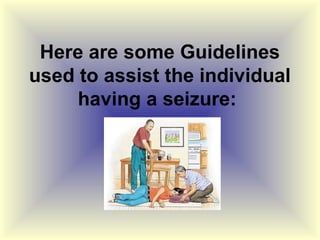
Here are some Guidelines
used to assist the individual
     having a seizure:
Seizures Guidelines
• Remain cool, calm, and collected. Stay
  with the individual. Crowd control is
  important. Limit to 2 people for first aid
  support.

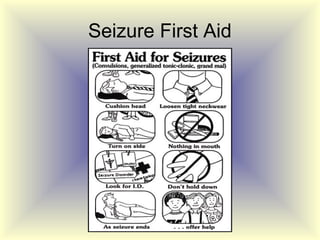
• Protect the individual from injury by
  removing sharp objects around them.
  Place a pillow or folded clothing (towel or
  jacket) under their head.
Seizure Guidelines
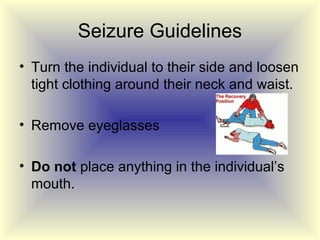
• Turn the individual to their side and loosen
  tight clothing around their neck and waist.

• Remove eyeglasses

• Do not place anything in the individual’s
  mouth.
Guidelines Cont.
• Do not restrain the seizure activity.

• Time the seizure activity.

• If a visitor or stranger is having a seizure call
  911 or 2-3333 immediately.

• If patient is inpatient at hospital call the nurse
  immediately or push call bell.
Seizure First Aid
Seizure Assessment
• Look for any injuries that need immediate
  attention such as cuts or broken bones.

• Do not let the individual drive after a
  seizure.
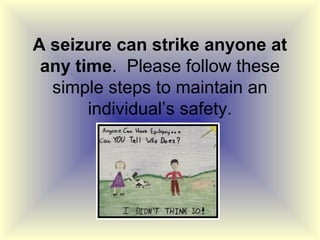
A seizure can strike anyone at
 any time. Please follow these
  simple steps to maintain an
       individual’s safety.
References:
•   Epilepsy Foundation of America. Safety and Seizures: Tips for Living with Seizure
          Disorders.

•   Handbook of Epilepsy: Diagnosis and Management, edited by J. Edwards,
    University Press, 2009.

•   Managing Seizure Disorders: A Handbook for Health Care Professionals, edited by
         N. Santilli, Lippincott-Raven Publishers, Philadelphia, 1996 by the Epilepsy
         Foundation of America.

•   Schacter, Steven C. & Shire Pharmaceuticals. (2000). A Guide for Adults: A Normal
         Life With Epilepsy.

Epilepsy first aid

  • 1.
    EPILEPSY FIRST AID Emmaline McCulloch, RN Epilepsy Resource Nurse 9 West
  • 2.
    What is aseizure? Short-lived bursts of uncontrolled energy in the brain.
  • 3.
    Seizures can bevery scary to watch whether it is a loved one who is experiencing the seizure, a patient you are treating, or an individual you happened upon while shopping at the grocery store.
  • 4.
    SEIZURES • Most peoplethink that all seizures are convulsions. • Seizures may also consist of: – Staring spells – Abnormal movements – Abnormal smells or sounds – Abnormal behaviors
  • 5.
    Here are someGuidelines used to assist the individual having a seizure:
  • 6.
    Seizures Guidelines • Remaincool, calm, and collected. Stay with the individual. Crowd control is important. Limit to 2 people for first aid support. • Protect the individual from injury by removing sharp objects around them. Place a pillow or folded clothing (towel or jacket) under their head.
  • 7.
    Seizure Guidelines • Turnthe individual to their side and loosen tight clothing around their neck and waist. • Remove eyeglasses • Do not place anything in the individual’s mouth.
  • 8.
    Guidelines Cont. • Donot restrain the seizure activity. • Time the seizure activity. • If a visitor or stranger is having a seizure call 911 or 2-3333 immediately. • If patient is inpatient at hospital call the nurse immediately or push call bell.
  • 9.
  • 10.
    Seizure Assessment • Lookfor any injuries that need immediate attention such as cuts or broken bones. • Do not let the individual drive after a seizure.
  • 11.
    A seizure canstrike anyone at any time. Please follow these simple steps to maintain an individual’s safety.
  • 12.
    References: • Epilepsy Foundation of America. Safety and Seizures: Tips for Living with Seizure Disorders. • Handbook of Epilepsy: Diagnosis and Management, edited by J. Edwards, University Press, 2009. • Managing Seizure Disorders: A Handbook for Health Care Professionals, edited by N. Santilli, Lippincott-Raven Publishers, Philadelphia, 1996 by the Epilepsy Foundation of America. • Schacter, Steven C. & Shire Pharmaceuticals. (2000). A Guide for Adults: A Normal Life With Epilepsy.