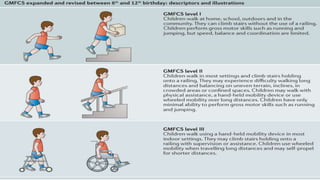
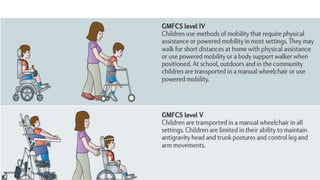
Cerebral Palsy
- Dr.C.S.N.Vittal
Most common chronic motor disability in childhood
CP
History
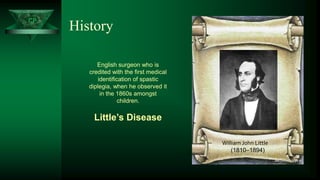
William John Little
(1810–1894)
English surgeon who is
credited with the first medical
identification of spastic
diplegia, when he observed it
in the 1860s amongst
children.
Little’s Disease
CP
Definition
 Collection of diverse syndromes characterized by
disorders of movement and posture leading to
activity limitation; caused by a non-progressive
injury to developing foetal or infant brain.
It is a static encephalopathy of childhood.
CP
CP
Epidemiology
 Incidence 3.6 per 1000 live births
 10% of infants born 1000 g or less at birth
 5-10% incidence in preterm
 Birth asphyxia as a cause : only in 3 – 21%
 Male:Female ratio 1.4:1
 major lesions that contribute to CP in preterm infants are
intracerebral hemorrhage and periventricular leukomalacia (PVL)
CP
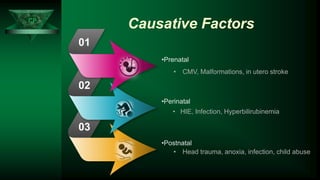
Causative Factors
• CMV, Malformations, in utero stroke
•Prenatal
• HIE, Infection, Hyperbilirubinemia
•Perinatal
• Head trauma, anoxia, infection, child abuse
•Postnatal
01
02
03
CP
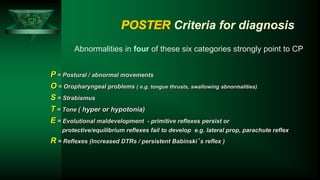
Criteria for diagnosis
P = Postural / abnormal movements
O = Oropharyngeal problems ( e.g. tongue thrusts, swallowing abnormalities)
S = Strabismus
T = Tone ( hyper or hypotonia)
E = Evolutional maldevelopment - primitive reflexes persist or
protective/equilibrium reflexes fail to develop e.g. lateral prop, parachute reflex
R = Reflexes (Increased DTRs / persistent Babinski’s reflex )
Abnormalities in four of these six categories strongly point to CP
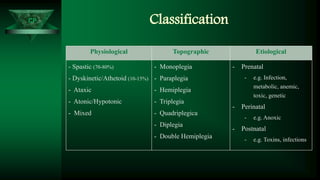
CP Classification
Physiological Topographic Etiological
- Spastic (70-80%)
- Dyskinetic/Athetoid (10-15%)
- Ataxic
- Atonic/Hypotonic
- Mixed
- Monoplegia
- Paraplegia
- Hemiplegia
- Triplegia
- Quadriplegica
- Diplegia
- Double Hemiplegia
- Prenatal
- e.g. Infection,
metabolic, anemic,
toxic, genetic
- Perinatal
- e.g. Anoxic
- Postnatal
- e.g. Toxins, infections
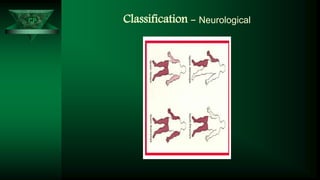
CP Classification - Neurological
es2015-16
R ANATOMICAL
12
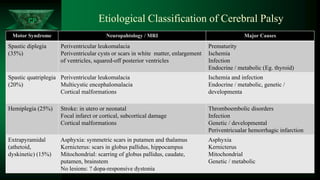
CP Etiological Classification of Cerebral Palsy
Motor Syndrome Neuropahtology / MRI Major Causes
Spastic diplegia
(35%)
Periventricular leukomalacia
Periventricular cysts or scars in white matter, enlargement
of ventricles, squared-off posterior ventricles
Prematurity
Ischemia
Infection
Endocrine / metabolic (Eg. thyroid)
Spastic quatriplegia
(20%)
Periventricular leukomalacia
Multicystic encephalomalacia
Cortical malformations
Ischemia and infection
Endocrine / metabolic, genetic /
developmenta
Hemiplegia (25%) Stroke: in utero or neonatal
Focal infarct or cortical, subcortical damage
Cortical malformations
Thromboembolic disorders
Infection
Genetic / developmental
Periventricualar hemorrhagic infarction
Extrapyramidal
(athetoid,
dyskinetic) (15%)
Asphyxia: symmetric scars in putamen and thalamus
Kernicterus: scars in globus pallidus, hippocampus
Mitochondrial: scarring of globus pallidus, caudate,
putamen, brainstem
No lesions: ? dopa-responsive dystonia
Asphyxia
Kernicterus
Mitochondrial
Genetic / metabolic
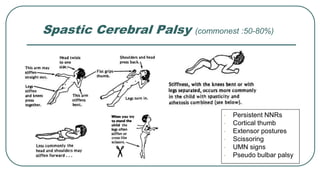
• Persistent NNRs
• Cortical thumb
• Extensor postures
• Scissoring
• UMN signs
• Pseudo bulbar palsy
Spastic Cerebral Palsy (commonest :50-80%)
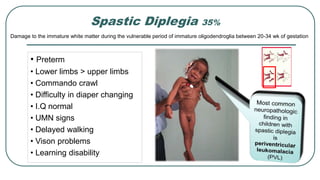
• Preterm
• Lower limbs > upper limbs
• Commando crawl
• Difficulty in diaper changing
• I.Q normal
• UMN signs
• Delayed walking
• Vison problems
• Learning disability
Spastic Diplegia 35%
Damage to the immature white matter during the vulnerable period of immature oligodendroglia between 20-34 wk of gestation
IAPUGTeachingslides2015-16
OGRAPHICAL OR ANATOMICAL
/Tetraplegia
plegia
12
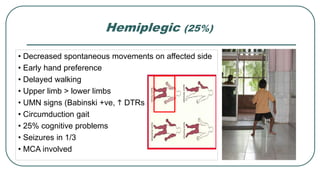
Hemiplegic (25%)
• Decreased spontaneous movements on affected side
• Early hand preference
• Delayed walking
• Upper limb > lower limbs
• UMN signs (Babinski +ve, h DTRs
• Circumduction gait
• 25% cognitive problems
• Seizures in 1/3
• MCA involved
IAPUGTeachingslides2015-16
APHICAL OR ANATOMICAL
traplegia
gia
12
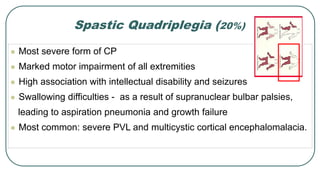
Spastic Quadriplegia (20%)
 Most severe form of CP
 Marked motor impairment of all extremities
 High association with intellectual disability and seizures
 Swallowing difficulties - as a result of supranuclear bulbar palsies,
leading to aspiration pneumonia and growth failure
 Most common: severe PVL and multicystic cortical encephalomalacia.
2015-16
ANATOMICAL
12
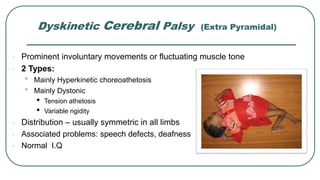
Dyskinetic Cerebral Palsy (Extra Pyramidal)
• Prominent involuntary movements or fluctuating muscle tone
• 2 Types:
• Mainly Hyperkinetic choreoathetosis
• Mainly Dystonic
• Tension athetosis
• Variable rigidity
• Distribution – usually symmetric in all limbs
• Associated problems: speech defects, deafness
• Normal I.Q
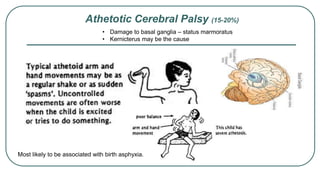
Athetotic Cerebral Palsy (15-20%)
• Damage to basal ganglia – status marmoratus
• Kernicterus may be the cause
PUGTeachingslides2015-16
d dystonia over several years.
basal ganglia
us
e the cause
22
Most likely to be associated with birth asphyxia.
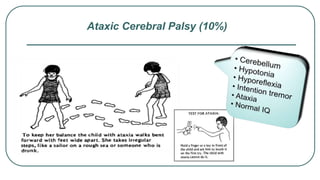
Ataxic Cerebral Palsy (10%)
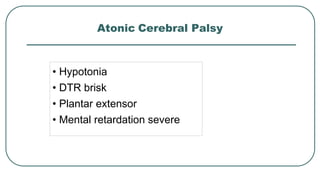
Atonic Cerebral Palsy
• Hypotonia
• DTR brisk
• Plantar extensor
• Mental retardation severe
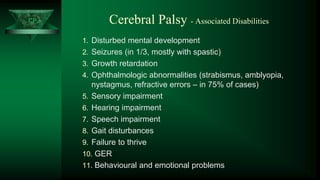
CP Cerebral Palsy - Associated Disabilities
1. Disturbed mental development
2. Seizures (in 1/3, mostly with spastic)
3. Growth retardation
4. Ophthalmologic abnormalities (strabismus, amblyopia,
nystagmus, refractive errors – in 75% of cases)
5. Sensory impairment
6. Hearing impairment
7. Speech impairment
8. Gait disturbances
9. Failure to thrive
10. GER
11. Behavioural and emotional problems
CP
Cerebral Palsy - Diagnostic Evaluation
1. Detailed history
2. Thorough neurological examination
3. Routine blood tests
4. Metabolic screening
5. X-Rays
6. EEG
7. CT brain
8. MRI
Cerebral Palsy – Difficulty in diagnosing clinically in 1st year
• Hypotonia is more common than hypertonic and spasticity
• Early abundance of primitive reflexes may confuse the clinical picture
• An infant has a limited variety of volitional movements for evaluation
• Substantial myelination takes months to evolve and may delay the clinical
picture of abnormal tone and increased DTRs
• Many children who develop CP do not have identifiable risk factors; most
cases are not related to labor and delivery events
Cerebral Palsy – Behavioural problems that arose suspicion & possibility
• Excessive irritability, constant crying, sleep difficulties (severe colic in 25%)
• Early feeding difficulties in coordinating suck and swallow, frequent spitting
up and poor weight gain
• “Jittery and jumpy” behaviour esp. - other than when hungry
• Early startled behaviour
• Stiffness when handled, esp. duding dressing, diapering and hand washing
• Paradoxically “precocious development”, such as early rolling (laterally
sudden, reflexive roll than a volitional) or stiff legged “standing” with support
of an infant with spastic diplegia.
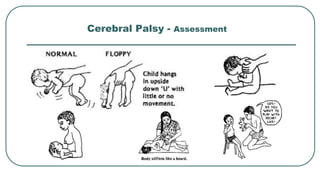
Cerebral Palsy - Assessment
Cerebral Palsy
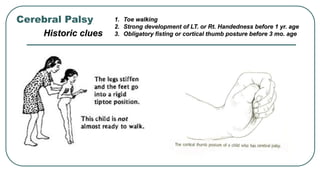
Historic clues
1. Toe walking
2. Strong development of LT. or Rt. Handedness before 1 yr. age
3. Obligatory fisting or cortical thumb posture before 3 mo. age
CP
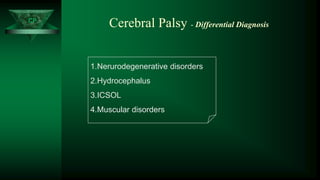
Cerebral Palsy - Differential Diagnosis
1.Nerurodegenerative disorders
2.Hydrocephalus
3.ICSOL
4.Muscular disorders
CP
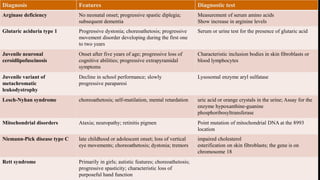
Diagnosis Features Diagnostic test
Arginase deficiency No neonatal onset; progressive spastic diplegia;
subsequent dementia
Measurement of serum amino acids
Show increase in arginine levels
Glutaric aciduria type 1 Progressive dystonia; choreoathetosis; progressive
movement disorder developing during the first one
to two years
Serum or urine test for the presence of glutaric acid
Juvenile neuronal
ceroidlipofuscinosis
Onset after five years of age; progressive loss of
cognitive abilities; progressive extrapyramidal
symptoms
Characteristic inclusion bodies in skin fibroblasts or
blood lymphocytes
Juvenile variant of
metachromatic
leukodystrophy
Decline in school performance; slowly
progressive paraparesi
Lysosomal enzyme aryl sulfatase
Lesch-Nyhan syndrome choreoathetosis; self-mutilation, mental retardation uric acid or orange crystals in the urine; Assay for the
enzyme hypoxanthine-guanine
phosphoribosyltransferase
Mitochondrial disorders Ataxia; neuropathy; retinitis pigmen Point mutation of mitochondrial DNA at the 8993
location
Niemann-Pick disease type C late childhood or adolescent onset; loss of vertical
eye movements; choreoathetosis; dystonia; tremors
impaired cholesterol
esterification on skin fibroblasts; the gene is on
chromosome 18
Rett syndrome Primarily in girls; autistic features; choreoathetosis;
progressive spasticity; characteristic loss of
purposeful hand function
CP
Cerebral Palsy - Treatment
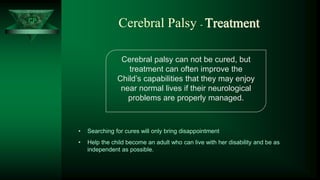
Cerebral palsy can not be cured, but
treatment can often improve the
Child’s capabilities that they may enjoy
near normal lives if their neurological
problems are properly managed.
• Searching for cures will only bring disappointment
• Help the child become an adult who can live with her disability and be as
independent as possible.
CP
Early Intervention
“A multidisciplinary services provided to children from
birth to 5 years of age to…
– promote child health and well-being,
– enhance emerging competencies,
– minimized developmental delays,
– remediate existing or emerging disabilities,
– prevent functional deterioration and
– promote adaptive parenting and overall family function”
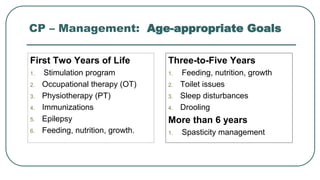
CP – Management: Age-appropriate Goals
First Two Years of Life
1. Stimulation program
2. Occupational therapy (OT)
3. Physiotherapy (PT)
4. Immunizations
5. Epilepsy
6. Feeding, nutrition, growth.
Three-to-Five Years
1. Feeding, nutrition, growth
2. Toilet issues
3. Sleep disturbances
4. Drooling
More than 6 years
1. Spasticity management
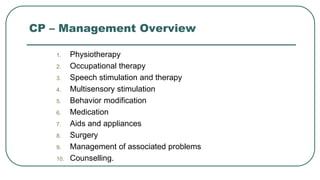
CP – Management Overview
1. Physiotherapy
2. Occupational therapy
3. Speech stimulation and therapy
4. Multisensory stimulation
5. Behavior modification
6. Medication
7. Aids and appliances
8. Surgery
9. Management of associated problems
10. Counselling.
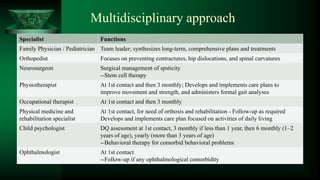
CP Multidisciplinary approach
Specialist Functions
Family Physician / Pediatrician Team leader; synthesizes long-term, comprehensive plans and treatments
Orthopedist Focuses on preventing contractures, hip dislocations, and spinal curvatures
Neurosurgeon Surgical management of spsticity
--Stem cell therapy
Physiotherapist At 1st contact and then 3 monthly; Develops and implements care plans to
improve movement and strength, and administers formal gait analyses
Occupational therapist At 1st contact and then 3 monthly
Physical medicine and
rehabilitation specialist
At 1st contact, for need of orthosis and rehabilitation - Follow-up as required
Develops and implements care plan focused on activities of daily living
Child psychologist DQ assessment at 1st contact, 3 monthly if less than 1 year, then 6 monthly (1–2
years of age), yearly (more than 3 years of age)
--Behavioral therapy for comorbid behavioral problems
Ophthalmologist At 1st contact
--Follow-up if any ophthalmological comorbidity
CP Multidisciplinary approach
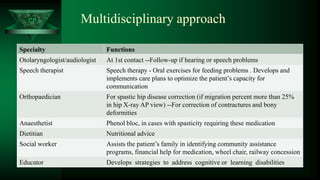
Specialty Functions
Otolaryngologist/audiologist At 1st contact --Follow-up if hearing or speech problems
Speech therapist Speech therapy - Oral exercises for feeding problems . Develops and
implements care plans to optimize the patient’s capacity for
communication
Orthopaedician For spastic hip disease correction (if migration percent more than 25%
in hip X-ray AP view) --For correction of contractures and bony
deformities
Anaesthetist Phenol bloc, in cases with spasticity requiring these medication
Dietitian Nutritional advice
Social worker Assists the patient’s family in identifying community assistance
programs, financial help for medication, wheel chair, railway concession
Educator Develops strategies to address cognitive or learning disabilities
CP
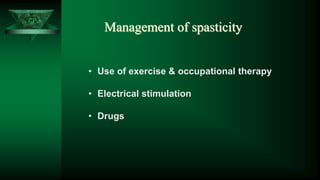
Management of spasticity
• Use of exercise & occupational therapy
• Electrical stimulation
• Drugs
CP
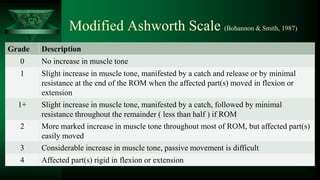
Modified Ashworth Scale (Bohannon & Smith, 1987)
Grade Description
0 No increase in muscle tone
1 Slight increase in muscle tone, manifested by a catch and release or by minimal
resistance at the end of the ROM when the affected part(s) moved in flexion or
extension
1+ Slight increase in muscle tone, manifested by a catch, followed by minimal
resistance throughout the remainder ( less than half ) if ROM
2 More marked increase in muscle tone throughout most of ROM, but affected part(s)
easily moved
3 Considerable increase in muscle tone, passive movement is difficult
4 Affected part(s) rigid in flexion or extension
CP
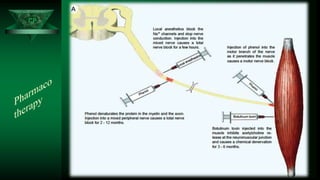
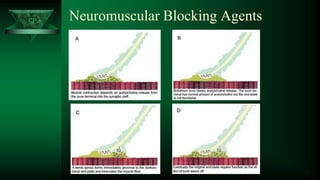
CP Neuromuscular Blocking Agents
CP
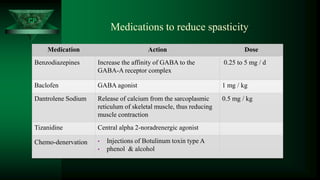
Medications to reduce spasticity
Medication Action Dose
Benzodiazepines Increase the affinity of GABA to the
GABA-A receptor complex
0.25 to 5 mg / d
Baclofen GABA agonist 1 mg / kg
Dantrolene Sodium Release of calcium from the sarcoplasmic
reticulum of skeletal muscle, thus reducing
muscle contraction
0.5 mg / kg
Tizanidine Central alpha 2-noradrenergic agonist
Chemo-denervation • Injections of Botulinum toxin type A
• phenol & alcohol
CP Botulinum toxin
• Distinct neurotoxins: A, B, C, D, E, F, and G
• BTX-A has FDA approval for
• strabismus, blepharospasm and hemifacial spasm
• Treatment of choice for oromandibular dystonia, cervical
dystonia, and spasmodic dysphonia,
• Clinical effects are seen within 1 week of injection.
• Benefits last 3-6 months
• Dose: 1.0 U/kg IM
• Eg: Anabotulinum, Onabotulinum, Incabotulinum A
Botax, Dysport, Xeomin
CP
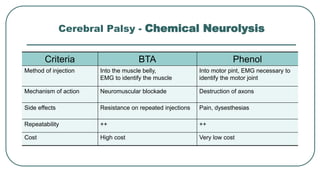
Cerebral Palsy - Chemical Neurolysis
Criteria BTA Phenol
Method of injection Into the muscle belly,
EMG to identify the muscle
Into motor pint, EMG necessary to
identify the motor joint
Mechanism of action Neuromuscular blockade Destruction of axons
Side effects Resistance on repeated injections Pain, dysesthesias
Repeatability ++ ++
Cost High cost Very low cost
CP
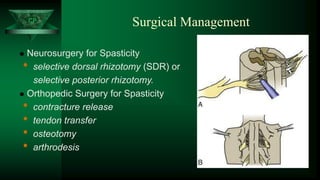
Surgical Management
 Neurosurgery for Spasticity
• selective dorsal rhizotomy (SDR) or
selective posterior rhizotomy.
 Orthopedic Surgery for Spasticity
• contracture release
• tendon transfer
• osteotomy
• arthrodesis
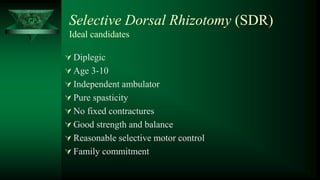
CP Selective Dorsal Rhizotomy (SDR)
Ideal candidates
 Diplegic
 Age 3-10
 Independent ambulator
 Pure spasticity
 No fixed contractures
 Good strength and balance
 Reasonable selective motor control
 Family commitment
CP
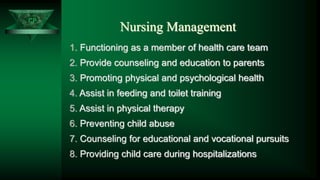
Nursing Management
1. Functioning as a member of health care team
2. Provide counseling and education to parents
3. Promoting physical and psychological health
4. Assist in feeding and toilet training
5. Assist in physical therapy
6. Preventing child abuse
7. Counseling for educational and vocational pursuits
8. Providing child care during hospitalizations
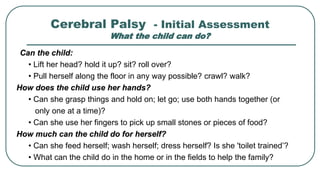
Cerebral Palsy - Initial Assessment
What the child can do?
Can the child:
• Lift her head? hold it up? sit? roll over?
• Pull herself along the floor in any way possible? crawl? walk?
How does the child use her hands?
• Can she grasp things and hold on; let go; use both hands together (or
only one at a time)?
• Can she use her fingers to pick up small stones or pieces of food?
How much can the child do for herself?
• Can she feed herself; wash herself; dress herself? Is she 'toilet trained’?
• What can the child do in the home or in the fields to help the family?
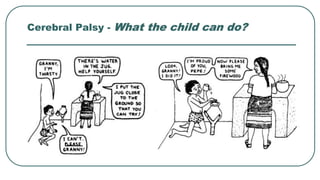
Cerebral Palsy - What the child can do?
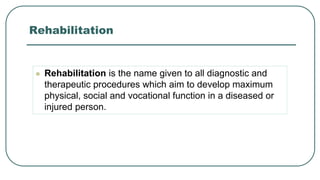
Rehabilitation
 Rehabilitation is the name given to all diagnostic and
therapeutic procedures which aim to develop maximum
physical, social and vocational function in a diseased or
injured person.
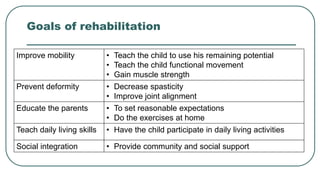
Goals of rehabilitation
Improve mobility • Teach the child to use his remaining potential
• Teach the child functional movement
• Gain muscle strength
Prevent deformity • Decrease spasticity
• Improve joint alignment
Educate the parents • To set reasonable expectations
• Do the exercises at home
Teach daily living skills • Have the child participate in daily living activities
Social integration • Provide community and social support
Components of rehabilitation
 Physiotherapy
 Occupational therapy
 Bracing
 Assistive devices
 Adaptive technology
 Sports and recreation
 Environment modification
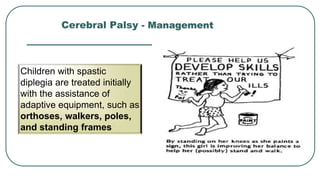
Cerebral Palsy - Management
Children with spastic
diplegia are treated initially
with the assistance of
adaptive equipment, such as
orthoses, walkers, poles,
and standing frames
Planning rehabilitation
 Example: Independent standing
1- State the necessary time period to achieve this goal i.e. 12 weeks
2- Plan the methods to achieve this goal i.e. Stander, exercises to
improve trunk balance
3- Evaluate the end state.
4- Revise the treatment program or the goals if not successful.
METHODS OF REHABILITATION
1. Neurodevelopmental technique (Baboth)
2. Kabot and Knott method
3. Philips and Denver method
4. Fay’s method
5. Pohl’s method
6. Voyta method.
Neurodevelopmental Technique (NDT-Baboth)
It is most popular. Its aim is to first normalize the muscle tone by:
• Inhibiting the pathological tonic reflex activity by use of reflex
inhibiting posture and patterns of movement. : Dynamic reflex
inhibition postures (RIP’s)
• Facilitation of higher centers to control the tone and activation
of postural reactions (righting and equilibrium reaction).
• NDT methods are for early treatment of common manifestation
of cerebral palsy
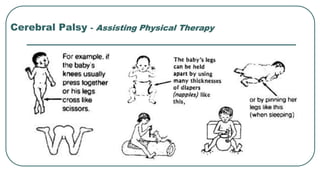
Cerebral Palsy - Assisting Physical Therapy
Kabot and Knott Method
 By means of stimulation of the proprioceptive system and
by using reversal of antagonists it is possible to stimulate
the function of motor cortex.
 For infant with Hypotonia it is necessary to increase
tone and to regulated reciprocal interaction by
proprioceptive and tactile stimulation such as
pressure, weight-bearing and resistance.
Philips and Denvers Method
 Used as the child grows older which includes facilitation of
movement through exercise so as to perform self-care activities
and ambulation.
Fay’s Method
 This is on phylogenic plan, in which the patient goes
through the stage of amphibian, reptilian, quadruped,
biped stage. It utilizes pathological reflexes such as the
tonic neck reflex and residual pattern of basic movements
which are released with brain damage.
Pohl’s Method
 Training should be started with control over a single
joint and then progress to include more joints until a
pattern of entire limb movement can be performed.
Voyta Method
 It makes use of primitive reflexes to encourage
movements. There are certain trigger zones on limbs
which when stimulated cause the child to move in a reflex
pattern which he recalls.
 Massive facilitation system will facilitate normal movement
is very young or athetoid child.
Rood’s Method
 Stroking certain areas on skin thought to be dermatomic
representation of muscles could result in stimulation of
muscle.
 Stimulation can be done in form of brushing, icing,
pressing, etc.
 Individualized management plan—Multimodal treatment
optimized with a multi-disciplinary team.
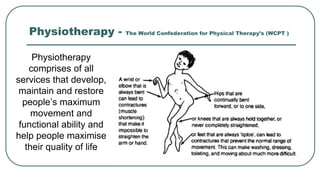
Physiotherapy - The World Confederation for Physical Therapy’s (WCPT )
Physiotherapy
comprises of all
services that develop,
maintain and restore
people’s maximum
movement and
functional ability and
help people maximise
their quality of life
Principles of Physiotherapy
 Encourage movement in as normal a way as possible.
 Use both sides of body.
 Follow the developmental stages.
 Encourage the child to learn by doing activities related to
daily life.
 Position the child straight in lying, sitting kneeling and
standing.
 Prevent deformities.
Physical Therapy for Upper Limb Dysfunction in
Children with Congenital Hemiplegia - models
1. Neurodevelopmental therapy (NDT).
2. UL BoNT-A injections combined with
training.
3. Constraint-induced movement therapy
(CIMT).
4. Hand-arm bimanual intensive training
(HABIT).
 Adeli Suit programs and
 Conductive Education
Target deficits in
body surface and
function
Focus on improving
activity limitations
}
}
Constraint-induced movement therapy
(CIMT)
1. Constraint of the non-affected limb and
2. Massed practice of therapeutic tasks with the affected
limb.
• High-intensity intervention (a total 60 to 120 hours)
• Used with children with hemiplegic cerebral palsy.
• Aims to increase spontaneous use of the affected upper limb and
thereby limit the effects of developmental disregard
Hand-arm bimanual intensive therapy
(HABIT)
 Structured tasks requiring bimanual function are
practiced in the context of play and functional activities.
 Helps inhibit spastic pattern, extensor thrust can be
given with the help of Proper holding position
• Bucket seat
• Feeding chair
• Holding is by maintaining head in midline,
• shoulder in forward semi flexed position,
• elbow extended, legs abducted at hip,
• flexed at hip and knee.
Cerebral Palsy - Posture during feeding
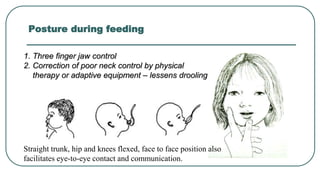
Posture during feeding
1. Three finger jaw control
2. Correction of poor neck control by physical
therapy or adaptive equipment – lessens drooling
Straight trunk, hip and knees flexed, face to face position also
facilitates eye-to-eye contact and communication.
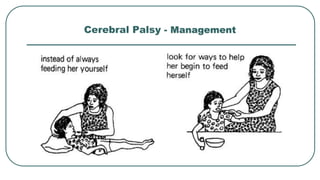
Cerebral Palsy - Management
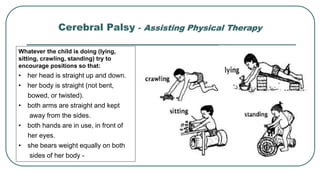
Cerebral Palsy - Assisting Physical Therapy
Whatever the child is doing (lying,
sitting, crawling, standing) try to
encourage positions so that:
• her head is straight up and down.
• her body is straight (not bent,
bowed, or twisted).
• both arms are straight and kept
away from the sides.
• both hands are in use, in front of
her eyes.
• she bears weight equally on both
sides of her body -
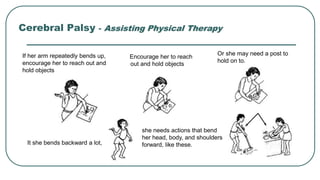
If her arm repeatedly bends up,
encourage her to reach out and
hold objects
Or she may need a post to
hold on to.
Encourage her to reach
out and hold objects
It she bends backward a lot,
she needs actions that bend
her head, body, and shoulders
forward, like these.
Cerebral Palsy - Assisting Physical Therapy
Speech therapy:
Helps overcome communication problems.
 Appropriate positioning of head and jaw.
 Auditory stimulation and work for
improvement of muscle control required for
articulation
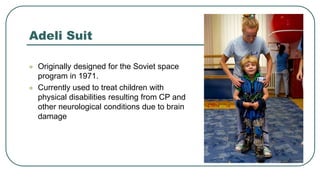
Adeli Suit
 Originally designed for the Soviet space
program in 1971.
 Currently used to treat children with
physical disabilities resulting from CP and
other neurological conditions due to brain
damage
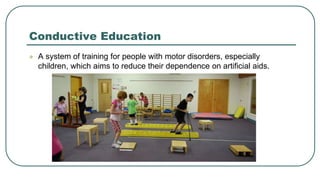
Conductive Education
 A system of training for people with motor disorders, especially
children, which aims to reduce their dependence on artificial aids.
Occupational Therapy
 OT aims to improve hand and upper extremity function in the child
through play and purposeful activity.
 Aims at treating problems related to activities of daily living (ADL):
• Fine motor development
• Cognition
• Perceptual maturation
• Functional skills needed for play and self-care.
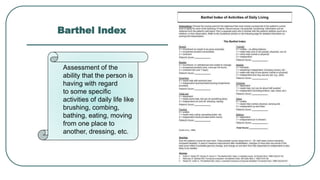
Barthel Index
Assessment of the
ability that the person is
having with regard
to some specific
activities of daily life like
brushing, combing,
bathing, eating, moving
from one place to
another, dressing, etc.
CP
CP - Complications
Condition Complications Care
Abnormal neurologic
control
Lack selective control of muscle activity and
anticipatory regulation
Caregivers and patients should protect the joints
and related soft tissues during movement,
including avoidance of head injury.
Abnormal sensation
and perception
In some patients - impaired sensations to touch and
pain with or without astereognosis.
Mittens may be needed during teething to
prevent damage to fingers and hands.
Gastrointestinal
problems (e.g.,
vomiting,
constipation, or
bowel obstruction)
by delayed gastric emptying, abnormal autonomic
control of gastrointestinal mobility, immobilization,
inadequate oral intake, and prolonged colonic transit
Use stool softeners with narcotic pain
medications.
Perform bowel hygiene.
Increase fluids and fiber with or without
laxatives.
Hearing and vision
abnormalities
Strabismus or hemianopia, hearing problems. Screen early and periodically.
Impaired oral-motor
functions
Hypoxemia, temporomandibular joint contractures,
vomiting, and aspiration pneumonia associated with
gastroesophageal reflux, poor nutrition, failure to
thrive, drooling, and communication difficulties
use special diets, positioning, new feeding
techniques, gastrostomy, or nasogastric tube
feeding.
Speech therapy and the use of computer voice
synthesizers can help impaired communication
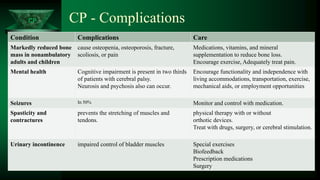
CP CP - Complications
Condition Complications Care
Markedly reduced bone
mass in nonambulatory
adults and children
cause osteopenia, osteoporosis, fracture,
scoliosis, or pain
Medications, vitamins, and mineral
supplementation to reduce bone loss.
Encourage exercise, Adequately treat pain.
Mental health Cognitive impairment is present in two thirds
of patients with cerebral palsy.
Neurosis and psychosis also can occur.
Encourage functionality and independence with
living accommodations, transportation, exercise,
mechanical aids, or employment opportunities
Seizures In 50% Monitor and control with medication.
Spasticity and
contractures
prevents the stretching of muscles and
tendons.
physical therapy with or without
orthotic devices.
Treat with drugs, surgery, or cerebral stimulation.
Urinary incontinence impaired control of bladder muscles Special exercises
Biofeedback
Prescription medications
Surgery
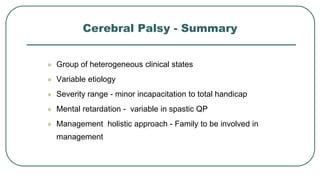
Cerebral Palsy - Summary
 Group of heterogeneous clinical states
 Variable etiology
 Severity range - minor incapacitation to total handicap
 Mental retardation - variable in spastic QP
 Management holistic approach - Family to be involved in
management
- Dr.CSN Vittal

Cerebral Palsy

  • 1.
    Cerebral Palsy - Dr.C.S.N.Vittal Mostcommon chronic motor disability in childhood
  • 2.
    CP History William John Little (1810–1894) Englishsurgeon who is credited with the first medical identification of spastic diplegia, when he observed it in the 1860s amongst children. Little’s Disease
  • 3.
    CP Definition  Collection ofdiverse syndromes characterized by disorders of movement and posture leading to activity limitation; caused by a non-progressive injury to developing foetal or infant brain. It is a static encephalopathy of childhood. CP
  • 4.
    CP Epidemiology  Incidence 3.6per 1000 live births  10% of infants born 1000 g or less at birth  5-10% incidence in preterm  Birth asphyxia as a cause : only in 3 – 21%  Male:Female ratio 1.4:1  major lesions that contribute to CP in preterm infants are intracerebral hemorrhage and periventricular leukomalacia (PVL)
  • 5.
    CP Causative Factors • CMV,Malformations, in utero stroke •Prenatal • HIE, Infection, Hyperbilirubinemia •Perinatal • Head trauma, anoxia, infection, child abuse •Postnatal 01 02 03
  • 6.
    CP Criteria for diagnosis P= Postural / abnormal movements O = Oropharyngeal problems ( e.g. tongue thrusts, swallowing abnormalities) S = Strabismus T = Tone ( hyper or hypotonia) E = Evolutional maldevelopment - primitive reflexes persist or protective/equilibrium reflexes fail to develop e.g. lateral prop, parachute reflex R = Reflexes (Increased DTRs / persistent Babinski’s reflex ) Abnormalities in four of these six categories strongly point to CP
  • 7.
    CP Classification Physiological TopographicEtiological - Spastic (70-80%) - Dyskinetic/Athetoid (10-15%) - Ataxic - Atonic/Hypotonic - Mixed - Monoplegia - Paraplegia - Hemiplegia - Triplegia - Quadriplegica - Diplegia - Double Hemiplegia - Prenatal - e.g. Infection, metabolic, anemic, toxic, genetic - Perinatal - e.g. Anoxic - Postnatal - e.g. Toxins, infections
  • 8.
    CP Classification -Neurological es2015-16 R ANATOMICAL 12
  • 11.
    CP Etiological Classificationof Cerebral Palsy Motor Syndrome Neuropahtology / MRI Major Causes Spastic diplegia (35%) Periventricular leukomalacia Periventricular cysts or scars in white matter, enlargement of ventricles, squared-off posterior ventricles Prematurity Ischemia Infection Endocrine / metabolic (Eg. thyroid) Spastic quatriplegia (20%) Periventricular leukomalacia Multicystic encephalomalacia Cortical malformations Ischemia and infection Endocrine / metabolic, genetic / developmenta Hemiplegia (25%) Stroke: in utero or neonatal Focal infarct or cortical, subcortical damage Cortical malformations Thromboembolic disorders Infection Genetic / developmental Periventricualar hemorrhagic infarction Extrapyramidal (athetoid, dyskinetic) (15%) Asphyxia: symmetric scars in putamen and thalamus Kernicterus: scars in globus pallidus, hippocampus Mitochondrial: scarring of globus pallidus, caudate, putamen, brainstem No lesions: ? dopa-responsive dystonia Asphyxia Kernicterus Mitochondrial Genetic / metabolic
  • 12.
    • Persistent NNRs •Cortical thumb • Extensor postures • Scissoring • UMN signs • Pseudo bulbar palsy Spastic Cerebral Palsy (commonest :50-80%)
  • 13.
    • Preterm • Lowerlimbs > upper limbs • Commando crawl • Difficulty in diaper changing • I.Q normal • UMN signs • Delayed walking • Vison problems • Learning disability Spastic Diplegia 35% Damage to the immature white matter during the vulnerable period of immature oligodendroglia between 20-34 wk of gestation IAPUGTeachingslides2015-16 OGRAPHICAL OR ANATOMICAL /Tetraplegia plegia 12
  • 14.
    Hemiplegic (25%) • Decreasedspontaneous movements on affected side • Early hand preference • Delayed walking • Upper limb > lower limbs • UMN signs (Babinski +ve, h DTRs • Circumduction gait • 25% cognitive problems • Seizures in 1/3 • MCA involved IAPUGTeachingslides2015-16 APHICAL OR ANATOMICAL traplegia gia 12
  • 15.
    Spastic Quadriplegia (20%) Most severe form of CP  Marked motor impairment of all extremities  High association with intellectual disability and seizures  Swallowing difficulties - as a result of supranuclear bulbar palsies, leading to aspiration pneumonia and growth failure  Most common: severe PVL and multicystic cortical encephalomalacia. 2015-16 ANATOMICAL 12
  • 16.
    Dyskinetic Cerebral Palsy(Extra Pyramidal) • Prominent involuntary movements or fluctuating muscle tone • 2 Types: • Mainly Hyperkinetic choreoathetosis • Mainly Dystonic • Tension athetosis • Variable rigidity • Distribution – usually symmetric in all limbs • Associated problems: speech defects, deafness • Normal I.Q
  • 17.
    Athetotic Cerebral Palsy(15-20%) • Damage to basal ganglia – status marmoratus • Kernicterus may be the cause PUGTeachingslides2015-16 d dystonia over several years. basal ganglia us e the cause 22 Most likely to be associated with birth asphyxia.
  • 18.
  • 19.
    Atonic Cerebral Palsy •Hypotonia • DTR brisk • Plantar extensor • Mental retardation severe
  • 20.
    CP Cerebral Palsy- Associated Disabilities 1. Disturbed mental development 2. Seizures (in 1/3, mostly with spastic) 3. Growth retardation 4. Ophthalmologic abnormalities (strabismus, amblyopia, nystagmus, refractive errors – in 75% of cases) 5. Sensory impairment 6. Hearing impairment 7. Speech impairment 8. Gait disturbances 9. Failure to thrive 10. GER 11. Behavioural and emotional problems
  • 21.
    CP Cerebral Palsy -Diagnostic Evaluation 1. Detailed history 2. Thorough neurological examination 3. Routine blood tests 4. Metabolic screening 5. X-Rays 6. EEG 7. CT brain 8. MRI
  • 22.
    Cerebral Palsy –Difficulty in diagnosing clinically in 1st year • Hypotonia is more common than hypertonic and spasticity • Early abundance of primitive reflexes may confuse the clinical picture • An infant has a limited variety of volitional movements for evaluation • Substantial myelination takes months to evolve and may delay the clinical picture of abnormal tone and increased DTRs • Many children who develop CP do not have identifiable risk factors; most cases are not related to labor and delivery events
  • 23.
    Cerebral Palsy –Behavioural problems that arose suspicion & possibility • Excessive irritability, constant crying, sleep difficulties (severe colic in 25%) • Early feeding difficulties in coordinating suck and swallow, frequent spitting up and poor weight gain • “Jittery and jumpy” behaviour esp. - other than when hungry • Early startled behaviour • Stiffness when handled, esp. duding dressing, diapering and hand washing • Paradoxically “precocious development”, such as early rolling (laterally sudden, reflexive roll than a volitional) or stiff legged “standing” with support of an infant with spastic diplegia.
  • 24.
    Cerebral Palsy -Assessment
  • 25.
    Cerebral Palsy Historic clues 1.Toe walking 2. Strong development of LT. or Rt. Handedness before 1 yr. age 3. Obligatory fisting or cortical thumb posture before 3 mo. age
  • 26.
    CP Cerebral Palsy -Differential Diagnosis 1.Nerurodegenerative disorders 2.Hydrocephalus 3.ICSOL 4.Muscular disorders
  • 27.
    CP Diagnosis Features Diagnostictest Arginase deficiency No neonatal onset; progressive spastic diplegia; subsequent dementia Measurement of serum amino acids Show increase in arginine levels Glutaric aciduria type 1 Progressive dystonia; choreoathetosis; progressive movement disorder developing during the first one to two years Serum or urine test for the presence of glutaric acid Juvenile neuronal ceroidlipofuscinosis Onset after five years of age; progressive loss of cognitive abilities; progressive extrapyramidal symptoms Characteristic inclusion bodies in skin fibroblasts or blood lymphocytes Juvenile variant of metachromatic leukodystrophy Decline in school performance; slowly progressive paraparesi Lysosomal enzyme aryl sulfatase Lesch-Nyhan syndrome choreoathetosis; self-mutilation, mental retardation uric acid or orange crystals in the urine; Assay for the enzyme hypoxanthine-guanine phosphoribosyltransferase Mitochondrial disorders Ataxia; neuropathy; retinitis pigmen Point mutation of mitochondrial DNA at the 8993 location Niemann-Pick disease type C late childhood or adolescent onset; loss of vertical eye movements; choreoathetosis; dystonia; tremors impaired cholesterol esterification on skin fibroblasts; the gene is on chromosome 18 Rett syndrome Primarily in girls; autistic features; choreoathetosis; progressive spasticity; characteristic loss of purposeful hand function
  • 28.
    CP Cerebral Palsy -Treatment Cerebral palsy can not be cured, but treatment can often improve the Child’s capabilities that they may enjoy near normal lives if their neurological problems are properly managed. • Searching for cures will only bring disappointment • Help the child become an adult who can live with her disability and be as independent as possible.
  • 29.
    CP Early Intervention “A multidisciplinaryservices provided to children from birth to 5 years of age to… – promote child health and well-being, – enhance emerging competencies, – minimized developmental delays, – remediate existing or emerging disabilities, – prevent functional deterioration and – promote adaptive parenting and overall family function”
  • 30.
    CP – Management:Age-appropriate Goals First Two Years of Life 1. Stimulation program 2. Occupational therapy (OT) 3. Physiotherapy (PT) 4. Immunizations 5. Epilepsy 6. Feeding, nutrition, growth. Three-to-Five Years 1. Feeding, nutrition, growth 2. Toilet issues 3. Sleep disturbances 4. Drooling More than 6 years 1. Spasticity management
  • 31.
    CP – ManagementOverview 1. Physiotherapy 2. Occupational therapy 3. Speech stimulation and therapy 4. Multisensory stimulation 5. Behavior modification 6. Medication 7. Aids and appliances 8. Surgery 9. Management of associated problems 10. Counselling.
  • 32.
    CP Multidisciplinary approach SpecialistFunctions Family Physician / Pediatrician Team leader; synthesizes long-term, comprehensive plans and treatments Orthopedist Focuses on preventing contractures, hip dislocations, and spinal curvatures Neurosurgeon Surgical management of spsticity --Stem cell therapy Physiotherapist At 1st contact and then 3 monthly; Develops and implements care plans to improve movement and strength, and administers formal gait analyses Occupational therapist At 1st contact and then 3 monthly Physical medicine and rehabilitation specialist At 1st contact, for need of orthosis and rehabilitation - Follow-up as required Develops and implements care plan focused on activities of daily living Child psychologist DQ assessment at 1st contact, 3 monthly if less than 1 year, then 6 monthly (1–2 years of age), yearly (more than 3 years of age) --Behavioral therapy for comorbid behavioral problems Ophthalmologist At 1st contact --Follow-up if any ophthalmological comorbidity
  • 33.
    CP Multidisciplinary approach SpecialtyFunctions Otolaryngologist/audiologist At 1st contact --Follow-up if hearing or speech problems Speech therapist Speech therapy - Oral exercises for feeding problems . Develops and implements care plans to optimize the patient’s capacity for communication Orthopaedician For spastic hip disease correction (if migration percent more than 25% in hip X-ray AP view) --For correction of contractures and bony deformities Anaesthetist Phenol bloc, in cases with spasticity requiring these medication Dietitian Nutritional advice Social worker Assists the patient’s family in identifying community assistance programs, financial help for medication, wheel chair, railway concession Educator Develops strategies to address cognitive or learning disabilities
  • 34.
    CP Management of spasticity •Use of exercise & occupational therapy • Electrical stimulation • Drugs
  • 35.
    CP Modified Ashworth Scale(Bohannon & Smith, 1987) Grade Description 0 No increase in muscle tone 1 Slight increase in muscle tone, manifested by a catch and release or by minimal resistance at the end of the ROM when the affected part(s) moved in flexion or extension 1+ Slight increase in muscle tone, manifested by a catch, followed by minimal resistance throughout the remainder ( less than half ) if ROM 2 More marked increase in muscle tone throughout most of ROM, but affected part(s) easily moved 3 Considerable increase in muscle tone, passive movement is difficult 4 Affected part(s) rigid in flexion or extension
  • 36.
  • 37.
  • 38.
    CP Medications to reducespasticity Medication Action Dose Benzodiazepines Increase the affinity of GABA to the GABA-A receptor complex 0.25 to 5 mg / d Baclofen GABA agonist 1 mg / kg Dantrolene Sodium Release of calcium from the sarcoplasmic reticulum of skeletal muscle, thus reducing muscle contraction 0.5 mg / kg Tizanidine Central alpha 2-noradrenergic agonist Chemo-denervation • Injections of Botulinum toxin type A • phenol & alcohol
  • 39.
    CP Botulinum toxin •Distinct neurotoxins: A, B, C, D, E, F, and G • BTX-A has FDA approval for • strabismus, blepharospasm and hemifacial spasm • Treatment of choice for oromandibular dystonia, cervical dystonia, and spasmodic dysphonia, • Clinical effects are seen within 1 week of injection. • Benefits last 3-6 months • Dose: 1.0 U/kg IM • Eg: Anabotulinum, Onabotulinum, Incabotulinum A Botax, Dysport, Xeomin
  • 40.
  • 41.
    Cerebral Palsy -Chemical Neurolysis Criteria BTA Phenol Method of injection Into the muscle belly, EMG to identify the muscle Into motor pint, EMG necessary to identify the motor joint Mechanism of action Neuromuscular blockade Destruction of axons Side effects Resistance on repeated injections Pain, dysesthesias Repeatability ++ ++ Cost High cost Very low cost
  • 42.
    CP Surgical Management  Neurosurgeryfor Spasticity • selective dorsal rhizotomy (SDR) or selective posterior rhizotomy.  Orthopedic Surgery for Spasticity • contracture release • tendon transfer • osteotomy • arthrodesis
  • 43.
    CP Selective DorsalRhizotomy (SDR) Ideal candidates  Diplegic  Age 3-10  Independent ambulator  Pure spasticity  No fixed contractures  Good strength and balance  Reasonable selective motor control  Family commitment
  • 44.
    CP Nursing Management 1. Functioningas a member of health care team 2. Provide counseling and education to parents 3. Promoting physical and psychological health 4. Assist in feeding and toilet training 5. Assist in physical therapy 6. Preventing child abuse 7. Counseling for educational and vocational pursuits 8. Providing child care during hospitalizations
  • 45.
    Cerebral Palsy -Initial Assessment What the child can do? Can the child: • Lift her head? hold it up? sit? roll over? • Pull herself along the floor in any way possible? crawl? walk? How does the child use her hands? • Can she grasp things and hold on; let go; use both hands together (or only one at a time)? • Can she use her fingers to pick up small stones or pieces of food? How much can the child do for herself? • Can she feed herself; wash herself; dress herself? Is she 'toilet trained’? • What can the child do in the home or in the fields to help the family?
  • 46.
    Cerebral Palsy -What the child can do?
  • 47.
    Rehabilitation  Rehabilitation isthe name given to all diagnostic and therapeutic procedures which aim to develop maximum physical, social and vocational function in a diseased or injured person.
  • 48.
    Goals of rehabilitation Improvemobility • Teach the child to use his remaining potential • Teach the child functional movement • Gain muscle strength Prevent deformity • Decrease spasticity • Improve joint alignment Educate the parents • To set reasonable expectations • Do the exercises at home Teach daily living skills • Have the child participate in daily living activities Social integration • Provide community and social support
  • 49.
    Components of rehabilitation Physiotherapy  Occupational therapy  Bracing  Assistive devices  Adaptive technology  Sports and recreation  Environment modification
  • 50.
    Cerebral Palsy -Management Children with spastic diplegia are treated initially with the assistance of adaptive equipment, such as orthoses, walkers, poles, and standing frames
  • 51.
    Planning rehabilitation  Example:Independent standing 1- State the necessary time period to achieve this goal i.e. 12 weeks 2- Plan the methods to achieve this goal i.e. Stander, exercises to improve trunk balance 3- Evaluate the end state. 4- Revise the treatment program or the goals if not successful.
  • 52.
    METHODS OF REHABILITATION 1.Neurodevelopmental technique (Baboth) 2. Kabot and Knott method 3. Philips and Denver method 4. Fay’s method 5. Pohl’s method 6. Voyta method.
  • 53.
    Neurodevelopmental Technique (NDT-Baboth) Itis most popular. Its aim is to first normalize the muscle tone by: • Inhibiting the pathological tonic reflex activity by use of reflex inhibiting posture and patterns of movement. : Dynamic reflex inhibition postures (RIP’s) • Facilitation of higher centers to control the tone and activation of postural reactions (righting and equilibrium reaction). • NDT methods are for early treatment of common manifestation of cerebral palsy
  • 54.
    Cerebral Palsy -Assisting Physical Therapy
  • 55.
    Kabot and KnottMethod  By means of stimulation of the proprioceptive system and by using reversal of antagonists it is possible to stimulate the function of motor cortex.  For infant with Hypotonia it is necessary to increase tone and to regulated reciprocal interaction by proprioceptive and tactile stimulation such as pressure, weight-bearing and resistance.
  • 56.
    Philips and DenversMethod  Used as the child grows older which includes facilitation of movement through exercise so as to perform self-care activities and ambulation.
  • 57.
    Fay’s Method  Thisis on phylogenic plan, in which the patient goes through the stage of amphibian, reptilian, quadruped, biped stage. It utilizes pathological reflexes such as the tonic neck reflex and residual pattern of basic movements which are released with brain damage.
  • 58.
    Pohl’s Method  Trainingshould be started with control over a single joint and then progress to include more joints until a pattern of entire limb movement can be performed.
  • 59.
    Voyta Method  Itmakes use of primitive reflexes to encourage movements. There are certain trigger zones on limbs which when stimulated cause the child to move in a reflex pattern which he recalls.  Massive facilitation system will facilitate normal movement is very young or athetoid child.
  • 60.
    Rood’s Method  Strokingcertain areas on skin thought to be dermatomic representation of muscles could result in stimulation of muscle.  Stimulation can be done in form of brushing, icing, pressing, etc.  Individualized management plan—Multimodal treatment optimized with a multi-disciplinary team.
  • 61.
    Physiotherapy - TheWorld Confederation for Physical Therapy’s (WCPT ) Physiotherapy comprises of all services that develop, maintain and restore people’s maximum movement and functional ability and help people maximise their quality of life
  • 62.
    Principles of Physiotherapy Encourage movement in as normal a way as possible.  Use both sides of body.  Follow the developmental stages.  Encourage the child to learn by doing activities related to daily life.  Position the child straight in lying, sitting kneeling and standing.  Prevent deformities.
  • 63.
    Physical Therapy forUpper Limb Dysfunction in Children with Congenital Hemiplegia - models 1. Neurodevelopmental therapy (NDT). 2. UL BoNT-A injections combined with training. 3. Constraint-induced movement therapy (CIMT). 4. Hand-arm bimanual intensive training (HABIT).  Adeli Suit programs and  Conductive Education Target deficits in body surface and function Focus on improving activity limitations } }
  • 64.
    Constraint-induced movement therapy (CIMT) 1.Constraint of the non-affected limb and 2. Massed practice of therapeutic tasks with the affected limb. • High-intensity intervention (a total 60 to 120 hours) • Used with children with hemiplegic cerebral palsy. • Aims to increase spontaneous use of the affected upper limb and thereby limit the effects of developmental disregard
  • 65.
    Hand-arm bimanual intensivetherapy (HABIT)  Structured tasks requiring bimanual function are practiced in the context of play and functional activities.
  • 66.
     Helps inhibitspastic pattern, extensor thrust can be given with the help of Proper holding position • Bucket seat • Feeding chair • Holding is by maintaining head in midline, • shoulder in forward semi flexed position, • elbow extended, legs abducted at hip, • flexed at hip and knee. Cerebral Palsy - Posture during feeding
  • 67.
    Posture during feeding 1.Three finger jaw control 2. Correction of poor neck control by physical therapy or adaptive equipment – lessens drooling Straight trunk, hip and knees flexed, face to face position also facilitates eye-to-eye contact and communication.
  • 68.
    Cerebral Palsy -Management
  • 69.
    Cerebral Palsy -Assisting Physical Therapy Whatever the child is doing (lying, sitting, crawling, standing) try to encourage positions so that: • her head is straight up and down. • her body is straight (not bent, bowed, or twisted). • both arms are straight and kept away from the sides. • both hands are in use, in front of her eyes. • she bears weight equally on both sides of her body -
  • 70.
    If her armrepeatedly bends up, encourage her to reach out and hold objects Or she may need a post to hold on to. Encourage her to reach out and hold objects It she bends backward a lot, she needs actions that bend her head, body, and shoulders forward, like these. Cerebral Palsy - Assisting Physical Therapy
  • 71.
    Speech therapy: Helps overcomecommunication problems.  Appropriate positioning of head and jaw.  Auditory stimulation and work for improvement of muscle control required for articulation
  • 72.
    Adeli Suit  Originallydesigned for the Soviet space program in 1971.  Currently used to treat children with physical disabilities resulting from CP and other neurological conditions due to brain damage
  • 73.
    Conductive Education  Asystem of training for people with motor disorders, especially children, which aims to reduce their dependence on artificial aids.
  • 74.
    Occupational Therapy  OTaims to improve hand and upper extremity function in the child through play and purposeful activity.  Aims at treating problems related to activities of daily living (ADL): • Fine motor development • Cognition • Perceptual maturation • Functional skills needed for play and self-care.
  • 75.
    Barthel Index Assessment ofthe ability that the person is having with regard to some specific activities of daily life like brushing, combing, bathing, eating, moving from one place to another, dressing, etc.
  • 76.
    CP CP - Complications ConditionComplications Care Abnormal neurologic control Lack selective control of muscle activity and anticipatory regulation Caregivers and patients should protect the joints and related soft tissues during movement, including avoidance of head injury. Abnormal sensation and perception In some patients - impaired sensations to touch and pain with or without astereognosis. Mittens may be needed during teething to prevent damage to fingers and hands. Gastrointestinal problems (e.g., vomiting, constipation, or bowel obstruction) by delayed gastric emptying, abnormal autonomic control of gastrointestinal mobility, immobilization, inadequate oral intake, and prolonged colonic transit Use stool softeners with narcotic pain medications. Perform bowel hygiene. Increase fluids and fiber with or without laxatives. Hearing and vision abnormalities Strabismus or hemianopia, hearing problems. Screen early and periodically. Impaired oral-motor functions Hypoxemia, temporomandibular joint contractures, vomiting, and aspiration pneumonia associated with gastroesophageal reflux, poor nutrition, failure to thrive, drooling, and communication difficulties use special diets, positioning, new feeding techniques, gastrostomy, or nasogastric tube feeding. Speech therapy and the use of computer voice synthesizers can help impaired communication
  • 77.
    CP CP -Complications Condition Complications Care Markedly reduced bone mass in nonambulatory adults and children cause osteopenia, osteoporosis, fracture, scoliosis, or pain Medications, vitamins, and mineral supplementation to reduce bone loss. Encourage exercise, Adequately treat pain. Mental health Cognitive impairment is present in two thirds of patients with cerebral palsy. Neurosis and psychosis also can occur. Encourage functionality and independence with living accommodations, transportation, exercise, mechanical aids, or employment opportunities Seizures In 50% Monitor and control with medication. Spasticity and contractures prevents the stretching of muscles and tendons. physical therapy with or without orthotic devices. Treat with drugs, surgery, or cerebral stimulation. Urinary incontinence impaired control of bladder muscles Special exercises Biofeedback Prescription medications Surgery
  • 78.
    Cerebral Palsy -Summary  Group of heterogeneous clinical states  Variable etiology  Severity range - minor incapacitation to total handicap  Mental retardation - variable in spastic QP  Management holistic approach - Family to be involved in management
  • 79.