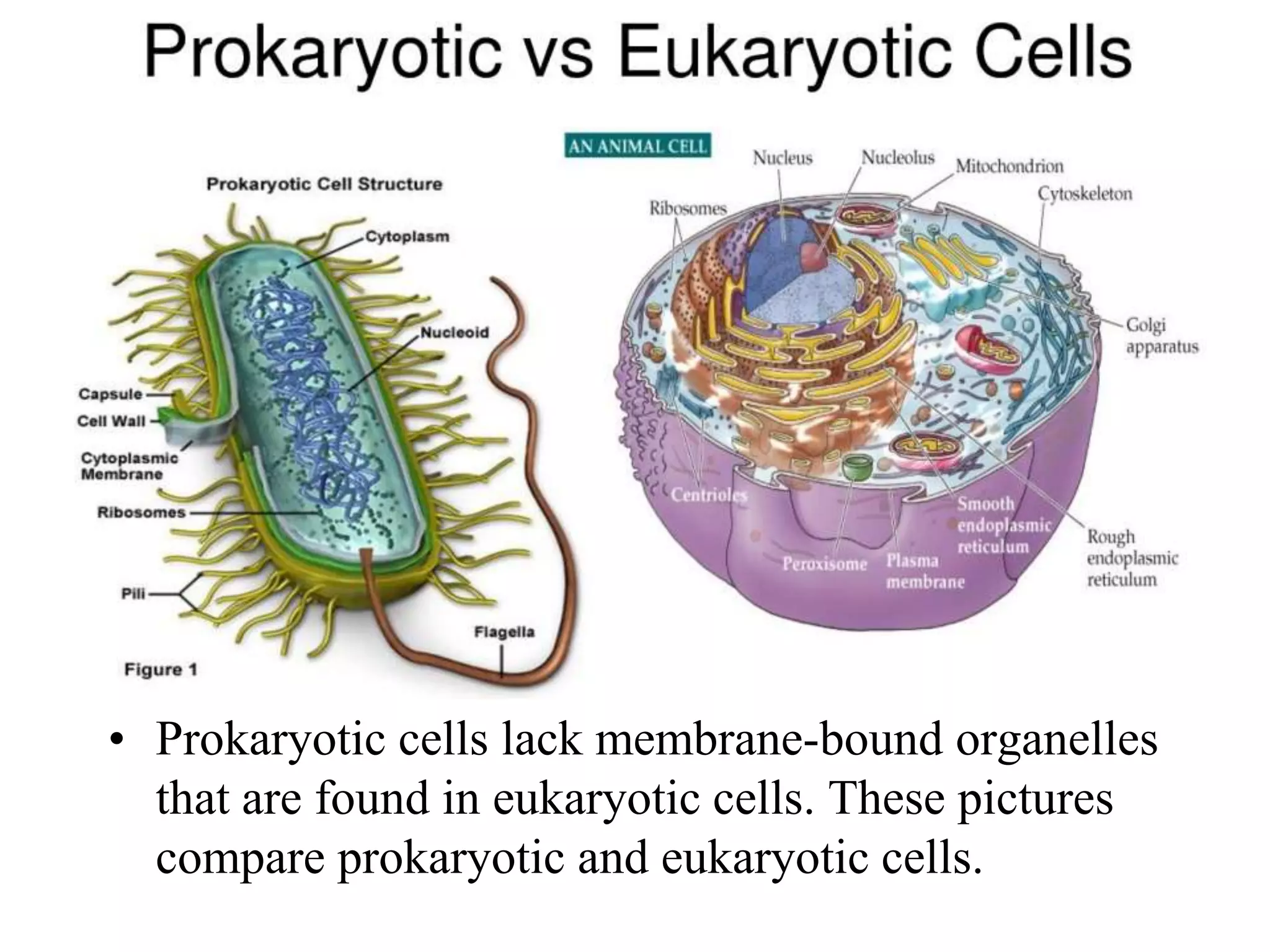
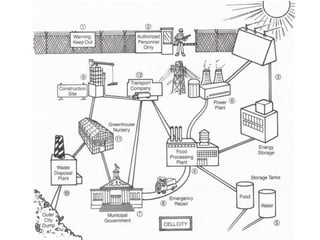
• Prokaryotic cells lack membrane-bound organelles 
that are found in eukaryotic cells. These pictures 
compare prokaryotic and eukaryotic cells.
The Nucleus and Cell Control 
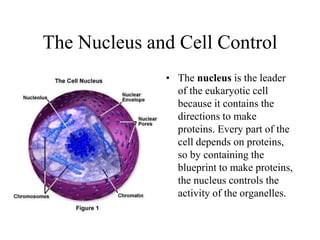
• The nucleus is the leader 
of the eukaryotic cell 
because it contains the 
directions to make 
proteins. Every part of the 
cell depends on proteins, 
so by containing the 
blueprint to make proteins, 
the nucleus controls the 
activity of the organelles.
The Nucleus and Cell Control 
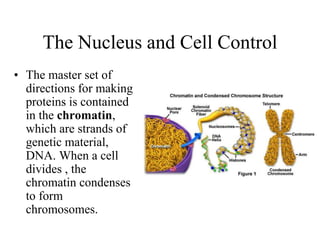
• The master set of 
directions for making 
proteins is contained 
in the chromatin, 
which are strands of 
genetic material, 
DNA. When a cell 
divides , the 
chromatin condenses 
to form 
chromosomes.
The Nucleus and Cell Control 
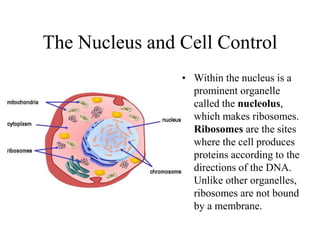
• Within the nucleus is a 
prominent organelle 
called the nucleolus, 
which makes ribosomes. 
Ribosomes are the sites 
where the cell produces 
proteins according to the 
directions of the DNA. 
Unlike other organelles, 
ribosomes are not bound 
by a membrane.
The Nucleus and Cell Control 
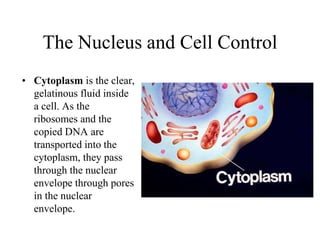
• Cytoplasm is the clear, 
gelatinous fluid inside 
a cell. As the 
ribosomes and the 
copied DNA are 
transported into the 
cytoplasm, they pass 
through the nuclear 
envelope through pores 
in the nuclear 
envelope.
Assembly, Transport, and Storage 
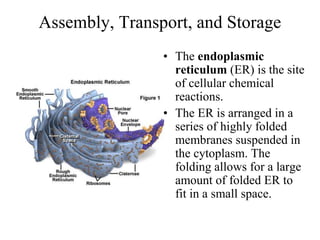
• The endoplasmic 
reticulum (ER) is the site 
of cellular chemical 
reactions. 
• The ER is arranged in a 
series of highly folded 
membranes suspended in 
the cytoplasm. The 
folding allows for a large 
amount of folded ER to 
fit in a small space.
Assembly, Transport, and Storage 
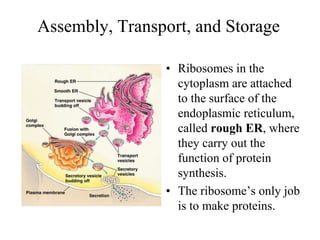
• Ribosomes in the 
cytoplasm are attached 
to the surface of the 
endoplasmic reticulum, 
called rough ER, where 
they carry out the 
function of protein 
synthesis. 
• The ribosome’s only job 
is to make proteins.
Assembly, Transport, and Storage 
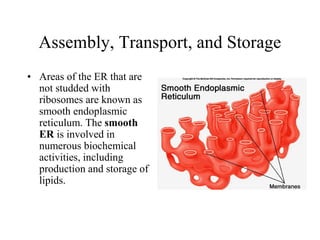
• Areas of the ER that are 
not studded with 
ribosomes are known as 
smooth endoplasmic 
reticulum. The smooth 
ER is involved in 
numerous biochemical 
activities, including 
production and storage of 
lipids.
Assembly, Transport, and Storage 
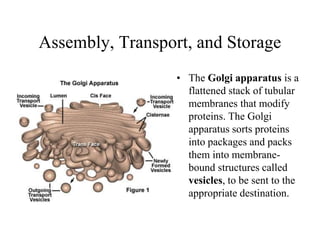
• The Golgi apparatus is a 
flattened stack of tubular 
membranes that modify 
proteins. The Golgi 
apparatus sorts proteins 
into packages and packs 
them into membrane-bound 
structures called 
vesicles, to be sent to the 
appropriate destination.
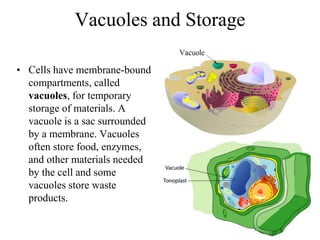
Vacuoles and Storage 
• Cells have membrane-bound 
compartments, called 
vacuoles, for temporary 
storage of materials. A 
vacuole is a sac surrounded 
by a membrane. Vacuoles 
often store food, enzymes, 
and other materials needed 
by the cell and some 
vacuoles store waste 
products.
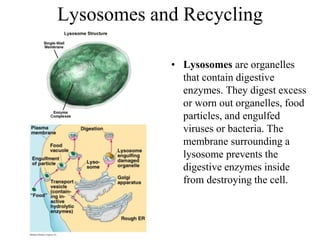
Lysosomes and Recycling 
• Lysosomes are organelles 
that contain digestive 
enzymes. They digest excess 
or worn out organelles, food 
particles, and engulfed 
viruses or bacteria. The 
membrane surrounding a 
lysosome prevents the 
digestive enzymes inside 
from destroying the cell.
Energy Transformers 
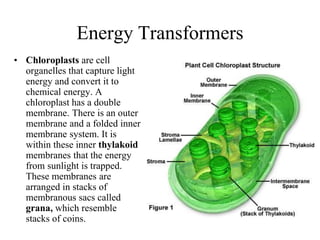
• Chloroplasts are cell 
organelles that capture light 
energy and convert it to 
chemical energy. A 
chloroplast has a double 
membrane. There is an outer 
membrane and a folded inner 
membrane system. It is 
within these inner thylakoid 
membranes that the energy 
from sunlight is trapped. 
These membranes are 
arranged in stacks of 
membranous sacs called 
grana, which resemble 
stacks of coins.
Energy Transformers 
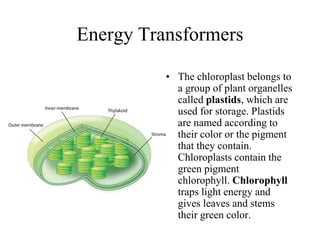
• The chloroplast belongs to 
a group of plant organelles 
called plastids, which are 
used for storage. Plastids 
are named according to 
their color or the pigment 
that they contain. 
Chloroplasts contain the 
green pigment 
chlorophyll. Chlorophyll 
traps light energy and 
gives leaves and stems 
their green color.
Energy Transformers 
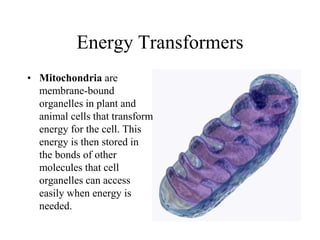
• Mitochondria are 
membrane-bound 
organelles in plant and 
animal cells that transform 
energy for the cell. This 
energy is then stored in 
the bonds of other 
molecules that cell 
organelles can access 
easily when energy is 
needed.
Energy Transformers 
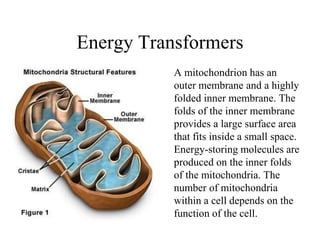
A mitochondrion has an 
outer membrane and a highly 
folded inner membrane. The 
folds of the inner membrane 
provides a large surface area 
that fits inside a small space. 
Energy-storing molecules are 
produced on the inner folds 
of the mitochondria. The 
number of mitochondria 
within a cell depends on the 
function of the cell.
The Cytoskeleton 
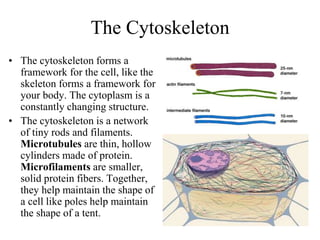
• The cytoskeleton forms a 
framework for the cell, like the 
skeleton forms a framework for 
your body. The cytoplasm is a 
constantly changing structure. 
• The cytoskeleton is a network 
of tiny rods and filaments. 
Microtubules are thin, hollow 
cylinders made of protein. 
Microfilaments are smaller, 
solid protein fibers. Together, 
they help maintain the shape of 
a cell like poles help maintain 
the shape of a tent.
Centrioles 
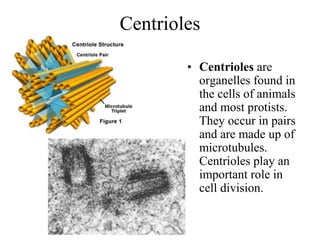
• Centrioles are 
organelles found in 
the cells of animals 
and most protists. 
They occur in pairs 
and are made up of 
microtubules. 
Centrioles play an 
important role in 
cell division.
Locomotion 
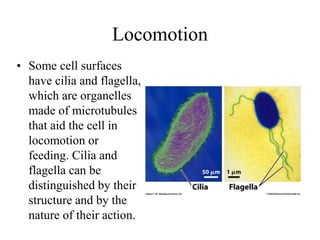
• Some cell surfaces 
have cilia and flagella, 
which are organelles 
made of microtubules 
that aid the cell in 
locomotion or 
feeding. Cilia and 
flagella can be 
distinguished by their 
structure and by the 
nature of their action.
Locomotion 
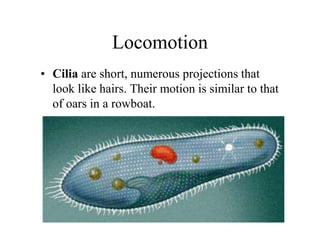
• Cilia are short, numerous projections that 
look like hairs. Their motion is similar to that 
of oars in a rowboat.
Locomotion 
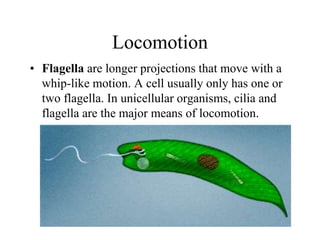
• Flagella are longer projections that move with a 
whip-like motion. A cell usually only has one or 
two flagella. In unicellular organisms, cilia and 
flagella are the major means of locomotion.
Cellular structure and function ii

Cellular structure and function ii

  • 1.
    • Prokaryotic cellslack membrane-bound organelles that are found in eukaryotic cells. These pictures compare prokaryotic and eukaryotic cells.
  • 2.
    The Nucleus andCell Control • The nucleus is the leader of the eukaryotic cell because it contains the directions to make proteins. Every part of the cell depends on proteins, so by containing the blueprint to make proteins, the nucleus controls the activity of the organelles.
  • 3.
    The Nucleus andCell Control • The master set of directions for making proteins is contained in the chromatin, which are strands of genetic material, DNA. When a cell divides , the chromatin condenses to form chromosomes.
  • 4.
    The Nucleus andCell Control • Within the nucleus is a prominent organelle called the nucleolus, which makes ribosomes. Ribosomes are the sites where the cell produces proteins according to the directions of the DNA. Unlike other organelles, ribosomes are not bound by a membrane.
  • 5.
    The Nucleus andCell Control • Cytoplasm is the clear, gelatinous fluid inside a cell. As the ribosomes and the copied DNA are transported into the cytoplasm, they pass through the nuclear envelope through pores in the nuclear envelope.
  • 6.
    Assembly, Transport, andStorage • The endoplasmic reticulum (ER) is the site of cellular chemical reactions. • The ER is arranged in a series of highly folded membranes suspended in the cytoplasm. The folding allows for a large amount of folded ER to fit in a small space.
  • 7.
    Assembly, Transport, andStorage • Ribosomes in the cytoplasm are attached to the surface of the endoplasmic reticulum, called rough ER, where they carry out the function of protein synthesis. • The ribosome’s only job is to make proteins.
  • 8.
    Assembly, Transport, andStorage • Areas of the ER that are not studded with ribosomes are known as smooth endoplasmic reticulum. The smooth ER is involved in numerous biochemical activities, including production and storage of lipids.
  • 9.
    Assembly, Transport, andStorage • The Golgi apparatus is a flattened stack of tubular membranes that modify proteins. The Golgi apparatus sorts proteins into packages and packs them into membrane-bound structures called vesicles, to be sent to the appropriate destination.
  • 10.
    Vacuoles and Storage • Cells have membrane-bound compartments, called vacuoles, for temporary storage of materials. A vacuole is a sac surrounded by a membrane. Vacuoles often store food, enzymes, and other materials needed by the cell and some vacuoles store waste products.
  • 11.
    Lysosomes and Recycling • Lysosomes are organelles that contain digestive enzymes. They digest excess or worn out organelles, food particles, and engulfed viruses or bacteria. The membrane surrounding a lysosome prevents the digestive enzymes inside from destroying the cell.
  • 12.
    Energy Transformers •Chloroplasts are cell organelles that capture light energy and convert it to chemical energy. A chloroplast has a double membrane. There is an outer membrane and a folded inner membrane system. It is within these inner thylakoid membranes that the energy from sunlight is trapped. These membranes are arranged in stacks of membranous sacs called grana, which resemble stacks of coins.
  • 13.
    Energy Transformers •The chloroplast belongs to a group of plant organelles called plastids, which are used for storage. Plastids are named according to their color or the pigment that they contain. Chloroplasts contain the green pigment chlorophyll. Chlorophyll traps light energy and gives leaves and stems their green color.
  • 14.
    Energy Transformers •Mitochondria are membrane-bound organelles in plant and animal cells that transform energy for the cell. This energy is then stored in the bonds of other molecules that cell organelles can access easily when energy is needed.
  • 15.
    Energy Transformers Amitochondrion has an outer membrane and a highly folded inner membrane. The folds of the inner membrane provides a large surface area that fits inside a small space. Energy-storing molecules are produced on the inner folds of the mitochondria. The number of mitochondria within a cell depends on the function of the cell.
  • 16.
    The Cytoskeleton •The cytoskeleton forms a framework for the cell, like the skeleton forms a framework for your body. The cytoplasm is a constantly changing structure. • The cytoskeleton is a network of tiny rods and filaments. Microtubules are thin, hollow cylinders made of protein. Microfilaments are smaller, solid protein fibers. Together, they help maintain the shape of a cell like poles help maintain the shape of a tent.
  • 17.
    Centrioles • Centriolesare organelles found in the cells of animals and most protists. They occur in pairs and are made up of microtubules. Centrioles play an important role in cell division.
  • 18.
    Locomotion • Somecell surfaces have cilia and flagella, which are organelles made of microtubules that aid the cell in locomotion or feeding. Cilia and flagella can be distinguished by their structure and by the nature of their action.
  • 19.
    Locomotion • Ciliaare short, numerous projections that look like hairs. Their motion is similar to that of oars in a rowboat.
  • 20.
    Locomotion • Flagellaare longer projections that move with a whip-like motion. A cell usually only has one or two flagella. In unicellular organisms, cilia and flagella are the major means of locomotion.