PLANT
CELL and
ANIMAL
CELL
The Cell Theory
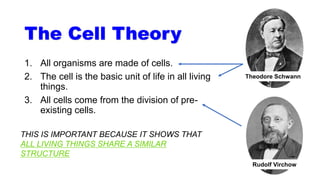
1. All organisms are made of cells.
2. The cell is the basic unit of life in all living
things.
3. All cells come from the division of pre-
existing cells.
THIS IS IMPORTANT BECAUSE IT SHOWS THAT
ALL LIVING THINGS SHARE A SIMILAR
STRUCTURE
Theodore Schwann
Rudolf Virchow
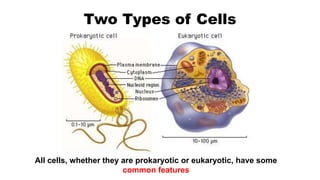
Two Types of Cells
All cells, whether they are prokaryotic or eukaryotic, have some
common features
Number of Cells
copyright cmassengale 4
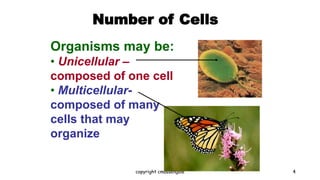
Organisms may be:
• Unicellular –
composed of one cell
• Multicellular-
composed of many
cells that may
organize
copyright cmassengale 5
Cells May be Prokaryotic or Eukaryotic
 Prokaryotes include bacteria & lack
a nucleus or membrane-bound
structures called organelles
Eukaryotes include most other cells
& have a nucleus and membrane-
bound organelles (plants, fungi, &
animals)
Prokaryotes
copyright cmassengale
Nucleoid region
contains the DNA
•Cytoplasmic
membrane & cell
wall
• Contain ribosomes
(no membrane) to
make proteins in
their cytoplasm
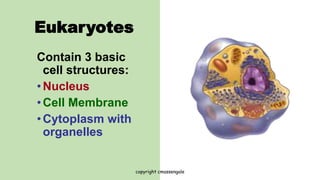
Eukaryotes
Contain 3 basic
cell structures:
•Nucleus
•Cell Membrane
•Cytoplasm with
organelles
copyright cmassengale
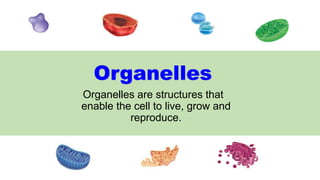
Organelles are structures that
enable the cell to live, grow and
reproduce.
Organelles
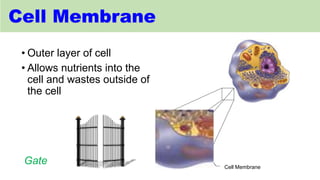
• Outer layer of cell
• Allows nutrients into the
cell and wastes outside of
the cell
Cell Membrane
Gate
Cell Membrane
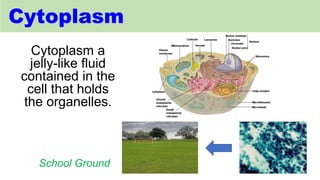
Cytoplasm a
jelly-like fluid
contained in the
cell that holds
the organelles.
Cytoplasm
School Ground
• The control center of
the cell
• Contains the Cell’s DNA
DNA
Nuclear Membrane
Nucleolus
Nucleus
Principal’s Office
• Power center of cell
• Provides the energy
the cell needs to
move, divide, etc.
Outer Membrane
Inner Membrane
Mitochondrion
Electric Company
•Site where proteins
are made
•Cell parts are made
of proteins
Ribosomes
Factory
• Transportation system of
cell
• Rough ER- play a role in
protein-synthesis; has
attached ribosomes
• Smooth ER- play a role in
phospholipid-synthesis; no
attached ribosomes
Ribosomes
Endoplasmic Reticulum
Roads/Pathway
• Packaging house of cell
• Packages, processes, and
ships out the stuff the
cell makes
Golgi Complex
J&T Courier
Digests food particles
and cell parts; breaks
down wastes
Lysosome
Garbage Collector Police Officer
Protects cell by digesting
foreign invaders
• Stores water, food & wastes
Vacuole is largest
organelle in plant
cell
Vacuole
Food and Water
Containers
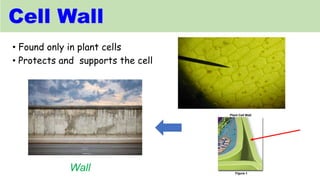
Cell Wall
• Found only in plant cells
• Protects and supports the cell
Cell Wall
Wall
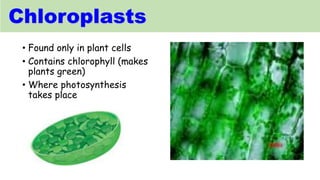
• Found only in plant cells
• Contains chlorophyll (makes
plants green)
• Where photosynthesis
takes place
Chloroplasts
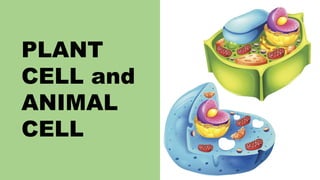
Plant Cell and Animal Cell
:
• Chloroplasts
• Cell Wall
Animal Cell
Found in Both Plant
and Animal Cell
Plant Cell
Centriole Nucleus
Golgi Complex
Mitochondrion
Lysosomes
Endoplasmic
Reticulum
Cell Membrane
Ribosomes
Vacuoles
Cell Wall
Chloroplast
Vacuole
Similarities between plant
cells and animal cells
Both have a cell membrane surrounding the
cytoplasm
Both have a nucleus
Both contain mitochondria
Differences between plant
cells and animal cells
Animal cells Plant cells
Relatively
smaller in size
Irregular shape
No cell wall
Relatively
larger in size
Regular shape
Cell wall is present
Vacuole small or
absent
Glycogen as food
storage
Nucleus at the
center
Large central
vacuole
Starch as food
storage
Nucleus near cell
wall
Differences between plant
cells and animal cells
Animal cells Plant cells

PLANT-CELL-AND-ANIMAL-CELL.ppt

  • 1.
  • 2.
    The Cell Theory 1.All organisms are made of cells. 2. The cell is the basic unit of life in all living things. 3. All cells come from the division of pre- existing cells. THIS IS IMPORTANT BECAUSE IT SHOWS THAT ALL LIVING THINGS SHARE A SIMILAR STRUCTURE Theodore Schwann Rudolf Virchow
  • 3.
    Two Types ofCells All cells, whether they are prokaryotic or eukaryotic, have some common features
  • 4.
    Number of Cells copyrightcmassengale 4 Organisms may be: • Unicellular – composed of one cell • Multicellular- composed of many cells that may organize
  • 5.
    copyright cmassengale 5 CellsMay be Prokaryotic or Eukaryotic  Prokaryotes include bacteria & lack a nucleus or membrane-bound structures called organelles Eukaryotes include most other cells & have a nucleus and membrane- bound organelles (plants, fungi, & animals)
  • 6.
    Prokaryotes copyright cmassengale Nucleoid region containsthe DNA •Cytoplasmic membrane & cell wall • Contain ribosomes (no membrane) to make proteins in their cytoplasm
  • 7.
    Eukaryotes Contain 3 basic cellstructures: •Nucleus •Cell Membrane •Cytoplasm with organelles copyright cmassengale
  • 8.
    Organelles are structuresthat enable the cell to live, grow and reproduce. Organelles
  • 9.
    • Outer layerof cell • Allows nutrients into the cell and wastes outside of the cell Cell Membrane Gate Cell Membrane
  • 10.
    Cytoplasm a jelly-like fluid containedin the cell that holds the organelles. Cytoplasm School Ground
  • 11.
    • The controlcenter of the cell • Contains the Cell’s DNA DNA Nuclear Membrane Nucleolus Nucleus Principal’s Office
  • 12.
    • Power centerof cell • Provides the energy the cell needs to move, divide, etc. Outer Membrane Inner Membrane Mitochondrion Electric Company
  • 13.
    •Site where proteins aremade •Cell parts are made of proteins Ribosomes Factory
  • 14.
    • Transportation systemof cell • Rough ER- play a role in protein-synthesis; has attached ribosomes • Smooth ER- play a role in phospholipid-synthesis; no attached ribosomes Ribosomes Endoplasmic Reticulum Endoplasmic Reticulum Roads/Pathway
  • 15.
    • Packaging houseof cell • Packages, processes, and ships out the stuff the cell makes Golgi Complex J&T Courier
  • 16.
    Digests food particles andcell parts; breaks down wastes Lysosome Garbage Collector Police Officer Protects cell by digesting foreign invaders
  • 17.
    • Stores water,food & wastes Vacuole is largest organelle in plant cell Vacuole Food and Water Containers
  • 18.
    Cell Wall • Foundonly in plant cells • Protects and supports the cell Cell Wall Wall
  • 19.
    • Found onlyin plant cells • Contains chlorophyll (makes plants green) • Where photosynthesis takes place Chloroplasts
  • 21.
    Plant Cell andAnimal Cell : • Chloroplasts • Cell Wall Animal Cell Found in Both Plant and Animal Cell Plant Cell Centriole Nucleus Golgi Complex Mitochondrion Lysosomes Endoplasmic Reticulum Cell Membrane Ribosomes Vacuoles Cell Wall Chloroplast Vacuole
  • 22.
    Similarities between plant cellsand animal cells Both have a cell membrane surrounding the cytoplasm Both have a nucleus Both contain mitochondria
  • 23.
    Differences between plant cellsand animal cells Animal cells Plant cells Relatively smaller in size Irregular shape No cell wall Relatively larger in size Regular shape Cell wall is present
  • 24.
    Vacuole small or absent Glycogenas food storage Nucleus at the center Large central vacuole Starch as food storage Nucleus near cell wall Differences between plant cells and animal cells Animal cells Plant cells