A map to cellular organelles
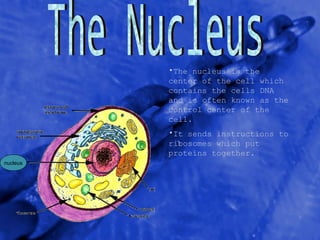
•The nucleus is the
          center of the cell which
          contains the cells DNA
          and is often known as the
          control center of the
          cell.
          •It sends instructions to
          ribosomes which put
          proteins together.
nucleus
Cell Membrane


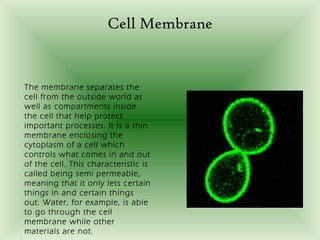
The membrane separates the
cell from the outside world as
well as compartments inside
the cell that help protect
important processes. It is a thin
membrane enclosing the
cytoplasm of a cell which
controls what comes in and out
of the cell. This characteristic is
called being semi permeable,
meaning that it only lets certain
things in and certain things
out. Water, for example, is able
to go through the cell
membrane while other
materials are not.
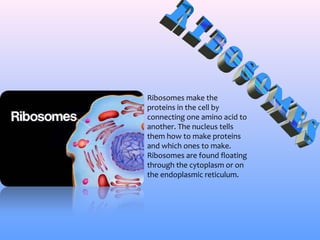
Ribosomes make the
proteins in the cell by
connecting one amino acid to
another. The nucleus tells
them how to make proteins
and which ones to make.
Ribosomes are found floating
through the cytoplasm or on
the endoplasmic reticulum.
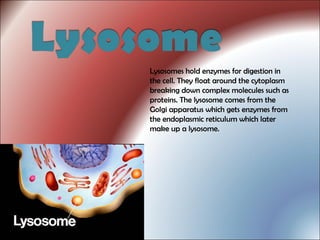
Lysosomes hold enzymes for digestion in
the cell. They float around the cytoplasm
breaking down complex molecules such as
proteins. The lysosome comes from the
Golgi apparatus which gets enzymes from
the endoplasmic reticulum which later
make up a lysosome.
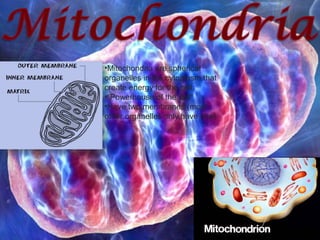
•Mitochondria are spherical
organelles in the cytoplasm that
create energy for the cell.
•“Powerhouse of the cell”
•Have two membranes (most
other organelles only have one)
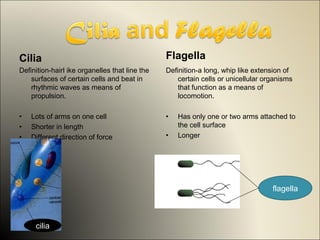
Cilia                                           Flagella
Definition-hairl ike organelles that line the   Definition-a long, whip like extension of
    surfaces of certain cells and beat in           certain cells or unicellular organisms
    rhythmic waves as means of                      that function as a means of
    propulsion.                                     locomotion.

•   Lots of arms on one cell                    •   Has only one or two arms attached to
•   Shorter in length                               the cell surface
•   Different direction of force                •   Longer


                                                                                   flagella


     cilia
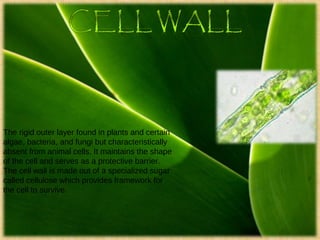
The rigid outer layer found in plants and certain
algae, bacteria, and fungi but characteristically
absent from animal cells. It maintains the shape
of the cell and serves as a protective barrier.
The cell wall is made out of a specialized sugar
called cellulose which provides framework for
the cell to survive.
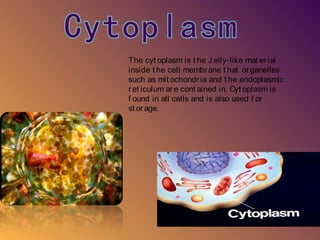
The cyt oplasm is t he J elly-like mat er ial
inside t he cell membr ane t hat or ganelles
such as mit ochondr ia and t he endoplasmic
r et iculum ar e cont ained in. Cyt oplasm is
f ound in all cells and is also used f or
st or age.
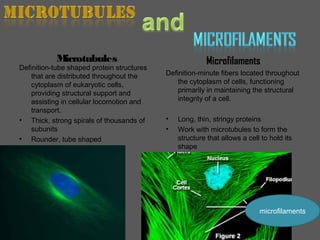
Microtubules                                  Microfilaments
Definition-tube shaped protein structures
    that are distributed throughout the     Definition-minute fibers located throughout
    cytoplasm of eukaryotic cells,              the cytoplasm of cells, functioning
    providing structural support and            primarily in maintaining the structural
    assisting in cellular locomotion and        integrity of a cell.
    transport.
• Thick, strong spirals of thousands of     •   Long, thin, stringy proteins
    subunits                                •   Work with microtubules to form the
• Rounder, tube shaped                          structure that allows a cell to hold its
                                                shape


                                                                            microfilaments
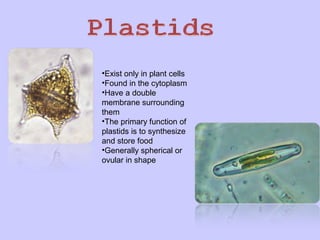
•Exist only in plant cells
•Found in the cytoplasm
•Have a double
membrane surrounding
them
•The primary function of
plastids is to synthesize
and store food
•Generally spherical or
ovular in shape
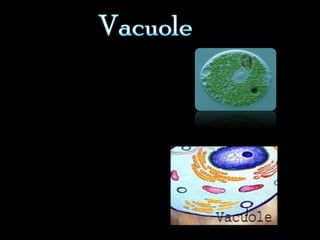
A cavity within the
cytoplasm surrounded
by a single membrane
and containing fluid,
food, or metabolic
waste. In plant cells
there is one very large
vacuole, in animal
cells there are small,
specialized vacuoles.
The vacuole holds on
to anything the cell
might need like more
food or water and the
waste is broken down
and eventually sent
out of the cell.
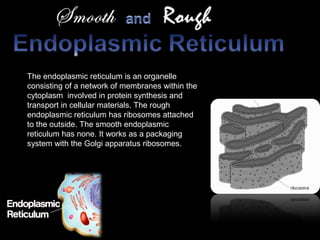
The endoplasmic reticulum is an organelle
consisting of a network of membranes within the
cytoplasm involved in protein synthesis and
transport in cellular materials. The rough
endoplasmic reticulum has ribosomes attached
to the outside. The smooth endoplasmic
reticulum has none. It works as a packaging
system with the Golgi apparatus ribosomes.
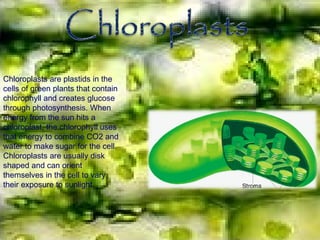
Chloroplasts are plastids in the
cells of green plants that contain
chlorophyll and creates glucose
through photosynthesis. When
energy from the sun hits a
chloroplast, the chlorophyll uses
that energy to combine CO2 and
water to make sugar for the cell.
Chloroplasts are usually disk
shaped and can orient
themselves in the cell to vary
their exposure to sunlight.
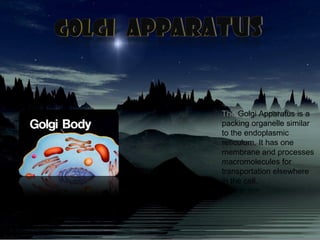
The Golgi Apparatus is a
packing organelle similar
to the endoplasmic
reticulum. It has one
membrane and processes
macromolecules for
transportation elsewhere
in the cell.
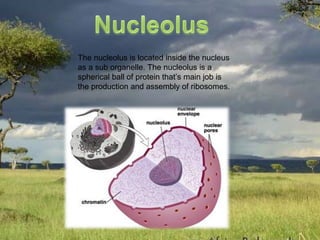
The nucleolus is located inside the nucleus
as a sub organelle. The nucleolus is a
spherical ball of protein that’s main job is
the production and assembly of ribosomes.
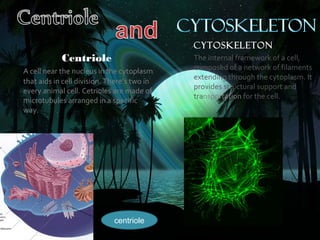
Cytoskeleton
            Centriole                                       The internal framework of a cell,
A cell near the nucleus in the cytoplasm                    composed of a network of filaments
                                                            extending through the cytoplasm. It
that aids in cell division. There’s two in
                                                            provides structural support and
every animal cell. Cetrioles are made of
                                                            transportation for the cell.
microtubules arranged in a specific
way.


                             centriole       Sources: Dictionary.com
                                                                       Biology4kids.com
                                                                       http://sun.menloschool.org/~cweaver/cells/c/plastids/
                                                                       http://www.cellsalive.com/cells/golgi.htm
                                             All visited 10/14/07

The cell-project4541[1]

  • 1.
    A map tocellular organelles
  • 2.
    •The nucleus isthe center of the cell which contains the cells DNA and is often known as the control center of the cell. •It sends instructions to ribosomes which put proteins together. nucleus
  • 3.
    Cell Membrane The membraneseparates the cell from the outside world as well as compartments inside the cell that help protect important processes. It is a thin membrane enclosing the cytoplasm of a cell which controls what comes in and out of the cell. This characteristic is called being semi permeable, meaning that it only lets certain things in and certain things out. Water, for example, is able to go through the cell membrane while other materials are not.
  • 4.
    Ribosomes make the proteinsin the cell by connecting one amino acid to another. The nucleus tells them how to make proteins and which ones to make. Ribosomes are found floating through the cytoplasm or on the endoplasmic reticulum.
  • 5.
    Lysosomes hold enzymesfor digestion in the cell. They float around the cytoplasm breaking down complex molecules such as proteins. The lysosome comes from the Golgi apparatus which gets enzymes from the endoplasmic reticulum which later make up a lysosome.
  • 6.
    •Mitochondria are spherical organellesin the cytoplasm that create energy for the cell. •“Powerhouse of the cell” •Have two membranes (most other organelles only have one)
  • 7.
    Cilia Flagella Definition-hairl ike organelles that line the Definition-a long, whip like extension of surfaces of certain cells and beat in certain cells or unicellular organisms rhythmic waves as means of that function as a means of propulsion. locomotion. • Lots of arms on one cell • Has only one or two arms attached to • Shorter in length the cell surface • Different direction of force • Longer flagella cilia
  • 8.
    The rigid outerlayer found in plants and certain algae, bacteria, and fungi but characteristically absent from animal cells. It maintains the shape of the cell and serves as a protective barrier. The cell wall is made out of a specialized sugar called cellulose which provides framework for the cell to survive.
  • 9.
    The cyt oplasmis t he J elly-like mat er ial inside t he cell membr ane t hat or ganelles such as mit ochondr ia and t he endoplasmic r et iculum ar e cont ained in. Cyt oplasm is f ound in all cells and is also used f or st or age.
  • 10.
    Microtubules Microfilaments Definition-tube shaped protein structures that are distributed throughout the Definition-minute fibers located throughout cytoplasm of eukaryotic cells, the cytoplasm of cells, functioning providing structural support and primarily in maintaining the structural assisting in cellular locomotion and integrity of a cell. transport. • Thick, strong spirals of thousands of • Long, thin, stringy proteins subunits • Work with microtubules to form the • Rounder, tube shaped structure that allows a cell to hold its shape microfilaments
  • 11.
    •Exist only inplant cells •Found in the cytoplasm •Have a double membrane surrounding them •The primary function of plastids is to synthesize and store food •Generally spherical or ovular in shape
  • 12.
    A cavity withinthe cytoplasm surrounded by a single membrane and containing fluid, food, or metabolic waste. In plant cells there is one very large vacuole, in animal cells there are small, specialized vacuoles. The vacuole holds on to anything the cell might need like more food or water and the waste is broken down and eventually sent out of the cell.
  • 13.
    The endoplasmic reticulumis an organelle consisting of a network of membranes within the cytoplasm involved in protein synthesis and transport in cellular materials. The rough endoplasmic reticulum has ribosomes attached to the outside. The smooth endoplasmic reticulum has none. It works as a packaging system with the Golgi apparatus ribosomes.
  • 14.
    Chloroplasts are plastidsin the cells of green plants that contain chlorophyll and creates glucose through photosynthesis. When energy from the sun hits a chloroplast, the chlorophyll uses that energy to combine CO2 and water to make sugar for the cell. Chloroplasts are usually disk shaped and can orient themselves in the cell to vary their exposure to sunlight.
  • 15.
    The Golgi Apparatusis a packing organelle similar to the endoplasmic reticulum. It has one membrane and processes macromolecules for transportation elsewhere in the cell.
  • 16.
    The nucleolus islocated inside the nucleus as a sub organelle. The nucleolus is a spherical ball of protein that’s main job is the production and assembly of ribosomes.
  • 17.
    Cytoskeleton Centriole The internal framework of a cell, A cell near the nucleus in the cytoplasm composed of a network of filaments extending through the cytoplasm. It that aids in cell division. There’s two in provides structural support and every animal cell. Cetrioles are made of transportation for the cell. microtubules arranged in a specific way. centriole Sources: Dictionary.com Biology4kids.com http://sun.menloschool.org/~cweaver/cells/c/plastids/ http://www.cellsalive.com/cells/golgi.htm All visited 10/14/07