Warm-up!
The Nervous System 
Brain Review, Nerve & Spinal Cord Anatomy
The Lobes 
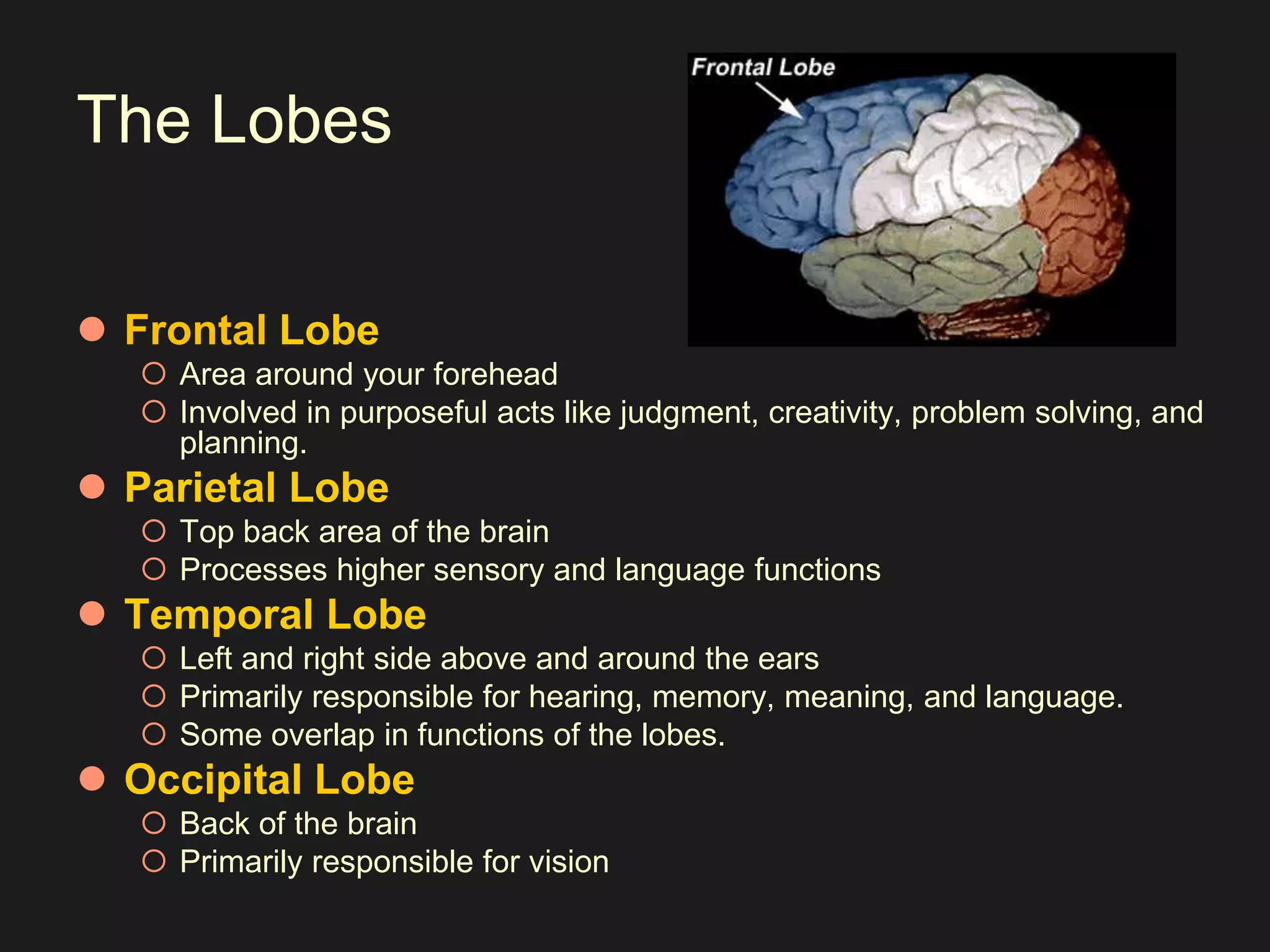
 Frontal Lobe 
 Area around your forehead 
 Involved in purposeful acts like judgment, creativity, problem solving, and 
planning. 
 Parietal Lobe 
 Top back area of the brain 
 Processes higher sensory and language functions 
 Temporal Lobe 
 Left and right side above and around the ears 
 Primarily responsible for hearing, memory, meaning, and language. 
 Some overlap in functions of the lobes. 
 Occipital Lobe 
 Back of the brain 
 Primarily responsible for vision
The Limbic System 
Emotional Center 
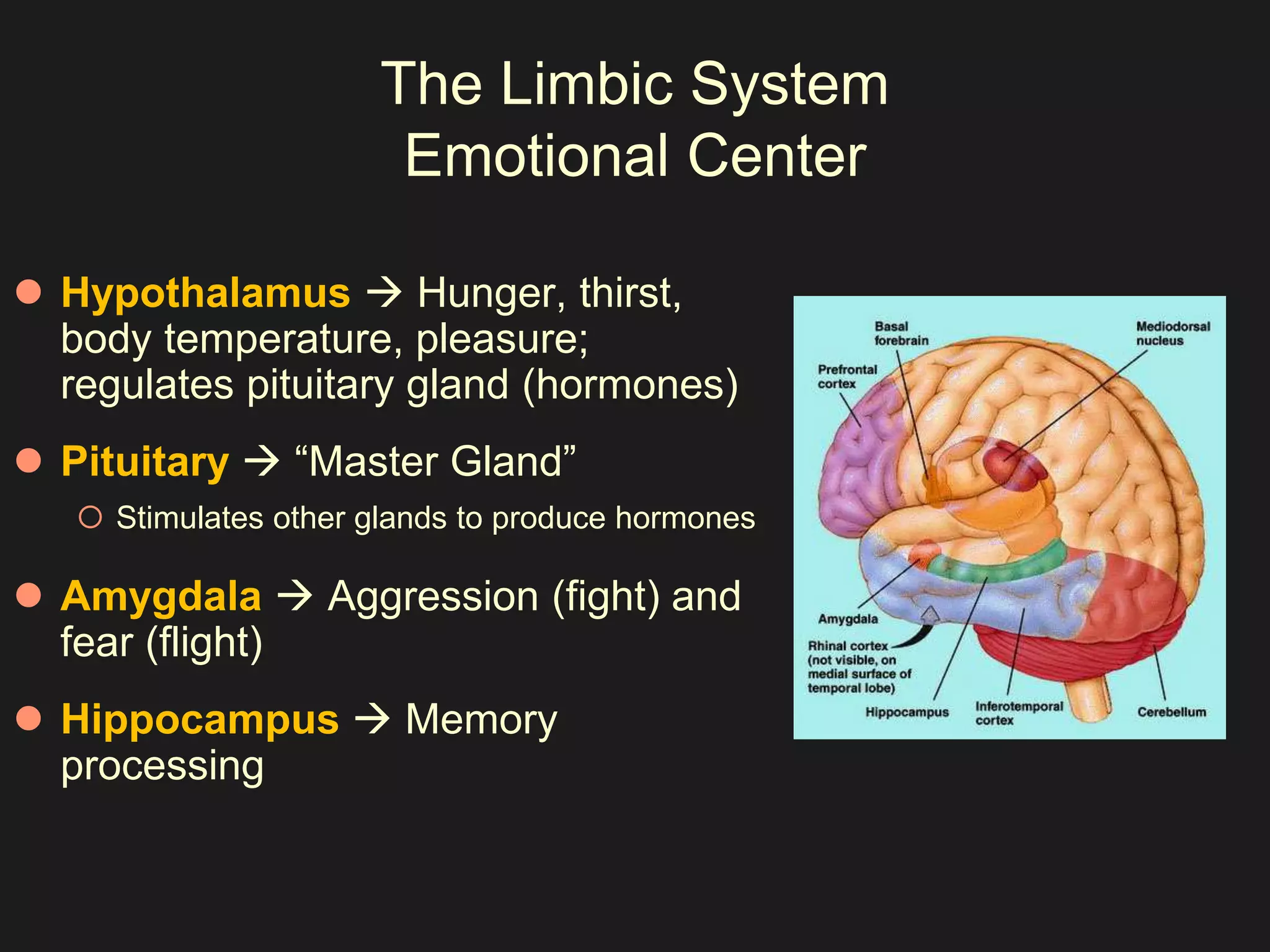
 Hypothalamus  Hunger, thirst, 
body temperature, pleasure; 
regulates pituitary gland (hormones) 
 Pituitary  “Master Gland” 
 Stimulates other glands to produce hormones 
 Amygdala  Aggression (fight) and 
fear (flight) 
 Hippocampus  Memory 
processing
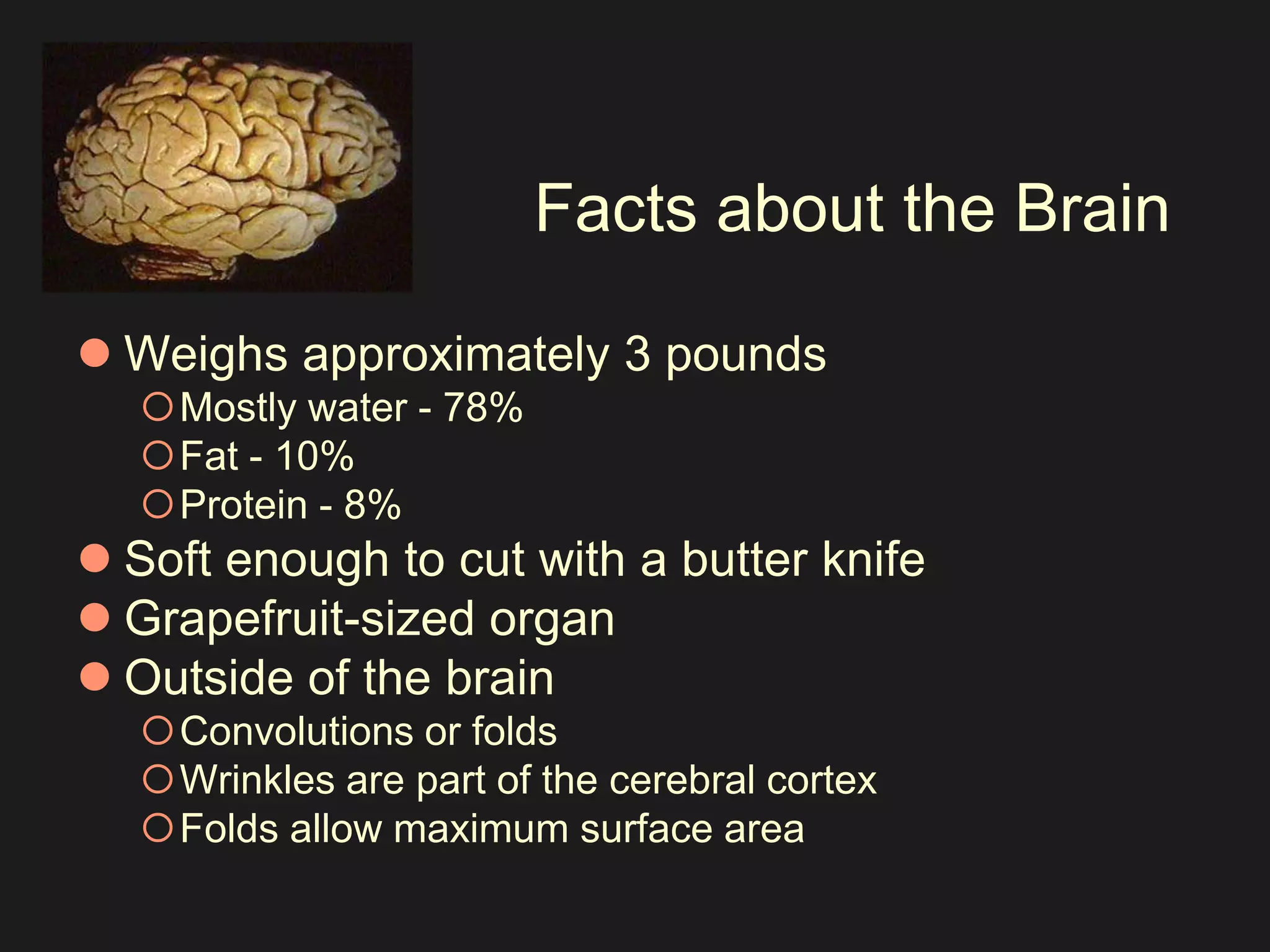
Facts about the Brain 
 Weighs approximately 3 pounds 
Mostly water - 78% 
Fat - 10% 
Protein - 8% 
 Soft enough to cut with a butter knife 
 Grapefruit-sized organ 
 Outside of the brain 
Convolutions or folds 
Wrinkles are part of the cerebral cortex 
Folds allow maximum surface area
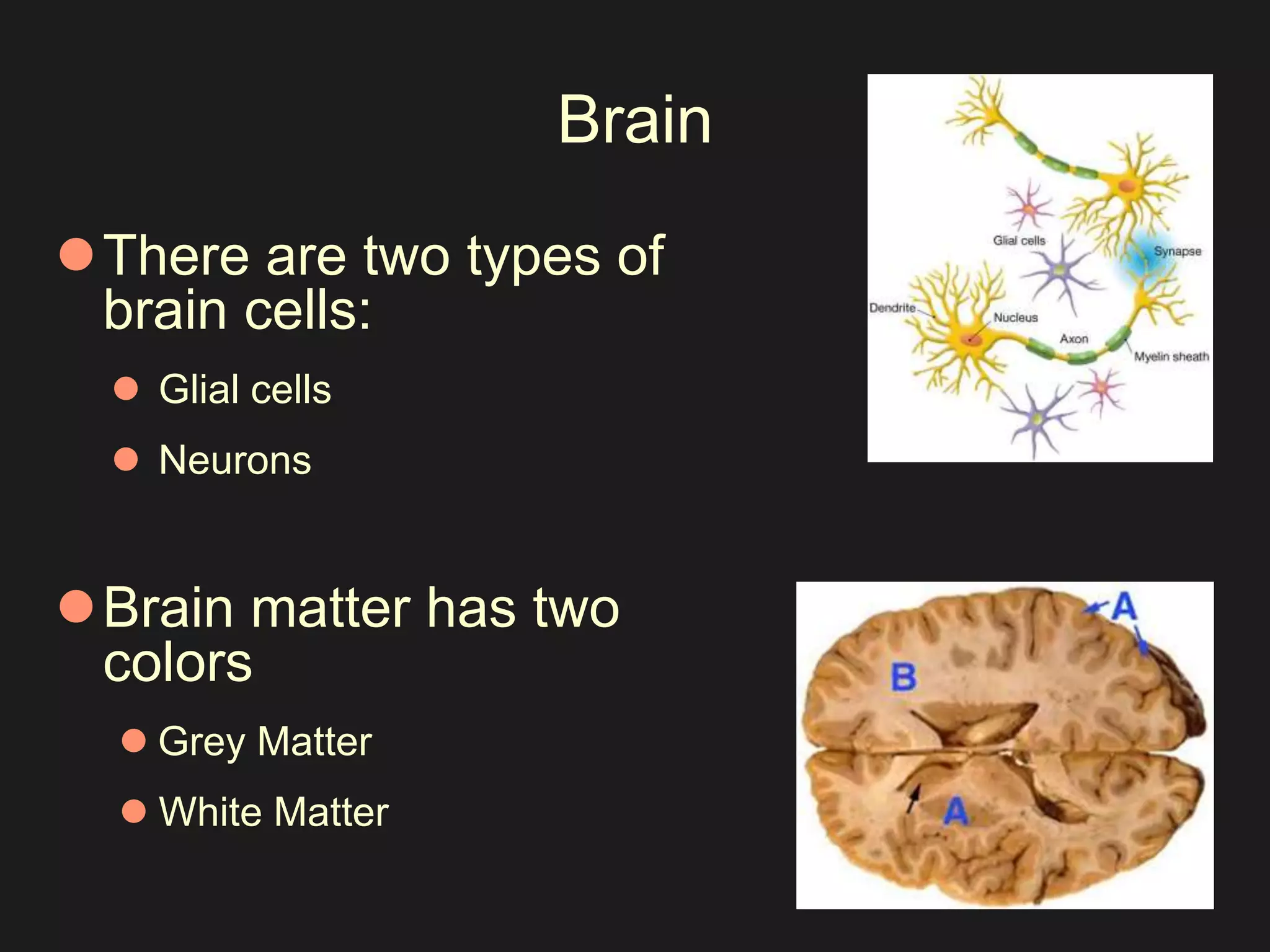
Brain 
There are two types of 
brain cells: 
 Glial cells 
 Neurons 
Brain matter has two 
colors 
 Grey Matter 
 White Matter
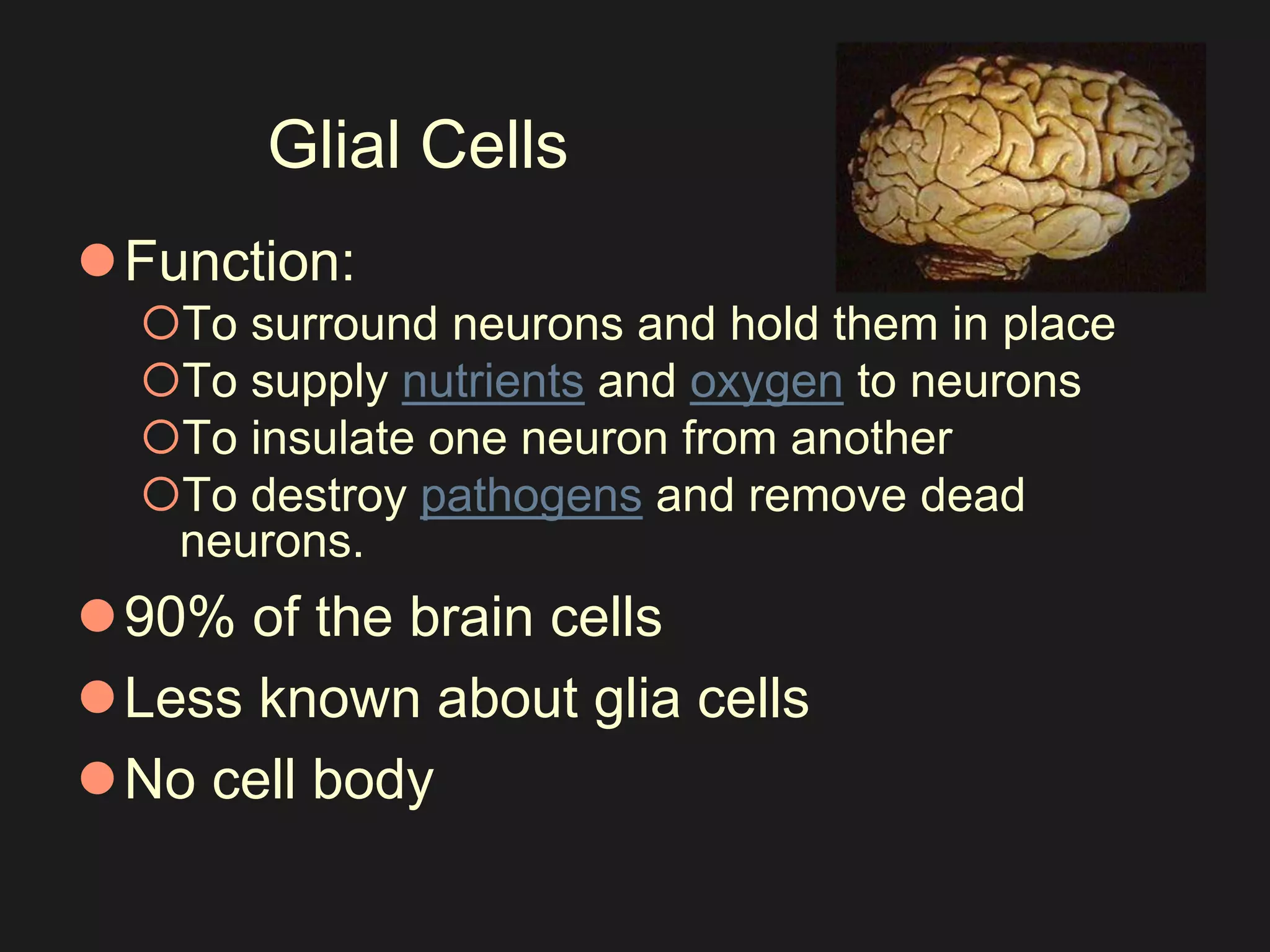
Glial Cells 
Function: 
To surround neurons and hold them in place 
To supply nutrients and oxygen to neurons 
To insulate one neuron from another 
To destroy pathogens and remove dead 
neurons. 
90% of the brain cells 
Less known about glia cells 
No cell body
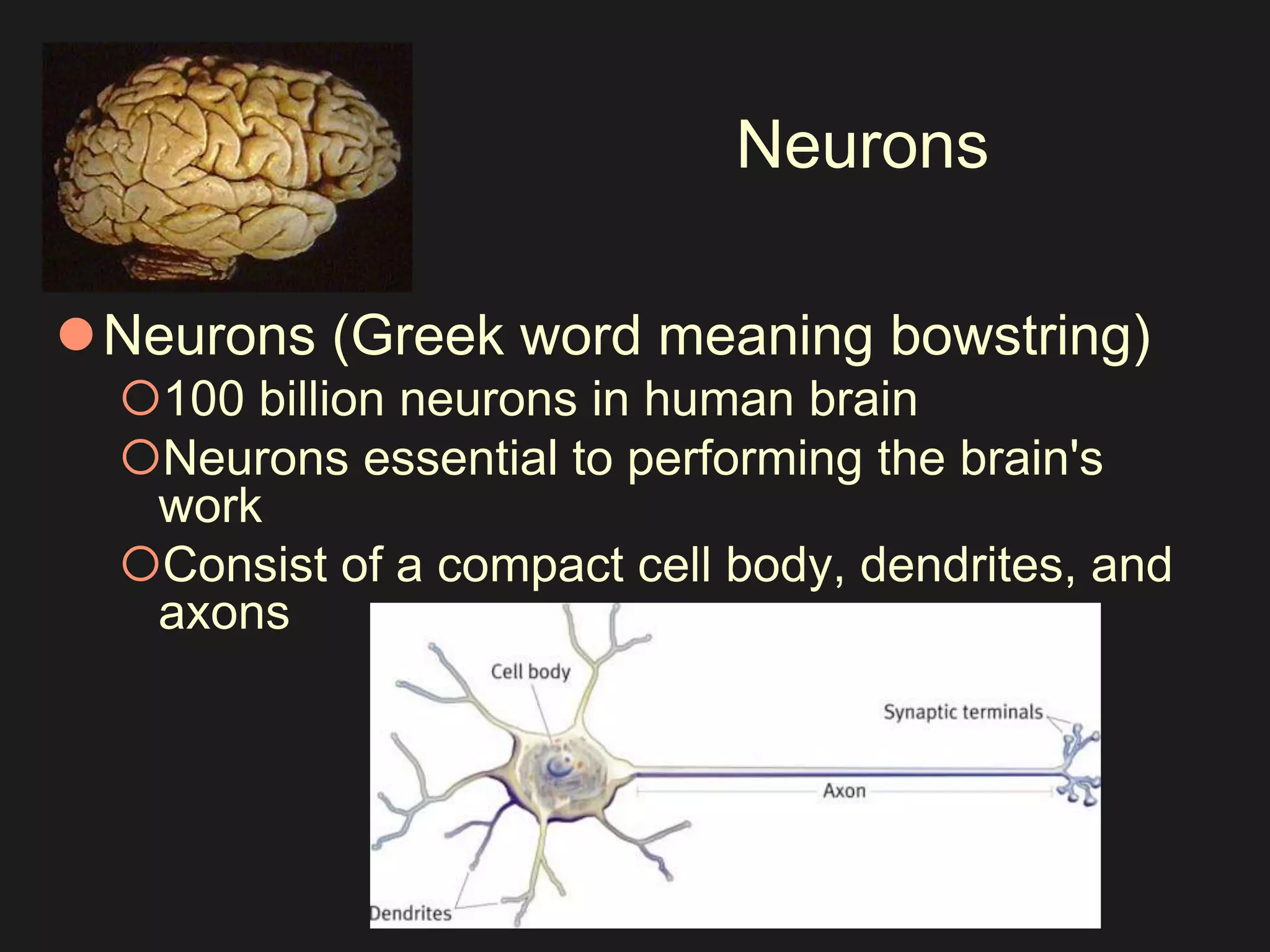
Neurons 
Neurons (Greek word meaning bowstring) 
100 billion neurons in human brain 
Neurons essential to performing the brain's 
work 
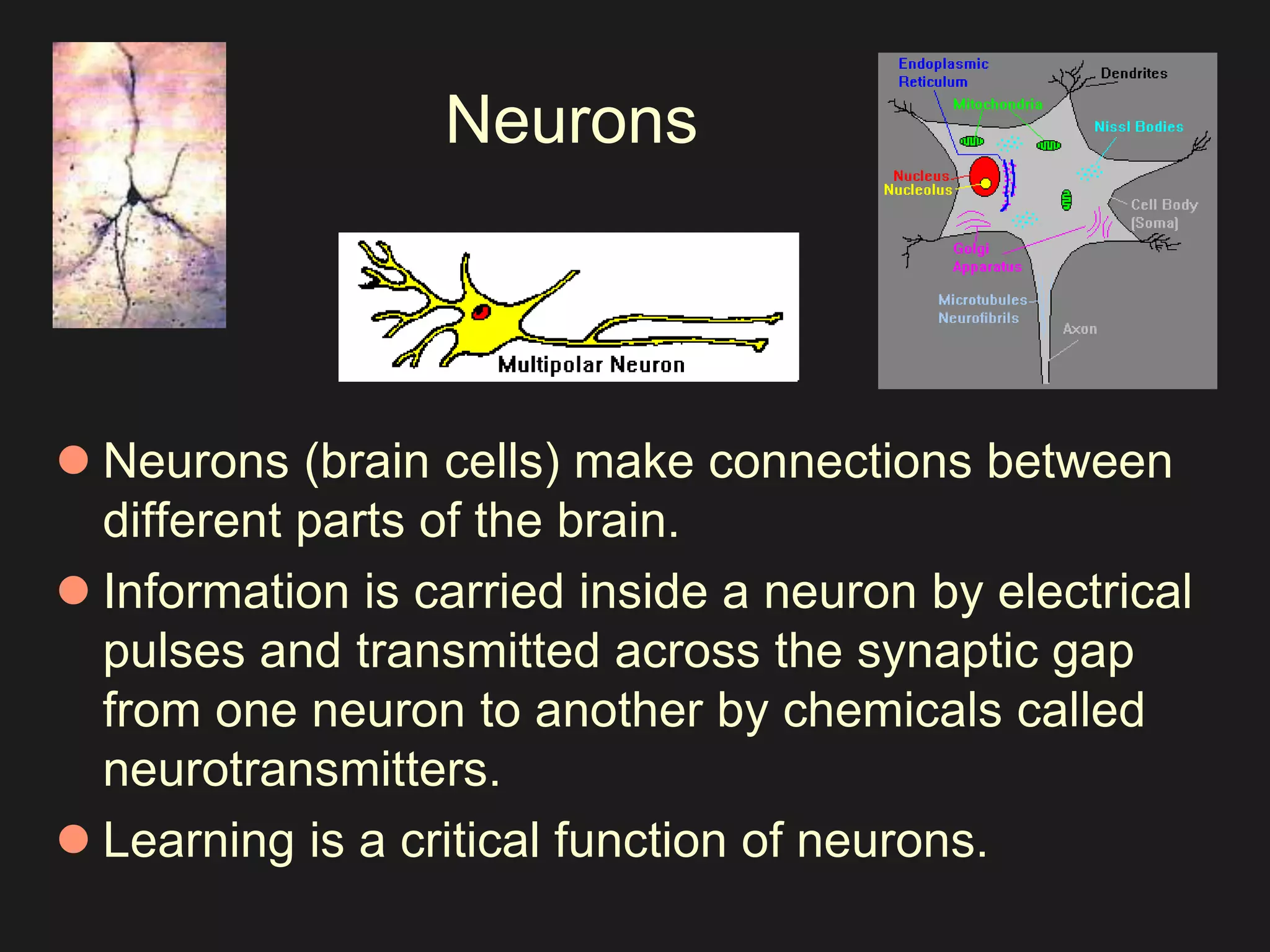
Consist of a compact cell body, dendrites, and 
axons
Neurons 
 Neurons (brain cells) make connections between 
different parts of the brain. 
 Information is carried inside a neuron by electrical 
pulses and transmitted across the synaptic gap 
from one neuron to another by chemicals called 
neurotransmitters. 
 Learning is a critical function of neurons.
Dendrites and Axons 
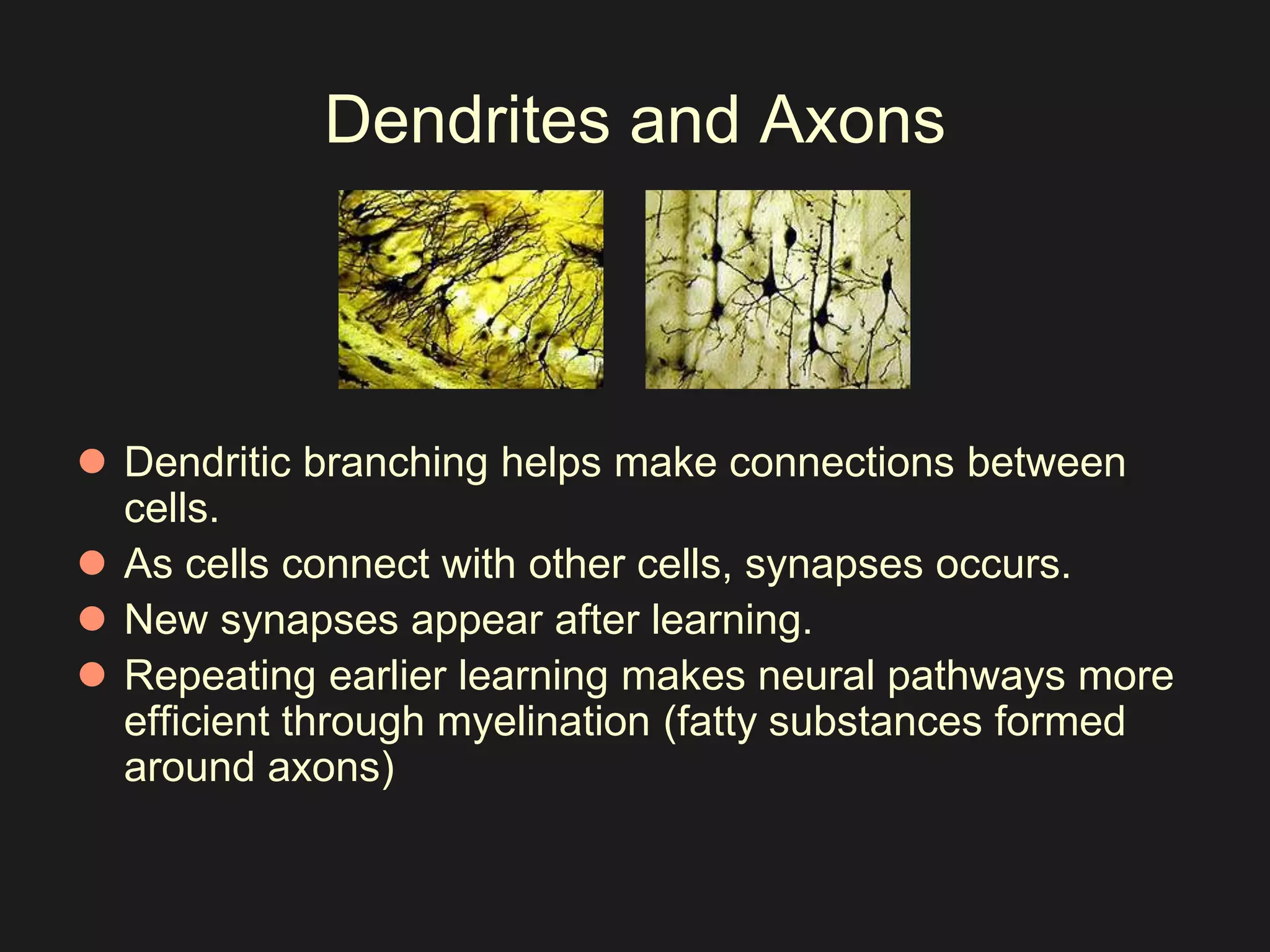
 Dendritic branching helps make connections between 
cells. 
 As cells connect with other cells, synapses occurs. 
 New synapses appear after learning. 
 Repeating earlier learning makes neural pathways more 
efficient through myelination (fatty substances formed 
around axons)
Grey Matter 
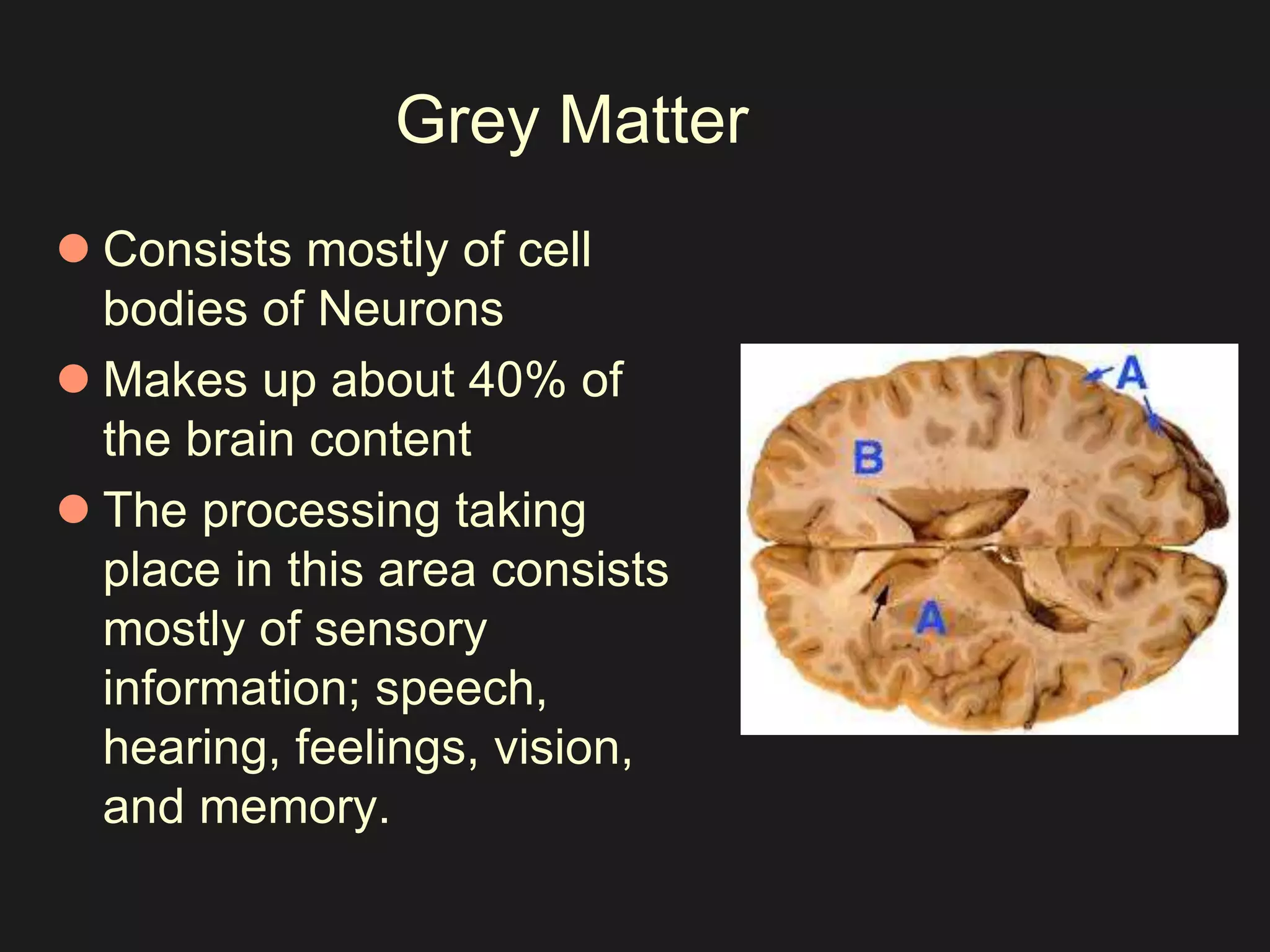
 Consists mostly of cell 
bodies of Neurons 
 Makes up about 40% of 
the brain content 
 The processing taking 
place in this area consists 
mostly of sensory 
information; speech, 
hearing, feelings, vision, 
and memory.
White Matter 
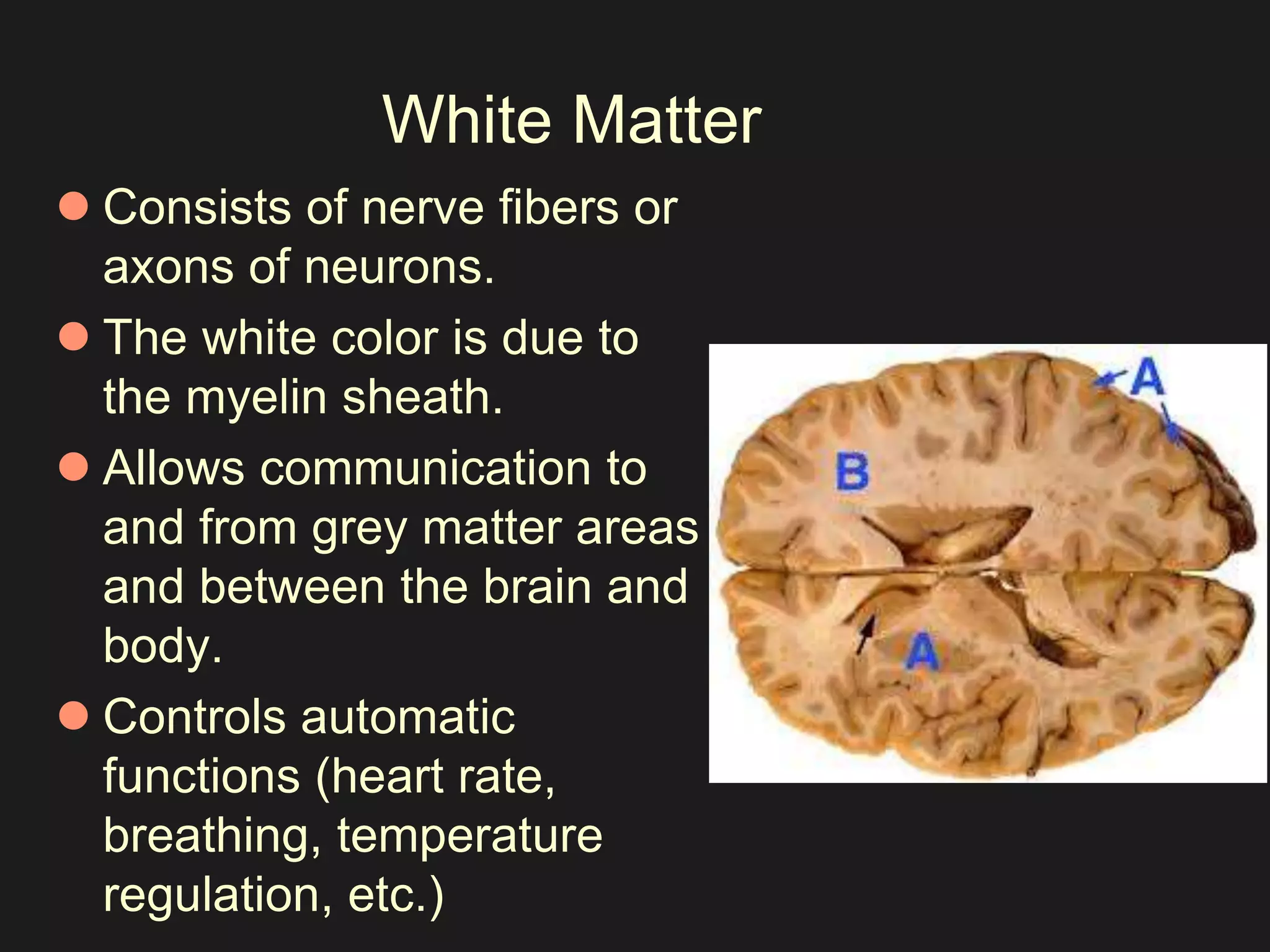
 Consists of nerve fibers or 
axons of neurons. 
 The white color is due to 
the myelin sheath. 
 Allows communication to 
and from grey matter areas 
and between the brain and 
body. 
 Controls automatic 
functions (heart rate, 
breathing, temperature 
regulation, etc.)
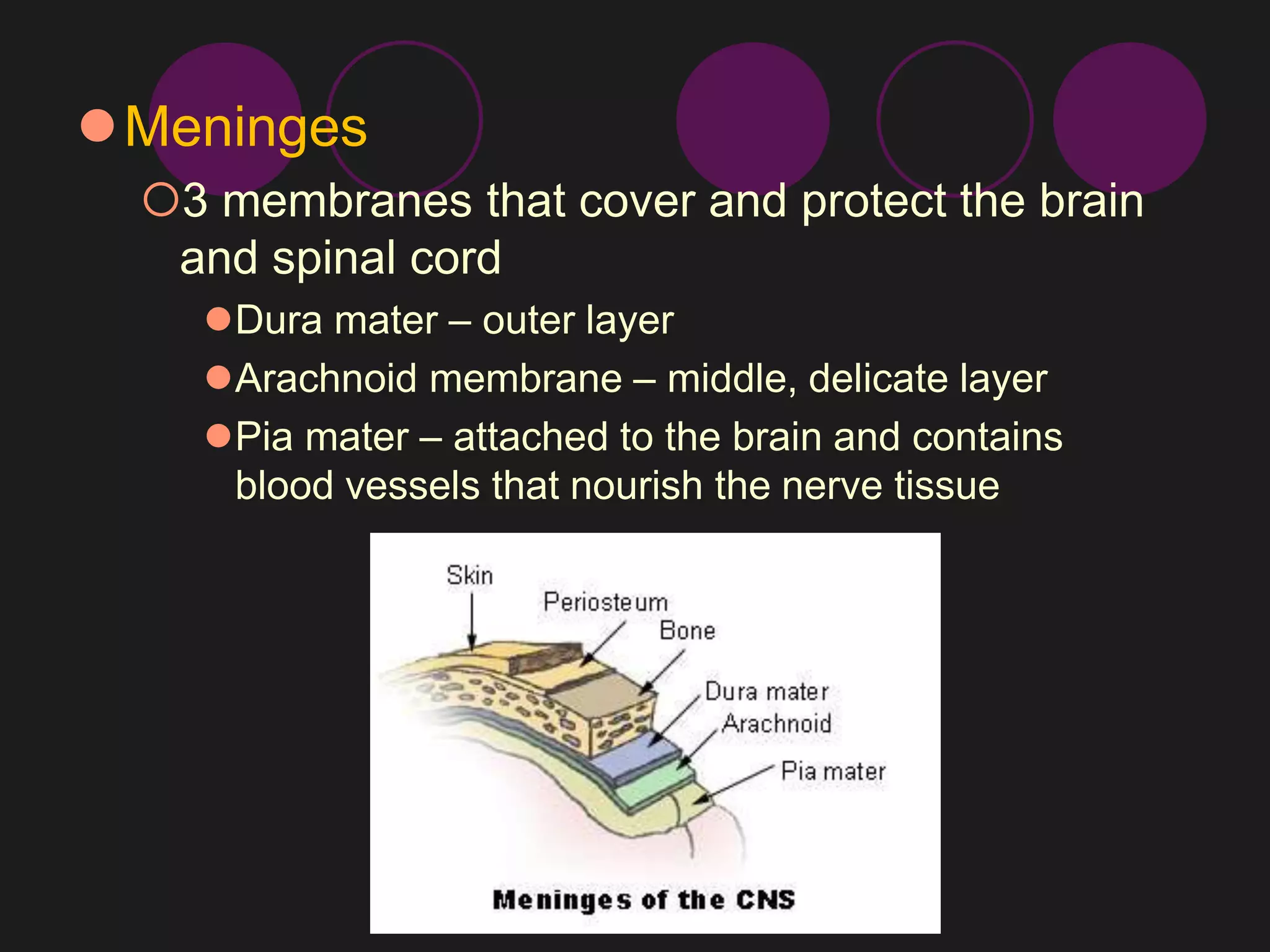
Meninges 
3 membranes that cover and protect the brain 
and spinal cord 
Dura mater – outer layer 
Arachnoid membrane – middle, delicate layer 
Pia mater – attached to the brain and contains 
blood vessels that nourish the nerve tissue
Spinal Cord 
 Spinal cord 
Continues down from the medulla oblongata 
Surrounded and protected by vertebrae 
Responsible for many reflex actions and 
carrying afferent and efferent nerves 
 Spinal nerves carry messages to and from the 
spinal cord and are mixed nerves (both afferent 
and efferent)
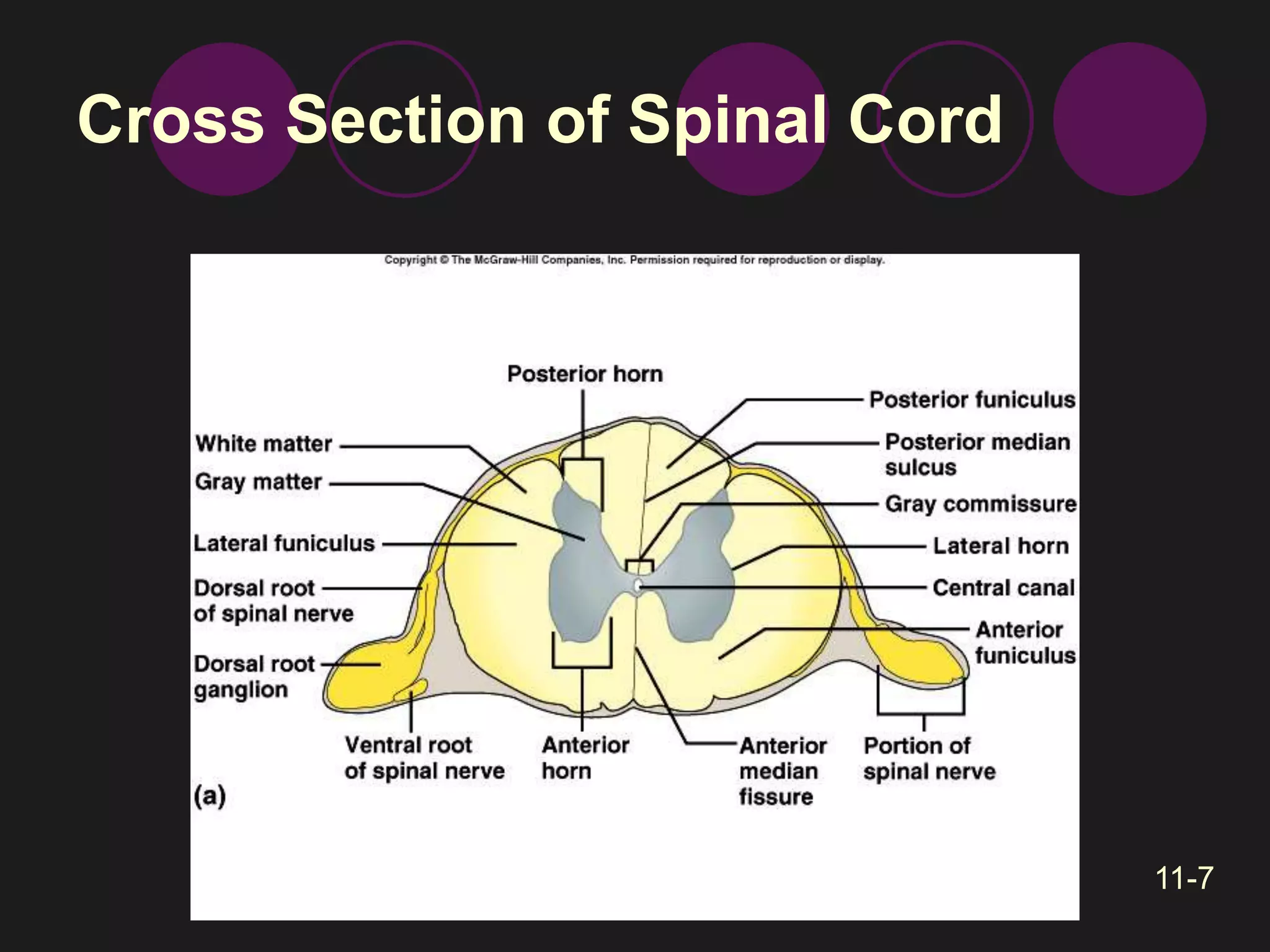
Cross Section of Spinal Cord 
11-7
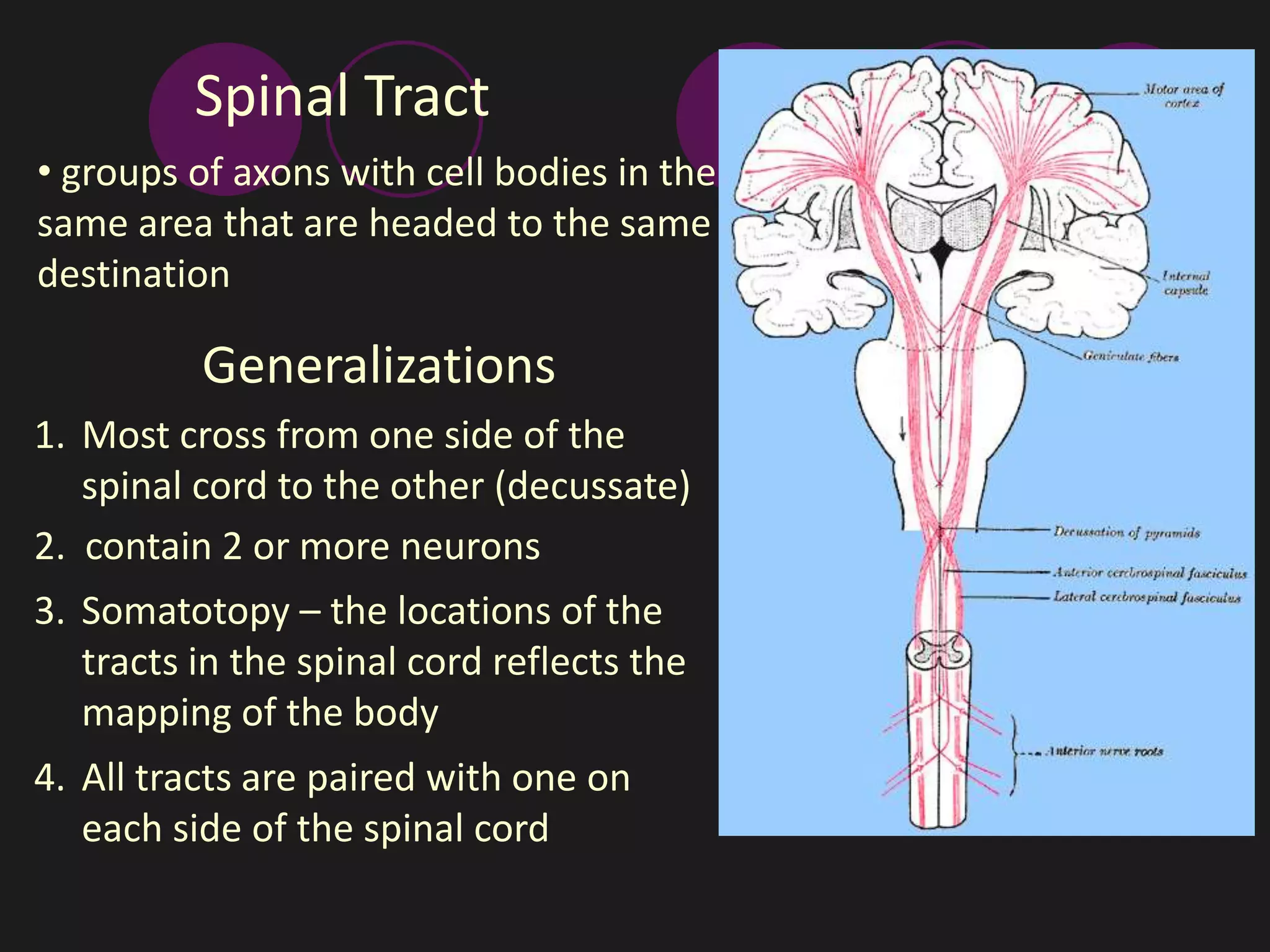
Spinal Tract 
• groups of axons with cell bodies in the 
same area that are headed to the same 
destination 
Generalizations 
1. Most cross from one side of the 
spinal cord to the other (decussate) 
2. contain 2 or more neurons 
3. Somatotopy – the locations of the 
tracts in the spinal cord reflects the 
mapping of the body 
4. All tracts are paired with one on 
each side of the spinal cord
Ascending Pathways 
Usually contain 3 successive neurons 
First Order Neurons – body in ganglion (dorsal or cranial) 
-- get impulses from skin and proprioceptors in the 
spinal cord to the brain stem 
Second Order Neurons – body in dorsal horn or medullary 
nuclei 
-- transmit impulse to thalamus or cerebellum 
Third Order Neurons – body in thalamus 
--send info to cortex 
Sensory
Descending Tracts 
Motor 
Direct Pathway – originate in cortex 
• No synapses until they reach the spinal cord 
• Interacts with interneurons or in the ventral horn 
• Activates skeletal muscle to do skilled movements (writing) 
Indirect Pathway (multineuronal) 
• all other descending tracts 
• usually rely of reflexes 
• regulate 
•Axial muscle for balance and posture 
•Muscle controlling course limb movement 
•Head, neck, and eye movement
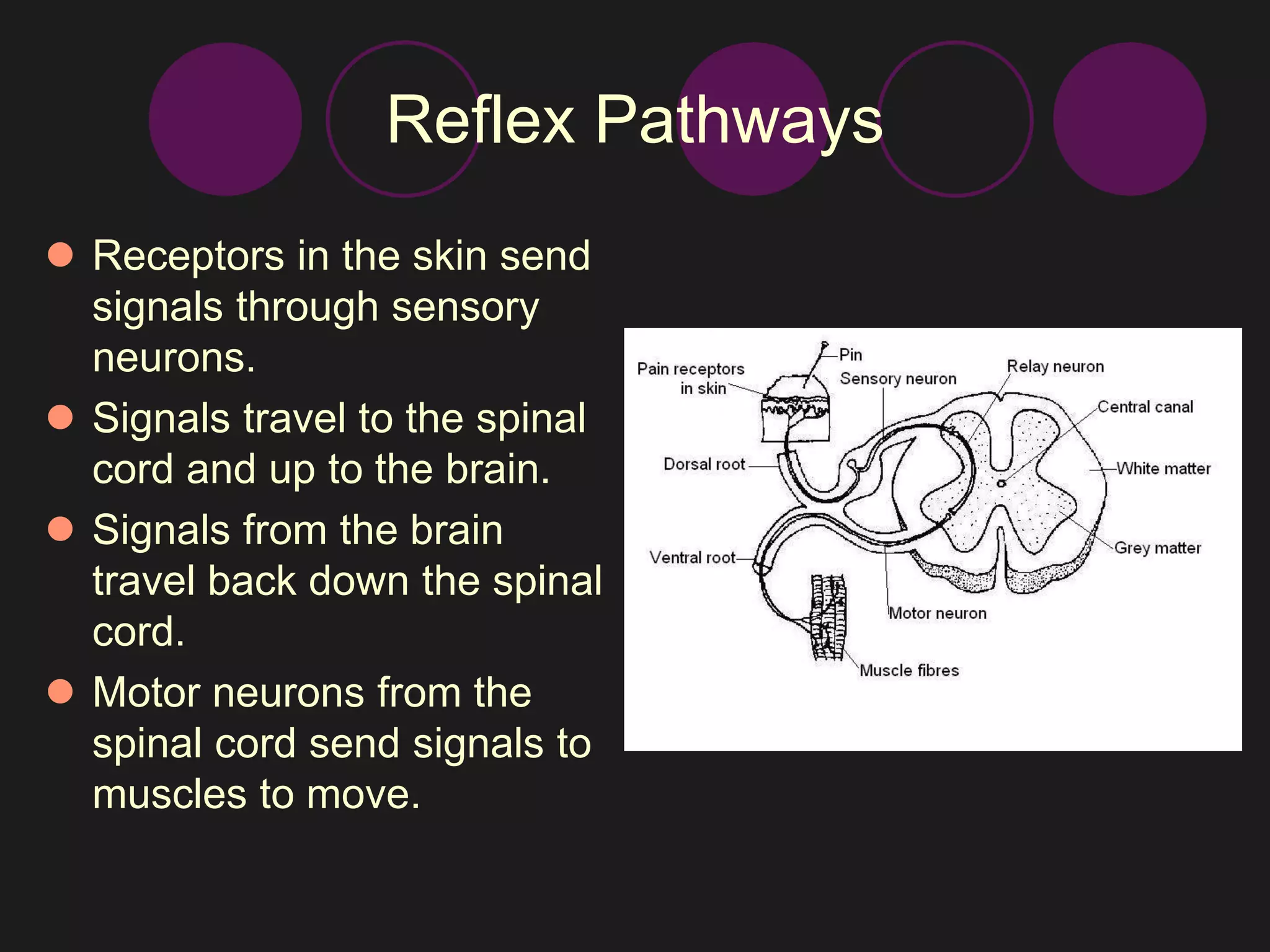
Reflex Pathways 
 Receptors in the skin send 
signals through sensory 
neurons. 
 Signals travel to the spinal 
cord and up to the brain. 
 Signals from the brain 
travel back down the spinal 
cord. 
 Motor neurons from the 
spinal cord send signals to 
muscles to move.

Brain, Neurons, and Spinal Cord

  • 1.
  • 2.
    The Nervous System Brain Review, Nerve & Spinal Cord Anatomy
  • 3.
    The Lobes Frontal Lobe  Area around your forehead  Involved in purposeful acts like judgment, creativity, problem solving, and planning.  Parietal Lobe  Top back area of the brain  Processes higher sensory and language functions  Temporal Lobe  Left and right side above and around the ears  Primarily responsible for hearing, memory, meaning, and language.  Some overlap in functions of the lobes.  Occipital Lobe  Back of the brain  Primarily responsible for vision
  • 4.
    The Limbic System Emotional Center  Hypothalamus  Hunger, thirst, body temperature, pleasure; regulates pituitary gland (hormones)  Pituitary  “Master Gland”  Stimulates other glands to produce hormones  Amygdala  Aggression (fight) and fear (flight)  Hippocampus  Memory processing
  • 5.
    Facts about theBrain  Weighs approximately 3 pounds Mostly water - 78% Fat - 10% Protein - 8%  Soft enough to cut with a butter knife  Grapefruit-sized organ  Outside of the brain Convolutions or folds Wrinkles are part of the cerebral cortex Folds allow maximum surface area
  • 6.
    Brain There aretwo types of brain cells:  Glial cells  Neurons Brain matter has two colors  Grey Matter  White Matter
  • 7.
    Glial Cells Function: To surround neurons and hold them in place To supply nutrients and oxygen to neurons To insulate one neuron from another To destroy pathogens and remove dead neurons. 90% of the brain cells Less known about glia cells No cell body
  • 8.
    Neurons Neurons (Greekword meaning bowstring) 100 billion neurons in human brain Neurons essential to performing the brain's work Consist of a compact cell body, dendrites, and axons
  • 9.
    Neurons  Neurons(brain cells) make connections between different parts of the brain.  Information is carried inside a neuron by electrical pulses and transmitted across the synaptic gap from one neuron to another by chemicals called neurotransmitters.  Learning is a critical function of neurons.
  • 10.
    Dendrites and Axons  Dendritic branching helps make connections between cells.  As cells connect with other cells, synapses occurs.  New synapses appear after learning.  Repeating earlier learning makes neural pathways more efficient through myelination (fatty substances formed around axons)
  • 11.
    Grey Matter Consists mostly of cell bodies of Neurons  Makes up about 40% of the brain content  The processing taking place in this area consists mostly of sensory information; speech, hearing, feelings, vision, and memory.
  • 12.
    White Matter Consists of nerve fibers or axons of neurons.  The white color is due to the myelin sheath.  Allows communication to and from grey matter areas and between the brain and body.  Controls automatic functions (heart rate, breathing, temperature regulation, etc.)
  • 13.
    Meninges 3 membranesthat cover and protect the brain and spinal cord Dura mater – outer layer Arachnoid membrane – middle, delicate layer Pia mater – attached to the brain and contains blood vessels that nourish the nerve tissue
  • 14.
    Spinal Cord Spinal cord Continues down from the medulla oblongata Surrounded and protected by vertebrae Responsible for many reflex actions and carrying afferent and efferent nerves  Spinal nerves carry messages to and from the spinal cord and are mixed nerves (both afferent and efferent)
  • 15.
    Cross Section ofSpinal Cord 11-7
  • 16.
    Spinal Tract •groups of axons with cell bodies in the same area that are headed to the same destination Generalizations 1. Most cross from one side of the spinal cord to the other (decussate) 2. contain 2 or more neurons 3. Somatotopy – the locations of the tracts in the spinal cord reflects the mapping of the body 4. All tracts are paired with one on each side of the spinal cord
  • 17.
    Ascending Pathways Usuallycontain 3 successive neurons First Order Neurons – body in ganglion (dorsal or cranial) -- get impulses from skin and proprioceptors in the spinal cord to the brain stem Second Order Neurons – body in dorsal horn or medullary nuclei -- transmit impulse to thalamus or cerebellum Third Order Neurons – body in thalamus --send info to cortex Sensory
  • 18.
    Descending Tracts Motor Direct Pathway – originate in cortex • No synapses until they reach the spinal cord • Interacts with interneurons or in the ventral horn • Activates skeletal muscle to do skilled movements (writing) Indirect Pathway (multineuronal) • all other descending tracts • usually rely of reflexes • regulate •Axial muscle for balance and posture •Muscle controlling course limb movement •Head, neck, and eye movement
  • 19.
    Reflex Pathways Receptors in the skin send signals through sensory neurons.  Signals travel to the spinal cord and up to the brain.  Signals from the brain travel back down the spinal cord.  Motor neurons from the spinal cord send signals to muscles to move.