Warm-up!
Drugs and Effects on 
Neurotransmitters
How drugs work 
Drugs achieve their affect by imitating or altering 
the release or uptake of neurotransmitters. 
Drugs may increase or decrease how much of a 
neurotransmitter is made, how it is transported, 
stored, released, or how they bind to target cells. 
Drugs can also mimic the activity of some 
neurotransmitters and bind to the receptors 
instead.
Caffeine 
• Blocks the activity of adenosine, a 
neurotransmitter that makes us tired or 
sleepy. 
• Because it blocks adenosine, it also causes 
changes in the balance of other 
neurotransmitters, increasing levels of 
dopamine, acetylcholine, and serotonin. 
• Increases muscle activity, relieves 
depression, and makes you feel relaxed, 
alert, energetic, and relieves migraine 
headaches. 
• Can also make you jittery, increase anxiety 
levels, and cause insomnia.
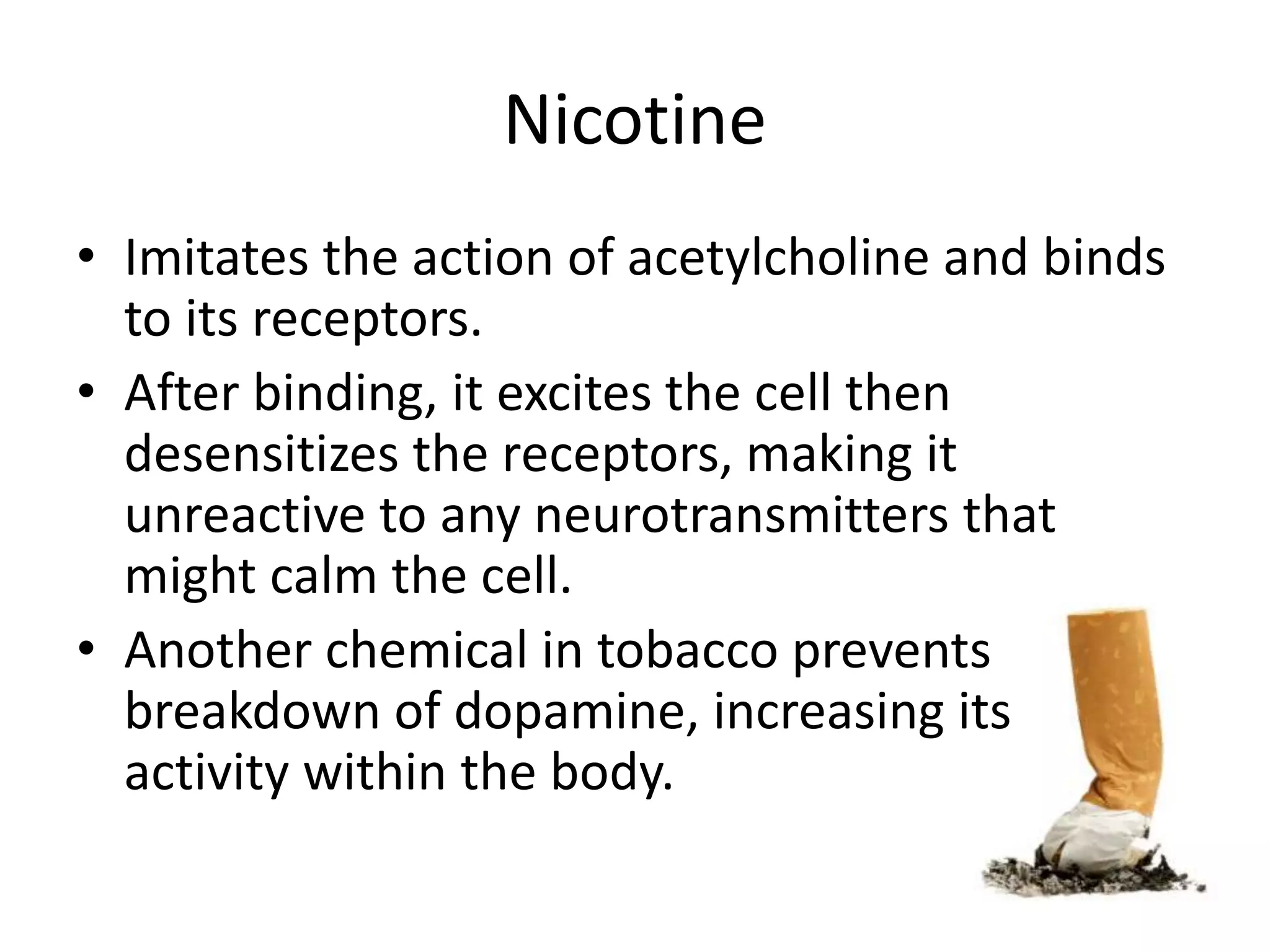
Nicotine 
• Imitates the action of acetylcholine and binds 
to its receptors. 
• After binding, it excites the cell then 
desensitizes the receptors, making it 
unreactive to any neurotransmitters that 
might calm the cell. 
• Another chemical in tobacco prevents 
breakdown of dopamine, increasing its 
activity within the body.
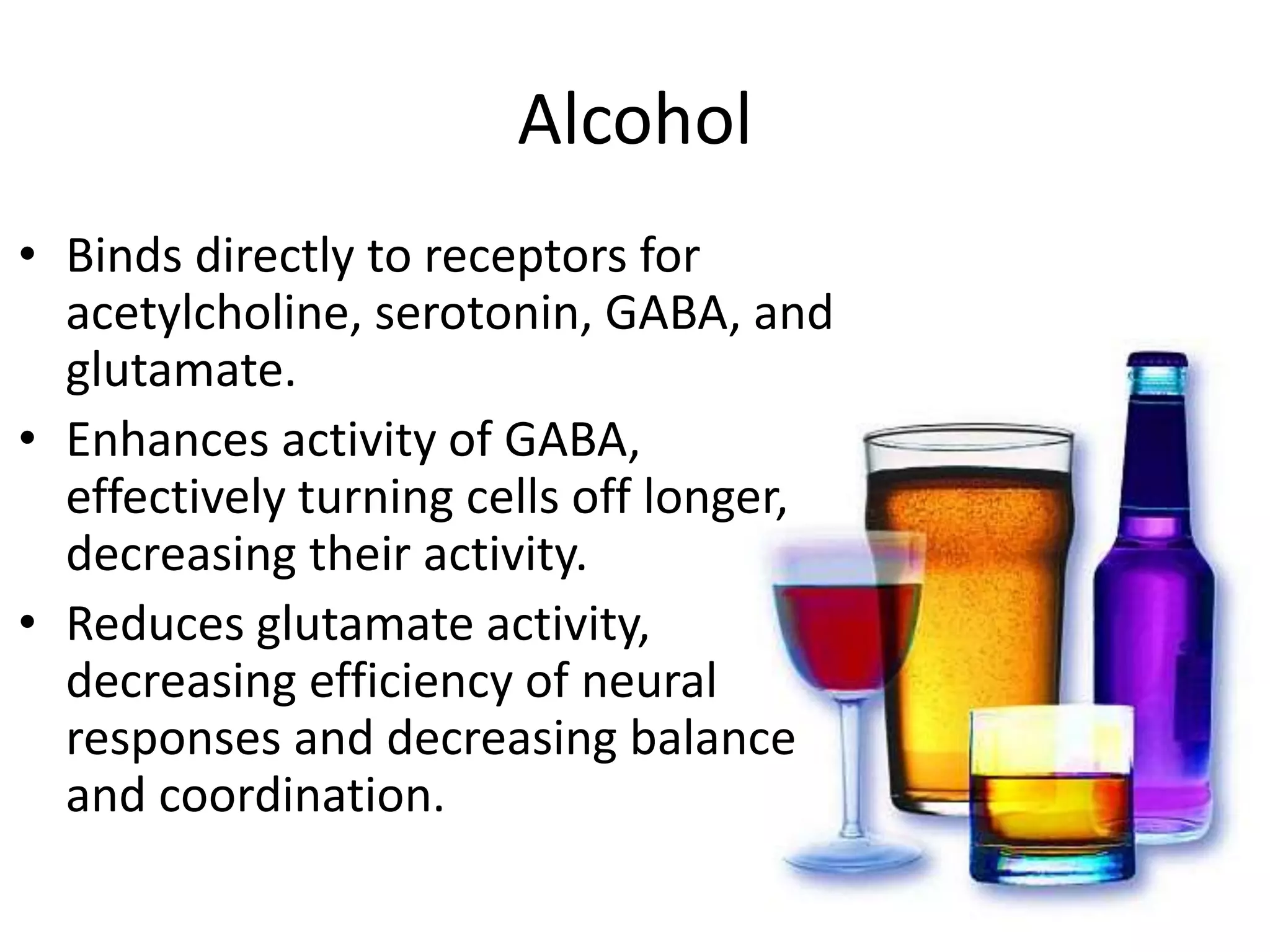
Alcohol 
• Binds directly to receptors for 
acetylcholine, serotonin, GABA, and 
glutamate. 
• Enhances activity of GABA, 
effectively turning cells off longer, 
decreasing their activity. 
• Reduces glutamate activity, 
decreasing efficiency of neural 
responses and decreasing balance 
and coordination.
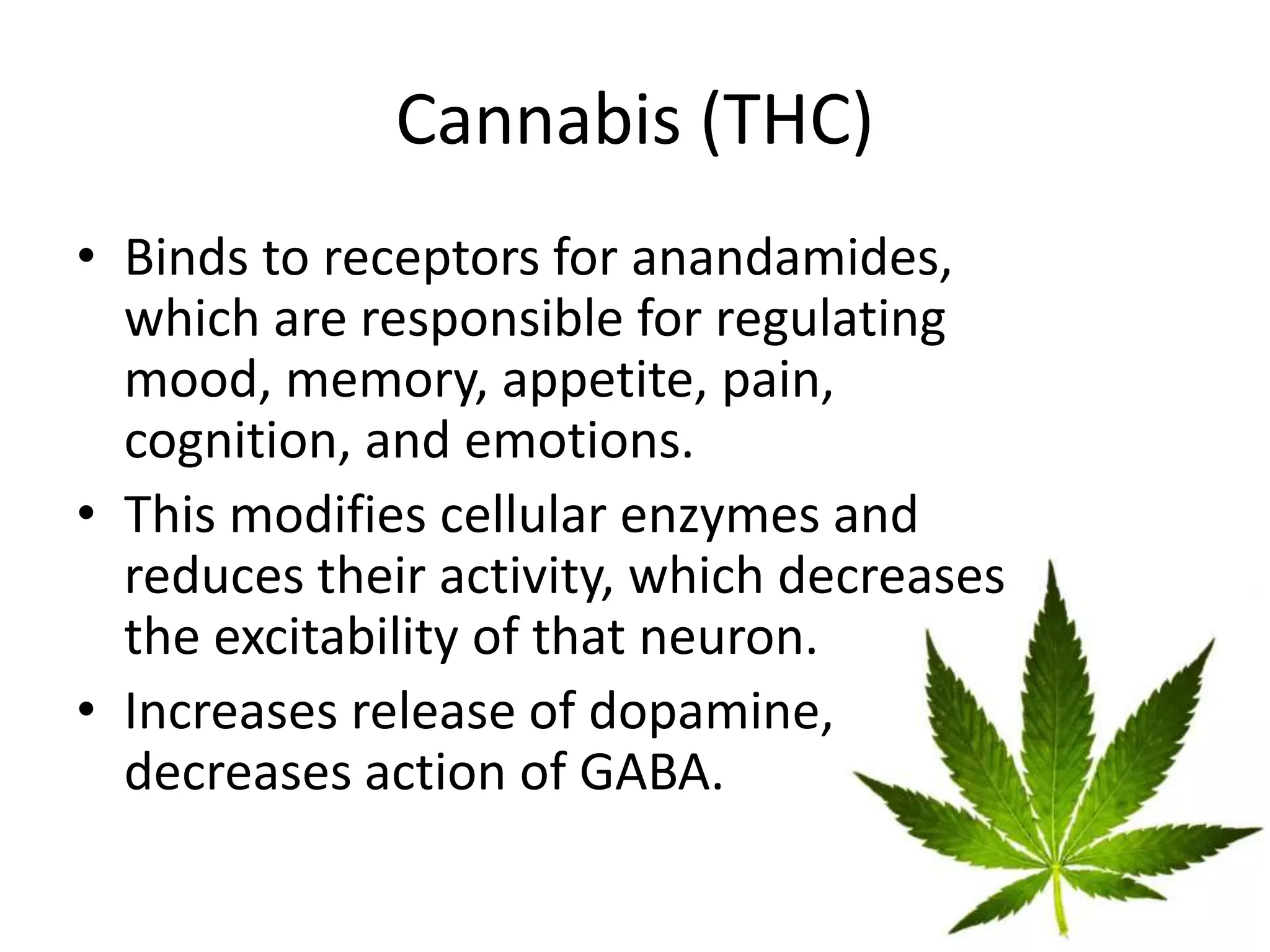
Cannabis (THC) 
• Binds to receptors for anandamides, 
which are responsible for regulating 
mood, memory, appetite, pain, 
cognition, and emotions. 
• This modifies cellular enzymes and 
reduces their activity, which decreases 
the excitability of that neuron. 
• Increases release of dopamine, 
decreases action of GABA.
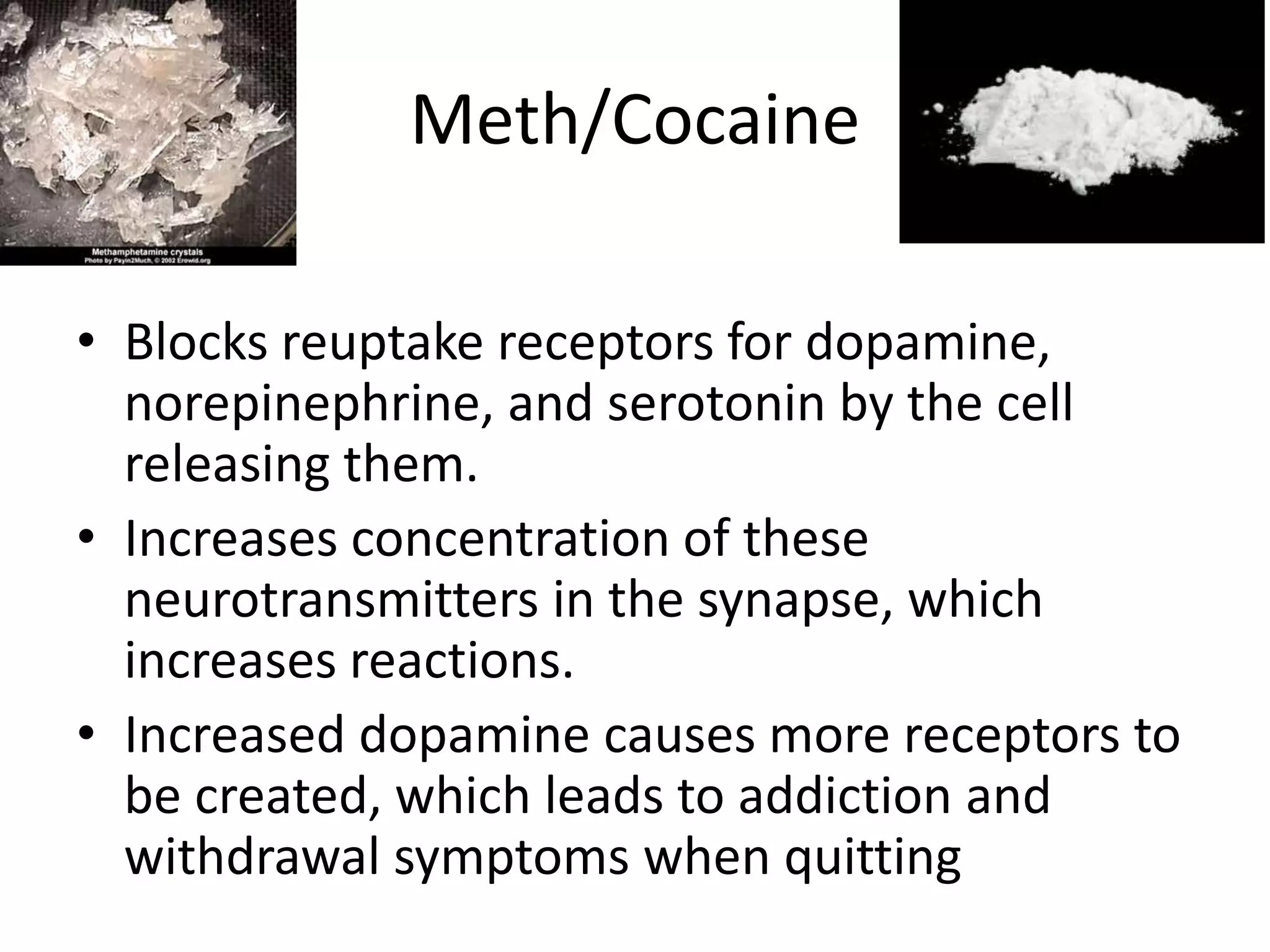
Meth/Cocaine 
• Blocks reuptake receptors for dopamine, 
norepinephrine, and serotonin by the cell 
releasing them. 
• Increases concentration of these 
neurotransmitters in the synapse, which 
increases reactions. 
• Increased dopamine causes more receptors to 
be created, which leads to addiction and 
withdrawal symptoms when quitting
Heroin 
• Mimic the effects of our neurotransmitters 
affecting pain, mood control, immune 
response, hunger, thirst, and other processes. 
• Reduces excitability of neurons, producing a 
euphoric feeling. 
• Reduces activity of GABA, which increases 
activity of dopamine.
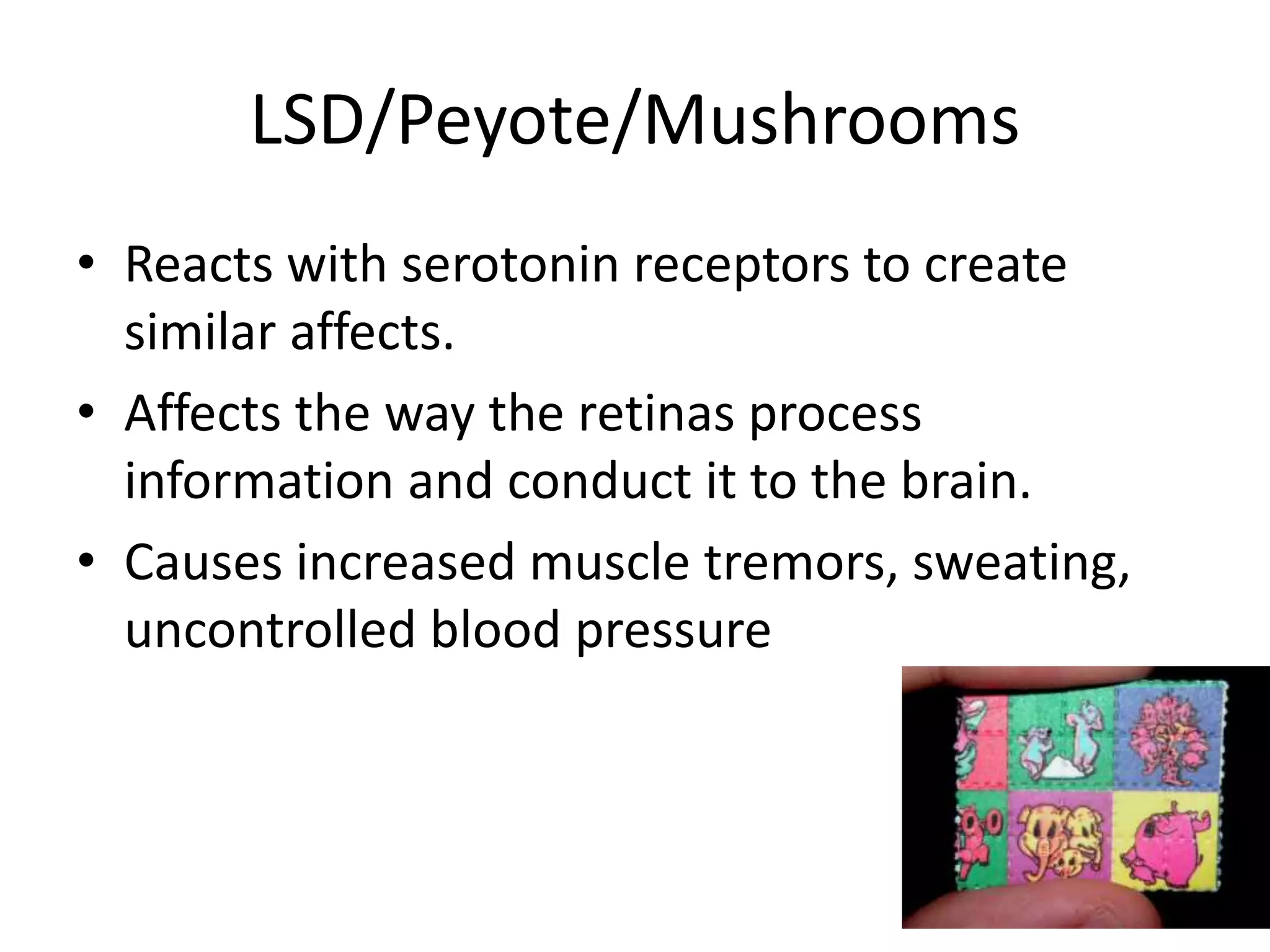
LSD/Peyote/Mushrooms 
• Reacts with serotonin receptors to create 
similar affects. 
• Affects the way the retinas process 
information and conduct it to the brain. 
• Causes increased muscle tremors, sweating, 
uncontrolled blood pressure
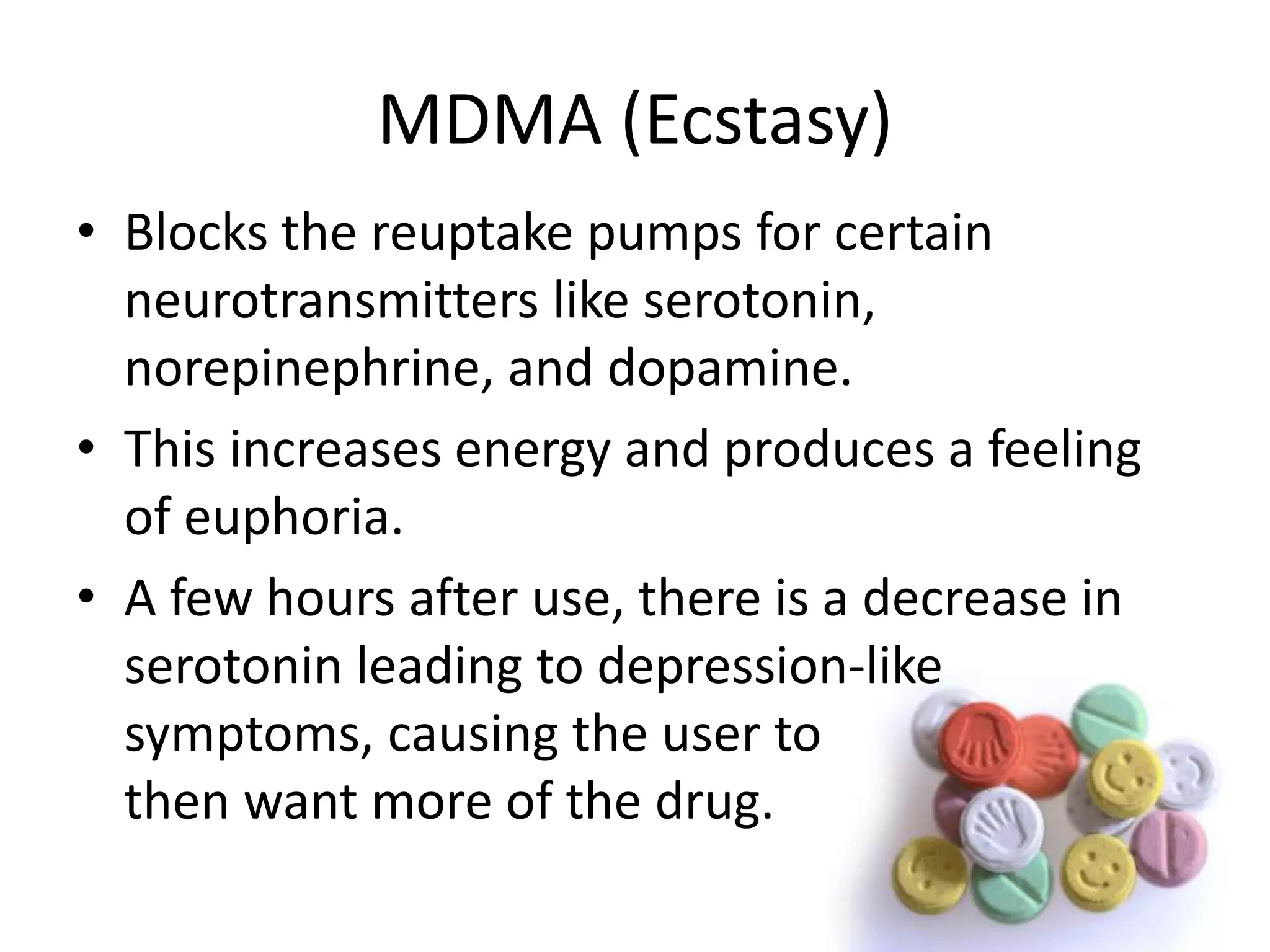
MDMA (Ecstasy) 
• Blocks the reuptake pumps for certain 
neurotransmitters like serotonin, 
norepinephrine, and dopamine. 
• This increases energy and produces a feeling 
of euphoria. 
• A few hours after use, there is a decrease in 
serotonin leading to depression-like 
symptoms, causing the user to 
then want more of the drug.

Drugs and effects on neurotransmitters

  • 1.
  • 2.
    Drugs and Effectson Neurotransmitters
  • 3.
    How drugs work Drugs achieve their affect by imitating or altering the release or uptake of neurotransmitters. Drugs may increase or decrease how much of a neurotransmitter is made, how it is transported, stored, released, or how they bind to target cells. Drugs can also mimic the activity of some neurotransmitters and bind to the receptors instead.
  • 4.
    Caffeine • Blocksthe activity of adenosine, a neurotransmitter that makes us tired or sleepy. • Because it blocks adenosine, it also causes changes in the balance of other neurotransmitters, increasing levels of dopamine, acetylcholine, and serotonin. • Increases muscle activity, relieves depression, and makes you feel relaxed, alert, energetic, and relieves migraine headaches. • Can also make you jittery, increase anxiety levels, and cause insomnia.
  • 5.
    Nicotine • Imitatesthe action of acetylcholine and binds to its receptors. • After binding, it excites the cell then desensitizes the receptors, making it unreactive to any neurotransmitters that might calm the cell. • Another chemical in tobacco prevents breakdown of dopamine, increasing its activity within the body.
  • 6.
    Alcohol • Bindsdirectly to receptors for acetylcholine, serotonin, GABA, and glutamate. • Enhances activity of GABA, effectively turning cells off longer, decreasing their activity. • Reduces glutamate activity, decreasing efficiency of neural responses and decreasing balance and coordination.
  • 7.
    Cannabis (THC) •Binds to receptors for anandamides, which are responsible for regulating mood, memory, appetite, pain, cognition, and emotions. • This modifies cellular enzymes and reduces their activity, which decreases the excitability of that neuron. • Increases release of dopamine, decreases action of GABA.
  • 8.
    Meth/Cocaine • Blocksreuptake receptors for dopamine, norepinephrine, and serotonin by the cell releasing them. • Increases concentration of these neurotransmitters in the synapse, which increases reactions. • Increased dopamine causes more receptors to be created, which leads to addiction and withdrawal symptoms when quitting
  • 9.
    Heroin • Mimicthe effects of our neurotransmitters affecting pain, mood control, immune response, hunger, thirst, and other processes. • Reduces excitability of neurons, producing a euphoric feeling. • Reduces activity of GABA, which increases activity of dopamine.
  • 10.
    LSD/Peyote/Mushrooms • Reactswith serotonin receptors to create similar affects. • Affects the way the retinas process information and conduct it to the brain. • Causes increased muscle tremors, sweating, uncontrolled blood pressure
  • 11.
    MDMA (Ecstasy) •Blocks the reuptake pumps for certain neurotransmitters like serotonin, norepinephrine, and dopamine. • This increases energy and produces a feeling of euphoria. • A few hours after use, there is a decrease in serotonin leading to depression-like symptoms, causing the user to then want more of the drug.