Multi and Single Celled
Organisms
Standards
S5L3 Students will diagram and label
parts of various cells (plant, animal,
single-celled, and multi-celled).
Essential Questions
How do single and multiple cells compare
and contrast?
Did you know???
• Both plants and animals can be made of one cell-or
millions of cells like you.
• One-celled (single-celled) organisms, however,
tend to be different from those with many cells.
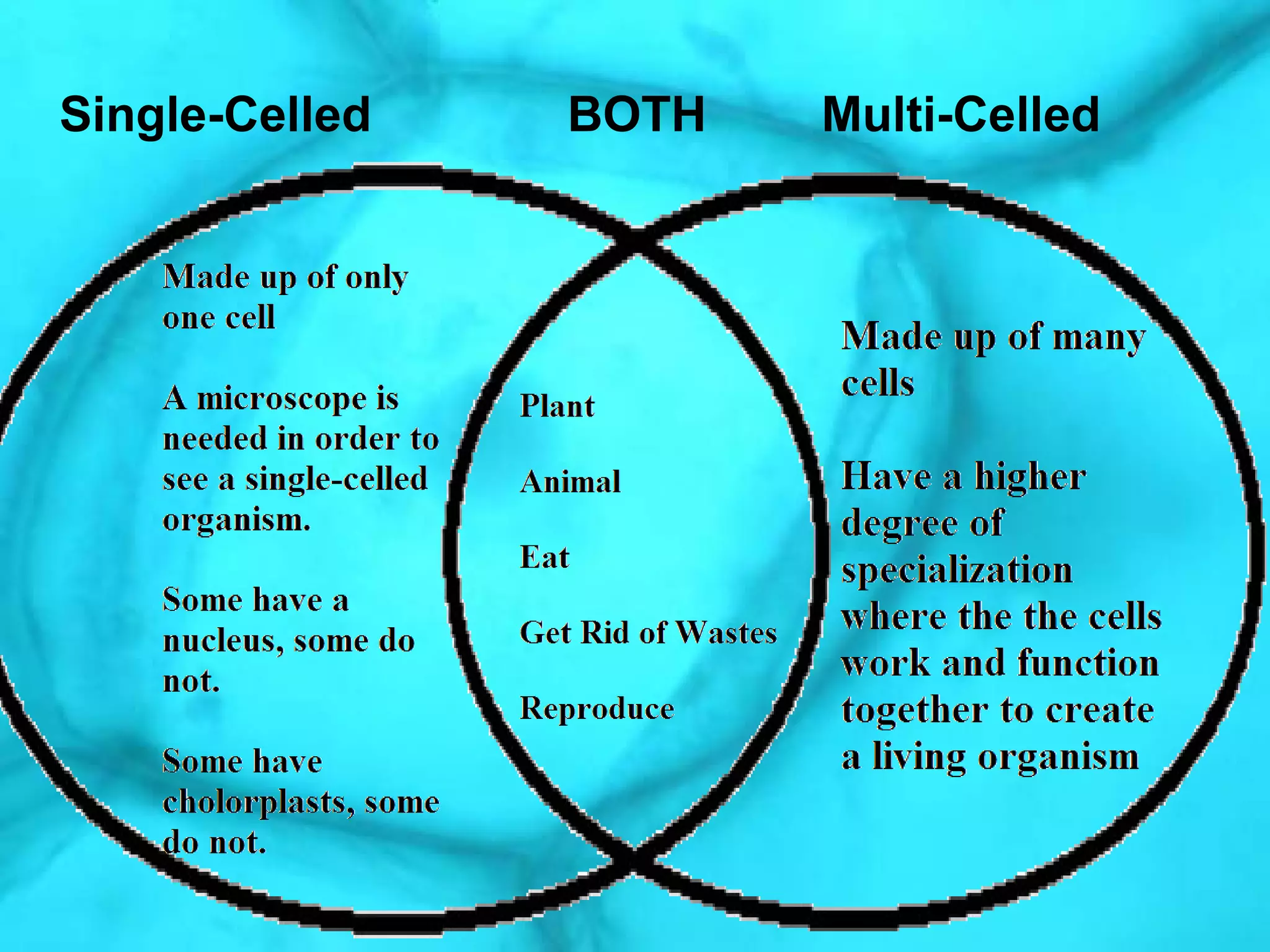
– Some single-celled creatures have a nucleus, and some
do not.
– Some single-celled plants have chloroplasts, but not all
have stiff cell walls.
– All single-celled organisms eat, get rid of wastes, and
reproduce.
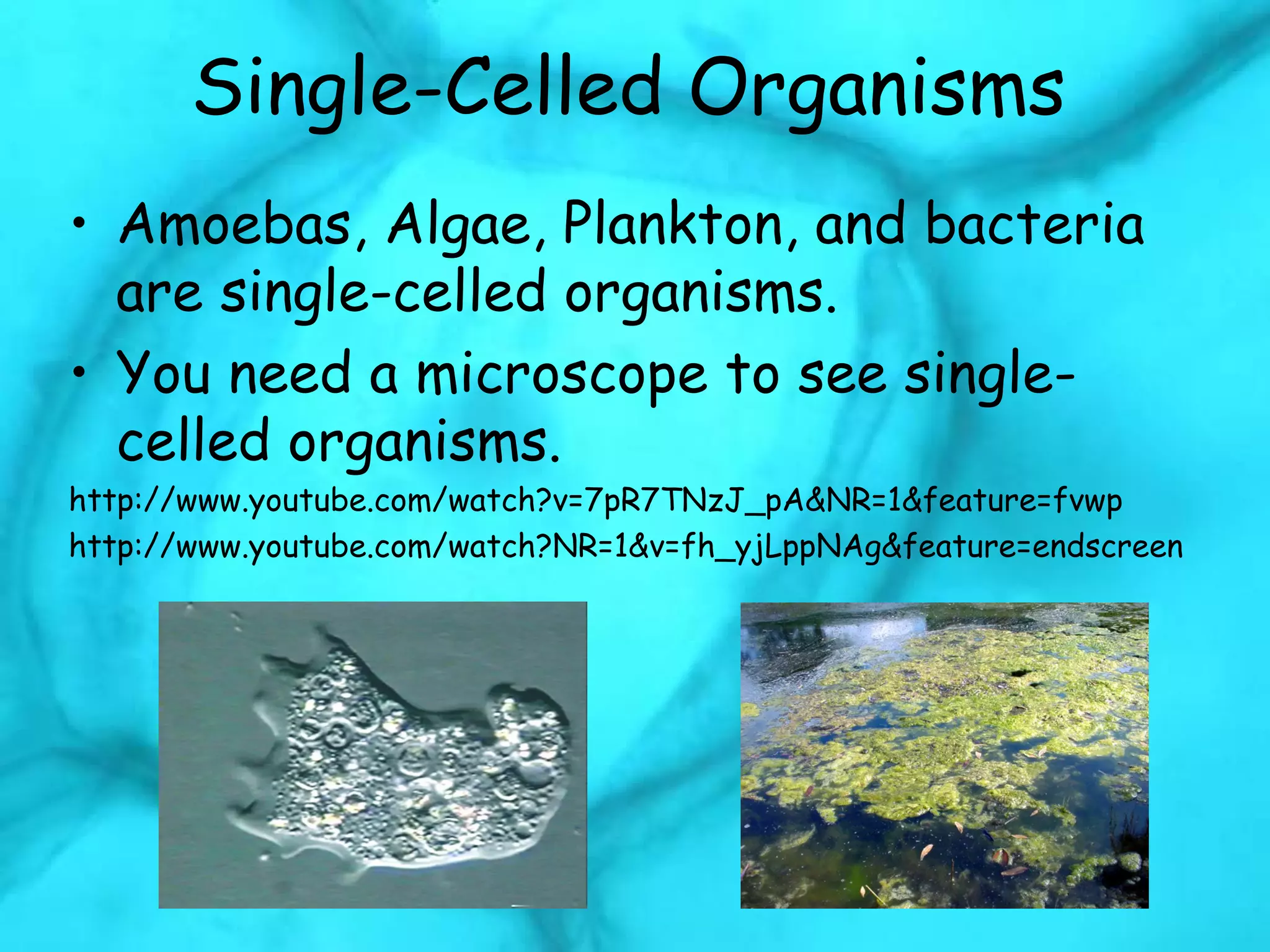
Single-Celled Organisms
• Amoebas, Algae, Plankton, and bacteria
are single-celled organisms.
• You need a microscope to see single-
celled organisms.
http://www.youtube.com/watch?v=7pR7TNzJ_pA&NR=1&feature=fvwp
http://www.youtube.com/watch?NR=1&v=fh_yjLppNAg&feature=endscreen
Multi Celled Organisms
• Living things made up of more than one
cell are multi-celled organisms.
• You are a multiple celled organism.
• Can you think of any other multi-celled
organisms?
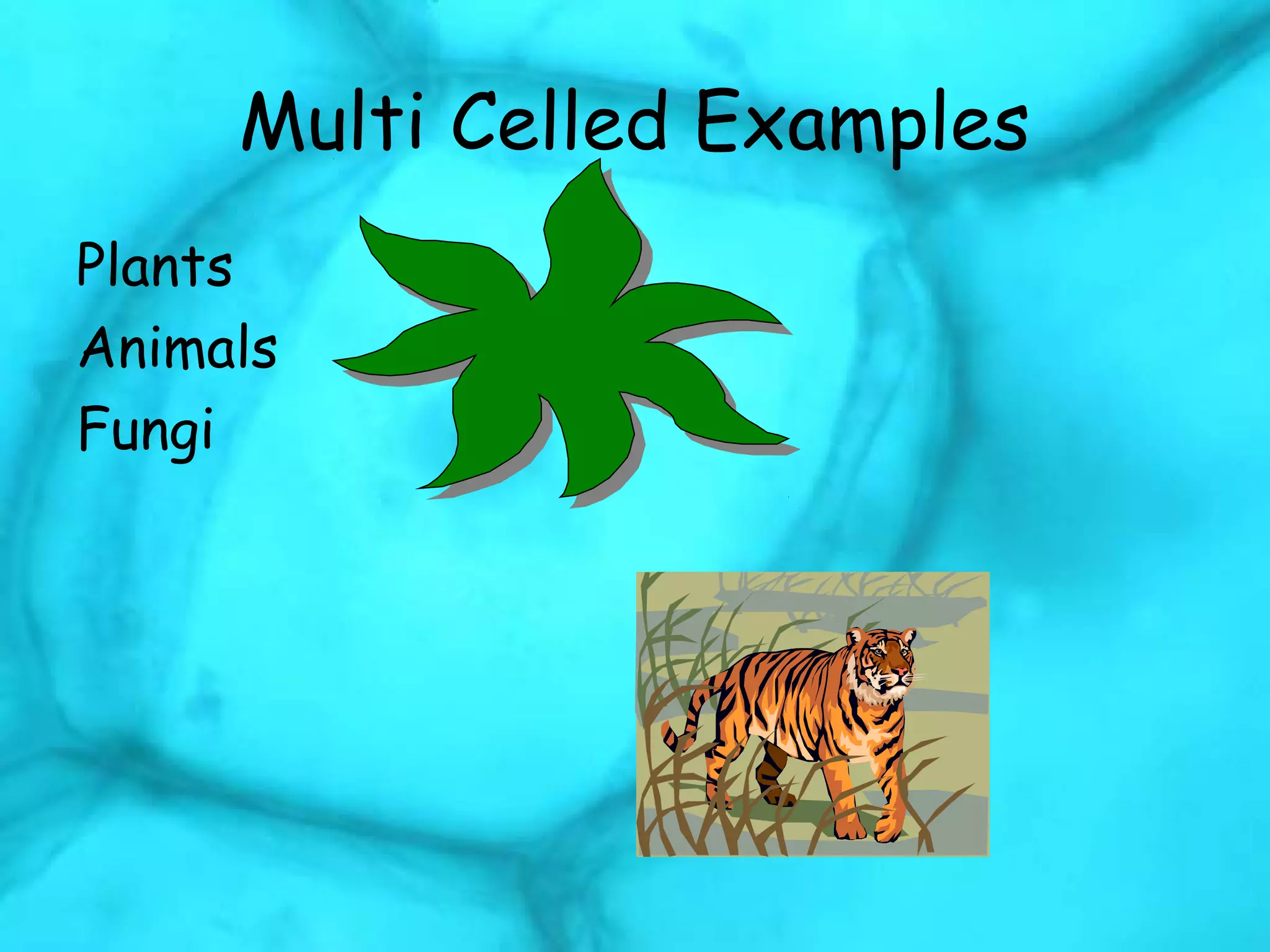
Multi Celled Examples
Plants
Animals
Fungi
Single-celled organisms are made of only one
cell.
Example: algae, amoeba, paramecium
Multi-cellular organisms, such as plants and
animals, have a higher degree of specialization
where the cells work together and function to
create a living organism.
Example: a human – starts as a single cell. Then
organize themselves into three groups called germ
layers. One layer will form the skin and nerves,
Another layer becomes the lining of the digestive
tract. The third layer produces all other body parts.
http://www.youtube.com/watch?v=qEHQbjido9I
Single-Celled BOTH Multi-Celled

Multi and single celled organisms comparisons

  • 1.
    Multi and SingleCelled Organisms
  • 2.
    Standards S5L3 Students willdiagram and label parts of various cells (plant, animal, single-celled, and multi-celled).
  • 3.
    Essential Questions How dosingle and multiple cells compare and contrast?
  • 4.
    Did you know??? •Both plants and animals can be made of one cell-or millions of cells like you. • One-celled (single-celled) organisms, however, tend to be different from those with many cells. – Some single-celled creatures have a nucleus, and some do not. – Some single-celled plants have chloroplasts, but not all have stiff cell walls. – All single-celled organisms eat, get rid of wastes, and reproduce.
  • 5.
    Single-Celled Organisms • Amoebas,Algae, Plankton, and bacteria are single-celled organisms. • You need a microscope to see single- celled organisms. http://www.youtube.com/watch?v=7pR7TNzJ_pA&NR=1&feature=fvwp http://www.youtube.com/watch?NR=1&v=fh_yjLppNAg&feature=endscreen
  • 6.
    Multi Celled Organisms •Living things made up of more than one cell are multi-celled organisms. • You are a multiple celled organism. • Can you think of any other multi-celled organisms?
  • 7.
  • 8.
    Single-celled organisms aremade of only one cell. Example: algae, amoeba, paramecium Multi-cellular organisms, such as plants and animals, have a higher degree of specialization where the cells work together and function to create a living organism. Example: a human – starts as a single cell. Then organize themselves into three groups called germ layers. One layer will form the skin and nerves, Another layer becomes the lining of the digestive tract. The third layer produces all other body parts. http://www.youtube.com/watch?v=qEHQbjido9I
  • 9.
  • 10.