THE DISCOVERY OF THE CELL
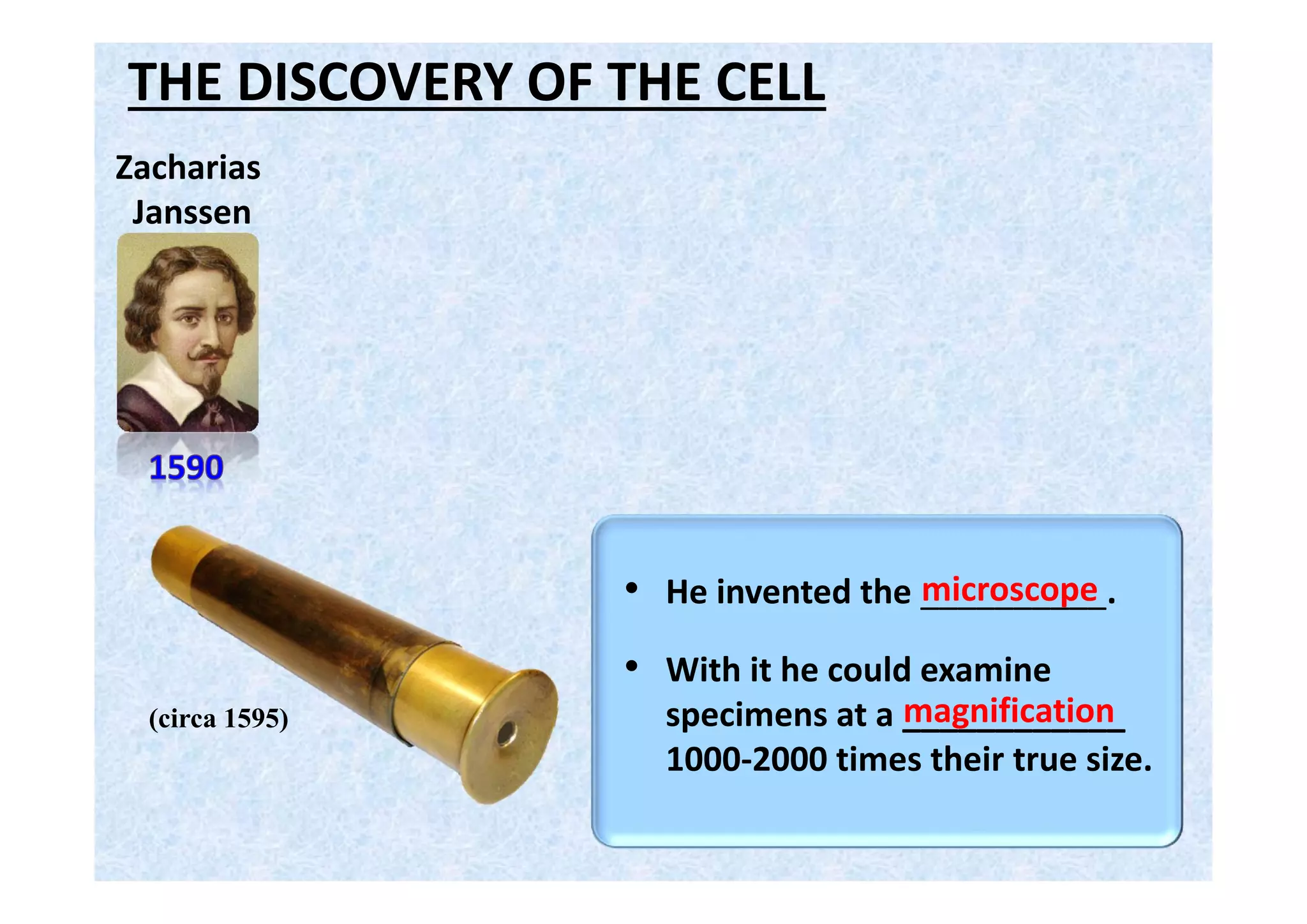
Zacharias
Janssen
• He invented the __________.microscope
• With it he could examine
specimens at a ____________
1000-2000 times their true size.
magnification(circa 1595)
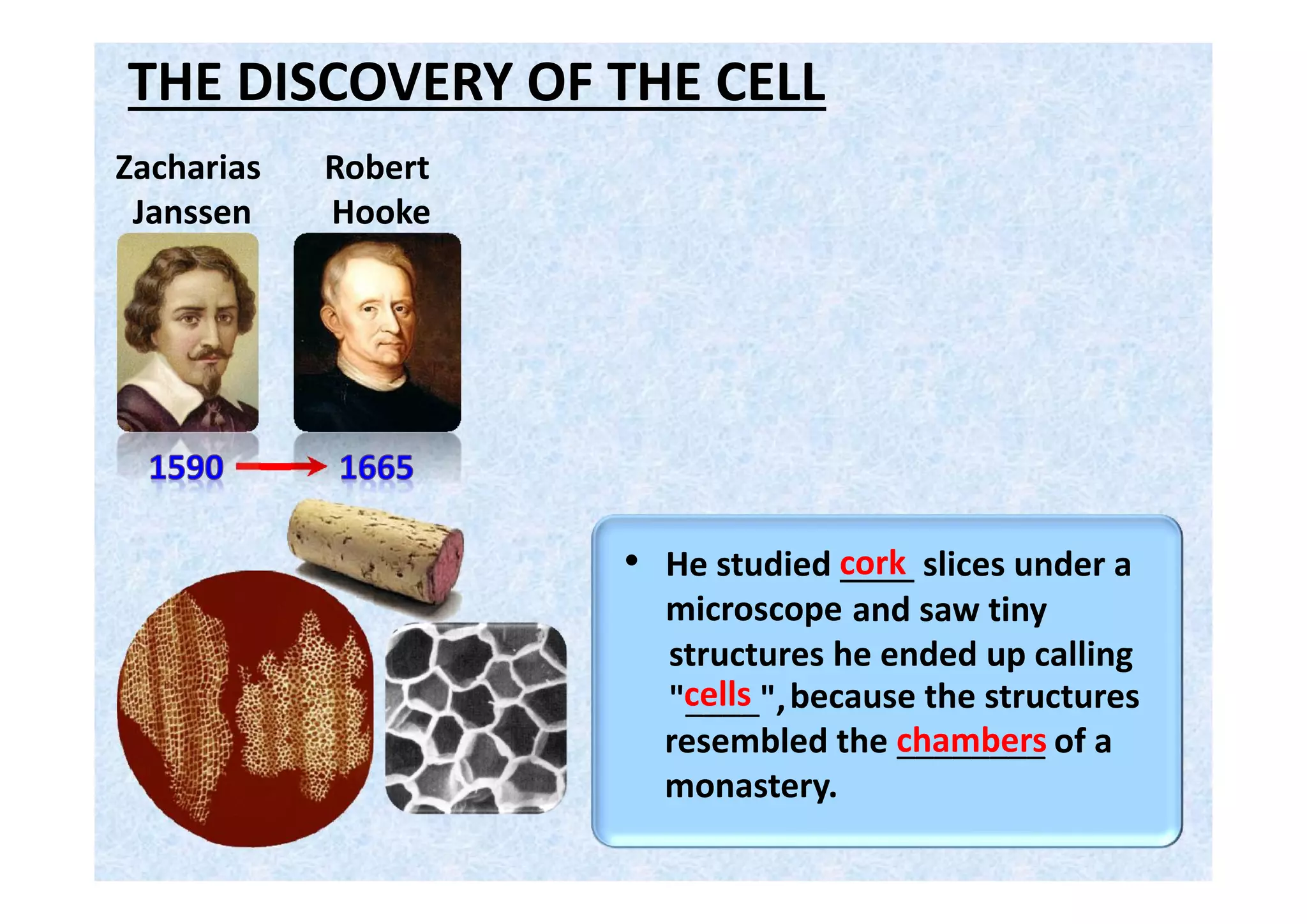
because the structures
resembled the ________ of a
monastery.
• He studied ____ slices under a
microscope and saw tiny
structures he ended up calling
"____",
THE DISCOVERY OF THE CELL
Robert
Hooke
Zacharias
Janssen
chambers
cells
cork
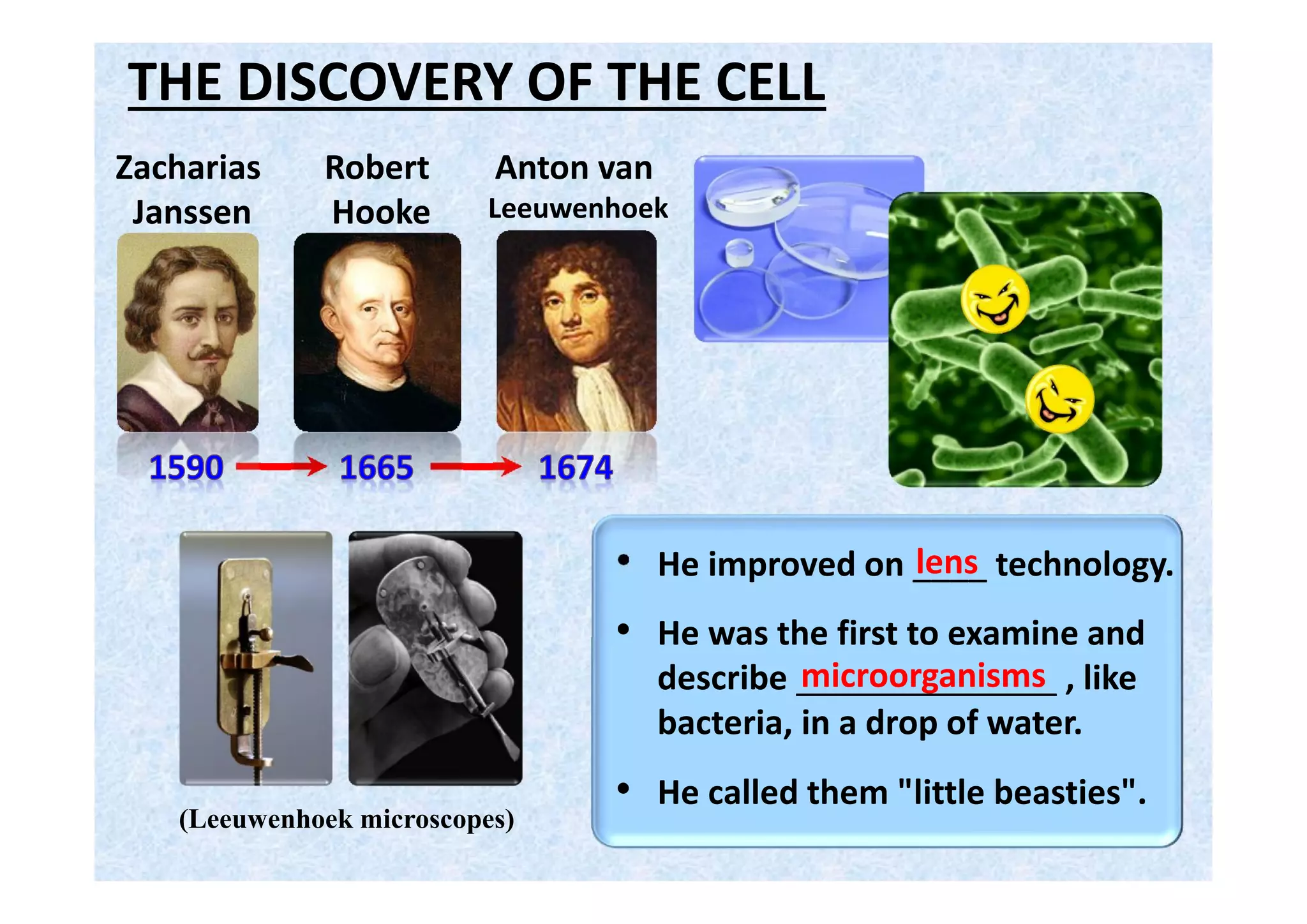
• He improved on ____ technology.
THE DISCOVERY OF THE CELL
lens
Robert
Hooke
• He was the first to examine and
describe ______________ , like
bacteria, in a drop of water.
Anton van
Leeuwenhoek
Zacharias
Janssen
microorganisms
• He called them "little beasties".
(Leeuwenhoek microscopes)
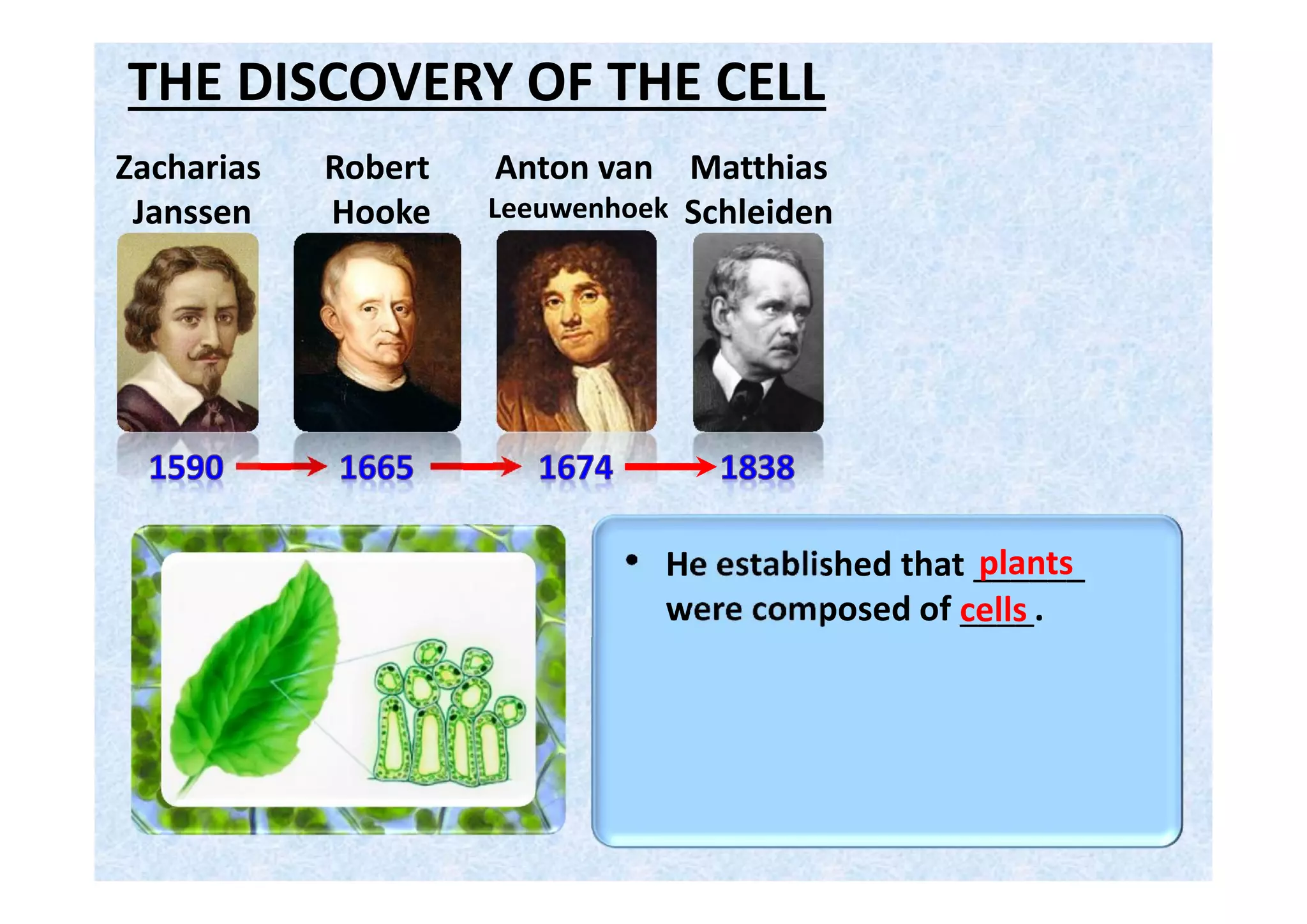
• He established that ______
were composed of ____.
THE DISCOVERY OF THE CELL
Robert
Hooke
Anton van
Leeuwenhoek
Zacharias
Janssen
Matthias
Schleiden
cells
plants
THE DISCOVERY OF THE CELL
Robert
Hooke
Anton van
Leeuwenhoek
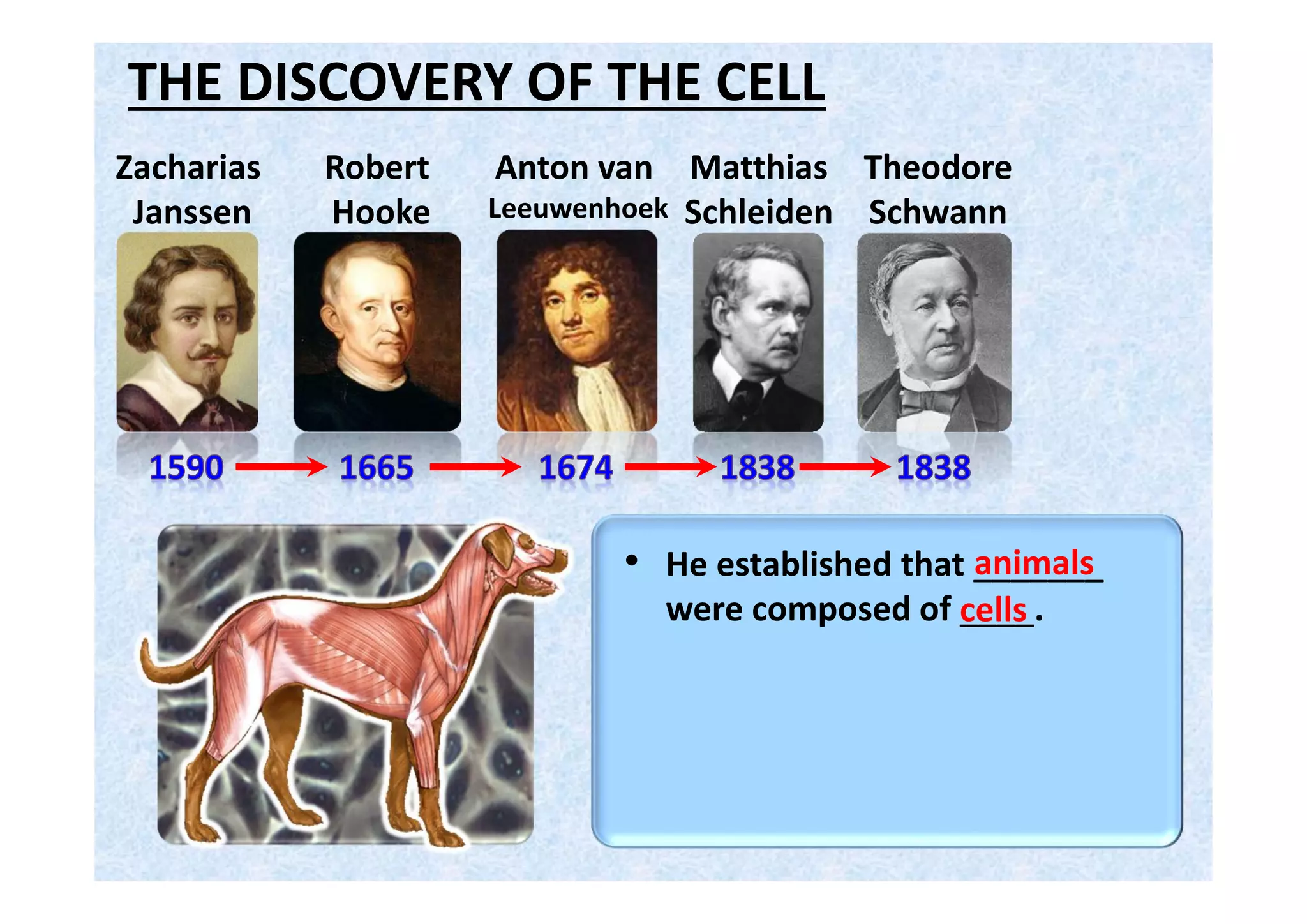
Theodore
Schwann
Zacharias
Janssen
Matthias
Schleiden
• He established that _______
were composed of ____.cells
animals
THE DISCOVERY OF THE CELL
Robert
Hooke
Anton van
Leeuwenhoek
Theodore
Schwann
Zacharias
Janssen
Matthias
Schleiden
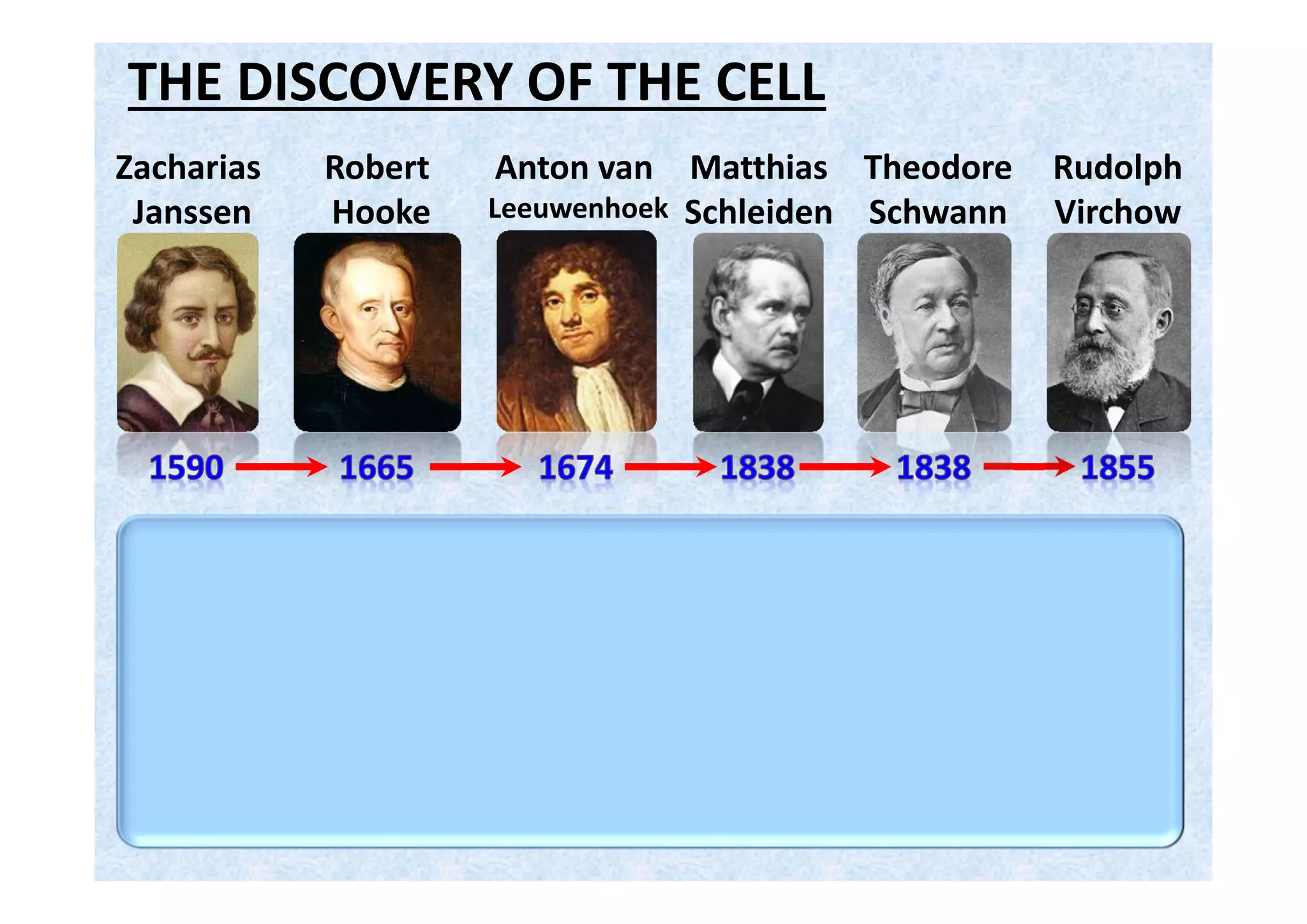
Rudolph
Virchow
• He established that every cell
came from _________.other cells
THE DISCOVERY OF THE CELL
Robert
Hooke
Anton van
Leeuwenhoek
Theodore
Schwann
Zacharias
Janssen
Matthias
Schleiden
Rudolph
Virchow
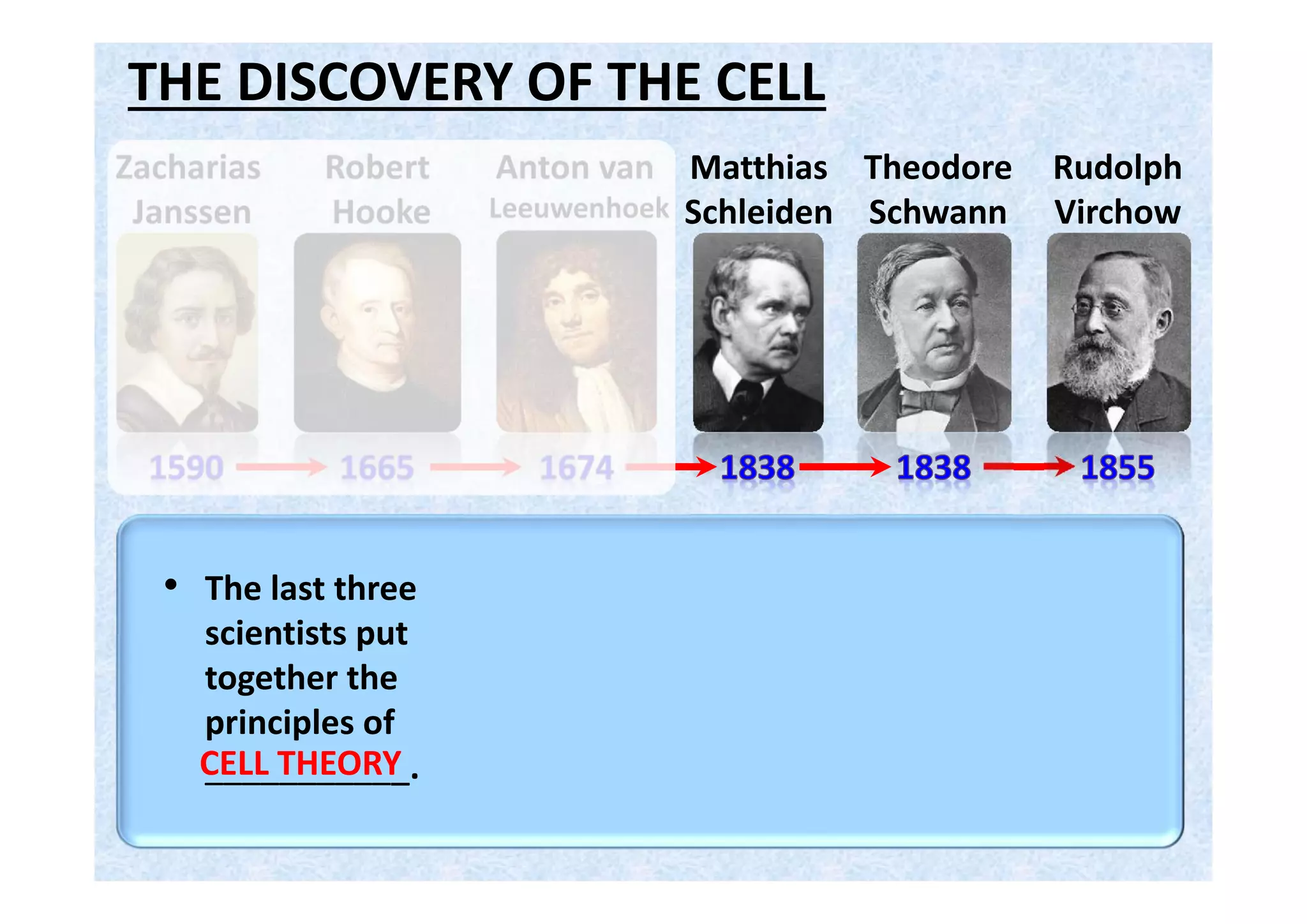
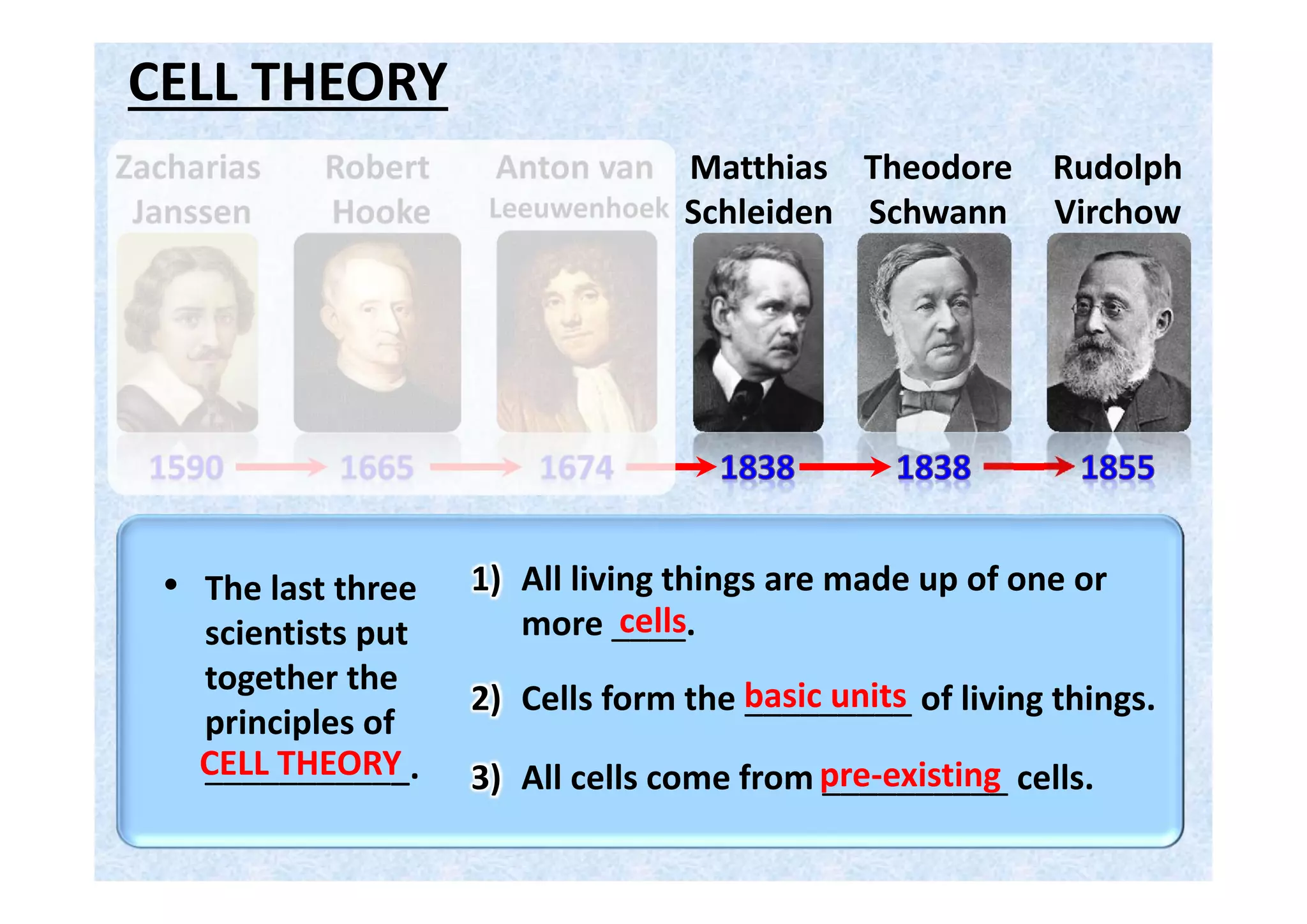
• The last three
scientists put
together the
principles of
___________.CELL THEORY
CELL THEORY
Robert
Hooke
Anton van
Leeuwenhoek
Theodore
Schwann
Zacharias
Janssen
Matthias
Schleiden
Rudolph
Virchow
• The last three
scientists put
together the
principles of
___________.CELL THEORY
1) All living things are made up of one or
more ____.cells
2) Cells form the _________ of living things.basic units
3) All cells come from __________ cells.pre-existing
CELLULAR REQUIREMENTS
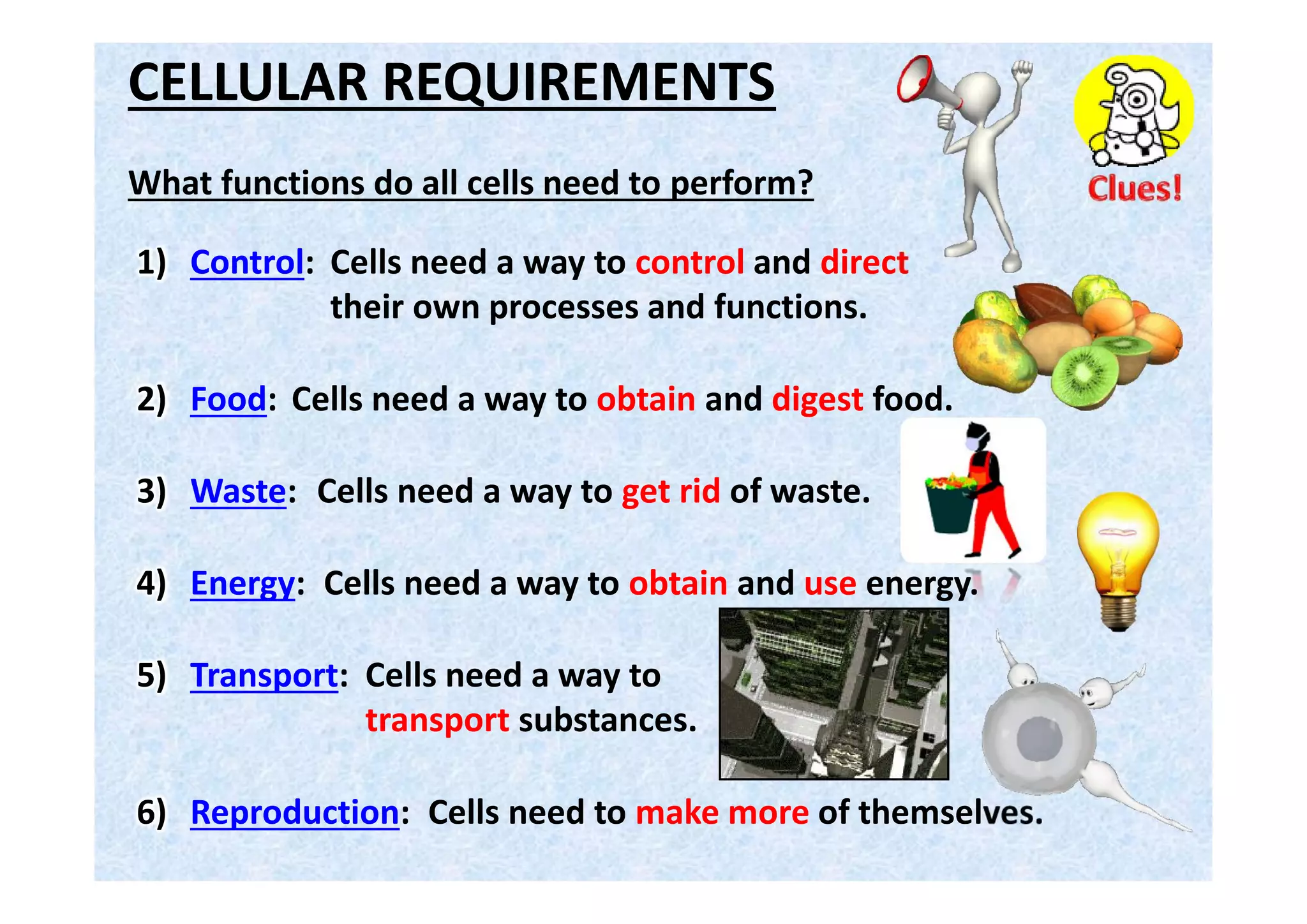
What functions do all cells need to perform?
1)
2)
3)
4)
5)
Control:
Food:
Waste:
Energy:
Transport:
Cells need a way to control and direct
their own processes and functions.
Cells need a way to obtain and digest food.
Cells need a way to get rid of waste.
Cells need a way to obtain and use energy.
Cells need a way to
transport substances.
6) Reproduction: Cells need to make more of themselves.
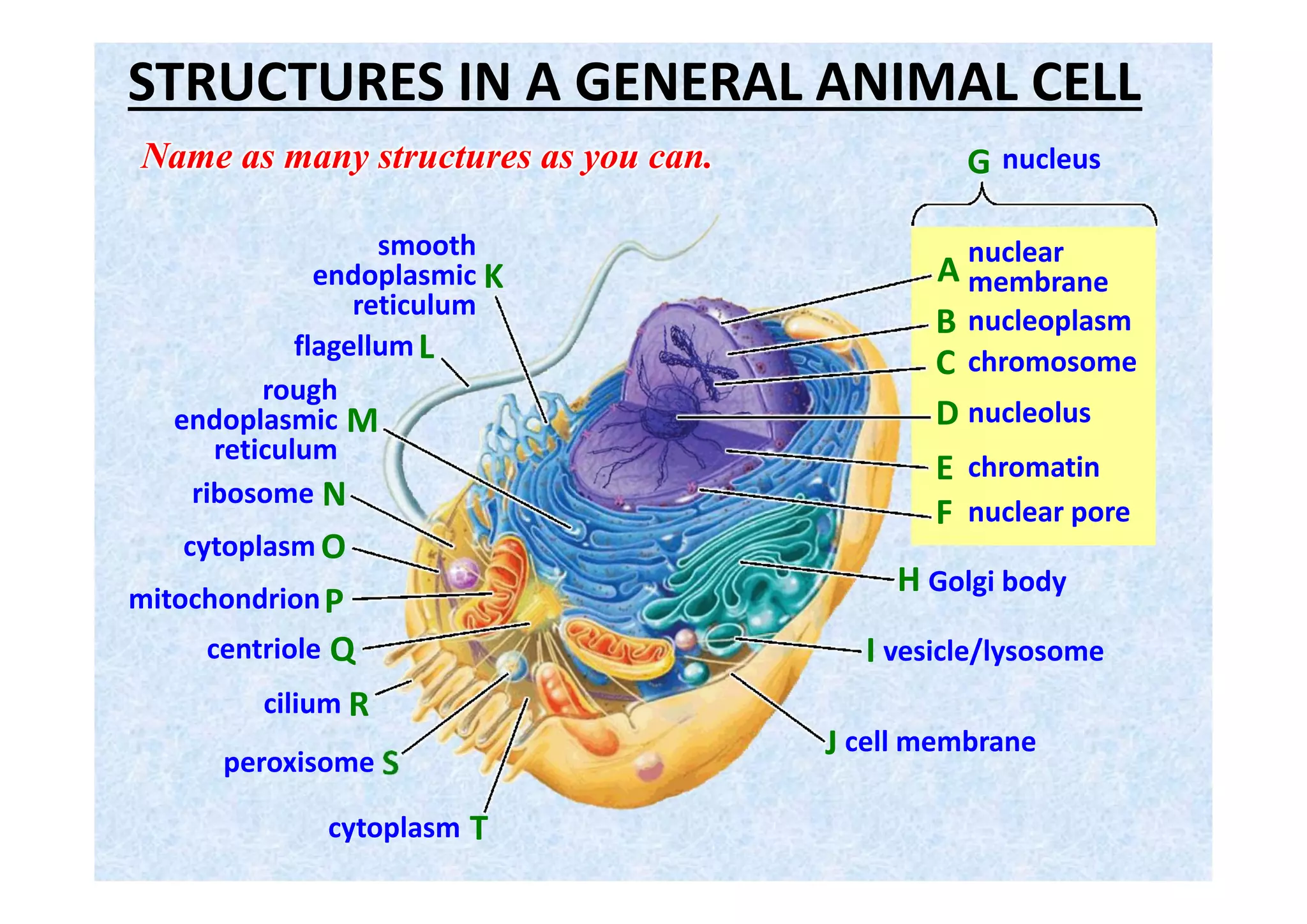
STRUCTURES IN A GENERAL ANIMAL CELL
A
B
F
E
D
C
S
J
I
H
G
R
Q
P
N
M
L
T
O
K
smooth
endoplasmic
reticulum
nucleolus
cytoplasm
centriole
mitochondrion
cytoplasm
ribosome
flagellum
nuclear pore
chromatin
chromosome
nucleoplasm
nuclear
membrane
rough
endoplasmic
reticulum
peroxisome
cilium
Golgi body
vesicle/lysosome
cell membrane
nucleusName as many structures as you can.
STRUCTURES IN A GENERAL PLANT CELL
A
B
F
E
D
C
S
K
I
H
G
R
Q
T
N
P
L
J
O
M
rough endoplasmic
reticulum
nucleolus
cytoplasm
plasmodesma
mitochondrion
central vacuole
nuclear pore
chromatin
chromosome
nucleoplasm
nuclear
membranesmooth
endoplasmic
reticulum
peroxisome
chloroplast
Golgi body
vesicle
cell wall
nucleus
cell membrane
ribosome
Name as many structures as you can.

Cell history and structure

  • 1.
    THE DISCOVERY OFTHE CELL Zacharias Janssen • He invented the __________.microscope • With it he could examine specimens at a ____________ 1000-2000 times their true size. magnification(circa 1595)
  • 2.
    because the structures resembledthe ________ of a monastery. • He studied ____ slices under a microscope and saw tiny structures he ended up calling "____", THE DISCOVERY OF THE CELL Robert Hooke Zacharias Janssen chambers cells cork
  • 3.
    • He improvedon ____ technology. THE DISCOVERY OF THE CELL lens Robert Hooke • He was the first to examine and describe ______________ , like bacteria, in a drop of water. Anton van Leeuwenhoek Zacharias Janssen microorganisms • He called them "little beasties". (Leeuwenhoek microscopes)
  • 4.
    • He establishedthat ______ were composed of ____. THE DISCOVERY OF THE CELL Robert Hooke Anton van Leeuwenhoek Zacharias Janssen Matthias Schleiden cells plants
  • 5.
    THE DISCOVERY OFTHE CELL Robert Hooke Anton van Leeuwenhoek Theodore Schwann Zacharias Janssen Matthias Schleiden • He established that _______ were composed of ____.cells animals
  • 6.
    THE DISCOVERY OFTHE CELL Robert Hooke Anton van Leeuwenhoek Theodore Schwann Zacharias Janssen Matthias Schleiden Rudolph Virchow • He established that every cell came from _________.other cells
  • 7.
    THE DISCOVERY OFTHE CELL Robert Hooke Anton van Leeuwenhoek Theodore Schwann Zacharias Janssen Matthias Schleiden Rudolph Virchow • The last three scientists put together the principles of ___________.CELL THEORY
  • 8.
    CELL THEORY Robert Hooke Anton van Leeuwenhoek Theodore Schwann Zacharias Janssen Matthias Schleiden Rudolph Virchow •The last three scientists put together the principles of ___________.CELL THEORY 1) All living things are made up of one or more ____.cells 2) Cells form the _________ of living things.basic units 3) All cells come from __________ cells.pre-existing
  • 9.
    CELLULAR REQUIREMENTS What functionsdo all cells need to perform? 1) 2) 3) 4) 5) Control: Food: Waste: Energy: Transport: Cells need a way to control and direct their own processes and functions. Cells need a way to obtain and digest food. Cells need a way to get rid of waste. Cells need a way to obtain and use energy. Cells need a way to transport substances. 6) Reproduction: Cells need to make more of themselves.
  • 10.
    STRUCTURES IN AGENERAL ANIMAL CELL A B F E D C S J I H G R Q P N M L T O K smooth endoplasmic reticulum nucleolus cytoplasm centriole mitochondrion cytoplasm ribosome flagellum nuclear pore chromatin chromosome nucleoplasm nuclear membrane rough endoplasmic reticulum peroxisome cilium Golgi body vesicle/lysosome cell membrane nucleusName as many structures as you can.
  • 11.
    STRUCTURES IN AGENERAL PLANT CELL A B F E D C S K I H G R Q T N P L J O M rough endoplasmic reticulum nucleolus cytoplasm plasmodesma mitochondrion central vacuole nuclear pore chromatin chromosome nucleoplasm nuclear membranesmooth endoplasmic reticulum peroxisome chloroplast Golgi body vesicle cell wall nucleus cell membrane ribosome Name as many structures as you can.