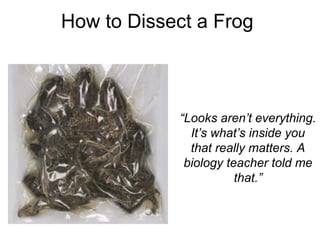
How to Dissect a Frog
“Looks aren’t everything.
It’s what’s inside you
that really matters. A
biology teacher told me
that.”
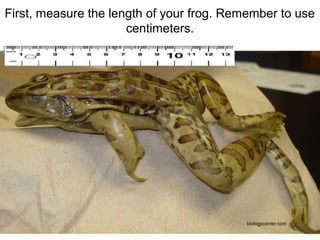
First, measure the length of your frog. Remember to use
centimeters.
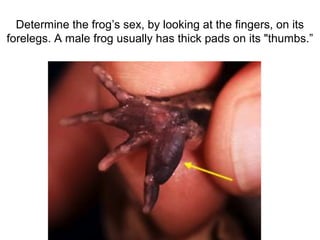
Determine the frog’s sex, by looking at the fingers, on its
forelegs. A male frog usually has thick pads on its "thumbs.”
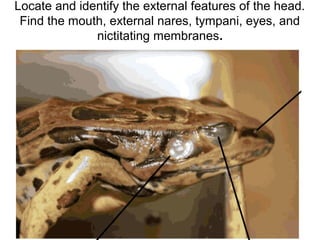
Locate and identify the external features of the head.
Find the mouth, external nares, tympani, eyes, and
nictitating membranes.
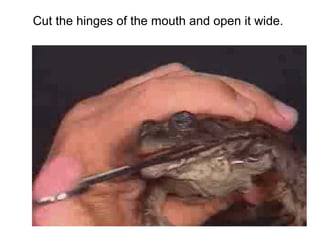
Cut the hinges of the mouth and open it wide.
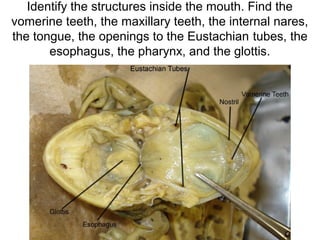
Identify the structures inside the mouth. Find the
vomerine teeth, the maxillary teeth, the internal nares,
the tongue, the openings to the Eustachian tubes, the
esophagus, the pharynx, and the glottis.
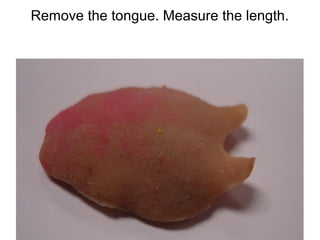
Remove the tongue. Measure the length.
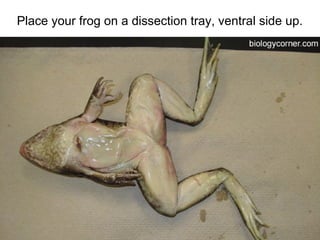
Place your frog on a dissection tray, ventral side up.
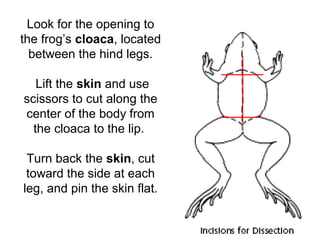
Look for the opening to
the frog’s cloaca, located
between the hind legs.
Lift the skin and use
scissors to cut along the
center of the body from
the cloaca to the lip.
Turn back the skin, cut
toward the side at each
leg, and pin the skin flat.
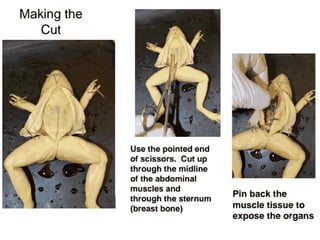
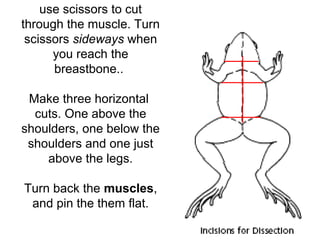
use scissors to cut
through the muscle. Turn
scissors sideways when
you reach the
breastbone..
Make three horizontal
cuts. One above the
shoulders, one below the
shoulders and one just
above the legs.
Turn back the muscles,
and pin the them flat.
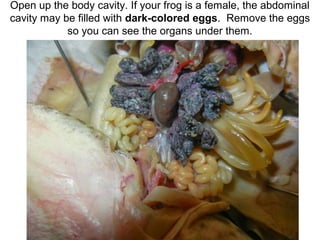
Open up the body cavity. If your frog is a female, the abdominal
cavity may be filled with dark-colored eggs. Remove the eggs
so you can see the organs under them.
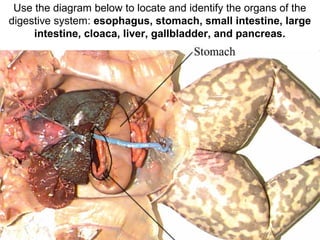
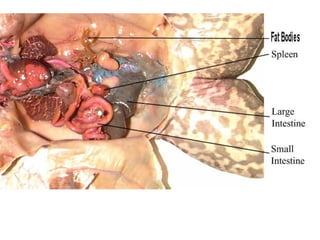
Use the diagram below to locate and identify the organs of the
digestive system: esophagus, stomach, small intestine, large
intestine, cloaca, liver, gallbladder, and pancreas.
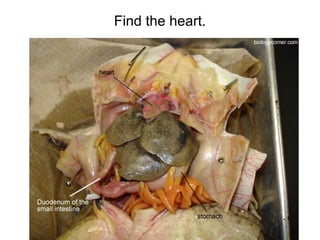
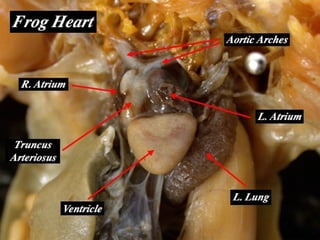
Find the heart.
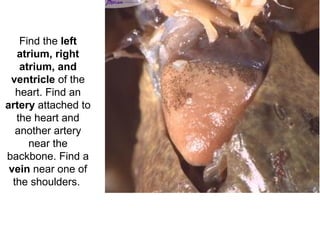
Find the left
atrium, right
atrium, and
ventricle of the
heart. Find an
artery attached to
the heart and
another artery
near the
backbone. Find a
vein near one of
the shoulders.
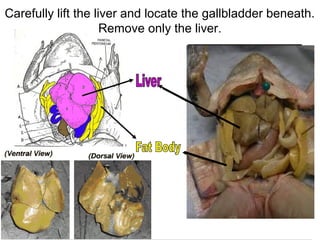
Carefully lift the liver and locate the gallbladder beneath.
Remove only the liver.
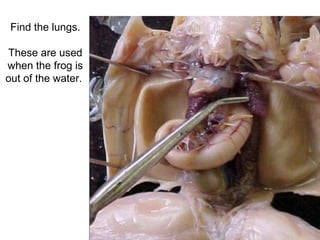
Find the lungs.
These are used
when the frog is
out of the water.
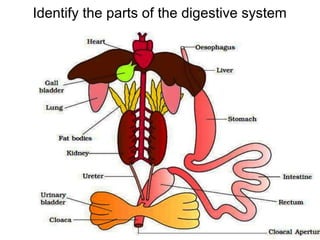
Identify the parts of the digestive system
Mouth
Pharynx
Oesophagus
Stomach
Intestine
Rectum
Cloaca
How is a
frog’s digestive
system different
than a humans?
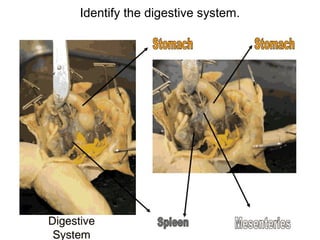
Identify the digestive system.
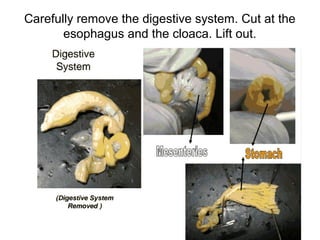
Carefully remove the digestive system. Cut at the
esophagus and the cloaca. Lift out.
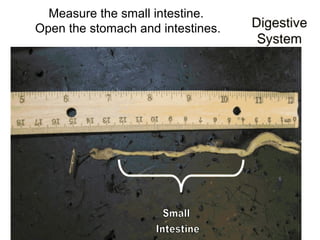
Measure the small intestine.
Open the stomach and intestines.
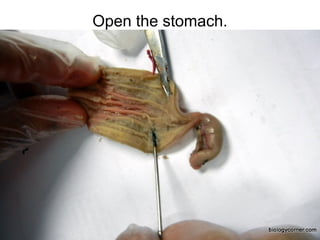
Open the stomach.
Remove the peritoneal membrane, which is connective
tissue that lies on top of the red kidneys.
Find the ureters;
the urinary
bladder; the testes
and sperm ducts in
the male; and the
ovaries, oviducts,
and uteri in the
female.
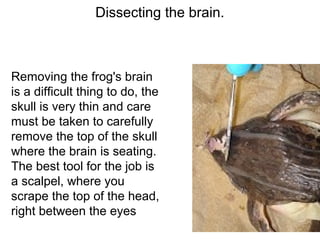
Dissecting the brain.
Removing the frog's brain
is a difficult thing to do, the
skull is very thin and care
must be taken to carefully
remove the top of the skull
where the brain is seating.
The best tool for the job is
a scalpel, where you
scrape the top of the head,
right between the eyes
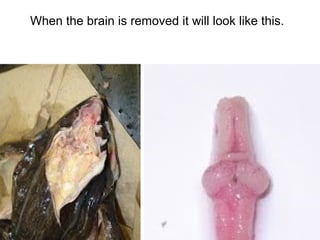
When the brain is removed it will look like this.

How to dissect a frog 2014

  • 1.
    How to Dissecta Frog “Looks aren’t everything. It’s what’s inside you that really matters. A biology teacher told me that.”
  • 2.
    First, measure thelength of your frog. Remember to use centimeters.
  • 3.
    Determine the frog’ssex, by looking at the fingers, on its forelegs. A male frog usually has thick pads on its "thumbs.”
  • 4.
    Locate and identifythe external features of the head. Find the mouth, external nares, tympani, eyes, and nictitating membranes.
  • 5.
    Cut the hingesof the mouth and open it wide.
  • 6.
    Identify the structuresinside the mouth. Find the vomerine teeth, the maxillary teeth, the internal nares, the tongue, the openings to the Eustachian tubes, the esophagus, the pharynx, and the glottis.
  • 7.
    Remove the tongue.Measure the length.
  • 8.
    Place your frogon a dissection tray, ventral side up.
  • 9.
    Look for theopening to the frog’s cloaca, located between the hind legs. Lift the skin and use scissors to cut along the center of the body from the cloaca to the lip. Turn back the skin, cut toward the side at each leg, and pin the skin flat.
  • 11.
    use scissors tocut through the muscle. Turn scissors sideways when you reach the breastbone.. Make three horizontal cuts. One above the shoulders, one below the shoulders and one just above the legs. Turn back the muscles, and pin the them flat.
  • 12.
    Open up thebody cavity. If your frog is a female, the abdominal cavity may be filled with dark-colored eggs. Remove the eggs so you can see the organs under them.
  • 13.
    Use the diagrambelow to locate and identify the organs of the digestive system: esophagus, stomach, small intestine, large intestine, cloaca, liver, gallbladder, and pancreas.
  • 15.
  • 16.
    Find the left atrium,right atrium, and ventricle of the heart. Find an artery attached to the heart and another artery near the backbone. Find a vein near one of the shoulders.
  • 18.
    Carefully lift theliver and locate the gallbladder beneath. Remove only the liver.
  • 19.
    Find the lungs. Theseare used when the frog is out of the water.
  • 20.
    Identify the partsof the digestive system
  • 21.
  • 22.
  • 23.
    Carefully remove thedigestive system. Cut at the esophagus and the cloaca. Lift out.
  • 24.
    Measure the smallintestine. Open the stomach and intestines.
  • 25.
  • 26.
    Remove the peritonealmembrane, which is connective tissue that lies on top of the red kidneys.
  • 27.
    Find the ureters; theurinary bladder; the testes and sperm ducts in the male; and the ovaries, oviducts, and uteri in the female.
  • 28.
    Dissecting the brain. Removingthe frog's brain is a difficult thing to do, the skull is very thin and care must be taken to carefully remove the top of the skull where the brain is seating. The best tool for the job is a scalpel, where you scrape the top of the head, right between the eyes
  • 29.
    When the brainis removed it will look like this.