STIMULATINGCRITICALTHINKING
IN EFL CLASSES
Presenter: StellaGrama
EnglishTeacher
“Prometeu-Prim“Lyceum
TeachingDegreeI
CambridgeCELTACertified
E-mail:stellagrama9@gmail.com
Chisinau,2019
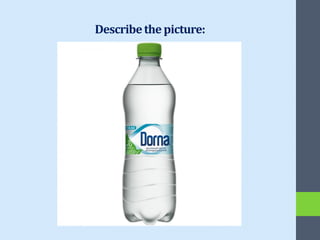
Describethe picture:
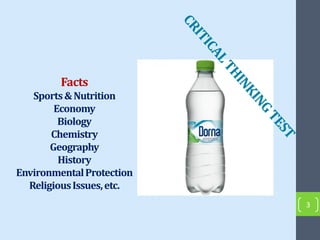
Facts
Sports&Nutrition
Economy
Biology
Chemistry
Geography
History
EnvironmentalProtection
ReligiousIssues,etc.
3
4
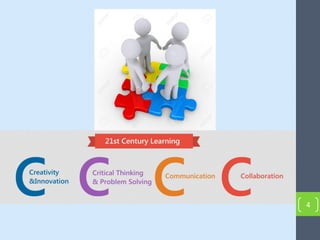
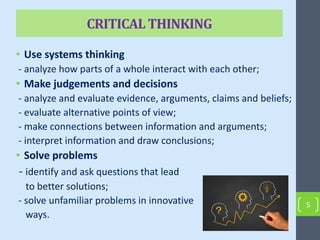
• Use systems thinking
- analyze how parts of a whole interact with each other;
• Make judgements and decisions
- analyze and evaluate evidence, arguments, claims and beliefs;
- evaluate alternative points of view;
- make connections between information and arguments;
- interpret information and draw conclusions;
• Solve problems
- identify and ask questions that lead
to better solutions;
- solve unfamiliar problems in innovative
ways.
CRITICALTHINKING
5
• Articulate thoughts and ideas effectively;
• Decode meaning including knowledge, values, attitudes
and intentions;
• Use communication for various purposes;
• Use multiple media and technologies and assess impact
and their effectiveness;
• Communicate effectively in multilingual and multicultural
environments.
COMMUNICATION
6
COLLABORATION
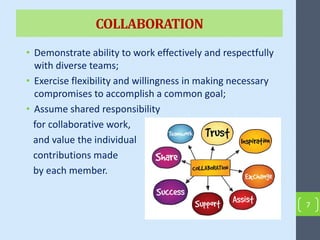
• Demonstrate ability to work effectively and respectfully
with diverse teams;
• Exercise flexibility and willingness in making necessary
compromises to accomplish a common goal;
• Assume shared responsibility
for collaborative work,
and value the individual
contributions made
by each member.
7
CREATIVITYAND INNOVATION
• Think creatively
- use various idea creation techniques;
- elaborate, refine, analyze and
evaluate ideas to improve creative
efforts;
• Work creatively with others
- develop, implement and
communicate new ideas to others
effectively;
- be open and responsive to new and
diverse perspectives;
• Implement Innovation
8
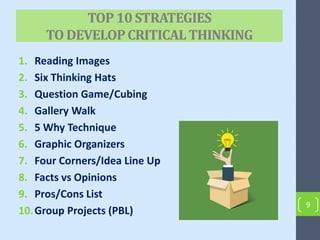
TOP10 STRATEGIES
TO DEVELOPCRITICALTHINKING
1. Reading Images
2. Six Thinking Hats
3. Question Game/Cubing
4. Gallery Walk
5. 5 Why Technique
6. Graphic Organizers
7. Four Corners/Idea Line Up
8. Facts vs Opinions
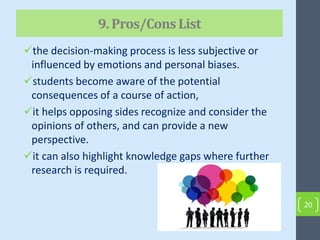
9. Pros/Cons List
10.Group Projects (PBL)
9
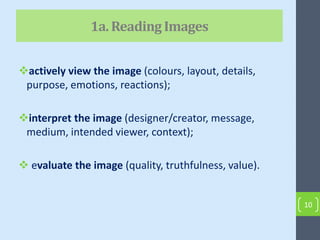
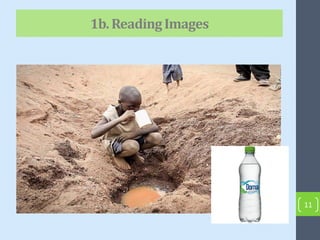
1a. ReadingImages
actively view the image (colours, layout, details,
purpose, emotions, reactions);
interpret the image (designer/creator, message,
medium, intended viewer, context);
 evaluate the image (quality, truthfulness, value).
10
1b.ReadingImages
11
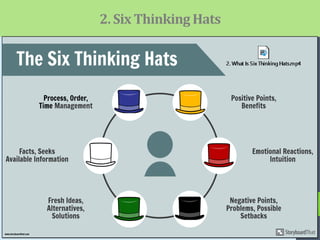
2. Six Thinking Hats
12
3. QuestionGame/Cubing
13
• Questioning (who, what, when, where, what,
why?)
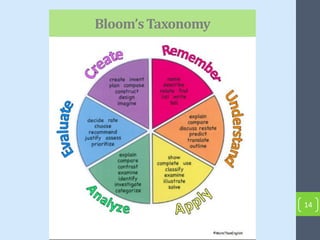
• Depth of knowledge (different directions or
prompts on each of the six sides. See Bloom’s
Taxonomy)
• Story elements (characters, plot,
conflict, rising action,
climax, resolution)
Bloom’sTaxonomy
14
4. GalleryWalk
15
 addresses a variety of cognitive skills involving
analysis, evaluation, and synthesis promotes
higher order thinking skills
develops oral/written presentation skills, and
team building
serves as a discussion technique for active
engagement
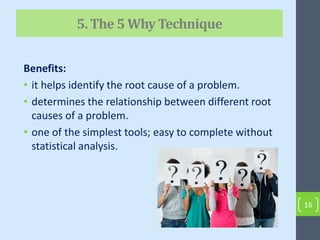
5. The 5 Why Technique
16
Benefits:
• it helps identify the root cause of a problem.
• determines the relationship between different root
causes of a problem.
• one of the simplest tools; easy to complete without
statistical analysis.
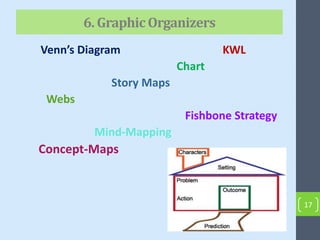
Venn’s Diagram KWL
Chart
Story Maps
Webs
Fishbone Strategy
Mind-Mapping
Concept-Maps
6. Graphic Organizers
17
18
1. Spiders are interesting animals to observe.
2. You must go to university to become a teacher.
3. Dogs make better pets than cats.
4. Some dogs have saved their owners’ life.
5. Apples contain vitamin C.
6. This school has too many steps to walk up and
down.
7. The President of the US may serve two 4-year
terms.
8. Facts vs Opinions
19
the decision-making process is less subjective or
influenced by emotions and personal biases.
students become aware of the potential
consequences of a course of action,
it helps opposing sides recognize and consider the
opinions of others, and can provide a new
perspective.
it can also highlight knowledge gaps where further
research is required.
9. Pros/ConsList
20
1. Defining the problem or collaborative project;
2. Identifying project elements and components in detail.
3. Identifying resources;
4. Dividing the resources amongst the participants;
5. Clearly stating the goals of the task or problem
solution.
6. Identifying the problem, sorting out a strategy to
resolve the problem or complete the task.
7. Developing a means of keeping records of their
decisions and discussions.
10a.Project-BasedLearning
21
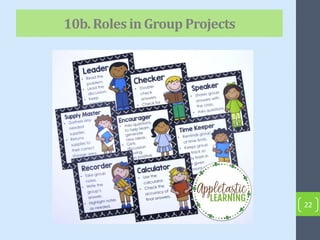
10b.Roles in Group Projects
22
Conclusions
By considering the 4 Cs framework and encouraging 21st
thinking and learning, students become more engaged
and interested, getting a deeper understanding of what
is being taught and retaining more information.
By thinking outside the box, learners develop problem
solving skills. They also are provided with the
opportunity to reflect upon their own strengths and
weaknesses.
They exercise teamwork skills like leadership,
compromise and willingness to be helpful.
Students feel proud about their products.
They develop crucial skills for the future. 23
24
25Thank you for your attention!

Building Critical Thinking Skills

  • 1.
    STIMULATINGCRITICALTHINKING IN EFL CLASSES Presenter:StellaGrama EnglishTeacher “Prometeu-Prim“Lyceum TeachingDegreeI CambridgeCELTACertified E-mail:stellagrama9@gmail.com Chisinau,2019
  • 2.
  • 3.
  • 4.
  • 5.
    • Use systemsthinking - analyze how parts of a whole interact with each other; • Make judgements and decisions - analyze and evaluate evidence, arguments, claims and beliefs; - evaluate alternative points of view; - make connections between information and arguments; - interpret information and draw conclusions; • Solve problems - identify and ask questions that lead to better solutions; - solve unfamiliar problems in innovative ways. CRITICALTHINKING 5
  • 6.
    • Articulate thoughtsand ideas effectively; • Decode meaning including knowledge, values, attitudes and intentions; • Use communication for various purposes; • Use multiple media and technologies and assess impact and their effectiveness; • Communicate effectively in multilingual and multicultural environments. COMMUNICATION 6
  • 7.
    COLLABORATION • Demonstrate abilityto work effectively and respectfully with diverse teams; • Exercise flexibility and willingness in making necessary compromises to accomplish a common goal; • Assume shared responsibility for collaborative work, and value the individual contributions made by each member. 7
  • 8.
    CREATIVITYAND INNOVATION • Thinkcreatively - use various idea creation techniques; - elaborate, refine, analyze and evaluate ideas to improve creative efforts; • Work creatively with others - develop, implement and communicate new ideas to others effectively; - be open and responsive to new and diverse perspectives; • Implement Innovation 8
  • 9.
    TOP10 STRATEGIES TO DEVELOPCRITICALTHINKING 1.Reading Images 2. Six Thinking Hats 3. Question Game/Cubing 4. Gallery Walk 5. 5 Why Technique 6. Graphic Organizers 7. Four Corners/Idea Line Up 8. Facts vs Opinions 9. Pros/Cons List 10.Group Projects (PBL) 9
  • 10.
    1a. ReadingImages actively viewthe image (colours, layout, details, purpose, emotions, reactions); interpret the image (designer/creator, message, medium, intended viewer, context);  evaluate the image (quality, truthfulness, value). 10
  • 11.
  • 12.
  • 13.
    3. QuestionGame/Cubing 13 • Questioning(who, what, when, where, what, why?) • Depth of knowledge (different directions or prompts on each of the six sides. See Bloom’s Taxonomy) • Story elements (characters, plot, conflict, rising action, climax, resolution)
  • 14.
  • 15.
    4. GalleryWalk 15  addressesa variety of cognitive skills involving analysis, evaluation, and synthesis promotes higher order thinking skills develops oral/written presentation skills, and team building serves as a discussion technique for active engagement
  • 16.
    5. The 5Why Technique 16 Benefits: • it helps identify the root cause of a problem. • determines the relationship between different root causes of a problem. • one of the simplest tools; easy to complete without statistical analysis.
  • 17.
    Venn’s Diagram KWL Chart StoryMaps Webs Fishbone Strategy Mind-Mapping Concept-Maps 6. Graphic Organizers 17
  • 18.
  • 19.
    1. Spiders areinteresting animals to observe. 2. You must go to university to become a teacher. 3. Dogs make better pets than cats. 4. Some dogs have saved their owners’ life. 5. Apples contain vitamin C. 6. This school has too many steps to walk up and down. 7. The President of the US may serve two 4-year terms. 8. Facts vs Opinions 19
  • 20.
    the decision-making processis less subjective or influenced by emotions and personal biases. students become aware of the potential consequences of a course of action, it helps opposing sides recognize and consider the opinions of others, and can provide a new perspective. it can also highlight knowledge gaps where further research is required. 9. Pros/ConsList 20
  • 21.
    1. Defining theproblem or collaborative project; 2. Identifying project elements and components in detail. 3. Identifying resources; 4. Dividing the resources amongst the participants; 5. Clearly stating the goals of the task or problem solution. 6. Identifying the problem, sorting out a strategy to resolve the problem or complete the task. 7. Developing a means of keeping records of their decisions and discussions. 10a.Project-BasedLearning 21
  • 22.
    10b.Roles in GroupProjects 22
  • 23.
    Conclusions By considering the4 Cs framework and encouraging 21st thinking and learning, students become more engaged and interested, getting a deeper understanding of what is being taught and retaining more information. By thinking outside the box, learners develop problem solving skills. They also are provided with the opportunity to reflect upon their own strengths and weaknesses. They exercise teamwork skills like leadership, compromise and willingness to be helpful. Students feel proud about their products. They develop crucial skills for the future. 23
  • 24.
  • 25.
    25Thank you foryour attention!