Principles of Learning


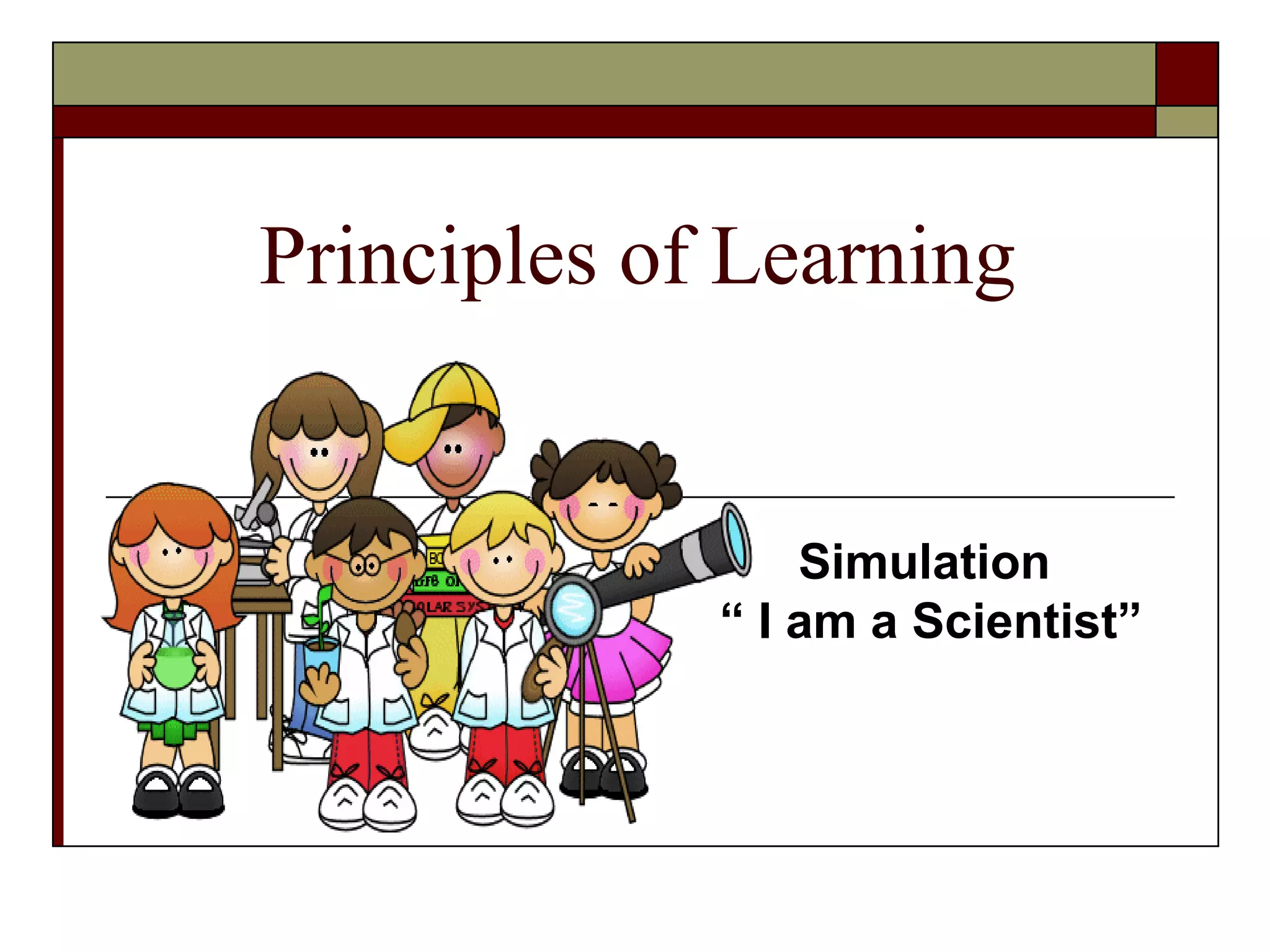
                 Simulation
             “ I am a Scientist”
The principles of Learning
   1. Active involvement -
       In active learning information is not delivered to
        students , rather the student creates it.

   2. Patterns of Connection
       Students “ make meaning" through learning
        situations.
The principles of Learning
   3. Informal Learning
       This refers to learning which , though not
        accidental, was not an outlined aim of the
        teacher.

   4. Direct Experience
       Students are aactively involved in creating their
        own patterns and connections in a real context
The principles of Learning
   5. Reflection
       Students are able to internalise what they have
        learnt and to apply their own relevance to their
        experience.

   6. Compelling Situation
       Students see or try to avoid havign first hand
        experience with the hazards which may occure if
        outline protocols are not followed.
The principles of Learning
   7. Frequent Feed Back
       Involves incentive as well as giving corrections to
        reinforce what has been learnt.

   8. Enjoyable setting.
       This involves creating an environment and
        learning situation where students are comfortable
        learning.
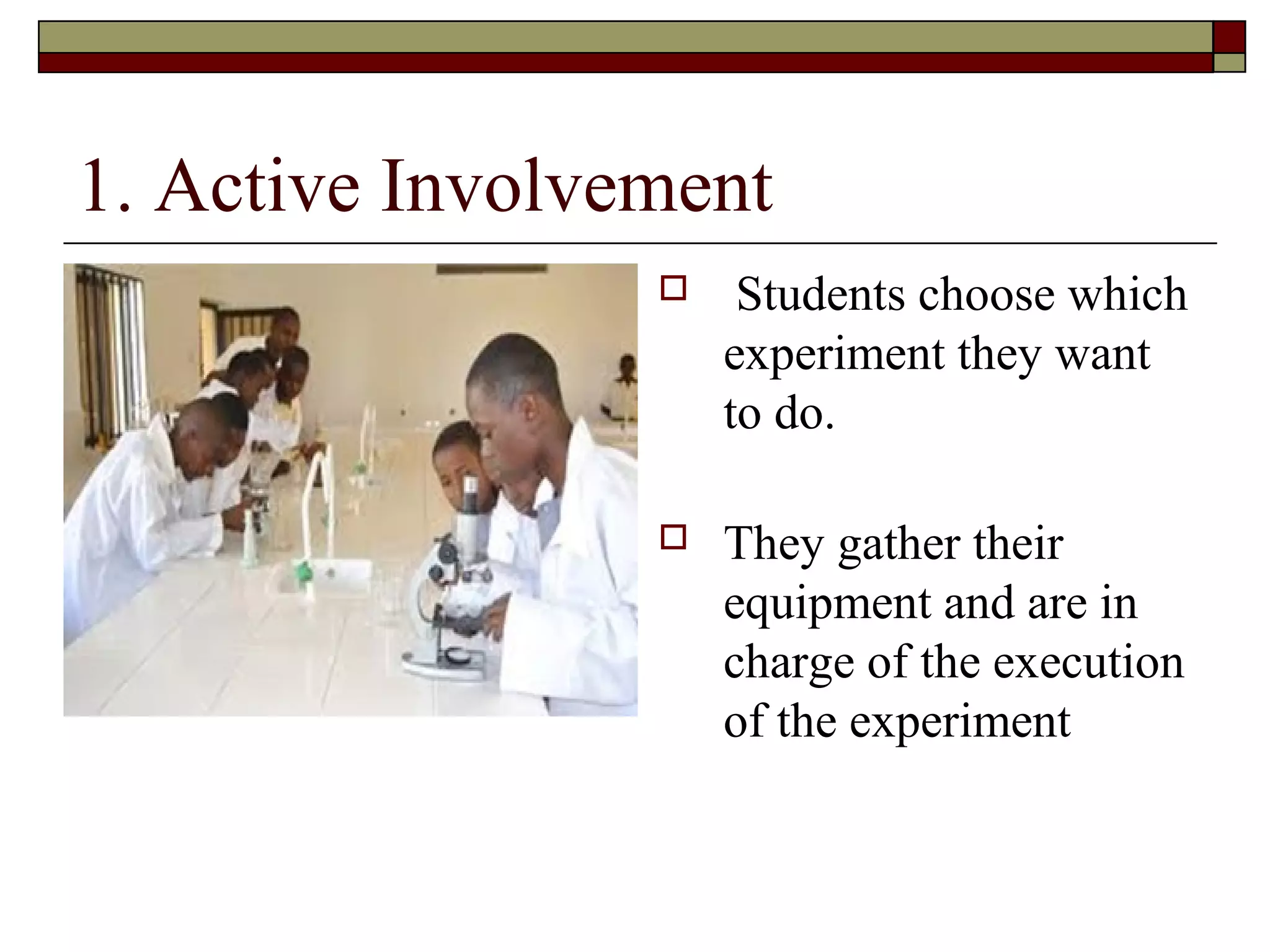
1. Active Involvement
                     Students choose which
                     experiment they want
                     to do.

                    They gather their
                     equipment and are in
                     charge of the execution
                     of the experiment
2. Patterns of Connection
                     Students make meaning of
                      what they have been taught
                      in theory through this
                      practical experiment
                      Students use class notes as
                      the guide to conduct the
                      experiment
                     Practical makes the theory
                      more meaningful
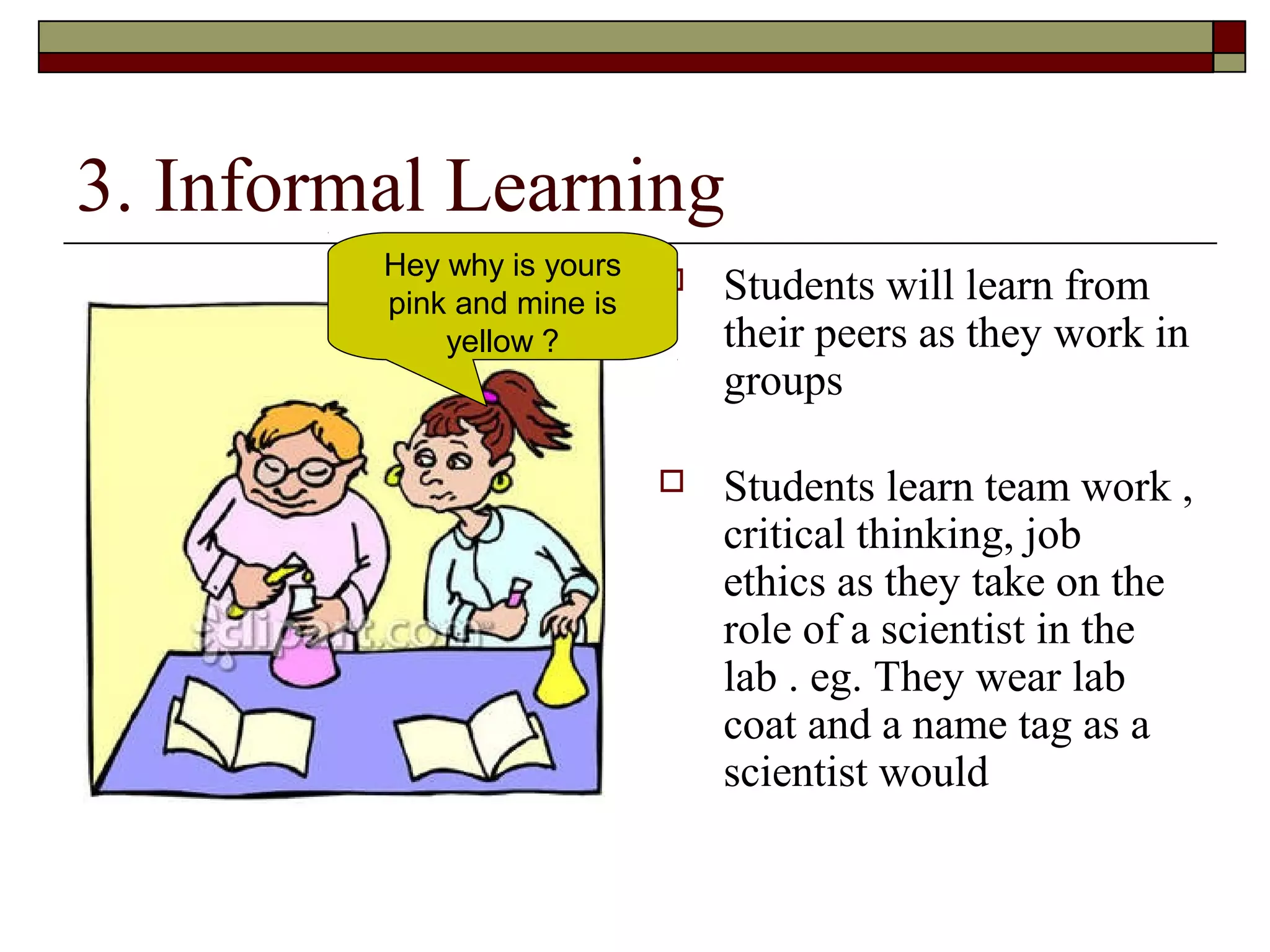
3. Informal Learning
         Hey why is yours
         pink and mine is
                               Students will learn from
             yellow ?           their peers as they work in
                                groups

                               Students learn team work ,
                                critical thinking, job
                                ethics as they take on the
                                role of a scientist in the
                                lab . eg. They wear lab
                                coat and a name tag as a
                                scientist would
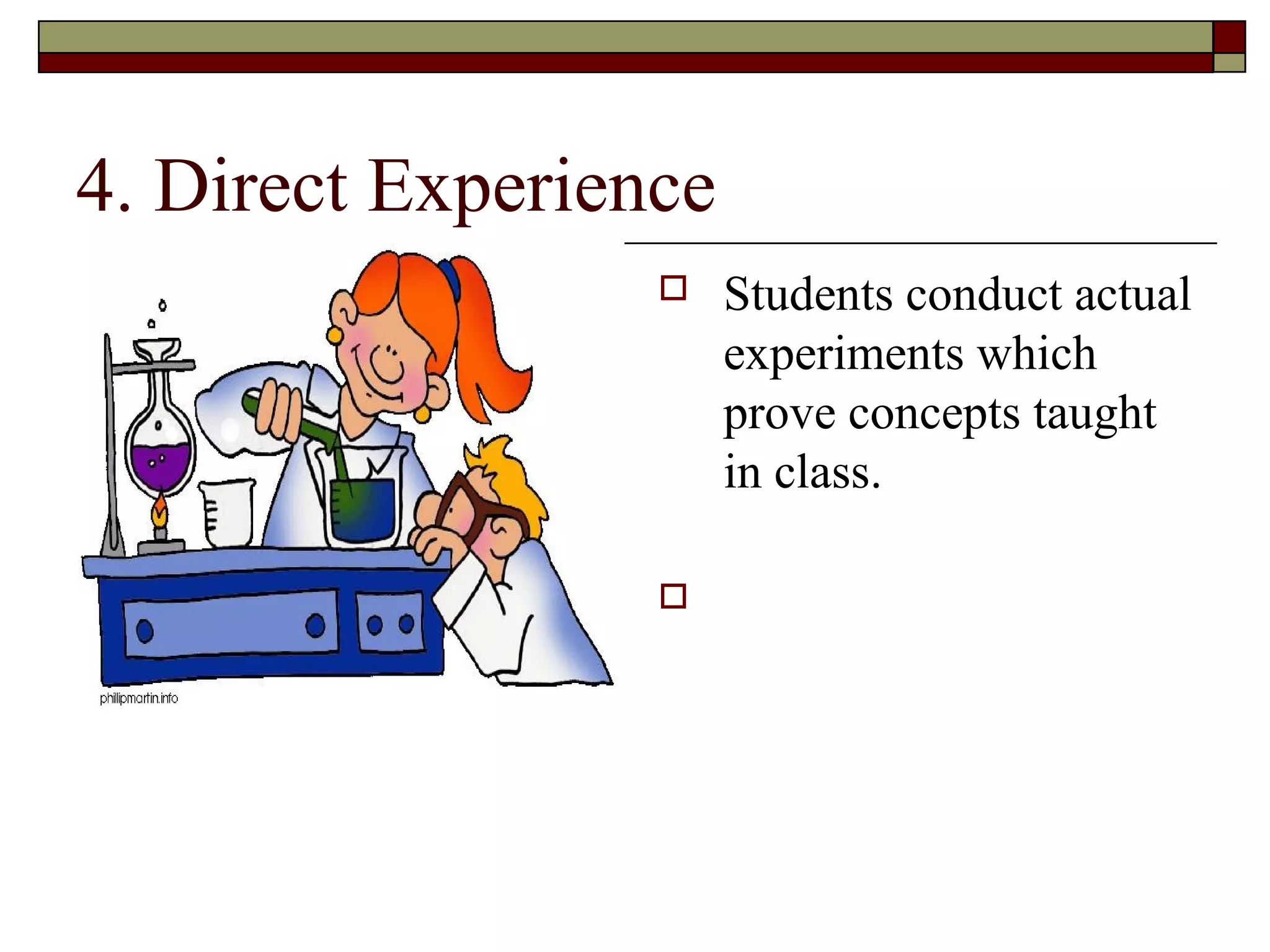
4. Direct Experience
                      Students conduct actual
                       experiments which
                       prove concepts taught
                       in class.

                  
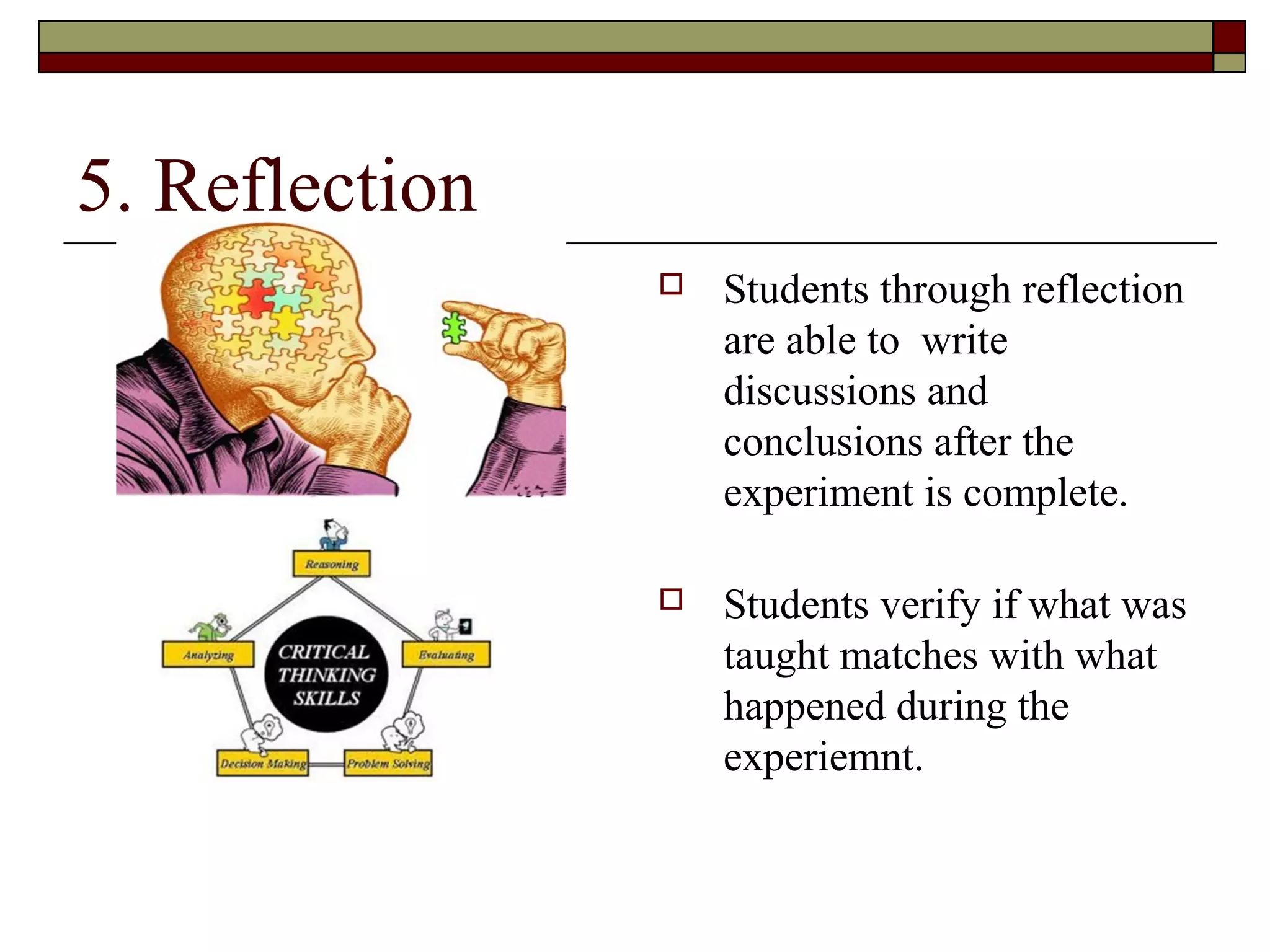
5. Reflection
                   Students through reflection
                    are able to write
                    discussions and
                    conclusions after the
                    experiment is complete.

                   Students verify if what was
                    taught matches with what
                    happened during the
                    experiemnt.
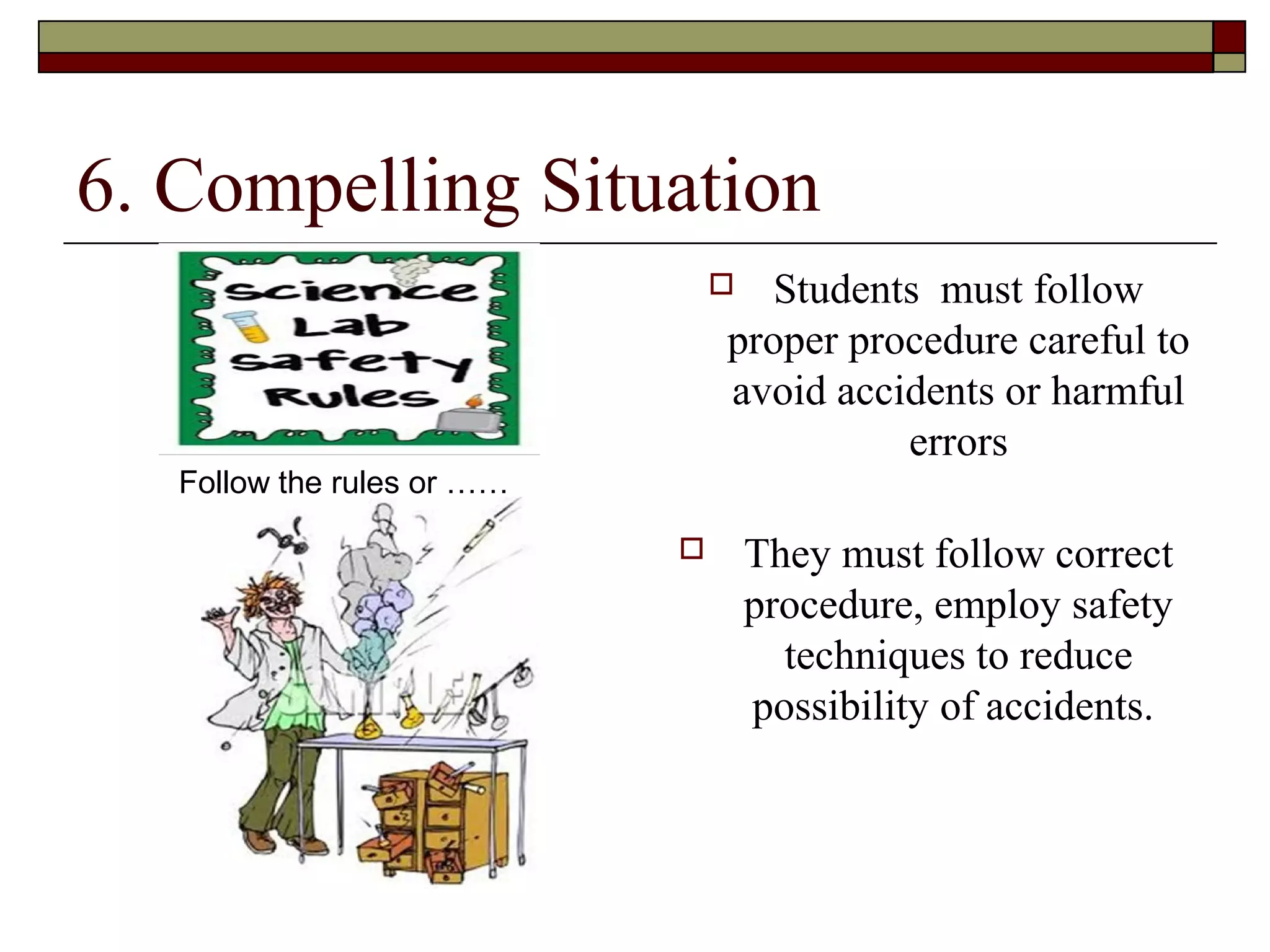
6. Compelling Situation
                                  Students must follow
                                proper procedure careful to
                                avoid accidents or harmful
                                          errors
   Follow the rules or ……

                                   They must follow correct
                                    procedure, employ safety
                                      techniques to reduce
                                    possibility of accidents.
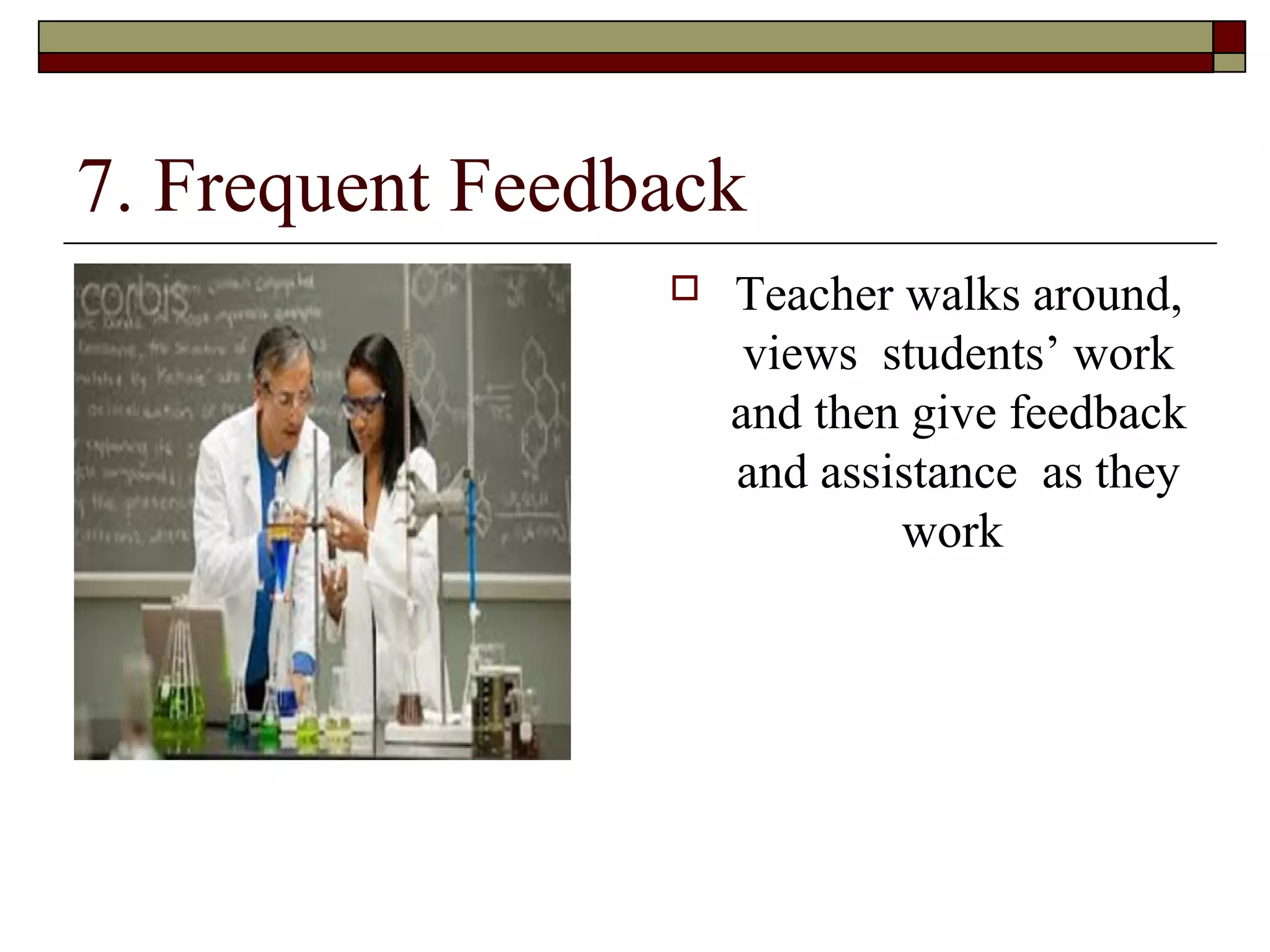
7. Frequent Feedback
                    Teacher walks around,
                      views students’ work
                     and then give feedback
                     and assistance as they
                             work
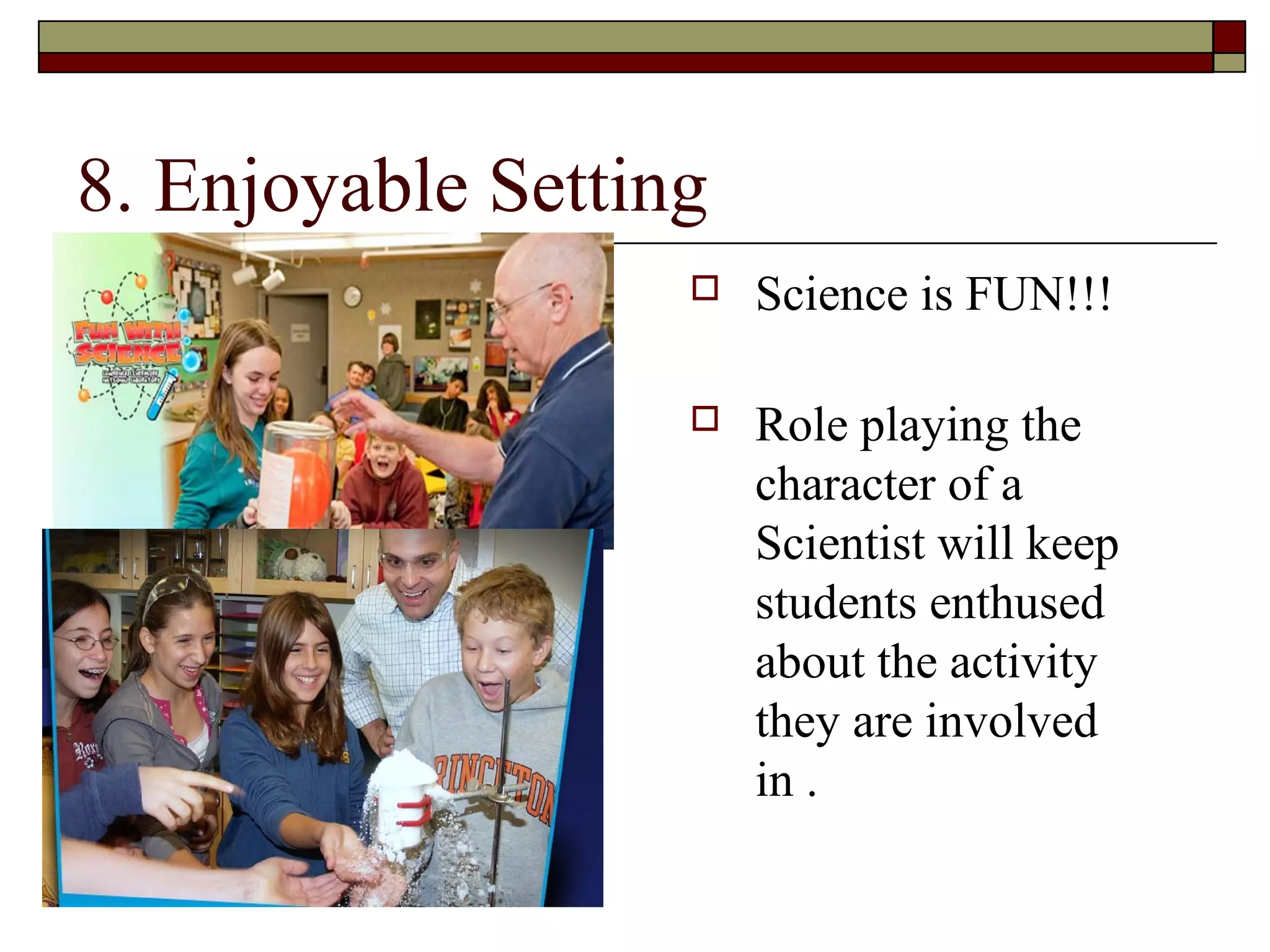
8. Enjoyable Setting
                      Science is FUN!!!

                      Role playing the
                       character of a
                       Scientist will keep
                       students enthused
                       about the activity
                       they are involved
                       in .

Principles of learning activity

  • 1.
    Principles of Learning Simulation “ I am a Scientist”
  • 2.
    The principles ofLearning  1. Active involvement -  In active learning information is not delivered to students , rather the student creates it.  2. Patterns of Connection  Students “ make meaning" through learning situations.
  • 3.
    The principles ofLearning  3. Informal Learning  This refers to learning which , though not accidental, was not an outlined aim of the teacher.  4. Direct Experience  Students are aactively involved in creating their own patterns and connections in a real context
  • 4.
    The principles ofLearning  5. Reflection  Students are able to internalise what they have learnt and to apply their own relevance to their experience.  6. Compelling Situation  Students see or try to avoid havign first hand experience with the hazards which may occure if outline protocols are not followed.
  • 5.
    The principles ofLearning  7. Frequent Feed Back  Involves incentive as well as giving corrections to reinforce what has been learnt.  8. Enjoyable setting.  This involves creating an environment and learning situation where students are comfortable learning.
  • 6.
    1. Active Involvement  Students choose which experiment they want to do.  They gather their equipment and are in charge of the execution of the experiment
  • 7.
    2. Patterns ofConnection  Students make meaning of what they have been taught in theory through this practical experiment  Students use class notes as the guide to conduct the experiment  Practical makes the theory more meaningful
  • 8.
    3. Informal Learning Hey why is yours pink and mine is  Students will learn from yellow ? their peers as they work in groups  Students learn team work , critical thinking, job ethics as they take on the role of a scientist in the lab . eg. They wear lab coat and a name tag as a scientist would
  • 9.
    4. Direct Experience  Students conduct actual experiments which prove concepts taught in class. 
  • 10.
    5. Reflection  Students through reflection are able to write discussions and conclusions after the experiment is complete.  Students verify if what was taught matches with what happened during the experiemnt.
  • 11.
    6. Compelling Situation  Students must follow proper procedure careful to avoid accidents or harmful errors Follow the rules or ……  They must follow correct procedure, employ safety techniques to reduce possibility of accidents.
  • 12.
    7. Frequent Feedback  Teacher walks around, views students’ work and then give feedback and assistance as they work
  • 13.
    8. Enjoyable Setting  Science is FUN!!!  Role playing the character of a Scientist will keep students enthused about the activity they are involved in .