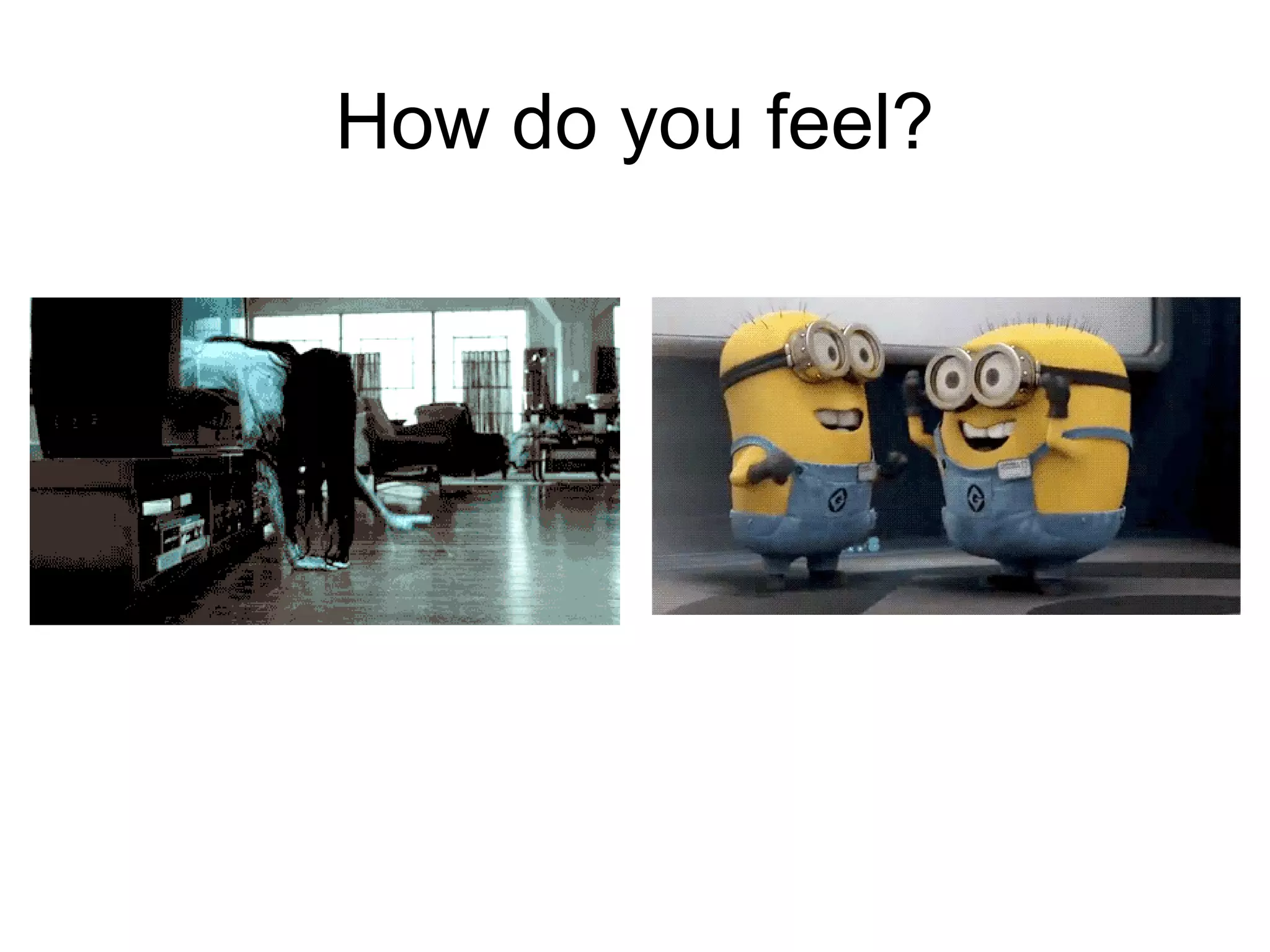
How do you feel?
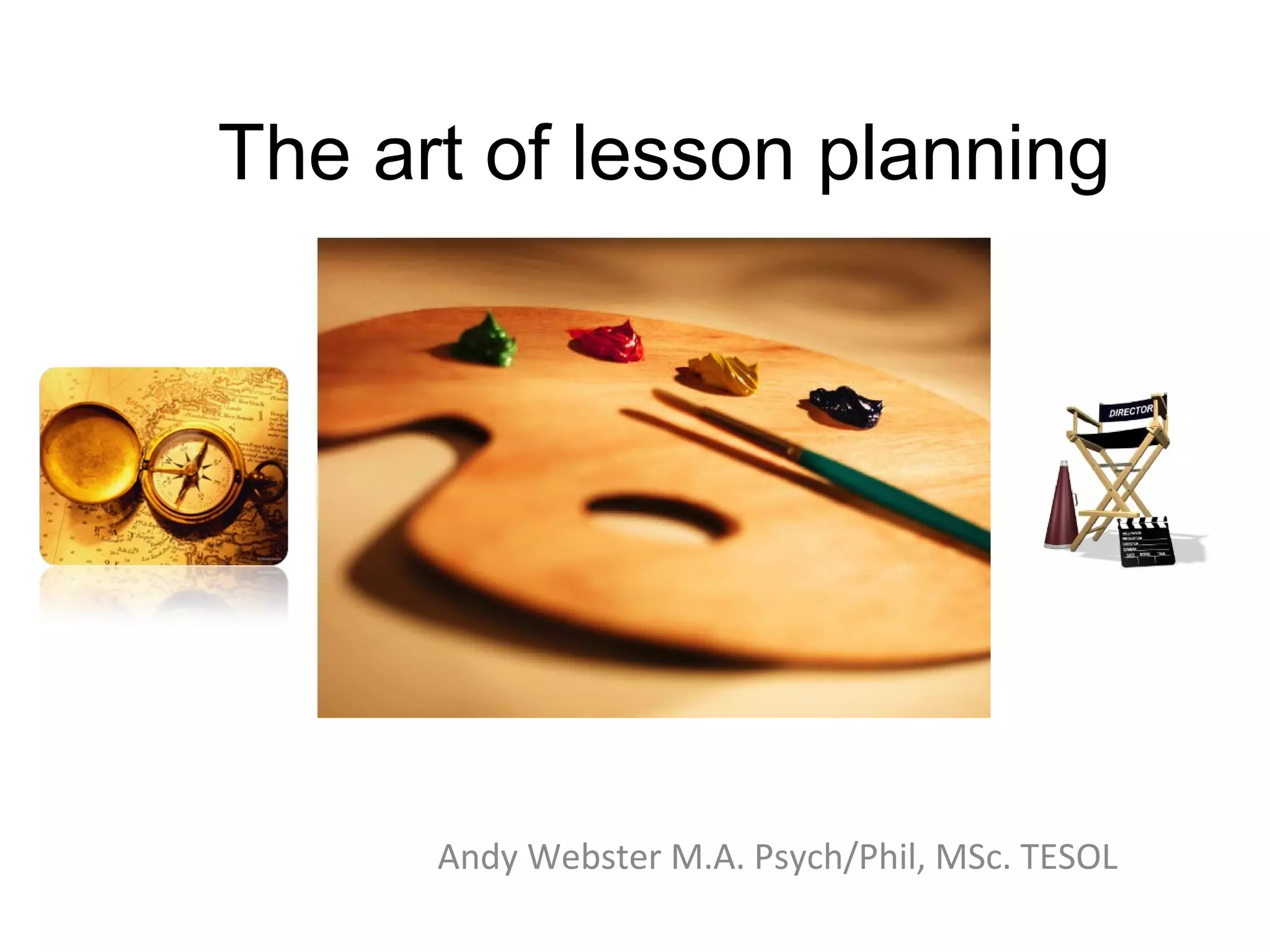
The art of lesson planning


      Andy Webster M.A. Psych/Phil, MSc. TESOL
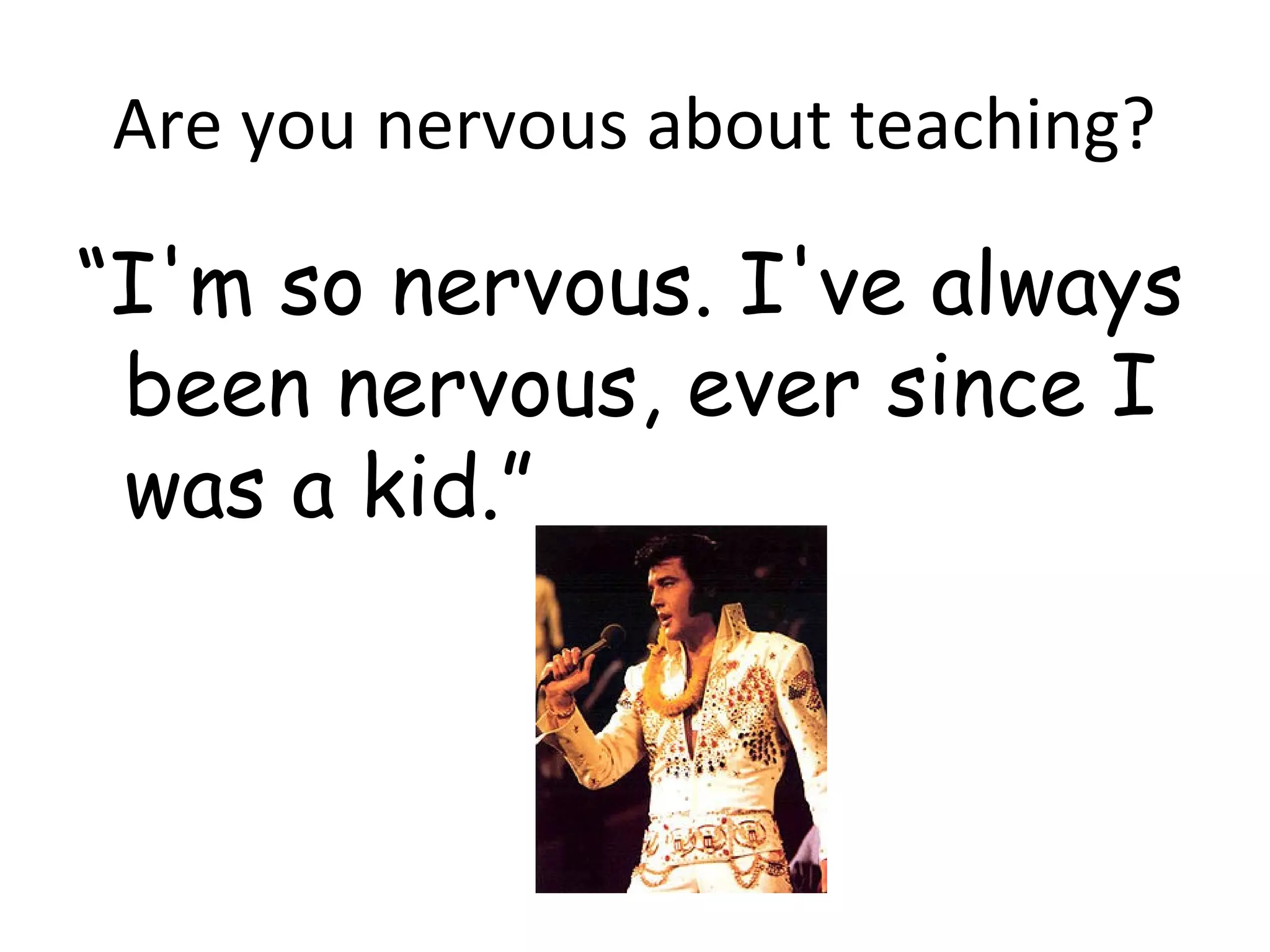
Are you nervous about teaching?

“I'm so nervous. I've always
 been nervous, ever since I
 was a kid.”
Objectives
You will….
• Increase confidence in lesson planning.
• Consider students & co-teachers needs.
• Share your ideas about lesson planning.
• Learn some effective teaching techniques.
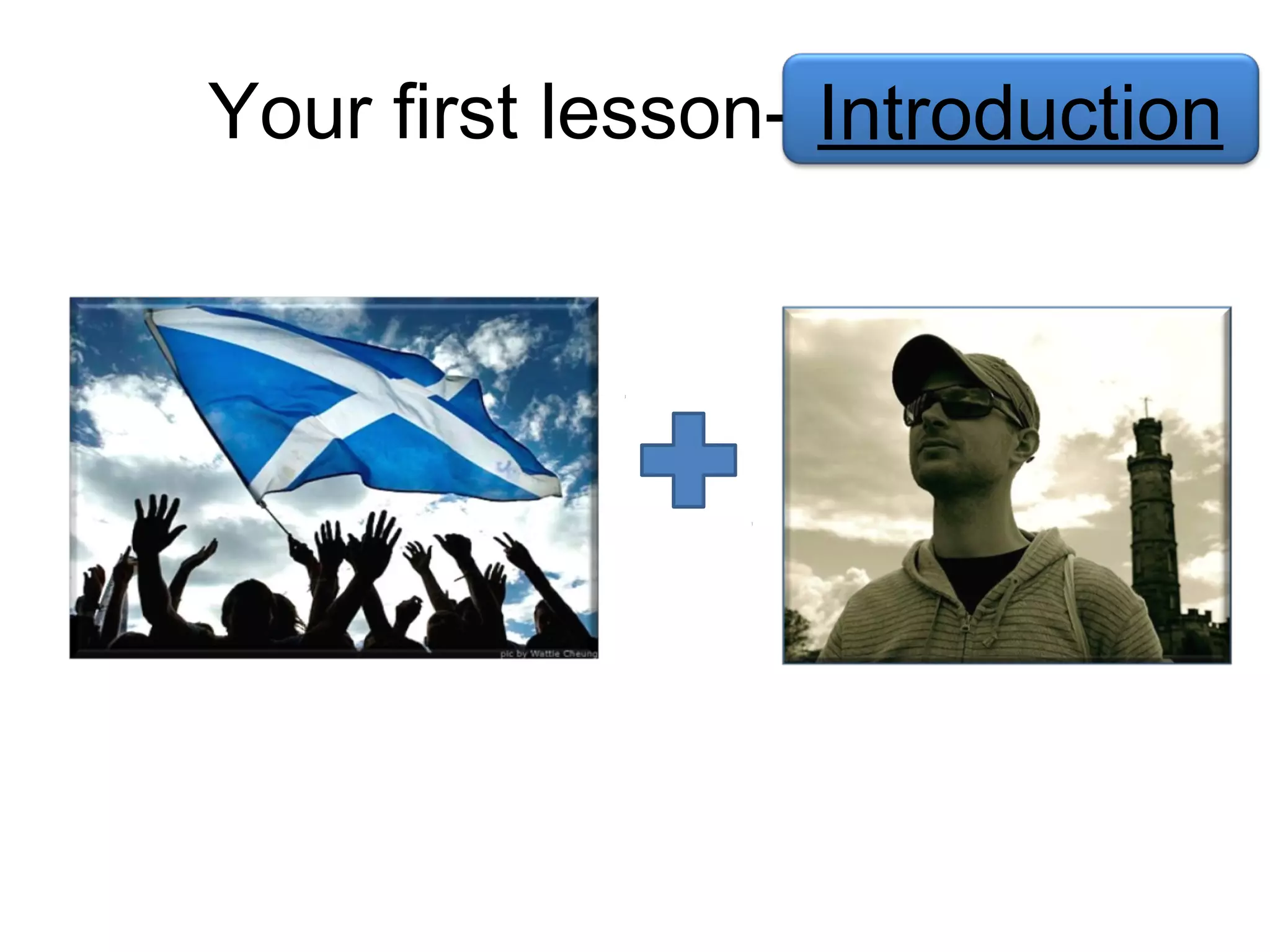
Your first lesson- Introduction
Always research before planning

• Students needs.

• Co-teachers needs.
• Available resources.
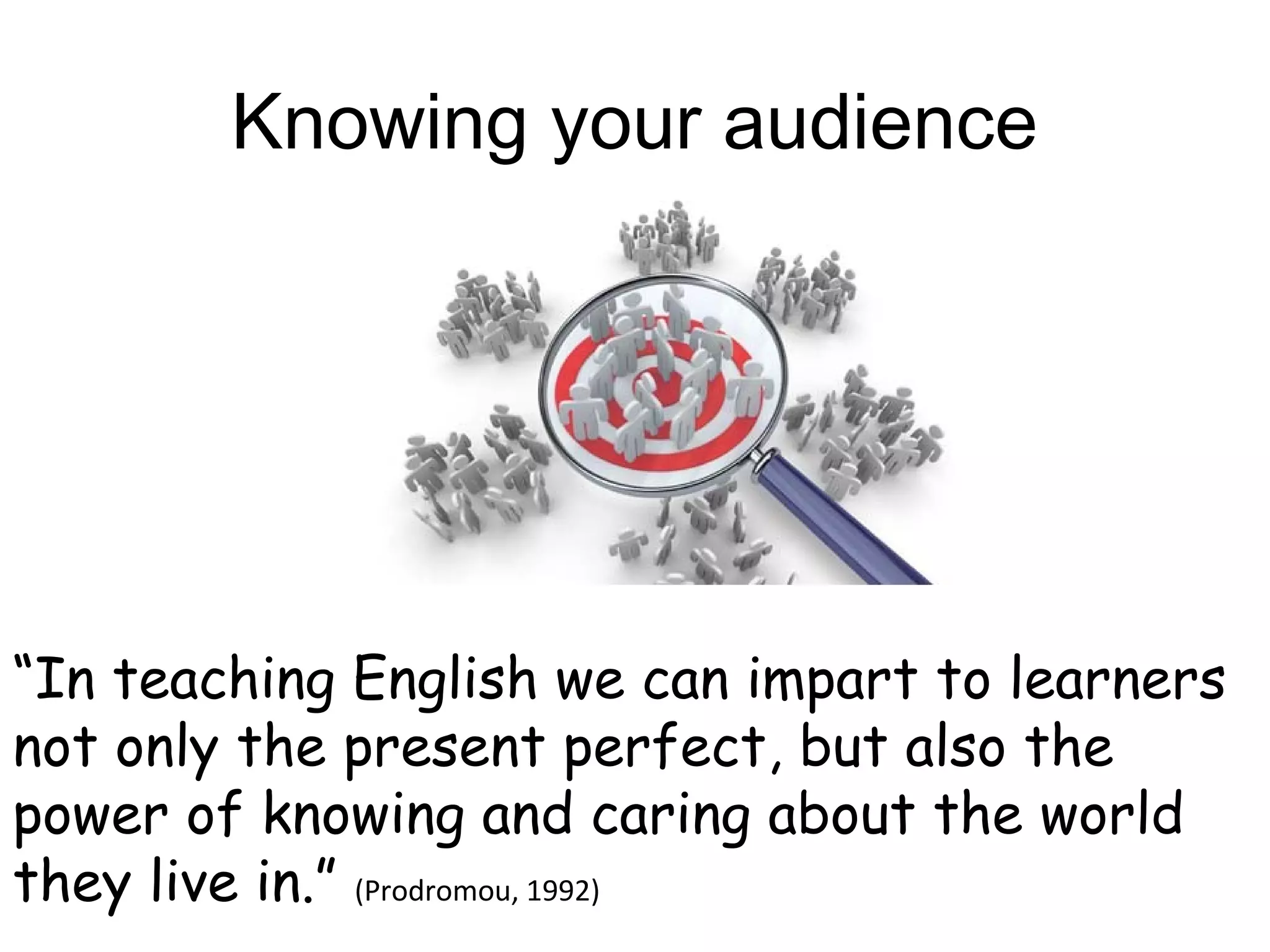
Knowing your audience


“In teaching English we can impart to learners
not only the present perfect, but also the
power of knowing and caring about the world
they live in.” (Prodromou, 1992)
Get to know your Students
• Learning by doing- entering imaginary worlds,
  creating, exchanging information, playing.
• Activities which are grounded in the young
  learners’ own needs, interests, desires and
  dreams.
• Teaching is a two-way process. Learn from your
  students.
Get to know your Students
• Try to understand the students.
• Take an interest in what they like and the culture
  which surrounds them.
• Remember what it’s like to be a student.
• Your attitude can dramatically affect learner
  motivation
• Create an encouraging and supportive
  environment.
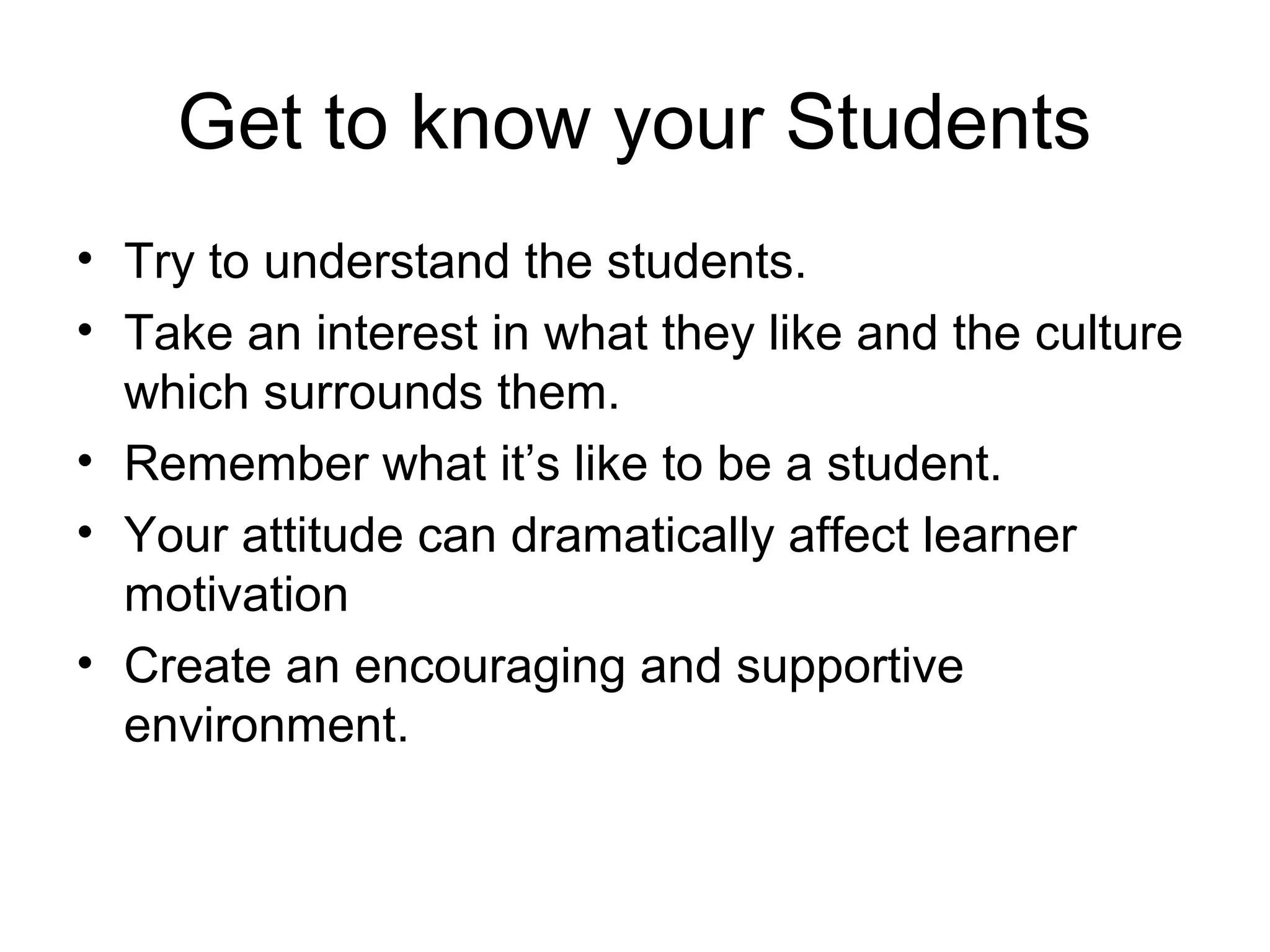
Hagwon Culture
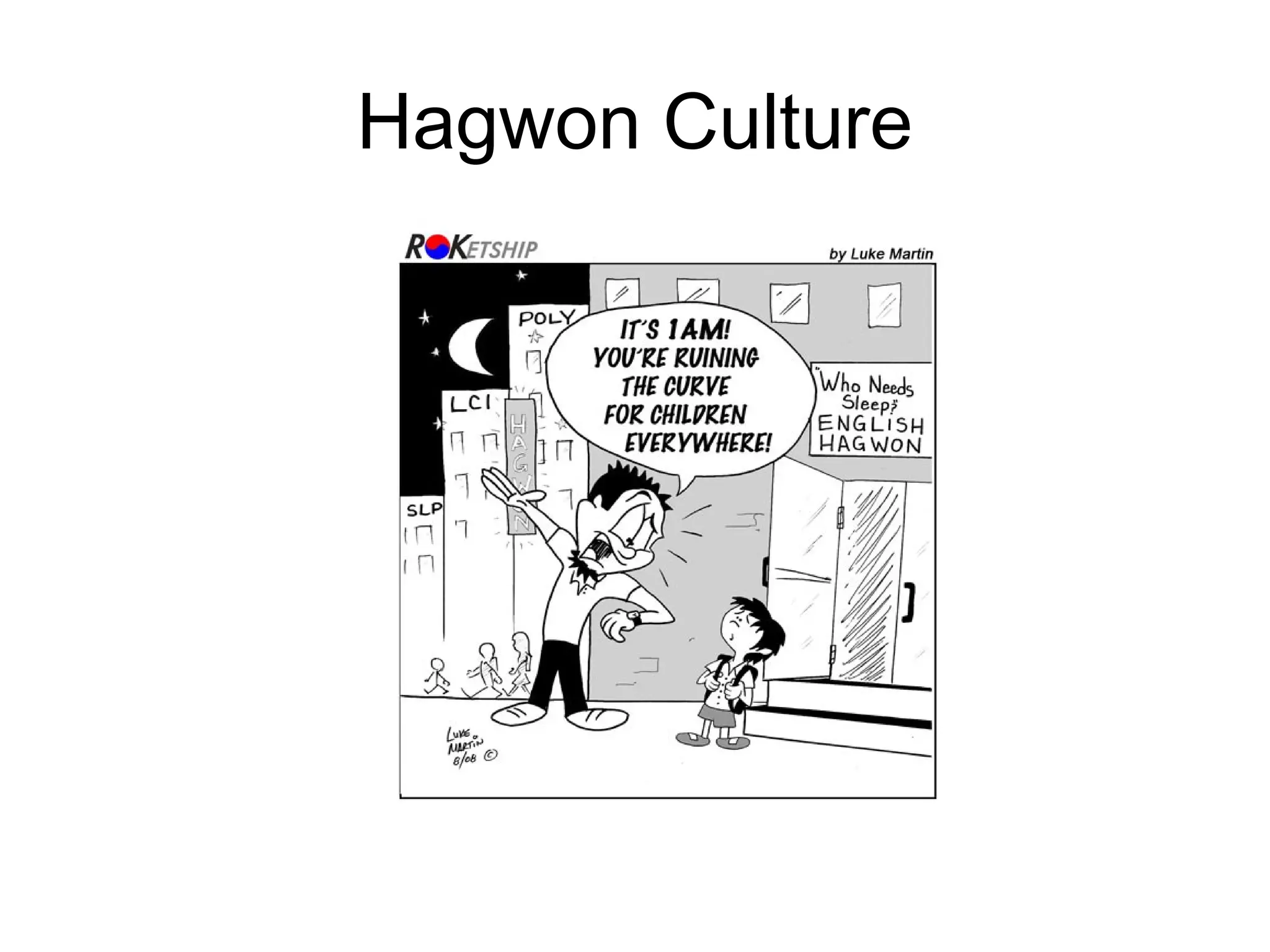
Study, study, study
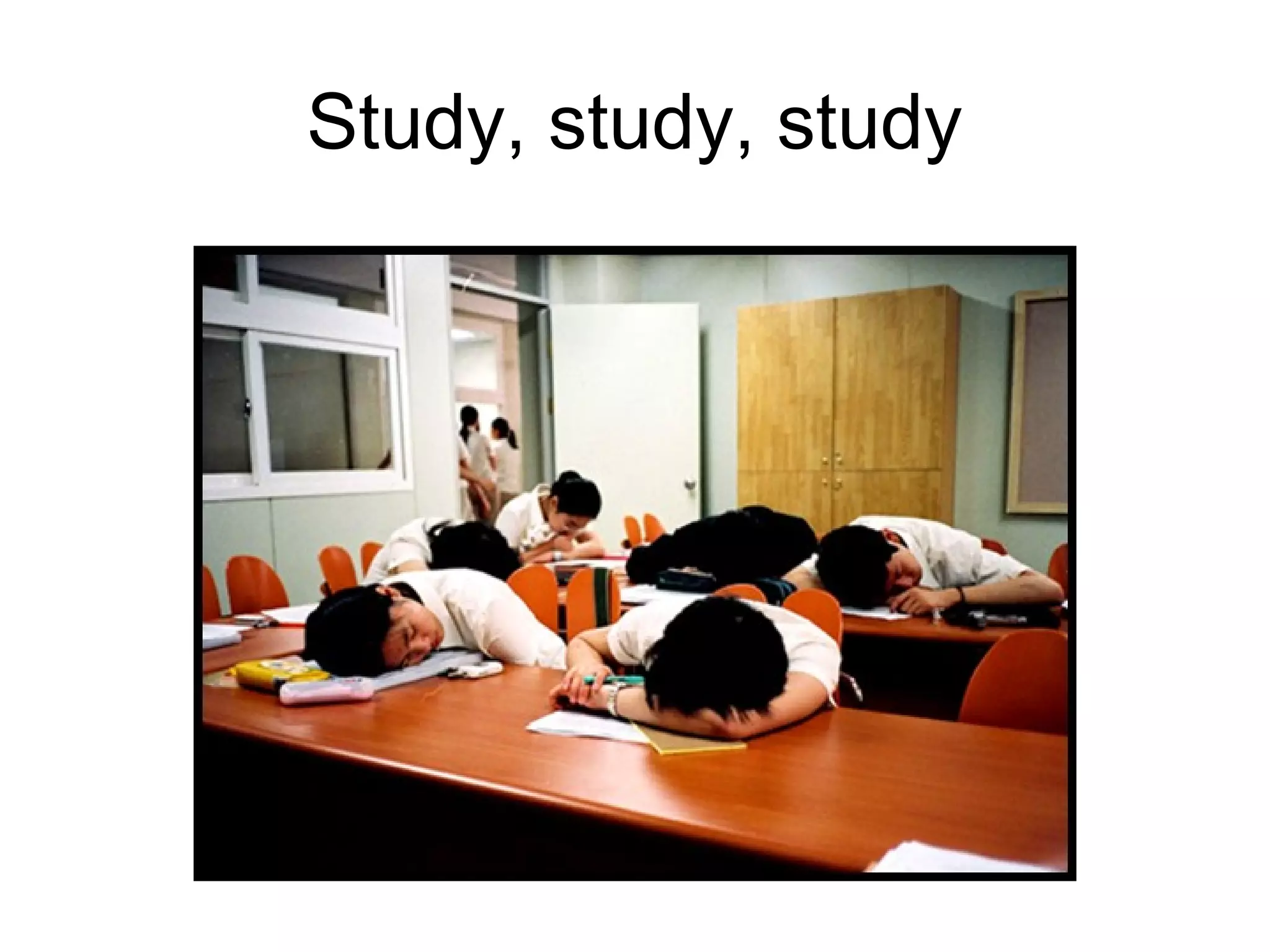
A Day in the life
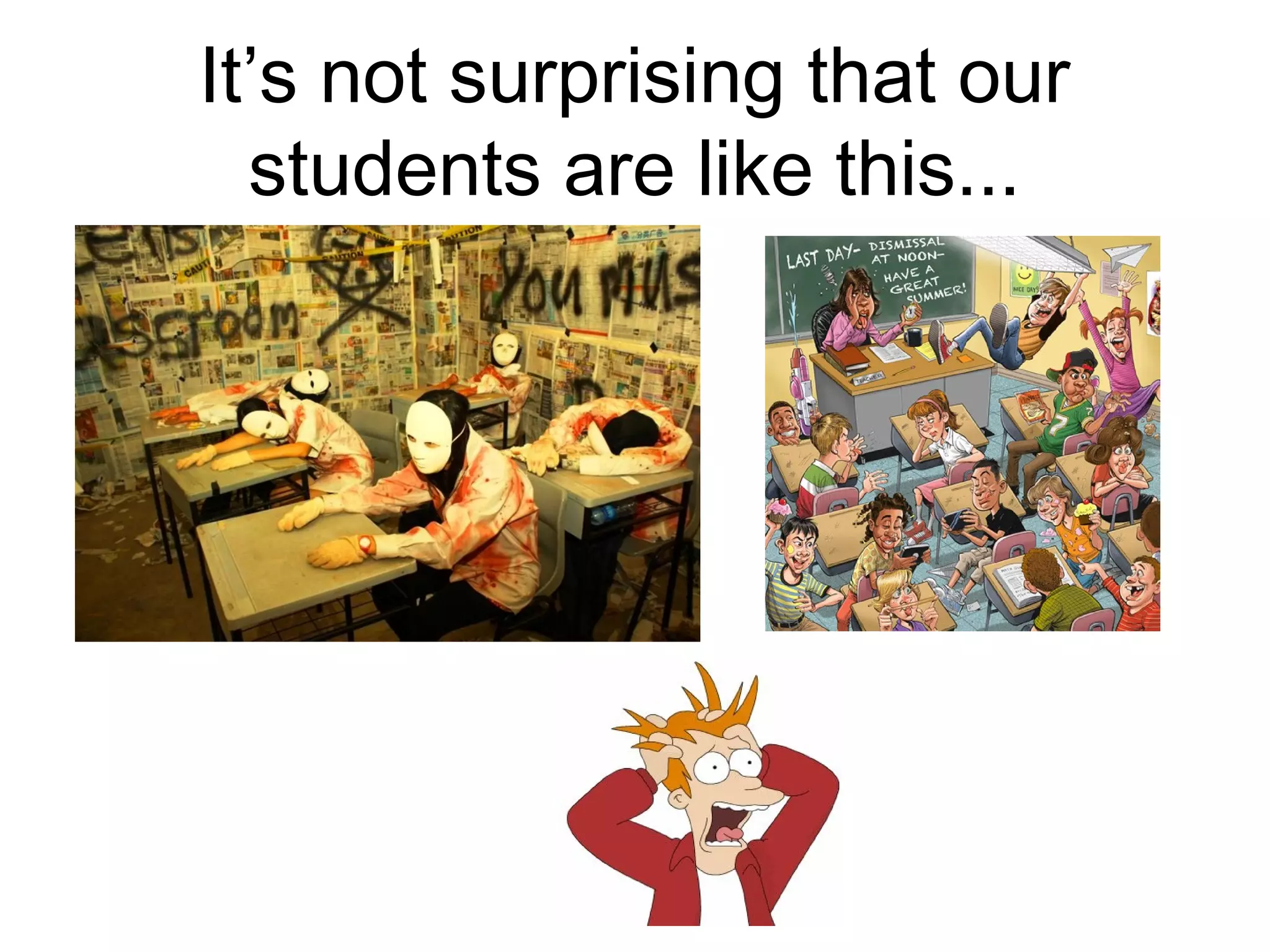
It’s not surprising that our
  students are like this...
Get to know your co-teachers
•   What are their expectations?
•   What are you required to teach?
•   What’s your position in the classroom?
•   Develop a good working relationship.
•   Good communication is key.
•   Tag team, together, separate.
•   Human tape recorder or edutainer.
What makes a good lesson
        plan?
‘Good lessons, I conclude, share features
with, among other art forms, good films.
They have plot, theme, rhythm, flow and
the sense of an ending.’ (Thornbury, 1999)

Finding a metaphor: Metaphors can assist
us in understanding what makes a good
lesson plan.
A good lesson is like a _______
because________.
•Ex. Symphony, jigsaw, play, story, meal.
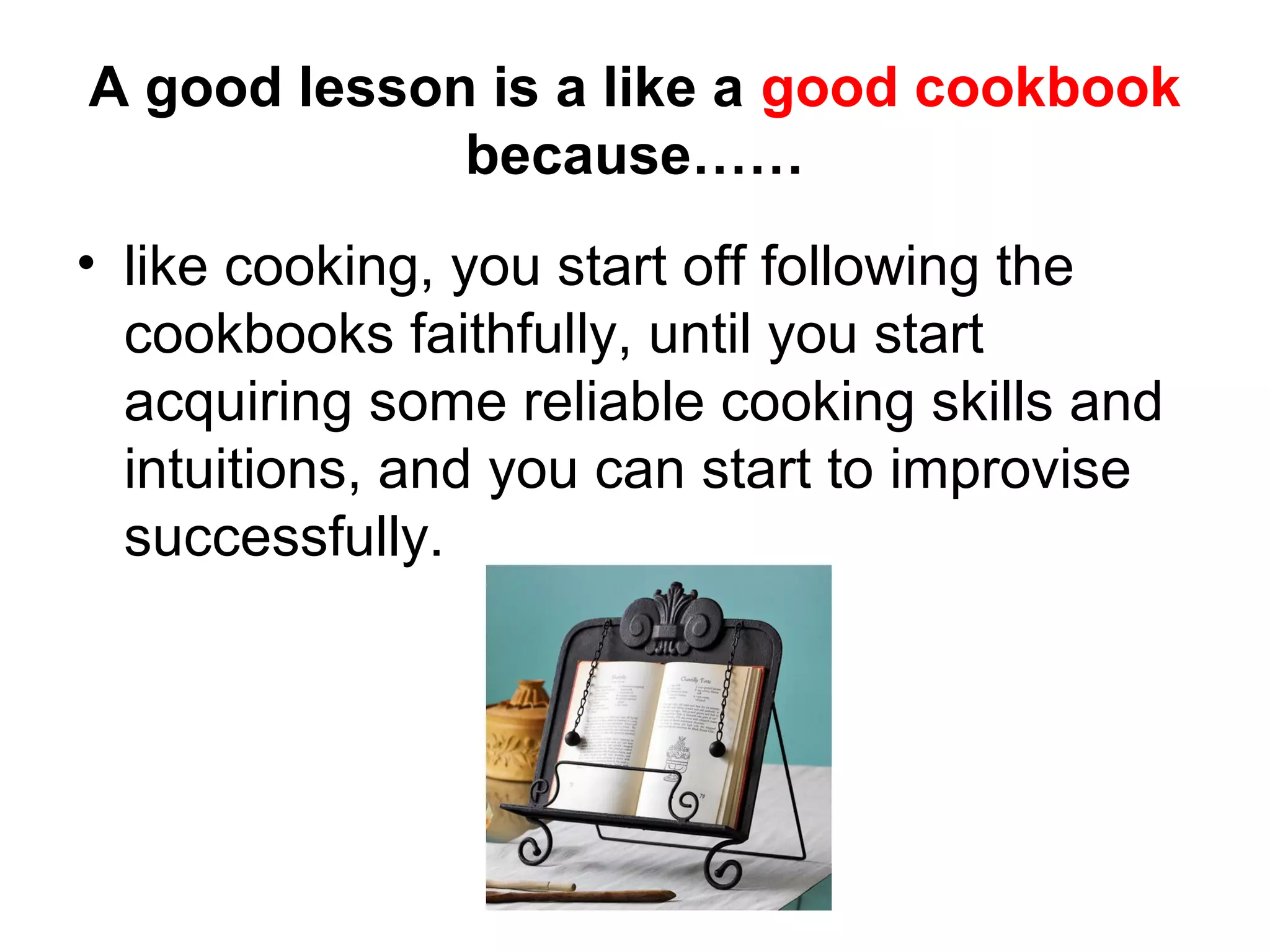
A good lesson is a like a good cookbook
             because……
• like cooking, you start off following the
  cookbooks faithfully, until you start
  acquiring some reliable cooking skills and
  intuitions, and you can start to improvise
  successfully.
How important is lesson
         planning?
• It provides a blueprint to protect us from
  the unpredictable nature of the classroom
  zoo.
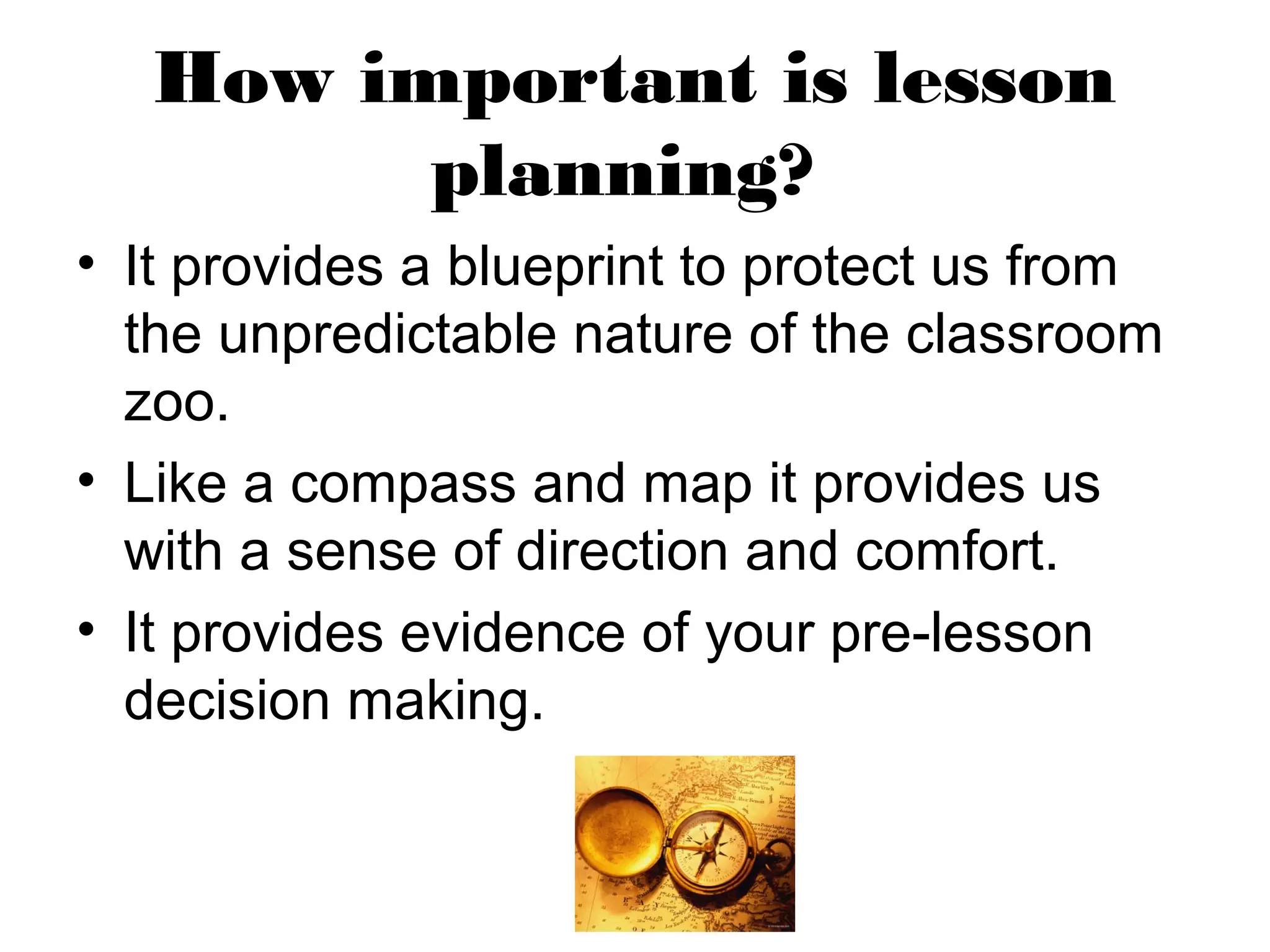
• Like a compass and map it provides us
  with a sense of direction and comfort.
• It provides evidence of your pre-lesson
  decision making.
‘The best laid plans of mice and men gang aft
                      agley’


• Remember that stuff happens!
• Learn to adapt, abandon and think on your
  feet.
• You can never be sure how your class will
  react to your lesson on a particular day.
• “ Unplanned situations or unstructured
  activities can sometimes create more
  effective, natural, and memorable
  communicative opportunities than well
  planned communicative activities.”
 (Cadorath, J. & Harris, S. 1998)
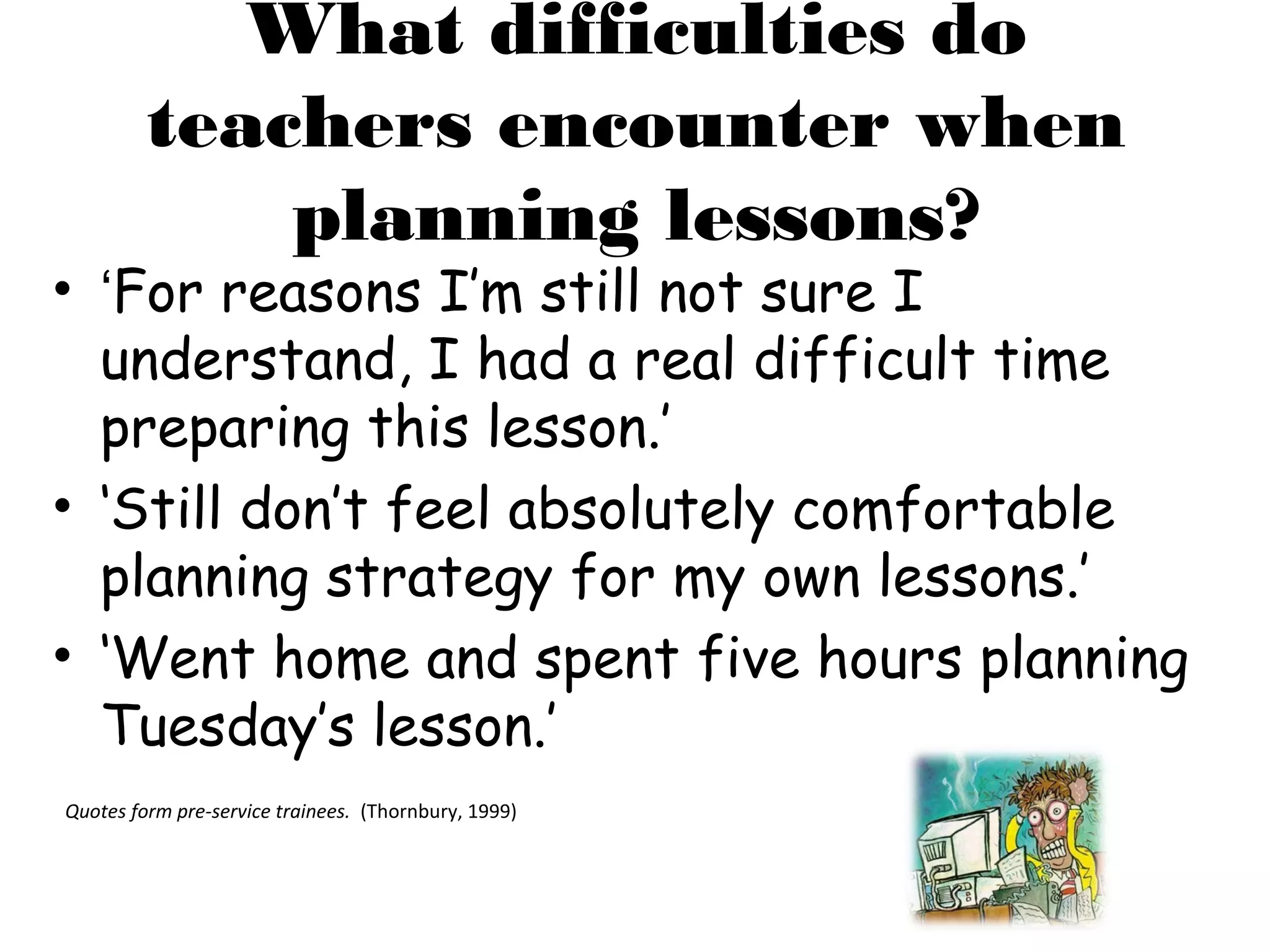
What difficulties do
         teachers encounter when
             planning lessons?
• ‘For reasons I’m still not sure I
  understand, I had a real difficult time
  preparing this lesson.’
• ‘Still don’t feel absolutely comfortable
  planning strategy for my own lessons.’
• ‘Went home and spent five hours planning
  Tuesday’s lesson.’
Quotes form pre-service trainees. (Thornbury, 1999)
Lesson Plan - Checklist
•   How realistic are your objectives?
•   How logical is the staging?
•   How varied are the activities?
•   How plausible is the timing?
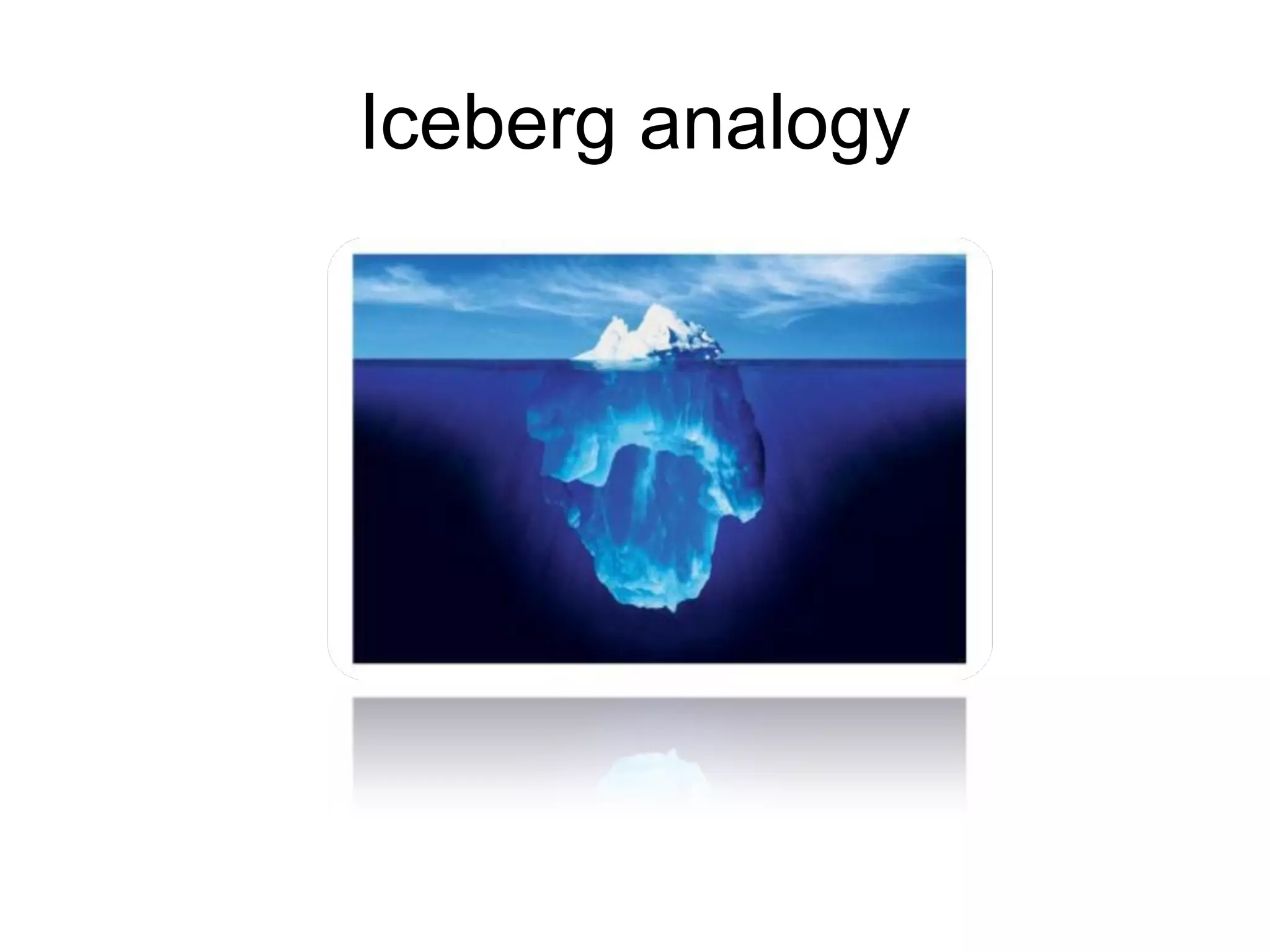
Iceberg analogy
Lesson Plan - Basics
• Level: The proficiency level with which
  the activities can be carried out.
• Time: A rough indication of how long
  each activity will last.
• Aims: Language points or skills which
  each activity addresses.
• Preparation: Materials to prepare.
• Procedure: Step-by-step guide to
  activities
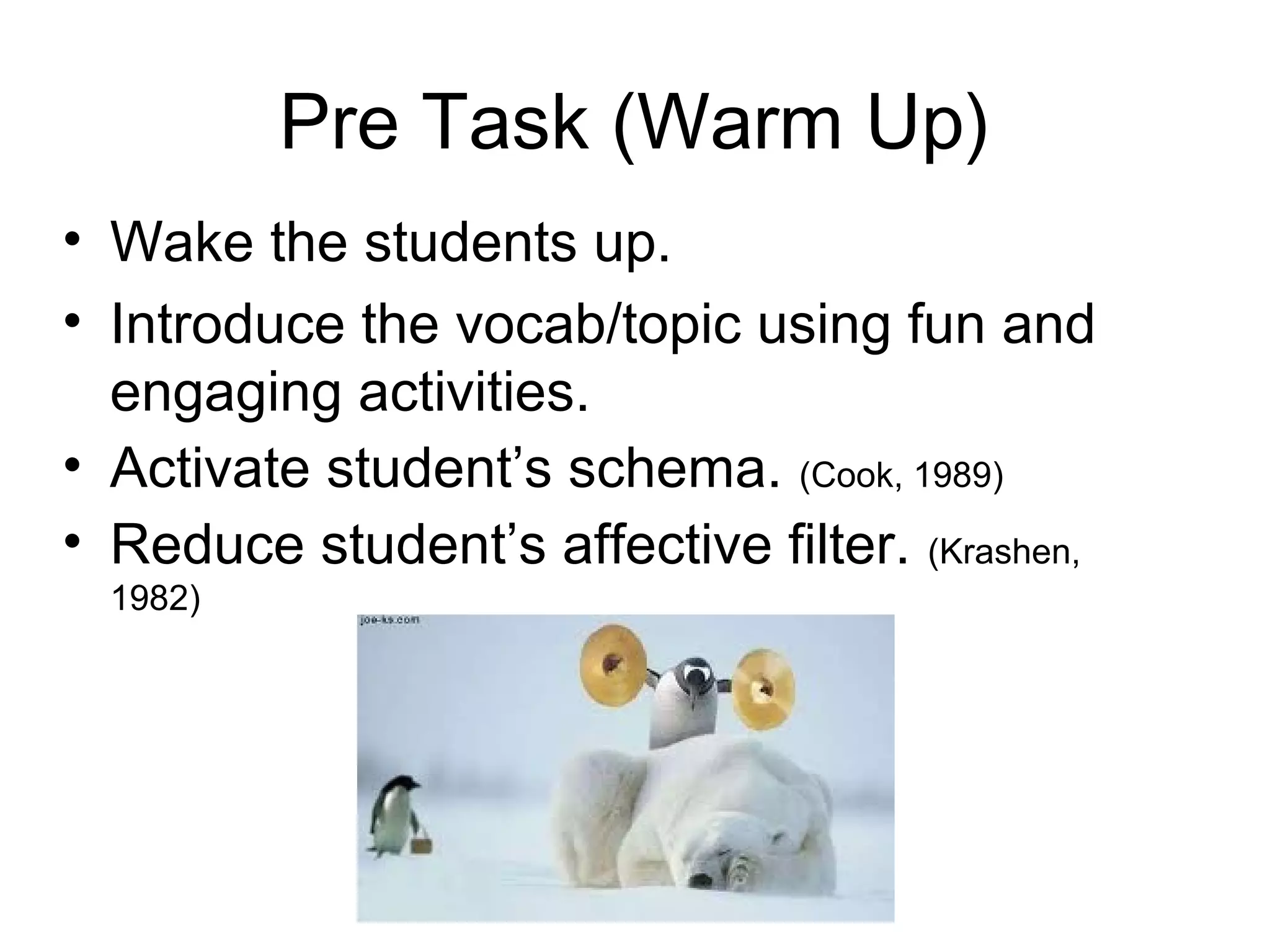
Pre Task (Warm Up)
• Wake the students up.
• Introduce the vocab/topic using fun and
  engaging activities.
• Activate student’s schema. (Cook, 1989)
• Reduce student’s affective filter. (Krashen,
  1982)
Riddles


                          Hidden Picture Game


Wordles
          What do you see?
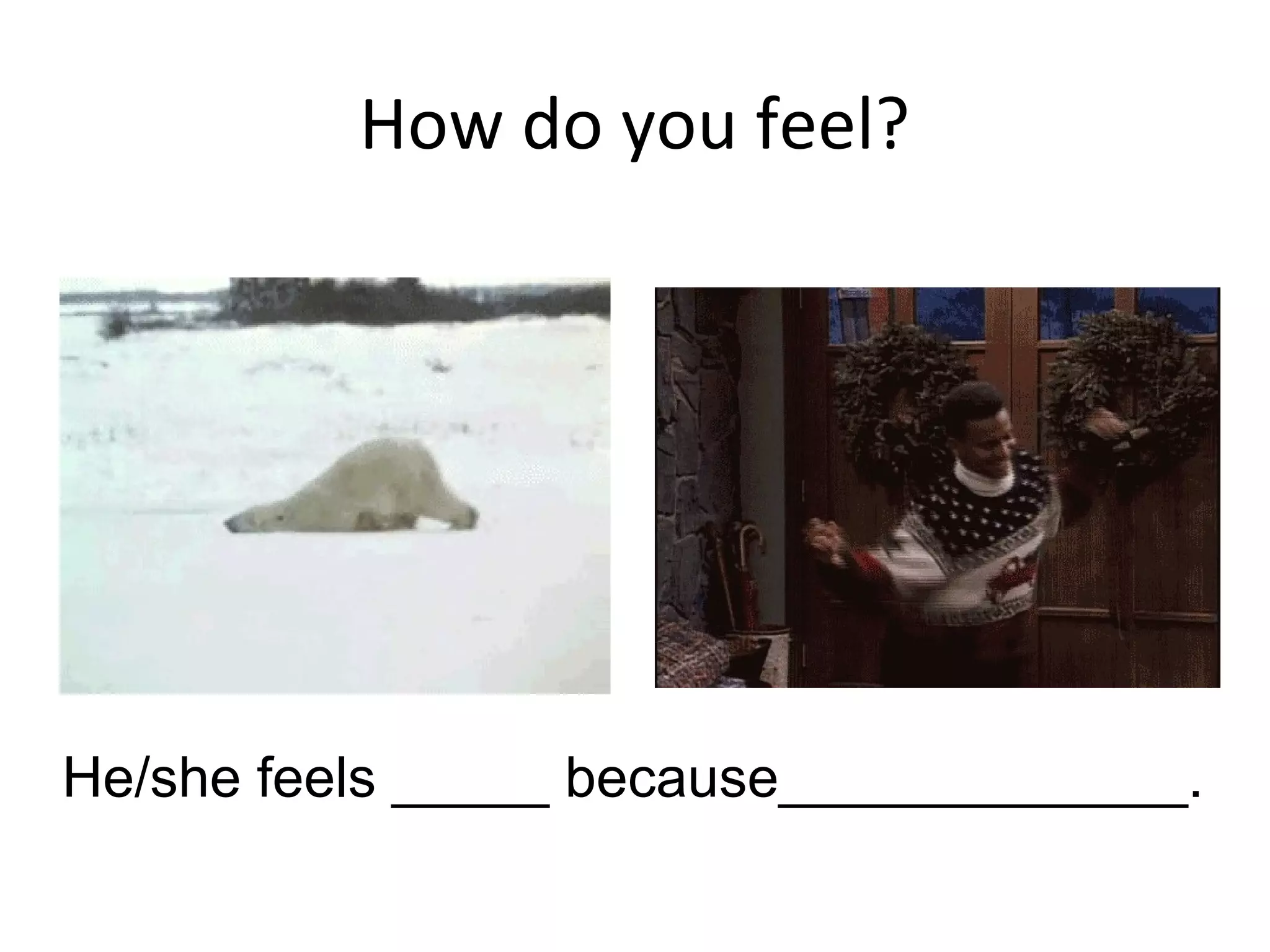
How do you feel?


He/she feels _____ because_____________.
While Task (Main Activity)
• Awareness and attention to language
  structures is provided through exposure to
  various examples.
• Try to sustain motivation and engagement.
• Creating a fun and relaxed environment with
  continual support and encouragement.
• Group work/pair work provides increased
  opportunities for communication and
  collaboration.
Activities
•   Dictation run
•   Q&A Bingo
•   Survey, interview
•   Role play
•   Telephone game
•   Madlibs
•   Mix sentences
•   Blind sentences
Post Task (Cool down)
•Providing time to recycle the language.
•Fun games .
•Evaluate the lesson.
Course book Vs No Course
             book
The key to using a course book effectively:
• Select, adapt and supplement.
• Avoid lessons of a sameness and
  blandness.
• Focus on the grammar point, topic,
  context and be creative.
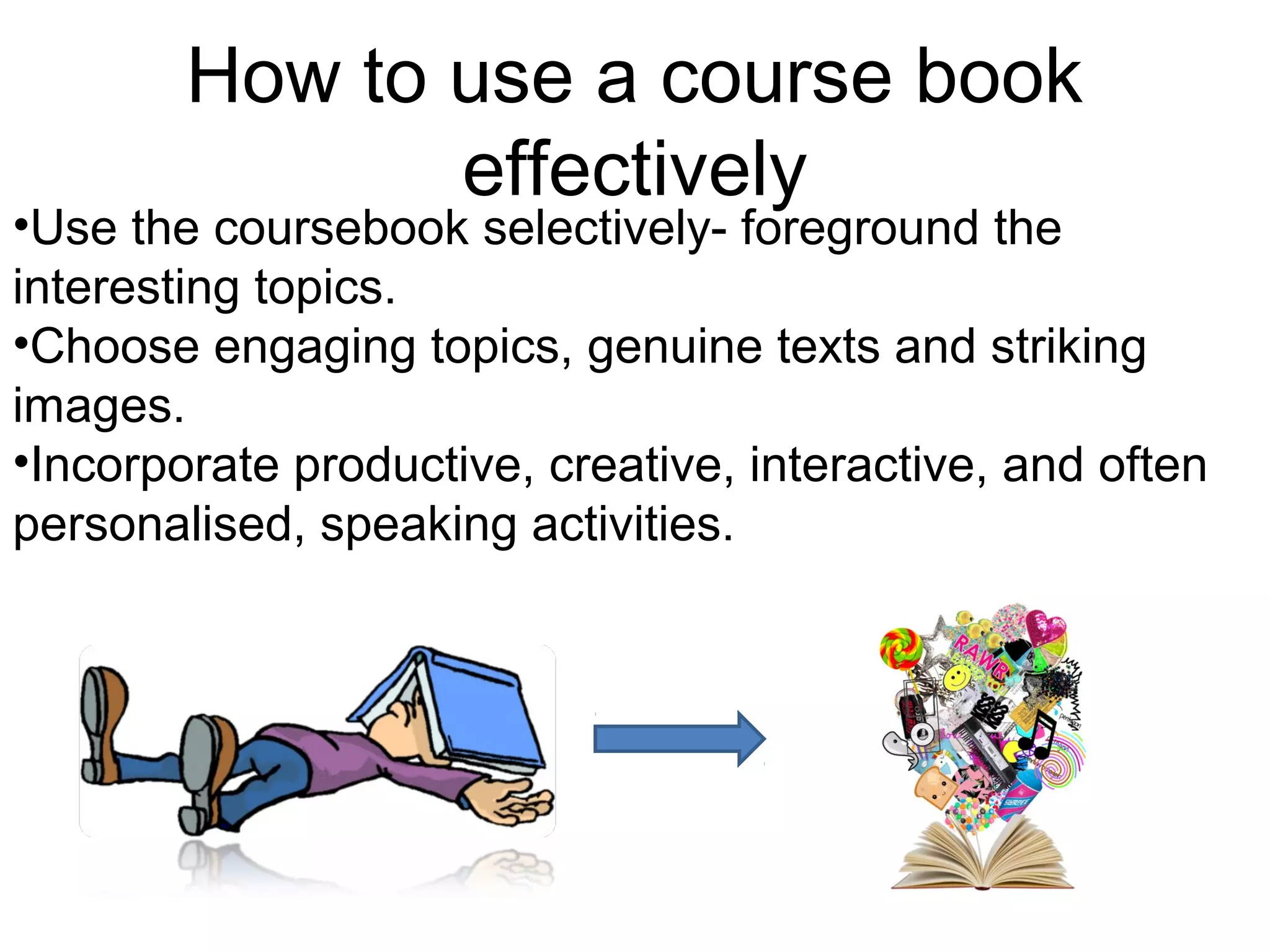
How to use a course book
              effectively
•Try to generate interest in the topic and language about
the topic through:
•Surveys, questionnaires, brainstorming activities and
your own personal anecdotes.
•Maximise time for productive, interactive and
collaborative activities.
•Personalise mechanical grammar and vocabulary
exercises, where possible, by asking learners to convert
them into true statements about themselves or the other
learners in the room.
How to use a course book
               effectively
•Use the coursebook selectively- foreground the
interesting topics.
•Choose engaging topics, genuine texts and striking
images.
•Incorporate productive, creative, interactive, and often
personalised, speaking activities.
Bring the text book alive!
• Be creative, mix it up, don’t get bored.
• Make it meaningful and relevant to your
  students life.
• Make it authentic.
• Consider different learning styles.
• Quick resource: Waygook.
• WARNING: When using ‘Waygook’ Be
  careful.
• Look at the previous teachers
  resources.
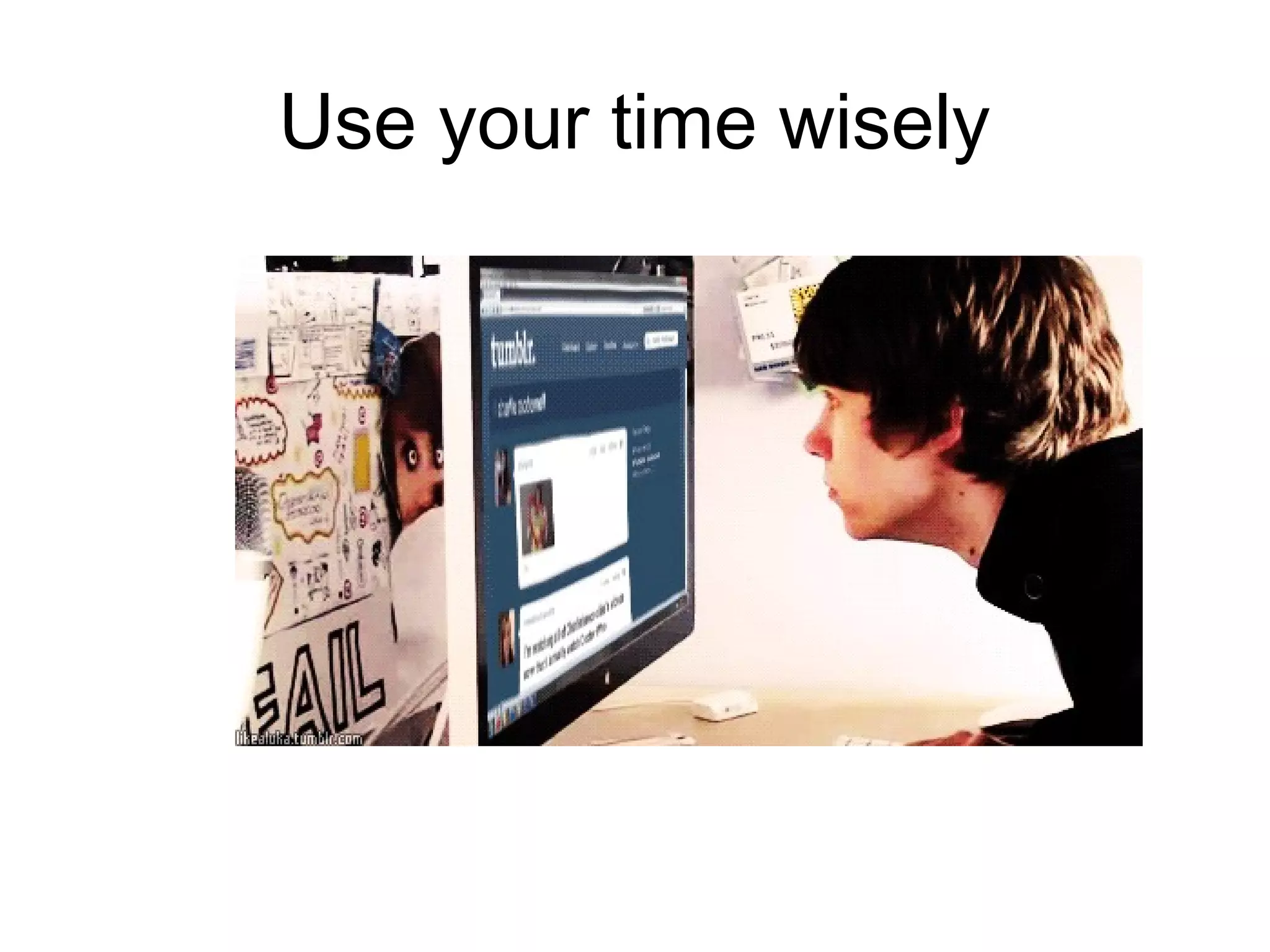
Use your time wisely
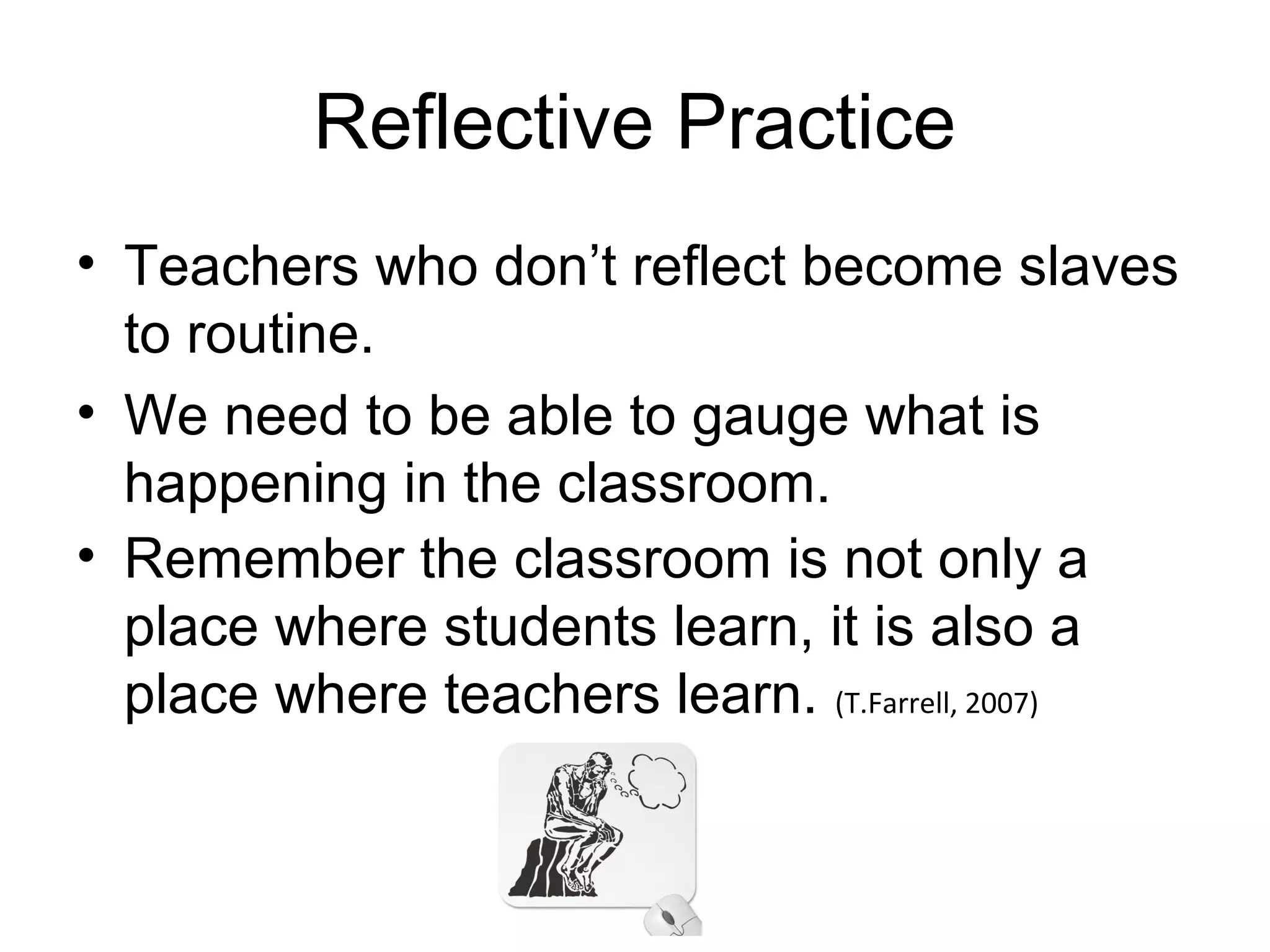
Reflective Practice
• Teachers who don’t reflect become slaves
  to routine.
• We need to be able to gauge what is
  happening in the classroom.
• Remember the classroom is not only a
  place where students learn, it is also a
  place where teachers learn. (T.Farrell, 2007)
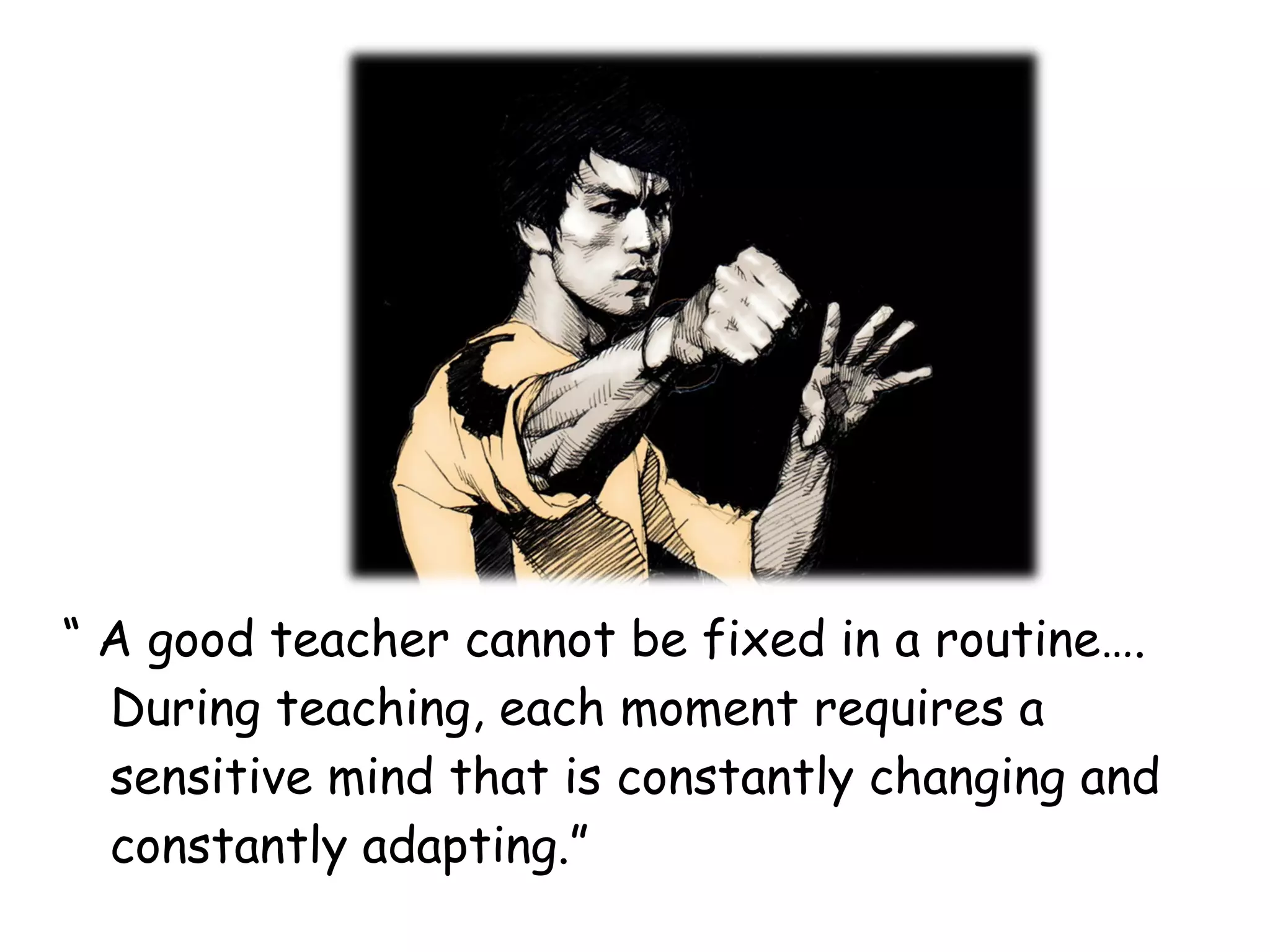
“ A good teacher cannot be fixed in a routine….
  During teaching, each moment requires a
  sensitive mind that is constantly changing and
  constantly adapting.”
Education Fever
References
•   Cadorath, J. & Harris, S. (1998) ‘Unplanned classroom language and
    teacher training.’ ELT Journal, 52 (3)
•   Cook, G. (1989) Discourse (Language Teaching: A Scheme for Teacher
    Education). Oxford: OUP.
•   Farrell, T. (2007) Reflective Language Teaching: From Research to Practice.
     Continuum International Publishing Group Ltd.
•   Krashen, S. (1982) Principles and practice in second language acquisition.
    Oxford: Pergamon.
•   Prodromou, L. (1992) ‘What culture? Which culture? Cross-cultural
    factors in language learning’ ELT Journal, 46 (1)
•   Thornbury, S. (1999) ‘Lesson art and design’ ELT Journal, 53 (1)

The art of lesson planning

  • 1.
  • 2.
    The art oflesson planning Andy Webster M.A. Psych/Phil, MSc. TESOL
  • 3.
    Are you nervousabout teaching? “I'm so nervous. I've always been nervous, ever since I was a kid.”
  • 4.
    Objectives You will…. • Increaseconfidence in lesson planning. • Consider students & co-teachers needs. • Share your ideas about lesson planning. • Learn some effective teaching techniques.
  • 5.
    Your first lesson-Introduction
  • 6.
    Always research beforeplanning • Students needs. • Co-teachers needs. • Available resources.
  • 7.
    Knowing your audience “Inteaching English we can impart to learners not only the present perfect, but also the power of knowing and caring about the world they live in.” (Prodromou, 1992)
  • 8.
    Get to knowyour Students • Learning by doing- entering imaginary worlds, creating, exchanging information, playing. • Activities which are grounded in the young learners’ own needs, interests, desires and dreams. • Teaching is a two-way process. Learn from your students.
  • 9.
    Get to knowyour Students • Try to understand the students. • Take an interest in what they like and the culture which surrounds them. • Remember what it’s like to be a student. • Your attitude can dramatically affect learner motivation • Create an encouraging and supportive environment.
  • 10.
  • 11.
  • 12.
    A Day inthe life
  • 13.
    It’s not surprisingthat our students are like this...
  • 14.
    Get to knowyour co-teachers • What are their expectations? • What are you required to teach? • What’s your position in the classroom? • Develop a good working relationship. • Good communication is key. • Tag team, together, separate. • Human tape recorder or edutainer.
  • 16.
    What makes agood lesson plan? ‘Good lessons, I conclude, share features with, among other art forms, good films. They have plot, theme, rhythm, flow and the sense of an ending.’ (Thornbury, 1999) Finding a metaphor: Metaphors can assist us in understanding what makes a good lesson plan. A good lesson is like a _______ because________. •Ex. Symphony, jigsaw, play, story, meal.
  • 17.
    A good lessonis a like a good cookbook because…… • like cooking, you start off following the cookbooks faithfully, until you start acquiring some reliable cooking skills and intuitions, and you can start to improvise successfully.
  • 18.
    How important islesson planning? • It provides a blueprint to protect us from the unpredictable nature of the classroom zoo. • Like a compass and map it provides us with a sense of direction and comfort. • It provides evidence of your pre-lesson decision making.
  • 19.
    ‘The best laidplans of mice and men gang aft agley’ • Remember that stuff happens! • Learn to adapt, abandon and think on your feet. • You can never be sure how your class will react to your lesson on a particular day.
  • 20.
    • “ Unplannedsituations or unstructured activities can sometimes create more effective, natural, and memorable communicative opportunities than well planned communicative activities.” (Cadorath, J. & Harris, S. 1998)
  • 21.
    What difficulties do teachers encounter when planning lessons? • ‘For reasons I’m still not sure I understand, I had a real difficult time preparing this lesson.’ • ‘Still don’t feel absolutely comfortable planning strategy for my own lessons.’ • ‘Went home and spent five hours planning Tuesday’s lesson.’ Quotes form pre-service trainees. (Thornbury, 1999)
  • 22.
    Lesson Plan -Checklist • How realistic are your objectives? • How logical is the staging? • How varied are the activities? • How plausible is the timing?
  • 23.
  • 24.
    Lesson Plan -Basics • Level: The proficiency level with which the activities can be carried out. • Time: A rough indication of how long each activity will last. • Aims: Language points or skills which each activity addresses. • Preparation: Materials to prepare. • Procedure: Step-by-step guide to activities
  • 25.
    Pre Task (WarmUp) • Wake the students up. • Introduce the vocab/topic using fun and engaging activities. • Activate student’s schema. (Cook, 1989) • Reduce student’s affective filter. (Krashen, 1982)
  • 26.
    Riddles Hidden Picture Game Wordles What do you see?
  • 27.
    How do youfeel? He/she feels _____ because_____________.
  • 28.
    While Task (MainActivity) • Awareness and attention to language structures is provided through exposure to various examples. • Try to sustain motivation and engagement. • Creating a fun and relaxed environment with continual support and encouragement. • Group work/pair work provides increased opportunities for communication and collaboration.
  • 29.
    Activities • Dictation run • Q&A Bingo • Survey, interview • Role play • Telephone game • Madlibs • Mix sentences • Blind sentences
  • 30.
    Post Task (Cooldown) •Providing time to recycle the language. •Fun games . •Evaluate the lesson.
  • 31.
    Course book VsNo Course book The key to using a course book effectively: • Select, adapt and supplement. • Avoid lessons of a sameness and blandness. • Focus on the grammar point, topic, context and be creative.
  • 32.
    How to usea course book effectively •Try to generate interest in the topic and language about the topic through: •Surveys, questionnaires, brainstorming activities and your own personal anecdotes. •Maximise time for productive, interactive and collaborative activities. •Personalise mechanical grammar and vocabulary exercises, where possible, by asking learners to convert them into true statements about themselves or the other learners in the room.
  • 33.
    How to usea course book effectively •Use the coursebook selectively- foreground the interesting topics. •Choose engaging topics, genuine texts and striking images. •Incorporate productive, creative, interactive, and often personalised, speaking activities.
  • 34.
    Bring the textbook alive! • Be creative, mix it up, don’t get bored. • Make it meaningful and relevant to your students life. • Make it authentic. • Consider different learning styles. • Quick resource: Waygook. • WARNING: When using ‘Waygook’ Be careful. • Look at the previous teachers resources.
  • 35.
  • 36.
    Reflective Practice • Teacherswho don’t reflect become slaves to routine. • We need to be able to gauge what is happening in the classroom. • Remember the classroom is not only a place where students learn, it is also a place where teachers learn. (T.Farrell, 2007)
  • 37.
    “ A goodteacher cannot be fixed in a routine…. During teaching, each moment requires a sensitive mind that is constantly changing and constantly adapting.”
  • 38.
  • 39.
    References • Cadorath, J. & Harris, S. (1998) ‘Unplanned classroom language and teacher training.’ ELT Journal, 52 (3) • Cook, G. (1989) Discourse (Language Teaching: A Scheme for Teacher Education). Oxford: OUP. • Farrell, T. (2007) Reflective Language Teaching: From Research to Practice. Continuum International Publishing Group Ltd. • Krashen, S. (1982) Principles and practice in second language acquisition. Oxford: Pergamon. • Prodromou, L. (1992) ‘What culture? Which culture? Cross-cultural factors in language learning’ ELT Journal, 46 (1) • Thornbury, S. (1999) ‘Lesson art and design’ ELT Journal, 53 (1)