EXPERIMENT NO. 3 : SIMULATION OF BUCK / BOOST
CONVERTER USING MATLAB / SIMULINK
Objective: Design a Buck / Boost Converter with appropriate value of parameters and
simulate it.
Parameters of the Buck / Boost Converter:
Input voltage: 24V
Output Voltage: 48V
Output Power: 100W
Switching Frequency: 100kHz
Ripple in Inductor Current: 25%
Ripple in Output Voltage: 0.1%
Theory: Buck/Boost Converter is a DC to DC converter (Step up/down Chopper), By
adjusting Duty Ratio we can use either as Buck Converter (Vo < Vin) or Boost Converter (Vo
> Vin)
Duty Ratio
D = =
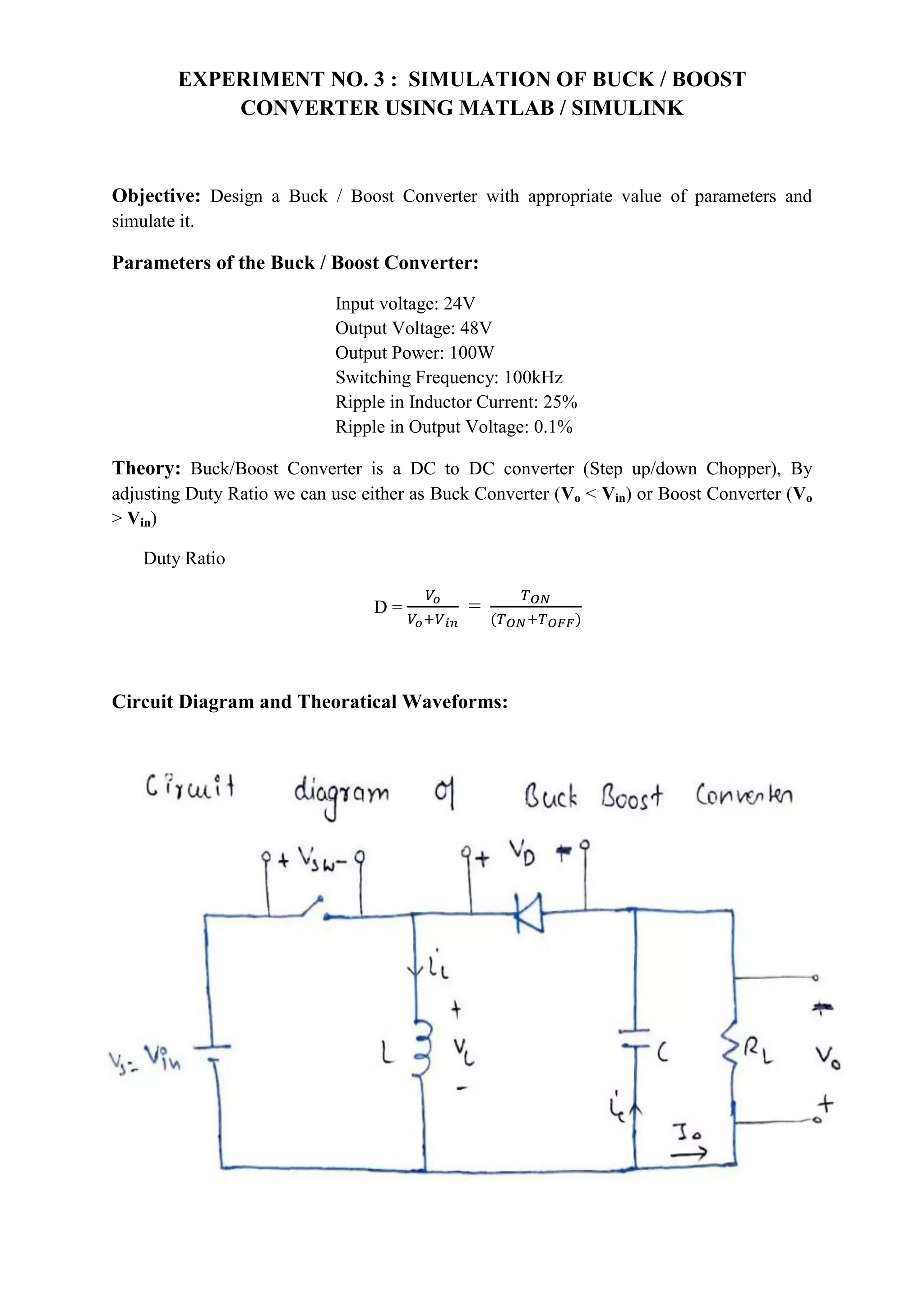
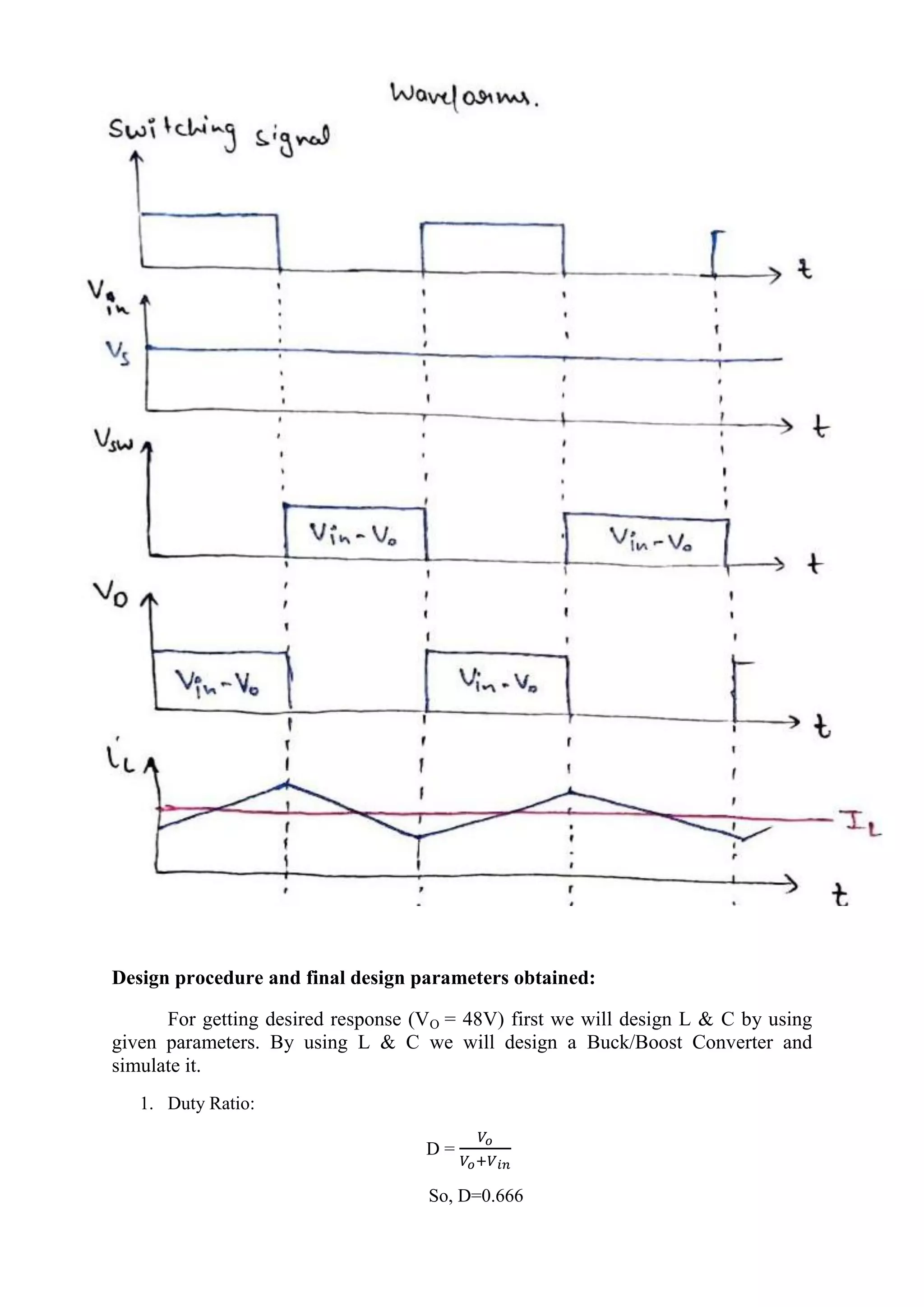
Circuit Diagram and Theoratical Waveforms:
Design procedure and final design parameters obtained:
For getting desired response (VO = 48V) first we will design L & C by using
given parameters. By using L & C we will design a Buck/Boost Converter and
simulate it.
1. Duty Ratio:
D =
So, D=0.666
2. Avg Current through Inductor (Theoretical):
IL = IS + IO = +
IL = 6.25 Amp.
3. Ripple in Inductor Current:
ΔIL (Theoretical) = 1.5625 Amp.
ΔIL =
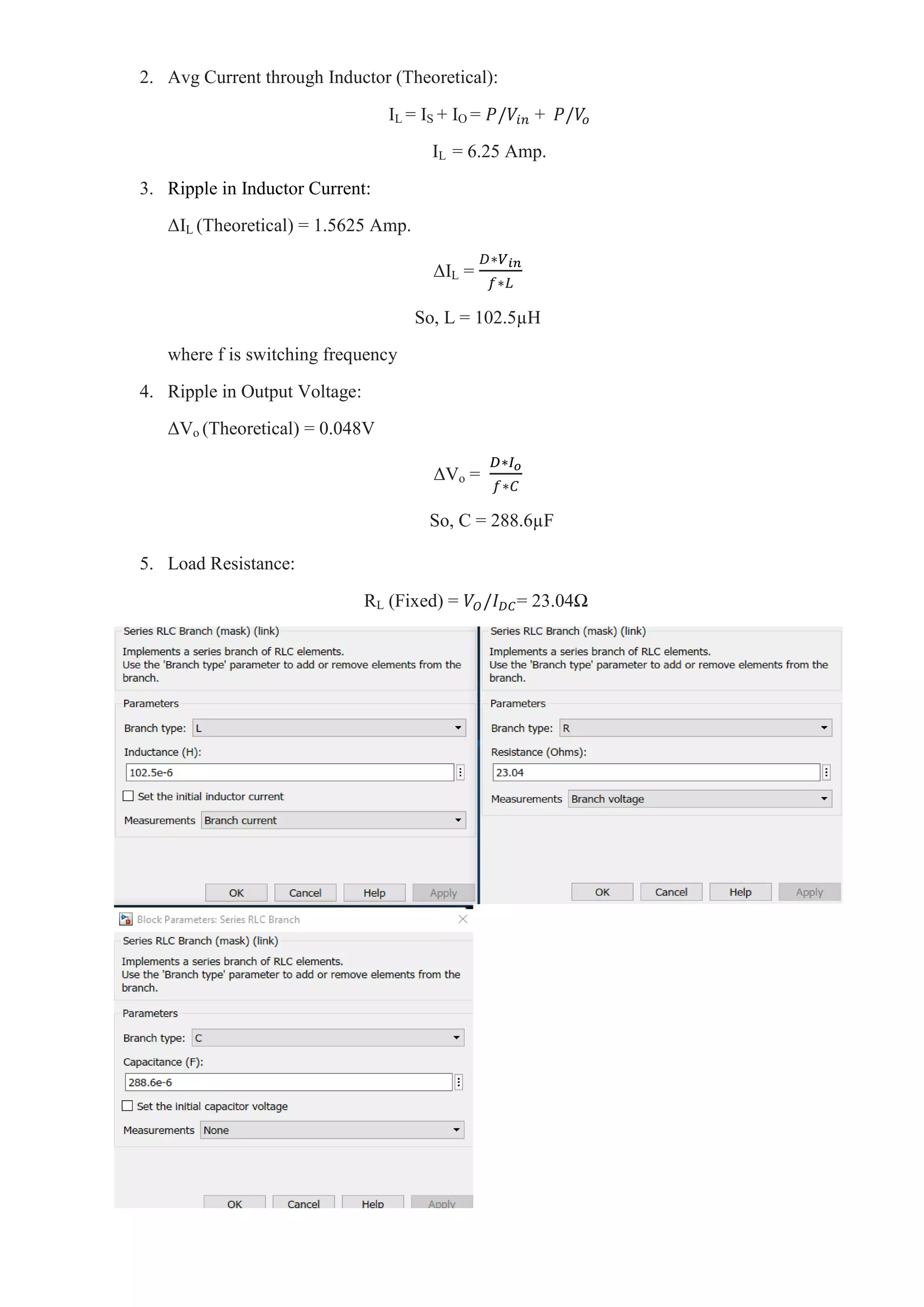
So, L = 102.5µH
where f is switching frequency
4. Ripple in Output Voltage:
ΔVo (Theoretical) = 0.048V
ΔVo =
So, C = 288.6µF
5. Load Resistance:
RL (Fixed) = = 23.04Ω
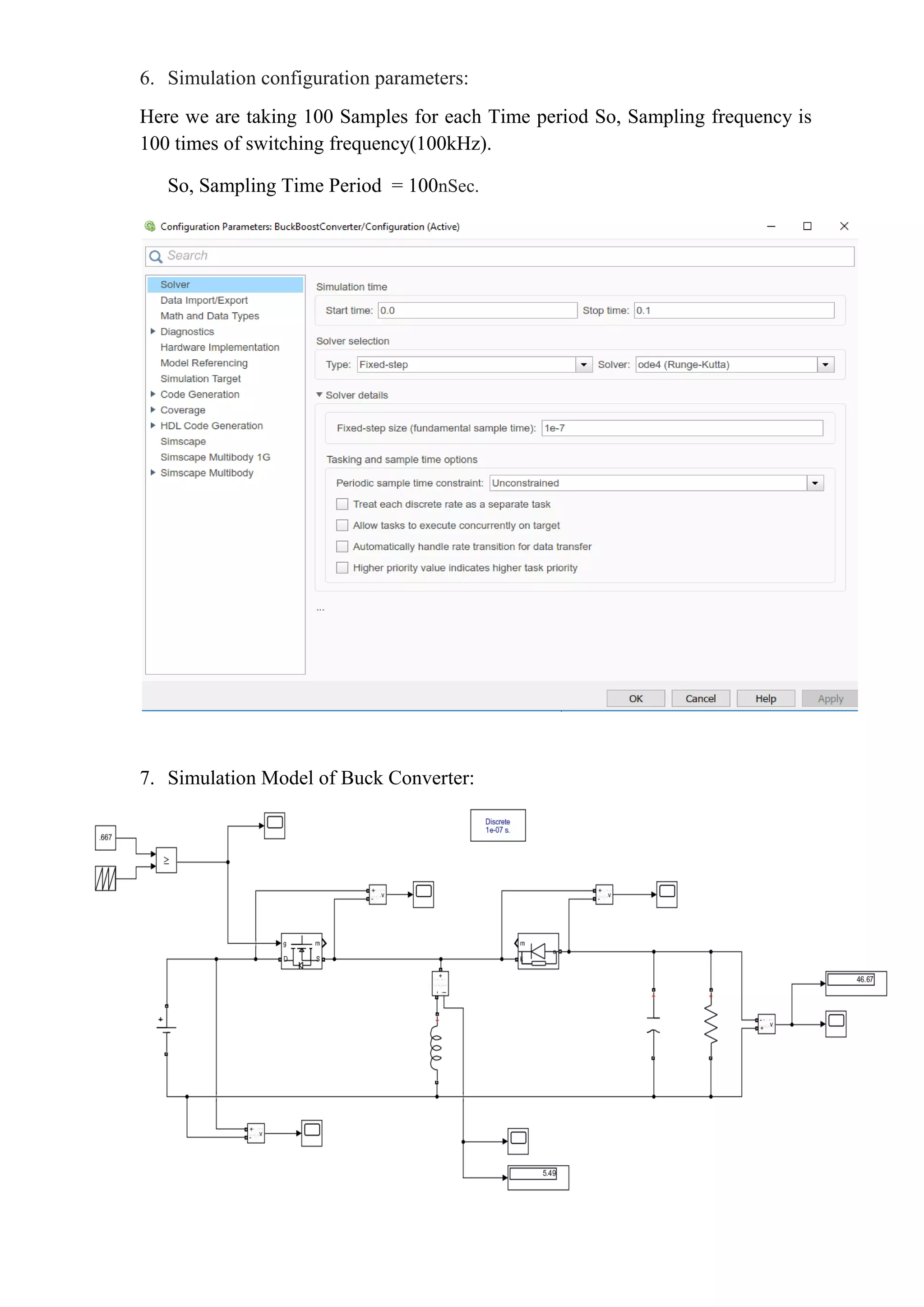
6. Simulation configuration parameters:
Here we are taking 100 Samples for each Time period So, Sampling frequency is
100 times of switching frequency(100kHz).
So, Sampling Time Period = 100nSec.
7. Simulation Model of Buck Converter:
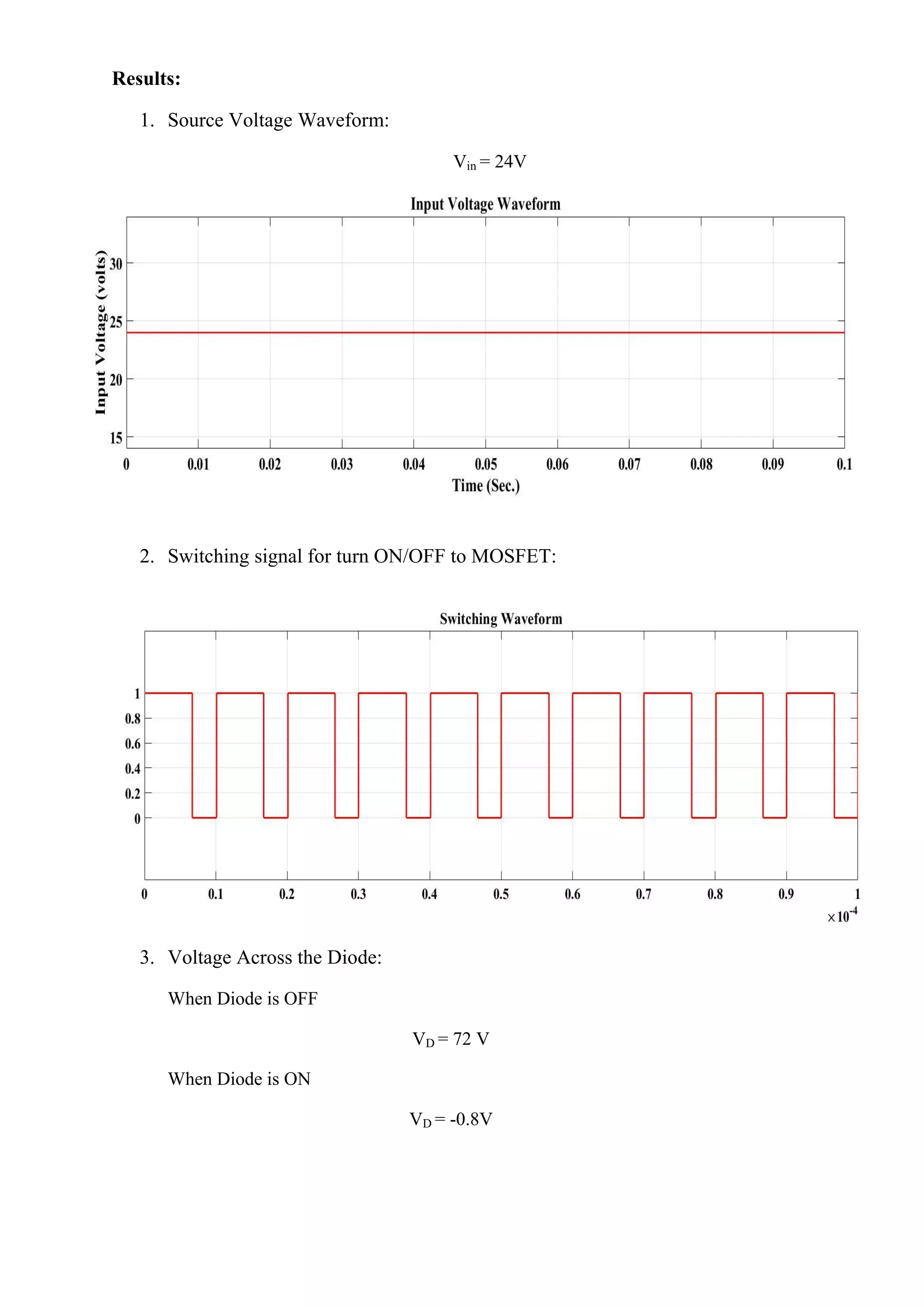
Results:
1. Source Voltage Waveform:
Vin = 24V
2. Switching signal for turn ON/OFF to MOSFET:
3. Voltage Across the Diode:
When Diode is OFF
VD = 72 V
When Diode is ON
VD = -0.8V
4. Voltage across the Switch/MOSFET:
When MOSFET/switch is ON
VSW = 0.8V
When MOSFET/switch is OFF
VSW = 72V
5. Current through Inductor:
Avg Current through Inductor (Practical)
IS = IL = 6.25Amp.
Ripple in Inductor Current (Practical)
ΔIL = 1.5Amp.
6. Output voltage:
Output Avg. Voltage (Practical)
Vo= 46.37V
Ripple in Output Voltage (Practical)
ΔVo = 0.041V

Buck Boost Converter with simulation model.pdf

  • 1.
    EXPERIMENT NO. 3: SIMULATION OF BUCK / BOOST CONVERTER USING MATLAB / SIMULINK Objective: Design a Buck / Boost Converter with appropriate value of parameters and simulate it. Parameters of the Buck / Boost Converter: Input voltage: 24V Output Voltage: 48V Output Power: 100W Switching Frequency: 100kHz Ripple in Inductor Current: 25% Ripple in Output Voltage: 0.1% Theory: Buck/Boost Converter is a DC to DC converter (Step up/down Chopper), By adjusting Duty Ratio we can use either as Buck Converter (Vo < Vin) or Boost Converter (Vo > Vin) Duty Ratio D = = Circuit Diagram and Theoratical Waveforms:
  • 2.
    Design procedure andfinal design parameters obtained: For getting desired response (VO = 48V) first we will design L & C by using given parameters. By using L & C we will design a Buck/Boost Converter and simulate it. 1. Duty Ratio: D = So, D=0.666
  • 3.
    2. Avg Currentthrough Inductor (Theoretical): IL = IS + IO = + IL = 6.25 Amp. 3. Ripple in Inductor Current: ΔIL (Theoretical) = 1.5625 Amp. ΔIL = So, L = 102.5µH where f is switching frequency 4. Ripple in Output Voltage: ΔVo (Theoretical) = 0.048V ΔVo = So, C = 288.6µF 5. Load Resistance: RL (Fixed) = = 23.04Ω
  • 4.
    6. Simulation configurationparameters: Here we are taking 100 Samples for each Time period So, Sampling frequency is 100 times of switching frequency(100kHz). So, Sampling Time Period = 100nSec. 7. Simulation Model of Buck Converter:
  • 5.
    Results: 1. Source VoltageWaveform: Vin = 24V 2. Switching signal for turn ON/OFF to MOSFET: 3. Voltage Across the Diode: When Diode is OFF VD = 72 V When Diode is ON VD = -0.8V
  • 6.
    4. Voltage acrossthe Switch/MOSFET: When MOSFET/switch is ON VSW = 0.8V When MOSFET/switch is OFF VSW = 72V 5. Current through Inductor: Avg Current through Inductor (Practical) IS = IL = 6.25Amp. Ripple in Inductor Current (Practical) ΔIL = 1.5Amp.
  • 7.
    6. Output voltage: OutputAvg. Voltage (Practical) Vo= 46.37V Ripple in Output Voltage (Practical) ΔVo = 0.041V