BY SUJATA MOHAPATRA.
OVERVIEW 
Introduction 
History 
Distribution 
Epidemiology 
Transmission 
Pathogenesis 
Diagnosis 
Prevention and Control 
Actions to Take
INTRODUCTION 
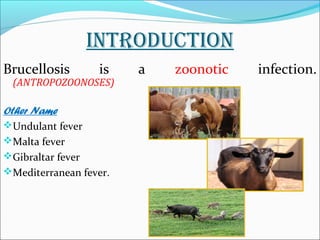
Brucellosis is a zoonotic infection. 
(ANTROPOZOONOSES) 
Other Name 
Undulant fever 
Malta fever 
Gibraltar fever 
Mediterranean fever.
DISTRIBUTION 
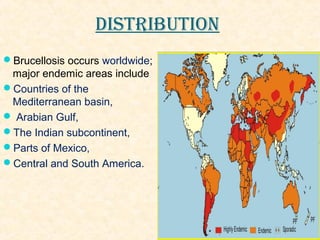
Brucellosis occurs worldwide; 
major endemic areas include 
Countries of the 
Mediterranean basin, 
 Arabian Gulf, 
The Indian subcontinent, 
Parts of Mexico, 
Central and South America.
HISTORY 
450 BC: Described by Hippocrates 
1905: Introduced to the U.S. 
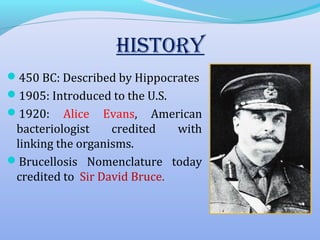
1920: Alice Evans, American 
bacteriologist credited with 
linking the organisms. 
Brucellosis Nomenclature today 
credited to Sir David Bruce.
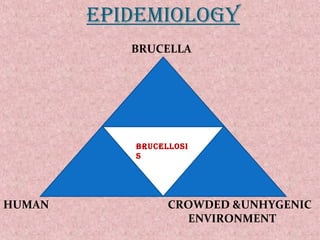
EPIDEMIOLOGY 
BRUCELLA 
HUMAN CROWDED &UNHYGENIC 
ENVIRONMENT 
BRUCELLOSI 
S
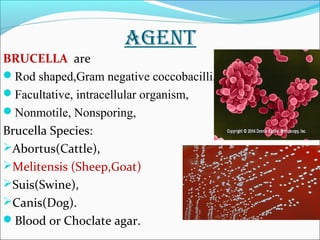
AGENT 
BRUCELLA are 
Rod shaped,Gram negative coccobacilli, 
Facultative, intracellular organism, 
Nonmotile, Nonsporing, 
Brucella Species: 
Abortus(Cattle), 
Melitensis (Sheep,Goat) 
Suis(Swine), 
Canis(Dog). 
Blood or Choclate agar.
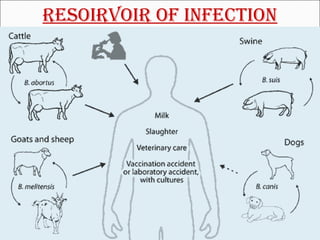
RESOIRVOIR OF INFECTION
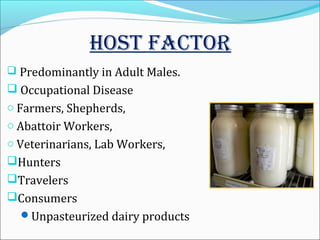
HOST FACTOR 
 Predominantly in Adult Males. 
 Occupational Disease 
o Farmers, Shepherds, 
o Abattoir Workers, 
o Veterinarians, Lab Workers, 
Hunters 
Travelers 
Consumers 
Unpasteurized dairy products
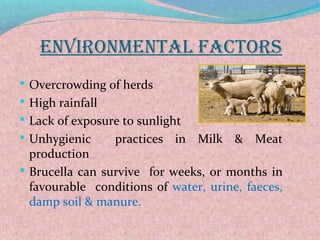
ENVIRONMENTAL FACTORS 
 Overcrowding of herds 
 High rainfall 
 Lack of exposure to sunlight 
 Unhygienic practices in Milk & Meat 
production 
 Brucella can survive for weeks, or months in 
favourable conditions of water, urine, faeces, 
damp soil & manure.
MODE OF TRANSMISSON 
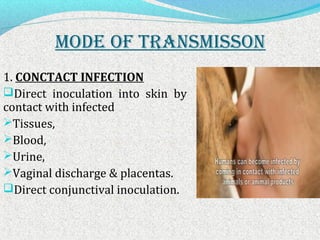
1. CONCTACT INFECTION 
Direct inoculation into skin by 
contact with infected 
Tissues, 
Blood, 
Urine, 
Vaginal discharge & placentas. 
Direct conjunctival inoculation.
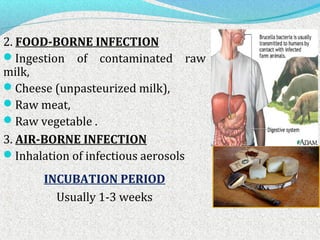
2. FOOD-BORNE INFECTION 
Ingestion of contaminated raw 
milk, 
Cheese (unpasteurized milk), 
Raw meat, 
Raw vegetable . 
3. AIR-BORNE INFECTION 
Inhalation of infectious aerosols 
INCUBATION PERIOD 
Usually 1-3 weeks
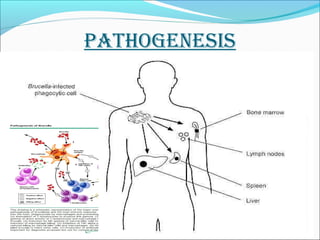
PATHOGENESIS
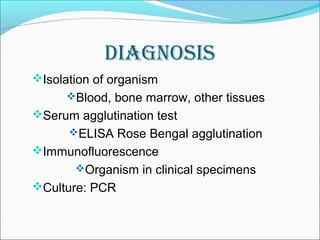
DIAGNOSIS 
Isolation of organism 
Blood, bone marrow, other tissues 
Serum agglutination test 
ELISA Rose Bengal agglutination 
Immunofluorescence 
Organism in clinical specimens 
Culture: PCR
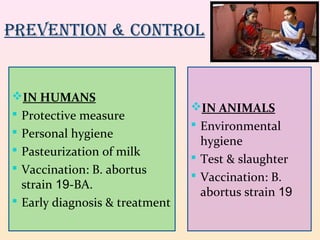
PREVENTION & CONTROL 
IN ANIMALS 
 Environmental 
hygiene 
 Test & slaughter 
 Vaccination: B. 
abortus strain 19 
IN HUMANS 
 Protective measure 
 Personal hygiene 
 Pasteurization of milk 
 Vaccination: B. abortus 
strain 19-BA. 
 Early diagnosis & treatment
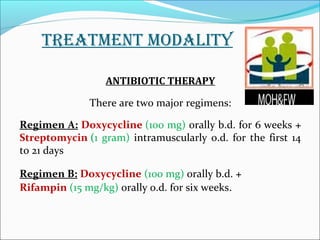
TREATMENT MODALITY 
ANTIBIOTIC THERAPY 
There are two major regimens: 
Regimen A: Doxycycline (100 mg) orally b.d. for 6 weeks + 
Streptomycin (1 gram) intramuscularly o.d. for the first 14 
to 21 days 
Regimen B: Doxycycline (100 mg) orally b.d. + 
Rifampin (15 mg/kg) orally o.d. for six weeks.
GROUP DISCUSSION
THANK YOU

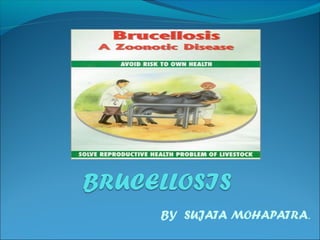
Brucellosis

  • 1.
  • 2.
    OVERVIEW Introduction History Distribution Epidemiology Transmission Pathogenesis Diagnosis Prevention and Control Actions to Take
  • 3.
    INTRODUCTION Brucellosis isa zoonotic infection. (ANTROPOZOONOSES) Other Name Undulant fever Malta fever Gibraltar fever Mediterranean fever.
  • 4.
    DISTRIBUTION Brucellosis occursworldwide; major endemic areas include Countries of the Mediterranean basin,  Arabian Gulf, The Indian subcontinent, Parts of Mexico, Central and South America.
  • 5.
    HISTORY 450 BC:Described by Hippocrates 1905: Introduced to the U.S. 1920: Alice Evans, American bacteriologist credited with linking the organisms. Brucellosis Nomenclature today credited to Sir David Bruce.
  • 6.
    EPIDEMIOLOGY BRUCELLA HUMANCROWDED &UNHYGENIC ENVIRONMENT BRUCELLOSI S
  • 7.
    AGENT BRUCELLA are Rod shaped,Gram negative coccobacilli, Facultative, intracellular organism, Nonmotile, Nonsporing, Brucella Species: Abortus(Cattle), Melitensis (Sheep,Goat) Suis(Swine), Canis(Dog). Blood or Choclate agar.
  • 8.
  • 9.
    HOST FACTOR Predominantly in Adult Males.  Occupational Disease o Farmers, Shepherds, o Abattoir Workers, o Veterinarians, Lab Workers, Hunters Travelers Consumers Unpasteurized dairy products
  • 10.
    ENVIRONMENTAL FACTORS Overcrowding of herds  High rainfall  Lack of exposure to sunlight  Unhygienic practices in Milk & Meat production  Brucella can survive for weeks, or months in favourable conditions of water, urine, faeces, damp soil & manure.
  • 11.
    MODE OF TRANSMISSON 1. CONCTACT INFECTION Direct inoculation into skin by contact with infected Tissues, Blood, Urine, Vaginal discharge & placentas. Direct conjunctival inoculation.
  • 12.
    2. FOOD-BORNE INFECTION Ingestion of contaminated raw milk, Cheese (unpasteurized milk), Raw meat, Raw vegetable . 3. AIR-BORNE INFECTION Inhalation of infectious aerosols INCUBATION PERIOD Usually 1-3 weeks
  • 13.
  • 15.
    DIAGNOSIS Isolation oforganism Blood, bone marrow, other tissues Serum agglutination test ELISA Rose Bengal agglutination Immunofluorescence Organism in clinical specimens Culture: PCR
  • 16.
    PREVENTION & CONTROL IN ANIMALS  Environmental hygiene  Test & slaughter  Vaccination: B. abortus strain 19 IN HUMANS  Protective measure  Personal hygiene  Pasteurization of milk  Vaccination: B. abortus strain 19-BA.  Early diagnosis & treatment
  • 17.
    TREATMENT MODALITY ANTIBIOTICTHERAPY There are two major regimens: Regimen A: Doxycycline (100 mg) orally b.d. for 6 weeks + Streptomycin (1 gram) intramuscularly o.d. for the first 14 to 21 days Regimen B: Doxycycline (100 mg) orally b.d. + Rifampin (15 mg/kg) orally o.d. for six weeks.
  • 18.
  • 19.