BRUCELLOSIS
DR. FAISAL HADDAD
Consultant of Family Medicine
Occupational Health&
PSMMC
HISTORY
BACKGROUND


Brucellosis is a worldwide zoonosis caused by the
bacterial genus Brucella. These organisms localize in the
reproductive organs of host animals, causing abortions
and sterility.



They are shed in large numbers in the animal's urine,
milk, and placental fluid.



Exposure to infected animals and animal products causes
the disease in humans.
Seroprevalence of brucellosis in KSA
Patients and Methods: A natural survey of 23,613 subjects was conducted in
1997, in order to assess the seroprevalence of brucellosis in Saudi Arabia.
Investigations included interviews, clinical examination and blood sampling for
antibody determination, using the standard tube agglutination test (STAT).
Results: the seroprevalence of brucellosis was 15%. The seroprevalence
increased by age, and was higher in rural areas, and among people in high-risk
occupations.
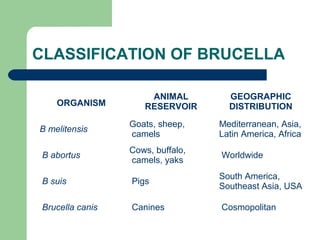
CLASSIFICATION OF BRUCELLA
ORGANISM

ANIMAL
RESERVOIR

GEOGRAPHIC
DISTRIBUTION

B melitensis

Goats, sheep,
camels

Mediterranean, Asia,
Latin America, Africa

B abortus

Cows, buffalo,
camels, yaks

Worldwide

B suis

Pigs

South America,
Southeast Asia, USA

Brucella canis

Canines

Cosmopolitan
MODE OF TRANSMISSION


Consumption of infected,
unpasteurized animal-milk products.



Direct contact with infected animal
parts.



Inhalation of infected aerosolized
particles.



Consumption of meat of infected
animal ???
CLINICAL MANIFESTATIONS
HX
 Generally nonspecific
 Fever
 Malodorous perspiration
 Constitutional symptoms
O/E
 Generally nonspecific
 Lymphadenopathy
 Hepatomegaly or spleenomegaly
(COMPLICATIONS (MOST COMMON
1. Osteoarticular disease
 Peripheral arthritis
 Sacroiliitis
 Spondylitis
2. Reproductive system disorders
 Epididymoorchitis
 Spontaneous abortion
3. Hepatitis
4. Pancytopenia
(COMPLICATIONS (LESS COMMON
Central nervous system disorders
e.g meningitis, encephalitis, brain abcess.




Endocarditis

Respiratory disorders
e.g lobar pneumonia, pleural effusion.




Every organ and system of the human body can be
affected.
RELAPSE


Relapses usually occur at a rate of about 10 % , in the first year
after infection.



Often milder in severity than the initial disease, and can be
treated with a repeated course of the usual antibiotic regimens.



Most cases of relapse are caused by :

1. Inadequate treatment.
2. Associated with characteristics of the initial infection that include
a duration of < 10 days, male sex, bacteremia, and
thrombocytopenia.
THANK YOU

Brucellosis

  • 1.
    BRUCELLOSIS DR. FAISAL HADDAD Consultantof Family Medicine Occupational Health& PSMMC
  • 2.
  • 3.
    BACKGROUND  Brucellosis is aworldwide zoonosis caused by the bacterial genus Brucella. These organisms localize in the reproductive organs of host animals, causing abortions and sterility.  They are shed in large numbers in the animal's urine, milk, and placental fluid.  Exposure to infected animals and animal products causes the disease in humans.
  • 5.
    Seroprevalence of brucellosisin KSA Patients and Methods: A natural survey of 23,613 subjects was conducted in 1997, in order to assess the seroprevalence of brucellosis in Saudi Arabia. Investigations included interviews, clinical examination and blood sampling for antibody determination, using the standard tube agglutination test (STAT). Results: the seroprevalence of brucellosis was 15%. The seroprevalence increased by age, and was higher in rural areas, and among people in high-risk occupations.
  • 6.
    CLASSIFICATION OF BRUCELLA ORGANISM ANIMAL RESERVOIR GEOGRAPHIC DISTRIBUTION Bmelitensis Goats, sheep, camels Mediterranean, Asia, Latin America, Africa B abortus Cows, buffalo, camels, yaks Worldwide B suis Pigs South America, Southeast Asia, USA Brucella canis Canines Cosmopolitan
  • 7.
    MODE OF TRANSMISSION  Consumptionof infected, unpasteurized animal-milk products.  Direct contact with infected animal parts.  Inhalation of infected aerosolized particles.  Consumption of meat of infected animal ???
  • 8.
    CLINICAL MANIFESTATIONS HX  Generallynonspecific  Fever  Malodorous perspiration  Constitutional symptoms O/E  Generally nonspecific  Lymphadenopathy  Hepatomegaly or spleenomegaly
  • 10.
    (COMPLICATIONS (MOST COMMON 1.Osteoarticular disease  Peripheral arthritis  Sacroiliitis  Spondylitis 2. Reproductive system disorders  Epididymoorchitis  Spontaneous abortion 3. Hepatitis 4. Pancytopenia
  • 11.
    (COMPLICATIONS (LESS COMMON Centralnervous system disorders e.g meningitis, encephalitis, brain abcess.   Endocarditis Respiratory disorders e.g lobar pneumonia, pleural effusion.   Every organ and system of the human body can be affected.
  • 12.
    RELAPSE  Relapses usually occurat a rate of about 10 % , in the first year after infection.  Often milder in severity than the initial disease, and can be treated with a repeated course of the usual antibiotic regimens.  Most cases of relapse are caused by : 1. Inadequate treatment. 2. Associated with characteristics of the initial infection that include a duration of < 10 days, male sex, bacteremia, and thrombocytopenia.
  • 13.