A study conducted in 1991 in 119 countries 
including India identified following major 
problem:- 
 Lack of nurses prepares to work in nursing 
administration. 
 Acute storage of nurses. 
 Less relationship between nursing service 
and nursing education.
 Lack of authority in administrative structure. 
 Strange relationship between nurses and 
other auxiliaries and also with physicians. 
 Lack of teamwork spirit. 
 Lack of resources, both material and 
financial.
 Restructuring. 
 Managed care system 
 Quality indicators and accountability for outcomes. 
 New demands/ technology advancement. 
 High tech and high touch dilemma. 
 Community/ global perspective.
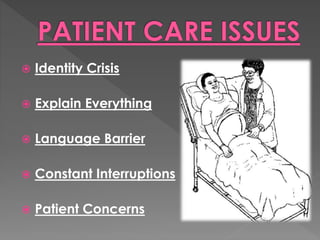
 Identity Crisis 
 Explain Everything 
 Language Barrier 
 Constant Interruptions 
 Patient Concerns
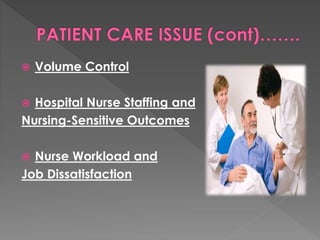
 Volume Control 
 Hospital Nurse Staffing and 
Nursing-Sensitive Outcomes 
 Nurse Workload and 
Job Dissatisfaction
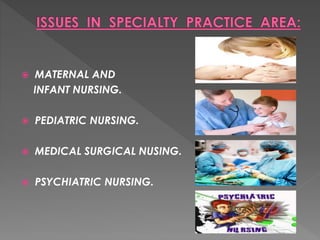
 MATERNAL AND 
INFANT NURSING. 
 PEDIATRIC NURSING. 
 MEDICAL SURGICAL NUSING. 
 PSYCHIATRIC NURSING.
 Employment issues are defined as any 
issue which may have an impact on 
wages, terms and other conditions of 
employment.
 Delays in registration 
 Employment discrimination 
issues 
 Employment harassment issues 
 Mandatory Overtime 
 Job dissatisfaction
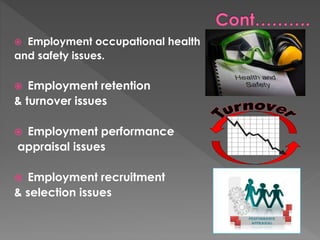
 Employment occupational health 
and safety issues. 
 Employment retention 
& turnover issues 
 Employment performance 
appraisal issues 
 Employment recruitment 
& selection issues
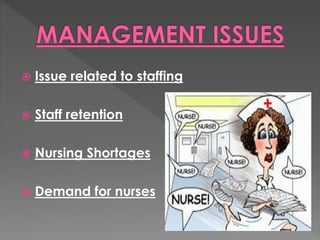
 Issue related to staffing 
 Staff retention 
 Nursing Shortages 
 Demand for nurses
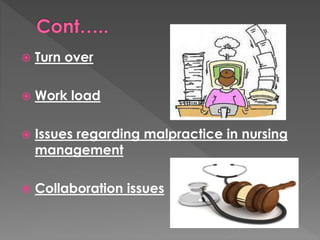
 Turn over 
 Work load 
 Issues regarding malpractice in nursing 
management 
 Collaboration issues
 Controlled substances 
 Caring patients with AIDS 
 Pregnancy Termination 
 Sex determination
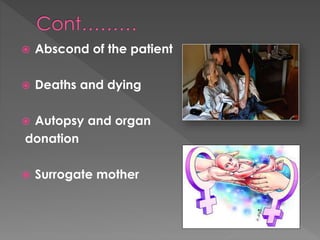
 Abscond of the patient 
 Deaths and dying 
 Autopsy and organ 
donation 
 Surrogate mother
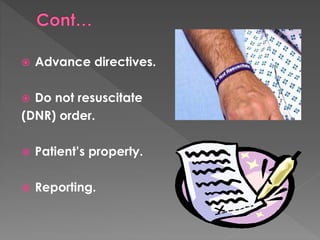
 Advance directives. 
 Do not resuscitate 
(DNR) order. 
 Patient’s property. 
 Reporting.
 Documentation of all unusual 
incidences. 
 Report all unusual incidences. 
 Know your job description. 
 Follow policies and procedures as 
established by your employing agency. 
 Keep your registration updated. 
 Perform procedures that you have been 
taught and that are within the standard 
scope of your practice.
 Protect patients from injuring 
themselves. 
 Remain alert and focused. 
 Establish and maintain rapport with 
patients and family. 
 Seek and clarify orders when the 
patient‘s medical condition changes. 
 Practice safety with physician‘s verbal 
orders.
 Remove side rails from patient‘s bed unless 
there is an order or hospital policy to do so. 
 Allow patients to leave the hospital or 
nursing home unless there is an order or a 
signed release. 
 Accept money or gifts from patients. 
 Give advice that is contrary to physician 
orders or the nursing care plan.
 Give medical advice to friends and 
neighbors. 
 Attempt to practice medicine. 
 Witness a patient‘s will. 
 Take medications that belong to 
patients. 
 Worked as a licensed 
practical/vocational nurse in a state 
in which you are not licensed.
Bibliography: 
•Vati Jogindra. Principles and Practice of Nursing 
Management and Admistration. 1st edition: Jaypee 
Brothers Medical Publishers (P) Ltd. New Delhi; 2013. Pp 
85-91. 
•Basavanthappa BT. Nursing Education. 2nd edition: Jaypee 
Broers Medical Publishers. New Delhi; 2009.pp 809-836. 
•Fraser M. Diane. Margaret A. Cooper. Myles Textbook for 
Midwives. 14th ed: Churchill Livingstone New York Oxford 
Philadelphia Publishers.Toronto; 2003. pp 59- 69. 
•http://www.nursingworld.org 
•www.ncbi.nlm.nih.gov 
•http://allnurses.com 
•http://nursinglink.monster.com 
•http://www.nursingcenter.com
ISSUES IN NURSING
ISSUES IN NURSING

ISSUES IN NURSING

  • 3.
    A study conductedin 1991 in 119 countries including India identified following major problem:-  Lack of nurses prepares to work in nursing administration.  Acute storage of nurses.  Less relationship between nursing service and nursing education.
  • 4.
     Lack ofauthority in administrative structure.  Strange relationship between nurses and other auxiliaries and also with physicians.  Lack of teamwork spirit.  Lack of resources, both material and financial.
  • 5.
     Restructuring. Managed care system  Quality indicators and accountability for outcomes.  New demands/ technology advancement.  High tech and high touch dilemma.  Community/ global perspective.
  • 6.
     Identity Crisis  Explain Everything  Language Barrier  Constant Interruptions  Patient Concerns
  • 7.
     Volume Control  Hospital Nurse Staffing and Nursing-Sensitive Outcomes  Nurse Workload and Job Dissatisfaction
  • 8.
     MATERNAL AND INFANT NURSING.  PEDIATRIC NURSING.  MEDICAL SURGICAL NUSING.  PSYCHIATRIC NURSING.
  • 9.
     Employment issuesare defined as any issue which may have an impact on wages, terms and other conditions of employment.
  • 10.
     Delays inregistration  Employment discrimination issues  Employment harassment issues  Mandatory Overtime  Job dissatisfaction
  • 11.
     Employment occupationalhealth and safety issues.  Employment retention & turnover issues  Employment performance appraisal issues  Employment recruitment & selection issues
  • 12.
     Issue relatedto staffing  Staff retention  Nursing Shortages  Demand for nurses
  • 13.
     Turn over  Work load  Issues regarding malpractice in nursing management  Collaboration issues
  • 14.
     Controlled substances  Caring patients with AIDS  Pregnancy Termination  Sex determination
  • 15.
     Abscond ofthe patient  Deaths and dying  Autopsy and organ donation  Surrogate mother
  • 16.
     Advance directives.  Do not resuscitate (DNR) order.  Patient’s property.  Reporting.
  • 17.
     Documentation ofall unusual incidences.  Report all unusual incidences.  Know your job description.  Follow policies and procedures as established by your employing agency.  Keep your registration updated.  Perform procedures that you have been taught and that are within the standard scope of your practice.
  • 18.
     Protect patientsfrom injuring themselves.  Remain alert and focused.  Establish and maintain rapport with patients and family.  Seek and clarify orders when the patient‘s medical condition changes.  Practice safety with physician‘s verbal orders.
  • 19.
     Remove siderails from patient‘s bed unless there is an order or hospital policy to do so.  Allow patients to leave the hospital or nursing home unless there is an order or a signed release.  Accept money or gifts from patients.  Give advice that is contrary to physician orders or the nursing care plan.
  • 20.
     Give medicaladvice to friends and neighbors.  Attempt to practice medicine.  Witness a patient‘s will.  Take medications that belong to patients.  Worked as a licensed practical/vocational nurse in a state in which you are not licensed.
  • 23.
    Bibliography: •Vati Jogindra.Principles and Practice of Nursing Management and Admistration. 1st edition: Jaypee Brothers Medical Publishers (P) Ltd. New Delhi; 2013. Pp 85-91. •Basavanthappa BT. Nursing Education. 2nd edition: Jaypee Broers Medical Publishers. New Delhi; 2009.pp 809-836. •Fraser M. Diane. Margaret A. Cooper. Myles Textbook for Midwives. 14th ed: Churchill Livingstone New York Oxford Philadelphia Publishers.Toronto; 2003. pp 59- 69. •http://www.nursingworld.org •www.ncbi.nlm.nih.gov •http://allnurses.com •http://nursinglink.monster.com •http://www.nursingcenter.com